
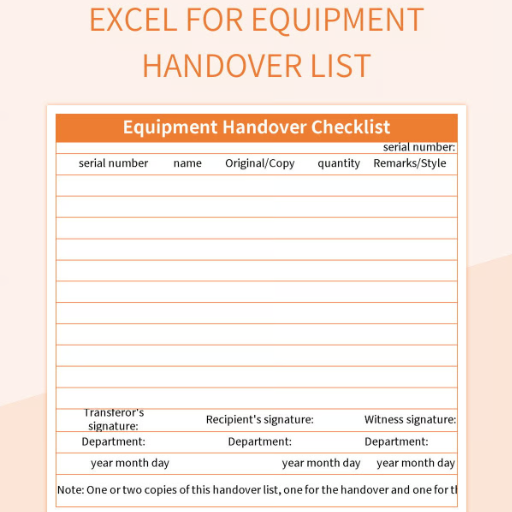
Food Equipment Handover Checklist for Documents and Training

A food equipment handover checklist should identify the delivered equipment, its approved documents, completed training and remaining obligations. Give each entry an owner, a review result and evidence that the receiving team can retrieve.
The supplier is preparing to leave. Can the next shift find the accepted settings, the current instruction and the person responsible for an unresolved alarm? Those questions belong in the handover review while the project team is still available.
Illustrative scenario. A receiving engineer opens a folder of manuals but finds two revisions for the same equipment tag. The review needs an agreed revision and an owner to resolve the mismatch before that instruction is accepted.
Use the registers below to organize the discussion. Adapt their fields to your equipment, contract and site procedures. For the wider project sequence, see the commissioning guide. Food production line commissioning.
Key Takeaways
- Match each deliverable to an equipment tag and accepted revision.
- Record task demonstrations alongside training attendance.
- Keep open items linked to owners, restrictions and closure evidence.
- Define exactly what each receiving signature approves.
For a proposed equipment project, ask which documents and training activities the scope includes. Discuss your handover requirements with Loyal.
Define the Food Equipment Handover Checklist Scope

Identify the equipment and installed revision
Start the checklist with the project reference, equipment tags, serial numbers and receiving location. Name the machines and interfaces included in this handover. A processing unit, conveyor and packaging machine may have separate suppliers, manuals and outstanding obligations.
Record the installed configuration and the document index used for review. Identify the current settings list, drawing revisions and approved changes made during commissioning. Where a file covers several machines, state which tags it applies to.
Return to the missing-revision scenario. The receiving engineer needs the manual’s equipment reference, the installed configuration and a review by the appointed technical owner. A filename containing “final” does not provide those details. Record the decision and retain the superseded file in the controlled history.
Use a short scope statement that another shift can understand. For example, identify the covered equipment group, the attached evidence index and any excluded auxiliary equipment. Mark an inapplicable requirement with its reason and reviewer so an empty box cannot hide an unfinished task.
Name the receiving roles and their decisions
Assign reviewers for operations, maintenance, quality, safety and procurement as appropriate to the project. Ask each role what evidence it needs and which decisions it can authorize. One person can hold several responsibilities, provided those responsibilities are explicit.
Record each approval in the site’s system. Identify who received the files, who accepted the equipment and who may authorize the intended production activity. Give each decision its own scope. Include any remaining restrictions on the signed cover sheet.
Compare the checklist against the agreed requirements before requesting signatures. The acceptance matrix should identify what needs demonstration, who reviews it and which result supports acceptance. Keep the detailed test requirements in the acceptance record and reference them from handover. Review food equipment acceptance criteria.
Build a Document Register the Receiving Team Can Use
Give each deliverable a reviewable record
Create a document register for the receiving team. Identify the equipment tag, document title and required revision beside the delivered revision. Add the file location, owner, reviewer, result and outstanding action. Link the evidence used for review, adapting this template to your agreed deliverables.
An industrial document-control reference from Long International discusses a master register, delivery formats and controlled handover records. Apply those concepts at a scale that suits the food line. Long International handover documentation guidance.
| Deliverable group | Record to identify | Receiving-team review |
|---|---|---|
| Equipment identity | Tags, serial numbers and supplied equipment list | Match the files to installed assets |
| Operating information | Manuals, approved settings and operating instructions | Confirm revision, language and access |
| As-installed drawings | Electrical, mechanical and utility drawings within scope | Check accepted changes are incorporated |
| Acceptance evidence | Executed tests, deviations and retest references | Identify results and unresolved requirements |
| Hygiene and material information | Applicable cleaning instructions and agreed food-contact evidence | Assign review to the responsible site role |
| Recovery information | Software inventory, backup references and recovery instructions | Identify version, custodian and review status |
| Maintenance and support | Parts list, maintenance instructions and contract contacts | Check equipment applicability and ownership |
For each applicable row, separate delivery from review. Use statuses such as received, under review, accepted and correction required. A repository link should open the intended file for the receiving role through the site’s approved access arrangements.
Connect test results to the accepted configuration
Index the factory acceptance test (FAT), site acceptance test (SAT) and relevant retests. Include the tested configuration, approved procedure revision, deviations and signatories. The handover register can point to the full records without repeating test execution instructions. See food equipment site acceptance testing.
Ask the quality owner which cleaning, sanitation and food-contact records are applicable. Identify gaps against the project specification and the site’s requirements. Keep supplier declarations tied to the relevant component or material and to the scope they actually cover.
Illustrative scenario. An alarm response changes during commissioning, but the operator instruction still describes the earlier sequence. Record the affected instruction and configuration references. The appointed owner must review the mismatch, define any operating restriction and identify the document correction, training or retest needed.
Make backups and support records usable
List the programmable logic controller (PLC), human-machine interface (HMI) and other relevant software versions. Identify the approved backup, its creation date, associated equipment and custodian. Record the recovery instructions and the status of any agreed recovery verification.
Keep passwords and other access secrets in the site’s approved secure system. The document register should point authorized people toward the access process. Agree software licenses, editing rights and supplier support responsibilities within the project scope.
For spare parts, record the equipment reference, part number, agreed quantity and storage location where applicable. Link maintenance tasks to the correct manual revision. Identify warranty documents and service contacts through the contract records, with any unresolved terms assigned for review.
Before sign-off, ask a receiving-team member to retrieve a selected drawing, instruction and test record. Record missing access or unclear references as actions. This provides a concrete review of the index the team will use after the supplier leaves.
Record Training by Task, Role and Shift
Define what each receiving role needs to demonstrate
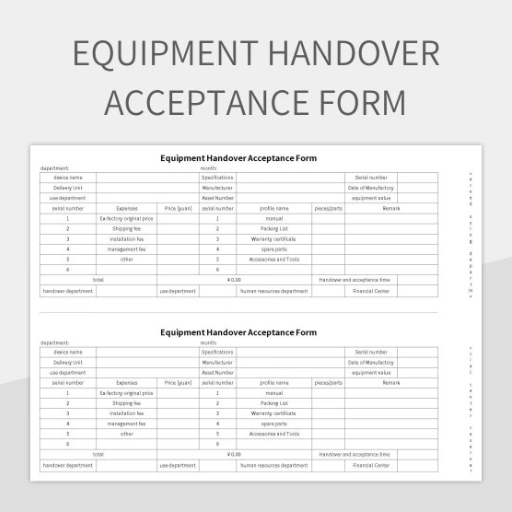
A training register should describe the task, approved instruction and person assessed. Start with the tasks the receiving team will perform under its site procedures. Allocate operation, sanitation, maintenance and quality responsibilities to the appointed roles.
For an operator, the agreed scope might include approved startup, shutdown, alarm escalation and changeover tasks. Sanitation staff may need instruction on the approved cleaning procedure and equipment access boundaries. Authorized maintenance staff need the equipment-specific instructions relevant to their assigned work.
Use a task matrix that can show remaining coverage by shift. Include temporary or relief personnel when their assigned duties require training. Confirm the language and format people need to understand the instruction.
| Training field | What to enter |
|---|---|
| Person, role and shift | The named trainee and assigned responsibility |
| Task and instruction | The specific task and approved document revision |
| Trainer and assessor | Who instructed and who evaluated the task |
| Date and demonstration | When training occurred and what was observed |
| Result and restrictions | Recorded assessment result and remaining supervision |
| Follow-up | Action owner, reassessment need and evidence reference |
Record attendance, demonstration and follow-up
Keep attendance records and describe any task demonstration separately. An assessor’s entry should identify what the person demonstrated, the instruction used and the result under the site’s assessment method. If assessment remains incomplete, record the supervision or restriction that applies.
For applicable US food operations, 21 CFR 117.4 addresses qualifications, food-hygiene and food-safety training appropriate to assigned duties. It also requires records of the training specified in paragraph (b)(2). The site’s quality team should determine applicability and connect those records to its training system. 21 CFR 117.4.
Where US OSHA energy-control requirements apply, its retraining guidance addresses specified changes and training deficiencies. Identify the responsible safety role and applicable records when equipment or duties change. OSHA employee retraining guidance.
Illustrative scenario. A day-shift operator attends training, while the night-shift receiver has only an earlier instruction. The training matrix should show the uncovered shift and the revision mismatch. Assign the current instruction, training owner and supervised assessment needed before the receiving role is signed off.
At the review meeting, ask who covers each required task when the trained person is absent. Record any gap and agreed follow-up.
Keep unresolved coverage visible until the assessor records the required follow-up. Confirm the task demonstrations, training languages and shift coverage proposed for your project. Ask Loyal about the required training scope.
Keep Open Items Traceable to Verified Closure
Describe the requirement, observation and restriction
Give every open item a unique reference. Link it to the requirement, equipment tag and evidence that raised it. Describe the observed gap plainly enough that another reviewer can understand what needs correction.
Record the potential effect and the restriction decided by the authorized site team. The appropriate response depends on the actual issue and applicable requirements. A missing file reference and a fault affecting an equipment safeguard need their own competent review.
Agree an owner, due date, corrective action, verification method and closure reviewer. Where several suppliers share an interface, name a coordinating owner as well as the party doing the work. This prevents the obligation from becoming an unassigned note between packages.
The following populated row continues the illustrative alarm-document example. Its references are fictional labels for a record template.
| Field | Illustrative entry |
|---|---|
| Item and requirement | OI-01, agreed operator-instruction deliverable |
| Observation | Alarm response in the delivered instruction differs from the accepted controls record |
| Impact and restriction | Site technical and safety owners to assess before authorizing affected operation |
| Action owner | Appointed documentation owner, with controls-owner review |
| Due condition | Before the affected operation resumes, with the calendar deadline agreed and recorded by the appointed site owner |
| Corrective action | Reconcile instruction and controls references, then assess training and retest needs |
| Verification | Compare approved revisions and review required demonstration or retest records |
| Closure evidence | Accepted instruction, review record and applicable training or test references |
| Closure reviewer and date | Appointed receiving reviewer, date recorded after verification |
Preserve the original finding through closure
Keep the original observation and evidence available when recording the correction. Add the revised file or test record, the review decision and its date. An item marked corrected-awaiting-verification should remain visible until the appointed reviewer has checked the required evidence.
For interface changes, link the final integration records to the relevant equipment and software revision. If the correction affects an agreed test, identify the retest scope through the approved process. Keep the handover register focused on the evidence and ownership. Review food production line integration testing.
During review, ask whether the reported correction addresses the original requirement and whether any linked instruction or training record also needs updating. Record the answer, evidence and reviewer. A completion email can be retained as correspondence alongside the records needed for closure.
If an obligation is deferred, document the agreed boundary, restriction, owner and next review. Have the authorized parties decide whether the remaining item is compatible with the proposed handover scope. Keep that decision traceable to the specific item and its evidence.
Sign the Handover Boundary and Plan Follow-Up
Make the signed decision understandable later
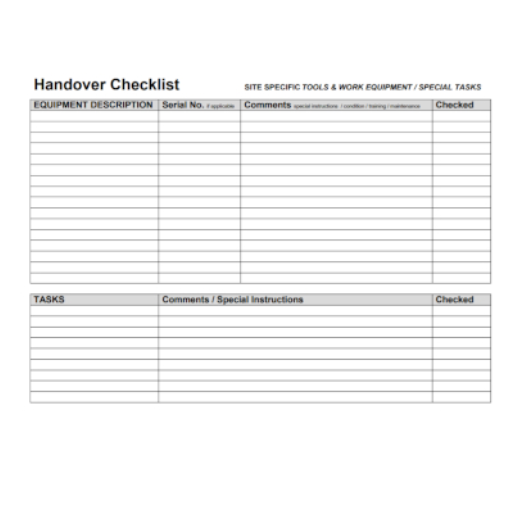
Prepare a cover record naming the equipment, evidence-index revision, accepted deliverables, remaining items and applicable restrictions. State the receiving roles and the decision each signature records. Reference the approved open-item register so the obligations remain visible after the meeting.
Bring any disputed or incomplete record to the appointed owner before requesting a decision. In the missing-manual-revision scenario, the file index needs the accepted revision and its review evidence. The cover record can then identify precisely which documentation set the receiving team considered.
Where capacity evidence forms part of the agreed scope, reference its accepted test report and conditions. Keep throughput methods and calculations in the test record. This gives the receiving team a traceable route to the result without expanding handover into another performance test. See food production line capacity testing.
Assign support and later change ownership
Record who maintains the document index, training matrix and open-item register after handover. Give the receiving team the agreed service contact and escalation route. Identify where contractual warranty terms, support obligations and commercial milestones are recorded for the authorized parties to review.
Set the next review around the outstanding obligations and the site’s operating needs. If the installed configuration changes, assign the review of affected drawings, instructions, backups and training. Keep the revision history so later teams can connect a change to its approval and evidence. Record the next review date beside each remaining action.
Close the meeting with a clear list of accepted records and remaining actions. The receiving team should leave knowing where its current instructions are stored, who can authorize its tasks and who owns each unresolved obligation.
For a new line proposal, prepare your equipment boundary, required document list and training expectations before discussing the handover package. Contact Loyal with your project requirements.
Food Equipment Handover Checklist FAQ
Use these answers to prepare the receiving-team review. Confirm the details against your project specification, applicable requirements and site procedures.
Which documents belong in an equipment handover package?
Start with the agreed deliverable list and equipment identity. Review applicable manuals, as-installed drawings, acceptance records, cleaning instructions, configuration backups, maintenance information and support terms. Give every file a revision, location, owner and review result. Add the training matrix and open-item register to the evidence index used for handover.
How should we record training completion?
Record the person, role, shift, task, instruction revision, trainer and date. Where assessment is required, describe the observed demonstration and its result. Keep any remaining supervision, restrictions and reassessment actions visible. This lets the receiving team distinguish attendance, task assessment and the authorization recorded under its own procedures.
Can equipment be handed over with open items?
The authorized parties must decide this against the specific issues, contract and applicable site requirements. Identify each remaining obligation, its effect, restriction, owner, due date and closure evidence. Record exactly what the proposed signature accepts. Escalate unresolved safety or food-safety questions to the responsible competent team before authorizing affected activity.
Who decides when the equipment can produce food?
The site’s appointed approval roles determine the required technical, safety and food-safety decisions for the intended activity. Identify those roles and their evidence within the project plan. Keep equipment handover, any required process or cleaning verification, and food-release responsibilities explicit in the site’s records so each decision has a defined scope.
What backup information should the receiving team receive?
Identify relevant software and configuration versions, approved backup references, creation dates, custodians and recovery instructions. Record the status of any agreed recovery verification. Confirm access rights and licenses through the project scope, and manage secrets through the approved secure system. The equipment turnover file should direct authorized people to these records.
For the wider sequence linking requirements, testing and closeout, use the commissioning overview when planning your next review. Food production line commissioning.