
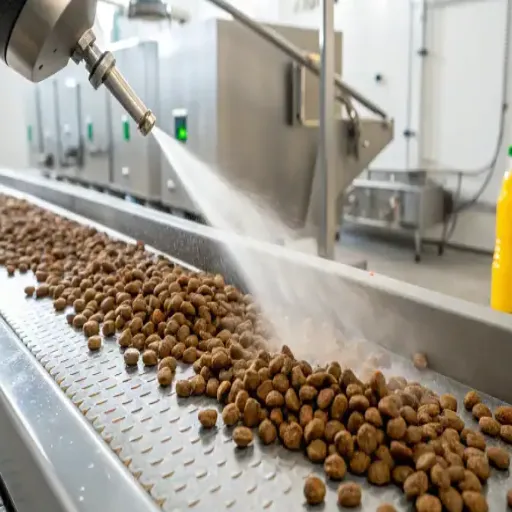
Food Extrusion Solutions: How to Choose, Configure, and Optimize Your Production Line

One of the regional snack manufacturers in Southeast Asia didn’t have any progression throughout the last year while its rivals launched three new products. The reason was not related to the demand. They just had a wrong extrusion machine. It corrected any product parameter with the use of a single screw extruder, but for every new product it tended to spent Agessss just to get the machine right, spoil works in hand and cause inconvenience to many.
You’ve prepared yourself to consider various food processing methods for incorporation into your plant. You are aware of their importance. According to The Business Research Company, the market size of the food extrusion industry globally shall reach $149.76 billion by the year 2030 at an estimated CAGR of 9.1 percent. The growth in the elastomer’s market is driven by snacks, pet food, cereals and proteins from plants. Once the bottle neck is eliminated then the growth comes when the production capacity increases beyond the complexity.
There is a good understanding of how to relate a specific extrusion technology to the desired product purpose, the output as well as efficiency provider and building of a modular production line that develops with the enterprise in this guide. The right extrusion solutions in food processing can help you move from a choke-point-of-production to a point of competitive advantage. Whether you are producing puffed food snacks, dry dog kibble food or textured vegetable protein tvp.
What Are Food Extrusion Solutions?
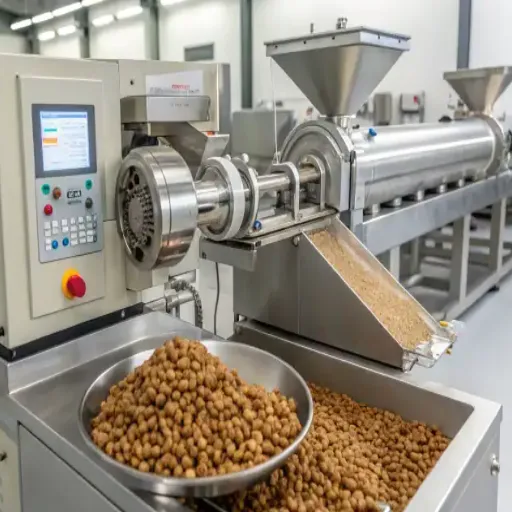
At its core, extrusion is a continuous process that applies heat, pressure, and shear to force ingredients through a shaped die. The result is a uniform, shelf-stable product with precise texture and density. But a true food extrusion solution is far more than the extruder itself.
A complete solution integrates the preconditioner, extruder barrel and screws, die plate, cutter, dryer, cooler, and automation controls. Each component must be configured for your specific recipe, capacity targets, and quality standards. Get one element wrong, and the entire line suffers.
Want to understand the fundamentals first? Read our complete guide on how the extrusion process works before diving into equipment selection.
The Core Extrusion Process
Food extrusion cooking follows a predictable sequence. First, dry ingredients are ground, weighed, and mixed. Next, the blend enters a preconditioner where steam and water hydrate the mixture and begin partial cooking. The conditioned dough then moves into the extruder barrel, where rotating screws generate mechanical energy and additional thermal energy cooks the material thoroughly.
Finally, the cooked mass passes through the die plate and is cut to the desired length. From there, the product travels to drying, cooling, coating, and packaging stations. This continuous flow is what makes extrusion so efficient for high-volume manufacturing.
From Process to Solution
The difference between “having an extruder” and “having an extrusion solution” comes down to integration and customization. A solution is engineered around your raw materials, your target products, and your growth trajectory. It includes recipe-specific screw configurations, die designs that deliver the right expansion and texture, and automation that maintains consistency shift after shift.
Why the Right Solution Matters
Product quality, throughput efficiency, energy consumption, and recipe flexibility all depend on system design. A mismatch between extruder type and product category can lead to poor expansion, uneven cooking, excessive wear, and product waste. The right food extrusion solutions eliminate these problems before production begins.
Single-Screw vs. Twin-Screw Extruders: Which Fits Your Operation?
Choosing between single-screw and twin-screw extruders is one of the most important decisions in extrusion system design. Each technology has distinct strengths, and the best choice depends on your products, capacity needs, and budget.
Single-Screw Extruders
These systems are prominent in food extrusion Spiral; they utilize a single rotating spiral inside the heated cylinder which creates heat and the friction between the cylinder causes shear. These designs include cost reduction measures such as mechanical complexity simplification that allows for reasonably priced designs and cheap servicing and remediation.
In massive industrial production cases, single screw extruders find themselves in line with typical expectations. GM Insights estimates a 64.2% share of pet food extrusion in favor of single screw extruders in 2025. They become quite efficient at making dry pet food, breakfast cereal, or other basic puffed snacks which requires little creative effort in terms of the recipe while producing lots of products.
Typically, however, single screws do have the constraints. The fully rely on the friction and the cohesion of the goods to effect e.g. mixing by convection, and the screws cannot handle exceptions or especially slippery goods. Such changes often require substantial periods of time for the rearranging of screws and dies.
Twin-Screw Extruders
Twin-screw extrusion in these machines can either be in the same direction (co-rotating) or in the opposite direction (counter-rotating) of the two screws. In food processing, only co-rotating extruders are used for their superior mixing performances, enhanced temperature control, and self-cleaning.
These processes enable easy processing of all systems. Any ingredient containing high moisture or shear stress sensitive proteins or fat variations can easily be handled in a twin-screw extruder. Switching from one product to another is quicker, as the profiles and screw set ups management can be disintegrated and reassembled with the help of module elements from within the recipe base.
The downside to this is that it has a high cost and difficulty to manufacture. Nevertheless, for organizations that need to produce many different SKUs, cutting edge formulations or exclusive offerings, the twin-screw model is especially economical from the perspective of downtime savings and increased portfolio possibilities.
Decision Framework
| Factor | Single-Screw | Twin-Screw |
|---|---|---|
| Capital cost | Lower | Higher |
| Operating complexity | Simpler | More complex |
| Recipe flexibility | Limited | High |
| Mixing quality | Moderate | Superior |
| Changeover speed | Slower | Faster |
| Best for | Basic pet food, cereals, standard snacks | Complex snacks, pet food, HME, TVP |
When Marcus launched his snack startup in 2023, he chose a single-screw extruder to keep initial investment low. For 18 months, it worked perfectly for his flagship cheese puff line. But when demand for high-protein, gluten-free options exploded, he discovered his single-screw system couldn’t handle the protein isolates and alternative flours. Switching to a modular twin-screw line doubled his SKU count in six months and cut changeover time from four hours to under 45 minutes.
Looking for snack-specific equipment? Explore our snack production line customization options to match your product goals.
Matching Extrusion Solutions to Product Categories
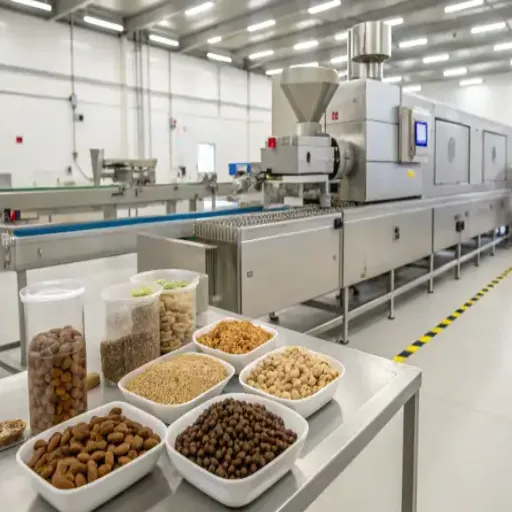
Different products place different demands on extrusion systems. Understanding these demands helps you configure a line that delivers consistent quality from day one.
Snack Extrusion Lines
Puffed snacks, extruded chips, and fortified cereals all rely on controlled expansion to create the right texture and mouthfeel. The die design is critical here. A small change in die geometry can mean the difference between a light, airy puff and a dense, hard bite.
Snack lines typically use high-shear configurations to gelatinize starches rapidly and create the steam pressure that drives expansion as the product exits the die. Twin-screw extruders are increasingly popular in snack manufacturing because they allow precise control over expansion, density, and shape. This precision matters when you’re producing multiple SKUs or adding functional ingredients like protein or fiber.
Pet Food Extrusion Lines
Dry pet food represents one of the largest applications for food extrusion solutions. The process must achieve uniform cooking, consistent kibble size, and the right moisture content for shelf stability and palatability.
Moisture control is the critical variable in pet food extrusion. Most dry kibble exits the extruder at 22-28% moisture and must be dried down to 10-12%. Preconditioning plays a major role in setting the stage for even cooking. A well-designed preconditioner hydrates the meal thoroughly before it enters the extruder barrel, which improves starch gelatinization and protein digestibility.
Need specialized pet food equipment? Our pet food extrusion systems are engineered for consistent kibble quality and scalable capacity.
Plant-Based Protein and TVP
The food technology sector has seen the emergence of new avenues for the application of extrusion technology such as textured vegetable proteins (TVP) or high moisture extruded (HME) meat analogs. As per the Good Food Institute, the preferable method to produce fibrous structures similar to meat from soy, pea, wheat and other protein sources, is extrusion.
For example, extrusion is an extended form of technology that produces national fresh fibrous textures of meat analogs from soy or wheat or pea or other off proteins without meat. The high moisture extrusion of these proteins holds the dies which are unable to cool down sharpies while retaining the capabilities of forming non-meaty protein strips from the proteins. Twin screw extruders serve a critical purpose right here in ensuring that the right degree of shear, temperature and moisture is maintained as protein fiberization occurs. High moisture extrusion almost shifts most of the concern from the extruder itself to the die, which is sometimes more critical. This is because texture and biting is determined by the cooling control such die imposes in the beaded shape.
Pasta, Cereals, and Baby Food
Such operations cannot work under higher influences of the shear stress or under higher temperatures in the cooker than snacks or high-melt extrusion. In the case of pasta in this respect, it is cold or low temperature extrusion which doesn’t allow heat pregrelation of weding to take place before it is dried.
Baby food and concepts on nutrition cereals are relations that should be imposed with extreme process control because food safety and retention of formulae knowledge and practice should be the one constant that aids digestion. Sanitation and being easy to service with the appropriate temperature winds out in this class will not suffice.
Key Factors When Choosing Food Extrusion Equipment
Beyond extruder type, several practical factors determine whether a food extrusion solution will serve your facility well over its lifetime.
Capacity and Throughput Requirements
Match your equipment to both current demand and realistic growth projections. Oversizing wastes capital and energy. Undersizing creates a bottleneck that limits revenue. Modular extrusion production lines offer a middle path: start with the core capacity you need, then add dryers, coaters, or packaging modules as demand grows.
Recipe Flexibility and Changeover Speed
If your strategy depends on SKU variety, prioritize systems with recipe management software and modular screw configurations. Advanced twin-screw systems can reduce changeover time to under 30 minutes, which makes small-batch production economically viable.
Energy Efficiency and Sustainability
Modern extruder designs can cut specific mechanical energy input by 25-35% compared to older systems. Features like heat recovery, variable frequency drives, and optimized screw geometry reduce both operating costs and environmental impact. For manufacturers in regions with high energy costs or strict sustainability targets, these efficiencies add up quickly.
Automation and Industry 4.0 Integration
Smart extrusion systems use real-time sensors and automated process control to maintain consistent quality with minimal operator intervention. Industry 4.0 integration can reduce energy usage by 15-20% and push Overall Equipment Effectiveness (OEE) above 85%. Predictive maintenance algorithms also flag wear issues before they cause unplanned downtime.
Compliance and Food Safety
Look for food-safe stainless steel construction, smooth welds, sloped surfaces for drainage, and clean-in-place (CIP) compatibility. CE marking, FDA compliance, and EHEDG hygienic design principles should all be part of the specification for any equipment you evaluate.
How to Optimize Extrusion Output and Efficiency
Even the best food extrusion solutions require careful tuning to reach peak performance. Here are the optimization levers that make the biggest difference.
Screw Configuration Best Practices
The screw configuration controls how material moves, mixes, and cooks inside the barrel. A typical food extrusion screw includes conveying elements, kneading blocks, and mixing elements arranged in zones:
- Feeding zone: Long-pitch conveying elements move material efficiently from the inlet.
- Compression and cooking zone: Kneading blocks generate shear and mix ingredients thoroughly.
- Venting zone: Open sections allow steam or volatiles to escape if needed.
- Die zone: Conveying elements build consistent pressure for uniform extrusion.
Adjusting the length and arrangement of these elements lets you tune residence time, shear intensity, and energy input for each specific recipe.
Temperature and Moisture Profiling
Importance of regulating temperature within the barrel during operating in a crucial way. In addition, most belts provided, allow a margin of ±1°C in temperatures, and therefore one can achieve improvement in productions of about 10-20 %. Moreover, the temperature should be progressively increased from the feed zone, and it should be enhanced according to the heat sensitivity of the materials you use.
This is due to the fact that moisture content determines expansion, texture, and cooking extent. For most food extrusions, 15-30% moisture is applied but in HME, it may be up to 40-70%. Attaining adequate moistening ahead of the process is crucial for promoting moisture management further down the line.
Feeding and Preconditioning
Gravimetric systems ensure the dosing efficiency within a range of ±0.5%, hence ensuring constant flow rates and minimized product variations. It is also important for materials such as protein isolates that are fluffy or highly aerated that drop distances from the feeder into the extruder opening are minimized to avoid changes in bulk density.
Steam serves to advance further preconditioning such function as moistening the raw material, creating propitious features for starch conformity and decreasing the mechanical stress that the used extruder, has to function. This preconditioner, when optimally designed, is capable of increasing the effectiveness of the extruder by up to 20–30 percentage in terms of throughput also with better mitigation of everything that is in the processed product.
Preventive Maintenance for Uptime
Regular maintenance extends extruder component life by 30-40% and prevents food safety issues from material buildup. A solid preventive maintenance schedule includes:
- Daily: Visual inspections, lubrication checks, and die cleaning.
- Monthly: Barrel and screw inspection with thorough cleaning.
- Quarterly: Wear measurement for barrel and screw clearance.
- Annually: Complete system overhaul including gearbox, bearings, and seals.
When the team at a mid-sized pet food facility in Eastern Europe implemented this schedule, they reduced unplanned downtime by 42% in the first year. More importantly, their kibble uniformity scores improved because worn screw elements were replaced before they could cause process drift.
Ready to optimize your line? Contact Shandong Loyal Industrial Co., Ltd. for a custom extrusion assessment tailored to your products and capacity goals.
Modular and Scalable Extrusion Solutions
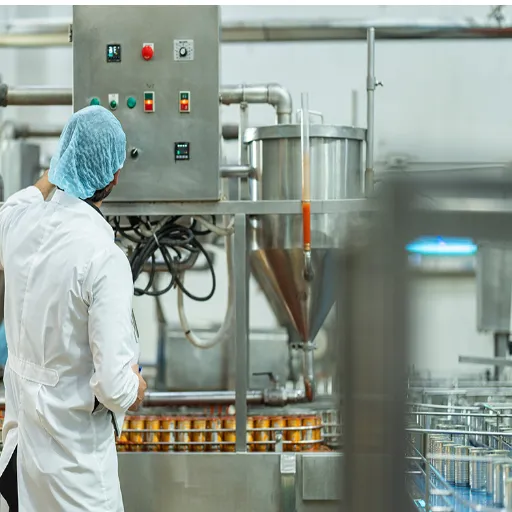
For many manufacturers, the biggest risk in extrusion investment isn’t the technology itself. It’s committing to a fixed capacity that doesn’t match future demand.
Why Modularity Matters
Modular food extrusion solutions let you start with a core system and expand as your business grows. A base extrusion line might include the preconditioner, extruder, and cutter. Later, you can add a fluid bed dryer, a coating drum, or automated packaging without replacing the entire system.
This approach protects capital, reduces risk, and lets you validate new products before scaling up. It also makes it easier to adapt when market trends shift.
Ideal Applications for Modular Lines
Modular systems are especially valuable for:
- Small and medium enterprises testing new markets.
- Contract manufacturers serving multiple customers with different products.
- Companies launching new product categories where demand is still uncertain.
- Regional manufacturers planning phased facility expansion.
Planning for Future Expansion
When selecting a modular system, think beyond the extruder itself. Leave adequate floor space for downstream equipment. Size utility connections — steam, water, electricity, compressed air — to support 2-3x capacity growth. And choose an automation architecture that can integrate new modules without reprogramming the entire control system.
Common Mistakes When Investing in Extrusion Solutions
Even experienced manufacturers can stumble when evaluating new extrusion equipment. Here are the most common pitfalls to avoid.
Buying on sticker price without calculating total cost of ownership. The cheapest extruder may have higher energy consumption, shorter component life, and limited spare parts availability. Factor in operating costs, maintenance, and downtime risk over a 10-year horizon.
Underestimating recipe development and test-run requirements. New formulations often need 20-50 test runs before reaching stable commercial production. Make sure your supplier offers R&D support, test kitchens, or pilot plant access.
Overlooking after-sales support and spare parts availability. A broken die or worn screw segment can shut down your line for weeks if replacement parts must be shipped from overseas. Ask about local service networks and typical lead times for critical spares.
Ignoring integration with existing material handling and packaging. The extruder is only one node in your production system. Powder handling, conveying, drying, and packaging must all work together seamlessly.
Failing to plan for product line expansion. Choose equipment that can handle not just today’s products, but the products you expect to launch in the next three to five years.
Conclusion
Food extrusion solutions are not one-size-fits-all. The right system depends on your product mix, your capacity targets, your recipe complexity, and your growth strategy. Single-screw extruders remain a cost-effective choice for high-volume staples, while twin-screw systems open the door to complex formulations and rapid product changeovers.
To get the most from your investment, focus on process optimization from day one. Tune your screw configuration, temperature profile, and preconditioning setup for each recipe. Build a preventive maintenance program that protects uptime and extends equipment life. And choose a modular architecture that scales with your business rather than locking you into a fixed capacity.
The global demand for extruded foods is growing fast. Manufacturers who match the right food extrusion solutions to their operational goals will capture that growth. Those who don’t will watch their competitors pull ahead.
At Shandong Loyal Industrial Co., Ltd., we design extrusion systems that align with your specific products, capacity requirements, and long-term plans. Our modular production lines, recipe-specific customization, and responsive technical support help food manufacturers worldwide turn extrusion technology into a lasting competitive advantage.