
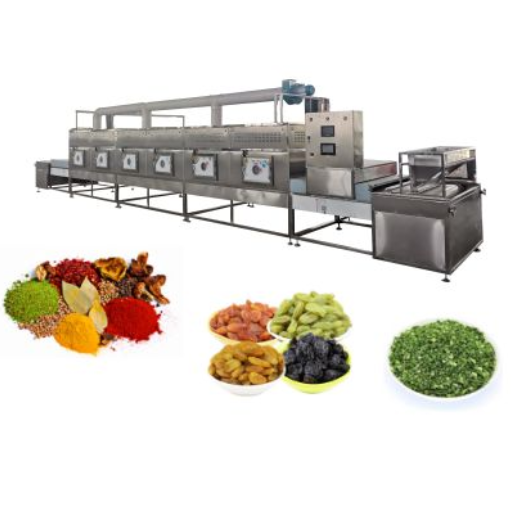
Food Microwave Sterilization Validation Protocol: The Complete Step-by-Step Guide

A food microwave sterilization validation protocol is a documented, repeatable procedure that proves your microwave-assisted thermal sterilization (MATS) process consistently achieves commercial sterility at the coldest point in every package. It combines equipment qualification, heat penetration studies, biological indicator challenges, and regulatory documentation to satisfy FDA 21 CFR 113 requirements for low-acid shelf-stable foods.
When Raj Patel’s spice processing facility in Gujarat installed a tunnel microwave sterilizer in early 2024, his team assumed the vendor’s default settings would be sufficient for FDA compliance. Three months and $12,000 in consultant fees later, they discovered their temperature mapping had missed a persistent cold spot near the conveyor edge. The validation data was rejected. They had to restart the entire process. This guide exists so you don’t repeat Raj’s mistake.
You will learn the complete validation protocol from equipment qualification through regulatory filing, with practical timelines, cost estimates, and application-specific guidance you can implement in your facility.
Key Takeaways
- Microwave sterilization validation requires a 7-step protocol: equipment qualification (IQ/OQ/PQ), product characterization, heat penetration studies, F0 value determination, biological indicator challenges, process documentation, and regulatory filing.
- The FDA requires proof of commercial sterility (12-log reduction of Clostridium botulinum spores, F0 >= 3 minutes at 121.1 degrees C) at the identified cold spot in the worst-case package.
- Complete validation typically takes 9-14 weeks and costs 15,000−15,000−43,000 depending on product complexity and whether you use external process authority consultation.
- Fiber-optic temperature sensors are required for microwave environments because metal thermocouples distort electromagnetic fields and create sparking hazards.
- Industrial microwave sterilizers with PLC control systems, 304 stainless steel construction, and integrated data logging significantly streamline validation documentation.
What Is Microwave Sterilization Validation?
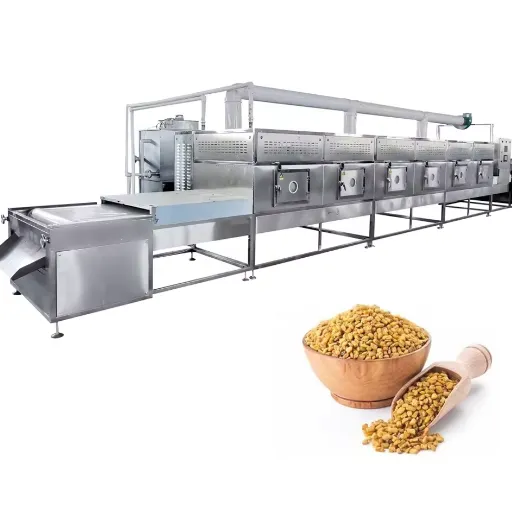
Microwave sterilization validation is the formal process of proving that your industrial microwave sterilizer consistently delivers sufficient thermal lethality to achieve commercial sterility across every package in every production batch. Unlike conventional retort sterilization, where steam heat penetrates uniformly from the outside in, microwave-assisted thermal sterilization (MATS) uses 915 MHz electromagnetic energy combined with pressurized hot water immersion to heat food volumetrically. This difference makes validation more complex and more critical.
Validation differs from verification and monitoring in three important ways. Validation proves your process works before you ever sell a product. It answers the question: “Under controlled conditions, does this process consistently achieve sterility?” Verification confirms the process is working during production, typically through temperature checks and record review. Monitoring is the continuous real-time observation of critical parameters like power output, water temperature, and conveyor speed during every production run.
The regulatory foundation for microwave sterilization validation sits within FDA 21 CFR Part 113, the regulation governing thermally processed low-acid foods packaged in hermetically sealed containers. Since 2009, when Washington State University’s Dr. Juming Tang and his team received the first FDA Letter of No Objection for MATS technology, the regulatory pathway has been established but remains rigorous. The FDA does not accept microwave sterilization as a novel technology exemption. It evaluates it as a thermal process, which means you must demonstrate the same level of microbial lethality you would prove for conventional retort processing.
Want to understand the full range of industrial microwave sterilization equipment before diving into validation? Explore our complete microwave sterilization solutions to see how different configurations affect validation requirements.
The 7-Step Microwave Sterilization Validation Protocol
This protocol synthesizes FDA guidance, academic research from Washington State University and Cornell University, and practical implementation experience from commercial MATS installations. Each step builds on the previous one. Skipping a step or rushing through documentation will cost you more time in regulatory review than you saved.
Step 1: Equipment Qualification (IQ / OQ / PQ)
Equipment qualification is the foundation of every successful validation. It proves your industrial microwave sterilizer is installed correctly, operates within specifications, and performs consistently under challenge conditions.
Installation Qualification (IQ) verifies that your equipment matches the purchase specifications. Document the model number, serial number, magnetron specifications, power output ratings, conveyor dimensions, and utility requirements. Verify electrical supply, grounding systems, safety interlocks, and microwave leakage levels (must be < 5 mW per cm squared at 5 cm per FDA 21 CFR 1030.10). Confirm the software version and calibration certificates for all integrated sensors.
Operational Qualification (OQ) tests the equipment under both no-load and loaded conditions. Run the system with water-filled phantom loads to verify power distribution uniformity across the treatment zone. Map the electromagnetic field to identify hot and cold zones in the cavity. Test emergency stop functions, over-temperature alarms, and automatic power shutdown systems. Record baseline performance data for power output, water temperature control, and conveyor speed accuracy.
Performance Qualification (PQ) is where you challenge the system with biological indicators. Run three or more consecutive cycles using Geobacillus stearothermophilus spore strips placed at multiple locations throughout the load. All indicators must show complete kill. Document repeatability across runs with statistical process control metrics.
Step 2: Product Characterization
Before you can validate a sterilization process, you must understand what you are sterilizing. Product characterization measures the dielectric properties, thermal properties, and physical characteristics of your food matrix.
Dielectric properties determine how your product interacts with microwave energy. The dielectric constant (epsilon prime) and dielectric loss factor (epsilon double-prime) vary with temperature, moisture content, salt concentration, and fat content. A high-fat pet food kibble behaves very differently from a low-moisture spice powder in a microwave field. These properties affect heating rate, penetration depth, and the location of cold spots.
Measure moisture content, water activity, pH, fat content, and bulk density for your specific product. Test packaging material compatibility with both microwave energy and pressurized hot water immersion. Document particle size distribution for powders and granules. All of these factors influence validation parameters and must be included in your process filing.
Step 3: Heat Penetration Studies
Heat penetration studies identify where the slowest-heating zone (the cold spot) exists in your product and measure the time-temperature history at that location. This is the most technically demanding step in the validation protocol.
You cannot use standard metal thermocouples in a microwave environment. The metal interacts with electromagnetic fields, causing arcing, sparking, and distorted heating patterns. Instead, use fiber-optic temperature sensors with fluoroptic probes or wireless data loggers designed for microwave applications. Place 9 to 16 sensors per package, covering edges, corners, geometric center, and suspected slow-heating zones based on your product’s dielectric properties.
Run multiple replicate trials under worst-case conditions: minimum product load, coldest starting temperature, thickest package, and slowest conveyor speed. The cold spot may shift location depending on product formulation, package geometry, and loading pattern. You must identify the consistent cold spot that governs process lethality.
At a pet food facility in Thailand, the quality team initially placed temperature sensors only in the geometric center of their kibble packages. After three failed validation runs, they discovered the cold spot was actually at the bottom edge where dense, fat-rich particles settled during filling. Re-mapping with 16 sensors per package identified the true cold spot, and the fourth validation run passed cleanly. The lesson: never assume where the cold spot is. Map it.
Step 4: F0 Value Determination
The F0 value expresses sterilization effectiveness as equivalent minutes at 121.1 degrees C (250 degrees F) with a z-value of 10 degrees C. Commercial sterility for low-acid foods requires a minimum F0 >= 3 minutes at the cold spot, though many processors target F0 >= 5-6 minutes to provide a safety margin. This equates to a 12-log reduction of Clostridium botulinum spores.
Calculate F0 by integrating the time-temperature history from your heat penetration study using the standard lethality equation. Modern data logging software automates this calculation, but you must understand the inputs: the reference temperature (121.1 degrees C), the z-value for your target organism (10 degrees C for C. botulinum), and the actual time-temperature data from your cold spot sensor.
Document the calculation method, software version, and validation of the calculation algorithm. The FDA may request this documentation during inspection. Maintain raw time-temperature data files in addition to summary reports.
Step 5: Biological Indicator Challenge Studies
Biological indicator (BI) challenge studies provide experimental proof that your process achieves the required microbial lethality. They complement the mathematical F0 calculation with real-world biological data.
Use Geobacillus stearothermophilus spore strips with a population of 10^6 or higher as the standard biological indicator for sterilization processes. For low-acid foods, Clostridium sporogenes PA 3679 serves as the non-pathogenic surrogate for C. botulinum. Place inoculated spore strips at the identified cold spot location in test packages. Process them through your established microwave sterilization cycle, then incubate at 55-60 degrees C for 7 days. No growth confirms lethality.
Run challenge studies under worst-case conditions: maximum package thickness, minimum initial temperature, and the slowest heating formulation in your product range. The biological challenge must demonstrate at least a 12-log reduction of the target organism.
Considering industrial microwave sterilization equipment for your facility? View our microwave-assisted thermal sterilization equipment with PLC intelligent control systems designed to simplify validation documentation.
Step 6: Process Documentation
Documentation is not an afterthought. It is the deliverable that determines whether your validation succeeds or fails. FDA inspectors review documentation. Process authorities base their filings on your documentation. Your customers’ auditors examine your documentation. Get it right.
Your validation documentation package should include: equipment qualification records (IQ, OQ, PQ); product characterization data with dielectric properties; heat penetration study reports with raw time-temperature data and F0 calculations; biological indicator challenge study results with incubation records; process parameter specifications including power levels, water temperatures, conveyor speeds, and hold times; standard operating procedures for routine production; and calibration records for all temperature sensors, power meters, and control systems.
Maintain documentation in compliance with 21 CFR Part 11 if you use electronic records. Electronic signatures, audit trails, and data integrity controls are mandatory for electronic documentation systems.
Step 7: Regulatory Filing
The final step is submitting your validation data to the appropriate regulatory authority. In the United States, low-acid canned food processors must file a scheduled process with the FDA. This filing includes your process parameters, validation data, and a statement from a recognized process authority.
A process authority is a person or organization with expert knowledge of thermal processing requirements for low-acid foods. The process authority reviews your validation data, confirms your process achieves commercial sterility, and signs the filing documentation. Common process authorities include university food science departments, consulting firms specializing in thermal processing, and industry associations.
Prepare your filing package with: product description and formulation; package specifications; process parameters with critical limits; heat penetration study summary; biological indicator challenge results; process authority letter; and facility registration information. Allow 4-8 weeks for FDA review after submission.
Cold Spot Identification and Temperature Mapping
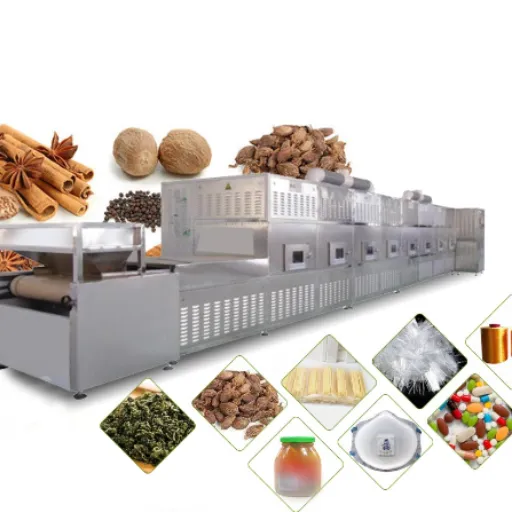
The cold spot is the single most important concept in microwave sterilization validation. It is the location within the product package that receives the minimum thermal treatment. If the cold spot achieves sufficient lethality, every other location in the package is also safe. If the cold spot fails, the entire batch fails, regardless of what happens elsewhere.
In microwave sterilization, cold spots are more complex than in conventional retort processing. Microwave heating is volumetric, meaning energy penetrates throughout the product rather than conducting from the outside in. However, electromagnetic field patterns create hot and cold zones that depend on product geometry, dielectric properties, moisture distribution, and packaging material. Edge heating, corner effects, and interference patterns can all create unexpected cold spots.
The standard approach to cold spot identification uses multiple temperature sensors distributed strategically through the package. Place sensors at the geometric center, at quarter-points along each axis, at corners, and at edges. Run replicate trials and compare time-temperature profiles. The sensor showing the lowest F0 value identifies the cold spot.
For continuous tunnel systems, also map cold spots across the conveyor width. Products near the conveyor edges may experience different field patterns than products in the center. Run width-wise mapping studies with packages placed at left edge, center, and right edge positions.
Validation for Different Food Applications
Validation requirements vary significantly depending on the food product, packaging format, and target market. Here are the key considerations for common applications.
Spice and Seasoning Powders
Spice powders present unique validation challenges due to low moisture content and particle size variation. Microwave energy couples more efficiently with moisture, so low-moisture products heat more slowly and less uniformly. Particle size affects bulk density, which influences both dielectric properties and heat transfer characteristics.
Validation for spice powders typically requires lower conveyor speeds and longer residence times to achieve target F0 values. Consider pre-conditioning steps that raise moisture content into the optimal range for microwave coupling. Document particle size distribution and bulk density as critical factors in your process filing.
Ready-to-Eat Meals
Ready-to-eat meals in multi-compartment trays represent one of the most complex validation scenarios. Each compartment may contain different components with different dielectric properties. Mashed potatoes heat differently from green beans, which heat differently from protein portions.
The FDA’s first MATS acceptance in 2009 was for homogeneous mashed potatoes in trays. The second acceptance in 2011 was for the more complex salmon fillets in Alfredo sauce, demonstrating that heterogeneous products can be validated but require more extensive mapping. Plan for compartment-specific cold spot identification and component-specific biological challenges.
Pet Food and Animal Feed
Pet food validation focuses on post-extrusion sterilization of kibble and treats. High fat content in many pet foods creates dielectric property challenges, as fats heat differently from carbohydrates and proteins. Post-extrusion moisture levels typically fall in the optimal range for microwave coupling, which simplifies validation compared to very dry products.
Salmonella reduction is the primary regulatory target for pet food sterilization. Validate your process for a 5-log reduction of Salmonella as the minimum standard, with many processors targeting higher lethality margins for export markets with stricter requirements.
Nutraceutical and Functional Powders
Nutraceutical powders often contain heat-sensitive active ingredients that limit maximum processing temperatures. This creates tension between sterility requirements and quality preservation. Microwave sterilization offers an advantage here because volumetric heating reduces overall thermal exposure time compared to conventional methods.
Validation for nutraceuticals must balance F0 targets with quality marker preservation. Document both microbial lethality and active ingredient stability in your validation package. Consider lower-temperature, longer-time processes that achieve sterility while preserving bioactive compounds.
Common Validation Mistakes and How to Avoid Them
After reviewing dozens of validation projects and consulting with process authorities, we see the same mistakes repeatedly. Here is how to avoid them.
Underestimating cold spot complexity. Teams often place too few sensors or assume the geometric center is the cold spot. Use at least 9 sensors per package for simple geometries and 16+ for complex products. Run replicate trials to confirm cold spot consistency.
Using inappropriate temperature sensors. Metal thermocouples in microwave fields create sparking, distorted heating, and safety hazards. Always use fiber-optic or wireless sensors designed for microwave environments. The initial cost difference is trivial compared to restarting a failed validation.
Insufficient replicate runs. A single successful validation run proves nothing about process consistency. Run at least three consecutive successful PQ runs. For regulatory filing, many process authorities recommend 5-10 replicate runs to demonstrate robustness.
Poor documentation practices. Handwritten temperature logs, inconsistent file naming, and missing calibration records destroy validation credibility. Implement a document control system before starting validation. Use electronic data logging with automatic timestamps and audit trails.
Ignoring product variability. Your validation must cover the full range of product variability: maximum and minimum moisture, thickest and thinnest packages, fastest and slowest conveyor speeds. Define worst-case conditions and validate those specifically.
Validation Timeline and Cost Estimates
Understanding realistic timelines and budgets helps you plan resources and set expectations with stakeholders.
Typical Validation Timeline
| Phase | Duration | Key Activities |
|---|---|---|
| Equipment qualification (IQ/OQ/PQ) | 2-4 weeks | Installation verification, operational testing, biological challenges |
| Product characterization | 1-2 weeks | Dielectric property measurement, moisture analysis, packaging testing |
| Heat penetration studies | 2-3 weeks | Sensor placement, cold spot mapping, F0 calculation |
| Biological indicator studies | 3-4 weeks | Inoculation, processing, incubation, result confirmation |
| Documentation and filing | 2-3 weeks | Report compilation, process authority review, FDA submission |
| Total | 9-14 weeks |
Cost Estimates
| Cost Category | Low Range | High Range |
|---|---|---|
| Temperature sensors and data loggers | $3,000 | $8,000 |
| Biological indicators and microbiological testing | $3,000 | $8,000 |
| Process authority consultation | $5,000 | $15,000 |
| Documentation and regulatory filing | $2,000 | $5,000 |
| Internal labor (engineer and QA time) | $2,000 | $7,000 |
| Total | $15,000 | $43,000 |
These estimates assume you own or have access to the microwave sterilization equipment. If you are validating before purchase, add costs for rental equipment or third-party validation facilities. Complex products with multiple components or heterogeneous formulations fall at the high end of the range. Simple, homogeneous products with single-component packaging fall at the low end.
Choosing Equipment That Simplifies Validation
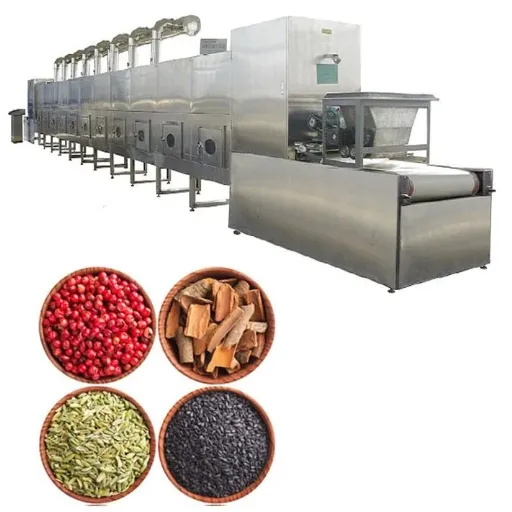
The right industrial microwave sterilizer can reduce validation complexity, shorten timelines, and lower costs. When evaluating equipment, prioritize these validation-friendly features.
PLC intelligent control systems provide precise, repeatable control over power output, temperature, and conveyor speed. Programmable logic controllers store process recipes, log production data automatically, and generate electronic batch records that satisfy 21 CFR Part 11 requirements. Look for systems with real-time temperature monitoring, automatic deviation alarms, and data export capabilities.
304 food-grade stainless steel construction ensures compliance with HACCP, FDA, and EU hygiene requirements. Smooth surfaces, welded seams, and sanitary design minimize contamination risk and simplify cleaning validation. Some applications requiring higher corrosion resistance may need 316L stainless steel.
Integrated data logging eliminates the manual transcription errors that plague validation documentation. Systems with built-in data historians automatically record power levels, cavity temperatures, water temperatures, conveyor speeds, and alarm events at configurable intervals. Export data in formats compatible with your document management system.
Customizable power and frequency configurations let you optimize the process for your specific product. 915 MHz systems provide deeper penetration (8-12 cm) for thick packages, while 2450 MHz systems offer higher power density for rapid surface heating. Some advanced systems support dual-frequency operation for complex products.
Consistent magnetron performance is essential for validation repeatability. Toshiba and Samsung magnetrons are industry standards for reliability and output stability. Ask your equipment supplier for magnetron output uniformity specifications and replacement schedules.
Shandong Loyal Industrial’s MSE series microwave sterilization equipment incorporates all of these validation-friendly features. Power configurations range from 10KW to 300KW+ with PLC intelligent control, 304 stainless steel construction, integrated temperature monitoring, and customizable batch or continuous tunnel configurations. Contact our engineering team to discuss validation-optimized equipment specifications for your application.
Validation Documentation Checklist
Use this checklist to ensure your validation package is complete before submission to your process authority or regulatory body.
- Equipment qualification records (IQ, OQ, PQ)
- Equipment calibration certificates (temperature sensors, power meters, control systems)
- Product characterization data (moisture, pH, fat content, dielectric properties)
- Packaging specifications and compatibility testing
- Heat penetration study protocol and raw time-temperature data
- Cold spot identification methodology and results
- F0 calculations with software validation documentation
- Biological indicator challenge study protocol and results
- Process parameter specifications with critical limits and operating ranges
- Standard operating procedures for routine production
- Process deviation handling procedures
- Employee training records for validation and production personnel
- Process authority letter and contact information
- Regulatory filing forms (FDA 2541 for low-acid canned foods)
- Electronic records compliance documentation (if applicable under 21 CFR Part 11)
Conclusion
Food microwave sterilization validation is rigorous, but it is absolutely achievable with the right protocol and equipment. The seven-step framework outlined in this guide — equipment qualification, product characterization, heat penetration studies, F0 determination, biological indicator challenges, process documentation, and regulatory filing — provides a clear pathway from equipment installation to commercial production.
The key takeaways are simple. Identify your cold spot with sufficient temperature sensors. Use fiber-optic probes, never metal thermocouples. Run enough replicate trials to prove consistency. Document everything. And work with a recognized process authority early in the project, not as an afterthought.
The food processing industry is moving toward microwave sterilization because it delivers better product quality, faster throughput, and lower energy consumption than conventional retort methods. The processors who master validation first will capture the competitive advantage. The processors who treat validation as an afterthought will face delays, rejections, and lost investment.
If you are evaluating industrial microwave sterilization equipment for your facility, request a consultation with our engineering team. We can review your product specifications, recommend equipment configurations that simplify validation, and provide technical documentation to support your qualification process. With over a decade of experience manufacturing microwave sterilization systems for global food processors, we understand both the equipment and the validation requirements that make your project successful.