
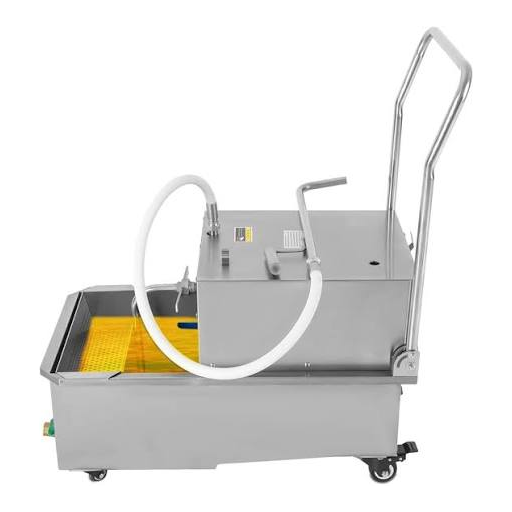
Fryer Oil Filtration: How to Extend Frying Oil Life

To extend frying oil life, filter the oil every day to remove food particles, control the frying temperature, keep moisture and soap out of the oil, and measure free fatty acids (FFA) and total polar materials (TPM) before you change it. Filtration removes the particles that speed up breakdown, while FFA and TPM tell you when the oil has genuinely reached the end of its life, so you change it on data instead of on a calendar.
Frying oil is one of the largest variable costs in a snack production line, yet most plants still change it the wrong way. Some dump it too early and pour money down the drain. Others stretch it too far and watch product color, taste, and shelf life quietly slip. Neither approach needs to happen.
Consider Dan, a production manager at a mid-sized potato chip plant. He changed frying oil every five days, no matter what, because that was the schedule he had always used. When he started testing the oil with a rapid TPM meter, he found the oil was still well under the discard limit on day five. Measuring before changing extended his oil to eight days. That single habit cut his plant’s annual oil spend by roughly a third.
In this guide, we will walk through why frying oil degrades, the filtration technologies that slow it down, and the FFA and TPM monitoring routine that tells you exactly when to change it. You will leave with a repeatable oil-life-extension schedule you can run on a batch or continuous fryer.
Key Takeaways
- Filter oil daily: this single habit can cut oil costs by up to a third and extend oil life by up to 50%.
- Oil dies through three reactions: oxidation, hydrolysis, and polymerization, all accelerated by food particles, heat, air, moisture, salt, and soap.
- Passive filtration removes particles; active filtration removes dissolved impurities and free fatty acids. Most plants only do the passive half and leave the bigger savings on the table.
- Change oil on data, not a calendar. Watch total polar materials (TPM) against a 24–27% discard limit and free fatty acids (FFA) against a 2.5% ceiling.
- The right fryer oil filtration system is designed into the line, not bolted on, and pays for itself through lower oil spend and more consistent product quality.
Why Frying Oil Degrades (and What It Costs)
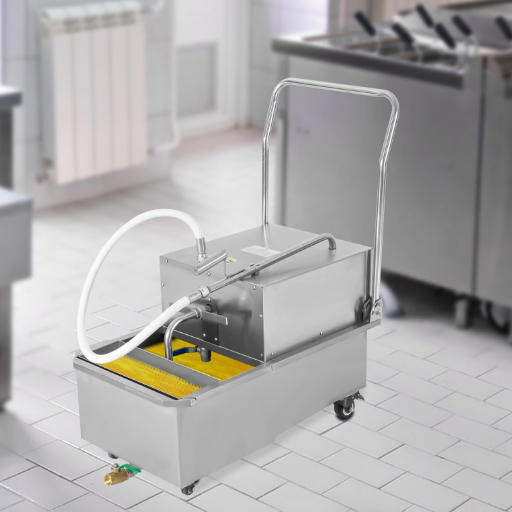
Every batch of fried food quietly attacks the oil it cooks in. Food particles break off, moisture steams out of the product, and high heat keeps the oil in a near-constant state of stress. Understanding the three reactions behind this is the first step to slowing it down.
Oxidation happens when oxygen meets hot oil. It produces compounds that smell and taste rancid. Polyunsaturated fats oxidize fastest, which is why oil selection matters as much as filtration.
Hydrolysis happens when moisture from the food splits oil molecules apart. This is what creates free fatty acids, or FFA. As FFA builds, the oil breaks down faster and faster, because FFA itself speeds up further hydrolysis.
Polymerization happens when heat fuses oil molecules into larger, stickier chains. The oil thickens, foams, and coats the food unevenly.
A useful way to remember the day-to-day enemies is the “CHAMSS” list used across the foodservice industry: Carbon, Heat, Air, Moisture, Salt, and Soap.
- Carbon, burned food particles that darken the oil and seed more breakdown.
- Heat, frying above the target temperature, or leaving vats hot and uncovered at idle.
- Air, oxygen exposure during storage and idle.
- Moisture, water from frozen or wet product falling into the vat.
- Salt, seasoning that drops into the oil and accelerates degradation.
- Soap, cleaning detergent residue left on fryer parts.
Each one shortens oil life and adds cost. Filtration directly attacks carbon and indirectly protects against the rest, because clean oil simply handles stress better.
The stakes are real. Industry guidance holds that filtering oil daily can cut oil costs by up to a third and extend oil life by up to 50%. For a plant running multiple fryers around the clock, that is not pocket change. It is a line item that moves the margin.
Want to see how continuous filtration fits a complete line? Explore our fried snack production line to see the fryer, filtration, and de-oiling working as one system.
Passive vs. Active Filtration: The Two Jobs of Oil Filtration
Most people think of oil filtration as one thing: removing the crumbs. That is only half the job.
Passive filtration removes solid particles. Fines from batter, flour dust, potato starch, and broken-off food bits float in the oil and act as tiny burners. They scorch, darken the oil, and give fried food a bitter edge. Removing them with a mesh, paper, drum, or centrifugal filter slows the whole breakdown cycle.
Active filtration removes dissolved impurities and free fatty acids. These are not particles you can catch in a screen. They are molecules dissolved in the oil itself. Adsorbents, such as synthetic magnesium silicate or activated powders, chemically bind to these impurities so they can be filtered out. This is what actually reclaims oil and pushes its life well past what particle removal alone can achieve.
Here is the pattern we see again and again: a plant installs a good particle filter, sees some improvement, and stops there. They never add the active-filtration stage, so they leave the larger share of the savings unrealized.
Think of it like maintaining a car. Passive filtration is changing the air filter. Active filtration is changing the oil. You need both, and they serve different purposes.
The right balance depends partly on the fryer type. A batch fryer that changes product frequently may lean on batch filtration between loads. A continuous fryer running one product all day benefits from continuous filtration that never interrupts the line. If you are deciding between the two, our batch fryer vs continuous fryer comparison walks through the trade-offs.
Filtration Methods Compared
Not all fryer oil filtration systems are equal. Here is how the common methods stack up.
| Filtration Method | What It Removes | Typical Particulate Size | Oil-Life Effect | Cost & Maintenance |
|---|---|---|---|---|
| Mesh / screen filter | Large food particles | 60–150 mesh | Modest; protects downstream filters | Low; clean or swap screens regularly |
| Paper filter | Fines and flour dust | ~10 microns | Good; “polishes” oil | Medium; disposable media |
| Drum / belt filter | Continuous fines removal | ~800 microns (drum) | Good; runs at full temperature | Medium; moving parts to service |
| Centrifugal separation | Dense particles, crumbs | Varies | Good; no media to replace | Medium; power and cleaning |
| Adsorbent pad / powder | Dissolved impurities, FFA | ~0.5 microns | High; reclaims oil | Higher; media and handling |
| Oil-water separation | Free water and sediment | N/A | Prevents hydrolysis and foaming | Medium; drain and inspect |
A few of these deserve a closer look.
Paper filters are the workhorse of small and mid-sized fryers. They catch the fine material that darkens oil and gives fried food a bitter note. The catch is media cost and the need to swap paper on schedule.
Drum and belt filters run continuously at full frying temperature, so they remove fines without ever cooling the oil or stopping the line. This is why continuous systems lean on them heavily.
Adsorbent-based filtration is where the biggest oil-life gains live. In one head-to-head test by filter-maker Filtrox, an adsorbent pad extended oil life to seven days versus four days for filter paper plus powder, while filtering down to 0.5 microns instead of 10. A synthetic magnesium silicate adsorbent posted even stronger numbers: a 91% reduction in free fatty acids, a 47% reduction in polar compounds, and up to 77% lower oil-management costs.
Industrial leaders push these gains further. Heat and Control pairs continuous drum and belt stages with fine paper and centrifugal polishing, while Oberlin Filter公司 runs high-pressure filtration down to a true 1 micron with reported oil savings around 30%.
The point is not that every plant needs the most expensive adsorbent system. The point is that a good fryer oil filtration setup uses the right combination: a coarse stage to catch particles, a fine stage to polish, and, where oil turnover is slow, an active stage to reclaim.
How to Measure Oil Quality: FFA, TPM & the Change Decision
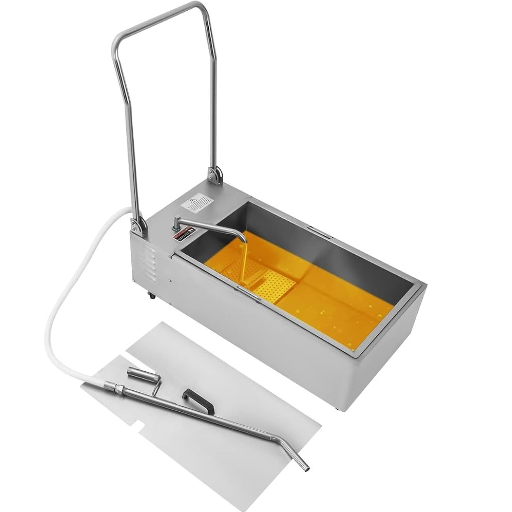
If there is one habit that pays for itself faster than any filter, it is measuring the oil instead of guessing.
Free fatty acids (FFA) measure hydrolysis. They rise as moisture splits the oil apart. Belgium sets a legal limit of 2.5% FFA for frying oil, and many quality programs watch FFA closely because it is a direct signal that the oil is degrading.
Total polar materials (TPM) measure all the breakdown products together, including FFA plus oxidized and polymerized compounds. This is the metric most regulators care about. Several European countries set TPM discard limits between 24% and 27%.
In practice, a rapid TPM tester gives you a number in seconds. Stick the probe in the hot oil, read the percentage, and compare it against your limit. When it approaches 24–27%, change the oil. Before that, keep filtering and topping up.
There is one caveat worth knowing. Rapid testers read the oil’s electrical properties, and water has a high dielectric constant. If moisture has gotten into the oil, a tester can read falsely high. A maintenance lead named Priya once dumped a full vat of good oil over a bad reading and learned this the hard way. If the number suddenly spikes, check for water in the system before you discard the batch.
Temperature is also a simple, observable signal. Oil with a smoke point that has fallen below roughly 170–200 °C is no longer fit for frying. If the oil smokes at a temperature it used to handle easily, it has degraded.
Ready to spec filtration for your fryer? Our engineering team sizes filtration stages, micron ratings, and monitoring points to your product and throughput. Contact us to discuss your line.
An Oil-Life-Extension Schedule for Batch & Continuous Fryers
Great oil management is boring, and that is the point. It is a handful of small habits repeated every day.
Daily
- Skim or filter the oil at least once a day, and every 12–18 batches in high-volume runs.
- Cover vats whenever the fryer idles, and drop the temperature to an idle setpoint.
- Knock off excess ice, water, and seasoning before product enters the vat.
- Log the FFA or TPM reading, and note the oil color and any foaming.
Weekly
- Run a full filtration pass and inspect filter media for wear or clogging.
- Check and drain any free water that has collected in the oil system.
- If you run high-FFA products like battered proteins, consider a weekly adsorbent treatment pass.
Monthly
- Deep-clean the oil tank, lines, and filtration housing to remove built-up carbon.
- Review oil turnover rate. Steady top-up with fresh oil is itself a form of oil management, because it dilutes breakdown products.
- Calibrate or cross-check your TPM meter against a lab test.
These habits sit beside, not instead of, regular equipment upkeep. For the machine side of the schedule, including boil-out cleaning and heating-element inspection, see our batch fryer maintenance checklist. And because heat is the other big oil-killer, the gas vs electric vs thermal oil heating comparison is worth reviewing alongside this schedule.
Building Oil Management Into the Line
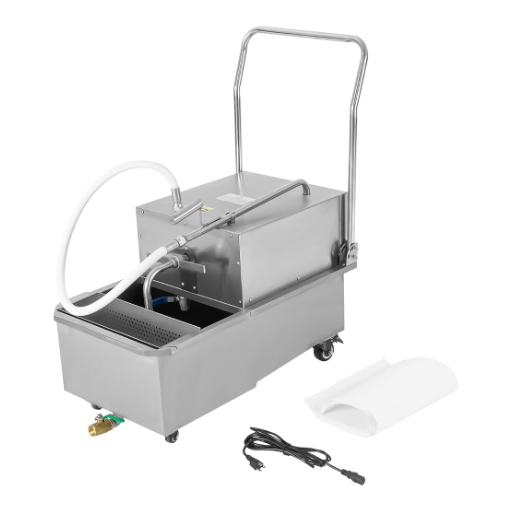
A filter bolted onto the side of a fryer can only do so much. The real savings come when oil management is designed into the line from the start.
Consider Miguel, who runs a pelleted-snack plant. He ran a fryer with a small paper filter and changed oil every six days. When they redesigned the line, they added a continuous filtration stage on the fryer, positioned the de-oiling step immediately after frying, and gave the flavoring drum a separate oil-free zone. The result was not one dramatic change but a system that worked together: cleaner oil, more even frying, and oil life that stretched from six days to eleven.
This is the argument for treating fryer oil filtration as part of the whole line rather than an accessory. The fryer, the filtration, and the de-oiling all affect each other. Poor de-oiling drops more oil and fines back into circulation. Poor filtration forces the fryer to fight degraded oil. When all three are engineered together, product quality rises and oil spend falls at the same time.
That integration is exactly what a turnkey line provides. Our continuous fryers run 200 kg to 1.0 ton per hour with ±1 °C multi-zone temperature control and continuous filtration that saves up to 20% on oil costs, all built on food-safe stainless steel. For a full look at how the pieces connect, see our fried snack production line and continuous fryer machine pages.
FAQ
How do you extend frying oil life?
Filter the oil daily to remove particles, control frying temperature, keep moisture and soap out, and monitor FFA and TPM so you change oil only when it is truly spent. These habits together can cut oil costs by up to a third.
How often should you filter fryer oil?
At least once a day, and every 12–18 batches in high-volume operations. Continuous systems filter constantly without stopping the line.
What causes frying oil to break down?
Three reactions: oxidation from air, hydrolysis from moisture, and polymerization from heat. They are accelerated by the CHAMSS enemies, carbon, heat, air, moisture, salt, and soap.
What is the difference between FFA and TPM?
Free fatty acids (FFA) measure hydrolysis, while total polar materials (TPM) measure all breakdown products combined. TPM is the more common discard metric, with limits around 24–27%.
What is the difference between passive and active oil filtration?
Passive filtration removes solid particles like crumbs and fines. Active filtration removes dissolved impurities and FFA using adsorbents. Active filtration delivers the larger oil-life gains.
When should you change frying oil?
Change it when TPM approaches 24–27%, when FFA nears 2.5%, or when the smoke point falls below roughly 170–200 °C, not on a fixed calendar.
Conclusion
Frying oil does not have to be a guessing game. The levers are simple and measurable.
Filter the oil every day to remove the particles that accelerate breakdown. Add an active-filtration stage to reclaim oil by removing dissolved impurities and free fatty acids. And measure FFA and TPM so you change oil on data, not on a calendar.
The payoff is direct: lower oil spend, longer oil life, and fried product with consistent color, taste, and shelf life. Whether you run a single batch fryer or a full continuous line, the same habits apply.
If you are ready to size filtration into your line rather than bolt it on afterward, our team can help you spec the right stages and monitoring points for your product. Request a consultation and we will help you turn your oil management into a measurable cost advantage.