

Recreate the Classic Hardee’s Biscuit and Gravy Recipe

Replicating the signature Hardee’s biscuit and gravy recipe at home requires mastering two distinct components: a high-rise buttermilk dough and a heavily seasoned, milk-based sausage roux. The fast-food standard relies on a specific flour-to-fat ratio so the baked biscuit holds up to the thick, peppery gravy without disintegrating. Getting this texture right demands strict temperature control during mixing and a brief, necessary resting period for the dough before it enters a hot oven.
Understanding the Fast-Food Breakfast Standard
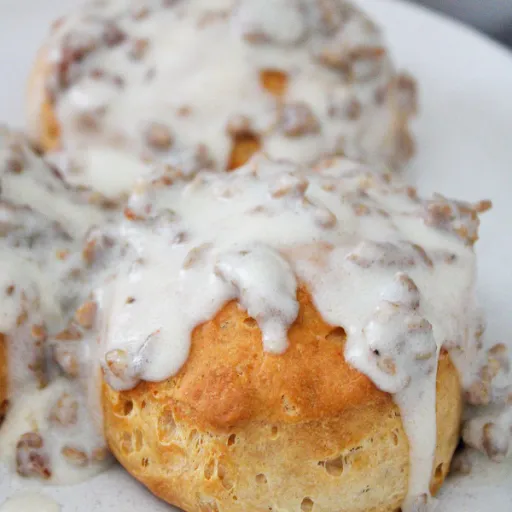
Most drive-thru morning menus prioritize speed over delicate textures. Biscuits sitting under commercial heat lamps tend to dry out quickly, and holding hot sausage gravy for hours often breaks the emulsion.
Yet, the appeal of the classic hardees biscuit and gravy recipe remains a towering benchmark in the industry. It comes down to structural integrity. They figured out how to bake a surprisingly high-fat buttermilk dough that withstands a heavy, peppery pour without instantly turning to mush. When formulating warming equipment for breakfast operations, engineers frequently study this specific mass-produced delicacy. If your kitchen setup can’t maintain that exact crust-to-crumb ratio, your morning service will struggle to compete.
4 essential rules for replicating the iconic scratch-made biscuit
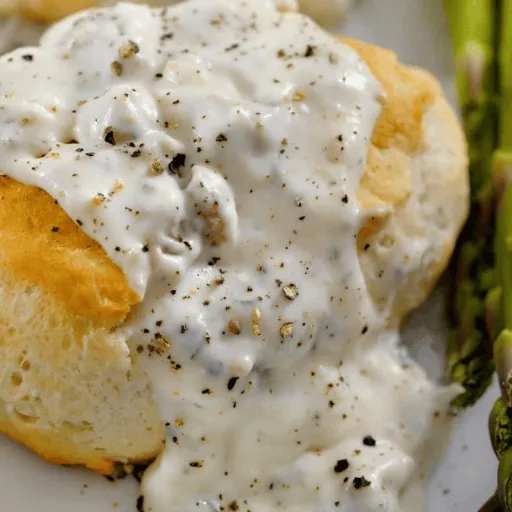
Nailing down a hardees biscuit and gravy recipe at scale isn’t just about throwing ingredients in a bowl. It requires strict adherence to temperature, hydration, handling, and bake times. Most operators fail because they treat biscuit dough like bread dough.
It’s fundamentally different.
You aren’t building gluten networks; you’re stacking fat layers. If you want that signature towering rise and golden crust that holds up under a heavy ladle of sausage gravy, you have to control the environment before you even touch the flour.
Flour selection and protein content
Commercial kitchens often rely on heavily bleached, low-protein soft winter wheat flours. Typical all-purpose flour sits around 10% to 11.7% protein, which is far too high for a tender crumb. You need something closer to 8.5%.
When protein levels creep up, the resulting dough tends to fight back during rolling, shrinking in the pan and baking into dense hockey pucks. If you are trying to replicate the fast-food standard using standard grocery store all-purpose flour, you will likely need to cut it with cornstarch or pastry flour to dilute that protein structure. Otherwise, the biscuits simply won’t yield that soft, pull-apart texture.
The buttermilk activation process
Cold, acidic liquid is the only thing standing between you and a flat biscuit. The lactic acid in real cultured buttermilk reacts violently with baking soda the second they meet, creating the initial lift.
But temperature matters just as much as acidity. If your buttermilk rests on the prep counter and warms to even 55 degrees, it starts melting the fat pockets suspended in your dry mix before the pan ever hits the oven. Keep it refrigerated until the exact moment of hydration.
Perfecting the Sausage Gravy
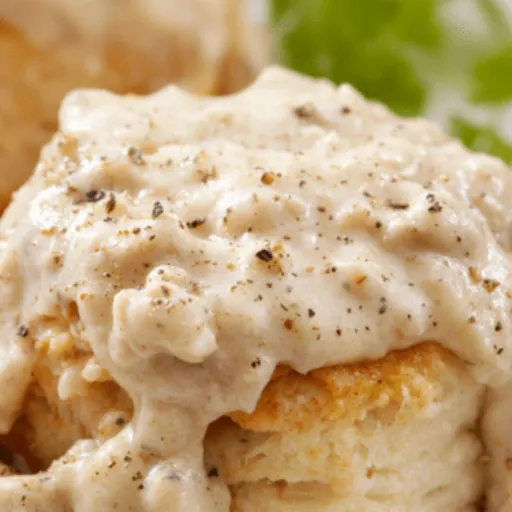
The true test of a hardees biscuit and gravy recipe lies in the viscosity of the pour. Gravy shouldn’t slide off the bread like water, nor should it sit on top like a dense pudding. Hitting that exact sweet spot requires understanding how rendered fat interacts with starches under continuous heat. It’s a delicate balancing act of emulsification.
Searing the meat for maximum flavor
Drop a cold block of sausage into a cold pan, and you’ll just steam it. To capture that robust, savory foundation, the meat needs to hit a hot surface—ideally a flat top griddle or a heavy cast-iron skillet preheated to around 375°F. You want aggressive browning. Let it sit undisturbed for a minute before breaking it apart. That caramelization is where the flavor lives, and rendering the fat out completely is non-negotiable since it acts as the base for your thickener.
Building a stable flour roux
Once the meat is browned, the remaining grease dictates your next move. A common mistake in busy kitchens is dumping the flour in and immediately adding liquids. You have to cook the raw flour taste out. Stir it aggressively into the rendered fat. If the pan looks dry, you may need a small pat of butter; if it’s swimming, drain a fraction off. Let that paste toast over medium heat for roughly 90 seconds until it smells faintly nutty. Rushing this stage often results in a grainy, unstable gravy that separates when held in a warmer.
Milk temperature control during reduction
Pouring ice-cold milk directly into a hot roux usually shocks the starches, causing immediate clumping. For a silky consistency, temper the reaction by pouring in a slow, steady stream of liquid that has been gently warmed to about 110 degrees. Whisk constantly as the mixture comes to a low simmer. The gravy will continue to thicken significantly as it cools, so pull it off the heat when it looks just slightly thinner than your desired final texture.
How do commercial restaurants manage high-volume gravy production?
Scaling up a delicate sauce is chaotic. When a busy franchise location serves 340 customers before 9 AM, whisking individual pans of roux isn’t just impractical—it’s impossible.
The secret to mass-producing the signature profile of a hardees biscuit and gravy recipe without ruining it lies in continuous agitation and indirect heat. Kitchen managers know that milk proteins burn aggressively under direct flames. If a line cook turns their back for ninety seconds to drop a basket of hash browns, a 4.5-gallon batch of gravy can instantly scorch at the base.
To survive the rush, high-volume operators abandon the skillet entirely. It becomes a game of maintaining the fragile emulsion at exactly 155 degrees for hours so the rendered fats don’t split and pool unappealingly on the surface.
Steam-jacketed kettles vs. stovetop batching
Stovetop batching is fine for a diner doing forty covers. You push a thick-bottomed stockpot over two burners, hoping the heat distributes somewhat evenly.
It rarely does.
Enter the steam-jacketed kettle. Think of it as a massive, industrial double boiler. Instead of a raw flame hitting thin metal, pressurized steam circulates within the kettle’s dual walls, providing incredibly uniform heat from all sides.
This changes everything for breakfast service. You can incorporate 15 pounds of cooked sausage and gallons of milk directly into the vat. The gentle, surrounding heat prevents the dreaded flour clumps from clinging to dead spots, resulting in a consistently smooth product that won’t break down before noon.
Assembly and Plating

Splitting a biscuit straight from the oven usually crushes its delicate crumb. It needs a 4 to 6-minute rest.
In high-volume kitchens, line cooks tend to tear the dough open by hand rather than cleanly slicing it. This leaves a jagged, craggy surface.
That uneven texture is actually a structural requirement. It creates deep ridges that grip a heavy 5.5-ounce pour of gravy, stopping the sauce from immediately sliding into the corners of the takeout container.
FAQ Section
Q: What type of sausage is closest to the one used by Hardee’s?
A: Hardee’s utilizes a classic, mild pork breakfast sausage heavily seasoned with black pepper and sage. To get that authentic fast-food flavor profile at home, look for standard bulk pork sausage—Jimmy Dean regular or original is a very close match. Avoid maple or hot varieties, as those sugars and chili flakes will completely alter the foundational taste of the gravy. If the meat looks too lean in the pan, you might need to add a spoonful of butter to build a proper roux.
Q: Can I make the sausage gravy ahead of time and reheat it?
A: You absolutely can, though the texture changes significantly in the fridge. As the flour and pork fat cool, the gravy solidifies into a stiff paste. When you’re ready to serve, scoop it into a wide skillet over medium-low heat. You will definitely need to whisk in a few splashes of warm milk or water to loosen the emulsion back to its original consistency. Microwave reheating often leads to broken, greasy pockets, so stick to the stovetop for the best results.
Q: Why did my white gravy turn out lumpy instead of smooth?
A: Lumps usually form when cold milk hits hot flour too quickly, causing the starches to instantly seize. It’s a common trap. To prevent this, cook your flour and sausage grease together for at least a minute until it forms a smooth paste. Then, stream in your liquid slowly while whisking aggressively. If you already have lumps, don’t panic. You can run the gravy through a mesh strainer or hit it with an immersion blender before folding the cooked sausage back in.
Q: Do I need self-rising flour to get the right biscuit height?
A: Not necessarily, but it provides a massive shortcut. Self-rising flour already contains baking powder and salt evenly distributed throughout the wheat, ensuring consistent lift. Fast-food chains rely on heavily guarded proprietary mixes that function similarly. If you only have all-purpose flour on hand, you can mimic the effect by whisking in 1.5 teaspoons of baking powder and a quarter teaspoon of salt for every cup of flour. Just make sure your leavening agents are fresh, or the dough will sit flat.
Q: How long should the biscuit dough rest before baking?
A: Fast-food lines bake continuously, so resting isn’t a luxury they typically afford. However, in a home kitchen, a brief chill makes a huge difference. Tossing the punched-out biscuits into the fridge for about 15 minutes before hitting the oven allows the gluten strands to relax. More importantly, it firms up the butter or shortening bits that softened during kneading. Cold fat hitting a hot oven is exactly what creates those rapid bursts of steam, pushing the dough upward into distinct, flaky layers.
Q: Can I substitute regular milk and vinegar for real buttermilk?
A: It works in a pinch, but it won’t yield a perfect replica. Stirring a tablespoon of white vinegar or lemon juice into whole milk creates the necessary acidity to activate your baking soda. However, this homemade clabbered milk lacks the thick, viscous texture and complex tang of real cultured buttermilk. The resulting biscuit tends to be slightly less tender and missing that distinct dairy richness. If you’re chasing that true Hardee’s texture, springing for the real carton is worth the trip to the store.