

From Pasture to Pantry: The Engineering Behind How Condensed Milk is Made

Understanding how condensed milk is made requires looking at the intersection of thermal physics and preservative chemistry. Unlike simple reduction, the industrial process relies on controlled vacuum evaporation to remove roughly 60% of the water content at low temperatures. This method prevents scorching while concentrating milk solids. When combined with precise sugar saturation and lactose “seeding,” the result is a shelf-stable, high-viscosity dairy product that maintains a consistent texture without the need for refrigeration.
The Core Science: Concentration through Evaporation

At its biological baseline, raw milk is roughly 87.4% water. To understand how is condensed milk made, you have to view the process as a strategic war against that liquid volume. The goal is to remove the water without damaging the delicate proteins and sugars that give milk its nutritional value.
In a kitchen, you might simply boil a pot of milk, but this leads to Maillard browning and a “cooked” flavor that ruins the profile of a commercial product. Industry observation shows that the secret lies in manipulating vapor pressure. By lowering the atmospheric pressure inside a sealed chamber, the boiling point of the milk drops significantly.
Instead of bubbling at 100°C, the milk may reach a “boil” at just 45°C or 52°C. This low-temperature evaporation preserves the natural white color and prevents the proteins from denaturing prematurely. A realistic scenario involves the milk cascading down heated tubes in a “falling film” evaporator, where it loses approximately 60.5% of its water content in mere seconds. This rapid moisture loss creates a dense, concentrated base that serves as the foundation for the final syrupy texture.
Standardizing the Raw Intake

Milk is a biological product, which means its composition fluctuates based on the season, the herd’s diet, and even the time of day it was collected. You cannot build a consistent industrial process on such a moving target. Before a single drop of water is removed, the “raw intake” must be brought to a strict baseline. This stage is essentially the calibration of the dairy. If the incoming milk is too lean or too rich, the final viscosity of the condensed product will be off, leading to a batch that is either watery or unpleasantly thick.
Fat and Solid-Not-Fat (SNF) Adjustment
Industry observation confirms that the ratio between milk fat and solids-not-fat (SNF) is the primary driver of quality. Standardized sweetened condensed milk often targets a specific ratio, such as 8.1% fat to 27.9% total milk solids. To hit these marks, technicians use centrifugal separators to either skim off excess cream or add back anhydrous milk fat.
A practical example of this precision occurs when the SNF is low; the producer might incorporate skim milk powder or utilize ultrafiltration to concentrate the proteins. Without this mechanical balancing, the “sandiness” associated with poor lactose crystallization becomes a nearly inevitable risk later in the pipeline.
Thermal Pre-heating and Pathogen Control
Once the chemistry is balanced, the milk enters a pre-heating phase. This isn’t just about killing bacteria—though safety is paramount—it’s about “heat-clotting stability.” By raising the temperature to roughly 82.5°C to 93.4°C for several minutes, manufacturers denature certain whey proteins.
This controlled thermal shock ensures the milk won’t coagulate or form lumps when it hits the high-intensity environment of the vacuum evaporators. A realistic scenario involves a sudden temperature drop in the pre-heater, which can lead to “age thickening” in the cans six months down the line. Cautious monitoring at this stage prevents the proteins from becoming too reactive during storage.
Why does condensed milk need so much sugar?
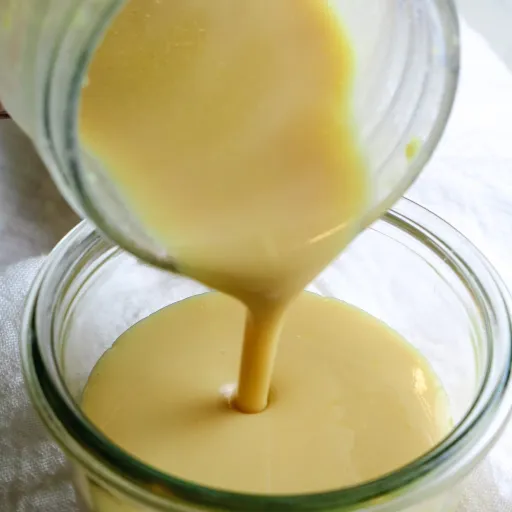
The sugar in condensed milk is not merely a sweetener; it is a structural and preservative necessity. While evaporated milk relies on high-heat sterilization to stay safe in a can, sweetened condensed milk uses a process called osmotic pressure. By saturating the liquid with sucrose—often at concentrations between 43.5% and 45% of the final total weight—you create an environment where most microorganisms simply cannot survive.
Industry observation suggests that this “sugar ratio” is the fine line between shelf stability and spoilage. In a realistic scenario, if the sugar content drops even slightly below the required threshold, the water activity (aw) becomes high enough for yeasts or molds to flourish. The sugar effectively “binds” the water molecules, making them unavailable for bacterial growth.
Beyond safety, sugar dictates the iconic mouthfeel. As the sucrose dissolves into the milk’s concentrated proteins, it increases the viscosity significantly. A practical example of this is the way the liquid resists pouring compared to standard cream. Without this heavy dose of sugar, the milk would lack its characteristic tackiness and would require much more aggressive thermal processing, which would likely lead to undesirable curdling or a burnt, over-caramelized flavor profile.
The Industrial Evaporation Sequence
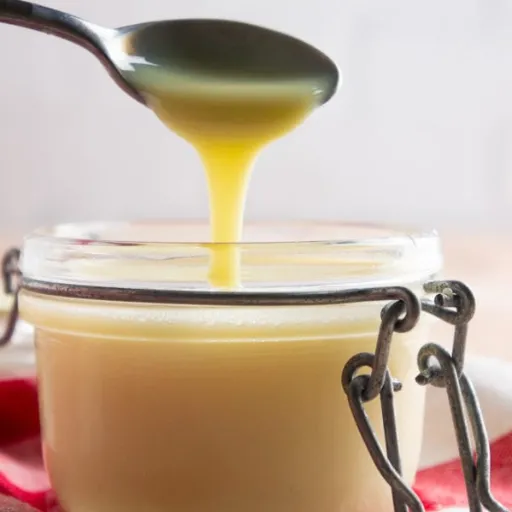
The transformation of liquid milk into a thick, shelf-stable concentrate happens within the evaporator—a massive, multi-stage machine designed to strip away water with surgical precision. Unlike the slow reduction of a sauce on a kitchen stove, industrial evaporation is a high-speed, continuous flow process. The milk travels through a series of “effects,” or chambers, where the water is flashed off in a matter of seconds.
Industry observation suggests that the efficiency of this sequence depends on the “delta T”—the temperature difference between the heating steam and the boiling milk. If the steam is too hot, the milk bakes onto the equipment; if it’s too cool, the throughput slows to a crawl. A realistic scenario involves a three-effect evaporator where the product is incrementally thickened, moving from one chamber to the next as the solids content climbs from a baseline of around 12% to the target 72% total solids.
Vacuum Pan Technology: Boiling Below 100°C
The physics of how is condensed milk made relies on the fact that the boiling point of any liquid is a slave to atmospheric pressure. In the vacuum pan, we artificially drop the pressure to a near-void. This allows the milk to boil at temperatures as low as 46.8°C or 53.2°C.
By avoiding the 100°C threshold, we bypass the violent turbulence of a standard boil, which often causes foaming and product loss. A practical example of this technology’s value is the preservation of the milk’s natural enzymatic profile. Because the heat remains moderate, the vitamins and minerals stay intact, and the carrier proteins don’t “cook” into a rubbery texture. It is a gentle extraction of water that respects the biological limits of the dairy.
Maintaining Color Integrity During Moisture Loss
Color is the silent indicator of quality. In high-heat environments, the milk’s lactose reacts with its proteins—a phenomenon known as the Maillard reaction. This can turn a batch an unappealing muddy brown. Cautious control of the residence time (the duration the milk spent inside the machine) is the primary defense against this discoloration.
By utilizing thin-film evaporation, where the milk exists as a microscopic layer against the heated wall, we maximize the surface area for evaporation while minimizing heat exposure. This ensures the final product retains its iconic creamy, off-white hue rather than darkening into a caramel-like shade before it even hits the canning line.
Precision Cooling and the “Seeding” Phase
Once the milk leaves the evaporator, it is a hot, supersaturated solution. If you simply poured this into a can and let it cool naturally, the result would be a textural disaster. As the temperature drops, the liquid’s ability to hold dissolved lactose decreases sharply. Without intervention, the lactose molecules would find each other and form large, jagged shards.
This is where the cooling curve becomes a critical piece of engineering. Industry observation suggests that the cooling must be aggressive but highly controlled, typically utilizing a flash cooler or a vacuum-jacketed tank to bring the product down to approximately 30°C. This specific temperature is the “nucleation window,” where the syrup is thick enough to suspend particles but fluid enough to allow for uniform mixing.
Preventing Sandiness with Lactose Crystals
“Sandiness” is the industry term for condensed milk that feels gritty on the tongue. This happens when lactose crystals grow larger than 10 to 12 microns—the threshold at which the human palate can detect individual grains. To prevent this, manufacturers employ a process called “seeding.”
A practical example involves adding a microscopic amount of finely pulverized lactose—essentially a “seed” dust—to the cooling tank. In a realistic scenario, adding just 0.05% of this seed powder provides millions of tiny nuclei for the dissolved lactose to latch onto. Instead of a few massive crystals forming, you get billions of microscopic ones. Because these crystals are so small (often under 8 microns), they remain imperceptible. Cautious management of the agitation speed during this 45-minute window ensures the crystals stay dispersed, resulting in the velvety, glass-smooth finish that consumers expect.
5 Critical Quality Control Checks in Modern Canning

Canning is the final barrier between a sterile production line and a shelf-stable retail product. In high-speed dairy facilities, the margin for error is measured in microns. Because sweetened condensed milk relies on a delicate balance of sugar saturation rather than retort sterilization, any lapse in the sealing process is an invitation for localized spoilage.
Double Seam Integrity
The most vital check is the mechanical measurement of the double seam. Technicians often pull random cans off the line every 30 to 60 minutes for a destructive test. They use a seam micrometer to check the “actual overlap,” which should ideally exceed 1.15 mm. If the seam is loose, oxygen can enter, causing the fats to oxidize.
Vacuum Level Monitoring
Every can must have a consistent internal vacuum. A realistic scenario involves an acoustic “tapper” on the line—an automated sensor that strikes the lid and listens to the pitch. A flat or dull sound indicates a “leaker” with insufficient vacuum, triggering an immediate air-jet rejection from the conveyor.
Headspace Verification
Maintaining a precise gap between the product and the lid—usually around 6.4 mm—is essential for expansion during temperature fluctuations. Industry observation suggests that overfilling can lead to “flippers,” where the lid bulges out, even if the contents are safe.
Refractive Index Testing
Before the filler nozzle opens, the batch is checked via a refractometer to verify the Brix level (sugar content). A reading of 72.8% total solids is a common practical example of the sweet spot for stability.
Incubation Sampling
Finally, a subset of the pallet is placed in an incubation room at 37°C for several days. This accelerated aging test reveals any latent microbial activity before the shipment leaves the dock.
FAQ Section
Q: Is condensed milk just boiled down regular milk?
Not exactly. While both involve reducing water, boiling milk on a stove causes proteins to scorch and sugars to caramelize, resulting in a dark, burnt-tasting liquid. The industrial process uses vacuum evaporation to remove moisture at much lower temperatures, roughly 50°C to 55°C. This preserves the creamy color and delicate flavor. Furthermore, “condensed milk” almost always implies the addition of a high volume of sugar, which isn’t present in simple boiled milk.
Q: What is the difference between evaporated and condensed milk?
The primary distinction lies in the sugar content and the preservation method. Evaporated milk is unsweetened and must be sterilized at high temperatures inside the can to prevent spoilage. Sweetened condensed milk, however, contains roughly 45% sugar. This high sugar concentration acts as a natural preservative, meaning the product doesn’t require the same aggressive heat sterilization. This results in a thicker, syrupy consistency and a much longer shelf life once the container is opened.
Q: How is the shelf life extended without refrigeration?
The combination of sugar saturation and low water activity makes the environment inhospitable to bacteria. By removing 60% of the water and replacing it with sucrose, manufacturers create high osmotic pressure that effectively dehydrates any potential microbes. Additionally, the canning process involves creating a vacuum seal and precise headspace, which prevents oxygen from entering and oxidizing the fats. This dual-action approach allows the sealed cans to remain stable at room temperature for years.
Q: Can you make a dairy-free version using the same industrial process?
Yes, the fundamental principles of vacuum evaporation apply to plant-based liquids like coconut, oat, or soy milk. The challenge lies in the protein structure; plant proteins behave differently under heat and sugar saturation. Manufacturers often add emulsifiers or stabilizers to prevent the oil and water from separating during the concentration phase. A practical example is coconut condensed milk, which requires careful homogenization to ensure the high fat content remains integrated with the added sugar syrup.
Q: Why is vacuum pressure used instead of open-air boiling?
Vacuum pressure allows the milk to “boil” at temperatures that won’t damage its chemical integrity. In a standard atmosphere, milk boils at 100°C, which triggers the Maillard reaction—turning the milk brown and grainy. By dropping the internal pressure of the evaporator, the boiling point falls significantly. This industry observation proves vital for maintaining a smooth texture and a bright, off-white appearance while significantly reducing the energy required to drive off the water vapor.