How to Choose Industrial Food Processing Equipment: A 7-Step Buyer’s Framework

To choose industrial food processing equipment, start by defining your product and throughput requirements. Next, map machines to each production stage. Set material and compliance standards, and document everything in a User Requirement Specification (URS). Finally, calculate total cost of ownership, score suppliers objectively, and validate performance through factory acceptance testing before shipment. This systems approach prevents the costly mistake of buying machines in isolation.
Last year, a snack co-manufacturer in Southeast Asia installed a high-capacity twin-screw extruder to expand output. Within three months, the line was producing 30% below its rated capacity.
The extruder was not the problem. The cooling conveyor and flavoring drum downstream were undersized, so operators had to slow the entire line. That one mismatch cost six months of lost margin and a second capital outlay.
If you are planning a new line or upgrading an existing one, you have probably seen the same problem: equipment catalogs list impressive specs, but they rarely show how machines connect in a real factory. This guide gives you a practical framework to choose industrial food processing equipment as an integrated system, not a collection of parts. You will learn how to document requirements, compare suppliers, control hidden costs, and validate performance before you commit.
Key Takeaways
- Start with product, throughput, and growth plans before comparing machines; the wrong capacity target causes years of inefficiency.
- Map every machine to its place in the production flow to avoid bottlenecks between stages.
- Treat food-grade stainless steel, surface finish, and certifications such as CE, FDA, and 3-A as minimum requirements, not upgrades.
- A written URS keeps procurement aligned with engineering and protects you from scope drift.
- Purchase price is typically only 20–30% of ten-year cost; energy, maintenance, and downtime dominate total cost of ownership.
- Use a weighted vendor scorecard and factory acceptance testing to compare suppliers on facts rather than sales claims.
How to Choose Industrial Food Processing Equipment: A 7-Step Overview
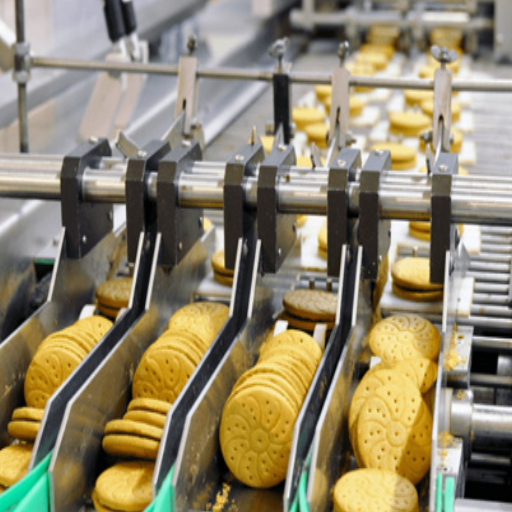
Choosing industrial food processing equipment is a systems engineering decision. The best extruder, fryer, or mixer in the world will underperform if it does not match your product, connect cleanly to upstream and downstream equipment, and comply with your target market’s regulations.
The global food processing equipment market is projected to reach approximately USD 60 billion to USD 68 billion in 2026, growing at roughly 4–6% annually, according to Precedence Research and other industry reports. That growth means more choices, but also more noise. A structured process cuts through the noise.
The seven steps below are designed for plant managers, procurement teams, and entrepreneurs who need equipment that works on day one and still works reliably ten years later.
Step 1: Define Your Product, Process, and Production Goals
Every equipment decision starts with what you are making, how much of it, and how fast you plan to grow. Skipping this step is the single most common cause of oversizing or undersizing.
Product Specifications
Write down the physical and chemical properties that affect machine selection:
- Moisture content, pH, and fat content, acidic or salty products often need 316/316L stainless steel instead of 304.
- Particle size and temperature sensitivity, these determine cutter speed, mixer shear, and thermal profile.
- Viscosity and flow behavior, critical for pumps, fillers, and heat exchangers.
- Allergen status, equipment for allergen-containing products may need dedicated lines or validated cleanability.
Batch vs. Continuous Operation
Batch equipment is flexible and easier to clean between recipes. Continuous equipment delivers higher throughput and more consistent quality at scale. Most growing manufacturers move from batch to continuous as volume rises.
Target Throughput and Growth Plans
Quote capacity in kilograms or units per hour, not per day. A machine rated for “8 tons per day” may only achieve that on a 24-hour shift. Be explicit about peak demand, planned SKUs, and changeover frequency. If you expect to double output in three years, specify modular or expandable equipment now.
Mini-story: When Priya, a plant engineer in India, selected a pet food extruder for a new kibble line, she specified 500 kg/hour based on current sales. Her marketing team planned a retail launch eighteen months later. That launch would push demand to 900 kg/hour. Because she had asked about expansion during the first supplier call, she chose a modular extruder with an upgrade path rather than replacing the machine entirely.
CTA: Want help matching capacity to your growth plan? Explore our food production line solutions and share your targets with our engineering team for a tailored proposal.
Step 2: Map Equipment to Each Production Stage
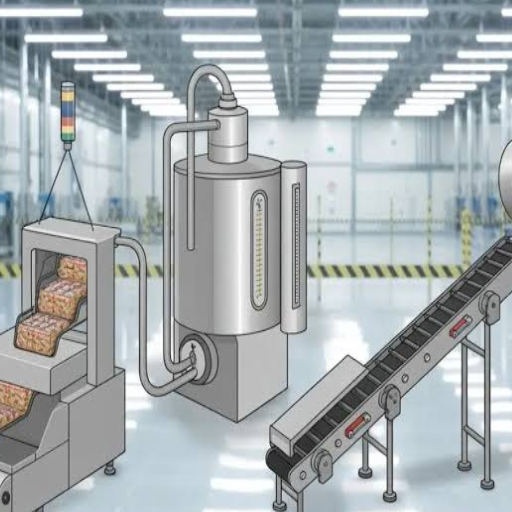
A production line is a sequence of dependent operations. Choosing equipment without mapping the full flow is like buying train cars without checking whether they couple together.
Receiving and Material Handling
This stage includes silos, tanks, cold storage, pallet handling, and conveyors. It is easy to underestimate. If your raw material arrives in 25 kg bags but your mixer accepts pneumatic feed, someone will be dumping bags all day.
Preparation and Cleaning
Washers, peelers, graders, optical sorters, and metal detectors bring raw materials into a consistent, contamination-free state. Inconsistent preparation upstream forces downstream equipment to compensate, increasing waste and wear.
Size Reduction, Mixing, and Forming
Slicers, grinders, mills, extruders, pelletizers, and molders transform ingredients into the desired shape and texture. Food extrusion is central to snacks, cereals, pet food, and textured proteins. If your product relies on extrusion, evaluate the full extrusion system, not just the extruder barrel. Shandong Loyal’s food extrusion solutions cover snack pellets, fried snacks, pet food, and specialty starch applications.
Thermal Processing and Drying
Pasteurizers, ovens, fryers, dryers, and industrial microwave systems change the microbiological and physical state of food. Match thermal capacity to the rest of the line. A fast fryer with a slow cooler creates a pile of soggy product.
Packaging and End-of-Line
Fillers, sealers, flow wrappers, cartoners, labelers, and palletizers must keep pace with upstream output. A packaging machine rated for 120 packs per minute sounds fast, but if your product weighs 2 kg, check whether that rating still applies.
Quality Control and Traceability
Metal detectors, X-ray systems, checkweighers, and vision systems protect consumers and brands. Build them into the line layout from the start, not as afterthoughts.
Mini-story: The snack co-manufacturer we mentioned earlier ran a fried snack line with a new twin-screw extruder. They thought the extruder was the bottleneck. A line mapping exercise revealed that the cooling conveyor could only handle 60% of the extruder’s peak output. Replacing the cooling section cost far less than replacing the extruder and restored the rated throughput within weeks.
Step 3: Set Technical and Hygiene Requirements
Once you know what the line must do, translate that into specifications suppliers can quote against.
Capacity, Speed, and Yield Targets
Specify rated throughput, acceptable downtime, and target overall equipment effectiveness (OEE). A well-run food line often targets OEE of 80–85% or higher. Ask suppliers to quote guaranteed yields and throughput based on your recipe, not generic test data.
Food-Grade Materials: 304 vs. 316 Stainless Steel
For most dry, low-acid products, 304 or 304L stainless steel is sufficient. For acidic, salty, or chloride-exposed products such as sauces, seafood, or dairy, 316 or 316L is usually necessary. The wrong grade leads to corrosion, contamination, and premature replacement.
Surface Finish and Cleanability Standards
Food-contact surfaces typically need a surface roughness of Ra ≤ 0.8 μm; high-hygiene applications such as dairy often require Ra ≤ 0.4 μm. Look for smooth welds, radiused corners, self-draining designs, and minimal crevices. Equipment should support clean-in-place (CIP) or be easy to disassemble for cleaning.
CIP, Washdown, and Allergen Control
If you run multiple allergens or products, cleaning time and validation become production constraints. Ask suppliers for spray coverage maps, drainability evidence, and validated cleaning procedures. A machine that looks clean is not the same as a machine that is validated clean.
CTA: Need equipment engineered for hygienic design from the start? Contact our team to review your material and compliance requirements.
Step 4: Build a User Requirement Specification (URS)
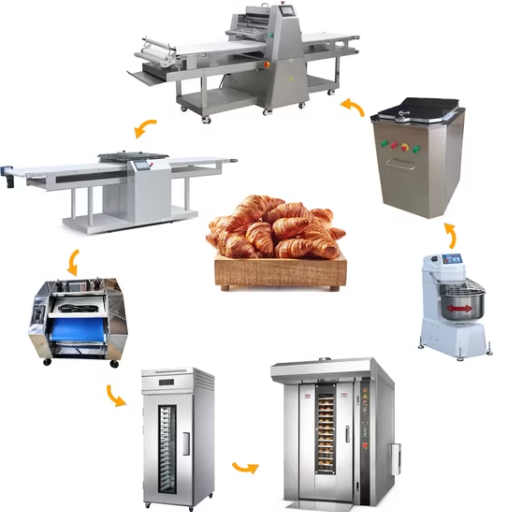
A User Requirement Specification (URS) is a formal document that states what the equipment must do. It does not dictate how the supplier must engineer it. It becomes the foundation for quotations, design reviews, factory acceptance testing, and contract terms.
What a URS Covers
A good URS for food processing equipment includes:
- Scope and intended products
- Performance requirements: capacity, speed, yield, changeover time
- Material of construction: stainless steel grade, surface finish, seal materials
- Operational requirements: batch or continuous, automation level, recipe storage
- Hygiene and cleaning: CIP compatibility, drainability, disassembly requirements
- Regulatory and safety: CE, FDA, USDA, 3-A, EHEDG, ISO 14159
- Documentation: manuals, drawings, certificates, calibration records
- Training, spare parts, warranty, and after-sales support
- Acceptance criteria for FAT and SAT
Sample URS Table
| ID | Requirement | Critical |
|---|---|---|
| URS-001 | Minimum throughput of 500 kg/hour for Recipe X | Yes |
| URS-002 | All product-contact surfaces: 316L stainless steel, Ra ≤ 0.8 μm | Yes |
| URS-003 | CIP-compatible with no inaccessible dead legs | Yes |
| URS-004 | Recipe storage for at least 50 formulations | No |
| URS-005 | OEE ≥ 85% during normal production | Yes |
Critical vs. Nice-to-Have Requirements
Label each requirement as critical, major, or minor. Critical requirements are deal-breakers. Major requirements affect value but may be negotiable. Minor requirements are desirable but not essential. This labeling prevents suppliers from treating every wish as a cost adder.
Mini-story: David, a procurement lead for a pet food facility in Europe, included a critical requirement in his URS that all product-contact surfaces be 316L. One shortlisted supplier proposed 304 with a price 12% lower. Because the requirement was labeled critical, the supplier was disqualified early, saving David’s team weeks of rework and a potential corrosion failure in production.
Step 5: Calculate Total Cost of Ownership (TCO)
The sticker price is the smallest part of the decision. According to Velec Systems, the initial purchase price of food processing machinery typically represents only 20–30% of total cost over a decade.
Upfront Cost vs. Lifetime Cost
Upfront cost includes the machine, freight, customs duties, insurance, site preparation, installation, commissioning, and initial spare parts. Lifetime cost includes energy, water, labor, maintenance, spare parts, downtime, and eventual disposal or resale.
Energy, Maintenance, and Downtime
Energy-efficient equipment can reduce utility costs by up to 30%. Preventive maintenance programs can reduce breakdowns by roughly 25% and often deliver 3:1 to 5:1 ROI. Downtime in a mid-sized plant can cost 5,000–5,000–10,000 per hour; full-line downtime can reach 50,000–50,000–300,000 per hour.
Hidden Costs to Budget For
- Shipping, customs, and inland freight
- Utility upgrades: power, water, compressed air, drainage
- Foundation, platform, and facility modifications
- Initial spare parts and wear components
- Operator and maintenance training
- Regulatory certification and third-party audits
- First-year consumables and ramp-up losses
A useful rule of thumb: year-one total cost is often 115–125% of the equipment invoice. Five-year TCO is typically 145–165% of the purchase price.
CTA: Looking for a transparent cost breakdown for your project? Request a detailed equipment quote that includes installation, commissioning, and first-year spare parts.
Step 6: Evaluate Suppliers with a Weighted Scorecard
Supplier selection is where procurement and engineering must agree. A weighted scorecard keeps the conversation objective.
Recommended Weighting
| Criteria | Weight | What to Evaluate |
|---|---|---|
| Regulatory compliance and documentation | 25% | Certifications, material certificates, test reports, reference installations |
| Total cost of ownership | 20% | Energy, maintenance, spare parts, downtime, warranty |
| Hygienic design and materials | 20% | Stainless steel grade, surface finish, cleanability, CIP design |
| Automation and integration | 15% | PLC/HMI quality, recipe management, OPC-UA/MES/ERP connectivity |
| After-sales support and spare parts | 15% | Response times, local technicians, spare-parts inventory, training |
| References in your product category | 5% | Similar installations, customer testimonials, site visits |
What to Ask Suppliers
- How many installations of this equipment type have you completed in the last three years?
- Can we visit a reference site running a product similar to ours?
- What is your standard warranty, and what does extended coverage include?
- What is the typical lead time for critical spare parts?
- Do you provide remote diagnostics and on-site commissioning?
- Can you supply a full bill of materials and electrical/mechanical drawings?
Red Flags
- Prices far below market average with vague specifications
- Missing or outdated certifications
- No local service presence or spare-parts warehouse
- Reluctance to provide references or allow factory visits
- Inability to explain how equipment integrates with upstream and downstream machines
For a deeper dive on manufacturer vetting, see our guide on how to choose a food machinery manufacturer.
Step 7: Validate with Factory Acceptance and Site Acceptance Testing
Acceptance testing turns promises into proof. Never skip FAT for complex or custom equipment.
FAT Checklist
Factory Acceptance Testing happens at the supplier’s facility before shipment. Key items include:
- Verify physical dimensions and material certificates
- Witness mechanical and electrical safety checks
- Run the machine with your recipe or a representative sample
- Confirm throughput, yield, and quality parameters meet URS
- Test alarm functions, emergency stops, and interlocks
- Review operator interface, recipe storage, and data export
- Validate documentation package completeness
SAT Checklist
Site Acceptance Testing happens after installation at your plant. Key items include:
- Confirm equipment arrives undamaged and complete
- Verify utility connections and safety systems
- Run production trials under normal operating conditions
- Measure actual throughput, yield, and product quality
- Validate cleaning procedures and swab test results
- Train operators and maintenance staff
- Sign off final documentation and warranty start date
Performance Guarantees and Warranty Terms
Require liquidated damages or warranty extensions if guaranteed performance is not met. Clarify whether warranty starts at shipment, installation, or first production. The difference can be months of uncovered risk.
Common Mistakes to Avoid When Choosing Industrial Food Processing Equipment
Even experienced buyers make these errors.
Over- or Under-Sizing Equipment
Oversized equipment wastes capital, energy, and floor space. Undersized equipment creates bottlenecks and premature wear. Size for peak demand plus 10–20%, not for a theoretical maximum.
Ignoring Utility and Layout Constraints
A machine that needs 480V three-phase power will not run on a 220V single-phase line. Check ceiling height, door widths, floor load, drainage, and ventilation before finalizing specifications.
Choosing Price Over TCO
A 15% lower purchase price can easily become a 40% higher lifetime cost if the machine consumes more energy, breaks down frequently, or lacks spare-parts support.
Skipping Compliance Validation
A CE mark on a brochure is not the same as a valid Declaration of Conformity. Request certificates, test reports, and material declarations in writing.
Frequently Asked Questions About Choosing Industrial Food Processing Equipment
How do I choose the right industrial food processing equipment?
Start with your product, throughput, and growth plans. Then map equipment to each production stage, set material and compliance requirements, write a URS, calculate TCO, score suppliers, and validate through FAT/SAT.
What should a food processing equipment URS include?
A URS should include scope, performance targets, material specifications, operational requirements, hygiene standards, regulatory requirements, documentation needs, training, spare parts, warranty, and acceptance criteria.
What is the most common mistake when buying food processing equipment?
The most common mistake is focusing on purchase price while ignoring integration, operating costs, and after-sales support. This leads to bottlenecks, downtime, and higher lifetime costs.
How much should I budget beyond the equipment sticker price?
Plan for year-one total cost of roughly 115–125% of the equipment invoice after freight, installation, commissioning, training, and spare parts. Five-year TCO is typically 145–165% of the purchase price.
What certifications should I demand from a food machinery supplier?
Demand CE marking for Europe, FDA or USDA acceptance for the United States, and HACCP compatibility globally. Depending on your product, also require 3-A Sanitary Standards, EHEDG compliance, NSF/ANSI certification, or ISO 14159.
When should I choose 316 stainless steel instead of 304?
Choose 316 or 316L for acidic, salty, chloride-exposed, or high-moisture applications such as sauces, seafood, dairy, and ready-to-eat meats. Use 304 for dry, low-acid products such as baked goods, grains, and many snack applications.
Conclusion
Choosing industrial food processing equipment is not a catalog exercise. It is a systems decision that starts with your product and ends with validated performance on your factory floor.
The buyers who get the best results follow a clear sequence. They define requirements, map the production flow, set hygiene and compliance standards, document a URS, calculate TCO, score suppliers objectively, and verify everything through FAT and SAT.
The right equipment should fit your process, your facility, and your growth plan. It should also come with a supplier who understands your product and stands behind the machine after installation.
At Shandong Loyal Industrial Co., Ltd., we design and manufacture complete food production lines for snacks, pet food, instant noodles, pasta, modified starch, and industrial microwave drying and sterilization. If you are evaluating how to choose industrial food processing equipment for your next investment, contact Shandong Loyal’s engineering team for a tailored proposal that matches your product, capacity, and compliance requirements.