
How to Make Dry Dog Food: A Complete Manufacturing Guide

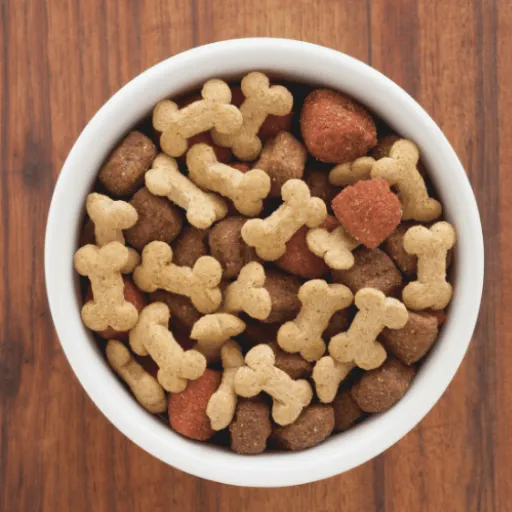
Dry dog food production starts with raw ingredients that undergo a controlled extrusion method, which uses high temperature and pressure to process the materials into permanent kibble form. The manufacturing process begins with protein and grain materials, which operators grind into powder form before they combine it with fats and additives for extrusion through a die plate. The global standard for producing safe and nutritious dry pet food through industrial processes consists of an eight-stage workflow system which guarantees product consistency.
The global dry pet food market already exceeds $128 billion because extruded kibble constitutes over 60% of total worldwide pet food manufacturing. Manufacturers encounter problems with their products because they experience inconsistent expansion and uneven moisture distribution and their coatings develop defects which reduce their market value and product lifespan. Market entry requires understanding each process as it helps to differentiate operations that produce basic results from those which achieve reliable profitability.
The guide teaches you the process of commercial dry dog food production. We will walk through every stage from raw material handling to final packaging, cover the equipment specifications that matter, and explain how to scale from a pilot line to full industrial output. Modern automation combined with twin-screw extrusion technology demonstrates its ability to enhance production efficiency while decreasing waste and maintaining compliance with AAFCO and HACCP and FSMA regulations.
Key Takeaways
- Commercial dry dog food is produced through an eight-stage extrusion workflow: grinding, mixing, preconditioning, extrusion, drying, cooling, coating, and packaging.
- Twin-screw extruders dominate the industry because they handle diverse recipes, high fresh-meat inclusion, and self-cleaning operation better than single-screw designs.
- Final moisture must reach 8–11% to prevent mold and achieve a 12–18 month shelf life.
- A complete production line ranges from roughly 150,000for1t/hcapacityto150,000for1t/hcapacityto600,000+ for 8–10 t/h industrial systems, with typical payback in 1–3 years.
- Compliance with AAFCO nutritional standards, HACCP principles, and FSMA requirements is essential for both domestic sales and global export.
What Is Commercial Dry Dog Food Production?
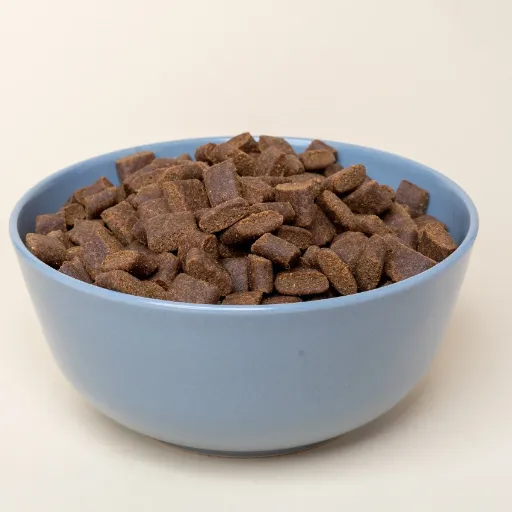
Commercial dry dog food production process turns basic materials into permanent storage kibble through extrusion cooking method. The system uses an extruder barrel to apply combined mechanical shear forces and steam and pressure. The process causes starches to transform into gelatinous form and proteins to lose their natural structure and harmful microbes to be destroyed. The cooked dough gets pushed through a die which shapes the product into uniform pieces that then undergo drying and cooling before being coated with fats and flavors and finally packed for distribution.
The industry uses extrusion as its primary method because it provides three benefits which baking and cold-pressing methods at industrial scale fail to provide.
First, the high-temperature kill step destroys Salmonella and E. coli. Second, starch gelatinization improves digestibility and creates the light, porous texture dogs prefer. Third, continuous extrusion enables throughput rates from 150 kg/h for pilot plants to over 5,000 kg/h for major facilities.
Chen established his pet food business in Qingdao during 2022 by starting with co-packer sourced kibble. The business suffered from low profit margins under unreliable delivery times. He had no control over recipe adjustments.
After eighteen months, he invested in a 300 kg/h twin-screw pet food production line. Within the first quarter of self-manufacturing, his cost per kilogram dropped by 22%. He could now trial new grain-free formulations in days instead of weeks.
Want to see what a complete pet food production line looks like in practice? Explore our pet food production line solutions →
Stage 1: Raw Material Selection and Preparation
The production process determines the final quality of kibble which starts with the first incoming raw materials at your facility. The nutritional requirements of commercial dry dog food are fulfilled through its combination of animal proteins and plant starches and fats and functional additives which meet AAFCO and FEDIAF standards.
The protein sources include chicken meal and fish meal and meat and bone meal and poultry by-product meal and fresh or frozen meats which are gaining popularity. Animal proteins from chicken meal fish meal and meat and bone meal and poultry by-product meal supplement amino acid requirements which plant proteins from soybean meal pea protein and rice protein concentrate provide.
The starch matrix of the product expands during extrusion because its carbohydrate sources include corn flour and wheat flour and rice and barley and potato starch. Fats and oils deliver both essential fatty acids and energy content. The most common options include poultry fat and fish oil and flaxseed oil. Functional additives include vitamin and mineral premixes and taurine and lysine amino acids and antioxidants and probiotics and enzymes.
All incoming materials must undergo testing before they can proceed through the facility. The production materials need to undergo testing for nutritional content and moisture levels and microbiological safety and contamination detection before they can enter the production process. This step protects both animal health and your brand reputation.
Stage 2: Grinding and Particle Size Reduction
The extrusion process needs uniform particle size as its requirement for producing reliable results. The process of mixing gets disrupted when the raw materials contain different particle sizes because it leads to unstable feed rates for extruders and unpredictable expansion patterns for kibble.
The process of grinding uses hammer mills and pulverizers to produce materials with a particle size range of 60 to 80 mesh which equals 180 to 250 microns. Different mill configurations are necessary to process animal meals and grains because the materials require different processing methods to achieve the same fineness level without producing extra heat which degrades proteins and fats.
The flow of materials after grinding begins with their passage through magnetic separators and sieves to eliminate metal pieces and stones and other unwanted materials. The control of foreign bodies represents a fundamental requirement of HACCP. The ground meal is then sent to automated batching scales which weigh each ingredient according to each specified requirement.
Stage 3: Mixing and Preconditioning
The process of precision mixing guarantees that each kilogram of kibble maintains identical nutrient distribution throughout its content. The industrial ribbon blender and double-shaft paddle mixer receive ground materials so that operators can mix dry components for 90 to 180 seconds until the coefficient of variation reaches 5% or lower.
The process of adding liquid components starts when the mixing operation begins. The dry mixture receives fats and oils plus molasses and liquid enzymes through spraying until it reaches the desired moisture content of 20 to 25 percent which occurs before the preconditioning stage. The process prevents clumping while it enables better distribution of heat-sensitive nutrients throughout the material.
Preconditioning establishes the difference between efficient contemporary production lines and their fundamental operational systems. The preconditioner introduces steam and water into the combined meal material to increase moisture content up to 30% while raising temperature levels between 80 and 95 degrees Celsius. The process initiates starch gelatinization while it makes the dough softer and decreases the extruder’s mechanical requirements. Advanced preconditioners can process up to 40% fresh meat without producing scorch damage which serves as an essential requirement for high-quality and grain-free product formulas.
The micro-dosing systems enable precise delivery of trace vitamins and minerals through controlled measurement systems. The final blend validation process confirms that AAFCO and FEDIAF standards have been met before the batch proceeds to the extrusion stage.
Stage 4: Extrusion Cooking and Kibble Forming
Extrusion is the heart of dry dog food manufacturing. This stage cooks the dough under controlled heat and pressure. It shapes the product through a die plate. A rotary cutter then slices it into uniform kibble.
Single-Screw vs. Twin-Screw Extruders
Choosing the right extruder technology determines your recipe flexibility, output consistency, and maintenance burden.
| Feature | Single-Screw Extruder | Twin-Screw Extruder |
|---|---|---|
| Capacity range | 100–800 kg/h | 150–5,000+ kg/h |
| Fresh meat handling | Limited (up to ~15%) | High (up to ~40% with preconditioning) |
| Self-cleaning | Minimal | Excellent (intermeshing screws) |
| Recipe flexibility | Narrow (starch-heavy) | Broad (grain-free, high-protein, novel ingredients) |
| Heat distribution | Less uniform | Superior (better shear control) |
| Maintenance frequency | Higher wear on barrel | Lower wear due to balanced torque |
| Typical investment | Lower initial cost | Moderate to higher, faster ROI |
Twin-screw extruders now hold roughly 68% of the pet food extrusion market, and the gap is widening. Their intermeshing screws provide better mixing, handle higher fat and fresh-meat inclusions, and self-clean during operation. For manufacturers planning to produce premium, grain-free, or functional diets, a twin-screw design is the practical standard.
Extruder Operating Parameters
Inside the extruder barrel, the preconditioned dough is subjected to:
- Temperature: 110–160°C across multiple barrel zones
- Pressure: 20–30 bar before the die plate
- Residence time: 30–90 seconds depending on screw speed and recipe
Starch gelatinization reaches 80–95%, proteins denature and bind, and pathogens are destroyed. The degree of cook directly affects kibble texture, digestibility, and expansion ratio.
Die Plates and Kibble Shaping
The cooked dough is forced through a die plate with shaped openings. Interchangeable dies allow you to produce round, bone-shaped, heart-shaped, or striped kibble in sizes ranging from 5 mm for small breeds and puppies up to 20 mm for large breeds. A rotary cutter slices the extrudate to length as it exits the die. Cutter speed and die design must be matched to prevent tailing, burrs, or inconsistent shapes.
Interested in the extrusion technology that drives consistent kibble quality? Learn more about our food extrusion solutions →
Stage 5: Drying and Cooling
Freshly extruded kibble contains 20–30% moisture. The moisture level must reach 8–11% for acceptable standards. Microbial growth cannot occur because lower moisture levels create shelf-stable storage conditions.
The industry standard requires the use of multi-pass belt dryers. Kibble moves through temperature-controlled zones on perforated belts which begin at 110–130°C and transition to 80–90°C for case-hardening prevention. Modern systems use infrared moisture sensors which connect to PLC feedback systems to control belt speed and airflow throughout the production process.
Counter-flow coolers provide the cooling process which reduces kibble temperature to 5°C above room temperature. This step is critical. Packaging warm kibble results in bag condensation which creates a mold breeding environment. The cooling air must also be filtered to prevent contamination of the finished product.
Maria took control of the Brazilian mid-size pet food facility operations which included a single temperature zone drying line. The facility experienced excessive energy costs. The facility experienced excessive moisture variation which reached above 3% between different production batches.
She upgraded to a three-zone belt dryer with automated moisture feedback. The final moisture content reached 0.5% of the target value. The business reduced energy use by approximately 30% during the first six months of operations. The investment paid for itself in under fourteen months.
Stage 6: Coating and Enrichment
High extrusion temperatures destroy heat-sensitive nutrients like certain vitamins, probiotics, and enzymes. The post-extrusion coating process enables the restoration of these components while the process introduces fats and flavors which enhance taste enjoyment.
The first step in the coating process involves spraying fat and oil onto the surface. The coating process uses animal fats or vegetable oils which are applied in a rotating drum coater or vacuum coater at a rate of 3–8% of the finished weight. The vacuum coating process uses air removal to create a coating chamber which enables fats and nutrients to penetrate into the core of kibble instead of remaining on the exterior. This method decreases surface greasiness while it maintains nutrient quality and extends the product’s shelf life.
Palatants are added next. The combination of hydrolyzed liver digest and yeast extracts alongside fish hydrolysates creates a product which delivers enhanced aroma and flavor. The coating drum enables the application of powdered additives which include probiotics postbiotics and functional ingredients.
Coating uniformity matters. The presence of uneven fat distribution results in oxidative rancidity for certain pieces while other pieces maintain their unflavored state. Modern systems use load cells and spray-nozzle arrays with real-time feedback to maintain consistent application rates.
Stage 7: Quality Control and Testing
The process of quality control begins when raw materials enter the facility and continues until the final product reaches its ending point. The finished kibble must undergo complete physical tests and analytical tests before it can be released into the market.
The physical tests assess kibble hardness and density and size consistency and coating uniformity. The texture analyzer uses sample pressing to measure breaking force which links to tooth erosion and food appeal. Sieving is used to separate small particles and large particles and damaged fragments which should be either recycled or thrown away.
Chemical analysis verifies protein, fat, fiber, moisture, and ash content against the formula target. Near-infrared (NIR) spectroscopy enables fast inline evaluation while laboratory wet chemistry delivers exact reference measurements. Aflatoxin and heavy metals screening protects against contaminated raw materials.
The microbiological tests screen for the presence of Salmonella and E. coli and total plate count. The time-temperature documentation proves the extrusion kill step, but finished-product testing provides the ultimate safety confirmation.
Metal detection and X-ray inspection serve as the final protective measures for the packaging process. The first foreign-object incident which occurs will lead to an expensive product recall and lasting damage to the brand reputation.
Stage 8: Packaging and Storage
The packaging system maintains the shelf life which you successfully achieved through your efforts. The system automatically weighs kibble and precisely pours it into bags and pouches and bulk containers. The process of nitrogen flushing removes oxygen from the package which prevents lipid oxidation and extends the product’s shelf life from several months to a 12-to-18-month period.
The barrier packaging materials which include multi-layer laminated films and metallized pouches create a protection system that prevents moisture and oxygen from entering the package. The labels need to meet the regional requirements which include the guaranteed analysis panels and ingredient lists and feeding directions and manufacturer contact information.
Companies should keep their finished products in warehouses that maintain controlled climate conditions. The package seals become compromised when temperatures rise above 25 degrees Celsius and high humidity levels exist. The first-in-first-out system of inventory rotation ensures that older stock reaches its optimal palatability window before it starts to deteriorate.
Equipment Overview: Building Your Production Line
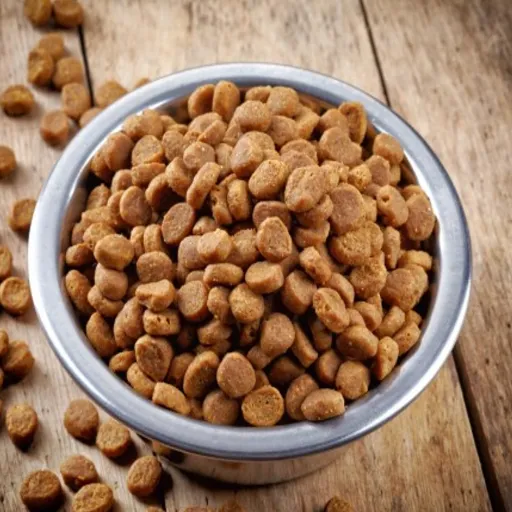
A complete dry dog food production line is a linear flow system. Raw materials enter at one end, and packaged kibble exits at the other. The equipment list below reflects a typical commercial configuration.
| Stage | Equipment | Typical Specifications |
|---|---|---|
| Grinding | Hammer mill or pulverizer | 60–80 mesh output, 11–37 kW motor |
| Mixing | Ribbon or paddle mixer | 200–2,000 kg batch capacity, 5–15 kW |
| Preconditioning | Steam preconditioner | 80–95°C, up to 40% fresh meat inclusion |
| Extrusion | Twin-screw extruder | 150–5,000 kg/h, 75–200 kW installed power |
| Drying | Multi-pass belt dryer | 3–5 temperature zones, 90–130°C |
| Cooling | Counter-flow cooler | Ambient + 5°C discharge target |
| Coating | Drum or vacuum coater | 3–8% fat application, spray-bar or vacuum system |
| QC | Metal detector, NIR analyzer | Inline detection, real-time moisture feedback |
| Packaging | Auto-weigh/fill/seal | 1–25 kg bags, nitrogen flush option |
Floor Space and Layout Considerations
A typical 500 kg/h line requires approximately 24 m × 5 m × 6 m of floor space. Layout should follow a unidirectional flow from raw material storage through finished goods to prevent cross-contamination. HACCP zoning separates raw-material handling from post-extrusion areas with distinct personnel and equipment pathways.
Automation and Control
Modern lines use PLC and HMI control systems with recipe storage, alarm logging, and remote diagnostic capability. This reduces operator error, accelerates changeovers between recipes, and provides the documentation trail that regulators and retail auditors expect.
Looking for industrial food equipment that integrates seamlessly into your facility? Browse our complete food equipment range →
Cost and ROI Considerations
Equipment investment scales with capacity, automation level, and material quality. The table below provides approximate investment ranges based on current industry benchmarks.
| Capacity | Estimated Investment (USD) | Typical Power Consumption |
|---|---|---|
| 150–300 kg/h (pilot/small commercial) | 80,000–80,000–150,000 | 50–80 kW installed |
| 500–800 kg/h (mid-size commercial) | 150,000–150,000–250,000 | 100–160 kW installed |
| 1.0–1.5 t/h (large commercial) | 250,000–250,000–400,000 | 160–220 kW installed |
| 3.0–5.0 t/h (industrial) | 400,000–400,000–600,000 | 250–350 kW installed |
| 8.0–10.0 t/h (major facility) | $600,000+ | 400+ kW installed |
Facilities operate at actual power consumption levels which reach 70 to 75 percent of their maximum installed power capacity. The payback period for projects varies between 1 and 3 years based on how projects use resources and according to local energy prices and labor costs and product profitability. The higher production capacity of manufacturing lines enables businesses to recover their investment more quickly because they can distribute their fixed expenses across larger production volumes.
The operating costs of a business extend beyond energy expenses to include all costs associated with raw materials which account for 60 to 70 percent of production expenses and costs related to labor essential for both operators and quality assurance personnel and all expenses connected to spare parts which include screws and dies that need replacement after six to twelve months of intensive usage and costs associated with packaging materials.
James established his premium pet food company in the UK with a 200 kg/h pilot line which he used to test recipes while developing his customer base. His business achieved stable sales growth for one year before he decided to add a second 500 kg/h modular line instead of replacing his existing equipment with new machinery. The organization used an incremental method which distributed capital costs across two fiscal periods while decreasing risk and enabling him to maintain pilot production at the smaller line which ran pilot batches during the growth of commercial operations on the new line.
Compliance and Safety Standards
The manufacturing of dry dog food requires adherence to multiple regulatory frameworks. Understanding these requirements before you design your facility prevents expensive retrofits and delays.
AAFCO (Association of American Feed Control Officials) establishes nutritional standards and labeling requirements for products sold within the United States. AAFCO standards serve as an internationally recognized standard for complete and balanced pet food declarations even if your business does not operate in the United States.
FEDIAF (European Pet Food Industry Federation) delivers equivalent guidance which applies to the European market through its nutritional standards that different life stages and animal species require.
HACCP (Hazard Analysis and Critical Control Points) functions as the food safety management system that organizations implement at each facility. The production process of dry dog food contains essential control points which include extrusion temperature and time specifications that determine the kill step and specialized equipment for moisture control and metal detection systems which operate before packaging and all protective measures against foreign materials.
Conclusion
Learning how to make dry dog food at commercial scale means mastering eight connected stages. The process includes eight stages which begin with raw material preparation and end with packaging.
The first stage provides essential resources which build the requirements for the following stage. A weak grinding step creates mixing problems. The extruder requires proper preconditioning to function correctly.
Drying must occur because moisture leads to mold growth. The product becomes less appealing to eat because of insufficient coating which also fails to maintain nutritional value.
The manufacturers who succeed treat the production line as an integrated system rather than a collection of standalone machines. They select twin-screw extrusion for flexible recipe options and they establish automated moisture control systems to ensure product consistency while designing their facility according to HACCP workflow standards from their initial planning stage.
The design choices you make during the design process for your new facility or existing line expansion will establish your future operating expenses and product quality standards. Start with a clear understanding of your target capacity, recipe range, and regulatory markets. Then select equipment that can grow with you.
Ready to design a dry dog food production line that matches your capacity and recipe goals? Contact our engineering team for a customized proposal →