
The Science and Mechanics of Extraction: How to Make Essential Oils

Understanding how to make essential oils requires a technical grasp of volatile compound isolation. While the principle remains consistent—releasing aromatic molecules from plant glands—the execution varies between steam distillation, cold-press expression, and solvent extraction. Success depends on managing temperature and pressure to rupture oil-bearing trichomes without degrading the heat-sensitive terpenes that define the oil’s therapeutic and aromatic profile. Selecting the right method ensures a high-purity yield suitable for commercial or professional use.
Botanical Integrity: The Raw Material Phase

The first step in how to make essential oils isn’t actually mechanical; it’s biological. You are essentially hunting for microscopic storage units. If the plant material is bruised, wilted, or harvested at the wrong time of year, the “active” compounds may have already evaporated into the atmosphere. Industry observation suggests that the ratio of plant mass to oil yield is staggeringly lopsided—it often takes 225 kg of lavender to produce just 1 kg of oil. This efficiency starts with protecting the raw botanical from the moment it leaves the soil.
Understanding Trichomes and Oil Gland Locations
Plants don’t store oil in a uniform way. To extract it effectively, you must identify whether your target molecules reside in internal secretory cavities, like those found in citrus peels, or in external glandular trichomes. These trichomes are tiny, hair-like appendages on the surface of leaves and flowers.
In a realistic scenario, a distiller working with peppermint must treat the leaves with extreme care; a rough handling process can rupture these external glands prematurely. A practical example of this difference is found in sandalwood, where the oil is locked deep within the heartwood. Unlike the delicate surface oils of herbs, wood-based oils require the material to be chipped or powdered to expose the internal glands before the extraction process can even begin.
Timing the Harvest for Peak Terpene Concentration
Terpene profiles fluctuate based on the circadian rhythm of the plant. For many aromatics, the concentration of volatile oils is at its highest just before dawn, as the rising sun tends to trigger evaporation.
Distillers often aim for a “pre-bloom” harvest because once a plant flowers, it diverts its energy and chemical precursors toward reproductive efforts, frequently changing the scent profile. Cautious monitoring of soil moisture is also vital. If a plant is over-hydrated, the oil glands may be diluted, whereas a slight environmental stress can actually trigger the plant to produce a more concentrated, potent aromatic profile.
Steam Distillation: The Industrial Standard
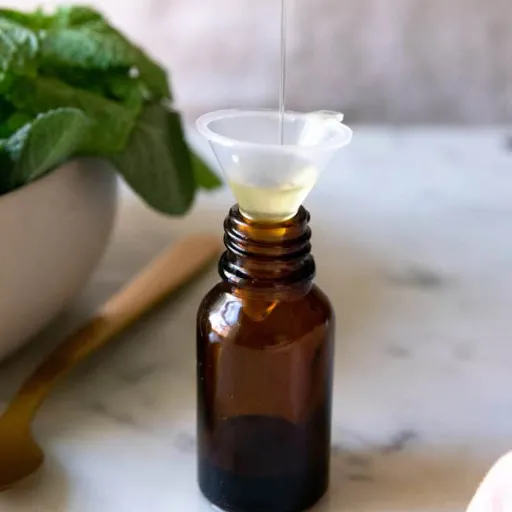
Steam distillation remains the backbone of the flavoring and aromatherapy sectors because it effectively balances cost with chemical purity. The process operates on the principle of hydrodistillation: steam passes through a densely packed bed of plant material, acting as the primary energy source to rupture those oil-bearing structures we identified in the raw material phase. As the steam breaks the cell walls, the volatile oils evaporate and hitch a ride on the vapor toward the condenser.
Industry observation suggests that the temperature must be high enough to liberate the oils but low enough to prevent “thermal cracking,” where the heat physically destroys the delicate fragrance molecules. Most professional systems operate around 100°C at sea level, though vacuum distillation may be utilized for particularly heat-sensitive florals to lower the boiling point and preserve the “top notes” of the scent.
The Role of Pressure and Steam Velocity in Volatile Release
Getting the steam to move at the right speed through the still is a delicate science. If the steam velocity is too low, the heavier, “base” molecules of the oil—the ones that give a scent its longevity—won’t be lifted out of the plant matter. Conversely, excessive pressure can create “tunneling,” where the steam finds a path of least resistance and leaves large pockets of plant material completely untouched.
In a realistic scenario, a distiller might find that their yield is down by 15% simply because the botanical charge was packed too tightly in the vat. A practical example of managing this involves “fluffing” the biomass or using layered trays to ensure the steam maintains a uniform 0.5 to 1.5 bar of pressure. This constant, gentle flow ensures that even the deep-seated resins are eventually coaxed out of the plant matrix without scorching the batch.
Separation Science: Why the Hydrosol Layer Matters
Once the vapor leaves the still, it enters a cooling coil where it returns to a liquid state. This mixture of water and oil then flows into a separator, often called an Essencier. Because essential oils are generally lighter than water, they float to the top, allowing the water—now known as a hydrosol—to be drained from the bottom.
However, the hydrosol isn’t just waste. It contains the water-soluble micro-molecules of the plant that the oil cannot hold. Cautious producers often harvest this “flower water” for use in high-end skincare or beverages. Industry standards suggest that in a 4-hour distillation run, the first 20% of the hydrosol collected tends to have the highest aromatic concentration, making it a valuable secondary product rather than a mere byproduct of the oil extraction.
4 Common Distillation Errors That Compromise Oil Purity
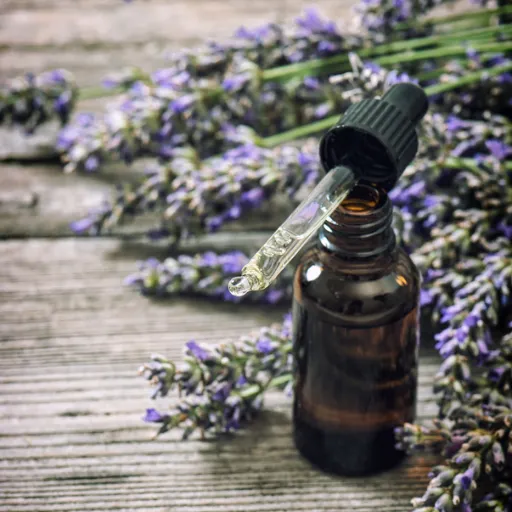
Precision in how to make essential oils is often undermined by subtle mechanical oversights rather than large-scale failures. One of the most frequent issues is “still note” contamination, which occurs when a distiller fails to properly deep-clean the stainless steel between different botanical runs. Industry observation suggests that residual sulfur compounds from a previous batch can linger in the condenser coils, effectively “bruising” the aroma of a fresh distillate. If your lavender begins to carry an unexplained metallic or vegetal undertone, the culprit is likely a bio-film buildup in the harder-to-reach plumbing of the still.
Temperature spikes are equally destructive. A realistic scenario involves an operator increasing the boiler heat too quickly to save time, causing the plant material to “scorch” against the bottom of the vat. This doesn’t just produce a burnt smell; it physically alters the chemical blueprint of the oil. For instance, in a 150-liter still, a jump of just 4.5°C above the target boiling point can trigger the production of unwanted paraffins.
Practical example: “water-logging” occurs when the plant material sits directly in the boiling water rather than being suspended above it on a steam grate. This leads to hydrolysis, where the water molecules break down the delicate esters that give oils like Roman Chamomile their fruity, apple-like top notes. Cautious monitoring of the water level is vital to ensure the extraction remains a true steam process. Finally, using a condenser that is too short can lead to incomplete cooling, allowing the most volatile “heart notes” to escape out of the separator as a gas before they have a chance to liquefy.
Cold Pressing and Expression
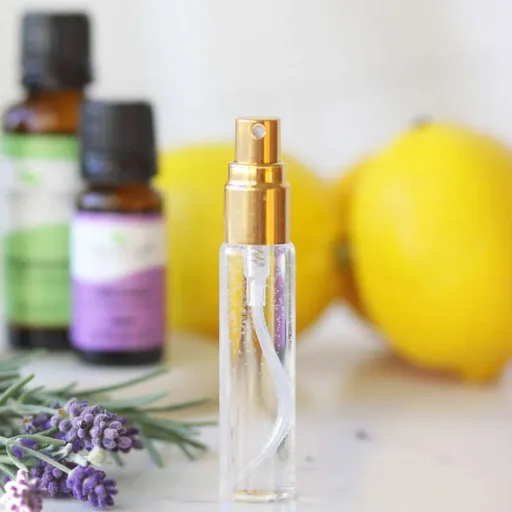
When the goal is to capture the essence of citrus, steam is often too aggressive. The heat tends to rearrange the chemical structure of the oil, resulting in a “cooked” aroma that lacks the sharp, zesty punch of a fresh peel. Instead, the industry relies on expression—a mechanical “squeezing” process specifically designed for the oil-rich flavedo of oranges, lemons, and bergamots.
Industry observation suggests that roughly 90% of the world’s citrus oils are produced this way. In a realistic scenario, a specialized machine known as a pelatrice pricks the surface of the fruit while it submerged in a water spray. This punctures the oil glands, releasing the essence into the water, which is then separated via centrifuge at speeds reaching 5,000 to 8,000 RPM.
A practical example of the precision required is the management of the albedo—the white, bitter pith. Cautious mechanical calibration is necessary; if the rollers press too deep, the oil will be contaminated with bitter juice and non-volatile waxes, significantly reducing the shelf life and clarity of the final product.
Solvent Extraction for Delicate Florals
For certain botanicals, steam is a blunt instrument. Delicate flowers like Jasmine, Mimosa, or Rose de Mai contain aromatic compounds that are either too heavy to be lifted by steam or so fragile they would denature at boiling temperatures. This is where solvent extraction becomes necessary. Instead of heat, the process relies on chemical affinity.
Industry observation suggests that this method captures a broader chemical profile than distillation, including the heavier waxes and pigments that give these florals their characteristic depth. The blossoms are submerged in a hydrocarbon solvent—often hexane or a similar food-grade equivalent—which acts as a magnet for the oils. After the solvent is evaporated, you aren’t left with a pourable oil, but rather a dense, fragrant “concrete.” This waxy substance is the raw precursor to the most expensive aromatics in the world.
Concrete to Absolute: The Multi-Stage Refinement Process
The transition from a solid concrete to a liquid absolute is a meticulous exercise in chemistry. The concrete is mixed with high-proof ethanol and agitated. Because the aromatic molecules are soluble in alcohol but the heavy plant waxes are not, the two begin to separate.
A realistic scenario: the mixture is chilled to -15°C. At this temperature, the waxes solidify and “precipitate” out of the solution, allowing for a clean filtration. Practical example: once the waxes are removed, the alcohol is evaporated under a vacuum, leaving behind the “absolute.” This liquid is incredibly concentrated; even a 0.5% concentration can dominate a fragrance blend. Cautious handling is required, as the vacuum must be precisely calibrated to remove 100% of the solvent residue without stripping away the precious top notes that make the absolute so valuable.
Why Does Cooling Rate Affect the Final Aromatic Profile?
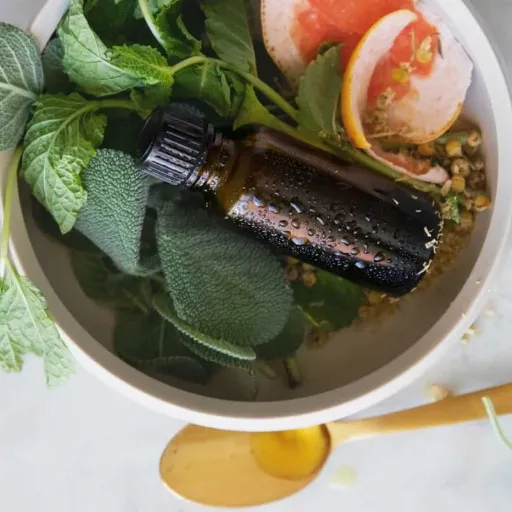
Condensation is more than just a phase change from gas to liquid; it is the moment the chemical composition of your oil is locked in. When you are learning how to make essential oils, the efficiency of your heat exchanger dictates the clarity of the scent. If the cooling process is sluggish, the hot distillate remains in a state of “extended cook time” within the coils. This lingering heat often triggers secondary chemical reactions, such as the polymerization of certain terpenes, which can turn a bright, crisp aroma into something heavy and dull.
Industry observation suggests that a rapid “shock” cool is generally superior for preserving top-heavy notes like those found in citrus or peppermint. A realistic scenario involves a condenser water temperature that fluctuates; if the coolant rises above 22°C, the heavier sesquiterpenes may begin to dominate the blend while the lighter, more volatile esters escape.
Practical example: in a high-efficiency 316-grade stainless steel condenser, keeping the exit temperature of the oil between 12.4°C and 15°C tends to produce a much more vibrant profile. Cautious management of this thermal gradient ensures that the “heart” of the oil doesn’t lose its nuance to heat-induced degradation before it even reaches the collection vessel.
Post-Extraction Stability
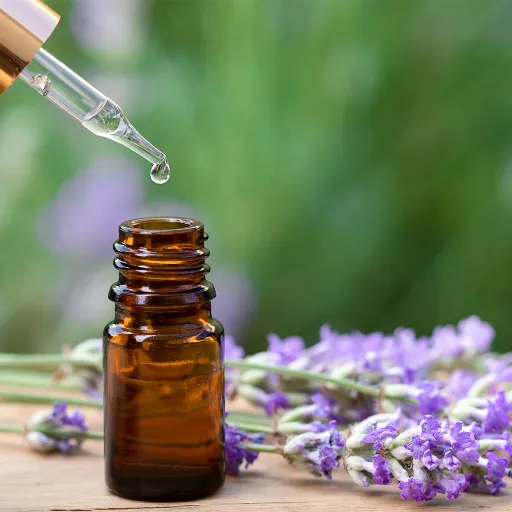
The process of how to make essential oils doesn’t end when the last drop leaves the separator. In fact, the first 48 hours are a period of chemical volatility. Freshly distilled oil is often “energetic,” containing trace amounts of moisture and dissolved gases that can lead to rapid degradation if bottled immediately. Industry observation suggests that most professional distillers allow their oils to “settle” in a neutral environment. This phase allows any residual hydrosol to precipitate out, ensuring that the final product is a pure, anhydrous liquid. Skipping this stabilization can result in a cloudy oil that is prone to microbial growth.
Curing and Oxidation Prevention
Curing is the quiet art of letting the oil’s aroma mature. Much like a fine wine, certain oils—especially wood and root-based varieties—tend to smell harsh or “green” immediately after the still is cracked.
Practical example: Patchouli or Vetiver oils are often aged for several months to allow their heavier sesquiterpenes to mellow. During this time, oxidation is the primary enemy. A realistic scenario involves a batch being ruined because it was stored in a container with too much “headspace,” allowing oxygen to react with the terpenes. Cautious producers utilize argon or nitrogen blanketing in their storage tanks. By displacing the air with an inert gas, you can extend the shelf life of a citrus oil from a mere 9 months to over 2 years, keeping the chemical blueprint exactly as it was at the moment of extraction.
Scaling Up: Moving from Glassware to Stainless Steel Production
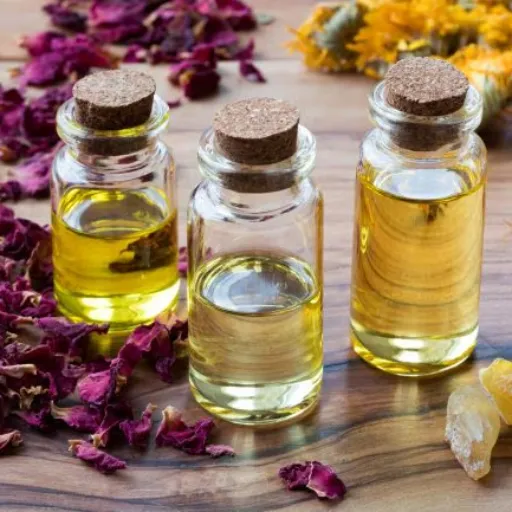
Transitioning from a laboratory-scale glass setup to industrial-grade stainless steel is a significant pivot in how to make essential oils with commercial consistency. While glass is excellent for visual monitoring and inertness, it lacks the thermal conductivity and structural durability required for high-volume batches. Industry observation suggests that 304 or 316-grade stainless steel is the non-negotiable standard. These alloys prevent the acidic nature of certain oils—like those found in citrus or coniferous needles—from leaching metallic ions into the distillate, which would otherwise lead to rapid oxidation and a “spoiled” scent.
The shift in physics is substantial. In a realistic scenario, a producer moving from a 5-liter glass flask to a 200-liter stainless steel vat will find that heat distribution becomes more complex. You are no longer heating a small surface area; you are managing a massive thermal load. Practical example: whereas glass heats evenly via a mantle, large steel vessels often utilize steam jackets. This allows for precise temperature control across the entire biomass, preventing the “hot spots” that typically occur in direct-fired setups.
Furthermore, larger systems allow for the integration of pressure vacuum gauges and advanced reflux condensers. Cautious scaling requires an understanding that yield doesn’t always scale linearly. A 40x increase in vessel size may only yield a 32x increase in oil if the steam path isn’t optimized to prevent vapor collapse. Ensuring the plumbing is sized correctly—often requiring a 2-inch diameter vapor path for vats over 100 liters—is what keeps the process efficient as you grow.
FAQ Section
Q: What is the difference between an essential oil and a fragrance oil?
Essential oils are purely botanical extracts derived through physical methods like distillation or expression. They contain the complex, “live” chemical footprint of the plant, which offers therapeutic properties. Conversely, fragrance oils are synthetic lab creations designed solely for scent. While they can mimic a plant’s aroma, they lack the volatile organic compounds found in nature. For those learning how to make essential oils, it is important to note that fragrance oils cannot be produced through distillation, as they are composed of petroleum-based chemicals and fixatives.
Q: Can you extract essential oil from any plant species?
Not every plant contains the specialized secretory structures, such as trichomes or oil sacs, required for extraction. While thousands of plants are aromatic, only a small percentage—roughly 5%—produce enough volatile oil to be commercially viable. Some species hold their scent in molecules that are too heavy for steam or too delicate for heat, requiring solvent extraction instead. Attempting to extract oil from non-oil-bearing plants will result in “flower water” or hydrosol at best, with no oily film layer appearing in the separator.
Q: How much plant material is required to produce 10ml of pure oil?
Yield varies dramatically based on the botanical’s density. For instance, it may take approximately 25 to 30 pounds of lavender flowers to yield 10ml of oil, but for rose blossoms, you might need closer to 50 pounds. This is why certain oils are significantly more expensive than others; the concentration of oil glands within the biomass dictates the final volume. Industry observation suggests that wood-based oils like cedarwood typically offer higher yields per pound than delicate, high-moisture flower petals.
Q: Why do some essential oils require a carrier oil for safe use?
Essential oils are highly concentrated chemical powerhouses; some are “hot” oils, containing high levels of phenols or aldehydes that can cause significant skin irritation. Because they are volatile, they also evaporate quickly when exposed to air. Mixing them with a carrier oil—such as jojoba or almond—dilutes the concentration to a safe percentage, usually 1% to 5%, and “carries” the molecules into the skin. This lipid base acts as a stabilizer, preventing the essential oil from evaporating before the body can absorb it.
Q: What is the shelf life of a properly distilled essential oil?
Shelf life is determined by the oil’s chemical family. Citrus oils, rich in limonene, are highly prone to oxidation and usually peak within 9 to 12 months. In contrast, heavier “base” oils like Patchouli or Sandalwood actually improve with age and can remain stable for 6 to 10 years if stored correctly. To maximize longevity, keep oils in amber glass containers at a constant 15°C and minimize “headspace” to prevent oxygen from reacting with the delicate terpenes.
Q: How does the pH of extraction water influence the final scent?
The acidity or alkalinity of your distillation water can catalyze specific chemical shifts during the heating process. Ideally, the water should be neutral or slightly acidic. If the pH is too high (alkaline), it can lead to the hydrolysis of esters, which are the molecules responsible for sweet, fruity, and floral notes. This reaction often results in a “soapy” or dull scent profile. Professional distillers frequently use deionized or pH-balanced water to ensure the steam doesn’t inadvertently alter the plant’s natural aromatic blueprint.