

Mastering the Extraction: A Professional Guide on How to Prepare Fruit Juice

Mastering how to prepare fruit juice at a professional level requires more than just mechanical extraction; it involves managing enzymatic browning, cellular breakdown, and microbial stability. Whether you are aiming for high-clarity clarified liquids or nutrient-dense cold-pressed blends, the process begins with optimizing your fruit’s Brix levels and selecting an extraction method—masticating, centrifugal, or hydraulic—that preserves the delicate flavor volatile compounds essential for a premium final product.
The Selection Phase: Beyond Just Ripeness
Most advice on how to prepare fruit juice begins at the juicer, but quality is actually determined in the orchard. Ripeness is a baseline, yet professional extraction demands a focus on structural integrity and chemical balance. If a fruit is “table-ripe,” it may already be too soft for certain high-speed centrifugal systems, leading to a clogged mesh rather than a clean yield. Industry observation suggests that fruit destined for juicing should be harvested at a specific pressure—measured in pounds-force—to ensure the cell walls withstand the milling process without collapsing into a silty purée.
Understanding Brix Levels and Natural Sugar Ratios
The Brix scale (∘Bx) is the professional yardstick for measuring the dissolved sugar content in your raw ingredients. Using a refractometer is the only way to move past guesswork.
In a realistic scenario, a batch of Valencia oranges might register at 12.4∘Bx, providing a perfect balance of sweetness and acidity. However, if the reading drops below 10∘Bx due to late-season rains, the resulting juice tends to taste thin and “watered down.” Practical example: blending high-Brix Granny Smith apples with lower-sugar greens can stabilize a recipe’s flavor profile without requiring added sweeteners. Achieving a consistent ∘Bx across batches is what separates amateur attempts from a repeatable, commercial-grade product.
Why Regional Sourcing Dictates Final Juice Clarity
Geography influences more than just flavor; it affects the pectin levels within the fruit. Pectin is the “glue” that holds plant cells together, and its concentration varies significantly based on soil composition and temperature fluctuations during the growing season.
Fruit sourced from high-altitude regions often develops thicker skins and higher pectin counts to protect against UV exposure. When learning how to prepare fruit juice from these sources, you may find that the liquid is naturally more viscous or prone to clouding. Cautious selection of local versus imported fruit allows you to predict how much filtration effort will be required to achieve your desired level of transparency.
Pre-Processing Essentials
Before a single drop of liquid is extracted, the raw fruit must undergo rigorous preparation to protect the integrity of the final product. Contaminants on the skin—pesticides, wild yeasts, or simple debris—can fundamentally alter the flavor profile during the milling stage.
Industry observation suggests that a multi-stage wash is more effective than a simple soak. A realistic scenario for a small-scale facility involves a primary wash in an antimicrobial bath followed by a secondary rinse with ozonated water. This process reduces microbial loads by as much as 98.7%, which is vital if you intend to market a raw, unpasteurized product.
Practical example: when working with citrus, “de-buttoning”—removing the small woody stem—prevents bitter tannins from leaching into the juice. Cautious trimming of bruised sections is also mandatory. A single fermented spot on a peach may contain enough acetobacter to turn an entire 50-liter batch of juice toward vinegar within hours. Preparing fruit juice is as much about what you remove as what you keep.
Thermal vs. Cold Press: Choosing Your Extraction Logic
Determining how to prepare fruit juice on a commercial scale often forces a choice between speed and enzymatic integrity. Thermal processing—where fruit is heated to soften tissues before extraction—can significantly boost yields, particularly for pome fruits like pears. However, this heat often compromises the volatile esters that define “fresh” flavor. Industry observation suggests that “cold press” has moved from a niche health trend to a standard for premium retail, as it avoids the thermal degradation of heat-sensitive vitamins. The logic here is simple: mechanical force replaces thermal energy. By keeping temperatures below 48°C throughout the process, you preserve the natural color and sharp aromatic profile that consumers associate with high-quality juice.
The Centrifugal Speed Trap
Centrifugal juicers are the workhorses of fast-paced environments, using a flat cutting blade that spins at incredible speeds—often between 6,500 and 14,500 RPM. While efficient, this velocity introduces significant oxygen into the liquid.
A realistic scenario: if you leave centrifugal apple juice on a counter for just ten minutes, you’ll notice a rapid shift toward a muddy brown. This is enzymatic browning accelerated by the high-speed aeration. While great for “made-to-order” service, this method is rarely ideal for bottled products because the high friction can slightly warm the juice, prematurely activating spoilage enzymes.
Hydraulic Pressing for Premium Nutrient Retention
The hydraulic press is widely considered the gold standard for high-end juice production. Instead of shredding the fruit, it applies thousands of pounds of pressure to fruit pulp contained in fine-weave cloths. This massive, slow force squeezes every possible drop of liquid from the cellular structure without the friction-induced heat of a spinning blade.
Practical example: a hydraulic system can achieve a yield of up to 68% to 74% by weight, depending on the fruit’s water content. This method minimizes oxidation because there is almost no air incorporated into the juice during the “squeeze.” The result is a vibrant, shelf-stable liquid with a remarkably clean finish.
Mastication: Slow Processing for High-Fiber Yields
Masticating juicers, or “slow juicers,” use a heavy auger to crush and grind fruit against a stationary screen. This “chewing” action mimics a more natural extraction process. Because the auger turns at a low speed—typically 45 to 80 RPM—it tends to produce a juice with a slightly higher pulp content. This can be an advantage if you are targeting a “nectar-style” mouthfeel. Mastication is particularly effective for leafy greens and fibrous fruits that would simply clog a centrifugal mesh or fail to release liquid in a hydraulic press.
4 Common Filtration Mistakes That Ruin Mouthfeel
Filtration is often where the soul of the juice is either refined or stripped away entirely. A primary error in how to prepare fruit juice is over-filtering to achieve “crystal clarity” at the expense of viscosity. While a clear liquid looks professional, removing all suspended solids—specifically the fine pectins and fruit essences—often leaves the juice tasting thin and metallic. Industry observation suggests that a “cloudy” juice with roughly 2% to 4% insoluble solids usually provides a more luxurious, lingering finish on the palate.
Using the wrong micron size for specific fruits is another frequent pitfall. For example, a filter fine enough for apple juice will instantly blind if used for a fibrous mango blend. A realistic scenario involves an operator attempting to force a thick berry purée through a 50-micron screen, resulting in high-pressure shearing that ruins the delicate cellular structure. Cautious selection of staged filtration—moving from a coarse 200-micron pre-filter to a finer finishing screen—prevents this mechanical stress.
Furthermore, ignoring “temperature-induced clouding” can be a major setback. If you filter juice while it’s warm, certain proteins remain dissolved, only to precipitate and create an unappealing sediment once the bottle is chilled in a retail display. Practical example: chilling your extract to 4°C before the final pass ensures these “cold-sensitive” particles are captured, resulting in a stable, professional mouthfeel that won’t separate over time. Finally, the use of excessive diatomaceous earth or chemical fining agents can impart an earthy, “flat” note, masking the vibrant acidity that high-quality fruit should provide.
Maintaining Biological Stability Without Compromising Flavor
The primary challenge in how to prepare fruit juice for the market is stopping the clock on spoilage without “cooking” the soul out of the fruit. Raw juice is a living system teeming with enzymes and wild microflora that begin fermentation almost immediately after extraction. To prevent your bottles from becoming pressurized hazards on a retail shelf, you must achieve a specific log reduction in pathogens. However, flavor compounds are notoriously heat-sensitive. Industry observation suggests that even a few seconds of excessive thermal exposure can transform the bright, acidic profile of a cold-pressed juice into something reminiscent of canned preserves. The goal is to hit the “pasteurization unit” ($PU$) target precisely, ensuring safety while leaving the volatile aromatics untouched.
Flash Pasteurization vs. High Pressure Processing (HPP)
Traditional flash pasteurization—the High Temperature Short Time ($HTST$) method—involves heating juice to roughly 71.7°C to 74°C for a mere 15 to 30 seconds. It is highly efficient for large-scale operations and provides a reliable shelf life of several weeks.
Practical example: an orange juice producer might prefer this route because the slight heat can actually help deactivate pectinesterase, an enzyme that causes juice to separate into layers. However, for “super-premium” products, High Pressure Processing (HPP) is the superior, albeit more expensive, alternative.
HPP is a “cold” stabilization method. In a realistic scenario, bottled juice is placed into a high-pressure chamber and subjected to 600 megapascals (about 87,000 psi) of water pressure. This crushing force destroys the cell walls of bacteria and yeast but leaves the covalent bonds of vitamins and flavor molecules intact. Cautious producers often lean toward HPP because it allows for a “raw” label claim and maintains a vibrant, orchard-fresh taste that thermal methods simply cannot match.
Balancing the Blend
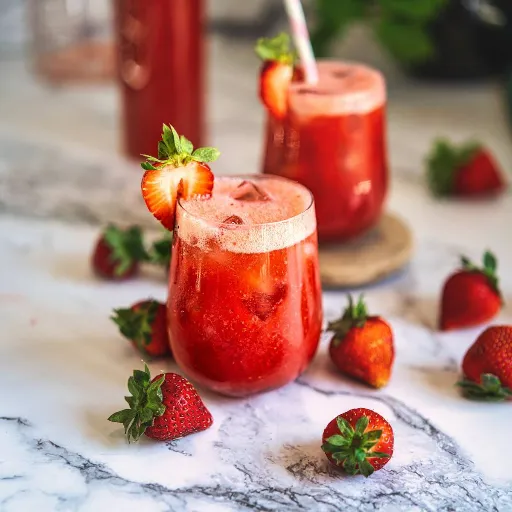
Creating a repeatable, high-quality product is rarely as simple as juicing a single variety of fruit. In the professional sphere, mastering how to prepare fruit juice means mastering the art of the blend. Nature is inconsistent; a batch of apples harvested in September will have a vastly different acid-to-sugar ratio than those picked in November. To maintain a consistent “brand flavor,” processors often combine juices with opposing profiles.
Industry observation suggests that a target pH of 3.4 to 3.8 is the sweet spot for most fruit blends. This acidity level doesn’t just provide that refreshing “zing”—it acts as a natural preservative by inhibiting certain spoilage organisms.
A realistic scenario for a production manager might involve balancing a particularly sweet, low-acid batch of mango nectar with a 12% addition of lime or acerola cherry juice. This isn’t just about taste; it’s about “brightening” the color and sharpening the top notes. A practical example of this in action is the use of “buffer” juices like white grape or pear. These are often used as a neutral base to carry more expensive, volatile flavors like pomegranate or passionfruit without overwhelming the delicate aromatic compounds. Cautious blending prevents the final product from tasting “flat” or becoming cloyingly sweet, ensuring the consumer experiences the same flavor profile every time they peel back the seal.
Optimization: How to Increase Your Liquid Yield Percentage

Yield optimization is the difference between a profitable operation and a wasteful one. In the world of commercial extraction, “yield” refers to the weight of the final juice compared to the total weight of the raw fruit. Industry observation suggests that even a minor 3.5% increase in yield can save thousands of dollars in raw material costs over a fiscal quarter. Maximizing this percentage requires moving beyond mere physical force to address the cellular structure of the fruit itself. If the liquid remains trapped in the pulp—the “pomace”—you are essentially throwing away your primary asset.
Efficiency gains often come from manipulating the viscosity of the mash. A realistic scenario for a mid-sized facility involves analyzing the “dryness” of the pomace; if it feels damp or heavy, the extraction logic is failing to rupture the secondary cell walls. By refining the particle size during the initial crush and managing the biochemical barriers, you can push the limits of what a standard press can achieve.
Enzymatic Treatment: Breaking Down Pectin Barriers
Pectin is a structural polysaccharide that acts as a biological “glue,” holding fruit cells together and thickening the juice. While great for jams, it is a nightmare for yield. Adding specific food-grade enzymes, such as pectinase, to the fruit mash before pressing can dissolve these gummy bonds.
Practical example: in apple juice production, an enzymatic rest of 45 to 90 minutes at room temperature can increase liquid release by as much as 12.8%. This treatment lowers the viscosity of the mash, allowing the juice to flow more freely through the filter cloths. Cautious application is necessary here; over-treatment can lead to an “over-softened” mash that becomes a slippery paste, which ironically makes it harder for the press to grip and squeeze effectively.
Temperature Control During the Milling Stage
The temperature at which you mill or grind the fruit has a direct impact on how much juice is eventually liberated. Cold fruit is firmer, which often results in a cleaner “shatter” of the fruit cells during milling, but slightly warmer temperatures—around 20°C to 24°C—can decrease the surface tension of the liquid.
If the fruit is too cold, the juices tend to be more viscous and cling to the fibers of the pulp. However, you must manage this carefully. Exceeding 30°C during the milling stage may trigger unwanted oxidative browning or “off-flavors” before the juice even reaches the cooling tanks. Precision in the milling environment ensures the maximum amount of “free-run” juice is available before the first press even begins.
FAQ Section
Q: Does peeling the fruit before juicing significantly impact the nutritional profile?
Removing the skin can drastically alter the final product’s composition. While peels often contain a higher concentration of antioxidants, flavonoids, and essential oils, they also harbor bitter tannins and pesticide residues. For citrus, the zest provides aromatic depth, but the white pith introduces overwhelming bitterness. Generally, leaving edible skins on—like those of apples or grapes—boosts the nutrient density, whereas thick, inedible rinds should be removed to ensure a palatable flavor profile and protect your machinery from excessive wear.
Q: How do I prevent natural separation and sedimentation in my juice bottles?
Sedimentation occurs when insoluble solids and heavy pectins settle due to gravity. To combat this, industry professionals often use enzymatic treatments to break down the “gummy” pectin bonds or employ high-shear homogenization to reduce particle size. On a smaller scale, ensuring the juice is rapidly chilled after extraction helps stabilize the suspension. If you prefer a clean look without chemical additives, fine-mesh filtration at a 5-micron level can remove the bulk of the particles responsible for that unappealing bottom layer.
Q: What is the ideal temperature for storing fresh juice to maximize shelf life?
Stability is best maintained at a constant temperature between 1°C and 4°C. Keeping the juice just above freezing significantly slows down enzymatic browning and inhibits the growth of spoilage yeasts and bacteria. Even a brief fluctuation up to 10°C can trigger fermentation, causing the bottle to bloat or the flavor to sour. For long-term distribution, maintaining this “cold chain” from the moment of extraction to the point of consumption is the most effective way to preserve the “orchard-fresh” taste.
Q: Why does some fruit juice turn bitter immediately after extraction?
This is often the result of “delayed bitterness,” particularly in citrus like Navel oranges. When the fruit is crushed, a tasteless precursor called limonoate A-ring lactone is converted into limonin by the juice’s natural acidity. Bitterness can also stem from over-extraction, where seeds or stems are accidentally crushed, releasing phenolic compounds. To avoid this, use a gentler extraction pressure and ensure that seeds remain intact throughout the milling and pressing stages to keep those harsh flavors trapped in the pomace.
Q: Is it necessary to add ascorbic acid to every batch of prepared juice?
It isn’t strictly mandatory, but it serves as a powerful insurance policy against oxidation. Ascorbic acid (Vitamin C) acts as an oxygen scavenger, preventing the liquid from turning brown when exposed to air. For light-colored juices like apple or pear, it is almost essential for maintaining visual appeal. If your goal is a 100% “clean label,” you might skip it, but you will need to rely on vacuum-sealed extraction and rapid bottling to prevent the juice from looking dull or unappetizing.
Q: How does the type of fruit impact the choice of juicing machinery?
Machine selection is dictated by the fruit’s cellular anatomy. Soft, fleshy fruits like berries or mangoes require the gentle pressing of a masticating or hydraulic system to avoid creating a foam-heavy purée. Conversely, hard pome fruits like apples thrive in high-speed centrifugal environments where they can be shredded rapidly. If you are processing leafy greens alongside fruit, a dual-stage auger is necessary to “wring” the liquid out of the fibrous strands, which a standard centrifugal blade would simply spin out as dry waste.