
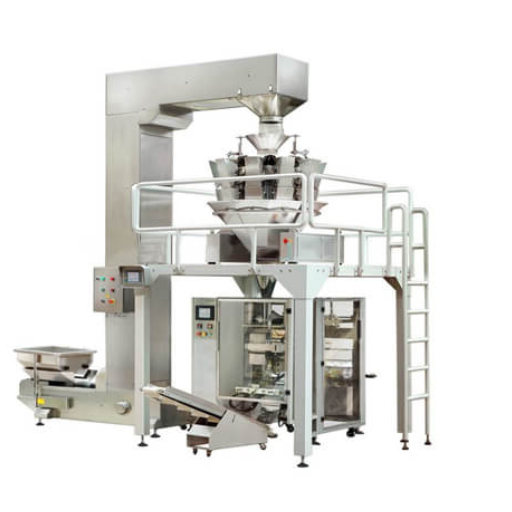
Industrial Food Packaging Equipment: A Complete Buyer’s Guide

Industrial food packaging equipment protects your product, extends shelf life, and determines how efficiently your line moves from finished goods to shipped orders. The right system reduces waste, cuts labor costs, and keeps your brand compliant with food safety regulations worldwide.
Maria runs a mid-sized snack plant in Southeast Asia. Six months ago, her team sealed every bag by hand.
Demand doubled after a retail contract. The manual station became a bottleneck. Bags leaked. Labels crooked. Workers could not keep up.
After she installed an automatic vertical form-fill-seal line with a multihead weigher, output rose by 40%. Waste dropped. Her retail buyer noticed the cleaner packages and placed a second order.
Her story is common. However, food manufacturers often treat packaging as the final afterthought. It should be planned as carefully as mixing, extrusion, or drying.
Whether you are comparing food packaging equipment manufacturers or planning your first automatic food packaging machine purchase, the same selection framework applies. This guide explains the main types of industrial food packaging equipment, how to match machines to your product, and what to evaluate when choosing a supplier.
Key Takeaways
- Industrial food packaging equipment covers primary, secondary, and end-of-line systems, from baggers to palletizers.
- The food and beverage packaging machine market reached approximately USD 24.2 billion in 2025 and is projected to grow at a 5.6% CAGR through 2035.
- Automatic machines now account for 56.1% of market value, while manual systems are shrinking toward 3.4% by 2035.
- Matching equipment to your product type, output targets, and compliance needs matters more than buying the fastest machine on the market.
- Shandong Loyal designs integrated production lines that connect packaging with upstream extrusion, drying, frying, and microwave processing.
What Is Industrial Food Packaging Equipment?
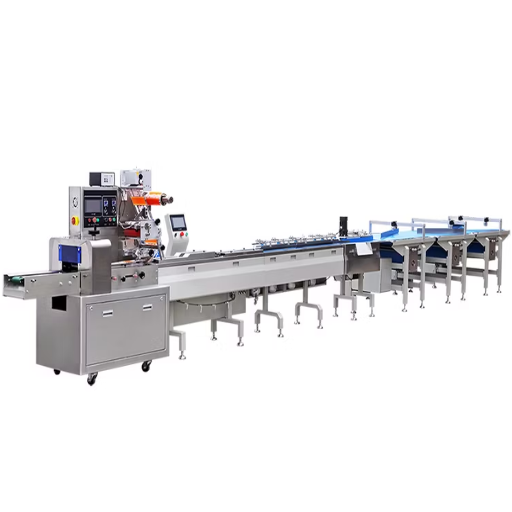
Industrial food packaging equipment is the machinery used to enclose, protect, label, and prepare food products for distribution. It includes primary, secondary, and end-of-line systems that work together to maintain quality, traceability, and throughput.
Primary packaging directly contacts the food. Think pouches, trays, bottles, vacuum bags, and flow-wrap films. Secondary packaging groups primary packages into cartons, cases, or multipacks. End-of-line packaging prepares pallets for warehousing and shipping.
A complete line might include a multihead weigher, a vertical form-fill-seal bagger, a metal detector, a carton erector, a case packer, and a palletizer. Each stage must work in sync. If one station is too slow, the whole line loses efficiency.
Modern equipment also handles traceability. Printers apply lot codes and best-before dates. Vision systems check seals and labels. Sensors feed data back to the plant control system. This is why packaging is no longer just a wrapping step. It is a quality and data checkpoint before your product leaves the factory.
Types of Industrial Food Packaging Machines
Below are the most common types of food packaging machines used in industrial plants today.
- Form-fill-seal (FFS) machines
- Pre-made pouch and doypack machines
- Vacuum and modified atmosphere packaging (MAP) machines
- Tray sealing and thermoforming machines
- Filling, dosing, and weighing systems
- Capping, sealing, labeling, and coding systems
- Secondary and end-of-line equipment
Understanding the main machine categories helps you narrow the field before contacting suppliers.
Form-Fill-Seal (FFS) Machines
A form-fill-seal food packaging machine creates bags from a roll of film, fills them, and seals them in one continuous process. Vertical form-fill-seal (VFFS) machines create bags from a roll of film, fill them vertically, and seal them. They are ideal for snacks, grains, powders, frozen vegetables, and granules. Horizontal form-fill-seal (HFFS), also called flow wrapping, packages solid items like biscuits, chocolate bars, and bakery goods horizontally. Biscuit production lines commonly use HFFS systems for this reason.
Pre-Made Pouch and Doypack Machines
These machines fill and seal pre-formed pouches. Stand-up pouches, zipper bags, flat-bottom pouches, and spouted pouches fall into this group. They are popular for coffee, pet food, nuts, premium snacks, and ready-to-drink products.
Vacuum and Modified Atmosphere Packaging (MAP) Machines
A vacuum food packaging machine removes air before sealing to extend shelf life. MAP replaces air with a protective gas mix, such as nitrogen and carbon dioxide. Both are essential for fresh meat, seafood, cheese, baked goods, and ready meals.
Tray Sealing and Thermoforming Machines
Tray sealers place products in trays and seal them with film or lids. Thermoforming machines create custom trays from plastic sheets. These systems are common for fresh produce, deli items, and meal kits.
Filling, Dosing, and Weighing Systems
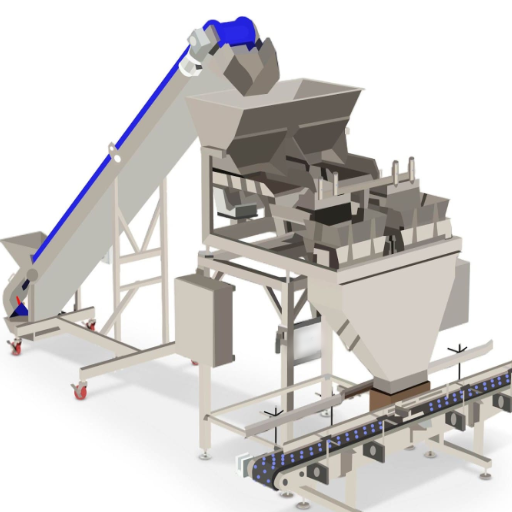
Multihead weighers handle snacks, granules, and irregular pieces. Auger fillers meter powders like flour, spices, and protein blends. Piston, peristaltic, and pump fillers manage liquids, sauces, oils, and pastes. Accurate dosing reduces giveaway and keeps recipes profitable.
Capping, Sealing, Labeling, and Coding Systems
Heat sealers, induction sealers, cappers, labelers, date coders, checkweighers, and metal detectors protect package integrity. They also ensure traceability and regulatory compliance.
Secondary and End-of-Line Equipment
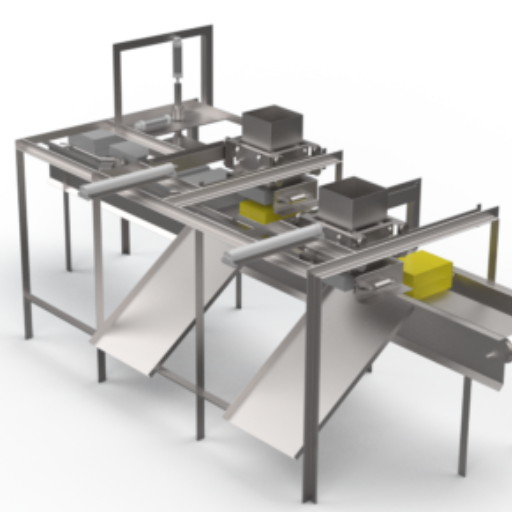
Cartoners, case packers, shrink wrappers, stretch wrappers, strapping machines, and palletizers prepare products for transport. These stages often offer the fastest return on automation because they reduce manual handling and damage.
Want to see how packaging fits into a full manufacturing workflow? Explore our complete food production line solutions.
How to Match Packaging Equipment to Your Product
The wrong machine can destroy product quality. The right machine protects it. Start with your product’s physical properties.
Solid snacks and extruded products need gentle handling to avoid breakage. VFFS or flow-wrap systems with controlled drop distances work well. Pair them with a multihead weigher for speed and accuracy. These systems connect easily to pasta and macaroni production lines and other extruded-product systems.
Powders, grains, and granules require dust control and precise dosing. Auger fillers or cup fillers with dust extraction keep the work area clean and the weight consistent. Breadcrumb production lines often use this type of packaging.
Liquids, sauces, and pastes need piston, peristaltic, or pump fillers. Viscosity, foaming, and temperature all affect machine selection. Hot-filled sauces need different seals than cold dressings.
Fresh and ready-to-eat foods usually require MAP or vacuum tray sealing. Shelf life and food safety are the top priorities.
Frozen and prepared meals need packaging that survives cold temperatures without cracking. VFFS systems with robust films and MAP options are common choices.
A comparison table can speed up the decision:
| Product Type | Common Equipment | Key Consideration |
|---|---|---|
| Snacks, extruded products | VFFS, flow wrap, multihead weigher | Gentle handling, seal strength |
| Powders, grains | Auger filler, VFFS, dust extraction | Dosing accuracy, hygiene |
| Liquids, sauces | Piston/pump filler, pouch/bottle system | Viscosity, temperature |
| Fresh meat, seafood | Vacuum/MAP tray sealer | Shelf life, gas mix |
| Ready meals | Tray sealing, thermoforming | Leak-proof seals, labeling |
| Frozen foods | VFFS, MAP, durable film | Cold resistance, puncture strength |
James manages a pet food facility in North America. He originally bought a low-cost pouch machine for dry kibble.
Fill weights varied by several grams per bag. Retail fines added up. After switching to a VFFS line with a multihead weigher, his giveaway fell by 2%.
On a line running 2,000 bags per hour, that saving paid for the upgrade within 18 months.
Key Selection Criteria for Industrial Food Packaging Equipment
Speed and price are easy to compare. They are also the easiest criteria to get wrong. Use this framework instead.
When choosing industrial food packaging equipment, focus on these seven factors:
- Production volume and speed requirements
- Packaging format and flexibility
- Changeover time and multi-SKU capability
- Hygienic design and food safety compliance
- Automation level and labor integration
- Footprint, utilities, and facility fit
- Total cost of ownership and ROI
Production Volume and Speed Requirements
Match machine output to your daily targets, not your peak hopes. A machine rated at 200 bags per minute may only hit 120 with your product, film, and facility conditions. Ask suppliers for guaranteed speeds based on your actual samples.
Packaging Format and Flexibility
If you run one SKU all year, a dedicated machine is cost-effective. If you run many SKUs or seasonal formats, quick-change tooling and recipe storage become critical. Some modern machines can switch pouch sizes in under 15 minutes.
Changeover Time and Multi-SKU Capability
Long changeovers kill effective capacity. A line that runs 180 bags per minute but needs 45 minutes to change over loses more output than a 120-bags-per-minute line with a 5-minute changeover.
Hygienic Design and Food Safety Compliance
Look for food-safe stainless steel construction, smooth surfaces, quick-release parts, and washdown-ready electrical enclosures. Confirm compliance with HACCP principles, FDA food contact regulations, EU food contact rules, and CE or UL electrical safety as needed.
Automation Level and Labor Integration
Manual and semi-automatic machines suit low volumes and startups. Fully automatic systems reduce labor and improve consistency. Collaborative robots and smart controls can bridge gaps for growing operations.
Footprint, Utilities, and Facility Fit
Verify floor space, ceiling height, electrical supply, compressed air demand, and access for maintenance. A machine that does not fit your building becomes an expensive mistake.
Total Cost of Ownership and ROI
Purchase price is only the entry fee. Include installation, commissioning, training, spare parts, energy, compressed air, maintenance, and downtime. Machines selected on true cost of ownership typically deliver higher ROI and fewer disruptions over five years.
If you are comparing quotes and want help calculating true ROI, request a custom packaging equipment analysis from our team.
Automation Trends Shaping Industrial Food Packaging Equipment in 2026
Packaging machinery is changing quickly. Manufacturers who understand these trends make better long-term investments.
Full-Line Automation
An automatic food packaging machine now accounts for roughly 56% of market value. Manual machines are projected to shrink to just 3.4% of the market by 2035. Labor shortages and rising wages are pushing producers toward integrated lines.
Robotics, Cobots, and AI-Powered Quality Control
Robotic pick-and-place, palletizing, and collaborative robots now handle fragile and irregular products. AI-driven vision systems detect seal defects, label errors, and foreign objects in real time. This reduces unplanned downtime and improves consistency.
Smart, Connected Packaging Lines
Machines with IoT sensors feed data to plant ERP and maintenance systems. Remote monitoring, predictive maintenance, and digital batch records are becoming standard. Smart labeling with QR codes and RFID supports traceability and consumer engagement.
Sustainability-Ready Machinery
Equipment is being redesigned to handle compostable films, paper-based materials, and thinner recyclable substrates. Ultrasonic sealing and advanced tension control help producers switch to sustainable formats without sacrificing speed or seal quality.
Flexibility and Modularity
Multi-SKU production and smaller batch sizes demand quick-change, modular machines. This is especially important for snacks, bakery, confectionery, ready meals, and personalized products. Nutrition bar production lines benefit from modular packaging systems that can switch between wrapper formats and portion sizes.
The global food and beverage packaging machine market is projected to reach USD 41.5 billion by 2035, growing at a 5.6% CAGR from 2025. (Global Market Insights)
![Integrated industrial food packaging equipment line with VFFS bagger, multihead weigher, and conveyor system]
How to Evaluate Industrial Food Packaging Equipment Suppliers
The machine matters. The supplier of your industrial food packaging equipment matters just as much. Not all food packaging equipment manufacturers offer the same level of engineering support.
As a result, a low-price machine with weak support becomes expensive the first time it stops unexpectedly.
Technical Capability and Customization
Can the supplier adapt the machine to your product, film, and line layout? Cookie-cutter solutions often need expensive workarounds. Look for engineers who ask about your recipe, package format, and upstream equipment.
Compliance Certifications
Confirm CE, UL, or CSA electrical approval. Verify FDA or EU food contact compliance. For pharmaceutical-adjacent foods or nutraceuticals, ask about IQ/OQ/PQ validation support.
Installation, Training, and After-Sales Support
A good supplier provides installation, operator training, maintenance training, and documentation. Ask how quickly spare parts ship and how service requests are handled.
Spare Parts Availability
Long lead times for critical parts can idle your line for weeks. Check regional spare parts stocking and whether common wear parts are locally available.
Factory Acceptance and Site Acceptance Testing
Request FAT before shipment and SAT after installation. These tests prove the machine meets agreed specifications using your product and materials.
Red flags to watch for:
- No warranty or limited support documentation
- Non-food-grade materials in product contact zones
- Overpromised speeds without product testing
- Missing safety certifications
- Complex changeover procedures with limited training
Building an Integrated Packaging Line with Shandong Loyal
Packaging should not feel like an isolated purchase. It should connect smoothly to everything that happens before it.
Chen operates a ready-meal facility in Europe. His previous supplier provided a tray sealer that worked well on its own.
The machine could not communicate with his upstream cooking and cooling systems. Changeover took an hour. Downtime was frequent.
When he moved to a Shandong Loyal integrated line, the packaging station received production signals from the cooking module. Recipes synchronized automatically. Changeover dropped to under 20 minutes.
Shandong Loyal Industrial Co., Ltd. designs industrial food packaging equipment and upstream processing systems as connected solutions. Our packaging solutions integrate with instant noodle production lines, fried snack production lines, pet food production lines, and industrial microwave drying systems.
Our food equipment solutions are built with food-safe stainless steel, configured to your product specifications, and supported by a global technical team. Whether you need a single packaging machine or a complete turnkey line, we tailor the solution to your output targets, compliance requirements, and growth plans.
Frequently Asked Questions
What is the difference between VFFS and HFFS packaging?
VFFS, or vertical form-fill-seal, forms bags vertically from a roll of film. It is ideal for free-flowing products like snacks, grains, powders, and frozen vegetables. HFFS, or horizontal form-fill-seal, also called flow wrapping, forms packages horizontally. It works best for solid, uniform items such as biscuits, chocolate bars, and nutrition bars.
How much does industrial food packaging equipment cost?
Prices vary widely by machine type and automation level. A small sealing machine may cost a few hundred dollars. A complete automatic food packaging line can range from 80,000to80,000to300,000 or more. Total cost of ownership includes installation, training, spare parts, energy, and maintenance.
What certifications should food packaging equipment manufacturers have?
Look for CE or UL electrical safety certification, FDA or EU food contact compliance, and HACCP-compatible hygienic design. For certain markets, ISO 9001 quality management and local electrical approvals are also important.
Which packaging machine is best for snack products?
Most snack producers use a VFFS bagger paired with a multihead weigher. Delicate or coated snacks may need gentle handling and controlled drop distances to reduce breakage. For bar-type snacks, a flow wrapper is often the better choice.
How do I integrate packaging with upstream processing?
Start by choosing equipment that communicates through common protocols such as Ethernet/IP or Modbus. Ensure the packaging line can receive production signals from cooking, drying, extrusion, or frying systems. A single supplier that provides both upstream processing and industrial food packaging equipment can simplify integration.
Conclusion
Industrial food packaging equipment is one of the most important investments a food manufacturer can make. The right system protects product quality, reduces waste, and keeps your line running at target output. The wrong system creates bottlenecks, compliance risks, and hidden costs.
To choose wisely, focus on your product characteristics, production volume, flexibility needs, hygienic design, automation level, and total cost of ownership. Therefore, evaluate food packaging equipment manufacturers on technical capability, certifications, support, and proven testing, not just list price.
Key takeaways:
- Match the food packaging machine to your product type first.
- Plan for changeovers and multi-SKU flexibility.
- Calculate total cost of ownership, not just purchase price.
- Prioritize hygienic design and global compliance.
- Integrate industrial food packaging equipment with upstream processing for the best results.
Ready to upgrade your packaging line? Contact Shandong Loyal today for a customized quote and production-line assessment.