
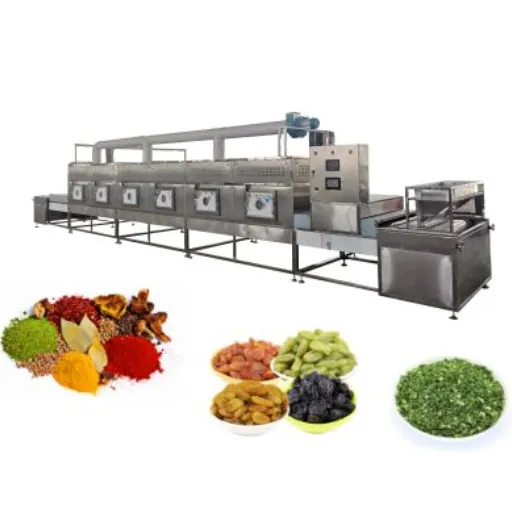
Industrial Microwave Sterilizer: A Complete Guide for Food Processors

What would you do if I told you that there is a way to lower the energy costs by thirty five percent while preventing loss of volatile oils which usually are the main reason for the increased costs of spices? This question is more than just an abstract thought for food factories looking to reduce energy costs while maintaining the quality of their produce. It is the only logical argument explaining why many processors have decided to convert from an autoclave sterilizer to the use of an industrial microwave sterilisation equipment.
It is obvious that if safety measures are taken overall, these limits will be tighter and wider across the globe. No Scope for compromise on hygiene can be seen with the increasing demands from the regulatory authorities, retailers and the end consumers alike. The blunt answer would be no as most of the products get overcooked under retort and retarded technologies and this extends beyond ninety minutes thus consuming a lot of water and time. There should be another perspective to this.
To sum up, you’ll know all about microwaves sterilizing processes, when they are better than autoclaves, and how to choose a Microwave Sterilization Machine for a production line. Real cases, requirements of the packaging activity, and the economic benefits from maintaining such machinery will also be analyzed for the decision making process.
Here is what we will cover:
- How industrial microwave sterilizers work at the technical level
- Microwave sterilization vs autoclave: a side-by-side comparison
- The key benefits driving adoption in food processing
- Top applications from spices to pet food and RTE meals
- How to choose the right system for your operation
- Packaging compatibility and cold-spot prevention
- Maintenance and total cost of ownership
What Is an Industrial Microwave Sterilizer?
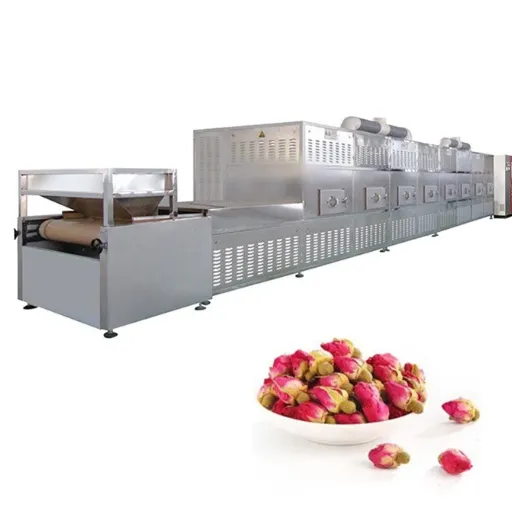
Microwave Sterilization Machine is also a mass production microwave food sterilization and pasteurization equipment system that relies on electromagnetic waves to kill the microbes within the food. Whereas the traditional retort systems work by heating the product from the outside in, microwave systems are capable of heating the product internally. This basic factor alters the whole definition of efficiency, speed and quality of end products.
How Microwave Sterilization Works
At the heart of the system is a magnetron that emits microwave energy, usually at 2.45 GHz for standard food applications or 915 MHz for heavy industrial lines. The waves travel through a waveguide into a tunnel or chamber where the product passes on a conveyor belt.
The energy penetrates the food and excites water molecules, creating rapid internal friction. That friction raises temperature quickly and uniformly. Two effects combine to kill bacteria, molds, and yeasts:
- Thermal effect: High temperatures denature proteins in microbial cells.
- Biological effect: The electromagnetic field disrupts cell membrane permeability and can damage microbial DNA, preventing reproduction.
Want to see how this technology fits into a complete production line? Explore our industrial microwave systems to compare drying and sterilization configurations.
Batch vs. Tunnel Microwave Sterilizers
There are two classes of Microwave Sterilization Machine, which are available for food processing industries.
Batch microwave sterilization is like bulky conventional oven. The machine is loaded with trays of production, the door is closed and a operated programme is run. The same machines are best suited for less production, especially for R&D purposes, or for operations that have many SKUs. Such allow saving the production area and limit machines however that’s the very downside of processing machines – the limited throughput.
The tunnel microwave sterilizers, on the other hand, are designed for formulation matrix-like operations. A long tubular sterilizer is fed at either end with the product on a conveyor belt, where it is penetrated by microwaves and exits the opposite end sterilized. At minimum conveyor speed belt may be set from 0 m/min to 6m/min. This refers to the multiple studio buildings because conveyor length adds up to a tunnel microwave sterilizer which processes materials at a rate of several hundred if not a couple of thousand kilograms an hour and hence applicable for those spice making factories, namely snack & pet food factories which runs high volume lines.
Key System Components
A complete microwave sterilization machine includes more than just the magnetron. Critical components are:
- Magnetron / RF generator: Produces the microwave energy.
- Waveguide: Channels energy into the treatment zone.
- Tunnel or chamber: The stainless steel enclosure where sterilization happens.
- Conveyor belt: Moves product continuously through the field.
- PLC control system: Manages power levels, belt speed, temperature monitoring, and data logging.
- Cooling system: Keeps magnetrons and electronics within safe operating temperatures.
Most industrial units are built from food-safe stainless steel (SUS 304 or 316) and carry CE or FDA certifications depending on the market.
Microwave Sterilization vs Autoclave: Which Is Right for You?
An important piece of equipment in food processing industries is choosing between an autoclave, i.e. retort, or a microwave sterilization machine. An incorrect decision can sometimes lead to financial loss or internal control difficulties or quality problems in the products.
Now let us compare in what really matters for any production manager.
Speed and Throughput
Microwave sterilizers are a much more expedient method of achieving commercial sterility in comparison to heat penetration. Active sterilization takes not more than ten minutes, while the preparation procedure and completion of the cycle is less than thirty minutes, sometimes even less than forty-five minutes. The process is accelerated due to velocentric heating; the product is essentially being heated inside its entirety at the same time.
Cf Instead, these autoclaves depend on steam whose effect begins from the outer surface and works its way inwards. In instances where heavy abandonment products enclosed in large exclosures are involved, A considerable amount of time is consumed. For example, a cycle of retort normally takes an hour or two if the time to heat up and cool down is included as well.
It is apparent that if the operation is focused on rapidity and continuous engagement, microwave is the obvious choice.
Energy and Water Consumption
Electrical energy in microwaves is transferred to the food for conversion to heat. For this reason, wastage is very few. Research conducted on different facilities shows that Microwave Sterilization Machine energy consumption is approximately 60-75% less than steam- water sterilizers and even this small quantity of energy does not involve much water.
An autoclave typically uses about twenty to fifty gallons of water within the course of a single cycle for the production of steam and water cooling. However, a similar microwave system may in respective cases require around 800 ml per cycle. This is important for those who have processors in regions where the cost of water usage is high or where resource savings are highly encouraged.
Product Quality and Nutrient Retention
This is where the advantages of microwave technology are well pronounced. The products do not undergo such boiling as is observed in the cans because of the short heat and internal exposure.
The spices do not lose their aromatic oils and vibrant colors. The texture and taste of ready-to-eat foods are preserved. Heat liable vitamins are retained within fruits and vegetables. Kibble in pet foods retains its density and does not become mushy on the outside due to extreme steam processing.
Autoclaves provide sterile conditions; however, it results in the deterioration of taste and nutritive content.
Sterilization Efficacy and Regulatory Acceptance
Autoclaves are considered to be the most effective method in terms of destroying the spores, particularly of bacterial pathogen Clostridium botulinum. Accordingly, the retorting of low-acid canned products remains an essential requirement as even as not so incompetent authority would have, why. There is no question about validation protocols of an autoclave by the regulators of any country especially the developed ones.
In fact, there are some foods that are sterilized using microwave based process as it achieves commercial sterility, Unfortunately, however, these microwave sterilization reports are highly influenced by the moisture content of the product, density and the even distribution of energy. The validation procedure will include temperature profiling to illustrate that there were no part of the product that remained cold. There is a risk of botulism, therefore some processors employ such hybrid systems combining the ease and efficiency of microwaves with the assurance of pressurized steam suitable for food processing without the frozen shelf.
Decision Framework
Use this simple framework to guide your choice:
| Choose an Autoclave If… | Choose a Microwave Sterilizer If… |
|---|---|
| You process low-acid canned foods | You process spices, herbs, or seasonings |
| You use metal containers | You use plastic, glass, or flexible pouches |
| Absolute spore destruction is non-negotiable | Speed and energy savings are priorities |
| Your batches are large and dense | You run continuous high-volume lines |
| Regulatory simplicity matters most | Product quality preservation is critical |
Need help matching sterilization technology to your specific product? Our engineers design food production lines with integrated sterilization, drying, and packaging solutions.
Key Benefits of Microwave Sterilization in Food Processing
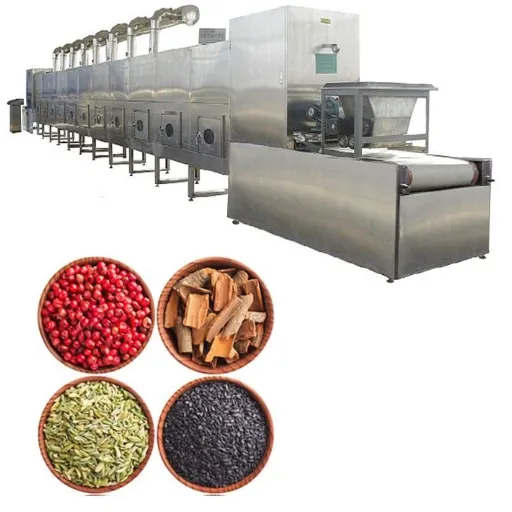
It is estimated that the global sterilization equipment market size will be approximately $27.6 billion in 2031, expanding at compound annual growth rate of approximately 7.3%. Among those who need the equipment most is the microwave technology sector because the advantages cannot be overlooked.
Dramatically Faster Processing
If it is compared with the methods of retort, the microwave sterilization process can diminish the total duration of process by even almost three-quarters, while maintaining the same destruction of the microorganism or the same Finfinity value as the case may be. This means an increase in the yield, a decrease in the production execution times, and a shorter time to fulfilling incoming customer demands.
Superior Product Quality
Short heat exposure minimizes overcooking. For quality-sensitive products, this is transformative.
- Spices keep their aroma, color, and oil content.
- RTE meals avoid the soggy texture that turns consumers away.
- Nutritional powders preserve heat-sensitive vitamins and bioactive compounds.
- Pet food maintains consistent density and palatability.
Significant Energy and Cost Savings
Industrial microwave sterilizers for sterilization of multiple articles are known within around 30–40 per cent less processing power than autoclaves. Adding with water exploitation, labor saving and facilitating the batch handling in smaller facility benefits even the more control over the cost of ownership increases the usage of microwave sterilization over the years.
Packaging Flexibility
Microwaves transmit through different kinds of plastic and also some glass materials. This enables the surface to be sterilized even with the product inside the cooled vessel, after the process of processing completed the vessel is not opened which means there is no secondary contamination.
Include packages made of polypropylene (PP), polyethylene terephthalate (PET), polycarbonate (PC), ABS, nylon etc. The sealed package benefit applies to most ready-to-eat, snacks and powdered pulverized health supplements.
Chemical-Free Clean-Label Processing
In contrast to Ethylene Oxide or chemical treatment, it does not use harmful residues either (microwaves). This meets the needs of clean label, as consumers and buyers are pushing for this more in the recent times. And, also aids in reducing the wastewater treatment issues and ensures no dangerous chemicals at the packaging end.
Top Applications for Industrial Microwave Sterilizers
Not every food category benefits equally from microwave sterilization. The technology excels in specific applications where speed, quality preservation, and continuous processing matter most.
Spices and Seasonings
It is the biggest application of . Tunnel . Microwave . Sterilization . Machine or Microwaves in food processing . In food production some spices such us paprika, cumin, pepper, chili powder, dehydrated herbs need to eliminate pathogens while avoiding removal of volatile essential oils which make these spices expensive.
Such as when applying steam to make sterilization involves evaporation of volatile contents resulting in deviation of visual color etc. Such versions of Application of irradiation heat treatment provides the same efficacy on E. coli and Salmonella eradication while withstanding sensory changes which are aimed at justifying such large price differentials.
For instance, in the year 2023, Chen had to account for rebuilding his Sichuan cooking creation building and instead of using the steam sterilizer he enhanced his line with a 60 kilowatt microwave tunnel. A cycle time of four hours was now reduced to twenty-five minutes. After six months, the test conducted in his exportation laboratory indicated that the amount of aromatic oil in his product was high while purchases by two clients from Europe increased by 30% due to color and smell in accordance with their needs.
Ready-to-Eat (RTE) Meals
Microwave Sterilization Machine is a fully automatic device capable of cooking food more quickly by utilizing high G force generated by the rotation of a centrifuge placed over the food.
Pet Food and Aquatic Feed
Dry kibble, treats, and fish feed all benefit from gentle, uniform sterilization. Pet owners increasingly demand high-quality nutrition, which means processors must kill pathogens without degrading proteins, fats, or palatability.
A microwave sterilization machine integrated downstream from an extruder can provide the final safety step while maintaining the precise nutritional profile that premium brands require. If you are expanding pet food capacity, see our pet food production line solutions.
Grains, Nuts, and Dried Goods
Soybean flour, dried sweet potatoes, tea leaves, nuts, and dried fruits all face mold and spoilage risks. Microwave sterilization extends shelf life without preservatives, opening clean-label positioning in health-conscious markets.
Food Powders and Nutraceuticals
Baby food powders, protein supplements, and nutritional blends require gentle, uniform heat treatment. Batch microwave systems are particularly popular here because they allow precise control over small, high-value runs with minimal product loss.
How to Choose the Right Microwave Sterilization Machine
Selecting the optimal industrial microwave sterilizer requires matching technology to your product, throughput, and operational goals. Here is a practical framework.
Determine Your Production Mode
Batch systems work best for:
- Low-volume or seasonal production
- High SKU variety
- R&D and recipe testing
- Nutraceuticals and high-value powders
Tunnel systems work best for:
- Continuous high-volume lines
- Spices, snacks, and RTE meals
- Operations with consistent product flow
- Facilities aiming to minimize labor per kilogram
Select the Right Frequency
Most food-grade microwave sterilizers operate at one of two frequencies:
- 2450 MHz: The standard frequency for most food applications. It works well for smaller products and moderate throughput lines.
- 915 MHz: Offers deeper penetration and higher power capacity. It is the better choice for very large industrial tunnels, dense products, or operations pushing maximum throughput.
If you are processing thick meat products or dense grain masses, 915 MHz may deliver more uniform results. For spices and powders, 2450 MHz is usually sufficient.
Match Power and Capacity to Throughput
Industrial units range from compact 30-kW systems to massive 200+ kW tunnels. To size correctly, consider:
- Target kilograms per hour
- Product density and moisture content
- Required lethality (F₀) value
- Belt width and tunnel length
- Adjustable transmission speed (typically 0–6 m/min)
A reputable supplier will run test batches and calculate the exact power and dwell time your product requires.
Evaluate Control and Automation Features
Modern microwave sterilization machines should include:
- PLC control with an HD touchscreen interface
- Adjustable power output by zone
- Real-time temperature monitoring and feedback
- Data logging for validation and traceability
- Automated belt speed control
- Alarm systems for overheating or magnetron failure
These features reduce operator error, simplify audits, and support Industry 4.0 integration.
Check Compliance and Certification
Verify that the equipment meets the standards of your target markets:
- CE marking for Europe
- FDA and USDA considerations for North America
- Food-safe stainless steel construction (SUS 304 or 316)
- Sanitary design with easy-clean surfaces and minimal crevices
Ready to find a sterilization system built for your exact product? Contact our team for a custom assessment and test-run schedule.
Packaging and Cold Spot Considerations
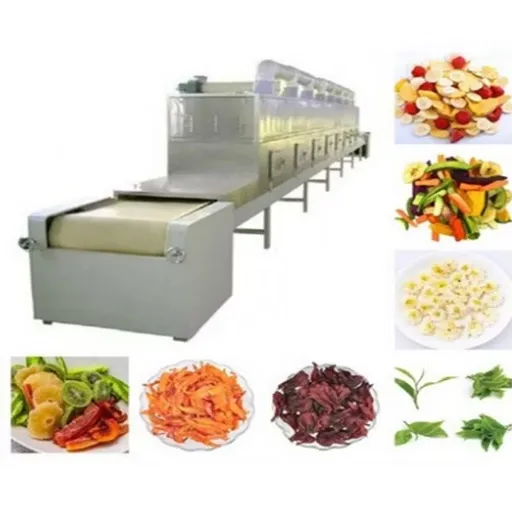
Even the best industrial microwave sterilizer will underperform if packaging or product geometry blocks uniform energy distribution. Here is what you need to know.
Compatible Packaging Materials
Microwaves penetrate many common packaging materials, which is one of the technology’s biggest advantages. Safe options include:
- Polypropylene (PP)
- Polyethylene terephthalate (PET)
- Polycarbonate (PC)
- ABS
- Nylon
- Certain glass types (verify thermal shock resistance)
Materials to avoid:
- Polyethylene (PE) — softens and deforms easily under microwave heating
- Ordinary or tempered glass — risk of thermal shock and shattering
- Metal containers or foil — reflects microwaves and can cause arcing
Preventing Cold Spots and Uneven Heating
Cold spots are the enemy of effective sterilization. If one corner of a product fails to reach lethal temperature, the entire batch is compromised.
Advanced systems mitigate this risk through:
- Multi-source microwave feed: Multiple magnetrons positioned around the tunnel create overlapping energy fields.
- Rotating trays or stirred beds: For powders and granular products, agitation ensures all particles pass through the hot zone.
- Real-time temperature mapping: Infrared sensors and feedback loops adjust power delivery dynamically.
- Controlled product layer thickness: Thin, even layers on the conveyor belt heat more uniformly than thick piles.
Validation protocols should include thermocouple mapping across the full belt width and length to prove consistent lethality before production begins.
Hybrid Systems for Complex Products
For dense, viscous, or layered products that resist uniform microwave heating, hybrid systems offer an elegant solution. These units combine microwave energy with overpressure steam or vacuum chambers. The microwave provides rapid initial heating, while the pressurized steam ensures deep penetration and sterility assurance.
Hybrid configurations are particularly useful for:
- Thick meat products in sauce
- Dense grain-based meals
- Products where regulatory scrutiny is especially high
Maintenance and Total Cost of Ownership
The purchase price of a microwave sterilization machine is only part of the financial picture. Let us look at the full cost of ownership.
Routine Maintenance Requirements
Well-maintained microwave systems are relatively straightforward to service. A typical schedule looks like this:
Daily:
- Clean conveyor belts and chamber surfaces
- Remove product residue from waveguide openings
- Check cooling water or air flow
Weekly:
- Inspect waveguides for damage or contamination
- Verify magnetron cooling system performance
- Check door seals and safety interlocks
Monthly:
- Inspect belt alignment and tension
- Review electrical connections and grounding
- Calibrate temperature sensors
Annually:
- Professional inspection of magnetrons and RF generators
- Replacement of worn belts, seals, and bearings
- Validation run with thermocouple mapping
Magnetron Lifespan
Magnetrons are the most critical wear component. In typical industrial use, they last 5,000 to 8,000 hours before replacement. With proper cooling and clean operating conditions, lifespan can extend toward the upper end of that range.
Energy and Labor Savings
The operating economics strongly favor microwave over autoclave in suitable applications:
- Energy: 30–40% lower electricity bills
- Water: Near-elimination of steam and cooling water costs
- Labor: Continuous tunnel systems require less operator attention per kilogram than batch autoclaves
- Footprint: Tunnel systems often occupy less floor space than equivalent retort installations
When these savings are projected over a ten-to-fifteen-year equipment life, the total cost of ownership frequently favors microwave sterilization even when the upfront capital cost is higher.
Common Mistakes When Investing in Microwave Sterilization
Even experienced operations managers can stumble when specifying a new industrial microwave sterilizer. Avoid these common pitfalls.
Underestimating Validation Requirements
Regulators and customers alike want proof that every product reaching the market is safe. Do not assume that running a cycle at a given power setting is enough. You need documented temperature mapping, lethality calculations, and repeatable protocols.
Choosing the Wrong Frequency for Product Density
A 2450 MHz system may struggle with very dense products, while a 915 MHz system might be overkill for lightweight spices. Match frequency to product physics, not just budget.
Overlooking Packaging Compatibility
Not all plastics behave the same under microwave energy. Test your exact packaging materials under production conditions before committing to a full line.
Ignoring After-Sales Support and Spare Parts
Microwave sterilizers are sophisticated machines. Ensure your supplier offers responsive technical support, rapid spare parts availability, and on-site training. Downtime on a critical path sterilization line is expensive.
Failing to Calculate Total Cost of Ownership
The lowest purchase price is not always the best deal. Factor in energy, water, labor, maintenance, and expected equipment life when comparing quotes.
Not Planning for Line Integration
Your sterilizer does not operate in isolation. Consider how it connects upstream to mixers, extruders, or packaging equipment and downstream to cooling, labeling, and palletizing. A modular layout makes future expansion far easier.
Conclusion
An industrial microwave sterilizer is not a universal replacement for every autoclave on the market. But for the right applications—spices, RTE meals, pet food, dried goods, and nutraceuticals—it delivers a compelling combination of speed, quality preservation, and energy efficiency.
Here are the key takeaways to remember:
- Microwave sterilization heats from the inside out, cutting cycle times by up to 72% compared to retort processing.
- Energy savings of 30–40% and dramatic water reduction make the technology attractive from a sustainability and cost perspective.
- Product quality wins are significant: better color, flavor, texture, and nutrient retention.
- Tunnel systems excel at high-volume continuous production, while batch systems suit R&D and low-volume runs.
- Validation, packaging compatibility, and cold-spot prevention are critical success factors.
- Total cost of ownership often favors microwave sterilization over a ten-to-fifteen-year horizon.
If you are evaluating a new sterilization line or looking to upgrade from steam-based processing, the next step is clear. Speak with an equipment specialist who understands your product, your throughput targets, and your quality requirements.
Request a Custom Microwave Sterilization Assessment →
At Shandong Loyal Industrial Co., Ltd., we design microwave drying and sterilization systems tailored to your exact production needs. From pilot testing to full-scale tunnel installations, our team helps you achieve the safety, efficiency, and quality your customers demand.
Need to paste into Word instead of downloading? Try Copy for Word in Markdown to HTML.