
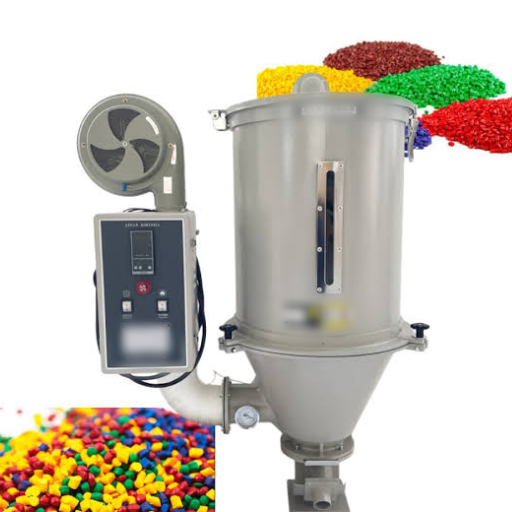
Industrial Pellet Dryer Machine: A Complete Guide for Feed & Food Producers

An industrial pellet dryer machine removes excess moisture from extruded or pressed pellets so they can be stored, transported, and sold without spoiling, breaking, or losing nutrition. For food, feed, pet food, and aquatic feed producers, the right dryer protects product quality, cuts waste, and keeps a production line running at full capacity.
If you’ve ever opened a bag of pet kibble and found dusty crumbles at the bottom, you’ve already seen what poor drying does. Pellets that leave an extruder hot and wet are soft. Without controlled drying, they crack in the cooler, absorb mold in storage, or lose the vitamins and fats that make the product valuable. The dryer isn’t just a heating box. It’s the bridge between extrusion and packaging.
In this guide, you will learn how an industrial pellet dryer works, which dryer type fits which product, what specifications matter, and how to integrate a dryer into a complete extrusion line. You will also see real cost ranges and a step-by-step selection framework you can use today.
Key Takeaways
- An industrial pellet dryer machine reduces pellet moisture to a safe storage level, typically 8–12% for feed and pet food.
- Rotary drum, mesh-belt, batch oven, and flash dryers each suit different materials, capacities, and budgets.
- Matching dryer capacity to your extruder output, heat source, and pellet fragility matters more than choosing the largest machine.
- Food-grade SUS304/316 construction, PLC control, and gentle handling protect both product quality and compliance.
- Total cost of ownership — energy, maintenance, breakage, and labor — usually reveals more value than the purchase price alone.
What Is an Industrial Pellet Dryer Machine?
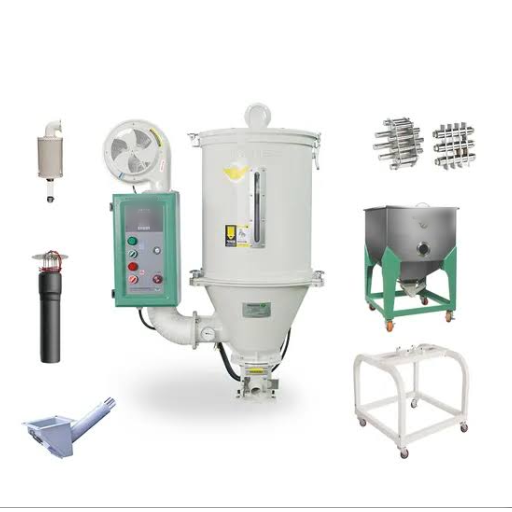
An industrial pellet dryer machine — also called a feed pellet dryer machine or general industrial pellet drying equipment — is a continuous or batch heating system that evaporates water from pellets after extrusion, pelleting, or granulation. It uses hot air, steam, thermal oil, gas, or electric heat to move moisture out of the product while controlling temperature, airflow, and residence time.
In a typical food or feed production line, the dryer sits between the extruder and the cooler or flavoring drum. Wet pellets enter at 15–22% moisture and leave at a level safe for storage. For fish feed, that target is often 8–12%. For biomass or wood pellets, producers usually aim for 10–15%. The exact number depends on the product, packaging, and local climate.
Drying does more than prevent spoilage. It also sets the final texture. Under-dried pellets stay soft and break into fines. Over-dried pellets can become brittle, lose palatability, or scorch on the surface.
A well-sized dryer gives you a narrow, repeatable moisture window batch after batch.
Mini-story: Maria runs a small pet food plant in Southeast Asia. When she launched, she used a borrowed batch oven to dry her kibble. It worked for 200 kg a day, but once she added a twin-screw extruder, the oven became a bottleneck. Pellets sat too long, turned brown on the edges, and her rejection rate hit 8%. After switching to a continuous mesh-belt dryer matched to her extruder output, moisture variation dropped below 1% and rejects fell under 2%. The dryer didn’t just dry faster. It made her whole line predictable.
How an Industrial Pellet Dryer Works
Most industrial pellet dryers follow the same basic cycle, even if the mechanical design changes:
- Heating. A burner, electric heater, steam coil, or thermal oil system raises air to the set temperature.
- Feeding. Wet pellets enter the dryer on a conveyor, through a rotary drum, or into a batch chamber.
- Heat transfer. Hot air contacts the pellets, evaporating surface moisture first and then internal moisture as heat moves inward.
- Exhaust. Fans pull moist air out of the drying chamber, often through a cyclone or filter to capture dust.
- Discharge. Dried pellets exit at the target moisture and move to cooling, flavoring, or packing.
The key control points are temperature, airflow, residence time, and relative humidity inside the chamber. In modern systems, a PLC adjusts these variables automatically. Some dryers also include inline moisture sensors that feed real-time data back to the controller, so the machine compensates for wetter or drier incoming product.
The heat source you choose affects both operating cost and product quality. Gas and biomass burners usually cost less to run but need emission controls. Electric heaters are clean and precise but more expensive per kilowatt-hour in many regions. Steam systems work well when a boiler already serves the extruder, letting one heat source support multiple machines.
Types of Industrial Pellet Dryers
Choosing the right dryer starts with matching the machine to your material, capacity, and fragility. Here are the four main types used in food, feed, and biomass production.
Rotary Pellet Dryer (Rotary Drum Dryer)
A rotary drum dryer is a large, slightly inclined cylinder that rotates while hot air flows through it. Internal lifting flights pick up the pellets and shower them through the air stream. This creates excellent heat transfer and works well for coarse, high-moisture materials.
Rotary dryers dominate biomass and wood pellet plants because they handle moisture reductions from 40–50% down to 8–15%. They come in single-pass, double-pass, and triple-pass designs. Triple-pass models pack a long drying path into a smaller footprint by routing material through three nested drums.
Best for: wood chips, sawdust, bagasse, agricultural waste, high-volume feed ingredients.
Typical capacity: 500 kg/h to 5+ t/h.
Pros: high throughput, handles wet and sticky feed, continuous operation.
Cons: higher capital cost, more dust generation, can damage fragile feed or pet food pellets if drum speed is wrong.
Mesh Belt Pellet Dryer (Conveyor Dryer)
A mesh-belt dryer moves pellets on one or more perforated stainless steel belts through a heated chamber. Hot air blows across and through the product layer, giving gentle, controlled drying. Multi-layer designs let pellets travel back and forth in a compact space.
This is the most common choice for extruded pet food, fish feed, and snack pellets because it treats fragile products gently. It is also the preferred pet food dryer machine configuration for premium kibble lines. Belt speed, layer thickness, temperature, and humidity can all be adjusted independently.
Best for: pet food kibble, floating fish feed, puffed snacks, delicate food pellets.
Typical capacity: 300 kg/h to 3 t/h per unit; larger modular systems reach 12 t/h.
Pros: gentle handling, precise control, food-grade construction, easy to inspect and clean.
Cons: larger footprint than rotary dryers, higher initial cost for large capacities.
For aquatic feed specifically, a dedicated fish feed pellet dryer usually uses the same mesh-belt architecture with corrosion-resistant belts and lower temperatures to preserve water-stable feed quality.
Batch / Hot-Air Oven Dryer
Batch dryers load a fixed quantity of pellets into a chamber, dry them, then discharge the batch before the next load. Small vertical dryers and cabinet ovens fall into this category.
These machines suit startups, R&D labs, and multi-product facilities that switch recipes often. They’re simple to operate and require less integration with upstream equipment. However, they usually use more energy per ton and produce less uniform moisture than continuous dryers.
Best for: small farms, pilot plants, product development, low-volume specialty feeds.
Typical capacity: 25–600 kg/batch, with cycles around 30–60 minutes.
Pros: low upfront cost, flexible, easy to move.
Cons: lower uniformity, higher labor, not suited for high-volume continuous lines.
Flash / Airflow Dryer
A flash dryer suspends fine particles in a high-velocity hot-air stream. Drying happens in seconds, making the design very compact. It works best for powders, sawdust, rice husk, and other small, light particles rather than formed pellets.
Best for: fine biomass powders, agricultural fines, pre-pelletizing drying.
Typical capacity: 300 kg/h to 2 t/h.
Pros: compact, fast, energy-efficient for fine materials.
Cons: not suitable for formed pellets or fragile products.
Quick Comparison: Rotary vs. Belt vs. Batch vs. Flash
| Dryer Type | Best Material | Capacity Range | Moisture Drop | Footprint | Gentleness |
|---|---|---|---|---|---|
| Rotary drum | Biomass, coarse feed, wood chips | 500 kg/h – 5+ t/h | Up to 40–50% | Medium to large | Moderate |
| Mesh belt | Pet food, fish feed, snacks | 300 kg/h – 12 t/h | 10–30% | Large | High |
| Batch oven | Small lots, R&D, farms | 25–600 kg/batch | Variable | Small | Moderate |
| Flash dryer | Fine powders, sawdust | 300 kg/h – 2 t/h | ~30% | Compact | Low (not for pellets) |
Key Specifications to Evaluate
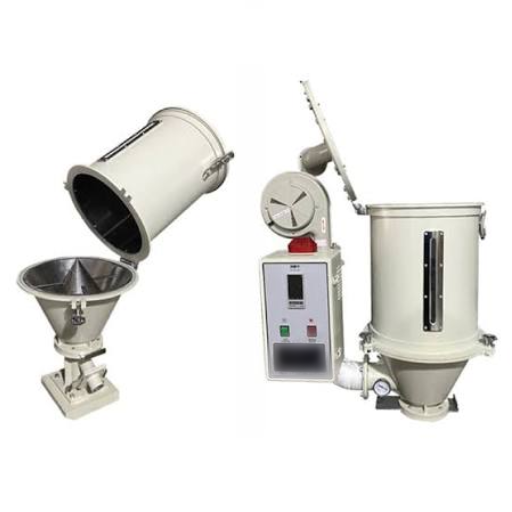
When you compare industrial pellet dryer machines, look past the brochure and focus on the specs that affect your daily operation.
Capacity. Match the dryer to your extruder or pellet mill output in kg/h or t/h. A dryer that is too small creates a bottleneck. One that is too large wastes energy and can over-dry small batches.
Moisture range. Know your incoming moisture and your target. Fish feed might enter at 22% and leave at 10%. Biomass might enter at 45% and leave at 12%. The dryer must handle that gap at your required speed.
Temperature control. Feed and food pellets need precise, even heat. Look for zoned temperature control, PID loops, and adjustable airflow. High heat saves time but can damage proteins, vitamins, and pellet structure.
Heat source. Choose gas, steam, thermal oil, electric, or biomass based on local fuel cost, infrastructure, and emission rules. If you already run a steam boiler for your extruder, a steam-heated dryer can share that investment.
Material of construction. For food, feed, and pet food, contact surfaces should be food-safe stainless steel such as SUS304 or SUS316. Carbon steel may cost less but corrodes and is harder to keep hygienic.
Automation level. PLC control with HMI touch screens, recipe storage, and alarm logging reduces operator error. Advanced systems add inline moisture sensors and automatic airflow adjustment.
Energy efficiency. Ask about heat recovery, insulation, recirculation ratio, and fan power. Over five years, energy often costs more than the machine itself.
Footprint and integration. Measure your floor space, ceiling height, and access for cleaning. Confirm how the dryer connects to your extruder discharge, cooler, and packaging line.
How to Choose the Right Pellet Dryer for Your Production Line
Use this framework to narrow your options without getting lost in specifications.
- Define your product. Is it fragile pet kibble, dense fish feed, coarse biomass, or a specialty snack? Fragile products need gentle belt dryers. Coarse, wet biomass needs rotary drums.
- Set your moisture targets. Measure incoming moisture from your extruder and the maximum safe storage moisture for your product and climate.
- Match capacity to upstream output. Size the dryer for your peak extruder output, not your average. Include a small buffer for future growth.
- Pick a heat source. Use what is cheap, reliable, and compliant in your region. Share infrastructure with your extruder when possible.
- Check food-grade standards. Verify SUS304/316 contact surfaces, welds, cleanability, and any certifications you need for export markets.
- Calculate total cost of ownership. Add purchase price, shipping, installation, energy, spare parts, labor, and expected downtime over five years.
- Request a drying test. A reputable supplier will test your actual recipe and report moisture curves, breakage rates, and energy use before you commit.
CTA: Need help matching a dryer to your extrusion line? Explore our food production line solutions and request a tailored proposal.
Integrating a Pellet Dryer with an Extrusion Production Line
A dryer never works alone. In a modern extrusion line, the sequence is usually:
Grinding → Mixing → Extrusion → Drying → Cooling → Flavoring/Coating → Screening → Packaging
Each stage must be balanced. If the extruder makes 2 t/h but the dryer only handles 1.5 t/h, pellets pile up, cool unevenly, and quality suffers. If the dryer is oversized, it may over-dry small batches or cycle inefficiently.
Sizing the dryer to the extruder. Start with the extruder’s rated output in wet weight. Then apply your target moisture reduction. A dryer rated in dry weight may need to be larger than it first appears.
Heat sharing. Wet-type extruders and steam-heated dryers can share a boiler. This reduces capital cost and improves energy efficiency. If you use gas or biomass heat, plan ducting and emission controls early.
Automation and synchronization. Use a common PLC or SCADA system to link extruder speed, dryer belt speed, and cooler discharge. When the extruder slows for a recipe change, the dryer should slow with it.
Layout and material flow. Keep the path from extruder to dryer as short as possible. Long conveyors let pellets cool and stick together before drying starts. Allow space for inspection, cleaning, and maintenance on both sides of the dryer.
For pet food producers, the pet food production line page shows how extrusion, drying, and coating work together to produce consistent kibble. For snack producers, the dryer plays a similar role after extrusion and before flavoring, as outlined on the fried snack production line page.
Common Pellet Dryer Problems and How to Avoid Them
Even a good dryer will disappoint you if it is misapplied or poorly operated. Here are the problems we see most often.
High final moisture. Usually caused by insufficient temperature, short residence time, overloaded belts, or uneven airflow. Fix it by verifying capacity, adjusting belt speed, and checking fan performance.
Pellet breakage and fines. Fragile pellets crack when tumbled too hard or exposed to sudden temperature swings. Use a mesh-belt dryer for delicate products and ramp temperature gradually.
Uneven drying. Thick product layers, blocked air nozzles, or poor insulation create wet and dry spots. Spread pellets evenly and inspect the chamber regularly.
Energy waste. Poor insulation, excessive exhaust, and unrecovered heat drive up bills. Ask suppliers about heat-recirculation design and insulation thickness before buying.
Dust and emissions. Dry biomass and some feeds create fine dust. Install cyclones, bag filters, or wet scrubbers as needed to meet local regulations and protect worker health.
Mini-story: A feed mill in Eastern Europe installed a rotary dryer rated for 3 t/h of biomass. They tried to run 2 t/h of extruded fish feed through it. The pellets tumbled too long, surface moisture dropped too fast, and the interior stayed wet. The result was cracked, dusty feed that customers rejected. After switching to a purpose-built fish feed pellet dryer with gentler handling, their product durability index improved by 18% and customer complaints disappeared.
Industrial Pellet Dryer Machine Price and ROI
Prices vary widely by type, capacity, material, and automation level. These ranges reflect current B2B machinery listings and should be treated as starting points for budgeting.
| Dryer Type | Typical Ex-Factory Price Range | Notes |
|---|---|---|
| Small batch / hot-air oven | 2,000–2,000–13,000 | Electric heat, SUS304, 25–600 kg/batch |
| Mesh belt dryer | 5,000–5,000–50,000+ | Multi-layer, gas/steam/electric, 300 kg/h – 3 t/h |
| Rotary drum dryer | 15,000–15,000–110,000+ | Large industrial, biomass/feed, multiple fuel options |
| High-end pet food belt dryer | 100,000–100,000–250,000+ | 2–12 t/h, multi-zone control, food-grade construction |
| Turnkey drying system | 70,000–70,000–280,000+ | Dryer, furnace, conveyors, controls, installation |
The purchase price is only part of the story. Over five years, energy, maintenance, labor, breakage, and downtime often cost more than the machine. A dryer that saves 10% on energy or cuts rejects by 3% can pay back a higher upfront cost quickly.
ROI also comes from intangible benefits: longer shelf life, fewer returns, better brand reputation, and the ability to run higher capacities without adding shifts. When you evaluate proposals, ask each supplier for a five-year operating estimate, not just the invoice price.
CTA: Looking for a drying system built around your recipe and capacity? Contact our team for a customized industrial pellet dryer machine quote.
Alternative Drying Technologies
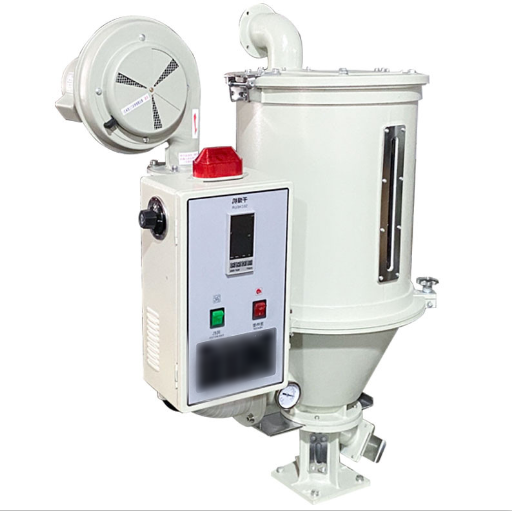
For some products, microwave or hybrid drying can complement or replace conventional hot-air drying. Industrial microwave drying equipment heats water molecules directly, giving very fast, uniform moisture reduction. It works well for heat-sensitive products and can shorten drying cycles.
Microwave drying is usually more expensive per kilogram than gas or steam, so it fits applications where speed, quality, or product value justify the cost. Many producers use microwave as a finishing step after a belt dryer to reach a precise final moisture.
Conclusion
An industrial pellet dryer machine is one of the most important investments in a feed, pet food, or food extrusion line. The right dryer protects nutrition, reduces breakage, extends shelf life, and keeps your line running at designed capacity. The wrong dryer creates bottlenecks, waste, and quality complaints.
Start by matching the dryer type to your material. Rotary drums handle coarse, wet biomass. Mesh-belt dryers protect fragile feed and pet food. Batch ovens work for small volumes and recipe development. Then size the machine to your extruder, choose a heat source that fits your infrastructure, and calculate total cost of ownership before you buy.
Key Takeaways
- Match dryer type to product fragility: rotary for biomass, mesh belt for feed and pet food, batch for small volumes.
- Size the dryer for peak extruder output, not average, and leave room for growth.
- Prioritize food-grade SUS304/316 construction, PLC control, and energy efficiency.
- Run drying tests with your actual recipe to verify moisture, breakage, and energy use.
- Total cost of ownership matters more than the lowest purchase price.
If you are planning a new line or upgrading an existing dryer, Shandong Loyal designs tailored drying solutions that integrate with twin-screw extruders, coolers, and packaging equipment. Request a quote today and let our team recommend the right industrial pellet dryer machine for your product.