
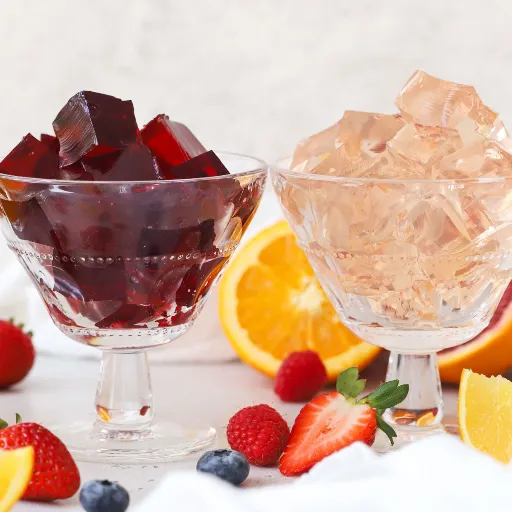
Defining the State of Matter: Is Jelly Actually a Solid or a Liquid?
Jelly is technically a colloid, specifically a solid dispersed within a liquid, known as a gel. While it maintains a defined shape like a solid, its high water content and ability to deform under pressure give it liquid-like properties. This dual nature occurs because a microscopic network of pectin or gelatin traps liquid pockets, creating a substance that remains structurally stable until physical force or heat triggers a phase transition.
The Rheological Hybrid
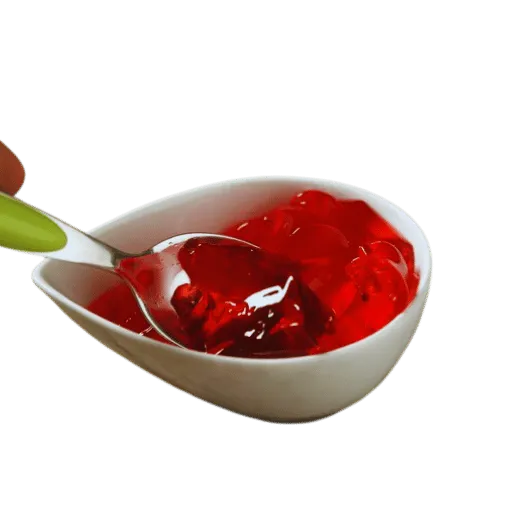
Labeling jelly as either a solid or a liquid ignores its complex physics. In the world of rheology—the study of how matter flows—jelly is categorized as a viscoelastic material. It possesses the elastic memory of a solid but the flow characteristics of a liquid when stressed beyond its “yield point.”
Industry observation suggests that most consumers perceive the quality of a preserve based on this specific tension. If the jelly is too rigid, it feels rubbery and artificial; if it is too fluid, it fails to hold its shape on a pastry. A high-quality fruit spread typically contains around 60% to 65% soluble solids. This concentration allows the substance to remain motionless in a jar, resisting gravity like a solid, yet spread smoothly under the shear force of a knife. It is a material caught between two worlds, existing in a state where molecular bonds are strong enough to prevent flow but weak enough to be disrupted by a simple spread.
Understanding the “Sol” and “Gel” phases in fruit preserves
The transition between states occurs during the shift from a “sol” to a “gel.” When you are boiling fruit in a jacketed kettle, the mixture is a sol—a liquid with solid particles (pectin) floating freely within it. The molecules are energetic and disorganized.
As the temperature drops below the setting point, often around 104°C, these pectin chains begin to cross-link. They create a three-dimensional scaffold that traps water molecules in place. This shift from a pourable liquid to a stable gel is a delicate chemical handoff. A practical example is seen when a batch is cooled too rapidly; the scaffold may become brittle, leading to a grainy texture rather than a smooth, continuous gel phase.
Why Jelly Defies Standard Definitions of Matter
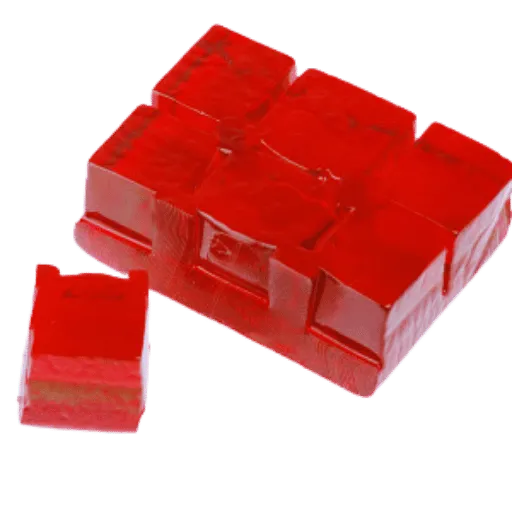
To a physicist, the question of whether jelly is a solid or a liquid feels like a trick. It doesn’t fit neatly into the three states of matter taught in primary school because it is a structural anomaly—a material that is mostly liquid by weight but entirely solid by behavior. If you were to dehydrate a standard jar of grape jelly, you would find that the actual “solid” structural components, mostly pectin and fruit fibers, often represent less than 1% of the total mass.
The rest is water and dissolved sugars. Yet, this tiny fraction of matter creates a sprawling, three-dimensional web that cages the liquid.
Industry observation suggests that the categorization often depends on the “time scale” of the observation. In a realistic scenario, if you tip a jar of jelly upside down, it remains a solid; it holds its shape against the pull of gravity. However, leave that same jelly under constant, heavy pressure for a week, and it may begin to show “creep,” a slow, liquid-like deformation.
This duality makes it a “soft solid.” It has a measurable yield stress—a specific threshold of force required to make it flow. Below that 35 or 45 pascals of pressure, it sits as a stagnant solid. Once you cross that line with a spoon, the molecular cages break, and it behaves, briefly, like a very thick liquid.
3 Factors That Dictate Structural Rigidity
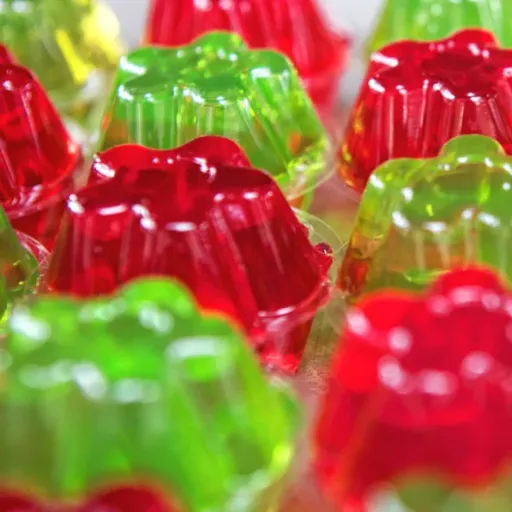
The stability of a gel isn’t accidental; it’s a calculated result of chemical environment and physics. If a manufacturer misses the mark on even one variable, the “solid” jelly reverts to a syrupy liquid or, conversely, a rubbery puck. Industry observation suggests that achieving the perfect “cut” depends on balancing the attraction between polymer chains against the liquid they are meant to trap.
Pectin concentration and the pH threshold
Pectin is the architect here. In a natural state, pectin molecules carry a negative charge, causing them to repel one another like matching magnets. To force these fibers to bond, you must lower the pH. By adding citric or tartaric acid to reach a precise window—usually between 2.8 and 3.35 pH—the electrical repulsion is neutralized. This allows the pectin to form the primary scaffolding. If the mix is too alkaline, the “solid” never forms; the molecules simply slide past each other in a permanent liquid state.
Soluble solids: How sugar creates a molecular lattice
Sugar does more than provide sweetness; it acts as a dehydrating agent. Because sugar is hygroscopic, it pulls water molecules away from the pectin chains, forcing the pectin to stop interacting with the liquid and start interacting with itself. A practical example of this is the “65% Rule”—if the soluble solids (Brix) drop too low, the water remains too “available,” preventing the lattice from tightening. This results in a weak, weeping gel. In a realistic scenario, a low-sugar jelly requires specialized amidated pectins because the standard molecular lattice lacks the “thirst” to pull the water into a solid-like bond.
Thermal history and the rate of cooling
The transition from a boiling sol to a set gel is highly sensitive to time. Thermal history refers to how long the mixture was held at peak temperature and how fast that energy was removed. If you cool a batch too slowly, the pectin chains may over-aggregate, leading to a cloudy appearance. Conversely, shocking a high-methoxyl gel with rapid industrial chilling can trap air bubbles or cause the structure to set prematurely, creating internal stress that eventually leads to the gel fracturing under its own weight.
Viscoelasticity
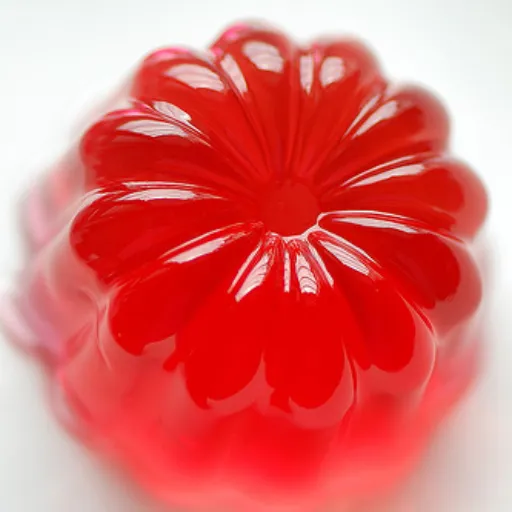
Jelly exists in a state of constant mechanical tension. Because it is viscoelastic, it behaves like a spring and a fluid simultaneously. If you poke a set gel with a spoon, it deforms and snaps back—that is the elastic, solid-like response. However, if you apply that same force slowly over a longer duration, the molecular chains may begin to slide, exhibiting viscous, liquid-like flow.
Industry observation suggests that the “mouthfeel” of a premium preserve is almost entirely dictated by this balance. A jelly that is too elastic feels like rubber, while one that is too viscous feels like simple syrup. In a realistic scenario, high-speed vibration during truck transport can actually “liquefy” certain weak gels if their resonant frequency is hit, a phenomenon known as thixotropy.
A practical example of measuring this is the use of a penetrometer. Technicians look for a specific resistance value—often hovering around 45 to 62 grams of force—to ensure the product can withstand the rigors of shipping without losing its structural integrity. It is this specific ability to store and dissipate energy that keeps jelly from being a simple liquid.
Does industrial processing change the physical state of the product?
The transition from a raw fruit slurry to a shelf-stable jelly is entirely a product of mechanical and thermal manipulation. In a factory setting, “is jelly solid or liquid” becomes a question of process control. If the energy input is too high, you shatter the molecular chains; too low, and the “solid” state never fully crystallizes. Industry observation suggests that the transition point—where the batch achieves its final viscosity—is often the most volatile stage of production. A deviation of just 1.2°C during the final cooling phase can be the difference between a spreadable gel and a crystallized syrup that refuses to leave the jar.
High-shear mixing vs. atmospheric boiling
How you agitate the mixture dictates the final texture. Atmospheric boiling is the traditional route, relying on heat to drive off moisture until the pectin can find its partners. However, high-shear mixing introduces a different variable: mechanical force. While a high-shear head can create a perfectly smooth emulsion in seconds, it also runs the risk of “over-working” the pectin. In a practical example, if the shear rate exceeds approximately 3,500 RPM for too long, the long-chain polymers can literally be sliced into shorter segments. This results in a jelly that looks like a solid but behaves like a liquid, losing its ability to “snap” back when cut.
The role of stabilizers in preventing syneresis
Syneresis—the technical term for “weeping”—is a gel’s greatest structural failure. It happens when the pectin network contracts too tightly, squeezing liquid out to the surface. To combat this, manufacturers often introduce secondary stabilizers like locust bean gum or modified starches. These additives act as microscopic sponges. By holding onto excess water that the primary pectin lattice cannot manage, they ensure the jelly remains a cohesive solid. Without these, a realistic scenario involves a watery layer forming atop the fruit, which consumers often mistakenly interpret as spoilage rather than a simple failure of physical state.
Vacuum concentration and preservation of cellular integrity
Vacuum kettles have revolutionized the solid-liquid balance in fruit preserves. By lowering the atmospheric pressure inside the vessel, water can be evaporated at much lower temperatures—often as low as 62°C instead of the standard 104°C. This lower thermal load is crucial for preserving the natural pectin found in the fruit’s cell walls.
When fruit is boiled at high heat, the cellular integrity collapses, releasing all the liquid instantly. Vacuum concentration allows for a gentler extraction. This tends to produce a “tighter” gel because the natural fruit fibers remain intact, providing extra physical scaffolding for the sugar and acid to work upon. The result is a jelly that feels more substantial and “solid” on the palate, despite having the same water content as a traditionally boiled batch.
Determining the Yield Stress: When Jelly Starts to Flow
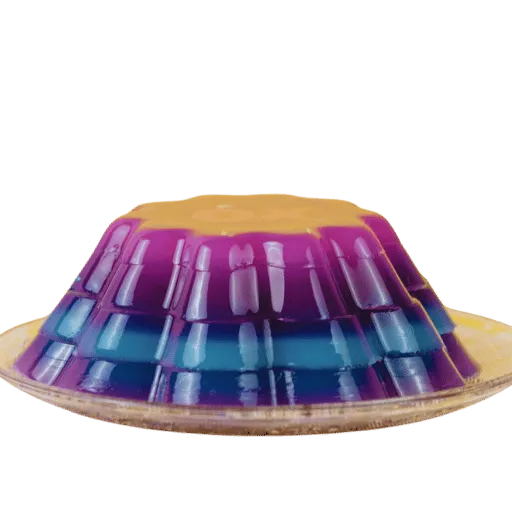
To define the exact moment jelly transitions from a solid to a liquid, engineers measure its “yield stress.” This is the specific amount of force required to permanently deform the pectin lattice. Until you hit that threshold, the jelly remains a solid; it stores energy elastically. If you tilt a jar, the surface may bulge slightly, but the internal “cages” hold the liquid in place. Once the force of the spoon or the gravity of a vertical spread exceeds the yield point—often measured between 30 and 55 pascals for high-methoxy fruit gels—the structure collapses and begins to flow.
Industry observation suggests that a “clean break” is the hallmark of a high-yield-stress product. In a realistic scenario, a baker filling a doughnut needs the jelly to behave as a liquid under the pressure of the injector nozzle, but revert to a non-flowing solid the instant the pressure stops. If the yield stress is too low, the filling will simply leak out under the force of its own weight. It’s a paradox of physics: the jelly must be strong enough to stand still, but weak enough to fail on command.
A practical example of this is the “spoon test” used in small-scale quality control. If the indentation left by the spoon maintains its sharp edges without slumped walls, the yield stress is sufficient to overcome the liquid’s natural tendency to seek a level surface.
The Impact of Temperature on Molecular Mobility
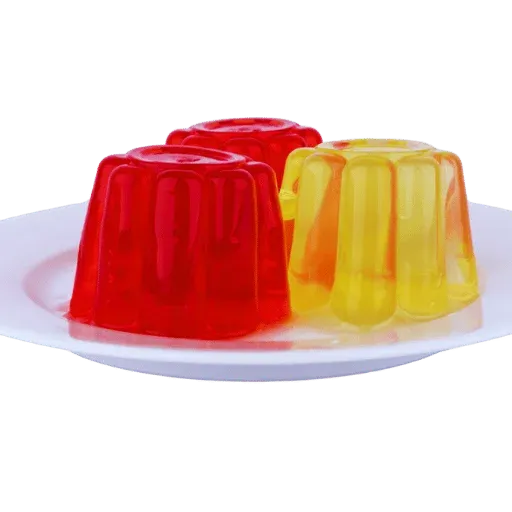
Temperature is the ultimate toggle switch between jelly’s solid and liquid identities. At room temperature, the pectin chains are locked in a structural stalemate, holding water molecules in a rigid embrace. However, as heat is introduced, the kinetic energy of these molecules increases. They begin to vibrate and rotate with enough violence to overcome the hydrogen bonds holding the gel together. Industry observation suggests that most high-methoxy pectins begin to lose their “solid” integrity as they approach the 48°C to 56°C range.
Consider a realistic scenario in a commercial bakery: a jelly-filled pastry is placed in a convection oven. As the internal temperature climbs, the once-stable solid undergoes a phase transition, liquefying and flowing into the dough’s pores. A practical example of this mobility is “melting point” testing. If the thermal threshold is too low, the jelly may “run” during summer shipping, effectively reverting to a liquid state inside a hot delivery truck. Once the heat source is removed, the molecules slow down, allowing the lattice to reform—though often with a slightly different, softer texture than the original set.
FAQ Section
Q: Is jelly classified as a non-Newtonian fluid?
Yes, jelly is a non-Newtonian fluid—specifically a shear-thinning substance. In its resting state, the internal pectin network provides enough resistance to categorize it as a “soft solid.” However, when you apply mechanical stress, such as stirring or spreading it with a knife, the viscosity drops instantly. This allows the material to flow like a thick liquid. Once that physical pressure is removed, the molecules attempt to realign, though they rarely return to their original, pristine structural rigidity.
Q: Why does jelly turn back into a liquid when heated?
Thermal energy is the enemy of the gel’s delicate structural bonds. As the temperature rises, the kinetic energy of the molecules increases, causing them to vibrate more violently. Eventually, this motion overcomes the hydrogen bonds and hydrophobic interactions that hold the pectin lattice together. When these “cages” collapse, the trapped water is released, and the substance loses its ability to hold a shape, reverting to a pourable, liquid state commonly seen in melted preserves or glazes.
Q: What is the difference between a gel and a liquid at a molecular level?
In a standard liquid, molecules move randomly and past one another with very little long-range order. A gel, however, is a colloid where a solid phase is dispersed within a liquid phase. On a microscopic scale, the solid components (like pectin or gelatin) form a continuous, three-dimensional mesh or “scaffold.” This network acts as a sponge that traps the liquid molecules through capillary forces, preventing them from flowing freely while maintaining a high moisture content.
Q: Can you change a jelly’s state of matter by adding more acid?
Acid is a critical catalyst for the “solidification” of jelly. Most fruit pectins are negatively charged and naturally repel each other, which keeps the mixture in a liquid state. Adding acid lowers the pH, neutralizing these charges and allowing the pectin chains to finally move close enough to bond. However, balance is vital; industry observation suggests that if the pH drops below 2.8, the gel may become too brittle or undergo syneresis, essentially forcing the liquid out of the solid structure.
Q: Why does “weeping” occur in older jelly jars?
Known technically as syneresis, “weeping” occurs when the pectin network undergoes a slow contraction over time. As the solid lattice tightens, it physically squeezes the trapped liquid out to the surface of the gel. This often happens due to fluctuations in storage temperature or an imbalance in the original acidity levels. While the jelly remains safe to eat, this separation indicates a partial collapse of the solid phase, resulting in a pool of liquid sitting atop a much firmer, rubbery mass.
Q: Does the fruit type influence whether the final product behaves more like a solid?
Absolutely. Some fruits, like quinces or tart apples, are naturally high in pectin and acid, making them predisposed to forming a very rigid, solid-like structure. Conversely, fruits like strawberries or overripe peaches are pectin-deficient. Without the addition of commercial setting agents, these fruits will remain a viscous liquid regardless of how long they are boiled. The “solidness” of your jelly is directly proportional to the length and density of the polymer chains provided by the specific fruit pulp used.
Q: Is there a specific temperature where jelly officially becomes a solid?
Jelly doesn’t have a single “freezing point” like water; instead, it has a “setting zone.” For most high-methoxyl pectins used in commercial production, this transition typically begins as the mixture cools below 104°C (219°F) and continues until it stabilizes at room temperature. The most critical structural hardening happens between 35°C and 50°C. If the jelly is disturbed or jarred during this specific thermal window, the developing molecular lattice can shatter, preventing it from ever reaching a true solid state.