Ohio Snack Food Manufacturing: The Production Lines Behind the Buckeye State’s Iconic Snacks
Ohio’s answer to “what food are you known for” is really a manufacturing story. Ohio snack food manufacturing has made the state the second-largest potato chip producer in the United States, behind only Pennsylvania, and the home of America’s first chip factory, which opened in Cleveland in 1895. If you work in snack production, the Buckeye State offers a working blueprint for how regional foods turn into high-volume products.
That is the real story behind the question “what food is Ohio known for.” Most people hear Cincinnati chili and buckeyes. Manufacturers hear chips, extruded puffs, corn snacks, and popcorn, all of it built on continuous fryers and twin-screw extruders.
When Marcus took over his family’s regional chip brand near Dayton in 2022, he was running a single kettle fryer and packing bags by hand. Demand from two new grocery chains forced a decision: add capacity or lose the accounts. His question was not “what food is Ohio known for.” It was “how do I move from batch frying to a continuous fried snack production line without breaking quality.” That question, shared by every growing snack maker, is what this article answers.
Here is how Ohio’s famous snacks are made at scale, and how you can apply the same equipment decisions to your own plant.
Key Takeaways
- Ohio is the second-largest potato chip producer in the U.S., home to roughly 15% of the country’s chip plants and the first chip factory in America (Cleveland, 1895).
- Most of Ohio’s iconic snacks map to just two core technologies: continuous frying for chips and twin-screw extrusion for puffs, cheese curls, and corn snacks.
- A standard potato chip line runs potato → wash → slice → continuous fryer → de-oil → flavoring drum → packaging, and the fryer is where quality and throughput are won or lost.
- Shearer’s 106millionMorainefacilityandWyandot′s106millionMorainefacilityandWyandot′s7.7 million Marion expansion show how Ohio snack plants scale by adding lines, not just labor.
- Choosing between batch frying and continuous frying, and between single- and twin-screw extrusion, is the single biggest equipment decision a growing snack maker faces.
Why Ohio Is a Snack Manufacturing Powerhouse
Ohio’s snack dominance is a manufacturing story, not a farming story. The state grows only a small share of the nation’s potatoes, yet it turns raw ingredients into a huge volume of finished snacks. That gap is exactly why the industry concentrates there.
According to the USDA, there are only about 92 chip plants nationwide, and Ohio is home to roughly 15% of them. Public media outlet WGTE and Ohio Ag Net both trace this back to 1895, when William Tappenden built the country’s first potato chip factory in Cleveland. The National Potato Chip Institute, later renamed the Snack Food Association, was also founded in Cleveland in the late 1930s.
The brand lineup is deep and regional. Mikesell’s in Dayton, founded in 1910, is the oldest chip company in the country. Grippo’s in Cincinnati, Ballreich’s in Tiffin, Gold’N Krisp in Massillon, Conn’s in Zanesville, and Jones’ in Mansfield each serve loyal local markets. Above them sit national-scale operators like Shearer’s, the largest private-brand salty snack supplier in North America, and Wyandot, a contract manufacturer that has made products for brands including Frito-Lay.
Ohio’s broader food manufacturing sector is substantial. JobsOhio puts food manufacturing employment around 75,000 workers. The Center for Innovative Food Technology counts more than 880 food manufacturers across roughly 970 establishments, supplied by over 1,300 farms. When you hear that Ohio is a food state, this is the part that matters for a machinery company.
For a snack producer, Ohio is a case study in how specialized equipment, not geography, creates scale. The same logic applies whether you are frying chips in Ohio, extruding puffs in Guangdong, or seasoning corn snacks anywhere in between.
How Ohio’s Famous Potato Chips Are Made
Potato chips are Ohio’s signature manufactured snack, and the process is more precise than most people assume. A modern line moves raw potatoes to sealed bags in a matter of minutes.
Curious how the fryer choice changes your output? See how our fried snack production line balances throughput and consistency.
From Potato to Bag: The Continuous Frying Line
Every commercial chip line follows roughly the same sequence. Potatoes enter a washing and destoning stage to remove dirt and foreign material. They are peeled, then sliced thin, typically between 0.04 and 0.06 inches, and rinsed again to remove surface starch that would otherwise cause slices to stick and brown unevenly.
The sliced potatoes then move into a continuous fryer, which is the heart of the operation. Oil temperature runs around 350 to 375 degrees Fahrenheit, and the fryer carries the slices through the oil on a conveyor. In a continuous fryer, throughput is set by belt speed and oil volume, which means a single machine can produce far more than a batch kettle in the same floor space.
Continuous frying matters for more than speed. Because every slice spends nearly the same time in the oil, color and moisture are far more uniform than in batch frying. For a regional brand trying to win a retail contract, that consistency is the difference between an accepted order and a rejected shipment.
De-Oiling, Flavoring, and Packaging
Frying is not the last word. Chips leave the fryer with excess oil, so a de-oiling step, typically a vibrating or centrifugal system, removes surface oil before seasoning. Excess oil shortens shelf life and hurts the flavor profile, so this stage is where shelf stability is controlled.
Next, chips pass through a flavoring drum, where a rotating drum tumbles the product with a measured dose of seasoning. The drum’s design controls how evenly flavor distributes, which is why seasoning systems get their own engineering attention on a well-built line.
Finally, chips move to weighing and packaging, often on a multihead weigher feeding a vertical form-fill-seal bagger. Throughout, the goal is gentle handling, because broken chips are waste, and waste is money.
Mini-story: Ballreich’s of Tiffin built its reputation on “marcelled” chips with a distinct ruffled texture. That texture comes from the slicing step, but holding it through frying requires a fryer that does not crush the slices. A brand that competes on texture is really competing on line design.
Extruded Snacks and Puffs: Ohio’s Quiet Strength
Chips get the headlines, but extrusion is where Ohio quietly wins. Wyandot Snacks of Marion, founded in 1936 as the Wyandot Popcorn Company, makes extruded puffs, cheese curls, tortilla chips, and better-for-you grain snacks for major national brands. That product range is built on food extrusion.
Extrusion works by feeding a dry mix, typically corn, rice, wheat, or a blend, into a heated barrel where a screw conveys, cooks, and pressurizes the dough. At the die, the pressure drops and the product expands into its final shape. Change the die, change the shape. Change the screw and barrel profile, change the texture and density.
Twin-Screw vs Single-Screw Extrusion
The biggest equipment choice in extrusion is screw configuration. A single-screw extruder is simpler and less expensive, and it works well for straightforward, consistent recipes. A twin-screw extruder uses two intermeshing screws that provide better mixing, more flexible ingredient handling, and tighter control over temperature and shear.
For a manufacturer running one puff shape every day, a single screw may be enough. For a co-manufacturer like Wyandot that switches between products, recipes, and customer specifications, twin-screw extrusion is usually the right call. It handles higher-fat and higher-moisture formulations without sacrificing consistency.
This is why the “food extrusion solutions” category exists as its own discipline. The right configuration depends entirely on how many products, formulas, and changeovers a plant must handle. Explore our extrusion solutions to see how configuration follows product mix.
Beyond Chips: Corn, Popcorn, and Pork Rinds
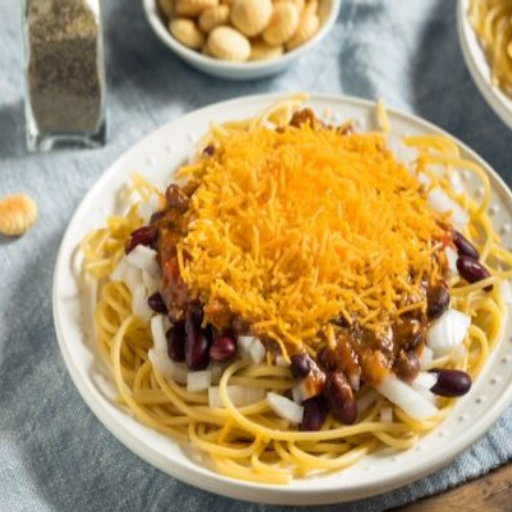
Ohio’s snack portfolio extends well past the potato. Corn chips, tortilla chips, popcorn, and pork rinds each carry their own production logic, and each has a strong Ohio presence.
Tortilla and corn chips start with corn that is cooked, steeped, and ground into masa, then sheeted, cut, baked, and fried or toasted. Shearer’s new Moraine facility was built specifically around this sequence, bringing tortilla chip production online before corn and potato lines.
Corn flakes and other ready-to-eat cereals run a different route: corn grits are cooked, then passed through flaking rolls, then toasted in a large oven. This is closer to the extrusion and drying equipment used across cereal manufacturing.
Popcorn is a moisture-controlled process. Kernels are conditioned to the right moisture level, then popped and flavored. The trick is uniformity of expansion, which depends on consistent heat delivery and kernel conditioning.
Pork rinds are two-stage. Raw pork skin is cut and cooked to render fat, producing pellets that are then fried, where they expand dramatically, then seasoned. This is a fried snack line with an added pellet step.
The common thread is that every one of these products depends on precise, repeatable frying or extrusion. None of them scale on labor alone. If you produce any of these categories, the same food production line fundamentals apply.
Scaling a Snack Line: Lessons From Shearer’s and Wyandot
The two most instructive Ohio stories right now are both about capacity. They show what scaling a snack operation actually looks like in 2026.
Shearer’s $106 Million Moraine Facility
Shearer’s, the largest private-brand salty snack supplier in North America, converted a former General Motors paint shop in Moraine, near Dayton, into a 390,000-square-foot snack plant. Tortilla chip production began on December 1, 2025, with corn chips scheduled for January, potato chips for February, and an automated variety pack line for March 2026.
At full build-out, the facility is expected to produce 36 to 60 million pounds of chips annually and employ 300 to 600 people. Notice the phased ramp: one line at a time, validated before the next goes in. That is how experienced operators de-risk a big build.
Wyandot’s $7.7 Million Marion Modernization
Wyandot Snacks announced a $7.7 million investment in its Marion plant in August 2025, creating 67 new jobs while retaining more than 260. The upgrades target machinery and automation that improve efficiency across its grain-based snacks, cereals, extruded puffs, and tortilla chips.
The lesson is consistent. Both companies scale by adding and upgrading lines, not by hiring proportionally more people. A modern continuous line produces more output per worker and per square foot than an older batch process, which is why the ROI case for equipment usually writes itself.
Mini-story: The operations team at a private-label co-manufacturer faced a familiar squeeze: a national retailer wanted a new extruded puff at a price that only worked with higher throughput. Their old single-screw line could not hold texture at the required speed. Moving to a twin-screw extruder solved both, hitting the output target while improving product consistency enough to win a second SKU.
Choosing Production Equipment for a Snack Plant
If Ohio’s manufacturers share one habit, it is disciplined equipment selection. These are the decisions that matter most when you build or upgrade a snack line.
Continuous Fryer vs Batch Frying
Batch frying uses kettles that process a fixed amount per cycle. It is lower cost up front and gives a craft, kettle-cooked texture that some brands want on purpose.
Continuous frying moves product through oil on a conveyor at steady temperature. It delivers higher throughput, tighter moisture and color control, and lower labor per bag.
| Factor | Batch Frying | Continuous Frying |
|---|---|---|
| Throughput | Lower, one batch at a time | High, set by belt speed |
| Color and moisture control | Varies between batches | Tight and uniform |
| Upfront cost | Lower | Higher |
| Labor per bag | Higher | Lower |
| Best for | Craft or kettle-cooked brands | Volume and private-label lines |
The decision usually hinges on brand position. A premium kettle-chip brand may stay batch on purpose. A brand chasing volume or private-label contracts needs continuous frying. Many plants run both, using batch kettles for the hero SKU and continuous fryers for the volume lines.
Flavoring and Seasoning Systems
Seasoning is where a snack earns its identity, and it deserves its own specification. A well-designed flavoring drum coats product evenly with minimal breakage and precise dosage. For producers running multiple flavors, quick-change drums and integrated dosing reduce changeover time and cross-contamination risk.
Line Integration and Flexibility
A modern snack line is more than a fryer or an extruder. It is the washing, slicing, frying, de-oiling, seasoning, and packaging stages working as one system. Modular, food-safe stainless steel construction makes it easier to add a stage later or reconfigure for a new product, which protects the investment as your mix changes.
Ready to spec your line? Request a quote and we will help you configure a fried snack or extrusion line around your products and capacity targets.
Frequently Asked Questions
What food is Ohio actually known for?
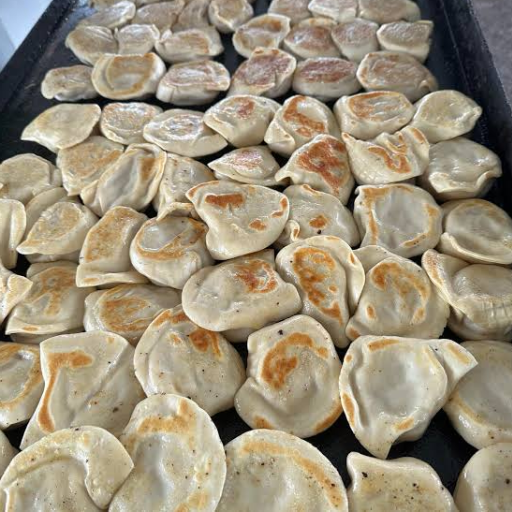
Ohio is best known for its snack foods, led by potato chips. It is the second-largest chip producer in the U.S. and home to brands like Mikesell’s, Grippo’s, Ballreich’s, Shearer’s, and Wyandot. Beyond snacks, Cincinnati chili, buckeyes, goetta, and pierogies are the state’s famous prepared foods.
Why does Ohio produce so many potato chips?
Ohio’s chip industry started early, with the first U.S. chip factory opening in Cleveland in 1895 and the National Potato Chip Institute forming there in the 1930s. A century of infrastructure, a skilled food-manufacturing workforce, and major co-manufacturers like Shearer’s and Wyandot have kept the industry concentrated in the state.
What equipment is used to make potato chips at scale?
A commercial chip line uses a washing and destoning system, peeler, slicer, continuous fryer, de-oiling system, flavoring drum, and packaging equipment. The continuous fryer is the most important stage for throughput and color consistency.
What is the difference between twin-screw and single-screw extrusion?
A single-screw extruder is simpler and lower cost, suited to consistent recipes. A twin-screw extruder offers better mixing, more flexible ingredient handling, and tighter process control, which matters for manufacturers that switch between products and formulas.
How do I scale a snack production line?
Add capacity by adding or upgrading lines rather than just labor. A continuous fryer or twin-screw extruder raises output per worker and per square foot, and modular, stainless steel construction lets you expand in stages as demand grows.
Conclusion
Ohio did not become a snack food manufacturing leader by accident. It got there with early infrastructure, a deep regional brand base, and a relentless focus on the equipment that turns raw potatoes and corn into consistent, high-volume products.
The takeaways for any snack producer are clear. Chips run on continuous frying. Puffs and corn snacks run on twin-screw extrusion. Both reward the same discipline: choose equipment for your actual product mix, add capacity in validated phases, and treat the fryer and extruder as the two decisions that define your plant.
Whether you are frying chips in Ohio or building a snack line on the other side of the world, the fundamentals do not change. Start with a clear picture of your products and capacity, then match the line to the job.
Request a quote today and we will help you design a snack production line around your exact requirements.