
Pani Puri Pellet Making Machine: A Complete Guide to Equipment, Process & Selection

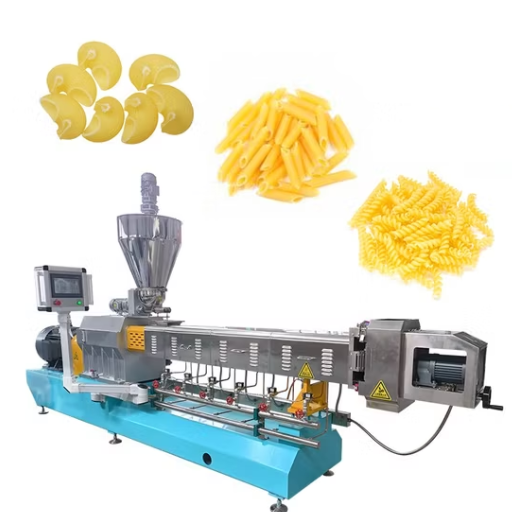
A pani puri pellet making machine is an industrial extrusion system that forms hollow, round snack pellets, also called golgappa or puchka shells, from wheat flour, corn starch, or tapioca starch. These pellets are dried and then fried or air-puffed to create the crisp, hollow puris used across India and global South Asian markets.
India’s pani puri economy alone is estimated at ₹6,000 crore, and the packaged snack market is growing at roughly 8.9% per year. That growth is pushing street-food vendors, cloud kitchens, and snack factories to move beyond hand-rolled puris. The challenge? Most buyers cannot tell the difference between a small tabletop puri cutter and a full industrial 3D pellet line. Choose the wrong machine, and you overspend on capacity you do not need, or buy equipment that cannot scale.
This guide will show you how each machine type works, what production parameters matter, how much you should budget, and how to avoid the defects that waste raw material. Whether you are launching a packaged-puri startup or expanding a snack factory, you will leave with a clear selection framework.
Key Takeaways
- A pani puri pellet making machine uses extrusion to form hollow snack pellets that puff into finished puris during frying.
- Small commercial cutters handle 1,000–12,000 pieces per hour and suit vendors or startups; industrial 3D pellet lines produce 60–800 kg/hour for factories and exporters.
- Core process steps: mixing, extrusion/shaping, drying, frying or puffing, cooling, and packaging.
- Expect to invest ₹38,000–₹1,70,000 for entry-level cutters or 12,000–12,000–120,000 USD for full extrusion lines.
- Consistent puffing depends on moisture control, dough consistency, and frying temperature, defects usually trace back to one of these three factors.
What Is a Pani Puri Pellet Making Machine?
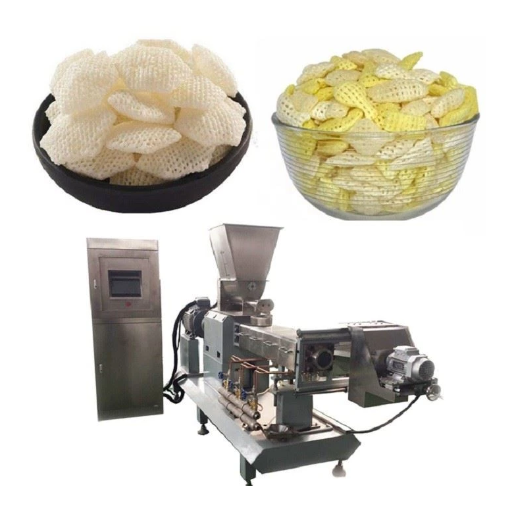
A pani puri pellet making machine forms the raw shell used in pani puri, the popular South Asian street snack. The machine mixes flour or starch with water, extrudes the dough through a shaped die, and cuts it into small, round, hollow pellets. After drying, those pellets are fried so that trapped moisture explodes into steam and puffs the shell into a light, crispy ball.
There are two very different categories of equipment sold under this name:
- Small commercial puri cutters, dough is rolled into a sheet and stamped into rounds. These machines are common in India for stalls, cloud kitchens, and small packaged-puri businesses.
- Industrial 3D pellet extrusion lines, raw materials are cooked and extruded into shaped pellets at high volume. These lines serve snack factories, co-manufacturers, and exporters.
When Ravi Patel opened a pani puri stall in Hyderabad in 2023, he bought a ₹45,000 semi-automatic cutter that produced 4,000 puris per hour. Within eight months, demand from nearby food courts pushed him toward a 100 kg/hour extrusion line. His first mistake was assuming both machines served the same scale. They do not.
Understanding which category fits your output, labor budget, and end market is the first decision every buyer must get right.
Two Machine Types: Small Puri Cutters vs. Industrial 3D Pellet Lines
Small Commercial Puri Cutters
These machines take prepared dough, roll it into a thin sheet, and use a rotary cutter or die to stamp out round puris. The operator feeds dough, collects the cut pieces, and fries them separately.
| Feature | Typical Range |
|---|---|
| Capacity | 1,000–12,000 pieces/hour |
| Power | 0.5–2 HP, usually 220V single-phase |
| Material | SS304 food-grade stainless steel or MS/SS combination |
| Puri size | 25–50 mm diameter |
| Price | ₹38,000–₹1,70,000 |
| Best for | Street vendors, cloud kitchens, small retail packs |
Strengths include low capital cost, simple operation, and fast setup. Weaknesses include limited consistency, higher labor per kilogram, and little room to scale beyond local demand.
Industrial 3D Pellet Extrusion Lines
These systems use a twin-screw or single-screw extruder to cook and form dough into 3D snack pellets. The process is continuous: raw materials are fed, mixed, extruded, cut, dried, and then fried in a continuous fryer.
| Feature | Typical Range |
|---|---|
| Capacity | 60–800 kg/hour |
| Installed power | 22–160 kW, three-phase |
| Material | SS304 or SS316 food-grade stainless steel |
| Pellet shape | Hollow rounds, plus customizable dies for related snacks |
| Price | 12,000–12,000–120,000 USD |
| Best for | Snack factories, exporters, co-manufacturers, RTE brands |
Strengths include high consistency, low labor per kilogram, and the ability to switch dies for fryums, bugles, or other 3D pellets. The trade-off is higher upfront investment and the need for trained operators.
Which One Should You Choose?
| Decision Factor | Choose a Small Cutter If… | Choose a 3D Pellet Line If… |
|---|---|---|
| Daily output | Under 50,000 pieces/day | Above 50,000 pieces/day or bulk kg/hour |
| Labor budget | Limited; owner-operated | You can hire line operators |
| End market | Local stalls, food courts, small retail | Export, frozen kits, national distribution |
| Growth plan | Stay local | Scale to multiple SKUs |
| Floor space | 100–200 sq ft | 1,000+ sq ft with utility infrastructure |
If you are unsure where you fall, start with a cutter and plan your layout so a larger line can replace it later. Modular food production equipment makes that transition far easier than replacing isolated machines one by one.
How the Pani Puri Pellet Production Process Works
Whether you use a small cutter or an industrial line, the physics are the same. A hollow pellet puffs because trapped moisture turns to steam inside a sealed dough shell. The steps below show how an industrial line achieves this at scale.
Step 1: Raw Material Preparation
The base recipe usually combines wheat flour, semolina (sooji), corn starch, tapioca starch, salt, and a small amount of oil or emulsifier. The starch content affects crispness and expansion. Higher starch blends puff more aggressively but can become brittle.
Step 2: Mixing and Kneading
Flour and water are mixed to a firm dough with controlled moisture, typically 25–30% before extrusion. Over-hydrated dough sticks to dies and creates dense puris. Under-hydrated dough cracks and fails to puff.
Step 3: Extrusion and Shaping
The dough enters an extruder where heat and mechanical shear partially cook the starch. A forming die shapes the dough into two thin sheets that are pressed together at the edges, leaving a hollow center. A roller cutter then slices the continuous strip into individual pellets.
Die design is critical. The edge seal must be strong enough to hold steam during frying, yet thin enough to crisp properly. Worn dies are a common cause of misshapen or cracked puris.
Step 4: Drying
Fresh pellets contain too much surface moisture to fry cleanly. Drying reduces moisture to roughly 8–10% and prevents sticking, cracking, and uneven puffing. Industrial lines use conveyor dryers set between 45°C and 60°C. Drying time varies with pellet thickness and ambient humidity.
Step 5: Frying or Puffing
Dried pellets enter a continuous fryer at 180–190°C. Within seconds, internal moisture flashes to steam and expands roughly 1,700 times in volume. The outer shell sets into a crisp, hollow sphere. Some modern setups use hot-air puffing instead of oil frying for lower-fat products.
Step 6: Cooling, Seasoning, and Packaging
Fried puris are cooled to room temperature to preserve crispness, then packed in airtight bags. If you produce flavored variants, a short oil-spray and seasoning drum step can be added before packaging.
A co-manufacturer in Mumbai supplying frozen pani puri kits to quick-commerce platforms runs a 250 kg/hour extrusion line. By holding drying temperature at 55°C and frying at 188°C, they reduced broken shells from 8% to under 2%. That single process adjustment saved more than ₹4 lakh in rework over one year.
Key Technical Specifications to Evaluate
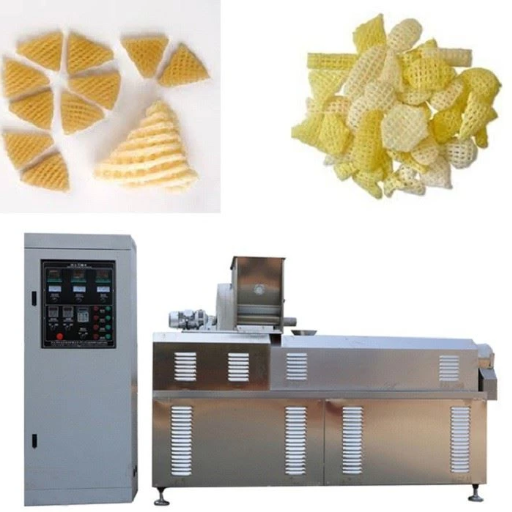
Before signing a purchase order, compare these specifications across suppliers:
Capacity. Verify whether the rating is in pieces per hour or kilograms per hour. Pieces depend on puri size; kilograms are more reliable for costing.
Extruder type. Twin-screw extruders offer better mixing, higher throughput, and easier recipe changes. Single-screw extruders cost less and work well for stable, high-volume recipes.
Power and utilities. Small cutters run on single-phase 220V power. Industrial lines need three-phase supply, compressed air, steam, and sometimes chilled water.
Material of construction. Food-contact surfaces should be SS304 at minimum. For high-salt or acidic recipes, SS316 offers better corrosion resistance.
Die and mold interchangeability. Ask how many die shapes are included and how much replacement dies cost. Some suppliers charge separately for each shape.
Automation level. Look for PLC-controlled feeding, temperature zones, and cut-length adjustment. Manual controls are cheaper but harder to keep consistent.
Energy consumption per kg. A line that consumes 0.3 kWh per kg of output is far cheaper to run long-term than one that consumes 0.6 kWh per kg, even if the purchase price is higher.
Typical Investment and Total Cost of Ownership
Entry-Level Commercial Cutters
- Capital cost: ₹38,000–₹1,70,000
- Output: 1,000–12,000 pieces/hour
- Labor: 1–2 operators
- Utilities: Standard 220V outlet
- Best payback: High-margin local sales where labor is inexpensive
Industrial 3D Pellet Lines
- Capital cost: 12,000–12,000–120,000 USD
- Output: 60–800 kg/hour
- Labor: 2–4 operators per shift
- Utilities: Three-phase power, water, compressed air, fuel or electricity for fryer
- Best payback: High-volume or export sales where consistency and throughput matter
Operating Cost Factors
Do not stop at the purchase price. Include these annual costs in your model:
- Raw materials (flour, starch, oil, seasonings)
- Energy (electricity, gas, steam)
- Labor (operators, quality control, packaging)
- Cooking oil and oil filtration/replacement
- Die and wear-part replacement
- Maintenance and spare parts
- Packaging materials
- Compliance and certification audits
A line with a lower purchase price but higher energy use can easily become the more expensive choice within three years.
Common Defects and Troubleshooting Tips
Even well-built machines produce scrap when parameters drift. Here are the most common defects and where to look first.
| Defect | Likely Cause | Fix |
|---|---|---|
| Puris fail to puff | Dough too dry, frying temperature too low, or poor edge seal | Increase moisture, raise fryer temp, inspect die |
| Cracked shells | Drying too fast, dough too stiff, or worn die | Reduce drying temp, adjust hydration, replace die |
| Uneven wall thickness | Inconsistent feeding or worn die plate | Check feeder, calibrate die, replace worn parts |
| Excessive oil absorption | Frying temperature too low or moisture too high | Raise fryer temp, extend drying |
| Sticking pellets after drying | Surface moisture too high or dryer airflow poor | Lower drying temp, increase airflow, extend drying time |
| Misshapen rounds | Cutter misalignment or die clogging | Realign cutter, clean die, check dough consistency |
Build a simple daily log for dough moisture, extruder temperature, drying temperature, and frying temperature. Most quality issues become obvious once you can see the trends.
Compliance, Safety, and Hygiene Considerations
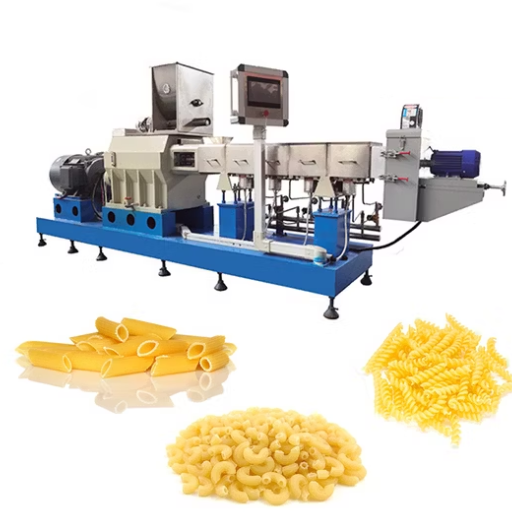
Food machinery must meet both market regulations and buyer expectations. For pani puri equipment, prioritize the following:
Food-contact materials. SS304 stainless steel is the minimum standard for surfaces touching dough or oil. SS316 is worth considering for aggressive cleaning chemicals or high-salt recipes.
Certifications. Look for CE marking for export to Europe, ISO 22000 or HACCP alignment for food safety management, and FDA-compliant materials for the United States.
FSSAI registration. Any food business operating in India must register with the Food Safety and Standards Authority of India.
Dust control. Flour and starch dust are combustible. Install proper extraction, grounding, and housekeeping around mixing and conveying areas.
Easy-clean design. Bolted covers, sloped surfaces, and quick-release parts reduce cleaning time and microbial risk. Ask suppliers for CIP (clean-in-place) compatibility where possible.
Why Shandong Loyal Industrial Co., Ltd. for Pani Puri Production Lines
Choosing a machine is only part of the decision. You also need a supplier who understands recipe variability, local voltage requirements, and export documentation.
Shandong Loyal Industrial Co., Ltd. designs food extrusion solutions and fried snack production lines with the following advantages:
- Customizable configurations. Extruder length, die shape, dryer capacity, and fryer length can be matched to your target output and recipe.
- Food-safe construction. Contact surfaces use SS304 or SS316 stainless steel, with layouts that support hygienic cleaning.
- Modular, scalable design. Start with a smaller line and add modules as demand grows without replacing the entire system.
- Recipe-specific adjustments. Screw profile, barrel temperature, and cutting speed can be tuned for different flour/starch blends.
- Global technical support. Responsive after-sales service, spare parts, and installation guidance keep downtime low.
When a procurement team in Nairobi evaluated three suppliers for a 200 kg/hour pani puri line, they selected Shandong Loyal because the proposal included a full utility list, die drawings, and a projected output table for three different recipes. That level of detail cut their internal approval time by two weeks.
If you are planning a new line or expanding an existing one, contact our engineering team for a customized proposal and layout drawing.
Conclusion
A pani puri pellet making machine can transform a labor-intensive snack into a scalable, consistent product, but only if you match the machine to your market. Small commercial cutters work for local vendors and startups with limited capital. Industrial 3D pellet extrusion lines are the right choice for factories, exporters, and brands that need high throughput and uniform quality.
The five decisions that matter most are:
- Match capacity to real daily demand, not best-case projections.
- Control moisture and temperature at every process stage.
- Budget for total cost of ownership, not just the invoice price.
- Choose food-safe materials and the right certifications for your market.
- Work with a supplier who provides recipe support and spare parts.
Get those right, and your line will produce crisp, hollow puris that keep customers coming back. Ready to move from planning to production? Request a quote for a pani puri pellet making machine and receive a tailored line configuration based on your capacity, recipe, and budget.