
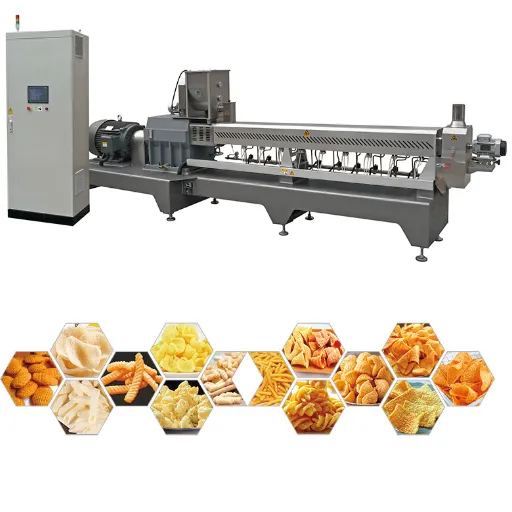
Pellet Snack Extruder Machine: Selection, Operation & Maintenance Guide

The best pellet snack extruder machine for your operation depends on three things: the shapes you want to produce, the raw materials you plan to use, and how much flexibility you need as your product range grows. For most commercial snack producers, a food-grade twin-screw extruder with modular dies and PLC control offers the best balance of versatility, output, and long-term value.
Choosing the wrong extruder is expensive. It can lock you out of premium 3D shapes, limit recipe changes, or saddle you with parts that wear out faster than expected. This guide walks you through how a pellet snack extruder machine works, how to match the machine to your product goals, and what it really costs to own and maintain one.
Key Takeaways
- A twin-screw extruder is the best choice for most snack pellet operations because it handles complex 3D shapes, multigrain recipes, and high-protein or gluten-free formulations better than a single-screw unit.
- Pellet snack extruder machines typically produce 100–500 kg/h in standard models, with prices ranging from roughly 8,000forentry−levelsingle−screwunitsto8,000forentry−levelsingle−screwunitsto128,000+ for industrial twin-screw lines.
- The extruder is only one part of a complete line; it must integrate with mixers, dryers, fryers or hot-air puffing systems, and seasoning equipment.
- Food-contact surfaces should be SUS 304 or 316 stainless steel, and screws/barrels should use wear-resistant alloy steel for long service life.
- Preventive maintenance, barrel and screw inspection, die cleaning, lubrication, and temperature sensor calibration, is what separates a low total cost of ownership from a money pit.
What Is a Pellet Snack Extruder Machine?
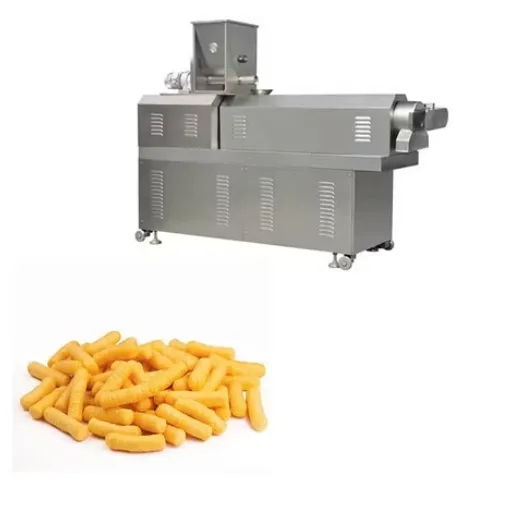
A pellet snack extruder machine is the core cooking and forming unit in a snack pellet production line. It blends raw materials, usually starches and flours, with water and additives, then cooks the mixture under controlled heat, pressure, and shear. The cooked dough is forced through a die and cut into shaped pellets.
These pellets are semi-finished products, sometimes called “half-products” or intermediate products. They have a long shelf life and are later expanded into finished snacks through frying, hot-air puffing, or baking. This two-stage process gives manufacturers flexibility. You can ship dense pellets cheaply and expand them close to the market, or you can hold inventory without the fragility of finished puffed snacks.
A pellet snack extruder machine is different from a direct-expansion snack extruder. Direct expansion extruders cook and puff the product in one step. Pellet extruders create a dense, stable intermediate that expands later. That difference matters because it changes the screw design, die geometry, drying requirements, and control parameters you need.
Want to see how the full line fits together? Read our complete 2D 3D pellet production line guide for a step-by-step process overview. You can also explore our snack food extruder machine range to compare specifications.
How a Pellet Snack Extruder Machine Works
Understanding the extrusion process helps you ask better questions when comparing one snack pellet extruder machine against another. The sequence is straightforward, but each stage depends on precise control.
1. Feeding and Pre-Conditioning
Mixed dough or dry flour blend enters the extruder through a feeder. Some machines include a pre-conditioner that adds steam and water to start gelatinization before the material reaches the extruder barrel. Pre-conditioning can increase capacity by 30–50% and improve pellet texture.
2. Cooking Inside the Barrel
The barrel houses one or more screws that push the material forward. As the screws rotate, three things happen simultaneously:
- External heating from electric or steam jackets raises the barrel temperature.
- Friction and shear generate additional heat inside the dough.
- Pressure builds as the material moves toward the restricted die opening.
This combination cooks the starch through gelatinization, turning the raw flour mixture into a pliable, pressurized dough. Temperatures typically range from 100°C to 160°C depending on the recipe and product.
3. Shaping Through the Die
At the end of the barrel, the dough is forced through a die. The die opening determines the cross-section of the pellet, rings, tubes, shells, spirals, or flat sheets. For 3D shapes, a second forming or embossing station may press two dough sheets together.
4. Cutting to Length
A rotary cutter at the die face slices the continuous extrudate into individual pellets. Cutter speed and blade condition affect length consistency, which matters for even frying and packaging later.
5. Drying
Fresh pellets leave the extruder with roughly 20–25% moisture. They must be dried to 8–12% moisture for storage and proper expansion later. Drying is usually done on multi-layer belt dryers at low temperatures over several hours.
After drying, pellets are fried, air-puffed, or baked to create the final snack. The extruder itself does not finish the product, it creates the structured intermediate that makes the final expansion possible.
Single Screw vs Twin Screw Extruder: Choosing the Right Pellet Snack Extruder Machine
This is the most important decision when buying a pellet snack extruder machine. The two designs look similar from the outside, but they behave very differently during production.
| Feature | Single-Screw Extruder | Twin-Screw Extruder |
|---|---|---|
| Screw design | One rotating screw | Two intermeshing screws |
| Mixing quality | Moderate | Superior |
| Self-cleaning | Limited | Yes |
| Raw material flexibility | Best for simple starch recipes | Handles multigrain, high-protein, high-fiber, oily recipes |
| Shape capability | Good for 2D pellets | Better for 3D and complex shapes |
| Control precision | Lower | Higher temperature/pressure control |
| Capital cost | Lower | Higher |
| Maintenance | Simpler, but parts can wear faster under high load | More complex, but modular design simplifies servicing |
| Best for | Startups, simple 2D products, tight budgets | Growing producers, 3D shapes, recipe innovation |
When you evaluate a pellet snack extruder machine for your plant, the screw configuration is the first technical decision that locks in or limits your product range. The table above summarizes the engineering differences, but the right choice also depends on your business stage, budget, and growth plan.
When to Choose a Single-Screw Extruder
A single-screw extruder is a good fit when you have a limited product range, simple recipes based on wheat flour or potato starch, and a tight budget. It is mechanically simpler, which can mean lower upfront cost and easier maintenance in basic configurations.
However, single-screw extruders struggle with recipes that contain high levels of fat, fiber, or protein. They also offer less precise control over expansion and texture. If you plan to add premium 3D products later, you may outgrow a single-screw machine quickly.
When to Choose a Twin-Screw Extruder
A twin screw extruder snack pellet configuration is the better long-term investment for most snack producers. The two intermeshing screws provide better mixing, more uniform heat distribution, and more precise control over shear and pressure. That translates into:
- More consistent pellet quality
- Better handling of complex recipes
- Faster product changeovers
- Ability to produce both 2D and 3D shapes
According to industry estimates, twin-screw extruders now account for roughly 58% of snack pellet production equipment. In addition, if your business plan includes shape variety, health-oriented formulations, or export markets with strict quality standards, a twin-screw design is the safer choice.
Mini-Story: From One Shape to a Full Portfolio
When Ravi opened his snack plant in Gujarat in 2022, he bought a single-screw extruder to make basic 2D fryums. Demand grew, and retailers began asking for 3D bugles and pani puri pellets.
His single-screw machine could not hold the complex die pressure needed for consistent hollow shapes. After 14 months, he replaced it with a twin-screw extruder. The new snack pellet extruder machine ran both his old 2D products and the new 3D line, but the upgrade cost him roughly 40% more than if he had chosen a twin-screw pellet snack extruder machine from the start.
Key Specifications to Evaluate
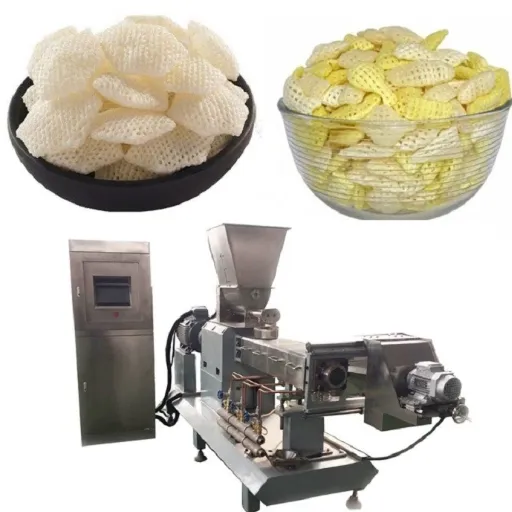
Spec sheets can be overwhelming. Focus on these parameters when comparing pellet snack making machine options for your plant.
Screw Diameter and L/D Ratio
Screw diameter affects output capacity. Common sizes include 65 mm, 70 mm, and 85 mm for snack pellet applications. The length-to-diameter (L/D) ratio indicates how long the screw is relative to its diameter. Ratios of 20:1 to 30:1 are typical.
A higher L/D ratio allows more cooking time and better gelatinization. It also requires more power, so match the ratio to your product needs.
Motor Power and Torque
Main motor power ranges from 22 kW on small machines to over 110 kW on industrial models. Do not look at motor power alone, torque matters for pushing dense dough through restricted dies. Ask the supplier for torque curves at your target output, not just rated power.
Temperature Control Zones
Look for at least 3–4 independent temperature zones on the barrel. Premium machines may have 6–12 zones with individual heating and cooling control. More zones mean better process stability and faster recipe changeovers.
Die and Cutter System
The die determines shape; the cutter determines length. Ask about:
- How quickly dies can be changed
- Whether custom dies are available
- Cutter blade material and replacement cost
- Whether the cutter is synchronized with screw speed
Material Quality
On any food-grade pellet snack extruder machine, food-contact parts should be SUS 304 or 316 stainless steel. Screws and barrels should use wear-resistant alloy steel, often 38CrMoAl or equivalent, with nitriding or bimetallic coatings for long life. Poor-quality screws wear out in months under abrasive starch and mineral loads, turning a cheap machine into an expensive one.
Automation and Control
Modern pellet snack extruder machines use PLC-based control with a touchscreen HMI. Useful features include recipe memory, automatic temperature control, fault alarms, and remote diagnostics. Some suppliers offer mobile app monitoring. Automation reduces operator error and makes it easier to reproduce successful runs.
Matching the Extruder to Your Product Portfolio
Not every pellet snack extruder machine can make every product. Match the machine to the shapes and recipes you plan to produce.
2D Pellets
Flat shapes like chips, rings, shells, spirals, and papad require stable pressure and clean die cutting. A versatile 2D 3D pellet snack machine with twin-screw configuration can produce 2D pellets with better edge definition and expansion consistency than most single-screw units.
3D Pellets
Three-dimensional shapes like bugles, cones, pillows, and hollow balls require higher pressure control and often a compound forming station. A 2D 3D pellet snack machine with twin-screw design is usually necessary for reliable 3D production.
Specialty Products
- Fryums and papad: Often made from tapioca starch, sago, or semolina. These recipes can be abrasive, so a fried snack pellet extruder with wear-resistant screws matters.
- Pani puri / golgappa: Requires uniform wall thickness in hollow pellets. Consistent die pressure and precise cutting are critical.
- Prawn crackers and sala chips: Often use pre-cooked starch. Some lines use cold extrusion for forming only.
- Gluten-free and multigrain: Twin-screw extruders handle these better because they provide the shear and mixing needed to bind non-wheat starches.
If you are unsure which configuration fits your product, ask the supplier to run a trial with your actual recipe before you place an order. A good supplier will welcome this.
Pellet Snack Extruder Machine Price and Total Cost of Ownership
Purchase price is only part of the equation. Energy, wear parts, labor, and downtime often cost more than the machine itself over five years.
Purchase Price Ranges
| Capacity Range | Typical Output | Single-Screw Price (USD) | Twin-Screw Price (USD) |
|---|---|---|---|
| Entry-level | 80–150 kg/h | 8,000–8,000–20,000 | 12,000–12,000–28,000 |
| Mid-range | 200–350 kg/h | 20,000–20,000–45,000 | 28,000–28,000–65,000 |
| Industrial | 400–600+ kg/h | 45,000–45,000–80,000 | 60,000–60,000–128,000+ |
Prices vary widely based on automation level, brand, auxiliary equipment, and customization. A complete fried snack production line, mixer, extruder, dryer, fryer, seasoning, and packaging, will cost more than the extruder alone.
Operating Costs to Model
- Energy: Twin-screw extruders use more power but often produce more output per kilowatt. Ask for kWh per kg of pellet at your target recipe.
- Wear parts: Screws, barrels, dies, and cutter blades wear out. Budget for replacement every 2,000–8,000 operating hours depending on abrasiveness of your recipe.
- Labor: Automated machines with recipe memory reduce operator skill requirements and training time.
- Downtime: Quick die changes and local spare parts availability reduce lost production.
When you evaluate quotes, therefore, ask suppliers for a five-year operating cost estimate. A machine with a lower purchase price but expensive proprietary wear parts can easily become the more expensive option.
Mini-Story: The Cheap Machine That Was Not Cheap
A snack startup in Nigeria chose a $9,500 single-screw extruder because the upfront cost fit the budget. Within eight months, the barrel and screw showed severe wear.
The only replacement parts came from the original supplier with a six-week lead time. Lost production and express shipping costs added roughly $14,000 to the first-year cost, more than the price difference to a mid-range twin-screw unit with local support.
Pellet Snack Extruder Machine Maintenance Checklist and Troubleshooting
Preventive maintenance is what keeps a pellet snack extruder machine profitable. Small problems become expensive failures if ignored.
Daily Maintenance
- Inspect screws, barrel, and die for residue buildup
- Clean the die face and cutter blades after each run
- Check oil levels in gearboxes and lubrication points
- Verify temperature sensor readings against actual barrel temperatures
- Remove accumulated starch dust from motors and electrical cabinets
Weekly Maintenance
- Inspect screw and barrel wear patterns
- Check belt and chain tension on feeders and cutters
- Clean air filters on electrical panels
- Review production logs for temperature or pressure drift
Monthly Maintenance
- Measure screw and barrel clearance; excessive clearance reduces efficiency and product quality
- Replace worn cutter blades and inspect die inserts
- Calibrate temperature controllers and pressure sensors
- Check gearbox oil quality and replace if contaminated
Common Problems and Causes
| Problem | Likely Cause | Corrective Action |
|---|---|---|
| Uneven expansion | Inconsistent moisture or die wear | Check drying profile; inspect die opening |
| Die blockage | Overheating or low moisture | Adjust temperature; check water/steam injection |
| Surging output | Worn screw or unstable feeding | Inspect screw; calibrate feeder |
| Overheating barrel | Cooling system failure or excessive shear | Check cooling water flow; reduce screw speed |
| Excessive wear | Abrasive recipe or poor screw material | Use alloy-coated screws; review raw material specs |
Keep a maintenance log. It helps you spot patterns, justify spare parts inventory, and maintain product consistency.
Factory Acceptance Testing and Supplier Evaluation
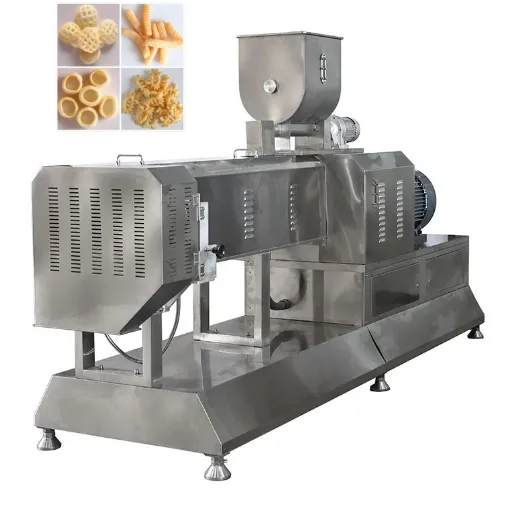
Before you accept delivery of your snack pellet extruder machine, run a factory acceptance test (FAT) with your recipe. A proper FAT protects both you and the supplier.
What to Test
- Output rate at target pellet moisture
- Product shape consistency and expansion after frying or puffing
- Temperature stability across all zones
- Motor current and energy consumption
- Ease of die change and cleaning
- Noise and vibration levels
Questions to Ask the Supplier
- Can you test my recipe before quoting?
- What is the lead time for critical spare parts?
- Do you provide installation, commissioning, and operator training?
- What warranty covers screws, barrels, and electrical components?
- Can you share reference customers in my region?
- Is the control system open, or does it require proprietary parts?
A supplier who avoids these questions or insists on selling a standard configuration without recipe testing is a red flag. The right partner will treat your product requirements as the starting point, not an inconvenience.
Embedding Process Knowledge: See Extrusion in Action
Video is one of the fastest ways to understand how an extruder behaves during production. Below is an overview of a 2D/3D pellet snack production line in operation. Seeing the extruder, die, cutter, and dryer work together makes the selection criteria in this guide easier to apply.
Frequently Asked Questions
What is a pellet snack extruder machine?
A pellet snack extruder machine cooks and forms raw starch or flour mixtures into dense, shaped pellets. These pellets are later expanded into finished snacks by frying, hot-air puffing, or baking.
How does a snack pellet extruder work?
It feeds mixed dough into a heated barrel, where screws rotate to cook the mixture under pressure and shear. The cooked dough is forced through a die and cut into pellets, which are then dried for later expansion.
What is the difference between single-screw and twin-screw extruders?
Single-screw extruders use one screw and are simpler and lower cost. Twin-screw extruders use two intermeshing screws for better mixing, more precise control, and greater recipe flexibility.
What shapes can a pellet snack extruder make?
Common shapes include rings, shells, spirals, tubes, chips, bugles, cones, pillows, animal shapes, and hollow pellets like pani puri.
How much does a snack pellet extruder machine cost?
Entry-level machines start around 8,000,mid−rangemodelsrangefrom8,000,mid−rangemodelsrangefrom28,000 to 65,000,andindustrialtwin−screwlinescanexceed65,000,andindustrialtwin−screwlinescanexceed128,000 depending on capacity and configuration.
Can a snack pellet extruder handle gluten-free or high-protein recipes?
Twin-screw extruders handle these recipes better than single-screw units because they provide the shear and mixing needed to structure non-wheat starches and protein blends.
Conclusion
A pellet snack extruder machine is the most important capital decision in a snack pellet line. The right machine gives you product flexibility, consistent quality, and room to grow. The wrong machine limits your portfolio and drives up operating costs through wear parts and downtime.
For most producers, a food-grade twin-screw extruder with modular dies and PLC control is the best long-term choice. It handles both 2D and 3D products, supports recipe innovation, and holds value better than a basic single-screw unit.
Ready to choose the right pellet snack extruder machine for your product line? Contact Shandong Loyal Industrial for a recipe trial, line layout consultation, or detailed quotation.