
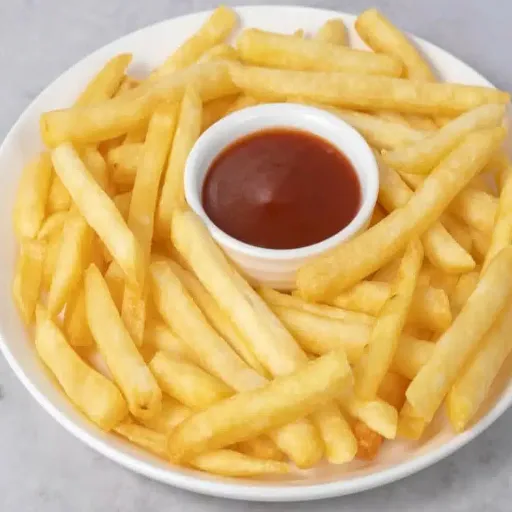
12 Most Profitable Snacks to Sell in 2026: A Manufacturer’s Guide to High-Margin Production

The most profitable snacks to sell in 2026 are extruded puff snacks, gourmet popcorn, protein bars, tortilla chips, roasted nuts, and healthy vegetable chips. Each of these categories delivers margins between 50% and 315% when manufactured at scale with the right production equipment.
Here is the catch. Most guides that promise to reveal “profitable snacks to sell” stop at the grocery list. They tell you what is trending. They do not tell you how to produce it profitably, what equipment you need, or how long it takes to earn back your investment.
That gap costs food entrepreneurs thousands of dollars in bad equipment choices. We have seen it happen. A buyer in Southeast Asia purchased a batch fryer for puff snacks, only to discover his capacity could not meet a single retail PO. Another client in Africa invested in a manual popcorn line that maxed out at 80 kg per day while her market demanded 800 kg.
This guide is different. We are Shandong Loyal Industrial Co., Ltd., and we have designed snack production lines for food manufacturers across 80+ countries since 2012. We know the numbers that matter: raw material cost per kilogram, equipment payback period, and the production scale that matches each distribution channel.
In the next 3,200 words, you will learn which twelve snack categories deliver the highest margins, what equipment each one requires, and how to scale from a startup kitchen to an industrial production line. You will also see real ROI timelines and 2026 consumer trends that are reshaping what shoppers buy.
Key Takeaways
- Gourmet popcorn and roasted nuts offer the highest margins (80-315%), but extruded puff snacks and protein bars scale faster due to automated production.
- A mid-scale snack production line (60,000−60,000−150,000) typically pays back in 18-24 months at 70% utilization.
- Protein-forward, gut-health, and “swicy” flavor profiles are the three biggest demand drivers in 2026.
- Private label and co-packing represent the fastest path to revenue for new snack manufacturers.
- Equipment choice matters more than recipe choice: the wrong fryer or extruder can erase your margin before you ship a single case.
Why the Snack Business Is Booming in 2026
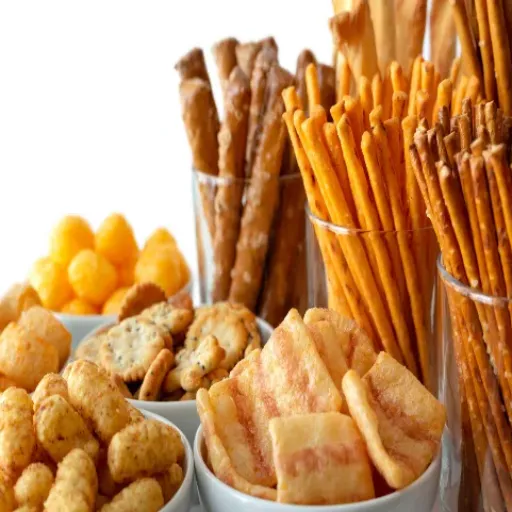
Market Size & Growth Statistics
The global snack food market reached 292billionin2026.Analystsprojectitwillhit292billionin2026.Analystsprojectitwillhit358 billion by 2031, growing at a 4.2% compound annual rate. That growth is not slowing down.
What is driving it? Three forces are converging.
First, urbanization is rising in Asia, Africa, and Latin America. City dwellers snack more frequently than rural populations, and the urban share of global population keeps climbing.
Second, convenience culture has normalized snacking as a meal replacement. 92% of adults now consume at least one snack within a 24-hour window.
Third, the “health halo” has expanded the category itself. Snacks are no longer just indulgence. They are protein delivery vehicles, gut-health tools, and functional nutrition.
The result is a market with room at every level. You can enter as a cottage-food producer selling at farmers markets. You can scale to a regional brand supplying convenience stores. Or you can build an industrial facility exporting to multiple continents. The demand exists at every tier.
The Manufacturing Opportunity
Here is where it gets interesting for equipment buyers. Consumer demand is outpacing production capacity in several emerging markets. In sub-Saharan Africa, Southeast Asia, and parts of the Middle East, local snack manufacturing is underdeveloped relative to population growth and urbanization.
Private label is another open door. In Europe, private label snacks now account for 39% of FMCG value. Retailers need manufacturers who can produce quality snacks under store brands. If you have the equipment and the compliance certifications, you do not need your own brand to generate revenue.
E-commerce adds a third channel. Online snack sales are expanding at 5.6-7.2% CAGR globally. Direct-to-consumer shipping favors lightweight, shelf-stable products with strong margins, which describes almost every category on this list.
Want to understand how a complete production line fits your capacity goals? Explore our food production line solutions designed for scalable snack manufacturing.
How We Evaluated Snack Profitability
Before we list the twelve categories, you deserve to know how we ranked them. Profit is not just about selling price minus ingredient cost. A snack that looks cheap to make can become expensive if it requires specialized labor, short shelf life, or fragile packaging.
We used a five-factor framework:
- Raw material cost as a percentage of wholesale price. Lower is better.
- Equipment investment and payback period. How long until the machine pays for itself?
- Scalability. Can you increase output without proportionally increasing labor?
- Market demand trajectory. Is the category growing, flat, or declining?
- Distribution flexibility. Does the product work in retail, wholesale, D2C, and food service?
A snack that scores well on all five factors is a manufacturing goldmine. A snack that scores well on price but poorly on scalability is a trap. We have excluded those traps from this list.
Top 12 Most Profitable Snacks to Sell
1. Gourmet Popcorn (80-90% Margins)
Popcorn is the margin champion. Raw kernel cost runs 0.25−0.25−0.40 per finished serving. Wholesale pricing for gourmet varieties lands at 15−15−30 per kilogram. The math is almost embarrassingly favorable.
The 2026 opportunity is flavor innovation. Truffle, hot honey, sriracha lime, and “swicy” blends are commanding premium prices. Seasonal rotations (pumpkin spice in Q4, tropical in Q2) keep repeat buyers engaged.
Equipment needed: an industrial popper, a flavoring drum for oil and seasoning application, and a packaging machine with nitrogen flush for shelf-life extension.
Scale path: start with a commercial popper (2,000−2,000−5,000) for market validation. Move to an automated line (30,000−30,000−80,000) once you have POs above 500 kg per week.
2. Extruded Puff Snacks (50-80% Margins)
Extruded puffs are the workhorse of profitable snack manufacturing. The raw material is corn or rice starch, which costs 15-25% of the finished wholesale price. Shape variety is nearly unlimited: balls, curls, rings, and sticks all come from the same extruder with a die change.
The 2026 angle is protein fortification and ancient grains. Consumers want 10-15 grams of protein per serving, and they are open to quinoa, sorghum, and chickpea bases. If you can deliver a clean-label puff with 12 grams of protein, you are in a premium pricing tier.
Equipment needed: a twin-screw extruder for precise temperature and shear control, a dryer or oven, a flavoring system, and packaging. Our food extrusion technology delivers 300-500 kg per hour with recipe-specific adjustments for consistent puff texture.
Scale path: entry-level extruders start around 2,500fortesting.Amid−scalelineruns2,500fortesting.Amid−scalelineruns60,000-$150,000 and handles serious SME volume. Industrial systems exceed 2,500 kg per hour.
3. Protein Bars and Energy Bites (High Margins, 17% YoY Growth)
Protein bars sit at the intersection of two powerful trends: health consciousness and on-the-go eating. The category is growing 17% year over year, and subscription models create predictable revenue.
Margins are strong because the ingredients (protein powder, nut butters, oats, binding syrups) cost a fraction of the retail price. A bar that wholesales for 1.50−1.50−2.50 often costs 0.30−0.30−0.50 in materials.
Equipment needed: a mixer, a forming press or slurry depositor, a cooling tunnel, and a flow wrapper.
Scale path: many startups begin in shared kitchens or co-packing facilities. Once volume exceeds 50,000 units per month, owning your own production line becomes cost-effective.
4. Tortilla Chips and Doritos-Style Snacks (60-75% Margins)
Tortilla chips benefit from universal recognition. Consumers know what they are. Retailers know how to shelve them. That reduces your education and marketing cost.
The profit lever is flavor differentiation. “Swicy” profiles (hot honey, chili-lime, mango-chili) command 20-30% price premiums over plain salted varieties. Novelty sells in this category.
Equipment needed: a tortilla press or sheeter, a continuous fryer or baking oven, and a seasoning drum. For manufacturers targeting the fried segment, our continuous fryer systems maintain automatic temperature control for uniform cooking and optimal oil turnover.
Scale path: batch frying works for micro-producers. Continuous production lines are essential once you supply grocery chains or distributors.
5. Roasted and Flavored Nuts (150-315% Markup Potential)
Nuts offer the highest markup potential on this list. Raw almonds or cashews purchased in bulk cost a fraction of what consumers pay for a 150-gram bag of honey-roasted or spice-coated nuts.
The premium packaging game matters here. A plain bulk bin of almonds sells for one price. The same almonds in a matte pouch with “small batch” and “artisan roasted” labeling sell for 3x.
Equipment needed: a roasting oven (either drum or belt style), a flavoring tumbler for oil and seasoning application, and packaging equipment.
Scale path: small roasters start at $500. Industrial roasting lines handle multiple tons per hour and include integrated cooling and sorting.
6. Healthy Vegetable and Fruit Chips (Premium Pricing)
The health halo is real in this category. Vacuum-fried beet chips, sweet potato crisps, and kale chips sell at 2-3x the price of standard potato chips. Consumers accept the premium because they perceive superior nutrition.
The 2026 opportunity is vacuum frying, which preserves color and nutrients better than conventional frying while still delivering the crispy texture shoppers expect.
Equipment needed: a slicer for uniform thickness, a vacuum fryer or high-efficiency air fryer, and packaging with nitrogen flush to prevent oxidation.
Scale path: start with a dehydrator for low-cost market testing. Upgrade to vacuum frying equipment once you validate demand.
7. Fried Savory Snacks: Kurkure, Sev, Bhujia (50-70% Margins)
These regional savory snacks dominate in South Asia, the Middle East, and diaspora communities worldwide. Demand is year-round with sharp spikes during festivals and celebrations.
The export opportunity is significant. Indian and Middle Eastern snack varieties are gaining traction in Western markets as global palates expand.
Equipment needed: an extruder or dough mixer for base preparation, a continuous fryer, and a seasoning system. Our fried snack production equipment handles everything from dough forming to oil filtration in a continuous process.
Scale path: batch fryers work for local markets. Continuous lines are required for regional distribution or export.
8. Gluten-Free and Keto Crackers (Premium Niche)
Gluten-free and keto consumers are loyal and underserved. They read labels carefully, and they are willing to pay premium prices for products that genuinely meet their dietary requirements.
The 2026 formulation trend is millet-based and ancient grain crackers. These ingredients carry a health story that resonates beyond the gluten-free community.
Equipment needed: a dough mixer, a sheeter for uniform thickness, a baking oven with precise temperature zones, and a cutting or scoring machine.
Scale path: shared kitchen production is viable at low volume. A dedicated production line becomes necessary once you have retail placement.
9. Pet Treats and Snacks (Emotional Pricing Power)
Pet humanization is a megatrend with no sign of slowing. Pet owners treat their animals like family members, and they spend accordingly. Pet snacks often face lighter regulatory requirements than human food, reducing compliance cost.
The 2026 opportunity is functional pet treats: dental health, joint support, and calming formulations. These command higher prices than basic biscuits.
Equipment needed: an extruder (the same twin-screw systems used for human snacks), a dryer, and packaging. Many snack manufacturers successfully run human and pet products on shared equipment with proper cleaning protocols.
For manufacturers interested in this dual-use approach, our pet food extrusion equipment is designed for easy changeover between product types.
10. Popped and Air-Fried Snacks: Rice Cakes, Popped Chips (Very High Margins)
Rice cakes and popped chips are lightweight, which means low shipping cost. That matters enormously for e-commerce and export. A container of puffed rice snacks weighs a fraction of what fried chips would weigh for the same volume.
Raw material costs are minimal. Rice pellets or raw grain cost pennies per serving. The value is added through flavoring, branding, and texture engineering.
Equipment needed: a popping machine (either hot air or high-pressure), a pellet feeder if using pre-formed pellets, and a seasoning drum.
Scale path: small air poppers handle startup volumes. Industrial lines with automated feeding and seasoning scale to thousands of kilograms per day.
11. Functional and Gut-Health Snacks (Premium Health Positioning)
Prebiotic fiber, probiotics, and adaptogens are moving from supplements into snacks. Health claims justify 30-50% price premiums over conventional alternatives.
The formulation sweet spot in 2026 is 3-6 grams of prebiotic fiber per serving. Consumers want a snack that tastes good and delivers a measurable health benefit.
Equipment needed: a mixer for even distribution of heat-sensitive functional ingredients, forming equipment, and packaging with high-barrier films to protect active ingredients from moisture and oxygen.
Scale path: co-packing is common for functional snacks because ingredient handling requires expertise. Once volume justifies it, in-house production gives you margin control.
12. Specialty Chocolate and Confectionery (High Margins)
Chocolate is the ultimate impulse purchase. Gift packaging, seasonal editions, and limited releases drive average order value higher than almost any other snack category.
The 2026 innovation wave is functional chocolate: protein-enriched bars, adaptogen-infused truffles, and low-sugar formulations that use alternative sweeteners.
Equipment needed: a tempering machine, an enrober for coating, a molding line, and packaging equipment.
Scale path: artisan production with manual tempering works for boutique markets. Semi-automated and fully automated lines handle national distribution.
Equipment Investment and ROI: From Startup to Industrial Scale
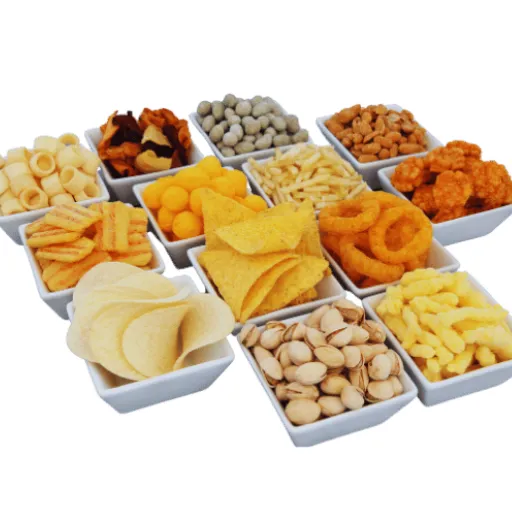
Choosing the right equipment tier is where most snack entrepreneurs make or break their business. Under-invest, and you cannot fulfill orders. Over-invest too early, and your capital sits idle while debt accrues.
Here is a realistic breakdown of three production tiers.
Entry-Level Setup (2,500−2,500−15,000)
At this level, you are validating the market. Equipment includes small extruders, commercial poppers, or countertop roasters. Labor is intensive. Output ranges from 50-200 kg per day.
Best for: cottage food operations, farmers market sellers, and founders testing product-market fit.
Payback: variable. If you sell direct-to-consumer at retail prices, you can recover equipment cost in 3-6 months. If you sell wholesale, it may take 12-18 months.
Mid-Scale Production (60,000−60,000−150,000)
This is where serious manufacturing begins. A 300-500 kg per hour twin-screw extrusion line or continuous fryer system at this tier can supply regional distributors, multiple retail accounts, or steady private-label contracts.
Best for: SMEs with validated demand, regional brands, and co-packers serving multiple clients.
Payback: 18-24 months at 70% or higher utilization. At 80% utilization with a high-margin product like extruded puffs or gourmet popcorn, payback can drop to 14-18 months.
Ready to see how a mid-scale line fits your capacity targets and payback timeline? Contact our team for a customized equipment quote and production consultation.
High-Output Industrial (150,000−150,000−500,000+)
Industrial systems handle 2,500+ kg per hour with full automation: automated feeding, continuous processing, inline quality control, and integrated packaging. Labor cost per kilogram drops dramatically.
Best for: national or international brands, large co-packers, and export-oriented manufacturers.
Payback: 12-18 months for high-margin products at scale. The capital requirement is high, but so is the throughput.
| Production Tier | Investment | Daily Output | Best For | Payback Period |
|---|---|---|---|---|
| Entry-Level | 2,500−2,500−15,000 | 50-200 kg | Market validation, D2C | 3-18 months |
| Mid-Scale | 60,000−60,000−150,000 | 2,000-4,000 kg | Regional distribution | 14-24 months |
| Industrial | 150,000−150,000−500,000+ | 20,000+ kg | National/export | 12-18 months |
2026 Consumer Trends Driving Snack Profits
Equipment alone does not guarantee sales. You also need to make what people want to buy. Here are the five demand trends shaping snack purchasing decisions in 2026.
Protein-Forward Everything
Sixty percent of global consumers are actively trying to increase protein intake. In snacks, the baseline is shifting: 10-15 grams of protein per serving is becoming the expectation, not the premium. If your snack does not deliver protein, you are losing share to brands that do.
Gut Health and Fiber-First
The prebiotics market is projected to grow from 1.44billionin2024to1.44billionin2024to4.02 billion by 2035. Snacks that deliver 3-6 grams of fiber per serving with a clean taste profile have a clear positioning advantage.
“Swicy” and Sensory Innovation
Sweet-plus-spicy flavor profiles are the breakout trend of 2026. Hot honey, chili-lime, and mango-chili combinations are winning shelf space. Layered textures (crunchy exterior, creamy filling) and visible toppings also drive purchase intent.
Mini and Portion-Controlled Formats
Twenty-seven percent of snack demand is now driven by the “mini” need. Small 25-40 gram packs work for impulse purchases, lunchbox inclusion, and calorie-conscious consumers. They also let shoppers trial new flavors with low commitment.
Sustainable and Clean-Label Packaging
The EU Packaging and Packaging Waste Regulation (PPWR) mandates recyclable packaging by 2030. Mono-material films are becoming standard. Brands that lead on sustainable packaging gain retailer preference and consumer trust.
How to Choose the Right Snack Category for Your Market
With twelve strong options, how do you pick one? Use a four-filter decision process.
Assess Local Demand
What do people in your region already buy? What flavors do they prefer? What dietary trends are emerging? A protein bar might crush it in urban gyms but flop in a rural market where price sensitivity is higher. Match your product to your geography.
Evaluate Your Capital
Be honest about your budget and financing options. An entry-level setup lets you test before you commit. A mid-scale line requires capital but delivers faster payback once demand is proven. Do not borrow for industrial equipment until you have purchase orders in hand.
Consider Distribution Strategy
Retail requires shelf-stable packaging and consistent supply. Wholesale demands volume and competitive unit pricing. D2C e-commerce needs lightweight products and strong branding. Private label removes marketing cost but requires compliance and reliability. Each channel favors different snack categories.
Start With One, Scale With Data
The biggest mistake we see is launching three snack categories at once. Pick one. Perfect the recipe, the equipment setup, and the supply chain. Once that category runs profitably at 70% capacity, expand.
Quick Reference: Top Snack Categories by Margin
Use this list to compare categories at a glance:
- Highest margin, lowest startup cost: Gourmet popcorn, roasted nuts
- Highest margin, fastest scaling: Extruded puff snacks, tortilla chips
- Fastest-growing category: Protein bars and energy bites (17% YoY)
- Best for e-commerce/export: Popped rice snacks, healthy chips (lightweight)
- Best for private label: Extruded puffs, fried savory snacks, tortilla chips
- Best dual-use opportunity: Pet treats (shares equipment with human snacks)
- Most premium positioning: Functional gut-health snacks, specialty chocolate
- Best for emerging markets: Fried savory snacks, extruded puffs
Regulatory and Compliance Essentials
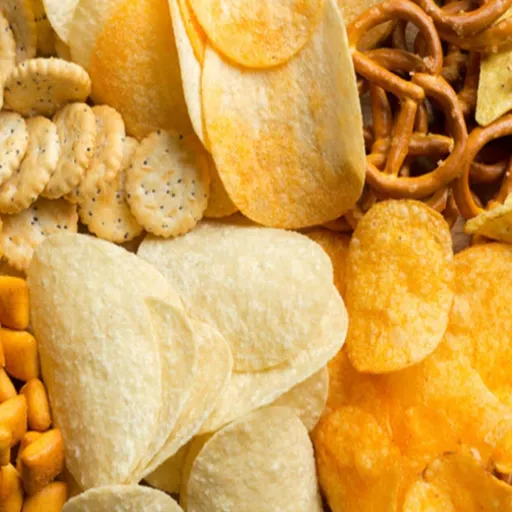
Profitability means nothing if your product cannot legally enter the market. Here are the compliance pillars every snack manufacturer must address.
Food Safety Certifications
HACCP (Hazard Analysis Critical Control Points) is the baseline. ISO 22000 and GMP (Good Manufacturing Practice) certifications open doors to larger retailers and export markets. If you are using our equipment, we provide documentation and guidance to support your certification process.
Labeling Requirements
Every package needs accurate nutrition facts, allergen declarations, net weight, and a complete ingredient list. Regulations vary by country, so verify local requirements before printing your first label.
Facility Registration
In the United States, FDA registration is required. In the EU, EFSA compliance applies. Most countries require health department permits at the local or national level. Plan for 2-4 months of paperwork before your first production run.
Export Considerations
If you are exporting, factor in target market regulations, import documentation, and certifications like halal or kosher if relevant to your destination countries. These certifications can be market-openers in regions with large Muslim or Jewish populations.
Conclusion
The snack market is not just growing. It is fragmenting into profitable niches that reward manufacturers who move fast and produce well. Gourmet popcorn, extruded puffs, protein bars, and roasted nuts all offer margins that justify serious equipment investment.
The key is alignment. Match your snack category to your capital, your market demand, and your production capabilities.
Start with one product. Validate it. Then scale with equipment that grows with you.
At Shandong Loyal Industrial Co., Ltd., we have spent over a decade designing snack production lines that turn raw ingredients into shelf-ready products at global quality standards. Whether you need an entry-level extruder for recipe testing or a full turnkey line for export production, we tailor every system to your specific snack category and capacity requirements.
Ready to start your snack production line? Contact our team for a customized equipment quote and production consultation. We will analyze your product, your market, and your goals, then recommend the line configuration that delivers the fastest ROI.