

The Definitive Guide to Industrial Pasta & Macaroni Production

The industrial production process for pasta and macaroni demonstrates how traditional cooking methods combine with modern technological advancements to create efficient production methods. For decades, pasta has been a staple food enjoyed by cultures worldwide and present-day technological advancements enable producers to manufacture it in greater quantities than ever before. The guide presents a comprehensive analysis of industrial pasta and macaroni production which includes all aspects from choosing raw materials to operating advanced machinery. The article delivers essential information to food manufacturers and industry professionals and people who want to learn about the pasta production process because it describes current industry trends and operational methods and technology advancements.
Introduction to Pasta and Macaroni Production
Importance of Pasta Production Technology
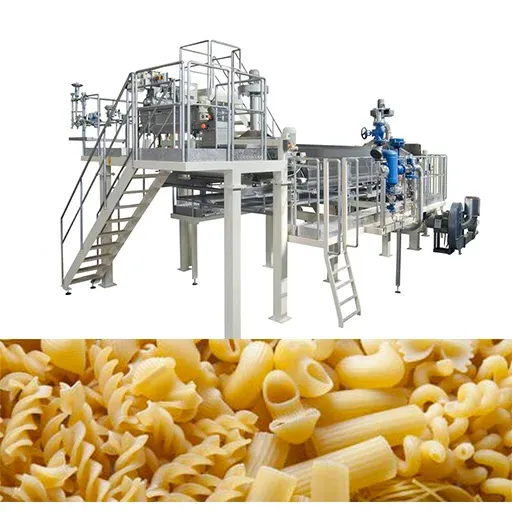
Pasta production technology has improved through its development process which developed better manufacturing methods that require less resources to produce higher quality products. Operators achieve precise process control because the advanced machinery system enables them to control all stages which include mixing and extruding and drying. The modern extrusion system uses Teflon-lined dies to create pasta which has a smooth surface that improves both taste and cooking performance.
The global pasta market reached a valuation of approximately $68 billion in 2022 according to recent industry reports and it will experience a 3.7% compound annual growth rate from 2023 through 2030. The increase in production demands show that current processes need new production techniques because customers want more products. The industry uses automation together with digital monitoring systems to reduce human errors while improving product tracking which enables organizations to comply with stringent food safety standards.
Overview of the Market and Industry Trends
The global pasta market has been experiencing steady growth because consumers increasingly prefer food products that offer both convenience and multiple uses. The pasta market will increase from 2023s approximate $45 billion valuation to more than $54 billion by 2028 according to recent market reports which project a compound annual growth rate of 3.7%. The growth of this market occurs because busy people prefer quick meal solutions which make pasta an ideal option.
The industry has started to follow a trend that shows more people are eating to improve their health. Consumers are increasingly seeking pasta varieties that align with specific dietary needs, such as gluten-free, whole-grain, and protein-enriched options. Gluten-free pasta made from lentils, chickpeas, and quinoa has gained significant popularity, with the segment growing at a faster pace compared to traditional pasta. Consumers who want to eat sustainable and ethical foods have created demand for plant-based and vegan pasta products.
Sustainability serves as the main force that drives development in the industry. Manufacturers are adopting eco-friendly production processes, using sustainable packaging, and sourcing raw materials responsibly. The implementation of these sustainable practices helps businesses attract environmentally minded consumers who want to see companies develop their environmental responsibility initiatives.
Understanding the Pasta Production Line
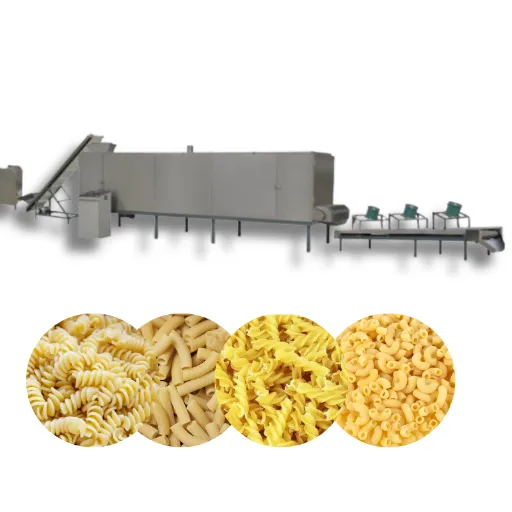
Components of a Pasta Production Line
1. Raw Material Handling System
The pasta production line begins its operation with the process that handles raw material components which include durum wheat semolina as the primary material. The automated silos together with dosing systems deliver accurate ingredient measurements which result in constant product standards. The production process requires additional ingredients which include eggs and flavoring agents to be used according to its needs.
2. Mixing and Kneading Unit
This stage involves blending the semolina with water to create a homogeneous dough. Modern mixing units use vacuum technology which removes air bubbles from the dough to create a smoother and more consistent product. Research demonstrates that vacuum mixing technique enhances both the texture and tensile strength of pasta which results in better product quality.
3. Extrusion System
The extrusion process transforms dough into different pasta shapes which include spaghetti and penne and fusilli. The extruders use precise dies to produce specific shapes while the pressure system maintains product uniformity. The advanced extrusion systems show the capability to produce between 1,500 kilograms and above per hour based on the specific model and product format being manufactured.
4. Drying System
The drying process in pasta production serves as a vital procedure which regulates moisture levels to below 12.5% moisture content enabling products to remain fresh during extended storage periods. The advanced multistage dryers utilize both temperature and humidity control systems to ensure that products maintain their original quality while preventing any damage to their structure. Most industrial drying systems use two drying stages which start with pre-drying and continue to the main-drying stage and typical production lines take 4 to 6 hours to complete pasta drying.
5. Cooling and Stabilization
The pasta requires a slow process of cooling which needs to occur after the drying phase which helps the pasta to maintain its original structure and prevent moisture build-up. The advanced cooling systems control both air temperature and humidity levels to enable efficient room temperature cooling of pasta.
Types of Pasta Making Machines
Manual Pasta Makers
The hand-operated devices serve as perfect equipment for both home users and small-scale pasta production operations because they enable users to create pasta sheets through manual sheet rolling and cutting. The system provides an affordable solution which shows easy operation yet demands users to invest excessive physical strength and time energy to complete tasks which automated systems can handle.
Electric Pasta Machines
The electric pasta makers use automated systems to handle dough rolling and cutting which improves the efficiency of pasta production. Most new pasta-making machines today include built-in systems which enable users to create and shape spaghetti fettuccine and penne pasta shapes. The solution serves as the optimal choice for small restaurants and businesses because it delivers high operational efficiency.
Pasta Extruders
Industrial pasta extruders enable processors to create multiple pasta shapes and sizes which include both long noodles and hollow tubes. The advanced models provide users with programmable options which enable them to control both texture and thickness of their creations. The pasta extrusion equipment market will experience a growth rate of 4.2% according to MarketsandMarkets which forecasts the period from 2023 to 2028 as rising demand for customized pasta products will drive market expansion.
Continuous Pasta Production Lines
The system handles all manufacturing processes which include mixing, kneading, shaping, drying, and packaging through a single integrated system for industrial production needs. The production facilities operate at such high capacity that they create multiple tons of pasta each day which serves as the primary foundation for global pasta production. The latest advancements concentrate on creating drying systems which consume less energy, resulting in a decrease of production costs that reaches up to 25%.
Sheet Pasta Machines
The machines focus on manufacturing flat pasta products which include lasagna and ravioli. The modern sheet pasta machines enable users to set precise thickness levels while operating at high speeds because of their increasing need for fresh and quickly preparable pasta products.
Role of the Extruder in Pasta Production
Modern pasta production uses an extruder machine as its primary equipment to create different pasta shapes through controlled production. The extruder uses its special dies to drive dough through them, which results in uniform product shapes that meet exact customer requirements. The development of advanced extrusion technology has increased production efficiency while improving the quality of products that manufacturers create.
The industry reports show that modern extruders can process over 1,000 kilograms of dough every hour which enables companies to supply the increasing global demand for pasta. The machines use automated controls together with sensors to achieve correct hydration and kneading processes which results in consistent product quality and reduced waste. The modern extruder system introduces the capability to process various specialty flours which include whole grain and gluten-free and legume-based flours to support market demand for health-oriented and specialty pasta products.
The Production Process of Macaroni and Pasta
Raw Material Mixing and Preparation
The process of combining and processing raw materials serves as an essential operation which defines the quality standards and consistency requirements necessary to produce macaroni and pasta products. Pasta production requires two main ingredients which are durum wheat semolina and water. Durum wheat semolina serves as the primary component for most pasta products because it provides high protein content and excellent gluten strength. The product contains 12-14% protein content which millers process to achieve specific grain sizes that improve its mixing and hydration capabilities.
The procedure begins with precise measurement and blending of ingredients. The facility uses automated systems which allow precise operations to maintain product quality during the entire mixing process. Studies indicate that using automated mixing systems can increase production efficiency by up to 25% and reduce human errors. Water which represents 25-30% of the total dough weight across different products needs to be added at specific temperature levels to achieve proper hydration of the semolina.
High-performance mixers are used in the blending process because they ensure complete moisture distribution throughout the entire semolina. The formation of elastic and cohesive dough requires this step because it enables subsequent processes which need both properties to function. Modern mixing equipment is designed to reduce waste and lower energy consumption because the industry demands more sustainable practices.
Shaping and Forming Pasta
The essential moment of pasta production occurs when the dough undergoes transformation into its final product during the shaping and forming stage. Modern pasta factories use extrusion machines which have specialized dies that shape dough into different styles including spaghetti and penne and fusilli and macaroni. The process ensures that all products maintain identical sizes while achieving exact measurements which fulfill industry requirements.
According to recent data extrusion methods leverage advanced technology capable of processing up to 1 000 kilograms of pasta per hour in industrial settings. Manufacturers can adjust all machine parameters including pressure and temperature to achieve their desired pasta texture and quality. The machines use design features that stop air bubbles from entering the dough which protects its cooking quality throughout the entire preparation process.
The shaping process involves new techniques which enable products to appeal to multiple consumer groups. Some producers now use 3D printing technologies to develop customized pasta products which allow them to fulfill the increasing demand for exclusive premium dining experiences. This stage underscores the importance of balancing tradition with cutting-edge advancements to ensure both quality and creativity in pasta production.
Key Features of Macaroni Production Lines
High Efficiency and Automation in Pasta Production
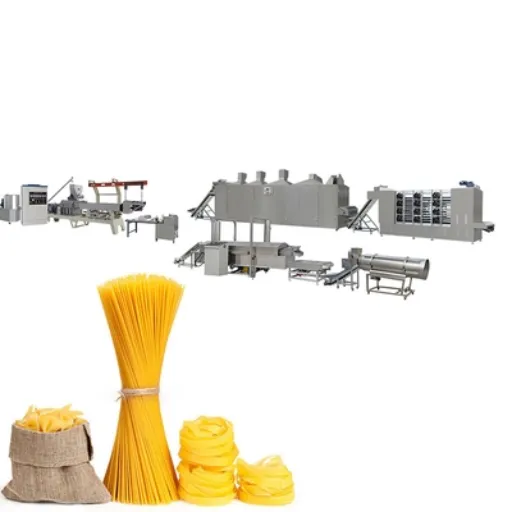
The production lines which create modern macaroni products have modern systems which achieve high productivity through their automated systems. Manufacturers gain complete production process improvements through the deployment of Industry 4.0 technologies which enhance their mixing and packaging operations. Automated production systems in the industry according to reports provide operational efficiency improvements that reach 30 percent while they reduce both human errors and machine operating time.
The main technological developments involve precision dosing systems which deliver exact ingredient amounts and automated extrusion systems which create uniform pasta shapes and real-time monitoring systems which use IoT (Internet of Things) technology. The Tensor Analytics prediction states that IoT-based monitoring will decrease product waste by 15 percent while it will increase power efficiency by 20 percent which will result in lower costs and environmentally friendly operations.
Customization Options in Production
Pasta production today needs customized products which fulfill diverse consumer requirements regarding their taste preferences and dietary needs. Pasta manufacturers use cutting-edge equipment and pioneering methods to create various pasta products which meet their precise production demands. The organization offers customers customization options which enable them to choose from different product shapes and sizes and ingredient choices and nutritional content.
The growing demand for gluten-free pasta has become a major trend which enables people with gluten intolerances or celiac disease to find suitable food options. The global gluten-free pasta market reached a value of $1.2 billion in 2022 while forecasted growth indicates a 9.8% CAGR increase between 2023 and 2028 which will result from growing health awareness among consumers. Fitness enthusiasts and health-conscious consumers have developed a preference for whole-grain and high-protein pasta varieties which contain legumes and quinoa and chickpeas.
Value Proposition of Pasta Production Machinery
Return on Investment (ROI) Considerations
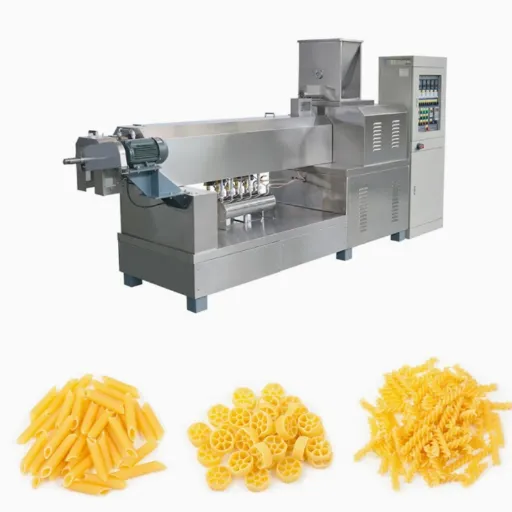
The financial advantages which modern pasta production machinery offers to businesses through its cost-saving effects create better market position for organizations. The assessment of return on investment needs to focus on how equipment upgrades increase production capabilities and reduce operational costs for businesses. The contemporary equipment requirements demand a pasta production system which can produce 1,200 kilograms of pasta but traditional methods can only deliver lower output levels. The efficiency improvements create monetary savings because restaurants spend less on staff while they increase their pasta offerings to meet higher customer demand.
Automated systems help businesses decrease material losses by delivering accurate ingredient quantities and better product assessment methods. Research shows that companies implementing advanced equipment achieve up to 20% decrease in material waste during their operations. Manufacturers gain access to high-profit specialized markets through their ability to develop gluten-free organic and special pasta products. The gluten-free pasta market worldwide will experience growth at a rate of 9.5% annual compound rate from 2023 until 2030 according to market research which offers early adopters a valuable business opportunity.
Maintenance and Operational Costs
The implementation of sophisticated pasta production systems boosts operational efficiency while delivering decreased operational costs through better system upkeep and operational efficiency. The modern pasta production machine system operates as a dependable production solution because its modular design allows for quick part exchanges which maintain system functionality. The research shows that companies with well-designed systems spend around 10-15% of their total equipment expenditures on maintenance costs each year. The maintenance expenses for legacy systems increase beyond 20% because their components experience more frequent damage.
Businesses need to think about their operational expenses. The deployment of new equipment comes with energy-efficient features that help businesses achieve power savings reaching 30% according to recent industry research. The automated system through its temperature management system and exact ingredient distribution system results in major resource savings which translate into financial advantages. The installation of energy-efficient pasta extruders enables businesses to achieve annual electricity savings which reach close to $5,000 based on their production level and local energy costs.
Reference Sources
- Pasta Production Facility Feasibility Report
This report discusses the requirements for establishing a pasta production facility, including production capacities and equipment specifications.
Read more here - Pasta Making Unit – Pre-Feasibility Report
This document is designed to assist potential entrepreneurs in understanding the investment and operational requirements for a pasta production unit.
Read more here - Pasta-Making Process: A Narrative Review
This review explores the challenges and processing variables that impact pasta quality, providing insights into the production process.
Read more here
Frequently Asked Questions (FAQs)
What is a fusilli pasta machine which produces macaroni pasta production?
The fusilli pasta machine serves as a dedicated pasta manufacturing equipment which functions as a pasta extruder to produce fusilli and other short-cut pasta products. The pasta macaroni production line starts with the dough mixing stage which combines wheat flour and water before the process continues to sheeting and shape creation through extrusion and twisting methods. Industrial pasta manufacturers use fusilli machines as part of their complete production system which includes mixers and extruders and drying tunnels and packaging equipment to achieve high output and consistent pasta shapes and effective food processing operations.
What is the functional process of an industrial pasta extruder which processes macaroni pasta production?
The industrial screw extruder operates as a pasta extruder which pushes the combined wheat flour dough through die openings to create macaroni and different types of pasta products. The extruder system maintains three operating parameters which control pressure and temperature and die design to produce short-cut pasta products with specific texture characteristics during macaroni pasta production processing. The production output of an extruder system depends on its size and motor power and the system needs to function as a complete automatic system in a pasta production machine.
What are the essential factors I need to consider when I want to purchase a macaroni production machine which is available for sale?
Machine evaluation requires assessment of production capacity and energy requirements and suitability for different wheat flour types and performance of the automatic pasta line and machine manufacturer’s market standing. The pasta macaroni making machine should provide extruder production capabilities which allow for simple die replacements to create multiple pasta shapes that include both short-cut and long pasta products while the machine should meet food processing equipment standards and provide spare parts for food machinery upkeep.
Can a noodles production line produce both short-cut and long cut pasta noodles?
Modern noodle production lines work through modular design which enables production of both short pasta and long pasta by changing dies and modifying processing parameters. The complete production line consists of four main stages which include mixing and extruding or pulling and drying and packaging. Short-cut pasta lines require particular cutter types and extruder speeds to maintain uniformity in producing short-cut pasta shapes.
What advantages does an automatic macaroni maker system offer when compared to a fully automatic pasta manufacturing line?
An automatic macaroni maker decreases the need for workers while it boosts production speed because it maintains a constant output level which produces uniform products and decreases mistakes made by operators. Fully automatic pasta production machines operate automatic dough mixing together with their extruder production system which includes cutting and drying and packaging functions. This equipment serves as the ideal solution for industrial pasta macaroni production which needs food manufacturing plants to create high-quality pasta while they fulfill food processing standards.