
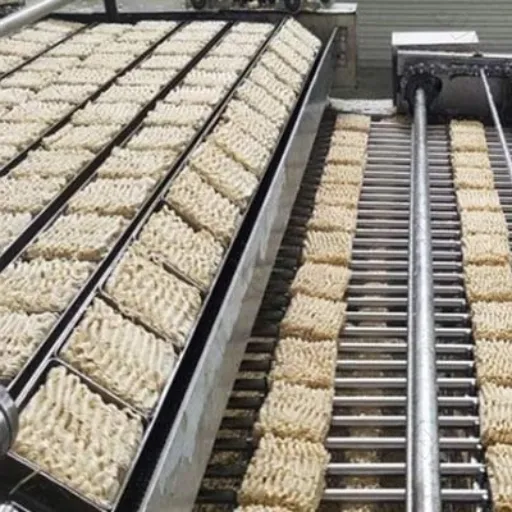
Fried vs. Non-Fried Instant Noodles: Market Trends and Machine ROI

The ongoing argument between fried and non-fried instant noodles exists as the main point of contention for both consumers and manufacturers. The two product categories maintain dedicated customer bases which fulfill different market requirements but their main difference stems from what specifically distinguishes them. The different aspects of their operations will determine how they impact market development and equipment investment returns for their manufacturing processes. The article investigates instant noodle production to examine how consumers make choices and what health factors matter and how products are made and how important industry data impacts results. The guide delivers an extensive examination of all components that determine the current state of the instant noodle industry for both industry experts and casual consumers who want to learn about their preferred quick meals.
Market Overview
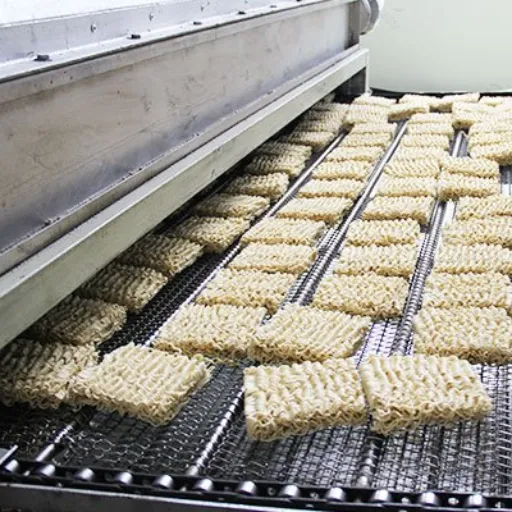
Current Trends in Instant Noodle Production
The instant noodle industry has been experiencing significant growth because both consumer preferences and production methods have changed. The first key trend shows that consumers increasingly prefer healthful food choices. Current consumers want noodles which contain whole grains and have reduced sodium levels and use air-dried processing instead of frying. According to a 2023 Statista report, 31% of participating consumers preferred instant noodles which provided additional nutritional value through fortified vitamins, minerals, and plant-based protein content.
The premium and gourmet instant noodle market continues to expand through its rising demand. Companies now provide premium products which contain distinctive flavors and superior ingredients and specialized fusion dishes to satisfy their most selective customers. This pattern demonstrates its strongest presence in three specific markets which include Japan and South Korea and the United States because premium instant noodles fetch much higher retail prices.
Sustainability leads to changes within production methods. Companies now implement sustainable packaging solutions which use biodegradable or recyclable materials to satisfy consumer demand for sustainable packaging. Nissin and Nongshim established a target to reduce plastic waste from their packaging operations by 20% before 2030 according to the announcement from these industry leaders.
Growing Demand for Automated Noodle Production
The global demand for instant noodles continues to rise because urbanization patterns and hectic daily schedules and economical pricing of these products drive consumer choices. Manufacturers currently rely on automated production systems as their main solution to satisfy rising consumer demand. Market analysis shows that the global instant noodle industry will experience 5.5% compound annual growth rate from 2023 to 2028 because of strong consumer demand and business sector developments.
Businesses use automated systems to expand their production capabilities while they achieve stable product quality and decrease their need for manual workers. Current technologies such as robotic arms for noodle packaging and AI-based quality checks and automated dough mixing systems have created improvements in work efficiency. The use of fully automated production lines enables manufacturers to achieve production increases of up to 30% which allows them to fulfill their operational needs during high-demand periods. The system uses advanced sensors to track all operational activities while AI identifies the best ways to use resources which results in reduced waste production.
Technical Breakdown of Instant Noodle Production Line
Core Components of the Noodle Processing Line
The Mixing System
The production line begins at the mixing system which combines flour with water and additional components to create uniform dough. The advanced mixers use precision controls to achieve proper dough hydration and maintain consistent dough texture. The latest industry research shows that automating this process increases production efficiency by 20 percent because it decreases manual work while delivering perfect ingredient distribution throughout the operation.
The Rolling and Sheeting Machine
The rolling and sheeting machines transform prepared dough into thin sheets through their pressing and elongation processes. The machines use high-pressure rollers to create a uniform thickness which ranges from 0.8mm to 2mm according to the noodle type. The automation system during this stage guarantees that all products maintain identical quality standards while production capacity reaches its maximum limits.
The Cutting and Slitting System
The dough sheet undergoes cutting and slitting operations to create noodle strands. The modern systems permit users to modify the width and shape of strands to accommodate various noodle types including thin wheat noodles and udon-style noodles. The high-speed slitters operate at a speed which allows them to process thousands of strands every minute while maintaining exact accuracy.
The Steaming Unit
The noodle strands undergo pre-cooking inside a steaming unit which maintains temperature control between 100°C and 105°C to produce gelatinized starch. This step improves the final noodle texture by producing a chewy bite which people find appealing. The real-time monitoring of steam pressure and temperature must occur because it directly affects the quality control process.
The Frying or Drying System
This stage requires different procedures based on the noodle type which includes either deep frying the noodles in oil or using hot air circulation for air drying. Fried noodles reach their crispy texture through cooking at 160°C to 175°C for 1-2 minutes which reduces moisture content to about 3 percent. The drying process for non-fried noodles occurs under controlled humidity and temperature conditions which creates a healthier product with reduced fat content.
The Cooling and Cutting Machine
The packaging process begins after noodles have been fried or dried because they undergo cooling and cutting into predefined dimensions. The advanced cooling systems maintain noodle structural integrity because they stop clumping before the packaging process starts. The cutting machines feature sensors which help achieve accurate portion control, thus minimizing product waste.
The Frying Process for Instant Noodles
The frying process is a critical step in producing instant noodles, as it not only affects the flavor and texture but also plays a key role in preserving the noodles for extended shelf life. The noodle frying process requires chefs to cook the noodles by dipping them into hot oil which needs to be maintained at temperatures between 140°C and 160°C for a duration of 1-2 minutes. The procedure decreases the noodle moisture content to 3%-5% which allows them to maintain shelf stability while preserving their original texture and bite.
Recent data shows that 70% of the energy used to produce instant noodles comes from the frying process. Modern frying systems have developed energy-saving technologies through their implementation of heat recovery mechanisms which enable energy consumption reductions that reach 15%-20% with their usage. The automated frying lines manage product quality through their real-time temperature and oil quality monitoring systems which help control oil degradation and lead to cost savings of up to 10% for businesses.
Key Considerations for Purchasing Noodle Machinery
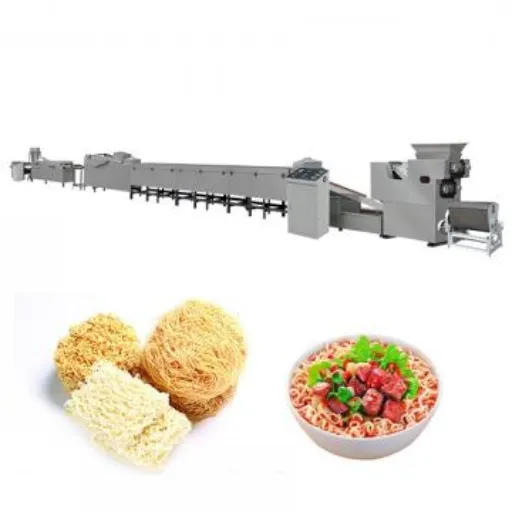
Evaluating Capacity and Efficiency
The essential element for determining noodle machine selection relates to the assessment of production capacity together with operational performance efficiency. Modern equipment operates at different production levels because it supports both small businesses and large industrial manufacturers. The production capacity of industrial noodle machines ranges from 500 kilograms to 2000 kilograms per hour according to their design specifications and operational functions. The system provides businesses with flexible scaling options that allow them to maintain their product standards while satisfying customer requirements.
The development of advanced machines requires operational efficiency because their automated systems decrease both staff expenses and machine idle time. The production processes can be monitored in real time through automated systems that use sensors and software, which provide continuous output validation while decreasing waste production by 30% efficiently. The use of energy-efficient equipment results in decreased electricity usage through better heating and mixing processes, which create both economic savings and environmental benefits.
Noodle Production Facilities Use Various Levels of Automation
Noodle production facilities base their operations on automation principles, which help to produce their products more efficiently. The implementation of advanced automated systems results in decreased human work requirements, which produces more consistent products and larger production volumes. The production capacity of automated noodle production lines reaches 3000 kilograms per hour, which depends on their specific design and operational configuration. The system achieves its high output through integrated technologies that manage all production steps from dough mixing to rolling and cutting and final drying procedures.
Automation provides its primary advantage through its capacity to deliver precise results which maintain consistent output. The production lines use robotic arms together with smart sensors to track real-time changes in three specific parameters: dough hydration, noodle thickness, and cooking time. The production process needs automated systems because they include automated cutting and drying functions which boost production efficiency beyond traditional methods by 40 percent.
Manufacturers now implement Industry 4.0 technologies which include IoT and AI-driven analytics to power their advanced production lines for predictive maintenance and energy management. The implementation of IoT technologies in a top noodle manufacturing plant led to decreased machine downtime by 25 percent and a 15 percent drop in energy expenses during production processes. Automation delivers financial advantages alongside environmental advantages, which makes it a vital investment choice for businesses that want to stay competitive within their markets.
Maintenance and ROI
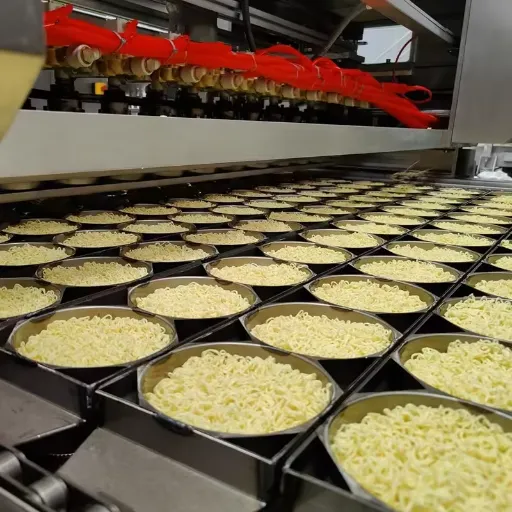
Operational Costs of Instant Noodle Production
The process of making instant noodles requires multiple types of operational expenses which include costs for raw materials and labor and energy usage and equipment upkeep and product wrapping materials. Raw materials which include wheat flour and palm oil and seasonings and vegetables constitute the largest share of production expenses. The percentage of production expenses attributed to raw materials ranges between 60 and 70 percent with actual costs depending on current market rates and the efficiency of the supply chain system.
The business requires substantial funding to cover its electricity bills and other essential power requirements. Manufacturing facilities that operate advanced energy-saving equipment can achieve greater electricity savings. Modern energy-saving technology enables manufacturing facilities to decrease their energy expenses by 20 percent which results in more eco-friendly production methods.
Different areas of the world have distinct labor rates but automation helps businesses in certain regions to balance their expensive labor expenses. Automated systems have shown to reduce manual labor requirements by up to 30-50%, depending on the production scale. The expenses associated with automation have to compete against the advantages of future cost reductions and the financial benefits that come from investment returns.
Efficiency Gains from Automated Systems
The implementation of automated systems in the production process of instant noodles provides major benefits through increased operational efficiency and decreased production costs. The production process becomes more efficient because automation technology improves the execution of essential noodle production tasks which include dough preparation and cutting and steaming and dehydration. The introduction of automated systems has allowed businesses to achieve production efficiency gains of up to 30 percent while reducing their need for human workforce.
Machine learning and predictive maintenance have developed advanced capabilities which allow manufacturers to operate their equipment without interruptions from breakdowns. The use of predictive maintenance technology results in a 20 to 50 percent reduction of operational downtime for equipment and a 10 to 40 percent decrease in expenses related to maintenance. The technologies enable continuous operations while they decrease maintenance costs through their ability to detect equipment problems before these issues become critical.
Conclusion
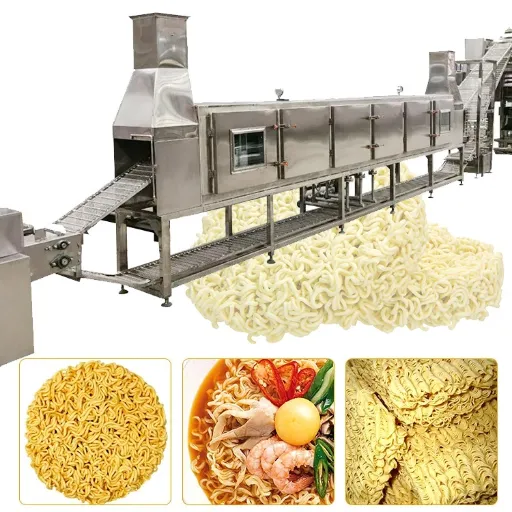
Future Outlook for Instant Noodle Manufacturing
The instant noodle industry is expected to experience major expansion and industry changes throughout the next several years. The worldwide instant noodle market will experience a compound annual growth rate of 5.1 percent between 2023 and 2030 according to recent market reports. The growth of this market occurs because more people want fast and easy ways to eat especially those who live in cities and emerging countries. China and Indonesia and India continue to dominate the market because their large populations and rising middle class creates more consumer buying power.
The future development of this market depends on improvements made in manufacturing technology. The use of artificial intelligence (AI) together with automation will enable production lines to achieve lower operating expenses while maintaining product excellence and faster production rates. The healthier product demand from consumers creates new instant noodle products which include whole-grain and low-sodium and high-protein options that have entered the market. Health-conscious consumers drive manufacturers to develop products with fewer preservatives while they implement air-frying methods in their production processes.
Impact of Market Trends on Production Lines
The instant noodle industry market trends are changing production processes because they require companies to implement modern technology and environmentally friendly methods. Manufacturers have increased their research spending on new product development because consumers now want products that are both healthy and environmentally sustainable. The global instant noodle market which reached a value of about 50 billion dollars in 2022 will experience a compound annual growth rate of 5.7 percent between 2023 and 2030 according to current market research.
The industry experiences major changes because automation and artificial intelligence (AI) technologies automate production lines. The use of automated machinery enables accurate portioning together with quality control which decreases waste to create efficient operations that support sustainability objectives. AI technology supports manufacturers in two ways through predictive maintenance and supply chain optimization which enables them to handle demand increases without affecting product quality or experiencing major production delays. The current trends show that more people prefer plant-based products which encourages manufacturers to create new plant-based recipes while updating their production processes to produce these products.
Reference Sources
- Feasibility of Commercial Instant Noodle Production
This thesis explores the feasibility of establishing a manufacturing facility for instant noodles, including market opportunities and production considerations.
Read more here - Feasibility Study of Projects of Noodle Machines
This report provides an in-depth feasibility analysis of instant noodle production lines, including profitability and industry insights.
Read more here - Instant Noodles: Processing, Quality, and Nutritional Aspects
This research discusses the processing, quality factors, and nutritional aspects of instant noodles, offering valuable insights into production challenges and standards.
Read more here
Frequently Asked Questions (FAQs)
What is the overall process of instant noodle production line?
The process of producing instant noodles starts with preparing raw materials and proceeds through all stages until it reaches the final step of packing. The production line for commercial instant noodles which includes fried instant noodles operates with automatic systems that include automatic dough sheet rollers and high speed conveyors and heat exchanger units and packing machines to boost production efficiency while maintaining food safety standards throughout the manufacturing process. The instant noodle factory uses noodle makers and roller sheeters and seasoning mixers to produce finished product noodles that have good elasticity and maintain consistent quality.
What types of instant noodle machines are used in noodle factories?
Noodle factories use a range of machine instant noodle equipment: dough mixers, automatic dough sheet rollers, sheeting machines, cutters or stick noodle production attachments, steamers, fryers or hot-air dryers, cooling conveyors, flavoring and packing machines. The production line for indomie noodle or cup noodles requires extra equipment which includes cup forming and sealing machines. Compact instant noodle making machines are preferred by small scale producers while large-scale manufacturing facilities use high speed continuous rolling and fully automatic instant noodle line systems.
How does an instant noodle making machine affect product quality?
The instant noodle making machine produces three essential qualities that determine noodles the basic properties which define their quality. The production process creates optimal elastic materials through precise dough mixing and controlled sheeting and standardized frying or drying methods. The businesses achieve better product quality and food safety and operational efficiency through their use of advanced automated systems for machinery operations. The product’s final flavor and shelf stability depend on the choice of packing machine and seasoning method.
Is frying necessary and what are the alternatives?
Frying serves a primary role in fried instant noodle production because it reduces rehydration duration while delivering distinct flavor and texture attributes. Consumers select hot-air drying or steaming followed by drying methods to produce lower-oil instant noodles which serve as a healthier option for their specialized ramen requirements. The selection process requires three factors which include the desired final product, the equipment capacity of the instant noodle factory, and the market demand for Indomie noodles and cup noodles.
How do packing and flavoring integrate into the production line?
The production process of instant noodles initiates its operations through completing its final stage which involves both packaging and flavoring activities. Noodles proceed to seasoning application after they complete their cooling inspection process because this step needs dry powder and liquid flavoring to blend with the noodles. The packing machines create the last product unit by using pillow packs and cups and multi-packs to package noodle blocks and flavor sachets which they then seal for shipping. Automated processes in these stages enable businesses to increase their production capacity while minimizing contamination risks which results in safer food handling and consistent product displays.
What quality control measures are used in a commercial instant noodle factory?
Noodle factories apply quality control methods which assess their incoming materials while they check the accurate water and flour and salt mixing ratios and sheeting thickness and frying and drying temperature and time and final moisture content of their finished products. The testing process includes sensory assessments of elasticity and chewiness together with microbiological and chemical safety evaluations. The instant noodle making machine achieves stable noodle quality and meets food safety requirements through automated sensors and continuous rolling metrics and periodic calibration.
What raw materials and mixing parameters are critical in instant noodle making?
The main ingredients for production include wheat flour and water and salt and sometimes kansui or other alkaline agents which change the product’s texture and elasticity. The dough mixing process needs to achieve complete water absorption and gluten development which matches the requirements of different noodle types. The mixing time and shear force together with the rest periods determine how dough will act during the continuous rolling and sheeting process used in instant noodle production which needs to produce consistent sheet thickness.