
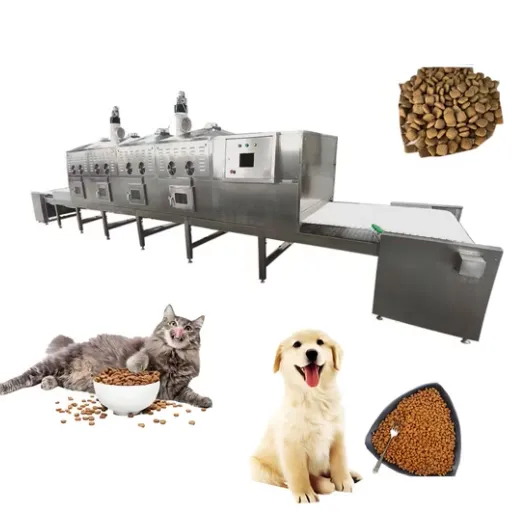
Pet Food Microwave Sterilization Equipment: A Complete Guide for Manufacturers

The best pet food microwave sterilization equipment uses 2450 MHz dielectric heating to eliminate pathogens at 75 to 80 degrees Celsius while preserving up to 90 percent of heat-sensitive vitamins. Industrial tunnel systems like the LY-series from Shandong Loyal Industrial Co., Ltd. process up to 3,000 kilograms per hour, cutting energy consumption by 30 to 50 percent compared to conventional gas dryers or retort sterilizers.
But choosing the right system is not as simple as comparing power ratings.
When Marcus Chen, operations director at a mid-size pet food facility in Vietnam, first evaluated sterilization upgrades in 2024, he assumed a higher-kilowatt unit would automatically deliver better throughput. Three months after installing an off-brand 60-kilowatt tunnel, his team discovered cold spots in the center of dense kibble batches. Salmonella tests came back positive on 12 percent of output. The equipment had no PLC temperature feedback loop, no infrared monitoring, and no way to adjust power zones independently. Marcus spent another $18,000 retrofitting the line before it met specification.
His story is more common than most manufacturers admit. Microwave sterilization technology offers genuine advantages over traditional methods, but only when the equipment is properly engineered, integrated, and validated for your specific product matrix.
In this guide, you will learn exactly how industrial microwave sterilizers work in pet food production, when they outperform retort systems, what specifications actually matter, and how to calculate the true return on investment for your facility. We will also walk through regulatory compliance, equipment sizing, and integration with existing extrusion lines so you can make a decision backed by data rather than marketing claims.
Key Takeaways
- Pet food microwave sterilization equipment uses volumetric dielectric heating to kill pathogens at 75 to 80 degrees Celsius, preserving up to 90 percent of heat-sensitive vitamins versus 46 to 50 percent with conventional retort methods.
- Tunnel microwave systems reduce processing time from 30 to 40 minutes (retort) down to 3 to 5 minutes while cutting energy costs by 30 to 50 percent compared to gas dryers.
- The LY-series from Shandong Loyal spans 10 kilowatts to 300 kilowatts, handling 100 kilograms per hour to 3,000 kilograms per hour sterilization capacity with full PLC plus HMI touchscreen control.
- Microwave sterilization excels for dry kibble, treats, and ingredients but is not suitable for canned wet food or hermetically sealed retort pouches.
- Regulatory compliance requires FSMA preventive controls validation, HACCP critical control point designation, and equipment meeting FDA food-contact plus CE or ISO 9001 standards.
What Is Pet Food Microwave Sterilization Equipment?
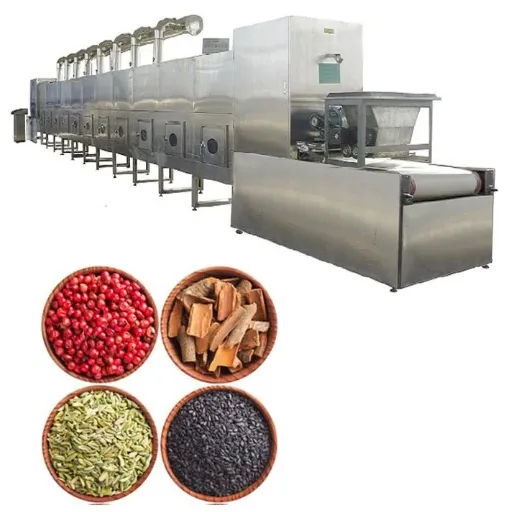
Pet food microwave sterilization equipment is industrial machinery that uses electromagnetic radiation at 2450 megahertz to generate heat inside food products through molecular friction. Unlike conventional ovens or steam retorts that heat from the outside in, microwave systems produce volumetric heating. The energy penetrates the product and excites polar water molecules, creating uniform temperature rise throughout the material.
This dual-action mechanism sets microwave sterilization apart from every other thermal method. The thermal effect denatures proteins in bacteria, viruses, and mold spores. The non-thermal effect, unique to microwave energy, disrupts cellular membrane permeability and DNA structure in microorganisms. Together, these effects achieve pathogen kill rates equivalent to retort processing at significantly lower temperatures.
Industrial units fall into two configurations:
- Tunnel systems (continuous production): Conveyor belts move product through a stainless steel tunnel where microwave emitters apply controlled energy. These handle 100 to 3,000-plus kilograms per hour.
- Cabinet or batch systems (smaller scale): Box-style ovens process smaller batches, ideal for R-and-D, pilot production, or specialty treats.
Modern systems integrate programmable logic controller (PLC) automation with human-machine interface (HMI) touchscreens. Operators set temperature profiles, conveyor speeds, and power levels for different recipes. Non-contact infrared temperature monitors provide real-time feedback, and the system adjusts power automatically to prevent overheating or cold spots.
Want to see how PLC-controlled microwave systems integrate with production lines? Explore our industrial microwave equipment range to view specifications for every LY-series model.
How Microwave Sterilization Fits Into the Pet Food Production Line
Understanding where microwave equipment belongs in your workflow is critical for proper integration. A typical dry pet food production line follows this sequence:
- Raw material mixing, Proteins, grains, fats, vitamins, and minerals are blended to recipe specification.
- Pre-conditioning, Steam and water adjust moisture to 25 to 30 percent before extrusion.
- Extrusion cooking, Twin-screw extruders cook the mixture at 120 to 160 degrees Celsius and 20 to 40 bar pressure. This is the primary kill step.
- Drying and sterilization, Product exits the extruder at 18 to 22 percent moisture. Microwave tunnel dryers reduce moisture to 8 to 10 percent while applying secondary sterilization.
- Coating and enrobing, Fats, flavors, and probiotics are applied to the cooled product surface.
- Cooling and packaging, Product stabilizes to ambient temperature before bagging or canning.
The microwave sterilization stage replaces or supplements traditional hot-air dryers and fluid-bed coolers. In many facilities, it serves as the secondary critical control point under HACCP, ensuring any surviving pathogens from post-extrusion handling are eliminated before packaging.
Shandong Loyal’s integrated approach pairs twin-screw extrusion systems with LY-series microwave tunnels. This eliminates the compatibility headaches Marcus Chen encountered. The extruder output rate is matched to the microwave tunnel capacity, conveyor heights are pre-aligned, and the PLC systems communicate through standardized protocols.
Seven Key Benefits of Microwave Sterilization for Pet Food
1. Superior Nutrient Retention
Retort sterilization operates at 115 to 125 degrees Celsius for extended periods. Those temperatures destroy heat-sensitive vitamins, denature proteins, and degrade amino acids. Microwave sterilization achieves equivalent microbial kill at 75 to 80 degrees Celsius because the non-thermal effect supplements the thermal action.
Research cited by food processing technology publications shows vitamin C retention rates of 60 to 90 percent with microwave processing versus 46 to 50 percent with conventional heating. For pet food manufacturers, this translates to better nutritional labels, higher palatability, and reduced need for post-process vitamin supplementation.
2. Rapid Processing Speed
A standard retort cycle for pet food takes 30 to 40 minutes including heat-up, hold time, and cool-down. Microwave tunnel systems process the same product volume in 3 to 5 minutes. This 50 to 70 percent reduction in cycle time directly increases production capacity without expanding floor space.
For a facility running two eight-hour shifts, replacing a retort line with a continuous microwave tunnel can increase daily throughput by 40 to 60 percent. The equipment runs continuously with no batch changeover delays.
3. Significant Energy Savings
Microwave energy transfers directly to water molecules in the product. There is no boiler to preheat, no steam piping to maintain, and no ambient heat loss. Manufacturers report 30 to 50 percent electricity savings compared to conventional electric or gas-fired drying systems.
The math is straightforward for high-volume operations. A facility processing 500 kilograms per hour of dry pet food with a gas dryer might spend 8,000to8,000to12,000 monthly on energy. Switching to an LY-100KW microwave tunnel typically reduces that to 5,500to5,500to8,000 per month, depending on local electricity rates.
4. Uniform Volumetric Heating
Hot-air dryers heat the product surface first. The interior warms through conduction, which creates temperature gradients. Dense kibble centers can remain cooler than the surface for minutes, creating “cold spots” where pathogens survive.
Microwaves penetrate the entire product volume simultaneously. The heating is uniform from center to surface, eliminating cold spots. This is especially important for thick-cut treats, meat-and-bone meal ingredients, and dense extruded kibble.
5. Extended Shelf Life
Effective microwave sterilization reduces total microbial load by four to six logarithmic cycles. Combined with the simultaneous drying action that drops moisture to mold-inhibiting levels, properly processed dry pet food achieves shelf lives of one to two months or longer with appropriate packaging.
The dual action, drying plus sterilization plus mold prevention in a single pass, eliminates the need for separate drying and sterilization equipment. This consolidation reduces capital expenditure, maintenance costs, and floor space requirements.
6. Precise Process Control
Modern microwave sterilizers feature instant on-off capability with no thermal inertia. Power levels adjust in seconds. Conveyor speeds modulate from 0 to 10 meters per minute. Infrared temperature sensors feed data to the PLC, which automatically adjusts microwave power zones to maintain target temperatures.
Recipe storage allows operators to save settings for different products: small-breed kibble, large-breed kibble, high-protein treats, or grain-free formulations. One-click recipe recall eliminates manual setup errors and ensures batch-to-batch consistency.
7. Compact Footprint and Cleaner Operation
A continuous tunnel microwave dryer requires roughly 40 percent less floor space than an equivalent-capacity retort system with associated boiler and steam infrastructure. The working environment stays cooler and quieter. There is no steam exhaust, no condensate drainage, and no risk of boiler-related safety incidents.
Microwave Sterilization vs. Retort Sterilization: Side-by-Side Comparison
The following comparison table breaks down the key differences between these two technologies for pet food applications:
| Factor | Microwave Sterilization | Retort Sterilization |
|---|---|---|
| Temperature | 75 to 80 degrees Celsius | 115 to 125 degrees Celsius |
| Processing time | 3 to 5 minutes | 30 to 40-plus minutes |
| Energy savings | 30 to 50 percent vs. conventional | Higher energy consumption |
| Nutrient retention | 60 to 90 percent of vitamins | 46 to 50 percent of vitamins |
| Heating method | Volumetric (inside-out) | Conduction (outside-in) |
| Best for | Dry kibble, treats, ingredients | Wet food, canned products, pouches |
| Packaging | Microwave-permeable materials only | Metal cans, flexible retort pouches |
| Shelf life | 1 to 2-plus months (dry products) | 6 to 18 months (wet products) |
| Capital cost | 12,000to12,000to28,000 (tunnel) | 30,000to30,000to150,000-plus (retort) |
| Regulatory precedent | Emerging, requires validation | Established, decades of precedent |
When to Choose Microwave
Microwave sterilization is the right choice when you produce:
- Dry or semi-dry extruded kibble
- Pet treats and jerky (beef, chicken, fish, or plant-based)
- Meat and bone meal ingredients
- Aquatic feed and bird food pellets
- Specialty proteins (black soldier fly larvae, insect meal)
- Puffed or expanded snack-style pet products
When Retort Still Wins
Retort sterilization remains necessary for:
- Canned wet food in metal containers
- High-moisture pouches and trays
- Products requiring 6 to 18 months ambient shelf life
- Dense meat chunks in gravy or broth
The critical distinction is moisture content and packaging format. Microwave energy heats water molecules efficiently, but very high-moisture products in sealed flexible packaging create steam pressure that can deform or burst containers without precise back-pressure control.
Planning your production line upgrade? View our complete pet food production line solutions to see how extrusion, drying, and coating systems work together.
Equipment Specifications and Sizing Guide
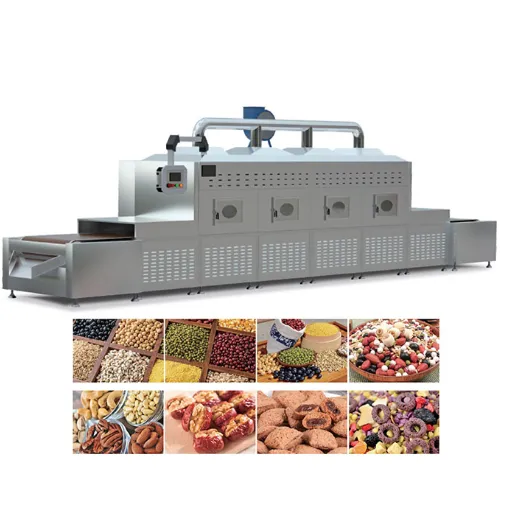
Shandong Loyal Industrial Co., Ltd. manufactures the LY-series industrial microwave sterilization equipment with models ranging from 10 kilowatts for pilot operations to 300 kilowatts for large commercial facilities.
LY-Series Capacity Table
| Model | Power | Dimensions (L x W x H) | Dewatering | Sterilization | Baking/Roasting |
|---|---|---|---|---|---|
| LY-10KW | 10-plus kilowatts | 5,000 x 825 x 1,750 millimeters | 10 kilograms per hour | 100 kilograms per hour | 30 to 50 kilograms per hour |
| LY-20KW | 20-plus kilowatts | 8,000 x 825 x 1,750 millimeters | 20 kilograms per hour | 200 kilograms per hour | 60 to 100 kilograms per hour |
| LY-30KW | 30-plus kilowatts | 8,500 x 1,160 x 1,750 millimeters | 30 kilograms per hour | 300 kilograms per hour | 90 to 150 kilograms per hour |
| LY-50KW | 50-plus kilowatts | 12,500 x 1,160 x 1,750 millimeters | 50 kilograms per hour | 500 kilograms per hour | 150 to 250 kilograms per hour |
| LY-60KW | 60-plus kilowatts | 13,500 x 1,450 x 1,750 millimeters | 60 kilograms per hour | 600 kilograms per hour | 180 to 300 kilograms per hour |
| LY-100KW | 100-plus kilowatts | 16,800 x 1,650 x 1,750 millimeters | 100 kilograms per hour | 1,000 kilograms per hour | 300 to 500 kilograms per hour |
| LY-150KW | 150-plus kilowatts | 22,400 x 1,850 x 1,750 millimeters | 150 kilograms per hour | 1,500 kilograms per hour | 450 to 750 kilograms per hour |
| LY-200KW | 250-plus kilowatts | 27,000 x 1,850 x 1,750 millimeters | 250 kilograms per hour | 2,500 kilograms per hour | 750 to 1,250 kilograms per hour |
| LY-300KW | 300-plus kilowatts | 32,000 x 1,850 x 1,750 millimeters | 300 kilograms per hour | 3,000 kilograms per hour | 900 to 1,500 kilograms per hour |
Standard Technical Specifications
All LY-series models share these core specifications:
- Frequency: 2450 megahertz plus or minus 50 hertz
- Construction: Food-grade SUS304 stainless steel (SUS316 available for corrosive environments)
- Microwave leakage: ISO standard less than or equal to 5 milliwatts per square centimeter
- Conveyor speed: 0 to 10 meters per minute, stepless adjustable
- Temperature monitoring: Non-contact infrared sensors with PLC feedback
- Control system: PLC plus HMI touchscreen with recipe storage
- Cooling: Air-cooling or water-cooling for magnetrons
- Power adjustment: Stepless microwave power control
- Certifications: CE marking, ISO 9001 quality management
How to Select the Right Model
When Sarah Okonkwo expanded her Nigerian pet treat facility in early 2025, she faced the same sizing question every manufacturer encounters. Her extruder output 400 kilograms per hour of semi-moist chicken jerky strips. She needed to reduce moisture from 22 percent to 12 percent while achieving a 4-log Salmonella reduction.
After testing samples in a pilot facility, she selected the LY-50KW model. The 500 kilograms per hour sterilization capacity provided 20 percent headroom above her extruder output, accommodating future growth. The 1,160-millimeter belt width accommodated her jerky strips without overlapping, and the water-cooling system handled Nigeria’s ambient temperatures.
Six months post-installation, her energy costs dropped 34 percent compared to her previous gas dryer. Product test results showed consistent 5-log pathogen reduction, and her moisture variance dropped from plus or minus 3 percent to plus or minus 0.8 percent.
Use this three-step method to size your equipment:
- Measure current output: Record your extruder or forming equipment’s kilograms-per-hour rate at peak production.
- Add 15 to 25 percent headroom: Choose a model with sterilization capacity above your current needs to accommodate growth and product variation.
- Consider product characteristics: Dense products or thick treats require lower conveyor speeds and potentially higher power per kilogram. Puffed or low-density products process faster.
Regulatory Compliance and Safety Standards
Pet food sterilization equipment must meet multiple regulatory frameworks depending on your target markets.
FDA and FSMA Requirements
The U. S. Food and Drug Administration (FDA) regulates pet food under the Food Safety Modernization Act (FSMA). Key requirements include:
- Current Good Manufacturing Practices (cGMPs): Equipment design, sanitation, and facility controls under 21 CFR Part 507
- Preventive Controls for Animal Food (PCAF): Hazard analysis and risk-based preventive controls including process parameters, sanitation controls, and supply-chain controls
- Kill-step validation: Any sterilization process must be documented as adequate to control identified hazards. Microwave processes require validation studies proving uniform lethality throughout the product matrix.
The FDA does not certify equipment directly. Instead, inspectors evaluate whether equipment and processes enable cGMP compliance. Over 166,000 pounds of pet food were recalled in 2025, mostly due to Salmonella from insufficient kill-step validation.
AAFCO Standards
The Association of American Feed Control Officials (AAFCO) establishes:
- Ingredient definitions and feed standards
- Labeling requirements for nutritional claims
- Nutrient profiles for “complete and balanced” designations
While AAFCO does not enforce federal law directly, most U. S. states adopt its standards. Equipment must process ingredients in ways that maintain AAFCO-compliant nutritional profiles.
Equipment Safety Certifications
| Standard | Application |
|---|---|
| CE marking | Required for European market access |
| ISO 9001 | Quality management system certification |
| ISO 22000 or FSSC 22000 | Food safety management systems |
| FDA 21 CFR 1030.10 | Microwave equipment radiation safety |
| IEC 60335-2-90 | International microwave appliance safety |
| HACCP | Hazard analysis implementation |
Material and Construction Standards
Food-contact surfaces must use SUS304 or SUS316 stainless steel with surface finishes less than or equal to 0.8 micrometers Ra. Clean-in-place (CIP) capability is required for sanitation compliance. Automatic interlocks must cut power when doors open, and over-temperature protection prevents fire hazards.
Need guidance on pet food safety compliance? Read our complete guide to pet food safety standards covering FDA, FSMA, and international requirements.
Applications: Which Pet Food Products Benefit Most?
Microwave sterilization delivers the strongest results for specific product categories. Understanding these applications helps you evaluate whether the technology matches your product portfolio.
Dry Kibble and Extruded Puffed Foods
The largest pet food segment by volume, dry kibble accounts for approximately 42.5 percent of the global market. Microwave tunnels excel at post-extrusion drying and sterilization. The volumetric heating prevents the surface hardening (case hardening) common with hot-air dryers, producing a more porous, palatable kibble texture.
Pet Treats and Jerky
Meat-based treats, dental chews, and jerky strips require gentle processing to maintain chewiness and flavor. Microwave sterilization at 75 to 80 degrees Celsius preserves texture while ensuring pathogen safety. The rapid processing prevents the toughening that occurs with prolonged heat exposure.
Meat and Bone Meal Ingredients
Rendered proteins used as pet food ingredients benefit from microwave drying and sterilization. The technology reduces moisture in dense protein meals while achieving microbial reduction, producing a stable, safe ingredient for downstream blending.
Aquatic Feed and Bird Food
Fish feed pellets and bird seed mixtures often contain high-value ingredients like fish meal, shrimp protein, or oilseeds. Low-temperature microwave processing preserves omega fatty acids and sensitive nutrients that degrade under conventional high-heat drying.
Specialty and Alternative Proteins
Insect-based pet foods (black soldier fly larvae, mealworms) and plant-based formulations are gaining market share. These products often contain heat-sensitive proteins and lipids that microwave processing preserves better than retort or hot-air methods.
Products Not Suited for Microwave
Do not use standard microwave sterilization for:
- Canned wet food in metal containers
- High-moisture pouches (greater than 60 percent moisture) without specialized pressure control
- Products in aluminum foil or metallized packaging
- Very large-format dense meat blocks (greater than 5 centimeters thick) without process validation
Integration Tips for Existing Production Lines
Adding microwave sterilization to an existing extrusion line requires careful planning. These integration points determine success or failure.
Space and Layout Assessment
Measure the gap between your extruder discharge and your current dryer or cooler. LY-series tunnel systems require:
- Infeed conveyor length: 1.5 to 3 meters before the tunnel
- Tunnel body length: 5 to 32 meters (model dependent)
- Outfeed conveyor length: 1.5 to 3 meters after the tunnel
- Clearance height: 2.5 meters minimum for maintenance access
If floor space is constrained, consider an L-shaped or U-shaped conveyor configuration. Shand Loyal’s engineering team designs custom layouts to fit existing facilities.
Utility Requirements
- Electrical: Three-phase power, 380 to 440 volts, 50 to 60 hertz. Model-dependent amperage requirements range from 30 amps (LY-10KW) to 450 amps (LY-300KW).
- Water: Water-cooling systems require 2 to 15 liters per minute depending on model.
- Compressed air: 0.4 to 0.6 megapascals for pneumatic components on some models.
Conveyor Belt Integration
The microwave tunnel must receive product from your extruder at a consistent depth and distribution. Mesh belt conveyors allow microwave penetration from below while supporting the product. Belt width must match or exceed your extruder die width to prevent product pile-up.
Temperature Feedback Loops
Install infrared temperature sensors at the tunnel exit to verify every batch reaches target temperature. Feed this data into your facility’s supervisory control and data acquisition (SCADA) system for batch records and regulatory documentation.
Staff Training
Microwave sterilization requires different operational knowledge than gas dryers. Train operators on:
- Recipe selection and adjustment
- Power zone management
- Cold spot identification and correction
- Microwave leakage safety protocols
- Routine maintenance (magnetron replacement, waveguide inspection)
Cost Analysis: Is Microwave Sterilization Worth the Investment?
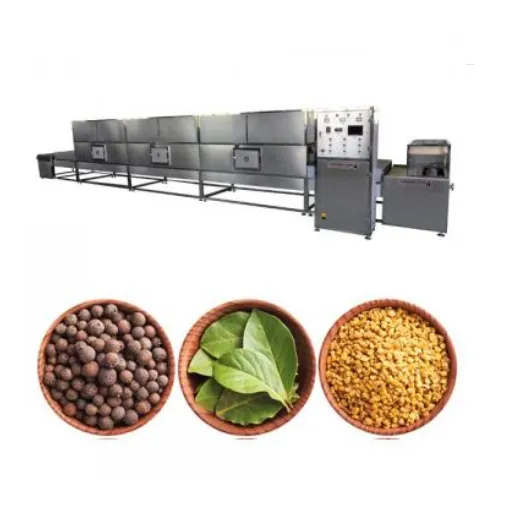
Understanding true total cost of ownership helps justify capital expenditure to stakeholders.
Equipment Capital Costs
| Configuration | Price Range (USD) | Typical Use Case |
|---|---|---|
| Small cabinet or batch unit | 6,800to6,800to10,000 | R-and-D, pilot production |
| Mid-size tunnel (LY-20KW to LY-50KW) | 12,000to12,000to25,000 | Small to medium commercial facilities |
| Large tunnel (LY-100KW to LY-150KW) | 25,000to25,000to45,000 | Large commercial production |
| Custom heavy-duty (LY-200KW-plus) | 45,000to45,000to80,000-plus | Industrial-scale continuous production |
Most suppliers, including Shandong Loyal, offer customization of tunnel length, power configuration, and control systems. Original equipment manufacturer (OEM) and original design manufacturer (ODM) services are available for private-label equipment.
Operating Cost Comparison
For a facility processing 500 kilograms per hour, 16 hours per day, 250 days per year:
| Cost Factor | Gas Dryer | Microwave Tunnel (LY-100KW) | Annual Savings |
|---|---|---|---|
| Energy | 110,000to110,000to140,000 | 70,000to70,000to90,000 | 30,000to30,000to60,000 |
| Maintenance | 8,000to8,000to12,000 | 5,000to5,000to8,000 | 2,000to2,000to4,000 |
| Labor (operators) | $45,000 (1.5 FTE) | $30,000 (1 FTE) | $15,000 |
| Water/steam | 6,000to6,000to10,000 | 2,000to2,000to4,000 | 4,000to4,000to6,000 |
| Total annual operating | 169,000to169,000to207,000 | 107,000to107,000to132,000 | 51,000to51,000to85,000 |
Return on Investment Timeline
Using the midpoint annual savings of 68,000andanLY−100KWinvestmentof68,000andanLY−100KWinvestmentof28,000, the payback period is approximately 5 months. Over a 10-year equipment lifespan, total savings exceed $650,000. This calculation excludes quality improvements, reduced waste, and extended shelf life benefits that further improve economics.
Hidden Cost Considerations
Factor in these often-overlooked costs:
- Electrical infrastructure upgrades: Older facilities may need panel upgrades or new three-phase service
- Validation studies: Process validation for FSMA compliance costs 5,000to5,000to15,000 depending on product complexity
- Packaging changes: Switching to microwave-compatible films may increase packaging costs by 5 to 10 percent
- Operator certification: Training programs cost 2,000to2,000to5,000 initially
Frequently Asked Questions
What temperature does microwave sterilization reach for pet food?
Industrial microwave sterilizers typically operate at 75 to 80 degrees Celsius for pet food applications. The non-thermal microwave effect supplements the thermal kill, so lower temperatures achieve equivalent pathogen reduction compared to retort processing at 115 to 125 degrees Celsius.
How long does microwave sterilization take compared to retort?
Microwave sterilization completes in 3 to 5 minutes for dry pet food products. Retort sterilization requires 30 to 40 minutes including heat-up, hold time, and cool-down cycles.
Is microwave sterilization FDA approved for pet food?
The FDA does not approve specific equipment but regulates processes under FSMA. Microwave sterilization is acceptable as a preventive control if validated with documented microbial challenge studies proving consistent lethality. Microwave-assisted thermal sterilization (MATS) has received FDA acceptance for human food applications, establishing precedent for pet food use.
Can microwave sterilization replace my entire retort line?
Not for all products. Microwave sterilization replaces retort for dry kibble, treats, and ingredients. It cannot replace retort for canned wet food, high-moisture pouches, or products requiring 6-plus months ambient shelf life in sealed containers.
What is the best microwave sterilization equipment for a startup pet food business?
Startups producing less than 200 kilograms per hour should consider the LY-20KW tunnel or a batch cabinet system. These units cost 12,000to12,000to16,000, require minimal infrastructure, and can scale alongside your business.
Conclusion
Pet food microwave sterilization equipment represents a significant advancement over traditional drying and sterilization methods for dry pet food manufacturers. The technology delivers 30 to 50 percent energy savings, 3 to 5 minute processing cycles, and superior nutrient retention while maintaining rigorous pathogen safety standards.
The key to success is matching the right equipment to your specific product, throughput, and regulatory requirements. Tunnel systems like the LY-series from Shandong Loyal Industrial Co., Ltd. offer scalable solutions from 100 kilograms per hour to 3,000 kilograms per hour, with full PLC automation and CE plus ISO 9001 certification.
For dry kibble, treats, and ingredient manufacturers, the return on investment typically pays back within 6 to 12 months through energy savings, increased throughput, and reduced waste. For wet food producers, microwave may serve as a secondary processing step but cannot fully replace retort systems.
Ready to evaluate microwave sterilization for your facility? Contact Shandong Loyal Industrial Co., Ltd. to discuss your production requirements, request a detailed quotation, or arrange sample testing in our pilot facility. Our engineering team has over a decade of experience designing integrated extrusion and microwave sterilization systems for pet food manufacturers worldwide.