

Pet Food Safety Standards: A Manufacturer’s Guide to Equipment, Facility, and Process Compliance

The safety standards for pet food establish an integrated framework which combines regulations with current Good Manufacturing Practices (cGMPs) and hazard control measures to protect the safety and nutrition of pet food products while ensuring accurate product labeling. The standards govern all aspects of production which include ingredient sourcing equipment material selection and facility zoning and extrusion kill-step testing procedures. The compliance process for manufacturers requires them to implement engineering practices which begin when they design their equipment.
The FDA recorded over 166000 pounds of pet food recalls in 2025 which included 157227 pounds of products contaminated with Salmonella. Most failures were not ingredient problems alone. The manufacturing process deficiencies included insufficient kill-step validation and the absence of environmental monitoring and the unavailability of equipment for effective sanitation practices. This guide addresses the problem. You already know the regulations exist. The equipment specifications and facility layouts and process parameters you need will convert the regulations into automatic compliance. You will obtain specifications for FDA FSMA HACCP AAFCO and international standards which you can implement directly on your production line by the conclusion of this article.
Key Takeaways
- Pet food safety standards require an integrated approach covering regulations, equipment materials, facility design, and validated process controls — not just documentation.
- FSMA mandates cGMPs and risk-based preventive controls; extrusion cooking at 120–160 degrees C and 20–40 bar serves as a validated kill step when properly monitored.
- Food-contact surfaces must use SUS 304 or SUS 316 stainless steel with surface finishes at or below 0.8 micrometers Ra, depending on chloride exposure and cleaning regimen.
- HACCP plans for extrusion-based lines should designate at least four Critical Control Points: pre-conditioning, extrusion cooking, drying, and metal detection.
- Export-oriented manufacturers need modular equipment designed to meet FDA FSMA, EU Regulation 183/2005, and Chinese GB standards simultaneously.
What Are Pet Food Safety Standards?

Pet food safety standards establish the regulations and guidelines and engineering methods which maintain the safety of animal health and the security of consumer confidence during the entire production process. The standards cover all aspects from ingredient safety to process control and equipment hygiene and facility design and labeling accuracy and post-market surveillance.
The primary regulatory bodies include the U. S. Food and Drug Administration (FDA), which enforces the Federal Food, Drug, and Cosmetic Act for pet food under the Food Safety Modernization Act (FSMA). The Association of American Feed Control Officials (AAFCO) develops model bills and nutrient profiles which most U. S. states use for adoption. The European Pet Food Industry Federation (FEDIAF) provides nutritional and safety guidelines for pet food in conjunction with EU feed hygiene regulations. China operates under national standards which include GB/T 13078 for feed hygiene.
Manufacturers must implement three operational standards which require them to create facility safety zones and conduct environmental monitoring and design equipment with food-safe materials and hygienic features and execute processes which need documented evidence to verify Critical Control Points.
FSMA and the Preventive Controls for Animal Food Rule
The Food Safety Modernization Act shifted U. S. pet food regulation from reactive inspection to proactive prevention. The final Preventive Controls for Animal Food (PCAF) rule, found in 21 CFR Part 507, requires every facility that manufactures, processes, packs, or holds animal food to comply with two interconnected requirements.
Current Good Manufacturing Practices (cGMPs)
Facilities need to establish basic safety and sanitation protocols which need to govern their staff procedures and their building and site upkeep and their waste treatment methods and their equipment maintenance practices and their production methods and storage and transportation practices. These are not suggestions. The requirements establish the fundamental legal obligations which every audit must assess.
cGMPs require food-contact surfaces to maintain specific design standards which include surfaces that need to stay smooth while resisting corrosion and stopping liquid absorption. The design of pet food production equipment uses SUS 304 and SUS 316 stainless steel because of its superior performance in manufacturing requirements. Equipment designers need to create systems which make it easy to clean and inspect equipment because this need drives the demand for clean-in-place systems and fast-disassembling modular parts.
Hazard Analysis and Risk-Based Preventive Controls
The facilities need to create a Food Safety Plan which outlines their understanding of hazards through a biological and chemical and physical and radiological hazard assessment process. The next step requires the establishment of preventive controls which must demonstrate their capacity to reduce or eliminate all identified hazards. The preventive controls of HACCP System need to be operational at all times throughout the production process except when passing through Critical Control Points which require critical limits to be established at all control points.
The plan must document all activities related to monitoring and verification and corrective actions and recalls and supply chain management of raw materials which contain hazardous materials needing supplier controls. The extruder functions as the main biological hazard control mechanism for all extrusion-based biological hazard operations.
How Equipment Design Enables cGMP Compliance
The single-screw extruder at the mid-size pet food plant in Vietnam between the food-contact zones needed plastic gearbox housings according to Chen Wei. The inspector flagged it immediately. The new equipment consists of a twin-screw extruder which contains complete SUS 304 stainless steel components together with sealed bearings and sloped drainage surfaces. The next inspection passed without a single equipment finding.
His story demonstrates the essential manufacturing principle which states that compliance begins during the design process. Bacterial growth is restricted by smooth welds and rounded corners together with sloped surfaces and limited horizontal flat areas. The equipment used for CIP systems enables facilities to maintain cleanliness while achieving better consistency. The facilities which must follow FSMA regulations need these features as their minimum operational requirements.
Ready to see how compliance-ready equipment is engineered? Explore our complete pet food production line configurations designed for global standards.
HACCP for Pet Food Manufacturing: A Practical Implementation
Hazard Analysis and Critical Control Points (HACCP) remains the global gold standard for food safety management. While FSMA preventive controls expand beyond traditional HACCP, the seven core principles still form the operational backbone of most pet food facilities worldwide.
The Seven HACCP Principles Applied to Pet Food
The seven principles are straightforward: conduct a hazard analysis, identify Critical Control Points (CCPs), establish critical limits for each CCP, set up monitoring procedures, define corrective actions, verify the system works, and maintain documentation and record-keeping. In practice, each principle requires engineering decisions that affect equipment selection and layout.
Critical Control Points in Extrusion-Based Production
For dry kibble and extruded pet food, four CCPs are typically essential:
CCP 1: Pre-conditioning temperature and moisture. Raw materials enter the extruder after steam and water injection raises moisture to 25–30% and temperature to 60–90 degrees C. If pre-conditioning falls short, the extruder cannot achieve the heat penetration needed for pathogen elimination.
CCP 2: Extrusion cooking (kill step). The extruder barrel operates at 120–160 degrees C under 20–40 bar pressure. These conditions gelatinize starch, denature proteins, and eliminate pathogens including Salmonella. However, extrusion does not “automatically” kill pathogens. The specific time-temperature combination must be validated for your recipe, equipment, and throughput. Document that validation. Auditors will ask for it.
CCP 3: Drying final moisture content. Belt dryers reduce moisture to 8–11% for shelf stability. Excess moisture invites mold and bacterial regrowth. Inline moisture sensors provide real-time monitoring.
CCP 4: Metal detection before packaging. Inline metal detectors catch physical contaminants from worn extruder screws, die plates, or upstream equipment. This is your last line of defense before the product reaches the consumer.
Monitoring and Documentation Systems
Modern pet food production lines use Programmable Logic Controller (PLC) systems to log temperature and pressure and moisture and metal detection events without manual intervention. The generated logs produce an audit trail which meets the requirements of both regulators and retail buyers. Lot coding ties every batch to its ingredient sources which include extrusion parameters and test results.
The manufacturing equipment evaluation process for equipment manufacturers requires them to assess which temperature the extruder can achieve beyond its 140 degrees Celsius capacity. The control system needs to demonstrate which it accomplished for each batch while maintaining the proof during the necessary storage time and allowing export during auditor inspections.
Learn more about how extrusion parameters affect product safety in our dry dog food manufacturing process guide.
Equipment Safety Standards and Certifications
Pet food manufacturing equipment must satisfy multiple certification frameworks depending on the market, the buyer, and the product type. Understanding these certifications before procurement prevents costly retrofitting later.
Required Certifications for Pet Food Machinery
| Certification | What It Covers | When You Need It |
|---|---|---|
| CE Marking | EU machinery safety, electrical safety, hygienic design | Exporting to or operating in the European Economic Area |
| ISO 22000 | Food safety management systems, hazard control, supply chain communication | Global buyer requirement, retail chain mandate |
| FSSC 22000 | ISO 22000 plus sector-specific requirements, food defense, fraud prevention | GFSI-recognized certification required by major retailers |
| SQF (Module 11) | Safe Quality Food Code for Pet Food Manufacturing | North American retail and private-label contracts |
| FDA cGMP Compliance | Equipment materials, sanitary design, cleanability | All U. S. pet food facilities under FSMA |
Material Standards: SUS 304 vs. SUS 316
The terms “food-grade stainless steel” and “stainless steel” are not interchangeable. The grade matters.
| Property | SUS 304 | SUS 316 |
|---|---|---|
| Chromium content | 18% | 16% |
| Nickel content | 8% | 10% |
| Molybdenum | None | 2–3% |
| Chloride resistance | Good | Excellent |
| Cost | Lower | Higher (15–25% premium) |
| Best for | Standard kibble, dry environments, mild cleaning agents | High-protein formulas, wet extrusion, aggressive CIP chemicals, coastal humidity |
SUS 304 handles most dry pet food applications adequately. However, if your production line processes high-meat formulations, runs wet extrusion with frequent wash-downs, or operates in humid climates, SUS 316’s molybdenum content provides superior pitting and corrosion resistance. Surface finishes should reach Ra less than or equal to 0.8 micrometers on all food-contact surfaces to prevent microbial attachment.
Safety Interlocks and Operator Protection
Beyond food safety, equipment must protect operators. Emergency stop buttons, safety interlocks on guard doors, and proper ventilation systems are standard requirements under OSHA and CE machinery directives. Extruders operating at high pressure and temperature present specific risks that guards and lockout systems must address.
Automation for Compliance
Real-time monitoring transforms compliance from a manual burden into an automatic output. Temperature sensors with dual-element diagnostics detect drift between calibrations. Pressure transducers flag deviations before product quality suffers. SCADA integration centralizes data logging, alarm management, and batch reporting into a single audit-ready platform.
Discover how advanced extrusion systems integrate real-time monitoring in our overview of twin-screw extrusion technology.
Facility Design for Pet Food Safety Compliance
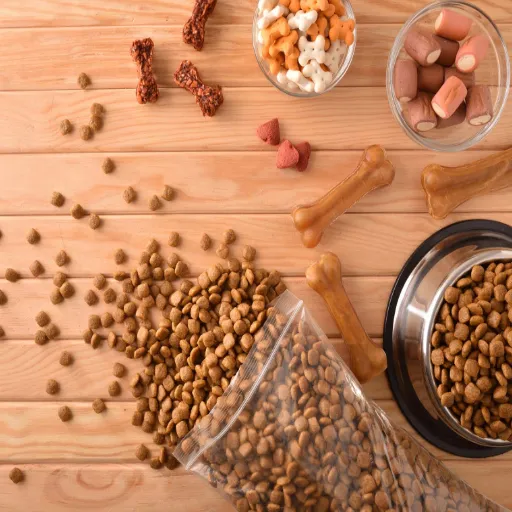
Equipment sits inside a facility, and the facility itself must be engineered for compliance. Poor layout can defeat even the best equipment.
Zoning and Workflow
The ideal pet food facility follows a linear workflow: raw material receiving and storage, pre-processing and grinding, mixing and pre-conditioning, extrusion, drying and cooling, coating and enrichment, packaging, and finished goods storage. The design of each area requires complete separation between raw materials and finished products to eliminate any chance of product contamination.
The movement of personnel through the facility needs consideration. Employees should not move from raw ingredient areas to finished product zones without changing protective clothing and footwear. The use of color-coded uniforms together with dedicated tools in each work area decreases the chances of allergen or pathogen transmission.
Air, Temperature, and Humidity Control
Dust control is critical in pet food facilities. The combination of grain dust and protein powders and vitamin premixes creates two dangerous conditions which include explosion hazards and cross-contamination risks. The system uses local exhaust ventilation to capture airborne contaminants at transfer points while maintaining negative pressure in areas that pose high contamination risk.
The facility maintains climate-controlled packaging areas which eliminate chances of product condensation during packaging because they maintain temperature in the facility.
Sanitation Infrastructure
Floors should slope toward drains. Walls should be coved at floor junctions to eliminate corners where debris accumulates. Overhead piping and conduits should be minimized or enclosed to prevent condensation drips. The entire facility should support wash-down sanitation with hose stations, chemical dosing systems, and waste capture.
Global Standards Comparison for Export Manufacturers
Export-oriented manufacturers face a complex landscape. A production line built solely for FDA compliance may fail an EU audit, and vice versa. The solution is not multiple lines. It is modular equipment designed to satisfy the strictest standard in each category.
United States: FDA, FSMA, and AAFCO
The U. S. framework centers on FSMA preventive controls and cGMPs. AAFCO provides nutritional and labeling standards adopted at the state level. Equipment must support hazard analysis documentation, supply-chain verification, and recall traceability. The FDA does not certify equipment directly, but inspectors evaluate whether equipment enables cGMP compliance.
European Union: Regulation 183/2005 and FEDIAF
EU feed hygiene regulation mandates Hazard Analysis and Critical Control Point principles for all feed businesses. FEDIAF publishes nutritional guidelines and a Safety Guide that covers Good Manufacturing Practice, supplier approval, and environmental monitoring. CE marking is mandatory for machinery placed on the EU market.
China: GB/T 13078 and GB/T 5915
China’s national standards cover feed hygiene (GB/T 13078) and pet food safety (GB/T 5915). Import registration is required for foreign manufacturers. Equipment must conform to Chinese national standards for electrical safety and material contact.
Building a Multi-Standard Production Line
The key to multi-market compliance is modularity. A wet-type twin-screw extrusion line with SUS 316 construction, PLC traceability, CE certification, and CIP capability can satisfy FDA cGMPs, EU hygiene rules, and Chinese import requirements simultaneously. Recipe-specific parameters stored in the control system allow rapid adjustment for regional formulation differences without mechanical reconfiguration.
Our modular pet food production solutions are engineered for exactly this challenge — configurable for FDA, EU, and Chinese compliance from day one.
Common Compliance Pitfalls and How to Avoid Them
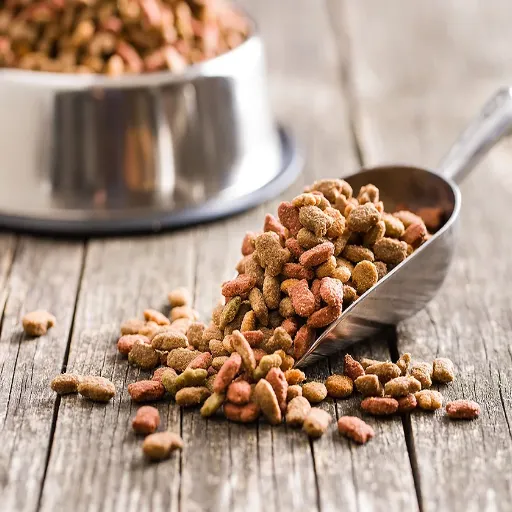
Even well-intentioned manufacturers make mistakes that trigger recalls, audit failures, or retail rejections. Here are the most common pitfalls and the equipment or process adjustments that prevent them.
Inadequate extrusion kill-step validation. Many manufacturers assume that running an extruder hot enough is sufficient. It is not. You must validate the specific time-temperature-pressure profile for each recipe and throughput rate, then monitor every batch against that validated profile.
Using non-food-grade materials in equipment construction. Plastic gears, aluminum housings, or painted surfaces near food-contact zones will be flagged. Specify SUS 304 or 316 for all food-contact and near-contact components.
Missing environmental monitoring for Salmonella. Pathogens do not stay on the product line. They colonize floors, drains, and equipment frames. A robust environmental monitoring program with scheduled swabbing and corrective action protocols is essential.
Poor lot traceability documentation. When a recall happens, you have hours — not days — to identify affected batches. PLC-based lot coding integrated with ingredient batch records makes traceability nearly instantaneous.
Inadequate supplier approval programs. FSMA requires supply-chain controls for hazards that your facility does not control. Your suppliers’ Certificates of Analysis (COA) must be current, and their facilities should be audited regularly.
Weak sanitation controls between flavor changeovers. Allergen carryover is a growing concern. Dedicated tooling, documented cleaning protocols, and verification swabbing between runs prevent cross-contamination.
Conclusion
The standards for pet food safety exist as active legal requirements which businesses must follow instead of being abstract concepts stored in a legal document. The engineering specifications determine all aspects of design work which includes choosing materials for extruder barrels and designing floor layouts. The manufacturers who treat compliance as a design parameter — not an afterthought — are the ones who pass audits, avoid recalls, and earn retail contracts.
The production line performs multiple functions because it produces kibble through efficient processes. The system achieves automatic compliance through its hygienic design features and its validated kill steps and its built-in traceability and its selection of materials which withstand actual operating conditions. The difference between a machine which operates normally and a business protection solution exists as the operational distinction.
If you are designing a new facility, upgrading an existing line, or preparing for export certification, start with equipment engineered for the standards you need to meet. Our team brings over a decade of experience building pet food production lines for global compliance. Contact us today for a customized equipment specification or facility consultation.