
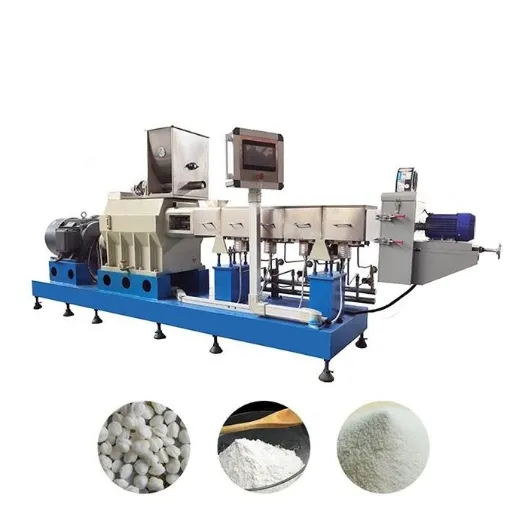
Modified Starch Manufacturing Process: A Step-by-Step Guide
The modified starch manufacturing process turns native starch into a functional ingredient. It uses physical, chemical, enzymatic, or combined treatments. The typical flow has six stages: raw material pretreatment, feed preparation, modification reaction, neutralization and washing, drying, and final grinding or packaging.
Each route uses different equipment and control parameters. The end product determines which path you take.
Most plant managers know the process looks simple on paper. Small changes in temperature, moisture, or reagent dosage can push viscosity, solubility, or color out of spec. When you understand how each stage of the modified starch manufacturing process connects to the next, you run a more predictable line and avoid costly reworks.
In this guide, you will learn the full modified starch manufacturing process. You will see how each modification method works. You will also understand which equipment configuration fits your product goals. We cover quality control checkpoints, food-grade versus industrial requirements, and common troubleshooting fixes.
Key Takeaways
- Modified starch is produced by treating native starch physically, chemically, enzymatically, or through a combination of methods.
- The core manufacturing stages are pretreatment, modification, neutralization/washing, drying, and grinding/packaging.
- Twin-screw extrusion, chemical reactors, drum dryers, and enzymatic lines each suit different product types and scales.
- Water Absorption Index (WAI), Water Solubility Index (WSI), degree of substitution, and viscosity are the main quality control metrics.
- Food-grade production requires food-safe stainless steel, controlled reagent residues, and compliance with HACCP, FDA, and EU standards.
What Is Modified Starch and Why Modify It?
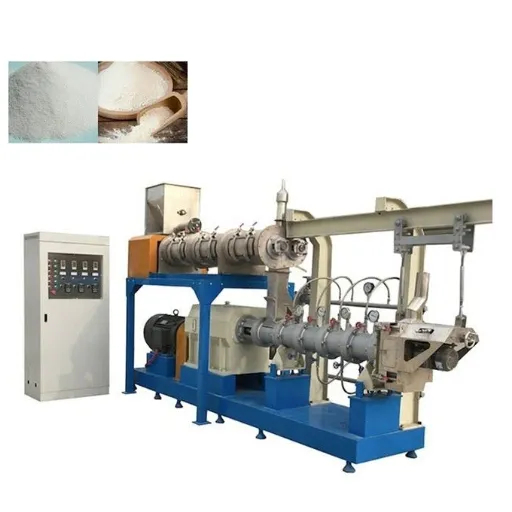
Modified starch is native starch that has been intentionally altered to improve its performance under industrial conditions. Native starch from corn, cassava, potato, or wheat works well in simple applications. However, it breaks down under heat, acid, shear, or freeze-thaw cycles. That limitation is why the modified starch manufacturing process exists.
Manufacturers modify starch to gain properties such as:
- Improved thermal stability for high-temperature processing
- Better freeze-thaw stability for frozen foods
- Controlled viscosity for sauces, soups, and coatings
- Enhanced solubility for instant applications
- Greater acid or alkali resistance for industrial uses
The global modified starch market is projected to reach USD 15.19–16.43 billion in 2025. Demand is rising in food, paper, textiles, oil drilling, and construction. According to Future Market Insights, physically modified starch accounts for roughly 52.1% of that market. Corn remains the dominant source at 46.4%.
Common Starch Sources
| Source | Typical Use | Notes |
|---|---|---|
| Corn | Food, paper, textiles | Most common; high availability |
| Cassava/Tapioca | Food, adhesives | Clean flavor; popular in Asia and Africa |
| Potato | Food, sauces | High swelling power; clear pastes |
| Wheat | Food, paper | Regional availability in Europe and North America |
| Waxy Maize | Food, thickeners | High amylopectin; stable gels |
When Maria, a plant engineer in Southeast Asia, switched from native tapioca starch to a pregelatinized cassava starch, her instant-noodle seasoning line finally achieved consistent cold-water thickening. The modification process turned a raw agricultural product into a reliable functional ingredient.
If you are deciding whether to buy a full production line or modify your existing process, our modified starch production line overview explains how each configuration scales from pilot to industrial output.
Overview of Starch Modification Methods
Before diving into the steps, it helps to understand the four main modification routes. Each method changes the starch structure in a different way. Each also produces different functional properties. Choosing the right route is the first decision in any modified starch manufacturing process.
Physical Modification
Physical modification uses heat, moisture, pressure, or mechanical shear. It does not add chemicals. The most common physical methods are:
- Pregelatinization: cooking starch so it swells and dissolves in cold water
- Heat-moisture treatment: heating starch at controlled moisture to alter crystalline structure
- Extrusion: using a twin-screw extruder to cook starch under high temperature, pressure, and shear
Physical modification is attractive for clean-label products. No chemical reagents are introduced. It is also the largest segment of the modified starch market. Many food manufacturers prefer this route when they want a simpler ingredient label.
Chemical Modification
Chemical modification introduces new functional groups or cross-links between starch molecules. Common reactions include:
- Etherification: adds hydroxyethyl or hydroxypropyl groups for freeze-thaw stability
- Esterification: adds acetate or octenylsuccinate groups for emulsification
- Cross-linking: connects starch chains with agents like phosphorus oxychloride for heat and acid resistance
- Oxidation: uses sodium hypochlorite to reduce viscosity and improve clarity
- Acid thinning: hydrolyzes starch to lower viscosity
Chemical routes offer precise control over functionality. They are common in the modified starch manufacturing process when the target product needs heat stability, emulsification, or acid resistance. However, they require careful handling of reagents and strict residue control.
Enzymatic Modification
Enzymatic modification uses enzymes such as α-amylase or saccharifying enzymes to break starch chains into smaller units. This method is highly specific. It is often used in the modified starch manufacturing process to produce maltodextrins, glucose syrups, or slowly digestible starches.
Composite Modification
Composite modification combines two or more methods. For example, starch can be oxidized first and then cross-linked to create a product with both low viscosity and high stability. Composite approaches are common in the modified starch manufacturing process when a single method cannot deliver all the required properties.
For a visual overview of how starch modification works, see this introduction to starch processing:
| Method | How It Works | Best For | Example Products |
|---|---|---|---|
| Physical | Heat, pressure, shear | Clean-label foods, instant thickeners | Pregelatinized starch, extruded starch |
| Chemical | Reagents alter molecular structure | Precise functionality, industrial uses | Cationic starch, oxidized starch, starch acetate |
| Enzymatic | Enzymes break starch chains | Specific molecular weight targets | Maltodextrins, glucose syrups |
| Composite | Two or more methods combined | Multi-property requirements | Oxidized-crosslinked starch |
Want to see how extrusion fits into your food production plans? Explore our food extrusion solutions to compare twin-screw configurations for snack, cereal, and starch applications.
Step-by-Step Modified Starch Manufacturing Process
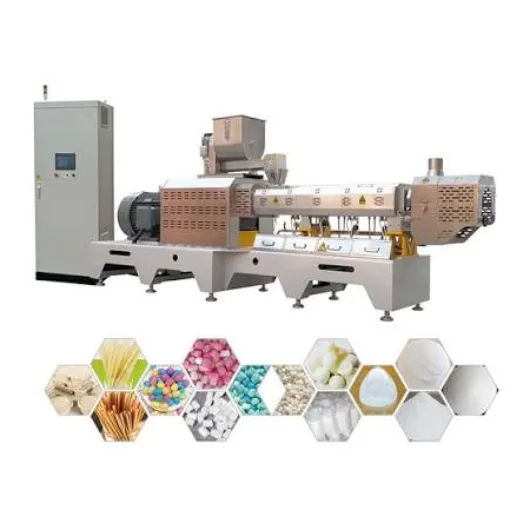
The modified starch manufacturing process follows a similar sequence across all methods, even though the equipment and reaction conditions change. Here is the step-by-step flow.
Step 1: Raw Material Selection and Pretreatment
The process starts with selecting the right native starch. Corn, cassava, potato, wheat, and waxy maize each bring different amylose/amylopectin ratios, granule sizes, and regional costs. These differences affect gelatinization temperature, final viscosity, and application fit. Raw material quality directly impacts every later stage of the modified starch manufacturing process.
Pretreatment includes four main steps:
- Cleaning to remove fibers, proteins, sand, and stones
- Washing with water to remove residual impurities
- Dewatering by centrifuge or filtration to about 30–40% moisture
- Drying to 10–15% moisture if the starch will be stored or dry-fed
High-purity starch improves reaction efficiency. It also reduces downstream defects.
Step 2: Slurry or Dry Feed Preparation
The next step depends on the modification route:
- Chemical and enzymatic routes use a starch slurry, typically 20–40% solids, mixed with water and adjusted for pH.
- Extrusion routes use a dry or low-moisture feed, often mixed with additives in a batch mixer before entering the extruder.
- Drum drying routes use a slurry of 30–50% solids spread as a thin film on heated drums.
At this stage, operators also add catalysts, reagents, enzymes, or modifiers depending on the target product. Correct feed preparation keeps the modified starch manufacturing process stable and repeatable.
Step 3: Modification Reaction
This is the core of the modified starch manufacturing process. The exact conditions vary by method.
Physical modification via extrusion: The feed enters a twin-screw extruder running at 120–200°C and 0.5–10 MPa. Mechanical shear and heat gelatinize the starch in seconds. The extrudate puffs as it exits the die, then moves to drying and grinding.
Physical modification via drum drying: A starch slurry is spread on steam-heated drums at 150–200°C. Gelatinization and drying happen in one step. The result is flakes that are crushed and milled.
Chemical modification: Starch is reacted with reagents under controlled temperature, pH, and time. For example, carboxymethyl starch etherification typically runs at 50–80°C, pH 8–12, for 2–4 hours. The starch-to-chloroacetic acid ratio is usually 1:0.1–0.5.
Enzymatic modification: Enzymes are added to a 20–30% starch suspension at pH 5–7 and 50–70°C. After several hours, enzymes are inactivated at 80–90°C.
Ahmed, a process supervisor in the Middle East, noticed that raising the extruder barrel temperature from 140°C to 170°C increased his product’s WAI but also darkened the color. By adjusting screw speed and moisture together, he hit the target functionality without burning the starch.
Step 4: Neutralization and Washing
After the reaction, the product must be stabilized and purified:
- Neutralization: pH is adjusted to 6–7 using acids or bases, depending on the process.
- Washing: impurities and residual reagents are removed by filtration, centrifugation, or solvent washing.
- Concentration: the slurry may be concentrated before drying.
Food-grade products require stricter residue control at this stage than industrial grades. Proper neutralization and washing protect both product quality and equipment life in the modified starch manufacturing process.
Step 5: Drying
Drying reduces moisture to 8–12% to prevent microbial growth and ensure shelf stability. Common dryers include:
- Spray dryers for fine powders from slurries
- Fluidized bed dryers for uniform granular products
- Drum dryers for pregelatinized flakes
- Industrial ovens or belt dryers for extruded products
The choice of dryer affects final particle structure and rehydration behavior. It is a critical control point in the modified starch manufacturing process. Our industrial microwave drying systems offer rapid, uniform drying for sensitive starch products where temperature control matters.
Step 6: Grinding, Screening, and Packaging
The dried product is milled to the target particle size, sieved to remove oversize material, and packed in moisture-proof bags or bulk containers. Particle size affects dispersion, hydration rate, and final texture. That makes this stage as important as the reaction itself in the modified starch manufacturing process.
Equipment Mapping for the Modified Starch Manufacturing Process
Choosing the right equipment train is critical. Here is how each route maps to production machinery.
Twin-Screw Extrusion Line
A typical extrusion-based modified starch manufacturing process uses:
- Mixer – blends starch, water, and additives
- Screw conveyor – feeds mixed material into the extruder
- Twin-screw extruder – cooks and modifies starch under heat, pressure, and shear
- Air conveyor – transfers extrudate to the dryer
- Industrial dryer – reduces moisture to spec
- Grinder – mills dried product to target fineness
- Packaging machine – bags final product
Twin-screw extruders are preferred for continuous physical modification. They offer precise control over residence time, temperature, and shear. That control is why extrusion dominates the physical modified starch manufacturing process. Learn more about selecting the right twin screw extruder machine for starch applications.
Chemical Reactor Line
A chemical modification line typically includes:
- Reactor vessel with heating/cooling jacket and agitator
- Neutralization tank
- Filter or centrifuge for washing and solid separation
- Dryer – spray, fluidized bed, or oven
- Mill and sifter
- Packing system
This setup is the backbone of the chemical modified starch manufacturing process. Reactor materials must resist the chemicals used, and food-grade lines require 304 or 316 stainless steel.
Drum Dryer Line for Pregelatinized Starch
The drum dryer route uses:
- Slurry preparation tank
- Steam-heated drum dryer with doctor blade
- Flake crusher
- Grinder
- Sifter
- Packer
Drum drying is a well-established physical modified starch manufacturing process. It produces higher-viscosity pregelatinized starch than extrusion. This route is widely used for instant foods and adhesives.
Enzymatic Processing Line
An enzymatic line includes:
- Mixing tank with pH and temperature control
- Enzyme reactor
- Inactivation vessel
- Filtration or centrifugation unit
- Concentration or spray dryer
- Packing system
Enzymatic routes are a specialized branch of the modified starch manufacturing process. They require precise temperature and pH control to maintain enzyme activity.
Ready to match equipment to your product goals? Contact our team for a customized food production line layout based on your starch type, capacity target, and end market.
Key Process Parameters and Control Points
Every modified starch manufacturing process depends on tight control of a few variables. Small deviations can change the final product more than most operators expect.
- Temperature: affects gelatinization, reaction rate, and final color. Extrusion runs 120–200°C; drum drying runs 150–200°C; chemical reactions often run 20–80°C.
- pH: critical in chemical and enzymatic routes. Off-target pH reduces reaction efficiency or creates unwanted byproducts.
- Moisture: low moisture favors high-shear extrusion; higher moisture supports chemical and enzymatic reactions.
- Reaction time: longer times increase substitution or cross-linking but can degrade the product if excessive.
- Reagent or enzyme dosage: directly affects degree of substitution and functionality.
- Screw speed and die size (extrusion): control shear, residence time, and expansion.
- Specific mechanical energy (SME): correlates with starch conversion and final WAI/WSI.
Keeping these parameters within spec is what separates consistent output from batch-to-batch variation. It is also what makes a modified starch manufacturing process profitable over the long run.
Quality Control Tests in the Modified Starch Manufacturing Process
Quality control should happen at multiple points, not just at final inspection. A robust modified starch manufacturing process tests samples during and after modification. Common tests include:
| Test | What It Measures | Typical Method |
|---|---|---|
| Water Absorption Index (WAI) | Gelatinization and water-holding capacity | Centrifuge method: 0.5–2.5 g sample in 10–25 mL water |
| Water Solubility Index (WSI) | Starch degradation and cold-water solubility | Same centrifuge supernatant dried and weighed |
| Degree of Substitution (DS) | Level of chemical modification | Titration, GC, or NMR depending on modification type |
| Viscosity | Pasting and thickening behavior | Rapid Visco Analyser (RVA) or Brabender viscometer |
| Moisture Content | Shelf stability and microbial safety | Oven drying at 105°C |
| Particle Size Distribution | Dispersion and hydration rate | Sieving or laser diffraction |
| Purity/Residue | Reagent residuals for food grade | HPLC or titrimetric methods |
For more detail on setting up a testing program, see our guide on modified starch quality control.
Food-Grade vs Industrial-Grade Process Considerations
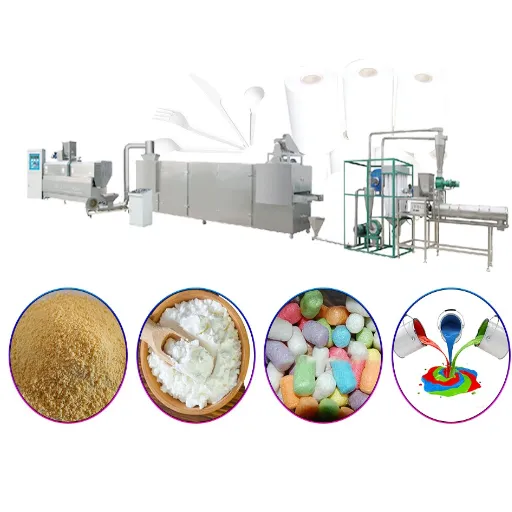
Not all modified starch is produced to the same standard. Food-grade lines must meet stricter requirements than industrial lines used for paper, textiles, or oil drilling. The right process controls depend on your end market and regulatory environment.
Food-Grade Requirements
Food-grade production requires:
- Food-safe stainless steel: 304 or 316 grade throughout contact surfaces
- Controlled reagent residues: must meet FDA 21 CFR and EU food additive limits
- HACCP and GMP compliance: documented hazard controls and sanitation
- Clean-in-place (CIP) systems: for equipment sanitation between batches
- Traceability: lot tracking for raw materials and finished goods
These requirements shape every stage of a food-grade modified starch manufacturing process.
Industrial-Grade Requirements
Industrial-grade production focuses on:
- Durability: equipment must handle abrasive or corrosive chemicals
- Efficiency: high throughput and low energy use
- Customization: formulations tuned for paper coating, textile sizing, or drilling fluid performance
- Safety systems: dust collection and explosion protection for dry starch handling
Industrial applications often tolerate higher reagent residues than food-grade work. That difference shapes how you design the modified starch manufacturing process.
Whether you are producing food thickeners or oil-drilling additives, our engineering team designs lines around your compliance and performance targets. We tailor every modified starch manufacturing process to match your raw materials, capacity goals, and end-market requirements.
Common Production Issues and Troubleshooting
Even a well-designed modified starch manufacturing process can run into issues. The table below lists the most common problems and how to fix them.
| Problem | Likely Cause | Corrective Action |
|---|---|---|
| Dark color or off-odor | Excessive temperature or long residence time | Reduce heat, increase feed rate, or adjust screw speed |
| Off-spec viscosity | Incorrect reagent dosage or moisture | Recalibrate dosing; check moisture content |
| High final moisture | Insufficient drying time or temperature | Increase dryer temperature or residence time |
| Poor solubility | Under-modification or low WSI | Increase extrusion temperature, enzyme dose, or reaction time |
| Inconsistent particle size | Worn mill screen or sifter | Replace screens; check grinder settings |
| Caking during storage | Moisture too high or packaging failure | Dry to 8–10% moisture; verify bag seals |
When Lisa’s paper-coating starch kept failing viscosity checks, her team traced the issue to inconsistent pH control in the reactor. After installing an automated pH loop, first-pass yield improved by 18%. A small control upgrade transformed her modified starch manufacturing process.
Frequently Asked Questions
What is the modified starch manufacturing process?
The modified starch manufacturing process treats native starch with physical, chemical, enzymatic, or combined methods to improve functionality. It includes pretreatment, modification, neutralization/washing, drying, and grinding/packaging.
How is modified starch made?
Modified starch is made by selecting a native starch source, preparing the feed, applying a modification treatment, neutralizing and washing the product, drying it, and then grinding and packaging it.
What is the modified starch production process?
The modified starch production process follows the same six stages as the manufacturing process: raw material pretreatment, feed preparation, modification reaction, neutralization and washing, drying, and final grinding or packaging.
What are the main modified starch processing steps?
The main steps are raw material selection and pretreatment, slurry or dry feed preparation, modification reaction, neutralization and washing, drying, and grinding/screening/packaging.
What is the pregelatinized starch manufacturing process?
Pregelatinized starch is manufactured by cooking starch in the presence of water and then drying it. Common methods include drum drying at 150–200°C and extrusion cooking at 120–200°C under pressure.
What equipment is needed for modified starch production?
Equipment depends on the modification route. Twin-screw extrusion lines use mixers, extruders, dryers, grinders, and packers. Chemical lines need reactors, neutralization tanks, filters, dryers, and mills. Drum dryer lines use slurry tanks, drum dryers, crushers, and grinders.
What is the difference between physical and chemical starch modification?
Physical modification uses heat, pressure, or shear without chemical reagents, making it suitable for clean-label products. Chemical modification adds functional groups or cross-links to achieve precise properties such as heat stability or emulsification.
What quality tests are used for modified starch?
Common tests include Water Absorption Index (WAI), Water Solubility Index (WSI), degree of substitution, viscosity, moisture content, particle size, and residue analysis.
Is modified starch safe for food?
Yes, when produced under food-grade conditions with approved reagents and within regulatory limits. Food-grade modified starch must comply with standards such as FDA 21 CFR and EU food additive regulations.
Conclusion
The modified starch manufacturing process turns a simple agricultural raw material into a versatile ingredient used across food, paper, textiles, construction, and oil drilling. While the overall flow is consistent, the choice of modification method and equipment determines the final functionality.
Here is what to remember:
- The six core stages are pretreatment, feed preparation, modification, neutralization/washing, drying, and grinding/packaging.
- Physical, chemical, enzymatic, and composite methods each serve different product requirements.
- Twin-screw extrusion, chemical reactors, drum dryers, and enzymatic lines are the main equipment routes.
- WAI, WSI, degree of substitution, viscosity, and moisture are the quality control metrics that matter most.
- Food-grade production requires food-safe stainless steel, residue control, and compliance with HACCP, FDA, and EU standards.
If you are planning a new modified starch manufacturing process or upgrading an existing one, the right equipment configuration makes the difference between inconsistent batches and a profitable, scalable operation. Contact Shandong Loyal Industrial Co., Ltd. today for a customized modified starch production line quote and process consultation.