
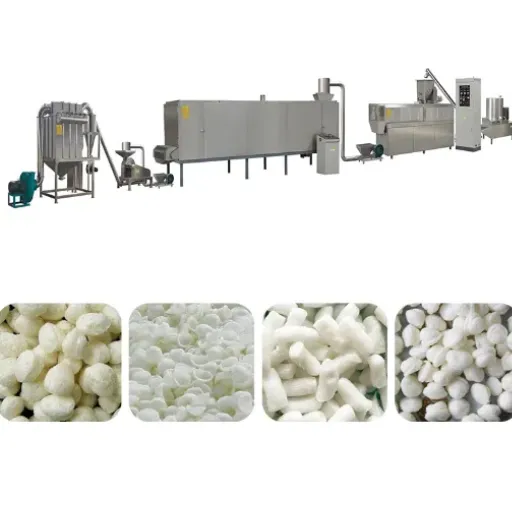
Modified Starch Production Line: Equipment & Process Guide
A modified starch production line is an integrated system of mixing, extrusion or reaction, drying, grinding, and packaging equipment that converts native starch into modified starch with enhanced functional properties. These lines typically process corn, cassava, potato, or wheat starch into products used in food, paper, textiles, oil drilling, construction, and pharmaceuticals. For manufacturers already running food production line equipment, adding a starch modification line can open new revenue streams without building an entirely new facility.
Most buyers are not looking for a single machine. They need a complete workflow that matches their raw material, target application, capacity, and budget. Yet the typical manufacturer page shows a product photo, lists a few specifications, and asks for an inquiry. That leaves plant managers guessing about process chemistry, energy consumption, quality control, and payback.
This guide solves that problem. You will learn how a modified starch production line works, what equipment you actually need, how to choose between extrusion and chemical modification, and what factors drive cost and ROI. We will also cover the quality standards that separate food-grade systems from industrial-grade systems, so you can specify equipment with confidence.
Key Takeaways
- A modified starch production line combines mixing, extrusion or chemical reaction, drying, grinding, and packaging into one continuous workflow.
- Capacity ranges from 100 kg/h for pilot lines to 3,000 kg/h for industrial plants, with installed power from 50 kW to 295 kW.
- The global modified starch market is valued at roughly USD 15–16 billion and is growing at 3–5% annually, driven by food, paper, and industrial applications.
- Twin-screw extrusion is the dominant physical modification method; chemical modification requires reactors, dosing systems, and washing stages.
- Food-grade lines must meet HACCP, FDA 21 CFR, and EU 1935/2004 standards, typically using 304 or 316 stainless steel.
- Complete line investment ranges from 30,000forsmallsystemsto30,000forsmallsystemsto1,500,000+ for turnkey industrial plants.
What Is a Modified Starch Production Line?
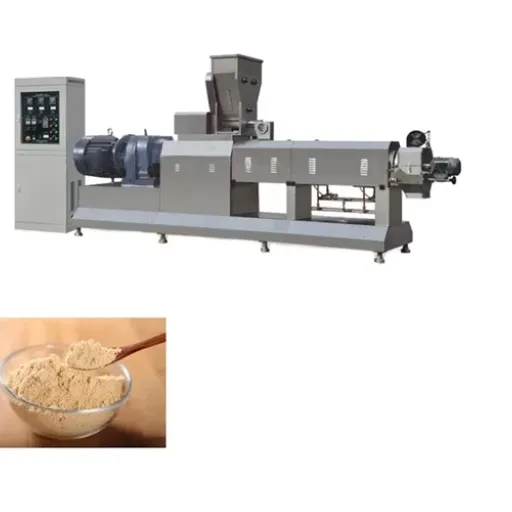
A modified starch production line takes native starch and changes its structure or properties through physical, chemical, or enzymatic treatment. Native starch straight from corn, cassava, potato, or wheat works fine for some applications, but it breaks down under heat, acid, shear, or freezing. Modification makes it stable, soluble, viscous, or adhesive enough for industrial use.
The phrase “production line” matters because modified starch is rarely made in one machine. A typical extrusion-based line includes a mixer, screw conveyor, twin-screw extruder, air conveyor, multi-layer dryer, cooling conveyor, grinder, and packaging machine. A chemical modification line adds reaction tanks, dosing pumps, pH control, washing, and filtration.
For buyers, the decision usually comes down to three questions:
- What raw material will I process?
- What functional properties does my end product need?
- What capacity and automation level fit my budget?
When Raj, a paper mill operations manager in India, first searched for a modified starch production line, he found dozens of supplier pages. None explained whether cationic starch for paper coating needed a chemical reactor or an extruder. After reading this guide, he specified a chemical modification line with cationic reagent dosing and a drum dryer. His line now produces 400 kg/h of coating starch with consistent viscosity and cationic degree.
Modified Starch Production Process Overview
The modified starch manufacturing process follows a simple logic: prepare the starch, modify it, then stabilize and package it. The exact steps depend on the modification method.
Physical Modification Process
- Mixing: Native starch is blended with water and sometimes additives to reach the target moisture content.
- Extrusion: A twin-screw extruder applies heat (140–220°C), pressure, and shear. The starch gelatinizes and its crystalline structure breaks down.
- Drying: A belt or fluid-bed dryer reduces moisture to 10–12%. Many processors pair extrusion with an industrial microwave drying machine for rapid, uniform moisture removal.
- Cooling: The product cools to room temperature to prevent clumping.
- Grinding: A pulverizer reduces particles to 80–200 mesh.
- Packaging: Automatic bagging systems weigh and seal the final product.
Chemical Modification Process
- Slurry preparation: Starch is suspended in water at 30–40% solids.
- Reagent addition: Acids, alkalis, ethers, esters, or oxidizers are added in controlled ratios.
- Reaction: The slurry is held at a set temperature and pH for a defined time.
- Washing: Residual chemicals are removed.
- Drying: Moisture is reduced to specification.
- Grinding and packaging: Final sizing and bagging.
Physical modification, especially extrusion, is faster and cleaner. Chemical modification gives more precise control over properties like freeze-thaw stability, acid resistance, and viscosity under shear. Many plants run both, or they buy a pregelatinized starch production line first and add chemical modification later.
Equipment Configuration for a Modified Starch Production Line
Choosing the right modified starch processing equipment starts with your modification method and capacity target. The equipment list below is the standard twin-screw extrusion configuration, followed by alternatives for chemical and pregelatinized starch lines.
Standard Twin-Screw Extrusion Line
| Equipment | Function |
|---|---|
| Mixer | Blends starch with water and additives to uniform moisture |
| Screw conveyor | Feeds mixed material continuously into the extruder |
| Twin-screw extruder | Applies heat, pressure, and shear to modify starch structure |
| Air conveyor | Transports extruded material to drying |
| Multi-layer dryer | Reduces moisture using hot air |
| Cooling conveyor | Brings product to ambient temperature |
| Grinder/pulverizer | Produces fine powder to required mesh size |
| Packaging machine | Weighs, fills, and seals bags automatically |
The twin-screw extruder is the heart of the line. Co-rotating twin screws provide self-wiping action, better mixing, and more consistent heat transfer than single-screw extruders. When selecting a twin screw extruder for modified starch, look for models with variable screw speed, segmented barrel heating, and a die plate designed for the target product shape. Our food extrusion solutions include configurable twin-screw systems built for starch, snack, and pet food applications.
Alternative: Drum Dryer Line for Pregelatinized Starch
Drum drying is another physical modification method. A thin film of starch slurry is applied to a heated rotating drum. The starch cooks and dries in one step, then flakes off. Drum-dried pregelatinized starch has different texture and solubility characteristics than extruded starch. If your end use is instant soups, sauces, or baby food, a pregelatinized starch production line based on drum drying may be the better fit.
Alternative: Chemical Reactor Line
For cationic, anionic, oxidized, or acetylated starch, you need:
- Reaction tank with agitator
- Reagent dosing system
- pH and temperature control
- Washing and dewatering equipment
- Dryer
- Dust collection system
Chemical lines require more floor space, more utilities, and stricter environmental controls. They also produce higher-margin specialty products.
Capacity Models and Power Specifications
| Scale | Capacity | Installed Power | Typical Dimensions |
|---|---|---|---|
| Pilot / small | 100–250 kg/h | 50–90 kW | 15–25 m length |
| Medium | 250–600 kg/h | 65–130 kW | 25–35 m length |
| Large | 600–1,000 kg/h | 100–180 kW | 35–45 m length |
| Industrial | 1,000–3,000 kg/h | 150–295 kW | 45–60 m length |
These figures are representative of mid-market Chinese equipment suppliers. Actual output depends on raw material, formulation, and final moisture target.
Want to see which configuration matches your product and capacity? Contact our engineers for a tailored modified starch production line proposal →
Raw Material Selection for Modified Starch
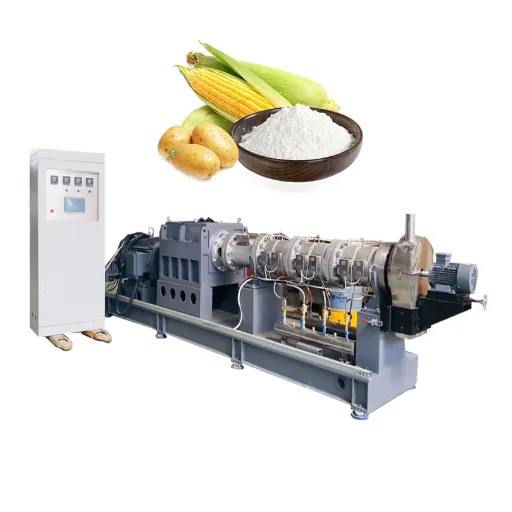
The raw material determines the final product more than many buyers realize. Each starch source has a different amylose/amylopectin ratio, granule size, and gelatinization temperature.
Common Starch Sources
| Source | Amylose Content | Typical Use |
|---|---|---|
| Corn | 25–28% | General purpose, paper, food |
| Waxy maize | <5% | High viscosity, freeze-thaw stability |
| Cassava / tapioca | 17–20% | Clean flavor, transparent gels |
| Potato | 20–23% | High viscosity, low gelatinization temp |
| Wheat | 25–28% | Bread, noodles, adhesives |
High-amylose starches form stronger gels and films. High-amylopectin starches give clearer, more stable pastes. For oil drilling fluid-loss agents, high amylopectin cassava or corn starch is common. For paper surface sizing, oxidized corn starch is widely used.
Regional availability and price also matter. A plant in Thailand will likely choose cassava, while a plant in the US Midwest will choose corn. A plant in Europe may use potato or wheat starch. Your production line should handle your primary source, and ideally be flexible enough to run alternative sources if prices shift.
Modification Methods Explained
Not all modified starch is made the same way. The method you choose defines your equipment, your operating costs, and your market.
Physical Modification
Physical modification changes starch structure without adding chemicals. The two main approaches are:
- Pregelatinization: Starch is cooked and dried so it dissolves in cold water. Used in instant foods, drilling mud, and adhesives.
- Heat-moisture treatment: Starch is heated at controlled moisture and temperature to increase thermal stability without destroying granule structure.
Physical modification is clean-label friendly and requires simpler equipment. It is the fastest-growing segment because food manufacturers want ingredient lists consumers recognize.
Chemical Modification
Chemical treatments introduce new functional groups or cross-links between starch molecules. Common reactions include:
- Etherification: Adds stability under freeze-thaw and acid conditions. Example: hydroxypropyl starch.
- Esterification: Improves clarity and film-forming. Example: acetylated starch.
- Cross-linking: Increases resistance to heat, acid, and shear. Example: distarch phosphate.
- Oxidation: Reduces viscosity and improves adhesion. Example: oxidized starch for paper and textile sizing.
Chemical modification requires precise control of reagent ratios, pH, temperature, and reaction time. It also requires washing to remove residues and meet food-grade standards. Each reaction creates a different functional profile, so the same base starch can become a thickener, binder, film former, or stabilizer depending on the treatment.
Enzymatic Modification
Enzymes break specific bonds in starch molecules to create dextrins, maltodextrins, or resistant starch. This method is highly specific and is growing at about 6.8% CAGR according to MarketsandMarkets.
Composite Modification
Some applications need more than one modification. A starch might be cross-linked and then pregelatinized, or etherified and then oxidized. These composite starches command premium prices but require flexible equipment and careful process control.
Applications of Modified Starch by Industry
The reason the global modified starch applications market reaches USD 15–16 billion is its versatility. One production line can serve multiple industries by changing the formulation and process parameters.
Food Industry
Modified starch acts as a thickener, stabilizer, emulsifier, and texture modifier. Common applications include:
- Instant soups and sauces (cold-water soluble pregelatinized starch)
- Bakery fillings and glazes (heat-stable cross-linked starch)
- Dairy desserts (freeze-thaw stable hydroxypropyl starch)
- Processed meats (fat replacer and binder)
- Snack coatings and flavor carriers
When Maria, a product developer at a sauce manufacturer in Brazil, replaced native corn starch with pregelatinized cassava starch, her instant gravy thickened in cold water without lumps. Distribution improved because retailers no longer had to worry about consumers cooking it incorrectly.
Paper Industry
Modified starch is used for surface sizing, coating, and wet-end addition. Cationic starch improves retention and strength. Oxidized starch gives smooth coatings and better printability. Paper mills are some of the largest industrial buyers of modified starch.
Textile Industry
In textile sizing, modified starch binds warp yarns to reduce breakage during weaving. Modified starch is also used in fabric finishing and printing thickeners.
Oil Drilling
Modified starch controls fluid loss in drilling mud. Under high temperature and pressure, the starch forms a filter cake on the borehole wall, preventing drilling fluid from escaping into the formation. Drilling-grade starch needs high water solubility index (WSI) and thermal stability.
Construction
Modified starch improves the workability of tile adhesives, putty powder, gypsum boards, and mortar. It increases water retention, adhesion, and open time.
Pharmaceuticals
Modified starch serves as a binder, disintegrant, and excipient in tablets. Pregelatinized starch is especially common because it compresses well and dissolves predictably.
Quality Control and Standards
Without quality control, a modified starch production line is just an expensive mixer. Buyers should specify testing protocols and equipment before installation.
Key Quality Metrics
| Metric | Why It Matters | Typical Target |
|---|---|---|
| Water solubility index (WSI) | Measures how much starch dissolves in hot water | 70–95% depending on application |
| Water absorption index (WAI) | Measures how much water the starch absorbs | Varies by product |
| Degree of substitution (DS) | For chemically modified starch; indicates how many hydroxyl groups are modified | 0.01–0.2 for food-grade |
| Viscosity | Critical for processing and end-use performance | Measured with Brabender or RVA |
| Moisture content | Affects shelf life and flowability | 10–14% |
| Particle size | Affects dissolution rate and mouthfeel | 80–200 mesh |
Food-Grade Compliance
Food-grade modified starch production lines must meet:
- HACCP: Hazard analysis and critical control points.
- FDA 21 CFR: Food-contact surfaces must be safe, smooth, and corrosion-resistant.
- EU Regulation 1935/2004: Materials must not release harmful substances into food.
- ISO 9001 / FSSC 22000: Quality and food safety management systems.
Food-contact surfaces should use 304 stainless steel as a minimum. For aggressive cleaning chemicals or acidic processes, 316 stainless steel is better because its molybdenum content resists chloride corrosion.
Industrial-Grade Standards
Industrial-grade lines for paper, textiles, or construction may use 201 stainless steel or carbon steel with protective coatings to reduce cost. The trade-off is shorter equipment life and higher maintenance.
Production Line Cost and ROI Considerations
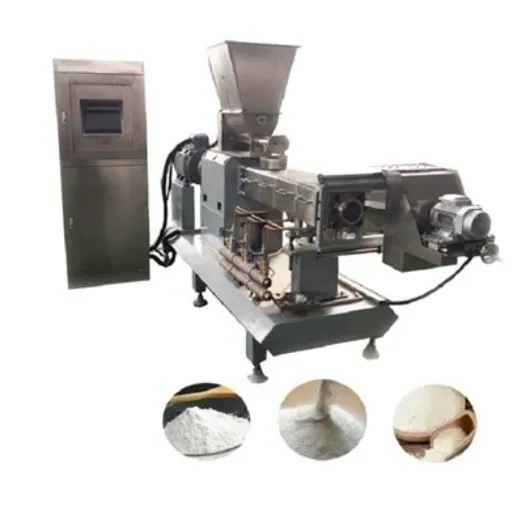
Price transparency is rare in this market, but buyers need realistic modified starch production line cost estimates to secure capital approval. The final price depends on capacity, automation level, stainless steel grade, and whether the scope includes installation and training.
Equipment Investment by Capacity
| Scale | Investment Range | Notes |
|---|---|---|
| Pilot / small | 30,000–30,000–100,000 | Lab or small commercial scale |
| Medium | 100,000–100,000–350,000 | Common for regional processors |
| Large | 350,000–350,000–800,000 | Industrial extrusion or chemical line |
| Turnkey plant | 800,000–800,000–1,500,000+ | Includes utilities, installation, training |
These ranges are based on common Chinese manufacturer listings for modified starch machinery. European or US suppliers typically quote higher prices.
Operating Cost Factors
- Energy: Extrusion and drying are the largest consumers. A 500 kg/h line may use 100–130 kW installed power.
- Raw materials: Native starch typically accounts for 60–70% of variable cost.
- Labor: Fully automatic lines need 2–3 operators per shift; semi-automatic lines need more.
- Maintenance: Screws, barrels, dies, and bearings wear under abrasion and heat.
- Utilities: Steam, compressed air, and cooling water add to operating cost.
Payback Period
For a mid-size line producing 500 kg/h of pregelatinized starch, gross margin depends heavily on end-use pricing. Food-grade pregelatinized starch may sell for 1,500–1,500–3,000 per ton. Industrial grades sell for 600–600–1,200 per ton. At typical margins, payback ranges from 18 months to 4 years.
Choosing a Modified Starch Production Line Supplier
Price and specifications are only part of the decision. The supplier’s ability to support installation, commissioning, and ongoing operation often determines whether a project succeeds.
Engineering and Customization
Look for a supplier who asks about your raw material, target product, and local utilities before quoting. A truly tailored line accounts for voltage, altitude, humidity, and available steam or compressed air. Off-the-shelf configurations may work in a showroom but fail in your plant.
Installation and Training
A complete modified starch production line can be 30–60 meters long. Installation requires alignment of the extruder, dryer, and conveyor systems, plus electrical and utility connections. Ask whether the supplier provides on-site installation supervision and operator training. Untrained operators are a leading cause of low yield and premature wear.
Spare Parts and Remote Support
Screws, barrels, dies, bearings, and seals wear under heat and abrasion. Confirm spare parts availability and typical lead times. Remote diagnostic capability through PLC systems can reduce downtime when issues arise.
Reference Projects
Request references from plants running similar raw materials and capacities. A supplier with experience in your target application, whether food-grade pregelatinized starch or drilling-grade modified starch, will anticipate problems that a generalist misses.
Want to see which configuration matches your product and capacity? Contact our engineers for a tailored modified starch production line proposal →
Safety and Environmental Considerations
A modified starch production line handles fine powders, high temperatures, and sometimes reactive chemicals. Proper safety design protects people, product, and equipment.
Dust and Explosion Risk
Starch dust is combustible. Dust collection systems, grounded equipment, and explosion vents are essential. Areas where starch powder is transferred or ground should have adequate ventilation and housekeeping procedures.
Chemical Handling
Chemical modification lines use acids, alkalis, oxidizers, or etherifying agents. Storage, dosing, and waste handling must comply with local environmental regulations. Workers need appropriate personal protective equipment and training.
Energy and Water Use
Extrusion uses less water than wet chemical modification, which reduces wastewater treatment load. Heat recovery from dryers and extruders can lower energy consumption. These factors affect both operating cost and sustainability reporting.
Noise and Heat
Grinders, extruders, and dryers generate noise and heat. Plan the layout so operators have safe access and the control room is separated from the noisiest equipment.
Common Production Issues and Troubleshooting
Even well-designed lines experience problems. Here are the most common defects and their likely causes.
Extrusion Issues
| Problem | Likely Cause | Solution |
|---|---|---|
| Low WSI | Insufficient temperature or shear | Increase barrel temperature or screw speed |
| Burnt particles | Overheating or residence time too long | Reduce temperature, adjust screw configuration |
| Uneven expansion | Moisture variation or worn die | Calibrate mixer, inspect die plate |
| High energy use | Wrong screw profile or over-torque | Optimize screw geometry and feed rate |
Drying and Grinding Issues
| Problem | Likely Cause | Solution |
|---|---|---|
| High final moisture | Insufficient drying time or temperature | Extend dryer, increase air temperature |
| Clumping | Product too hot during packaging | Improve cooling conveyor airflow |
| Coarse particle size | Worn grinder screen | Replace screen, adjust classifier |
| Dust losses | Poor dust collection | Check cyclone and bag filter |
Chemical Modification Issues
| Problem | Likely Cause | Solution |
|---|---|---|
| Off-spec DS | Inaccurate reagent dosing | Calibrate pumps, verify pH control |
| Residual reagents | Insufficient washing | Add washing stages or extend wash time |
| Color defects | Over-oxidation or metal contamination | Control reaction time, use stainless steel |
When Chen, a plant engineer in Shandong, noticed inconsistent WSI in his extruded starch, he traced it to moisture variation in the mixer. After installing a continuous moisture sensor and automating water addition, his WSI variation dropped from ±8% to ±2%. Downtime for rework fell by 40%.
Frequently Asked Questions
What is a modified starch production line?
A modified starch production line is an integrated manufacturing system that converts native starch into modified starch through physical, chemical, or enzymatic treatment. It typically includes mixing, extrusion or reaction, drying, grinding, and packaging equipment.
What equipment is needed for modified starch production?
A standard extrusion-based line needs a mixer, screw conveyor, twin-screw extruder, air conveyor, multi-layer dryer, cooling conveyor, grinder, and packaging machine. Chemical modification lines also require reaction tanks, dosing systems, pH control, and washing equipment.
How much does a modified starch production line cost?
Small pilot lines start around 30,000.Mid−sizeindustriallinesrangefrom30,000.Mid−sizeindustriallinesrangefrom100,000 to 350,000.Largeturnkeyplantscanexceed350,000.Largeturnkeyplantscanexceed1,500,000 depending on capacity, automation, and configuration.
What raw materials can be used?
Corn, cassava, potato, wheat, and waxy maize starch are the most common. Each source produces different viscosity, gel strength, and solubility characteristics.
Is modified starch safe for food?
Yes, when produced under food-grade conditions. Food-grade modified starch must comply with HACCP, FDA 21 CFR, and EU food-contact regulations. Equipment should use 304 or 316 stainless steel for food-contact surfaces.
What is the difference between modified starch and pregelatinized starch?
Pregelatinized starch is a type of physically modified starch that dissolves in cold water. Modified starch is a broader category that also includes chemically and enzymatically treated starches with enhanced stability, adhesion, or viscosity properties.
Which industries use modified starch?
Food, paper, textiles, oil drilling, construction, and pharmaceuticals are the largest users. Each industry requires specific functional properties and quality standards.
Conclusion
A modified starch production line is more than a collection of machines. It is a workflow that must match your raw material, modification method, capacity target, and end-use quality requirements. The best buying decisions come from understanding the full process, from mixing and extrusion to drying, grinding, and packaging, rather than comparing isolated specifications.
The market opportunity is substantial. With global demand growing at 3–5% annually and Asia Pacific leading consumption, processors who invest in the right line can serve food, paper, oil drilling, construction, and pharmaceutical markets from one flexible plant.
As you evaluate options, focus on three things: equipment that handles your target starch source and modification method, quality control systems that meet your customers’ standards, and a supplier who provides process support after installation.
Ready to design a modified starch production line for your plant? Request a customized quote from Shandong Loyal → Our engineers will match your raw material, capacity, and application to the right extrusion or chemical modification configuration.