
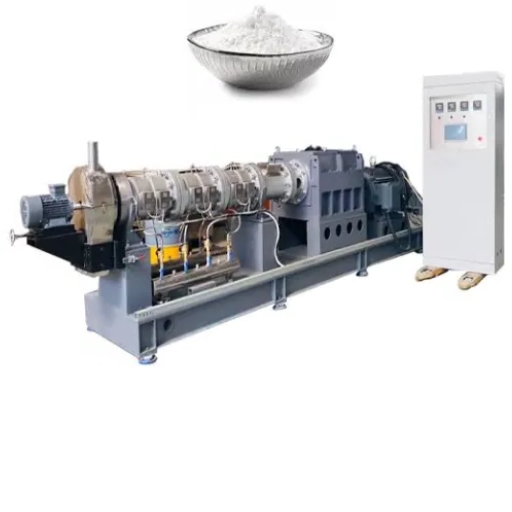
Chemical Starch Modification Equipment: A Buyer’s Guide to Reactors & Production Lines

Chemical starch modification equipment is the reactor, dosing, washing, drying, and safety train used to convert native starch into ethers, esters, oxidized starches, and cross-linked starches at commercial scale. The right configuration depends on whether you run a wet slurry process or a dry powder process, the modification chemistry you need, and whether your product must meet food-grade or industrial specifications.
That is the answer most buyers are looking for, yet it is rarely delivered in one place. Most supplier pages either show a generic equipment list or drift into extrusion-only solutions that cover physical modification but miss the chemistry entirely. If you are specifying a line for cationic starch, oxidized starch, acetylated starch, or any other chemically modified derivative, you need more than a catalog. You need to understand how each unit operation affects degree of substitution, purity, residue levels, and total cost of ownership.
In this guide, we walk through the core equipment behind wet and dry chemical starch modification. You will learn how to match reactor type to modification chemistry, what separates food-grade from industrial-grade construction, where equipment costs typically land, and how to avoid the specification mistakes that turn a promising project into a retrofit nightmare.
Key Takeaways
- Chemical modification still dominates the modified starch market, accounting for roughly 66.9% of production in 2024.
- Wet chemical lines use slurry reactors followed by neutralization, washing, and drying; dry chemical lines use heated powder mixers and produce far less wastewater.
- Reactor material selection matters: 316/316L stainless steel is the safer choice for acidic, oxidizing, or chloride-containing duties in food-grade plants.
- A mid-size wet chemical starch modification line typically ranges from 150,000to150,000to500,000, while dry cationization trains often cost 20–40% less in capital equipment.
- The most common specification mistakes are undersized washing equipment, wrong reactor materials, and skipped pilot trials before full-scale commitment.
What Is Chemical Starch Modification Equipment?
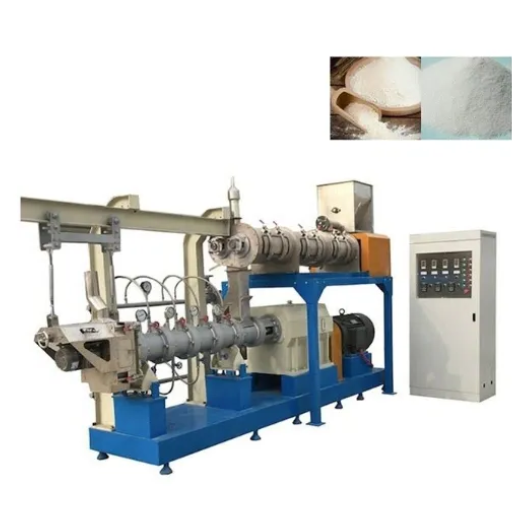
Chemical starch modification equipment is the integrated production train that reacts native starch with reagents to change its functional properties. Native starch from corn, cassava, potato, wheat, or waxy maize is treated to improve viscosity stability, heat resistance, acid tolerance, freeze-thaw behavior, solubility, or binding power.
The main chemical routes are:
- Etherification, hydroxypropyl, carboxymethyl, and cationic starches.
- Esterification, acetylated, octenyl succinic anhydride (OSA), and adipate starches.
- Oxidation, hypochlorite- or peroxide-oxidized starches.
- Cross-linking, phosphate, adipate, and epichlorohydrin cross-linked starches.
- Acid thinning, acid-hydrolyzed starches with reduced viscosity.
Each route needs controlled reaction conditions, precise reagent dosing, and downstream handling to remove residuals and reach target moisture. That is why chemical starch modification equipment is not a single machine. It is a system of reactors, mixers, dosing skids, separators, dryers, mills, dust collectors, and control instrumentation.
This differs from physical modification equipment such as extruders or drum dryers used for pregelatinized starch. Those systems change starch structure with heat, moisture, and mechanical shear rather than covalent reactions. If you want a complete view of how these methods fit together, see our modified starch manufacturing process guide. For a broader look at full-line configurations, our modified starch production line overview covers equipment trains from feeding to packaging.
Wet vs Dry Chemical Starch Modification Equipment
The first fork in equipment selection is wet versus dry processing. Both can produce high-quality modified starch, but their equipment trains, economics, and environmental profiles differ significantly.
Wet Chemical Modification
In a wet process, native starch is suspended in water at 20–40% solids. Reagents and catalysts are added to a jacketed reactor where temperature, pH, and residence time are tightly controlled. After the reaction reaches the target degree of substitution, the slurry is neutralized, washed to remove salts and residuals, dewatered, dried, ground, and packaged.
Typical wet-line equipment:
- Slurry preparation tank
- Jacketed stirred-tank reactor
- Reagent and catalyst dosing system
- Neutralization tank
- Filter press, rotary vacuum filter, or centrifuge
- Counter-current washer
- Spray dryer, fluid-bed dryer, or drum dryer
- Pulverizer and sifter
- Dust-tight packaging system
Wet processing gives higher degrees of substitution and cleaner products, which is why it remains the standard for food-grade modified starches and high-performance industrial grades.
Dry Chemical Modification
In a dry process, native starch powder is mixed with reagent and catalyst in a heated reactor, often a ring-layer mixer or turbo-reactor. The starch stays powdery throughout the reaction. A second mixer may neutralize the product before cooling, grinding, and packaging.
Typical dry-line equipment:
- Powder mixer or ring-layer mixer
- Heated reactor with jacket and agitator
- Neutralization mixer
- Cooler
- Grinder and sifter
- Dust collection and packaging system
Dry cationization is especially popular in the paper industry because it eliminates most wastewater, reduces footprint, and lowers capital cost. The trade-off is usually a lower degree of substitution and more by-product carry-through, so product specification must drive the choice.
| Factor | Wet Process | Dry Process |
|---|---|---|
| Product form | Slurry, then dried powder | Powder throughout |
| Wastewater | Significant | Minimal |
| Capital cost | Higher | 20–40% lower for equivalent capacity |
| Degree of substitution | Higher possible | Often lower |
| Best for | Food, pharma, high-spec industrial | Paper, textile, large-volume additives |
| Key equipment | Reactor, washer, dryer | Heated mixer/reactor, grinder |
Core Equipment in a Chemical Starch Modification Line
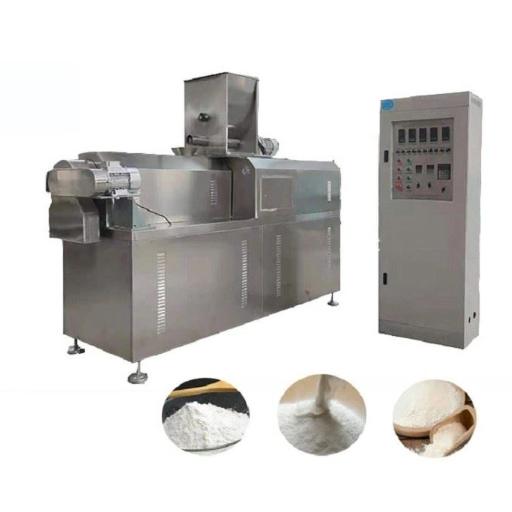
Whether wet or dry, every chemical modification train shares a common logic: prepare the feed, control the reaction, clean the product, and convert it to a stable powder. Here is how the equipment breaks down.
Reactor Vessels
The reactor is the heart of any chemical starch modification line. Common designs include:
- Jacketed stirred-tank reactors. Batch vessels with agitator, heating/cooling jacket, and ports for reagent addition. Best for flexible, multi-product operation.
- Ring-layer mixers. Continuous dry-phase reactors that create intense mixing and short residence times. Widely used for dry cationization.
- Turbo-reactors. Continuous reactors with a heated rotor for gas-phase or dry reactions, such as BF3 cationization.
- Static mixer reactors. Tube reactors with internal mixing elements for continuous hydroxypropylation and other etherifications.
- Twin-screw extruders. Can act as continuous thermochemical reactors, combining heat, pressure, shear, and reagent injection. Not a full replacement for wet chemical reactors, but useful for reactive extrusion and composite modification.
When Maria, a project engineer at a Southeast Asian starch plant, specified her first cationic starch line, she assumed one reactor size would cover every product. She later learned that hydroxypropylation and cationization need different agitation intensities and temperature profiles. Her second line included a variable-speed agitator and segmented heating zones, which cut product changeover time by 40%.
Reagent Dosing and Mixing Systems
Consistent product quality depends on precise reagent delivery. Dosing systems typically include:
- Metering pumps for liquid reagents such as propylene oxide, acetic anhydride, or sodium hypochlorite.
- Loss-in-weight feeders for solid catalysts and dry reagents.
- High-shear slurry mixers to disperse reagents uniformly before reaction.
- pH and temperature transmitters with closed-loop control.
Inaccurate dosing is one of the fastest ways to produce off-spec starch. A dosing skid with PLC control and recipe management pays for itself by reducing rework and raw-material waste.
Neutralization and Washing Equipment
After reaction, residual chemicals must be neutralized and removed. Wet lines use:
- Neutralization tanks with acid or alkali addition.
- Filter presses or rotary vacuum filters for solid-liquid separation.
- Centrifuges for higher-speed dewatering.
- Counter-current washers to reduce salt content to food-grade limits.
Skimping on washing capacity is a common and expensive mistake. A line with too small a filter or washer will bottleneck the whole plant and leave residual salts that fail customer specifications.
Drying, Grinding, and Packaging
The final moisture target for most modified starches is 8–12%. Equipment choices include:
- Spray dryers for fine, uniform powders.
- Fluid-bed dryers for gentle, controlled drying and cooling.
- Drum dryers for pregelatinized or flake products.
- Flash dryers for rapid moisture reduction in high-volume plants.
After drying, the product is milled to 80–200 mesh and sifted. Dust-tight packaging protects the powder from moisture uptake and preserves shelf life. For drying-intensive applications, our industrial microwave drying solutions can also be integrated for rapid, uniform moisture removal.
Safety and Environmental Controls
Chemical starch modification involves combustible powders, reactive chemicals, and sometimes toxic reagents. Essential safety equipment includes:
- Dust collectors with explosion vents on dryers, mills, and packaging stations.
- Vapor scrubbers for reagent gases such as propylene oxide or epichlorohydrin.
- Leak detection and containment for acid, alkali, and oxidizer storage.
- CIP and SIP systems for food-grade lines.
- Personal protective equipment stations and emergency showers.
Equipment by Modification Type
Different chemistries place different demands on equipment. Here is how the train changes by modification type.
Etherification Equipment
Hydroxypropyl, carboxymethyl, and cationic starches are produced under alkaline conditions. Typical equipment includes:
- Alkaline slurry reactor with precise pH control.
- Propylene oxide or CHPTAC dosing system.
- Static mixer or high-shear mixer for uniform dispersion.
- For dry cationization: heated ring-layer mixer and acid neutralizer.
Cationic starch production equipment is one of the most searched subtopics in this category because paper mills use cationic starch as a wet-end additive and surface sizing agent.
Esterification Equipment
Acetylated and OSA starches need controlled pH and low temperatures to avoid excessive side reactions. Equipment includes:
- Reactor with cooling as well as heating capability.
- Acetic anhydride or OSA dosing at controlled rate.
- pH control system to maintain 7–9 for acetylation.
- Washing system to remove acetic acid residues.
Food manufacturers favor acetylated distarch phosphate for freeze-thaw-stable sauces and gravies, so food-grade construction is usually non-negotiable.
Oxidation Equipment
Oxidized starch is made by treating starch with sodium hypochlorite or hydrogen peroxide under alkaline conditions. Equipment needs include:
- Corrosion-resistant reactor and piping, often 316/316L stainless steel.
- Oxidizer dosing with cooling to control exotherm.
- pH monitoring to prevent over-oxidation and discoloration.
- Washing and drying to remove salts.
Because oxidizers are aggressive, material selection is critical. A 304 reactor might survive a few batches, but it will corrode over time and contaminate the product with metallic ions.
Cross-Linking Equipment
Cross-linked starches resist heat, acid, and shear. Common cross-linkers include phosphorus oxychloride, sodium trimetaphosphate, adipic anhydride, and epichlorohydrin. Equipment includes:
- Reactor with tight pH and temperature control.
- Cross-linker dosing skid.
- Extended washing to remove residual cross-linker and salts.
- Drying and milling.
Cross-linked starches are widely used in canned foods, retort sauces, and noodles, so compliance with food-contact regulations is essential.
Food-Grade vs Industrial-Grade Equipment Considerations
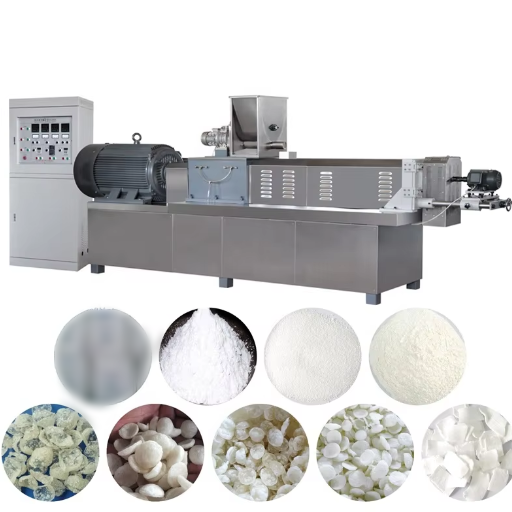
Not every modified starch line needs food-grade construction, but if your product enters the food, pharmaceutical, or personal-care supply chain, material and design choices are regulated.
Stainless Steel Selection
- 304 stainless steel is acceptable for mildly acidic or neutral duties where chlorides are absent.
- 316/316L stainless steel is preferred for oxidizing, acidic, or chloride-containing processes and for aggressive cleaning regimes. The molybdenum content improves corrosion resistance, especially at welds.
- Surface finishes of Ra ≤ 0.8 μm support cleanability and reduce microbial harborage.
Compliance and Documentation
Food-grade chemical starch modification equipment should support:
- HACCP and GMP implementation.
- FDA 21 CFR and EU 1935/2004 food-contact compliance.
- FSSC 22000 or similar certified food safety management systems.
- Full traceability of reagents, batches, and contact materials.
- CIP compatibility and hygienic design.
When Chen upgraded his modified starch plant in eastern China to supply a global seasoning brand, the audit hinged on two issues: 316L contact surfaces and documented lot traceability. His previous 304 construction and paper batch records failed the first audit. After retrofitting the reactor train and installing a PLC-based batch reporting system, he passed the second audit and landed a three-year supply contract.
Cost and Capacity Benchmarks for Chemical Starch Modification Equipment
Pricing depends on capacity, automation level, material of construction, and whether the line is wet or dry. The ranges below are representative of turnkey equipment delivered from experienced manufacturers.
| Scale | Capacity | Wet Line Investment | Dry Line Investment |
|---|---|---|---|
| Pilot / Lab | 50–150 kg/h | 50,000–50,000–150,000 | 30,000–30,000–100,000 |
| Mid-size Industrial | 200–800 kg/h | 150,000–150,000–500,000 | 100,000–100,000–350,000 |
| Large Industrial | 1,000–3,000 kg/h | 500,000–500,000–2,000,000+ | 350,000–350,000–1,200,000 |
Operating Cost Factors
Beyond equipment cost, budget for:
- Reagents and catalysts, often the largest variable cost.
- Wastewater treatment, especially for wet lines.
- Energy for heating, cooling, drying, and grinding.
- Labor for operation, quality testing, and maintenance.
- Spare parts for dosing pumps, seals, and filter cloths.
Payback Period
A well-run modified starch line typically pays back in 18 months to 5 years, depending on product margin, capacity utilization, and local energy and labor costs. Specialty grades such as pharmaceutical or oil-drilling starches generally pay back faster than commodity food thickeners.
If you are comparing full-line economics, our guide to modified starch production line cost and configuration covers extrusion, drum drying, and chemical routes side by side.
How to Select the Right Chemical Starch Modification Equipment
Use this checklist to narrow your options and compare supplier quotes on equal terms.
- Define the target product and specification. Degree of substitution, viscosity, moisture, residue limits, and particle size drive every downstream choice.
- Choose wet or dry processing. High-spec and food-grade products usually favor wet. Large-volume paper or textile additives may favor dry.
- Select reactor type and material. Match the reactor to the chemistry and specify 316/316L for aggressive reagents.
- Evaluate dosing and control accuracy. PLC-based recipe management and closed-loop pH/temperature control reduce variability.
- Confirm washing and wastewater handling. Undersized separation equipment is a common bottleneck.
- Verify compliance requirements. Food-grade, pharma-grade, and industrial-grade lines have very different material and documentation standards.
- Request pilot trials and references. A supplier that cannot run a trial with your raw material and target specification is a risk.
Want help narrowing down the right configuration for your product? Contact our team for a tailored equipment proposal based on your raw material, capacity, and compliance targets.
Common Equipment Selection Mistakes
Even experienced buyers make these errors. Avoiding them saves both capital and operating cost.
Undersizing the Washing and Dewatering Stage
A reactor can complete a batch in two hours, but if the filter press needs six hours to wash and dewater the same batch, effective capacity collapses. Size washing and dewatering for the peak slurry flow, not the average.
Choosing 304 Stainless Steel for Aggressive Duties
304 is cheaper upfront, but it corrodes in oxidizing or chloride-rich environments. The resulting metallic contamination can reject entire batches and trigger customer complaints.
Ignoring Dust-Explosion Risks
Starch dust is combustible. Dry grinding, drying, and packaging areas need dust collection, explosion venting, and ignition-source control. Do not treat this as an afterthought.
Overlooking Reagent Vapor Containment
Volatile or toxic reagents need sealed reactors, vapor scrubbers, and proper ventilation. Regulatory inspections and worker safety depend on it.
Skipping Pilot Trials
Lab results do not always scale. A supplier with pilot-scale chemical starch modification equipment can confirm reaction kinetics, washing efficiency, and final product properties before you commit to a full-scale line.
Frequently Asked Questions
What is chemical starch modification equipment?
Chemical starch modification equipment is the production train used to react native starch with chemicals that alter its properties. It typically includes reactors, reagent dosing systems, neutralization and washing equipment, dryers, grinders, and safety systems.
What is the difference between wet and dry chemical modification?
Wet modification uses a starch slurry in water, followed by washing and drying. It produces higher-purity, higher-substitution products. Dry modification reacts starch powder directly with reagents, producing less wastewater and requiring lower capital investment.
Can twin-screw extruders replace chemical reactors?
Twin-screw extruders can perform some thermochemical reactions, such as reactive extrusion and composite modification, but they are not a direct replacement for wet chemical reactors when high degree of substitution or strict residue limits are required. Many plants use extrusion alongside dedicated chemical reactors.
What reactor material is best for food-grade modified starch?
316 or 316L stainless steel is the safest choice for food-grade lines, especially when acids, oxidizers, or chlorides are present. 304 stainless steel may be acceptable for milder duties.
How much does a chemical starch modification line cost?
Pilot lines start around 50,000,mid−sizewetlinesrangefrom50,000,mid−sizewetlinesrangefrom150,000 to 500,000,andlargeindustrialplantscanexceed500,000,andlargeindustrialplantscanexceed2 million. Dry cationization lines typically cost 20–40% less than equivalent wet lines.
What safety systems are required for starch modification reactors?
Essential systems include dust collection with explosion protection, vapor scrubbers for reactive gases, leak containment for chemicals, CIP capability for food-grade lines, and personal protective equipment stations.
Conclusion
Chemical starch modification equipment is more than a reactor and a dryer. It is an integrated system where material selection, dosing accuracy, washing capacity, and safety design determine whether you produce a profitable specification or a compliance headache.
The key decisions are straightforward once you know what to ask: wet or dry route, which reactor type fits your chemistry, 304 or 316/316L construction, and whether your washing and wastewater systems can keep up with the reactor. Get those right, confirm them with pilot trials, and you will have a line that scales reliably from first batch to full production.
At Shandong Loyal Industrial Co., Ltd., we design wet and dry chemical starch modification trains for food, paper, textile, oil drilling, and industrial applications. Our lines are built with food-safe stainless steel options, PLC-controlled recipe management, and modular layouts that grow with your market. Request a customized quote today and let us help you specify the right chemical starch modification equipment for your product.