Modified Starch Production Line Cost: 2026 Pricing & ROI Guide
A complete modified starch production line costs between 30,000 and 30,000 and 1,500,000+ in 2026, depending on capacity, modification method, automation level, and whether the quote covers only equipment or a full turnkey installation. Most buyers will land in the 100,000–100,000–350,000 range for a mid-scale industrial extrusion line that handles 250–600 kg/h.
That wide range is frustrating if you are trying to build a capital budget. You can find Alibaba listings for 10,000pregelatinizedstarchmachinesandIndianplantquotesabove10,000pregelatinizedstarchmachinesandIndianplantquotesabove1 million for the same headline product. The difference is not a trick; it is capacity, scope, and support. In this guide, we break down what a modified starch production line really costs, what drives the price, and how to estimate your payback before you request your first quote.
Key Takeaways
- A modified starch production line cost typically ranges from 30K for pilotlines to 30K for pilotlines to 1.5M+ for turnkey plants, with most mid-scale buyers spending 100K–100K–350K.
- Capacity, modification method, automation, stainless steel grade, and scope of supply are the five biggest price drivers.
- Operating costs, energy, raw materials, labor, and maintenance, often exceed the equipment price over the life of the line.
- Realistic payback periods range from 18 months to 4 years, depending on end-use pricing and capacity utilization.
- Buyers who prepare a clear specification sheet (capacity, raw material, end product, certifications) receive more accurate quotes and avoid hidden costs.
Modified Starch Production Line Cost by Capacity
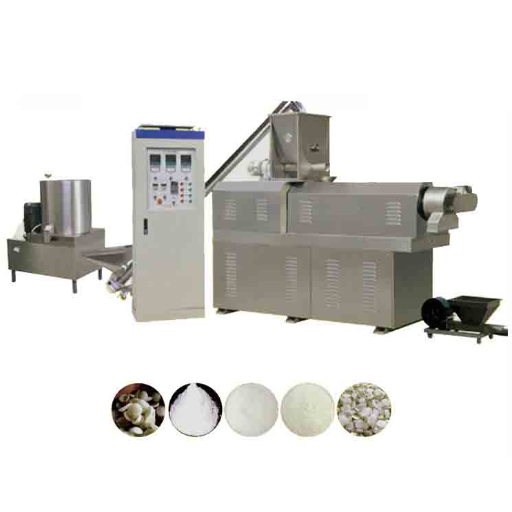
The fastest way to estimate your modified starch production line cost is to match your target capacity to a tier. Suppliers price lines by output, so a 100 kg/h lab line and a 1,000 kg/h industrial line share almost no components in common.
| Capacity Tier | Typical Output | Investment Range | Best For |
|---|---|---|---|
| Pilot / small commercial | 100–250 kg/h | 30,000–30,000–100,000 | Recipe development, small batches, market testing |
| Medium industrial | 250–600 kg/h | 100,000–100,000–350,000 | Regional processors, co-manufacturers, growing brands |
| Large industrial | 600–1,000 kg/h | 350,000–350,000–800,000 | Dedicated plants, high-volume food or oil drilling starch |
| Turnkey plant | 1,000+ kg/h | 800,000–800,000–1,500,000+ | Full facility with utilities, installation, and training |
Want a budget tailored to your capacity and raw material? Request a customized modified starch production line quote and we will match you to the right configuration.
Small-scale and pilot lines
Small pregelatinized starch processing lines are commonly listed from 10,000to10,000to60,000 on Chinese B2B platforms. These units are usually benchtop or compact extrusion systems with limited automation. They work well for recipe trials, university labs, or startups proving product-market fit.
However, a true small commercial line, one that can run 8–16 hours a day with reliable output, typically starts closer to $30,000. Below that price point, expect shorter equipment life, fewer safety features, and limited after-sales support.
Medium industrial lines
This is where most serious buyers land. A 250–600 kg/h extrusion-based modified starch line gives you enough output to serve regional food, paper, textile, or oil drilling customers without requiring a massive facility.
For example, a 500 kg/h pregelatinized starch line typically falls in the 120,000–120,000–250,000 range, depending on whether you choose electric or gas drying, PLC control, and food-grade 316 stainless steel contact parts.
Large and turnkey plants
At 1,000 kg/h and above, you are buying a production system, not just a machine. Large lines may include multiple extruders, larger dryers, grinding and sieving stations, bulk packaging, dust collection, and full building integration. Turnkey projects also cover installation, commissioning, operator training, and sometimes recipe development.
What Drives Modified Starch Production Line Cost?
Two identical-looking lines can differ by $200,000 once you look under the hood. Here are the eight factors that move the price needle.
1. Production capacity
Capacity is the single biggest driver of modified starch production line cost. A line rated for 1,000 kg/h needs a larger extruder, heavier dryer, bigger grinder, and more powerful electrical supply than a 250 kg/h line. Most suppliers use modular scaling, so doubling capacity rarely doubles price, but it usually adds 50–80% to the equipment cost.
2. Modification method
Physical modification through extrusion or drum drying is generally less expensive than chemical modification. Extrusion lines cook starch under heat and shear, while chemical lines add reaction tanks, dosing systems, pH control, washing, and neutralization equipment. If you need cationic, oxidized, or cross-linked starches, expect a 30–60% higher capital investment than a comparable extrusion-only pregelatinized line.
3. Automation and control level
Semi-automatic lines use push-button panels and manual recipe adjustments. Fully automatic lines use PLC touch-screen controls, recipe storage, automatic feeders, and remote monitoring. Full automation adds 20,000–20,000–80,000 to a medium line but reduces labor and improves batch consistency.
4. Stainless steel grade and certifications
Food-grade lines require 304 or 316 stainless steel on all product-contact surfaces. Industrial-grade lines can use carbon steel or lower grades in non-contact areas. A full 316 stainless steel build adds cost but is essential for pharmaceutical or high-hygiene food applications. Certifications such as CE, ISO, and SGS also affect price.
5. Heating source
Dryers can be electric, gas-fired, diesel, or steam-heated. Electric dryers have lower upfront cost but higher running cost. Gas or steam dryers cost more initially but reduce energy bills over time. The right choice depends on your local utility prices.
6. Raw material handling
Will your line receive 25 kg bags of native starch, bulk silos, or fresh cassava? Bulk handling, weighing, and pneumatic conveying add equipment but reduce labor. Bag-dump stations are cheaper but slower.
7. Scope of supply
A common source of quote confusion is scope. FOB equipment-only prices exclude shipping, customs, installation, commissioning, and training. Turnkey prices include everything but can be 30–50% higher. Always ask suppliers to specify what is included.
8. Supplier region and support
Chinese manufacturers typically offer the lowest upfront modified starch making machine price, often 30–50% below European or U. S. suppliers. However, factor in shipping, import duties, spare parts availability, and on-site support. A slightly higher quote with local service engineers can deliver lower total cost of ownership.
Equipment Breakdown: What Your Investment Covers
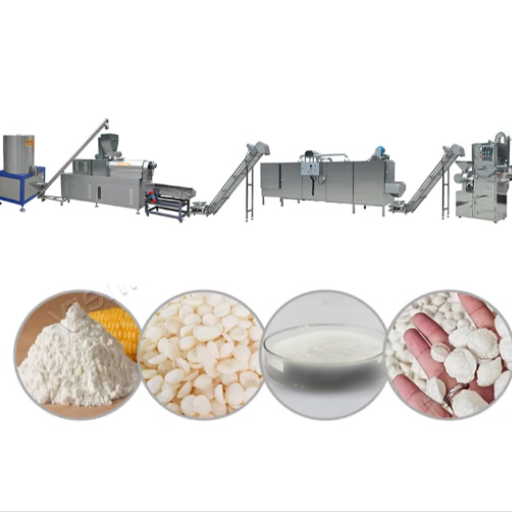
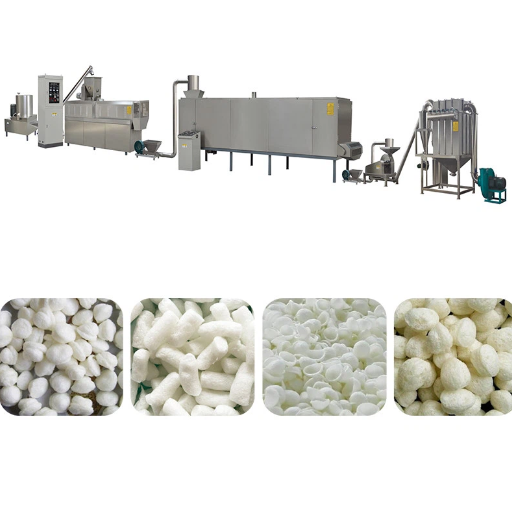
A standard extrusion-based modified starch line includes a connected sequence of machines. Understanding each component helps you see where your money goes, and where you can save.
Standard extrusion line components
- Raw material mixer, blends native starch with water or additives.
- Screw conveyor / feeder, delivers the mix to the extruder at a controlled rate.
- Twin-screw extruder, the core unit that cooks and modifies the starch.
- Air conveyor, transfers extruded product to the dryer.
- Multi-layer dryer, reduces moisture to 10–14%.
- Cooling conveyor, brings product to ambient temperature.
- Grinder / pulverizer, mills dried starch to 80–200 mesh.
- Packaging machine, bags powder in 25 kg bags or bulk containers.
- PLC control panel, coordinates speed, temperature, and recipe parameters.
For a medium line, the extruder and dryer together typically represent 50–60% of the equipment cost. The grinder, packaging system, and controls make up most of the rest.
Chemical modification additions
If you produce etherified, esterified, or oxidized starches, your line also needs:
- Reaction tanks with agitation and temperature control
- Chemical dosing and metering systems
- pH control and neutralization tanks
- Washing, filtration, and dewatering equipment
- Additional drying and grinding stages
These additions are why a chemical modification line can cost 30–60% more than an equivalent extrusion line.
Optional equipment that affects price
- Pre-conditioner for improved moisture and heat distribution
- Vacuum cooling for fragile starch structures
- Inline metal detection and sieving
- Bulk bag unloading and storage silos
- Dust collection and explosion protection systems
- Recipe-specific dies and screws
To learn more about how each stage works, see our modified starch manufacturing process guide.
Operating Costs to Budget For
The purchase price is only part of the story. Over a 10-year life, operating costs often exceed the initial equipment investment. Here is what to include in your financial model.
Energy consumption
Extrusion and drying are the largest energy consumers. A 500 kg/h line may have 100–150 kW of installed power, with real consumption of 60–90 kW during normal operation. At 0.10/kWh,thatisroughly∗∗0.10/kWh,thatisroughly∗∗50–$90 per hour** in electricity. Gas or steam heating can cut dryer energy costs by 30–50% where available.
Raw materials
Native starch is typically 60–70% of variable production cost. Corn starch, cassava starch, potato starch, and wheat starch all have different regional prices. For example, cassava starch may be cheaper in Southeast Asia, while corn starch is more economical in the U. S. Midwest or China.
Labor
A fully automatic modified starch line usually needs 2–3 operators per shift, one for feeding, one for monitoring the control panel, and one for packaging. Semi-automatic lines may need 4–6 people. Labor cost varies widely by country, so automation payback is faster in high-wage markets.
Maintenance and spare parts
Screws, barrels, dies, and bearings wear from abrasion and heat. Budget 3–5% of equipment cost annually for maintenance and spare parts. High-wear applications such as oil drilling starch, which uses abrasive minerals and high shear, may run toward the higher end.
Utilities and overhead
Do not forget steam, compressed air, cooling water, dust collection, and building HVAC. These are often underestimated but can add 10,000–10,000–50,000 to first-year operating costs.
ROI and Payback Period
A well-specified modified starch line can pay for itself in 18 months to 4 years. The exact timeline depends on your output value, capacity utilization, and local costs.
Output value by application
| Application | Typical Selling Price | Margin Profile |
|---|---|---|
| Food-grade pregelatinized starch | 1,500–1,500–3,000/ton | Higher margin, stricter compliance |
| Oil drilling starch | 600–600–1,200/ton | Volume-driven, stable demand |
| Paper/textile sizing starch | 500–500–1,000/ton | Commodity-like, high volume |
| Construction adhesive starch | 400–400–900/ton | Lower margin, simple requirements |
Simple ROI example
Imagine a 500 kg/h line producing food-grade pregelatinized starch:
- Equipment and installation: $220,000
- Output: 500 kg/h × 16 hours/day × 250 days/year = 2,000 tons/year
- Selling price: $2,000/ton
- Revenue: $4,000,000/year
- Raw materials + energy + labor + maintenance: ~70% of revenue
- Gross margin: 30% = $1,200,000/year
- Payback: ~2.2 years before financing and taxes
This is a simplified example, but it shows why capacity utilization matters. A line running one shift at 50% utilization will have a much longer payback than the same line running two shifts at 85% utilization.
How to calculate your own ROI
Use this framework:
- Estimate annual output (kg/h × hours/day × days/year).
- Multiply by your expected selling price per ton.
- Subtract variable costs: raw materials, energy, labor, packaging.
- Subtract fixed costs: depreciation, maintenance, rent, overhead.
- Divide annual net benefit by total investment.
Need help modeling ROI for your specific project? Ask our engineering team for a payback analysis based on your capacity and end product.
Regional Price Differences
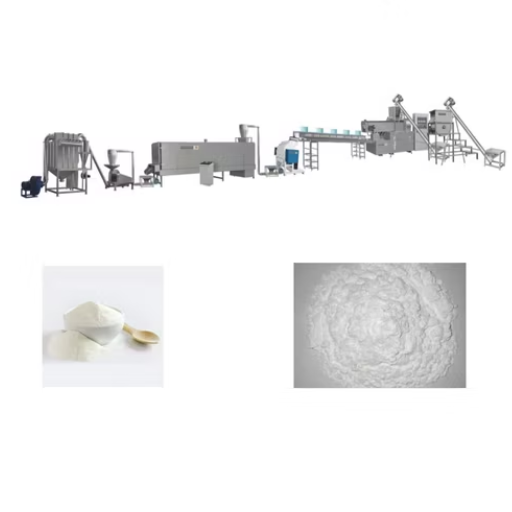
Where you buy matters almost as much as what you buy.
China
Chinese manufacturers dominate the mid-range market. A 250–500 kg/h extrusion-based line typically costs 80,000–80,000–250,000 FOB, depending on automation and materials. Strengths: competitive pricing, fast delivery, wide model range. Considerations: shipping, import duties, language, and after-sales response time.
India
Indian suppliers and B2B marketplaces list modified starch processing plants from roughly ₹25 lakh to ₹9 crore (30,000to30,000to1,000,000+). A mid-size modified starch processing plant is often quoted around ₹86 lakh (~$103,000). India is a strong option for buyers who want local support and compliance with Indian regulations.
Europe and the United States
Western suppliers typically quote 50–100% more than Chinese manufacturers for comparable capacity. The premium reflects engineering standards, longer warranties, local service, and easier spare parts access. For buyers with strict hygienic or pharmaceutical requirements, the higher upfront cost may deliver lower total cost of ownership.
The real cost comparison
When Ravi, a food ingredient distributor in Mumbai, compared three quotes for a 300 kg/h pregelatinized starch line, the cheapest Chinese offer was 85,000FOB.ThemostexpensiveEuropeanquotewas85,000FOB.ThemostexpensiveEuropeanquotewas210,000 turnkey. At first, the Chinese option looked like half the price. After adding shipping, customs, installation travel, and a one-year spare parts package, the gap narrowed to about 30%. Ravi chose the Chinese line but negotiated a local service contract. His total first-year cost was $118,000, still a savings, but not the 60% difference the headline price suggested.
Hidden Costs Buyers Often Overlook
The biggest budget surprises usually happen after the purchase order is signed. Add these items to your capital plan.
Shipping, customs, and duties
Ocean freight for a full production line can cost 3,000–3,000–15,000, depending on distance and container size. Import duties and VAT vary by country and can add 5–25% to the landed cost.
Installation and commissioning
Even experienced plants need 1–3 weeks for installation and commissioning. Supplier engineer travel, lodging, and daily allowances typically cost 3,000–3,000–10,000 per visit.
Operator training
Training is sometimes included in turnkey quotes but often billed separately. Budget 1,000–1,000–5,000 for on-site training, or ask for video documentation and remote support packages.
Spare parts inventory
Keeping critical wear parts in stock prevents multi-week shutdowns. A starting spare parts package costs 5,000–5,000–20,000 for a medium line.
Utility upgrades
A 500 kg/h line may require 200+ amps of three-phase power, a gas line, steam boiler, or compressed air system. Utility upgrades can range from 10,000to10,000to100,000+, especially in older facilities.
Building preparation
Floor loading, ceiling height, ventilation, and dust explosion protection all affect building cost. A line that is 40 meters long and 4 meters high needs more space than many first-time buyers expect.
How to Get an Accurate Quote
The more precise your specification, the more accurate your quote. Prepare this information before contacting suppliers:
- Target capacity, kg/h or tons/day
- Raw material, corn, cassava, potato, wheat, or other
- End product, pregelatinized starch, oil drilling starch, cationic starch, oxidized starch, etc.
- Application industry, food, paper, textile, oil drilling, construction, pharmaceutical
- Required automation level, semi-auto or full PLC
- Stainless steel grade, 304 or 316
- Heating source preference, electric, gas, diesel, or steam
- Certifications needed, CE, ISO, SGS, FDA, EU food contact
- Destination country, for voltage, voltage, and shipping
- Scope of supply, FOB equipment only, or turnkey with installation and training
Get at least three quotes. Ask each supplier to itemize equipment, optional items, shipping, installation, training, and warranty. A quote that is 30% lower than the others often excludes something important.
Frequently Asked Questions
How much does a modified starch production line cost?
A modified starch production line typically costs 30,000–30,000–1,500,000+, with most mid-scale industrial lines falling between 100,000and100,000and350,000. The exact price depends on capacity, modification method, automation, and scope of supply.
What is the cheapest modified starch production line?
Small pregelatinized starch machines start around 10,000–10,000–30,000, but these are usually limited to lab or very small commercial use. For reliable daily production, budget at least 30,000–30,000–50,000.
Is a Chinese modified starch production line a good investment?
Chinese lines offer competitive pricing and fast delivery, often 30–50% below Western suppliers. The key is to factor in shipping, import duties, installation, spare parts, and after-sales support. For many buyers, the total cost of ownership still favors Chinese equipment.
What is the difference between FOB and turnkey pricing?
FOB pricing covers only the equipment delivered to the port of origin. Turnkey pricing includes equipment, shipping, customs clearance, installation, commissioning, training, and sometimes recipe development. Turnkey can cost 30–50% more but reduces project risk.
How long does it take to pay back a modified starch production line?
Typical payback periods range from 18 months to 4 years. Food-grade pregelatinized starch lines often pay back faster because of higher selling prices. Industrial grades such as oil drilling or construction starch may take longer but offer stable demand.
Can I finance a modified starch production line?
Yes. Many buyers use equipment financing, lease-to-own arrangements, or export credit. In some countries, capital equipment purchases qualify for tax deductions such as Section 179 in the United States. Consult your accountant or equipment finance provider.
Conclusion
Understanding modified starch production line cost is not about finding the cheapest quote. It is about matching capacity, modification method, and scope of supply to your business model. A 50,000machinecanbeexpensiveifitcannotmeetyourqualityoroutputtargets.A50,000machinecanbeexpensiveifitcannotmeetyourqualityoroutputtargets.A400,000 line can be a bargain if it runs two shifts and pays back in under three years.
Start with a clear specification sheet. Compare total cost of ownership, not just equipment price. Ask suppliers for references, spare parts lists, and detailed scope documents. And build a financial model that includes energy, labor, raw materials, and maintenance, not just the purchase price.
At Shandong Loyal, we design modified starch production lines for food, paper, textile, oil drilling, and construction applications worldwide. Whether you need a pilot line for recipe development or a turnkey plant for full-scale production, our engineers can help you choose the right configuration and budget.
Ready to move from budget planning to production? Request a customized modified starch production line quote and our team will provide a detailed proposal with equipment specs, layout drawings, and ROI estimates.