Potato Chip Fryer Machine: Complete Buying Guide for Snack Manufacturers

A potato chip fryer machine is the commercial frying system that cooks sliced potatoes in hot oil to produce finished potato chips. It comes in three main types: batch fryers, continuous fryers, and vacuum fryers. The right choice depends almost entirely on your daily output target and the texture you want your chips to have.
Here’s the problem most buyers run into. When Rajesh launched his chip brand in Nagpur last year, he bought the smallest fryer he could find to keep his startup costs low. Within four months, demand for his masala chips outpaced the machine.
He was running it 14 hours a day, burning through oil, and turning away orders. Replacing that undersized fryer mid-launch cost him more than buying the right one would have from day one.
You’re likely asking the same question Rajesh did: how do I pick the right fryer without overspending or undersizing? This guide answers that. You’ll learn how each fryer type works, what specifications actually matter, what a realistic budget looks like, and how to match a machine to your output goals.
Key Takeaways
- Potato chip fryers come in three types: batch fryers (flexible, kettle-style chips), continuous fryers (high-volume, uniform output), and vacuum fryers (low oil content, premium price).
- Batch fryers suit output under roughly 500 kg per day, while continuous fryers make sense at roughly 300 kg per hour and above.
- Vacuum frying cuts final oil content to about 1 to 5%, compared to 30 to 40% for conventional atmospheric frying.
- Expect to spend roughly 4,000to4,000to22,000 on a small production line, and 90,000to90,000to400,000 on a high-capacity automatic line.
- Oil is your largest recurring cost, so oil filtration, de-oiling, and total cost of ownership matter more than the sticker price.
What Is a Potato Chip Fryer Machine?
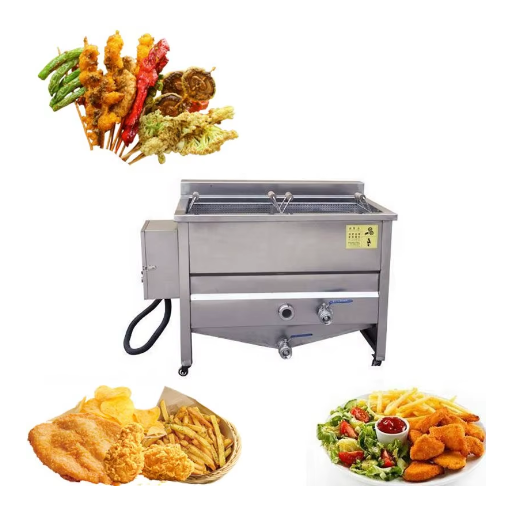
A potato chip fryer machine is a piece of commercial food processing equipment that submerges sliced potatoes in heated oil to cook them into finished potato chips. It is the core of any potato chip production line, positioned between the slicing and blanching stages and the de-oiling, seasoning, and packaging stages.
The fryer does far more than cook. It controls oil temperature, frying time, and oil flow to produce consistent color, texture, and moisture content across every batch. In a modern continuous system, temperature control holds within plus or minus 1 to 2 degrees Celsius, and frying time for a standard chip runs around 60 seconds.
Because the fryer sets both product quality and daily throughput, most chip producers treat it as the single most consequential purchase in their line. The machine you choose determines your capacity ceiling, your oil consumption, and the texture profile your customers come back for.
Types of Potato Chip Fryer Machines
Choosing a fryer starts with understanding the three main types. Each trades flexibility, throughput, and cost in a different way.
Batch Fryer
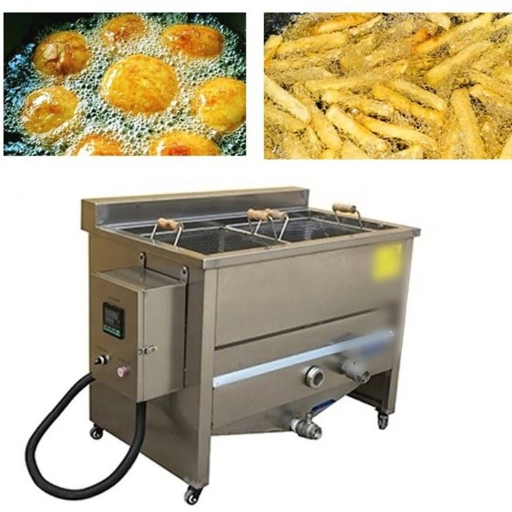
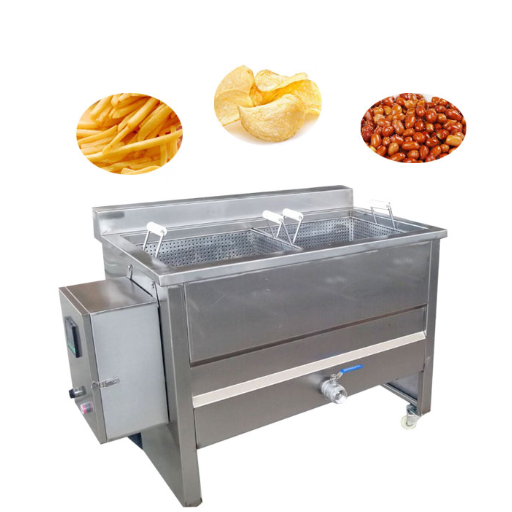
A batch fryer cooks one load of chips at a time in a kettle or open tank. Operators lower a basket of sliced potatoes into the oil, cook them for a set time, then lift and drain.
Batch fryers produce the dense, hard-bite texture associated with kettle-style chips. They also make flavor changeovers fast, since you simply swap out the oil or season the next load differently. This flexibility suits small runs and premium or multi-SKU brands.
The tradeoff is throughput. Because each load is discrete, batch fryers produce far less volume per hour than a continuous line. They also use roughly twice the energy of a comparable continuous fryer for the same output.
Continuous Fryer
A continuous fryer feeds sliced potatoes onto a conveyor that carries them through a long oil bath at a steady rate. Product enters raw on one end and exits finished on the other, with no pause between loads.
This design delivers high, uniform throughput, which is why continuous fryers power most standard potato chip plants. Multi-zone control lets you adjust temperature, dwell time, and oil flow at different points along the belt. Some systems even use laminar oil flow to keep floating chips evenly submerged.
Continuous fryers are ideal for a single high-volume product like standard potato chips. If you run many short SKUs, a continuous line may be less practical because changeovers take longer.
Vacuum Fryer
A vacuum fryer lowers the boiling point of oil by reducing pressure inside a sealed chamber. Chips fry at a lower temperature, which limits oil absorption and preserves natural color and nutrients.
The result is a crisp product with a final oil content of roughly 1 to 5%, compared to 30 to 40% for conventional frying. That makes vacuum fryers the standard choice for premium fruit and vegetable chips and for brands marketing a lower-fat snack.
Vacuum fryers carry the highest capital cost of the three. For most potato chip producers, the premium is only justified when the low-oil positioning commands a higher retail price. For more on this option, see our guide to the vacuum frying machine.
How a Commercial Potato Chip Frying Line Works
The fryer never works alone. Understanding the full line helps you see where the fryer fits and why upstream equipment affects its performance.
From Raw Potato to Finished Chip
A complete potato chip production line follows a consistent sequence:
- Washing and peeling removes dirt and skin from raw potatoes.
- Slicing cuts potatoes into uniform rounds, typically 0.8 to 3 millimeters thick.
- Rinsing washes away surface starch that would otherwise cause sticking.
- Blanching pre-treats slices to improve texture and reduce sugar, which lowers acrylamide formation during frying.
- Frying cooks the slices in the fryer itself.
- De-oiling removes excess surface oil, usually with a vibrating or centrifugal de-oiler.
- Seasoning tumbles chips with flavoring in a seasoning drum.
- Sorting, weighing, and packaging complete the line.
Each upstream step affects the fryer. Uneven slicing, for example, produces chips of different thickness that fry inconsistently, no matter how precise the fryer’s temperature control is.
Where the Fryer Fits
The fryer is the throughput bottleneck of the line. If your fryer handles 300 kg per hour, your slicer, de-oiler, and packaging machines should each keep pace. Buying a faster fryer while leaving a slower slicer upstream just moves the bottleneck elsewhere.
This is why Shandong Loyal designs fryers as part of a fried snack production line rather than as standalone units. A matched line keeps every stage balanced so your actual output matches the fryer’s rated capacity.
Want to see how a balanced line works in practice? Explore our fried snack production line for a closer look at how the fryer integrates with washing, slicing, and packaging equipment.
Key Specifications to Evaluate Before You Buy
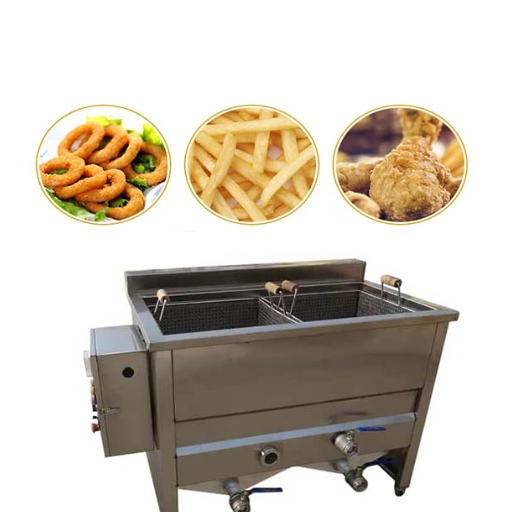
Once you know which fryer type you need, evaluate these specifications before requesting a quote.
Capacity and Sizing
Capacity, measured in kilograms per hour, is the first number to confirm. A small continuous fryer might run 100 to 300 kg per hour, while industrial systems from brands like Heat and Control reach 500 kg per hour or more. Enterprise lines from tna scale from 300 to 3,000 kg per hour.
Match this to your realistic output, not your optimistic one. Rajesh’s mistake was sizing for his launch month instead of his growth year.
Heating System: Electric vs Gas vs Thermal Oil
Heating method drives oil life and operating cost.
- Electric heating is clean, precise, and near 99% efficient. It suits small to mid-size facilities with affordable electricity.
- Gas or direct-fired heating costs less per unit of energy and heats up fast, which favors high-volume production.
- Thermal oil (indirect) heating delivers gentle, uniform heat at 80 to 85% efficiency, ideal for delicate products and long oil life.
Temperature and Dwell-Time Control
Look for multi-zone control that holds temperature within about 1 to 2 degrees Celsius. Adjustable frying time matters too. A variable-frequency drive that spans 40 seconds to 4 minutes lets you dial in texture for different recipes.
Materials: SUS 304 vs SUS 316
All food-contact surfaces should be food-grade stainless steel. SUS 304 is the minimum standard. For salty or acidic products that accelerate corrosion, SUS 316 offers better resistance. Confirm that frames, tanks, and conveyors in contact with oil and product meet these grades.
Oil Filtration and De-Oiling
Oil is your largest recurring cost, so treat oil management as a buying criterion, not an afterthought. Continuous filtration removes fines and carbon particles that would otherwise darken chips and degrade oil faster. Automatic de-oiling reduces the oil left on each chip, improving shelf life and lowering your oil bill.
Potato Chip Fryer Machine Price Guide
Price varies widely by type, capacity, and automation. These figures reflect current supplier ranges and give you a realistic budget to plan against.
Price Bands by Machine Type and Capacity
| Machine Type | Typical Capacity | Price Range (USD) |
|---|---|---|
| Batch fryer (electric) | 35 to 500 lb/hr | 3,500to3,500to29,000+ |
| Small continuous fryer | 100 to 300 kg/hr | ~$7,800 |
| Semi-automatic line | ~300 kg/hr | 900to900to85,000 |
| Full automatic line | 200 to 1,000 kg/hr | 6,000to6,000to250,000 |
| High-capacity turnkey line | 1,000+ kg/hr | 90,000to90,000to400,000 |
These are list ranges aggregated from supplier catalogs and marketplaces. The spread is wide because automation, heating method, and build quality all shift the final quote.
Total Cost of Ownership
The sticker price tells you less than you think. Oil, energy, and maintenance dominate long-term cost.
- Oil is replenished continuously, and a fryer with poor filtration burns through it faster.
- Energy varies by heating method; continuous frying uses about half the energy of a comparable batch fryer.
- Maintenance includes belts, heat exchangers, and seals that wear with use.
A cheaper fryer that uses 30% more oil will erase its price advantage within a year of steady production. That’s why our batch fryer guide emphasizes total cost of ownership over upfront price.
How to Choose the Right Potato Chip Fryer
Match the Fryer to Your Output Target
Start with a simple sizing rule. Below roughly 500 kg per day, a batch fryer is usually the economical choice. Above roughly 300 kg per hour, a continuous fryer becomes necessary to hit volume targets. In between, your product mix and growth plan decide.
Maria runs a mid-size chip plant in Texas producing a single salted-chip SKU. When she hit 250 kg per hour on two batch fryers, her labor and oil costs stopped scaling. She moved to a single continuous fryer and cut energy use nearly in half while freeing her operators for other tasks. The shift paid for itself in under a year.
Batch vs Continuous: A Decision Framework
Use this short framework to decide between the two workhorse types.
- Choose a batch fryer if you produce small runs, multiple flavors, or a premium kettle-style chip where texture matters more than volume.
- Choose a continuous fryer if you produce one high-volume product and need consistent, repeatable output.
For a fuller comparison of the tradeoffs, read our breakdown of batch fryer vs continuous fryer.
5 Mistakes to Avoid When Buying
- Oversizing wastes oil, energy, and floor space.
- Undersizing caps your growth, as Rajesh learned.
- Ignoring oil economics overlooks your largest recurring cost.
- Choosing price over total cost of ownership hides expensive operating costs.
- Skipping a pilot trial with your actual recipe before committing.
Ready to spec a fryer for your output target? Request a custom fryer quotation and we’ll configure a machine to match your capacity and product goals.
Frequently Asked Questions
How much does a potato chip machine cost?
A small complete potato chip production line typically costs 4,000to4,000to22,000. High-capacity automatic lines run 90,000to90,000to400,000. Basic electric fryers alone start around $3,500.
What machine is used to make potato chips?
A continuous fryer is the standard machine for commercial potato chip production. It is fed by a slicer and blanching stage and followed by a de-oiler, seasoning drum, and packaging line. Batch and vacuum fryers serve smaller or premium producers.
What’s the difference between batch and continuous frying?
A batch fryer cooks one load at a time in a kettle, producing hard-bite kettle-style chips with easy flavor changeovers. A continuous fryer moves product through an oil bath on a conveyor for high, uniform throughput at roughly half the energy cost.
How long does it take to fry potato chips?
A standard potato chip fries in about 60 seconds, with adjustable ranges from 40 seconds to 4 minutes depending on thickness and recipe.
Conclusion
The right potato chip fryer machine comes down to three decisions: which fryer type fits your product, what capacity matches your growth, and how much the machine really costs to run.
Batch fryers offer flexibility and hard-bite texture for small and premium runs. Continuous fryers deliver the volume and consistency standard chip plants rely on. Vacuum fryers produce a low-oil chip that supports a premium health positioning.
Before you buy, confirm food-grade stainless steel, precise temperature control, and a real oil-management strategy. Then run a pilot trial with your own recipe. The fryer you choose sets both your capacity ceiling and your largest operating cost, so take the time to size it correctly.
If you’re ready to move forward, contact our team for a configured quotation. We’ll help you match a fryer and line to your output goals, whether you’re launching a single flavor or scaling a full potato chip production line.