
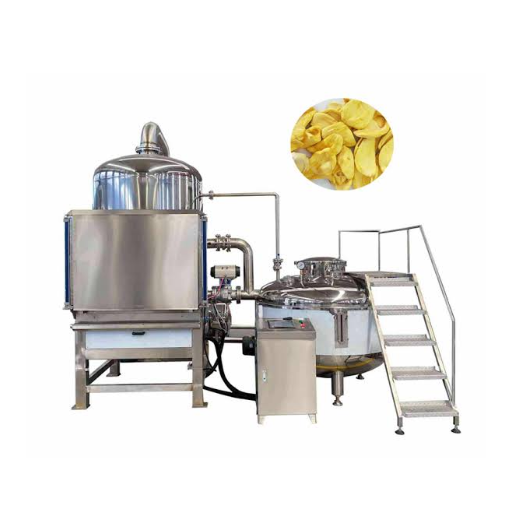
Vacuum Frying Machine: Complete Buyer’s Guide

A vacuum frying machine is industrial equipment that fries food under reduced pressure, letting it cook at 80–120°C instead of the 180°C used in conventional fryers. The result is crisper texture, far less absorbed oil, and more natural color and nutrients in every batch.
Priya spent two years fighting her jackfruit chip line. At 180°C, the fruit browned before it crisped, and the oil turned dark after a single shift. Every sample tasted greasy.
Then she ran the same jackfruit through a low-temperature vacuum fryer at 90°C. The chips came out golden, crisp, and with roughly half the oil. That single change let her sell to health-conscious retailers who’d previously turned her down.
You probably share that frustration. You don’t just want the quality benefits of a premium process; you want to stop guessing at which machine actually delivers them. In this guide, I’ll walk through exactly how a vacuum frying machine works, how it compares against conventional frying and freeze drying, what you can make with one, and how to choose a machine that fits your capacity and budget.
Key Takeaways
- A vacuum frying machine fries at 80–120°C under vacuum, cutting absorbed oil by roughly 25–50% compared with conventional frying.
- The biggest quality lever is the vacuum-breaking step, not low pressure alone. Rapid re-pressurization plus in-vacuum de-oiling keeps chips crisp and low-fat.
- Vacuum frying costs 3–4 times less up front than freeze drying, and three vacuum fryers can match the output of 18 freeze dryers for apple chips.
- Fruit and vegetables lose 20–30% of their weight during frying, so size your machine for finished output, not raw input.
- Batch machines typically run 16,000–16,000–94,000 by capacity; verify SUS 304/316 steel, PID temperature control, and the vacuum pump type before you buy.
What Is a Vacuum Frying Machine?
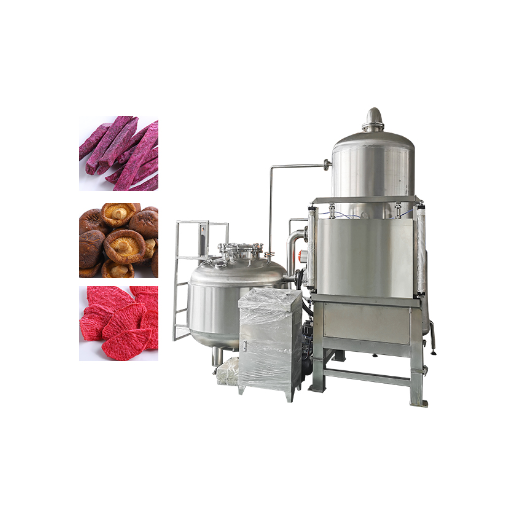
A vacuum frying machine is a food-processing system that fries and dehydrates products inside a sealed chamber kept under vacuum. It’s one piece of a broader range of food processing equipment that also covers extrusion, drying, and complete production lines. Because reduced pressure lowers the boiling point of water, the food cooks and dries at a much lower temperature than a traditional atmospheric fryer.
Most units operate between 80°C and 120°C with a vacuum level of roughly -0.095 to -0.098 MPa. Conventional frying, by contrast, needs oil around 180°C to drive moisture out of the food. That temperature gap is the entire reason the technology produces a different product.
How Low-Pressure Frying Works
Under normal conditions, water boils at 100°C. Inside a vacuum chamber, that boiling point drops sharply, which means moisture inside a piece of fruit or vegetable can turn to vapor and escape while the oil stays relatively cool.
This low-temperature cooking does several things at once. It stops sugars and proteins from browning aggressively. It protects heat-sensitive vitamins and natural pigments. And it slows the formation of acrylamide, a compound that forms when foods are heated above roughly 120°C.
For a snack manufacturer, the practical outcome is a chip that looks, tastes, and tests healthier than a conventional fried product. That’s why vacuum frying has become the default route for premium fruit and vegetable chips.
Want to see how vacuum frying fits a full production line? Explore our fried snack production line →
How Does Vacuum Frying Reduce Oil?
A vacuum frying machine does not reduce oil simply because the pressure is low. The mechanism is more specific, and understanding it separates a good purchase from an expensive mistake.
When food is fried, oil enters the product in two phases. Surface oil clings to the outside, while some oil is pulled into the pores left behind as moisture escapes. As the product cools and the vacuum is released, the pressure difference can draw additional oil deep into the structure.
Research shows vacuum-fried carrot and potato chips absorb about 50% less oil than atmospheric-fried chips, and vacuum-fried apple chips reduce oil absorption by around 25%. Vacuum-fried fish skin has shown 39% less fat than deep-fat frying.
The Vacuum-Breaking Step Most Buyers Ignore
Here’s the part most equipment listings never mention. The real quality control point is how the machine returns from vacuum to atmospheric pressure.
One study concluded that the success of vacuum frying depends less on operating under reduced pressure itself than on carefully controlling the transition back to atmospheric pressure. Rapid vacuum breaking compresses the product and leaves less internal space for oil to fill, which measurably lowers total oil content.
That’s why the best vacuum fryers pair two things: fast, controlled re-pressurization and a built-in centrifugal de-oiling step that spins excess oil off while the product is still under vacuum. A machine that skimps on either will deliver a greasy, heavy chip no matter how deep its vacuum goes.
When you evaluate equipment, ask the supplier specifically how the de-oiling and vacuum-breaking stages are engineered. That single question tells you more than a spec sheet full of wattage numbers.
Vacuum Frying vs Conventional Frying
| Factor | Vacuum Frying | Conventional Frying |
|---|---|---|
| Oil temperature | 80–120°C | ~180°C |
| Absorbed oil | 25–50% less | Higher |
| Natural color | Preserved | Darkens / browns |
| Nutrient retention | High (protects vitamins) | Lower |
| Acrylamide risk | Low (stays below ~120°C) | Higher |
| Batch time | Longer | Shorter |
| Typical product | Fruit/veg chips, premium snacks | Potato chips, extruded snacks |
The trade-off is time. Because vacuum frying runs cooler, it takes longer than a conventional fryer. A fish-skin study found ideal vacuum frying at 120°C took about 24 minutes versus 6 minutes for deep-fat frying at 180°C.
For commodity snacks sold on price and volume, conventional frying still wins on throughput. For premium, better-for-you products where color, oil content, and clean-label claims drive the price, vacuum frying is the stronger fit.
The Colombian apple-chip plant learned this the hard way. Their freeze-drying quote came back at nearly four times the cost of vacuum frying, and the capacity math made it worse. A single freeze dryer handled 20 kg per batch, so matching their target meant buying 18 units. Three vacuum fryers covered the same output. They chose vacuum frying and funded the difference into packaging and distribution instead.
Vacuum Frying vs Freeze Drying
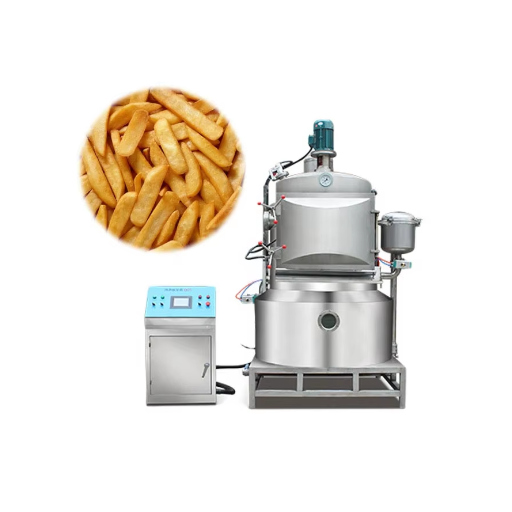
Freeze drying removes moisture by sublimation at very low temperature and high vacuum, producing an extremely light, fully preserved product. It’s also dramatically more expensive.
Vacuum frying uses heat and oil under vacuum to achieve a crisp, shelf-stable snack at a fraction of the capital cost.
| Factor | Vacuum Frying | Freeze Drying |
|---|---|---|
| Up-front cost | Lower (often 3–4× cheaper) | Much higher |
| Throughput | Higher per machine | Lower per machine |
| Final texture | Crisp, slightly oily | Dry, airy, no oil |
| Fat content | Low (with de-oiling) | Nearly none |
| Shelf life | 6–12 months with packaging | 12+ months |
| Best for | Fruit/veg chips, crunchy snacks | Whole fruits, instant meals, premium ingredients |
Neither is universally better. If your product is a crunchy chip with a premium feel and a modest oil content is acceptable, vacuum frying delivers most of the quality at a far lower entry cost. If your product must be oil-free and budget is secondary, freeze drying is the answer.
Ready to compare options for your specific product? Talk to our engineers about the right frying system →
What Can You Make with a Vacuum Fryer?
A vacuum frying machine is remarkably flexible. Its core applications fall into three groups:
- Fruit and vegetable chips: apple, banana, jackfruit, mango, kiwi, strawberry, sweet potato, carrot, purple potato, okra, pumpkin, and mushroom.
- Root and specialty snacks: potato, taro, onion, garlic, and winter melon chips with retained natural sweetness.
- Protein products: meat, seafood, fish skin, tofu, and nuts such as cashews.
The shared thread is that all of these products benefit from low-temperature cooking. Delicate sugars, bright pigments, and subtle flavors survive a vacuum process in a way they simply cannot at 180°C.
That’s why vacuum-fried fruit and vegetable chips have become the anchor product for the category. They deliver the crunch of a fried snack with the positioning of a health food, which opens doors to premium grocery, export, and online health channels.
How to Choose a Vacuum Frying Machine
Most buyers start by asking about price. The better question is capacity, because undersizing or oversizing is the most common and most expensive mistake.
Match Capacity to Finished Output
Fruit and vegetables lose 20–30% of their weight during frying. Load 10 kg of fresh jackfruit and you may get only 2–3 kg of finished chips. If you size the machine for raw input, you will consistently miss your production target.
Work backward from your daily sales or distribution forecast. Calculate how many kilograms of finished product you need per shift, then apply the shrinkage to find your required fresh-input capacity, then add headroom.
Ana’s plant in Portugal made this error. She sized a small 8 kg-per-batch fryer to her launch volume and hit it within four months. Every added retailer meant overtime shifts and a machine running near its ceiling. Six months later she bought a second, larger unit and had to re-run commissioning, training, and maintenance on a line she could have built correctly the first time.
The general sizing ladder looks like this:
- R&D and test markets: 8–10 kg per batch mini units
- Small to mid commercial: 20–80 kg per batch
- Industrial and export: continuous systems from 40 kg/h up to 250–350 kg/h
Batch vs Continuous
Batch vacuum fryers load, fry, de-oil, and discharge one basket at a time. They are cheaper, simpler, and ideal for product variety and startups.
Continuous vacuum fryers move product through the chamber on conveyors or sealed locks without stopping. They deliver far higher throughput and lower labor per kilogram, and they are the right choice once volume is predictable.
The decision comes down to whether your production is stable enough to justify the higher cost of a continuous line. If you run many small SKUs or are still validating demand, start batch.
Verify the Critical Specifications
When you compare machines, don’t let the conversation stop at capacity and price. Verify these four things on the actual spec sheet:
- Material: food-grade SUS 304 or 316 stainless steel. Avoid chrome-plated ordinary steel, which is less hygienic and less durable.
- Vacuum degree: -0.095 MPa or better, with stable performance under full load.
- Temperature control: PID control accurate to about ±1°C, since 80–120°C is a narrow working window.
- De-oiling: built-in centrifugal de-oiling inside the vacuum chamber, with adjustable spin speed, so chips crisp without re-absorbing oxygen or oil.
Choose the Right Vacuum Pump
The vacuum pump is the heart of the machine, and there are two common types.
Water-ring pumps are cheaper, easier to maintain, and effective at handling the water vapor the process produces. They are the practical default for most fruit and vegetable applications.
Rotary-vane oil pumps reach higher vacuum and pump faster, but they cost more and can suffer oil emulsification from moisture. They are worth considering for specific products but add complexity.
Match the pump to your product and your maintenance team’s capability, not just to the lowest quote.
Budget for Total Cost of Ownership
The sticker price isn’t the whole story. A vacuum frying machine also carries operating costs for oil replacement, electricity or steam, cooling water, maintenance, and spare parts.
That’s where working with a manufacturer matters. A supplier with responsive technical support and ready spare parts reduces your real cost far more than a marginally cheaper machine ever will. We build our frying systems with high-grade stainless steel and back them with direct technical support, so your line keeps running.
How Much Does a Vacuum Frying Machine Cost?
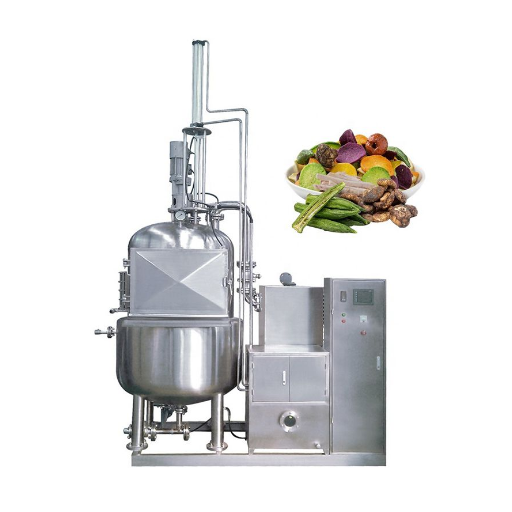
Prices scale with capacity and automation, and they vary by region and supplier.
- Mini batch units (around 8 kg per batch) start near 16,000–16,000–20,000.
- Mid-size batch machines (20–80 kg per batch) commonly run 30,000–30,000–94,000.
- Continuous systems start higher and scale with throughput, reaching six figures for high-capacity export lines.
These are reference ranges from current industrial listings, not fixed quotes. Your final price depends on configuration, material grade, automation level, and whether you need customization for a specific product.
The most useful comparison is not one machine against another at the same price. It’s total cost of ownership over five years, including oil, utilities, downtime, and support. A durable machine with good after-sales service routinely beats a cheaper one on that measure.
Frequently Asked Questions
How does a vacuum frying machine work?
It fries food in a sealed chamber under vacuum. Lower pressure drops the boiling point of water, so the food dehydrates and crisps at 80–120°C instead of the 180°C needed for conventional frying.
Is vacuum frying healthier than regular frying?
Yes, in the sense that it typically cuts absorbed oil by 25–50% and reduces acrylamide formation by keeping temperatures below roughly 120°C, while preserving more vitamins and natural color.
What is the difference between vacuum frying and freeze drying?
Vacuum frying uses oil and low heat under vacuum to produce a crisp chip with low but nonzero fat. Freeze drying removes moisture by sublimation, producing an oil-free, airy product at 3–4 times the capital cost and much lower per-machine throughput.
What foods can you make with a vacuum fryer?
Fruit and vegetable chips such as apple, banana, jackfruit, sweet potato, okra, and mushroom, plus meat, seafood, fish skin, tofu, and nuts.
How much does a vacuum frying machine cost?
Batch units range from roughly 16,000to16,000to94,000 depending on capacity, while continuous systems cost more. Total cost of ownership should also account for oil, utilities, maintenance, and spare parts.
How do I choose the right vacuum frying machine?
Calculate your finished-output target accounting for 20–30% weight shrinkage, confirm SUS 304/316 construction, verify PID temperature control and vacuum degree, select the right pump type, and budget for total cost of ownership.
Conclusion
A vacuum frying machine is the most practical way to produce premium, lower-oil fruit and vegetable chips at scale. It cooks at 80–120°C under vacuum, cuts absorbed oil by 25–50%, preserves color and nutrients, and keeps acrylamide formation low.
The details that determine success are the vacuum-breaking step, in-vacuum de-oiling, and honest capacity planning around the 20–30% weight loss that frying causes. Get those right and the technology pays for itself in product quality and market access.
If you’re ready to bring vacuum frying into your production line, we can help. We design food-safe, high-grade stainless steel frying systems tailored to your product and capacity, backed by direct technical support. Request a quote today and talk with our engineers →