
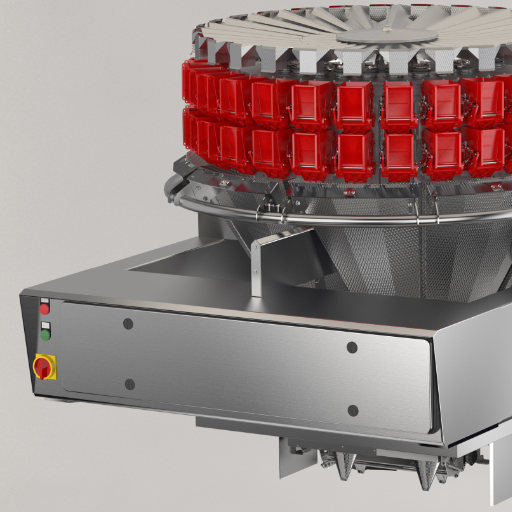
Multihead Weigher: How It Works and How to Choose

A multihead weigher is a combination scale that portions product by weighing many hoppers at once and releasing the set whose combined weight lands closest to the target. It sits above a bagger, tray sealer, or pouch machine, and it decides how much product you give away in every pack.
That last point is where budgets go wrong. Buyers negotiate the bagger for weeks, then accept the weigher as a line item. The bagger sets your speed. The weigher sets your margin.
If you’re already scoping a line, our team can quote a 10- or 14-head multi-head weighing system matched to your bagger and product. If you’re still deciding, this guide covers the mechanism, the head count, the accuracy claim, the cost, and the specification checklist.
Key Takeaways
- A multihead weigher hits target weight by combining partial portions, not by filling one hopper. Ten heads give 1,023 possible combinations; fourteen give 16,383.
- Head count should follow target weight, piece size, and speed. More heads improve accuracy but add cost, footprint, and cleaning time.
- Published accuracy of ±0.5 to 1 g is a supplier figure. Ask whether it is average or maximum deviation, at what target weight, at what speed, and on what product.
- Giveaway is a permanent cost. At 60 bags/min and 20 hours a day, 1 g of average overfill wastes about 21,600 kg a year.
- Price bands run from roughly 15,000to15,000to40,000 for a 6 to 10 head unit up to 120,000to120,000to350,000+ for a high-speed system. Used 10-head units trade around 12,000to12,000to20,000.
What Is a Multihead Weigher?
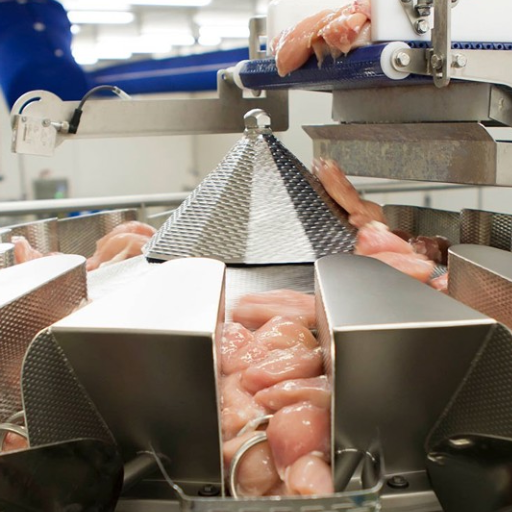
A multihead weigher, also called a combination weigher or multihead scale, is a computer-controlled dosing machine that spreads product across 10 to 24 hoppers, weighs each hopper with its own load cell, and discharges the combination closest to the target weight.
The names are interchangeable. Buyers search for a multihead weigher machine, a combination weigher, a multihead scale, and a combination scale, and all of them describe the same equipment. European suppliers tend to say combination weigher. North American suppliers often say combination scale.
It usually sits between an infeed elevator and a vertical form-fill-seal bagger. In other layouts it feeds a flow wrapper, a tray sealer, a premade pouch machine, or a bulk container. It replaces manual weighing, a linear weigher, or a volumetric filler when the product is irregular, sticky, fragile, or high value enough that a few grams of overfill matter.
The technology has a clear origin. In 1972, Ishida launched the first computer combination scale. The trigger was a Kochi agricultural cooperative that needed to bag irregular green peppers at 150 g ±2 g without going under.
One hopper could not hold that tolerance at speed. Combining several partial portions could. Ishida tells that story on its 50th anniversary page, and it explains the whole idea in one sentence: the machine does not weigh better, it chooses better.
How Combination Weighing Works
The cycle repeats every few hundred milliseconds. Here is the sequence.
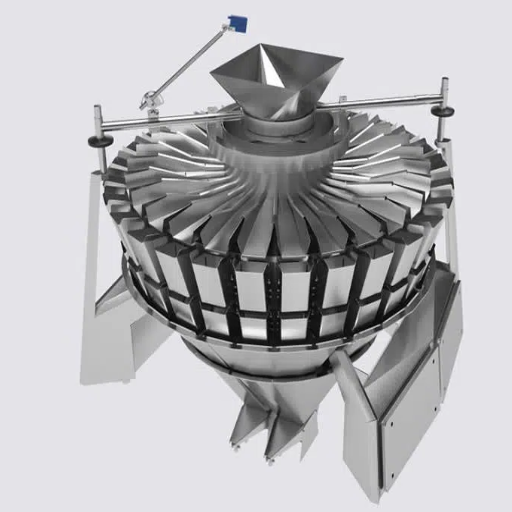
- Infeed. Product arrives by bucket elevator or conveyor and drops onto the top cone.
- Distribution. The cone spreads product outward to the linear feeder pans.
- Feeding. Each pan vibrates product into a feed hopper, also called a pool hopper. The portion is roughly one-third to one-fifth of the target weight.
- Weighing. The feed hopper releases into a weigh hopper. A load cell records the weight and sends it to the controller.
- Combination. The controller evaluates every possible subset of hoppers and picks the one closest to target, without going under if it can avoid it.
- Discharge. The selected hoppers open into a collecting chute, then a timing hopper, then the packer.
Why “combination” beats “fill to target”
A linear weigher fills one bucket until it reaches the setpoint. Its accuracy is limited by how finely it can stop the feed. A multihead weigher never relies on one bucket. It creates options.
With n weigh hoppers, the controller has 2n − 1 possible combinations. Ten heads give 1,023. Fourteen heads give 16,383. Twenty heads give 1,048,575. The more combinations, the higher the chance that one lands very close to target.
That is why a 14-head machine can be both faster and more accurate than a 10-head machine on the same product. It is not measuring more precisely. It has more ways to win.
Memory, booster, and timing hoppers
Three optional hoppers change how the machine behaves.
- Memory or booster hoppers hold already-weighed product that did not fit the last combination. They add options without re-weighing, which raises speed and reduces giveaway.
- Timing hoppers buffer a weighed batch until the bagger is ready. This matters when the bagger cycles intermittently.
- Twin discharge sends alternate batches to two chutes or two baggers. It raises throughput, not accuracy.
| Part | Job | What to specify |
|---|---|---|
| Top cone | Spreads product to the feeders | Diameter, coating, adjustment range |
| Linear feeders | Move product into feed hoppers | Amplitude control, pan length, isolation |
| Feed hoppers | Hold a partial portion | Volume in litres, material, coating |
| Weigh hoppers | Weigh each portion | Load cell resolution, hinge design, sealing |
| Load cells | Measure weight | Resolution, overload protection, IP rating |
| Collecting chute | Funnel the batch | Height, geometry, anti-stick surface |
| Controller | Run the combination | Recipe memory, bagger interface, data logging |
Head Count: How Many Heads Do You Need?
Head count is the first number buyers ask about, and the easiest one to over-buy.
| Heads | Combinations | Typical speed | Typical accuracy | Best fit | New price signal |
|---|---|---|---|---|---|
| 10 | 1,023 | 30 to 70 weighments/min | ±0.5 to 1.5 g | Entry lines, simple dry products, few SKUs | 15,000to15,000to40,000 |
| 14 | 16,383 | 60 to 120 weighments/min | ±0.3 to 1.0 g | Snacks, frozen food, pasta, pet food | 40,000to40,000to90,000 |
| 20 | 1,048,575 | 100 to 180 weighments/min | ±0.2 to 0.8 g | High-speed lines, blends, twin discharge | 80,000to80,000to150,000 |
| 24+ | 16.7 million+ | 180 to 300 weighments/min | ±0.1 to 0.5 g | Very high speed, dedicated single-SKU lines | 120,000to120,000to350,000+ |
Those speed and accuracy ranges are supplier figures, not guarantees. They move with target weight, piece size, and product behavior.
In practice, a 10 head multihead weigher is the entry point for simple dry products. A 14 head multihead weigher is the workhorse for most food plants. Higher counts belong on high-speed or multi-product lines.
Three inputs decide the minimum head count.
Target weight. A 25 g pack and a 2.5 kg pack need different hopper volumes. If the hopper is too small, the controller needs too many hoppers per combination. If it is too large, product sits in the hopper too long and accuracy drifts.
Piece size. Large pieces fill a hopper quickly and vary more in weight. Small, uniform pieces combine more predictably. Ask for hopper volume in litres, then check the fill at your bulk density.
Line speed. More heads mean more weighments per minute, but the bagger caps output. A 130 dumps/min weigher feeding an 80 bags/min bagger still outputs 80.
Supplier guidance often says every four heads roughly halves the achievable deviation. That is directionally useful, not a law. The gain depends on how much piece weight varies and how well the feeders distribute product.
Consider a snack plant we’ll call Meridian Snacks. It bought a 24-head weigher for a 60 bags/min line because the brochure promised the tightest accuracy. Commissioning took a week longer than planned, cleaning time doubled, and changeover between three SKUs slowed to 40 minutes.
A 14-head unit would have held the same target on its product. The extra heads sat idle for most of the shift.
Want a second opinion on the head count? Send us your target weight, bag size, and line speed, and we’ll tell you the range that fits. Talk to our packaging team.
Feed Systems: Vibratory, Belt, Screw, and Count
Head count gets the attention. Feed system decides whether the machine works at all.
| Product state | Feed system | Hopper treatment | Typical IP rating | Examples |
|---|---|---|---|---|
| Dry, free-flowing | Vibratory | Smooth or dimpled | IP65 | Snacks, nuts, candy, rice, dry pasta, kibble |
| Sticky, wet, marinated | Screw | Scraper gate, non-stick coating | IP65 to IP67 | Marinated meat, tuna flakes, kimchi, pulled meat |
| Fragile | Belt | Low drop, gentle transfer, low amplitude | IP65 | Cookies, chips, soft fruit, chocolate |
| Fresh produce | Belt or vibratory | Anti-stick, washdown-friendly | IP66 to IP67 | Salad, cut fruit, vegetables, herbs |
| Discrete pieces | Count or vibratory | Count plate or shallow hopper | IP65 | Hardware, small parts, confectionery |
| Mixed products | Multi-chamber or multi-lane | Separate lanes, ratio control | IP65 | Trail mix, snack blends, multi-component packs |
Vibratory feed is the default for dry, free-flowing product. The pans vibrate at a tuned amplitude and product slides into the hoppers. It is fast, simple, and easy to clean.
Belt feed runs slower but handles product gently. It suits sticky, fragile, and fresh items that would bounce, smear, or clump on a vibrating pan. Each hopper can have its own belt drive, which gives the controller independent control.
Screw feed pushes wet, marinated, or diced product that will not slide. It is the standard choice for tuna flakes, pulled meat, and deli salads.
Count feed counts discrete pieces instead of weighing them. It suits hardware, small parts, and some confectionery where the pack is sold by count rather than weight.
Hopper treatment matters as much as the feed. Dimpled plates reduce contact area on sticky product. Scraper gates force product out instead of letting it cling. Non-stick coatings help, but they wear and need replacement.
Tool-less hopper removal cuts cleaning time, which is often the real bottleneck on a multi-product line.
A produce packer we’ll call Northline Fresh learned this the hard way. It ran cut fruit on a vibratory weigher with smooth stainless hoppers. Product stuck, operators stopped to clean every 20 minutes, and accuracy drifted between stops. A belt-fed unit with anti-stick hoppers and a washdown-rated frame held target through a full shift and cut cleaning stops to twice a day.
Accuracy, Giveaway, and ROI on a Multihead Weigher
Three terms get used as if they mean the same thing. They don’t.
- Accuracy is how close the average pack is to target.
- Tolerance is the allowed range around target, often set by law or by the retailer.
- Giveaway is the average amount over target. It is deliberate, because an underweight pack is worse than an overfilled one.
A machine that holds ±0.5 g on a 100 g target is not twice as good as one that holds ±1 g. It may simply be running slower, on a more uniform product, with a larger hopper.
Here is why the difference matters in money. Assume 60 bags/min, 20 operating hours a day, 300 days a year, and product worth $3/kg.
- 60 bags/min × 60 minutes × 20 hours = 72,000 bags a day.
- 1 g of average giveaway = 72 kg a day.
- 72 kg × 300 days = 21,600 kg a year.
- 21,600 kg × 3/kg=about3/kg=about64,800 a year.
If a 14-head weigher cuts average giveaway from 1.5 g to 0.5 g, it saves 1 g per bag. That is the same 21,600 kg, or roughly 65,000ayear.A65,000ayear.A60,000 weigher pays back in about a year at those assumptions.
The payback is slower on cheap, heavy products. A pasta plant we’ll call Westmill ran 500 g packs at 1.5 g average giveaway. Moving from a 10-head to a 14-head unit brought average deviation down to about 0.6 g.
At 40,000 packs a day, that saved 0.9 g per pack, or 10,800 kg a year. At 1.20/kgfordrypasta,thesavingwasabout1.20/kgfordrypasta,thesavingwasabout13,000 a year. The upgrade made sense, but the payback was closer to two years, not one.
How to read an accuracy claim
Six questions separate a real specification from a brochure number.
- Is ±0.1 g the load cell resolution or the system accuracy? They are not the same. A fine load cell can sit inside a machine that holds ±1 g at production speed.
- Is the figure a percentage or a gram value? ±0.5% of 100 g is 0.5 g. ±0.5% of 1 kg is 5 g.
- Is it average or maximum deviation? A maximum figure is a harder promise. Ask which one is quoted.
- At what speed? Accuracy often falls as speed rises. A number quoted at 60 bags/min may not hold at 120.
- At what target weight and piece size? A machine tuned for 50 g candies behaves differently on 500 g frozen vegetables.
- On whose product? Ask for a factory acceptance test with your product, at your target weight, at your line speed. A witnessed test is worth more than any datasheet.
Metrology guidance from InstMC and NPL draws the same line: accuracy describes the instrument, tolerance describes the allowed error, and the two should not be used interchangeably.
Speed and Line Integration for a Multihead Weigher
Weighments per minute and bags per minute are different numbers, and confusing them is common.
The weigher produces a weighed batch. The bagger forms, fills, seals, and cuts a bag. The slower machine sets line output.
A 130 dumps/min weigher feeding an 80 bags/min bagger outputs 80. A 60 bags/min bagger fed by a 70 dumps/min weigher outputs 60.
Three integration details decide whether the line runs smoothly.
Discharge height and chute geometry. The chute must clear the bagger without a long drop that damages fragile product. Too steep and product bounces. Too shallow and it stalls.
Handshake protocol. The weigher needs a ready signal from the bagger. Without it, product either waits in the timing hopper or dumps early and spills.
Infeed buffer. The weigher should never starve. A Z-elevator with a level sensor is standard. If the elevator cycles on and off, the feeders see uneven product and accuracy suffers.
Vibration is the invisible problem. The load cells measure tiny weight changes, so floor vibration from a nearby fryer or case packer can show up as false weight. Isolate the weigher frame, and keep it away from high-vibration equipment.
For a wider view of how the weigher fits the rest of the line, see our industrial food packaging equipment buyer’s guide.
Nameplate speed is not output. Apply OEE. A 120 weighments/min machine at 80% OEE delivers about 96. At 60%, it delivers 72.
Use 55% to 70% of rated speed for planning, then prove the number at the factory acceptance test.
What a Multihead Weigher Costs
The multihead weigher price varies more by head count, feed system, and hygiene level than by brand alone. These are indicative bands from supplier and marketplace listings.
| Configuration | New price signal | Typical use |
|---|---|---|
| 6 to 10 head | 15,000to15,000to40,000 | Entry lines, simple dry products |
| 10 to 14 head | 40,000to40,000to90,000 | The workhorse range for snacks, pasta, frozen food, pet food |
| 16 to 20 head | 80,000to80,000to150,000 | High-speed lines, blends, twin discharge |
| 24+ head | 120,000to120,000to350,000+ | Very high speed, dedicated lines |
| Used 10-head | 12,000to12,000to20,000 | Budget projects, older brands |
| Chinese 10-head | From about $6,000 | Entry projects; verify support and spares |
Straits Research estimates the global multihead weigher market at about 252millionin2025,risingto252millionin2025,risingto378 million by 2034, with food and beverage at roughly three-quarters of demand. That is one definition of the category. Broader definitions run above $2 billion.
The machine is not the whole cost. Budget for the infeed elevator, the support platform, installation, commissioning, calibration weights, spares, training, air, and power. On a small line, those items can add 20% to 40% to the equipment price.
Used machines can save 30% to 60%, but check the load cells, controller firmware, hopper condition, and spare-parts availability before you buy. A cheap used weigher with a discontinued controller can cost more in downtime than it saved.
For a fuller breakdown by line type, see our noodle packing machine price guide.
When Not to Buy a Multihead Weigher
The linear vs multihead weigher decision starts with the product. A multihead weigher is not the right answer for every application, and sometimes the cheaper technology is the better buy.
| Technology | Accuracy | Speed | Best for | Watch out for |
|---|---|---|---|---|
| Linear weigher | ±2 to 3 g | 10 to 60 packs/min | Uniform, free-flowing, low-value product | Giveaway; slow speed changes |
| Volumetric filler | ±2% to 5% | Fast | Powders, granules, consistent bulk density | Product density changes throw it off |
| Multihead weigher | ±0.5 to 1 g | 30 to 300 weighments/min | Irregular, sticky, fragile, high-value product | Cost, footprint, cleaning time |
The break-even is simple. If the product is cheap, the pack is heavy, and the tolerance is loose, the giveaway saving will not repay the premium. A linear weigher or volumetric filler will do the job for years.
If the product is expensive, the pack is small, the pieces vary, or the retailer enforces tight net-weight rules, the multihead pays for itself. The same logic applies to sticky and fragile products, where a linear weigher simply cannot feed consistently.
Specification and FAT Checklist
Ask every supplier the same twelve questions. The answers will separate the specialists from the resellers.
- What target weight and speed is your accuracy figure based on?
- Is that average or maximum deviation?
- What is the hopper volume in litres, and what fill does that give at our bulk density?
- Which feed system do you recommend for our product, and why?
- What IP rating and washdown protocol do you specify?
- Are contact parts SUS 304 or SUS 316?
- What is the discharge height and chute geometry?
- What handshake protocol does our bagger need?
- How long does a product changeover take, and what does it involve?
- Which spares should we hold for the first year?
- What training do you provide for operators and maintenance staff?
- Will you run a factory acceptance test with our product, at our target weight and speed?
On compliance, the EU food-contact framework is Regulation 1935/2004. US buyers should ask for FDA 21 CFR Part 177 documentation.
The FAT is where the specification becomes real. Run the machine for at least 30 minutes on your product. Record every pack, then calculate average and maximum deviation. Count rejects. Time a changeover.
If the supplier will not test with your product, treat the accuracy claim as unproven.
Maintenance, Cleaning, and Calibration
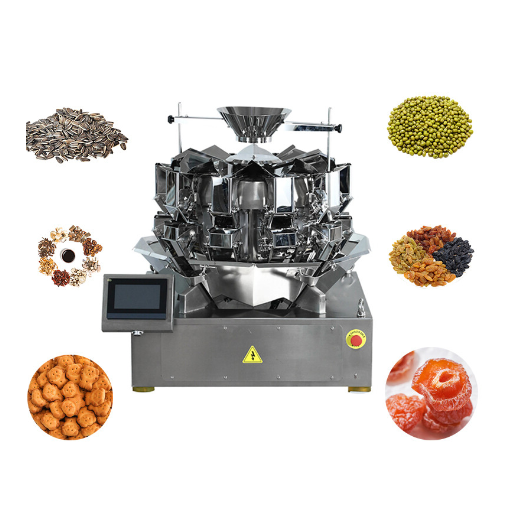
A multihead weigher is a precision instrument, but most accuracy problems start with hygiene, not electronics.
Daily: Check the zero point at the start of each shift. Clean contact parts and the top cone. Inspect hopper doors for residue and smooth movement. Look for product stuck under the load cell beam.
Weekly: Inspect load cell mounts and seals. Test emergency stops. Lubricate hopper joints with food-grade lubricant where specified.
Monthly: Verify calibration with certified test weights. Check bearings and vibratory motors for wear.
Quarterly to annually: Full calibration. High-use or regulated lines often need quarterly service. Many OEMs recommend every 6 to 12 months.
Washdown is the most common cause of drift. Warm water heats the load cell and frame, and the reading shifts. Supplier service guidance puts the effect at roughly 0.5 g per 10°C, with larger swings on big temperature changes. Dry the machine, let it return to ambient, re-zero, and only then recalibrate.
If one head reads oddly, swap hoppers to isolate the problem. One drifting load cell affects every combination that uses that head, so a single fault can look like a machine-wide accuracy problem.
Why the Weigher, Not the Bagger, Sets Your Giveaway
Most lines are sold bagger-first. The bagger is the visible machine, the one buyers demo, and the one they negotiate hardest. The weigher is quoted last, often discounted, and treated as an accessory.
That is backwards. The bagger controls speed. The weigher controls how much product leaves the plant in every pack. A 1 g improvement on a high-volume line is worth more than a 10% discount on the bagger.
Loyal integrates 10- and 14-head weighers into its VFFS-420, VFFS-520, and VFFS-720 lines and its FW flow wrappers. That matters because product state at the weigher is set upstream.
Piece size comes from the extruder or cutter. Surface oil comes from the fryer. Temperature and stickiness come from the cooler. A weigher that works in a brochure can fail in a plant if the product arrives hot, clumped, or oversized.
One vendor owning the hand-off is an advantage. It is not always the answer. If your line is stable and only the weigher is missing, a weighing specialist may be the better buy. We would rather tell you that than sell you a machine you don’t need.
Ready to match a weigher to your line? Request a line consultation and we’ll review your product, target weight, and speed.
Conclusion
A multihead weigher is the machine that turns a target weight into a repeatable pack. It does that by combining partial portions, not by filling one hopper to a line.
Five things are worth remembering. Head count follows target weight, piece size, and speed, not the brochure. Feed system follows product state, and the wrong feed will defeat the best controller. Accuracy claims need a target weight, a speed, a product, and a definition of average versus maximum.
Giveaway is a permanent cost, so the weigher deserves the same negotiation effort as the bagger. And a factory acceptance test on your product is the only proof that matters.
If you’re planning a new line or replacing an underperforming weigher, start with the product and the pack, then size the machine. Our food processing equipment team can help you scope the whole line, size the multihead weigher, and specify the case packer. If you’re starting from instant noodle production, we can map the line from mixer to pallet.
Frequently Asked Questions
What is a multihead weigher used for?
A multihead weigher portions food and non-food products into packs at a target weight. Common applications include snacks, nuts, candy, frozen vegetables, fresh meat, poultry, seafood, pasta, noodles, pet food, coffee, and hardware. It is most useful when pieces vary in weight or the product is sticky, fragile, or high value.
How does a multihead weigher work?
Product spreads across 10 to 24 feeder pans and drops into feed hoppers, then weigh hoppers. Each weigh hopper has a load cell. The controller evaluates every combination of hoppers and discharges the set closest to the target weight. Empty hoppers refill, and the cycle repeats.
How accurate is a multihead weigher?
Most production machines hold ±0.5 to 1 g on a suitable product, though the figure depends on target weight, piece size, speed, and product behavior. High-head-count machines can hold tighter tolerances. Always ask whether the number is average or maximum deviation, and test with your own product.
How many heads do I need?
A 10-head machine suits entry lines and simple dry products. A 14-head machine is the workhorse for snacks, pasta, frozen food, and pet food. A 20- or 24-head machine suits high-speed lines, multi-product blends, or twin discharge. Target weight, piece size, hopper volume, and bagger speed decide the minimum.
How much does a multihead weigher cost?
New 6 to 10 head units run about 15,000to15,000to40,000. A 10 to 14 head production machine runs about 40,000to40,000to90,000. High-speed 20 to 24 head systems run 120,000to120,000to350,000 or more.
Used 10-head units trade around 12,000to12,000to20,000. Installation, infeed, and spares add to the total.
What is the difference between a multihead and a linear weigher?
A linear weigher fills one bucket to a target weight. A multihead weigher weighs many partial portions and combines them. The multihead is faster, more accurate on irregular product, and better at handling sticky or fragile items. The linear weigher is cheaper, simpler, and adequate for uniform, free-flowing, low-value products.
Can a multihead weigher handle sticky products?
Yes, with the right feed system. Screw feed, belt feed, scraper gates, dimpled hoppers, and non-stick coatings all help. Vibratory feed alone often fails on wet or marinated product. The machine also needs a washdown-rated frame and a cleaning routine that matches the product.
How fast does a multihead weigher run?
Typical production machines run 30 to 130 weighments per minute. High-speed models reach 240 packs per minute, and specialised configurations with memory or multi-point discharge can exceed that. The bagger usually sets the real line speed, so compare weighments per minute and bags per minute before you specify.