Noodle Packing Machine Price: Real 2026 Cost Guide

A noodle packing machine typically costs between 4,000and4,000and220,000+, depending on how automated it is. Entry semi-automatic units start around 4,000to4,000to9,000, automatic vertical form-fill-seal (VFFS) machines with a multihead weigher run 15,000to15,000to50,000, and full multi-bundle turnkey lines reach $220,000 and beyond. Those are FOB China figures, so the landed price at your facility will run higher once freight, duties, and installation are added.
Key Takeaways
- A noodle packing machine costs roughly 4,000to4,000to220,000+ (FOB China, 2026), scaling with automation and line scope.
- A fully automatic VFFS with a multihead weigher, the workhorse setup for most noodle plants, lands around 15,000to15,000to50,000.
- The three biggest price levers are scope (single machine vs. complete line), stable speed, and weighing accuracy, not the sticker on the wrapper.
- The cheapest quote often hides missing weighers, conveyors, installation, and spares, which is why total cost of ownership matters more than list price.
- A payback calculation built on giveaway reduction and labor savings will usually beat the fastest machine on the spec sheet.
How Much Does a Noodle Packing Machine Cost?
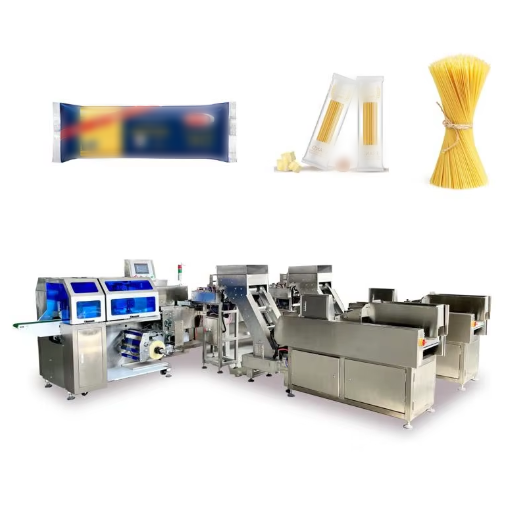
A noodle packing machine is equipment that weighs and seals noodles into bags, pouches, cups, or flow wraps at production speed. Prices split into three broad tiers, and knowing which tier you’re in is the first budgeting step.
At the entry level, a semi-automatic weighing and packing unit for dry stick noodles or short-cut pasta runs 4,000to4,000to9,000. These machines handle the weighing and sealing but need an operator to feed film and manage the output.
The mid-range, which covers most commercial noodle plants, is the automatic VFFS machine paired with a multihead weigher. Here you’ll pay roughly 15,000to15,000to50,000. A turnkey setup with a 10-head weigher, elevators, conveyors, and a servo drive sits near the top of that band.
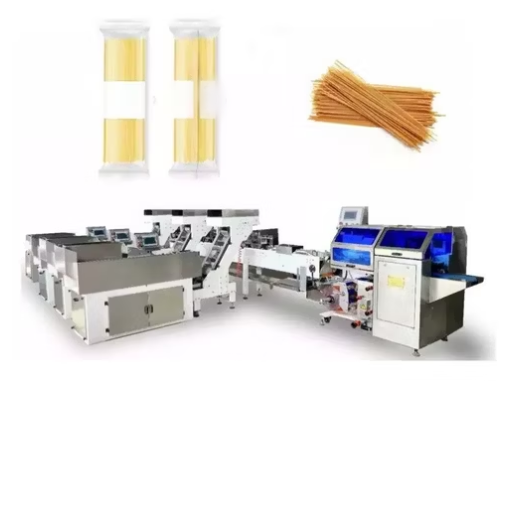
Above that sit specialty and turnkey systems. Stick-noodle and spaghetti flow-wrap lines land around 30,000to30,000to40,000, cup and bowl filling and sealing lines run 40,000to40,000to70,000, and a full multi-bundle weighing, bundling, and sealing line can pass $220,000.
These figures are FOB China, meaning the machine price at the factory gate. Freight, import duties, and on-site installation are separate line items. When you compare quotes, make sure you’re comparing the same scope, not just the bottom-line number.
The market keeps growing, so prices keep moving. The food and beverage packaging machine market reached roughly USD 24.2 billion in 2025 and is projected to grow at 5.6% annually through 2035, according to Global Market Insights.
Noodle Packing Machine Price Bands by Type
Different noodle formats need different packaging technology, and that technology drives the price. Here’s how the 2026 numbers break down by machine type.
| Machine type | Typical 2026 price (FOB China) | Speed / notes | Best for |
|---|---|---|---|
| Semi-automatic weighing & packing | 4,000to4,000to9,000 | Operator-assisted; 15 to 30 packs/min | Small batches, dry stick noodles, startups |
| Automatic VFFS + multihead weigher | 15,000to15,000to50,000 | 30 to 60 packs/min; ±1 g accuracy | Block, broken, and short-cut noodles |
| Stick-noodle / spaghetti flow-wrap | 30,000to30,000to40,000 | Multi-lane flow wrap with weighing | Stick noodles, spaghetti, pasta |
| Cup & bowl filling and sealing | 40,000to40,000to70,000 | Cup feed, lid seal, nitrogen flush | Instant cup and bowl noodles |
| Turnkey multi-bundle & secondary line | $220,000+ | Weighing, bundling, case packing | High-volume instant noodle plants |
The mid-range VFFS band is worth a closer look because it has the most internal spread. A basic automatic VFFS with a simple weigher can list under 15,000.Movetoa10−headmultiheadweigher,addaservodriveandstainlesssteelcontactparts,andthesameclassofmachineapproaches15,000.Movetoa10−headmultiheadweigher,addaservodriveandstainlesssteelcontactparts,andthesameclassofmachineapproaches50,000.
The difference isn’t cosmetic. It’s accuracy, speed stability, and how long the machine runs between stoppages.
Want a machine priced to your exact format and speed? Request a spec-based quote from our team → Tell us the noodle type, target packs per minute, and film, and we’ll return a line item breakdown rather than a single vague number.
What Affects Noodle Packing Machine Price?
If two suppliers quote wildly different prices for what looks like the same machine, this is usually why. These factors move the price in roughly this order.
- Scope of supply. A single wrapper is one purchase. A complete line that adds accumulation, multipack, case packing, and palletizing is another, and the secondary packaging can cost as much as the wrapper itself. IMA Group’s noodle packaging line overview shows how much machinery sits downstream of a single wrapper. This is the single biggest price lever.
- Stable speed, not rated speed. A machine rated at 230 packs per minute doesn’t run 230 packs per minute all shift. The stable, sustainable speed after film changes, changeovers, and minor stoppages is what you’re really buying. Buyers who pay for empty-machine speed overpay.
- Weighing accuracy. A multihead weigher with more heads and better control cuts giveaway. That accuracy has a cost, but it pays back directly in product saved.
- Product format and fragility. Block, strand, broken, and wet noodles all need different handling. Fragile products need gentler transfer, which costs more.
- Seasoning sachets. Instant noodles need powder, oil, sauce, or vegetable sachets fed in sync. More sachet types means more feeders and a higher price.
- Film and sealing. Barrier films, nitrogen flushing, and automatic film splicing all add cost, and all reduce waste or extend shelf life.
- Materials and compliance. Food-safe SUS 304 or 316 stainless steel, servo drives, and CE, FDA, ISO, and HACCP certification add cost and durability.
- FAT, installation, training, and spares. Factory acceptance testing, commissioning, and a start-up spare parts kit are real costs that low quotes sometimes leave out.
The pattern across all eight is the same: the number that matters least is the rated packs-per-minute on the spec sheet, and the numbers that matter most are the ones nobody puts in the headline.
The Real Cost: Total Cost of Ownership
The purchase price is paid once. Film, labor, downtime, and giveaway are paid every single day. That’s why two machines with identical stickers can have very different real costs.
Giveaway and Portion Accuracy
Giveaway is the product you give away with every pack. A multihead weigher running at ±3 grams of target on a 100-gram noodle pack gives away roughly 3% of your product. Tighten that to ±1 gram and you reclaim margin on every pack you ship.
Consider a dry-noodle plant running 40 packs per minute, eight hours a day. At ±3 grams, it gives away about 57 kilograms of noodles per shift. At ±1 gram, that drops to about 19 kilograms. Over a year, the difference is enough to pay for the more accurate weigher several times over.
“When we switched our line to a 10-head weigher, the giveaway number on our 80-gram packs dropped from just over 3 grams to under 1 gram. The machine cost more up front, but it earned back the difference in under a year on saved product alone.” That’s the tradeoff we see most often, and it’s why weighing accuracy deserves a line of its own in your budget.
Film Waste and Changeover Losses
Roll film almost always beats premade bags on material cost. One packaging supplier reports shrink-film lines saving the equivalent of 55to55to70 a day versus premade bags, and bundling lines saving 70to70to110 a day in materials while freeing up to eight operators. Those daily savings compound into the biggest line item in your payback math.
Labor
Automation is a labor decision as much as a throughput decision. A semi-automatic machine ties up an operator to feed film and manage output. A fully automatic line with automatic film splicing and a case packer can free five to eight people to run other stations. When you price a machine, ask how many operators per shift it actually needs, not just how fast it runs.
New vs. Used Noodle Packing Machines
The used market offers a shortcut. A used Kinghanlong noodle packing machine lists around $24,000, roughly half or less of a comparable new unit. The tradeoff is risk: no warranty, unknown wear on the seal jaws and weigher, and a supplier who may not support a machine they didn’t sell you. Used makes sense when you have in-house maintenance and a short, forgiving production run. New makes sense when uptime and supplier response time are worth more than the upfront savings.
How to Get an Accurate Noodle Packing Machine Quote
Most noodle packing machine price quotes aren’t comparable because the buyers aren’t asking for the same thing. Fix that by sending every supplier the same spec sheet.
- Noodle type and format: block, strand, broken, wet, or cup.
- Target stable packs per minute, not the wishful number.
- Pack weight and tolerance, such as 100 grams ±1 gram.
- Film type and any barrier or nitrogen requirement.
- Number and type of seasoning sachets.
- Utilities available: power, air, and floor space.
- Destination standards: CE, FDA, or local electrical requirements.
- Installation, training, and start-up spares, in or out.
When quotes come back, compare line by line. A supplier who quotes lower because they left out the weigher, the conveyors, or the installation isn’t cheaper. They’re just hiding the cost where you’ll find it later.
Budgeting for a Complete Noodle Packing Line
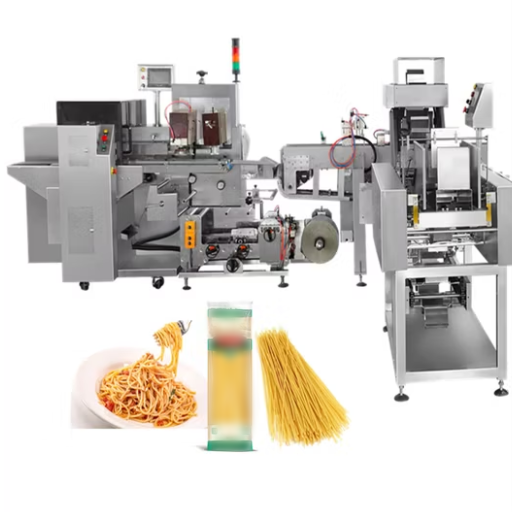
Packing is the last station on the line, but it shouldn’t be the last thing you think about. Your instant noodle production line and your pasta macaroni production line feed directly into whatever packing machine you choose. If the upstream throughput and the packing speed don’t match, you pay for the mismatch in either idle packing time or backed-up product.
That’s the strongest argument for buying packing from the same supplier as the rest of the line. When extrusion, drying, and packing come from one vendor, there’s one integration point and one team accountable for the whole flow. When they come from separate vendors, integration drift lands in your lap.
If you’re still narrowing down machine types, our automatic noodle packing machine buyer’s guide covers VFFS, flow wrap, premade pouch, and cup sealing in more depth. And if your line includes a drying or sterilization stage before packing, the industrial microwave drying step matters for moisture control, which in turn affects which film and seal you need.
FAQ
How much does a noodle packing machine cost?
A noodle packing machine costs about 4,000to4,000to9,000 for a semi-automatic unit, 15,000to15,000to50,000 for an automatic VFFS with a multihead weigher, and $220,000 or more for a complete multi-bundle turnkey line, FOB China.
What is the cheapest noodle packing machine?
The cheapest practical option is a semi-automatic weighing and packing machine at roughly 4,000to4,000to9,000. It needs an operator and suits dry stick noodles and small batches, but it won’t match the speed or accuracy of an automatic line.
Why do noodle packing machine prices vary so much?
Prices vary because of scope, speed, weighing accuracy, product format, and materials. A machine with a multihead weigher, servo drive, stainless contact parts, and secondary packaging costs several times more than a basic wrapper.
Is a semi-automatic noodle packing machine cheaper to run?
It’s cheaper to buy, but often not cheaper to run. A semi-automatic machine ties up an operator and gives away more product, so for sustained production an automatic line usually wins on total cost of ownership.
How long until a noodle packing machine pays for itself?
It depends on giveaway and labor savings, but many automatic lines pay back in one to three years. A more accurate weigher alone can recover its cost within a year on saved product at typical noodle volumes.
Conclusion
A noodle packing machine price isn’t one number. It’s a band from 4,000to4,000to220,000+, shaped by scope, speed, and weighing accuracy far more than by the sticker on the wrapper. The most important lesson is simpler: the cheapest quote is usually the most expensive machine, because the cost shows up later in giveaway, film waste, downtime, and missing parts.
Here’s what to take with you. First, budget by machine type, not by the lowest listing. Second, price the total cost of ownership, which means weighing accuracy and labor, not just throughput. Third, send every supplier the same spec sheet so quotes actually compare. And fourth, consider buying packing from the same vendor that builds your production line, so integration doesn’t become your problem.
If you’re ready to put a real number on your line, tell us your noodle type, target speed, and film, and we’ll return an itemized quote rather than a single vague figure.