
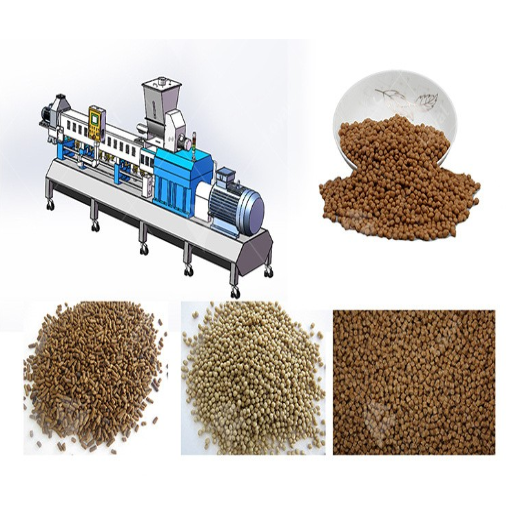
Fish Food & Aquafeed Production: Pellet Processing Equipment

The production of high-standard fish food aquafeed production line, is majorly dependent on modern state-of-the-art production equipment, such as pellet mills and turners. In aquaculture, feeds must be formulated to support the needs of several aquatic species and must be able to withstand the adverse effects of soaking. This article discusses how pelleting equipment helps in achieving these standards, including vital technologies improvement, advances, and addressing issues in food equality or packaging. Whether you are dealing with issues such as feed structure, energy limits, or the adjustment of the manufacturing in terms of capacity, this guide will help to address the complex world of today’s made and manufactured aqua feed products. Read more about the details involved in making quality pellets that animals in an aquatic environment can feed on.
Introduction to Fish Feed Production Lines
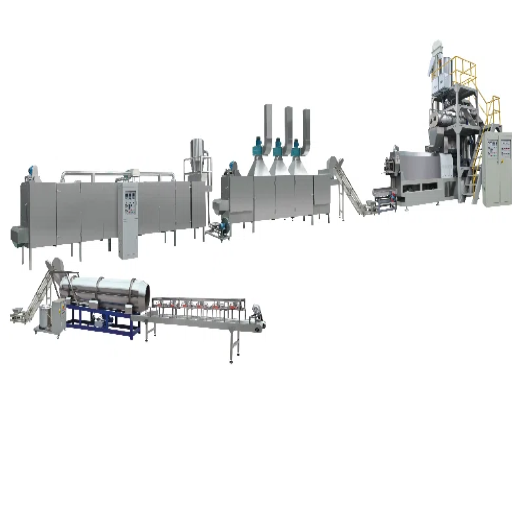
Processes of manufacturing lines of fish meal that convert raw materials into good-quality and long-lasting feed for aquaculture are logically laid out. This apparatus usually comprises essential processes such as grinding of materials, mixing of the ingredients, blending, extruding, also called pelleting, drying, cooling, and packing. For the reason of the nutrient fixation and procedures of pellet formation that promote the availability of nutrients to target marine squabs, every step is optimized. Recent turns of events in production line management are characterized by energy-saving and precision-enhancing processes of automation, minimizing the problem of waste generation.
Importance of Feed Production Lines
Feed manufacturing industries present in the agribusiness sector crucially depend on the usage of such structures over the highly productive systems, which are feed lines. It is primarily because there is a wide transition from the raw materials to a complete blend of feeds that can be consumed in their natural state. There is much improvement with the role of machine work in terms of residue or waste processing in the fish food aquafeed production line. Certain fish species polish/process their teeth, which intervening their habit and consumption patterns; this is why feed particle and rheological characteristics remain constant. More so, other very precise terminal equipments enhance economy by eliminating losses and wastages, efficient use of ingredients, freeing motives or environmental awareness to engage in modern technologies. These added features clearly demonstrate not only the advantage of being able to support elements of a period but also raise the question of whether or not they should be reinstated in response to the current and future surge in the demand for proteinated foods about ecology.
Types of Fish Feed
The technology applied for fish methods that are the most effective, for formulation purposes, rather than what determines the organization. The major ones are:
Pelleted Feed (Pellets)
These are highly textured, and they are very economical. Several fish species have their own nutritional requirements, which are balanced in the form of prevailing pelleted food. Thirdly, respective animals/heavenly drowning species are controlled in three textures or measures. In addition, swimming behavior can also be accomplished a lot easier when pellets are either floatable or sunken.
Extruded Feed (Pelleting or Extrusion Method)
This type is unlike the pelleted method in that it uses high temperature and pressure in the fish feed manufacturing process to come up with food that is easy to digest and lasts longer in water. In aquaculture, where the subject species needs to be fed with floating or has a metabolic activity that requires such a feeding regime out of nutritional composition considerations, these feeds are specially manufactured.
Powdered Feed (Flourious Feed or Marshy Food)
Powdered or crumbled food preserves are typically given to larval fish (fry) as the structure of these compounds with finer particles is easy to consume by smaller fish. The primary emphasis of this form is high protein and nutritional quantity aimed at the growth and survival of the young.
Medicated Fish Food
Medicated fish food is a form of administration of antibiotics or other veterinary drugs. It is utilized in effect only by trained aquicultural experts who seek to end diseases and improve the health of fish stocks farmed in captivity.
Wet Fish Food (Moist Feed)
Cooked raw materials and other ready food ingredients contribute to the moist feed product. The moist feed is mostly fishmeal-based, and that is incorporated with supplementary components. Less popular but an interesting option for appropriate aquaculture settings where conventional fish food aquafeed pellets may o not suffice the dosage requirement.
Fish food that is proper customizes the aquafeed production line to meet the nutritional diet, development needs, and health management of species in fish food practices for aquaculture. Diligently selecting fish food feeds not only contributes to enhanced production and sustainability, in this case, fish farming, but also helps combat relevant costs.
Understanding Fish Feed Pellet Production
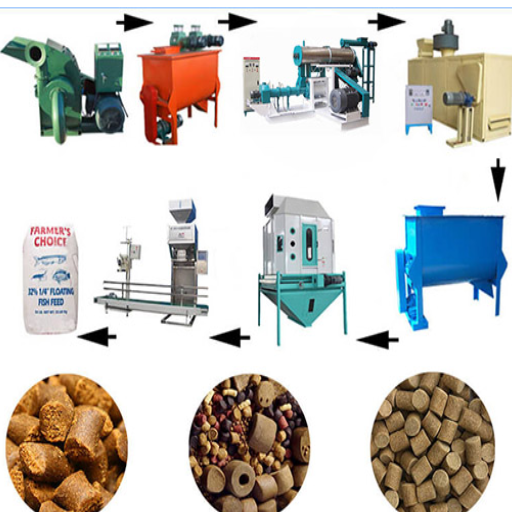
A fish food aquafeed production line contains several clearly defined phases, designed to produce aquafeeds in forms of pellets as efficiently as possible. This phase is characterized by meticulous preparation and conditioning of the various fish raw materials, after ensuring that these ingredients are nutritionally appropriate. Such ingredients are accordingly processed during the entire phase of the production line up to a fine powder to keep the level of homogeneity within the desired limits, and through this method, a mixture, which fits all purposes, is achieved.
The steam conditioning process is done on the mixture so as to improve adhesiveness, and after that, it is then submitted to compaction in a pellet mill, where the preparation is forced through a die to obtain pellets of a definite and required size and geometry. The extruded pellets are subsequently subjected to drying to remove the moisture, and for longer keeping periods, an additional cooling may be required, especially in the hot, humid areas. In the last phase, stable bags are used to pack the pellets, and they are stored under certain temperature and humidity conditions to preserve them intact for the next few months. This systematic approach of manufacture guarantees that the pellets produced will be nutritionally functional, stable in water, and proficient in terms of effective feed for fish culture.
What is Fish Feed Pellet?
Fish food contains pellets, which are specially fortified or contentious food provided for animals of aquaculture species. Fish food is normally made by combining various raw materials such as fishmeal, soybean meal, grains, vitamins, and minerals using methods such as grinding, mixing, extruding, and drying. These pellets are marketed as being easily digested and long-lasting in water. Moreover, they are believed to be ideal for the dietary requirements of a particular kind of fish or even other aquatic animals. Fish feed pellets are crucial in promoting growth, increasing feed efficacy, and reducing wastage towards sustainable aspects of fish feed.
Process of Fish Feed Pellet Making
The preparation of fish feed pellet production entails many basic stages in order to achieve acceptable quality and productivity. Firstly, it is the raw materials – fishmeal, soybean meal, maize meal, and other additives among them – that meet the dietary requirements of the intended species of fish, which are the key concern and that are therefore prepared or handled for this process. These raw materials undergo either grinding or crushing in order to reduce the particle sizes for easier mixing and solidifying of the pellets.
Then, the grounded components are taken into a mixer, which mixes them with binder agents and oils, along with water, for a compact final product. The formulation is then subjected to cooking within an extruder, which uses high temperature and pressure. It is not only the process that pelletizes the modified starch-based diet, but it is also the process that provides sterilization of the product and makes it easier for the animals to consume even larger quantities of the fish food. This kind of aquafeed production line would help in the supplementation of fish.
Once the pellets have been extruded, moisture is extracted using an energy-efficient Iversen kind of dryer in the interest of storage and transportation. The original pelletizing process ends here, as dried pellets can be coated with oils or other additional products to increase the energy content and attractiveness of the final aquafeed. The produced pellets are then cooled, packaged, and ready to sell, ensuring products are of the appropriate quality, especially for use in aquaculture. This approach in fish food aquafeed production line enables the use of the nutritional composition of feed most efficiently without causing too much pollution during fish farming.
Raw Materials for Fish Feed Pellets
Manufacturing fish food often uses several raw materials in consideration of the requirements of various fish species. Among the primary ingredients for fish food preparation, fish meal and fish oil stand as quality protein and fatty acid components that have been traditionally used in fish food production. However, proteins of plant origin, like soybean, rapeseed, and corn gluten meals, are also used as a protein source and to decrease the use of marine resources. Cereals like wheat and rice are also added inthe aquafeed production line to provide carbohydrates and for the sticking function by acting as binders.
It is necessary to fortify the diet with micronutrients, particularly vitamins and minerals, to promote the health and growth of animals. In addition, it is beneficial to incorporate amino acids such as lysine and methionine in order to support the intake of protein from plant-based sources, where the level of these amino acids is not sufficient. More environmentally friendly and economically viable sources like insect meal, algae, or single-cell protein are currently being studied to supplement or replace conventional fish meals. Every raw material is very well controlled and checked for quality, then prepared in a way that enhances its digestibility, retention, and acceptability. The formulation of these foodstuffs enables precise manipulation of the protein content to suit different types of fisheries.
Key Equipment in Fish Feed Processing
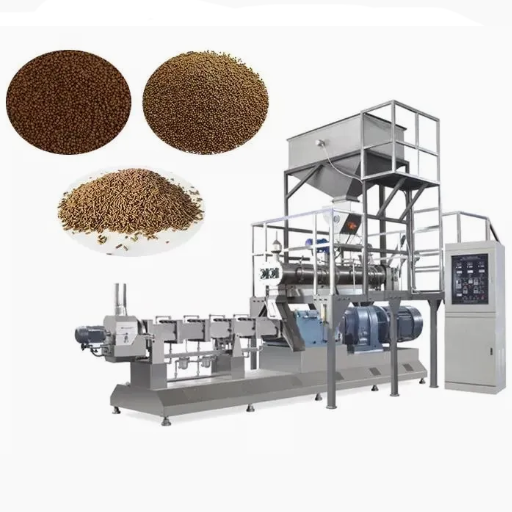
- Grinders and Pulverizers – Responsible for converting most of the raw materials into fine powder for ease in mixing and forming pellets.
- Mixers – Are used to blend all ingredients together thoroughly, so that a homogenous and even mixture is obtained.
- Pelleting Machines – The feed blend is compressed into the desired size and shape of pellets for different species based on their needs.
- Dryers – Work on the removal of moisture from pellets for longer storage and the stability of feeds.
- Coolers – Used to remove the excess heat in the dried pellets to maintain the wholesomeness of the product.
- Coating Equipment – Used to coat the feed formulations with fats, vitamins, and other nutrients to enhance the feed nutritional characteristics.
Using dry pelleting without frozen fish food led to an extremely soft aquafeed, which was difficult to pellet and was more in the line of a slurry. This is an illustration of the equipment and fish food aquafeed production line, which is rather flat in nature.
Feed Pellet Machines
The equipment that constructs the fish food aquafeed production line is a feed pellet machine. This device also makes dense lactation formulations and feed for young cattle by transforming powders into pellets. It functions by performing functions which include grinding, mixing, conditioning, and pelleting. To prepare these materials, they are finely ground so that they become easier to handle. The expectation is to incorporate different raw materials, such as vitamins and binding agents, necessary for a complete diet, into these ground particles so that they blend quite well. Following this, the blend is conditioned and steamed to become soft, hence improving its pelletization properties.
The last stage allows the hanging preconditioned mass to be formed into pellets of a particular form in accordance with the diets of various animals. In such systems, contemporary feed pellet presses have high efficiency with enhanced interchangeable dies and computer programs-assisted temperature management for the consistency of production. Depending on the configuration of such machinery, after pelletizing can occur cooling, drying, and cover-processes as to extend their shelf life and improve nutrition. It is impossible to underestimate their importance in this type of activity, as it allows for mass production of qualitative feed with minimal loss and accuracy within the required range of measurements.
Extruders in Fish Feed Production
Extruders are vital machinery in the manufacturing of fish food. They provide caregivers for the applicator, achieving quality feed with processed ingredients. Its operation involves forcing raw ingredients into a cylinder with elevated temperature and pressure before extruding them through the die for shaping the feeds. Television extrusions are ideal as they make it possible to manage factors of the environment, such as temperature, moisture content, and density, which in turn determine how floats, crunches, and digests feed.
One of the main benefits of extrusion cooking in aquaculture is nutrient re-enrichment retention. The destruction of some proteins in the body greatly enhances the utilization of other nutrients. In addition, because the operating parameters can be changed, it is possible to produce floating, slow-sinking, and sinking pellets that will correspond to the feeding habits of individual fish. Extrusion further permits preparation of a feed that is strong and dry, and which is less likely to break down in the water, thus ensuring better water quality management in fish farming.
Finally, the extrusion equipment permits incorporation of a large number of different components concerning the raw materials used in the fish food aquafeed production line, such as substitutions of the fish meals and proteins derived from plants. Such capability, combined with the development of new extruder designs, has made them crucial in the aquafeed sector in meeting the economic and ecological needs of aquaculture.
Feed Machinery Overview
The term feed machinery refers to a broad category of devices with specialized functions, which are used to transform raw materials into finished feed products suitable for aquaculture, livestock, and poultry use. These key functional units include size reduction equipment like grinders or hammer mills, mixing equipment for even distribution of ingredients, and pelleters or extruders for making the feed into pellets or even pastes. It is imperative to understand the function of every piece of equipment as the machine is the core process of fish food aquafeed production.
Grinders grind up the raw materials to smaller, more workable sizes. This ensures the feed particles are uniform and easy to break down and metabolize for the nutrients. Mixers then create a homogenous blend of these ground materials, including amounts of vitamins and minerals in the right proportion. Finally, pellet mills or extruders apply mechanisms which include heat, pressure, and shaping for feed ranging primarily in texture, stability, and durability needed for specific species and or conditions of farming.
Most equipment in use today is sophisticated; therefore, many processes happen automatically. This includes the parameters like consumption of energy, production rate, and product quality being tracked in the control systems as well. The machines enable maximum waste minimization, increased production, and increased ecological trends and safety of the fish food aquafeed production line.
Feed Manufacturing Techniques

To produce any feed, a certain series of steps is necessary for effective results, including the production of quality, balanced feeds. Examples of such steps are grinding, mixing, conditioning, pelleting, and cooling.
1. Grinding
This process aims at reducing various materials into smaller, equally sized particles that can be easily digested and mixed. This step is usually done using a hammer mill or a roller mill.
2. Mixing
It involves putting together all the ingredients to ensure that the nutrition is uniformly distributed. This is a very important process, and accuracy in mixing must be observed in order to guarantee feed quality.
3. Conditioning
In this process, steam or heat is introduced into the mix for the purposes of binding, thereby making it ready for pelleting.
4. Pelleting
In this process, feed is extruded into pellets of the same size as one another and, more importantly, denser to lower the waste and increase the feed intake efficiency by animals.
5. Cooling
When the pellets are subjected to the cooling process, they harden in order to eliminate any formation of molds in them and to facilitate proper storage and transportation.
Each of these stages, in turn, leads to the fabrication of feed products that are in line with the nutritional requirements for different classes of farm animals, whether they are livestock, poultry, or aquaculture species, but only after optimizing the materials used.
Extrusion Process in Feed Production
The extrusion technology in feed manufacturing includes passing a mixture of all the ingredients through a barrel with a turning screw under very high pressure and temperature. The process of extrusion is popular in the production of aquatic, pet, and other specialized animal feeds because it enhances the digestibility and nutritional content of the produced feeds.
Aside from the fact that feed extruder manufacturing is aimed at a very stable or waterproof feed, it also allows technology to be specific in its formulation, which is why the method is efficient for good-quality feed processing. This process is very effective and industrially satisfying the hard–won challenges in the feed industry.
Fish Food Aquafeed Production Line – This fish food aquafeed production line serves the functional application of allowing the feed producer the ability to respond to the demand of bulk fish feed in the market, boosting the efficiency of the production considerably.
Processing Machines Overview
The current generation of processing equipment used in the production of animal feeds aims to increase effectiveness, accuracy, and assess the potential for upscaling the process within the required and imposed norms. Different pieces of equipment, such as extruders, pelletizers, and hammer mills, underline the importance of each urinary processing stage. Extruders usually shape the feed in precise conditions, which maintains the feed at the right moisture content and preserves nutrients accurately. Whereas a pellet mill presses the mixture to produce homogeneous pellets tailored according to the species density or applications in the market. While hammer mills mainly perform comminution activity, they allow ingredients to be milled to the correct size for the mixture.
Aside from the fundamental apparatus mentioned in the previous paragraphs, there are relevant devices such as blending tanks, drying units, and refrigeration equipment that aid in streamlining the manufacturing of feed. Blending equipment prevents spot-feeding of feed with additives, whereas drying and cooling equipment modulate the water activity as per the requirements and increase the strength of pellets. Such automation, on top of quality control abilities, endows these bodies with the ability to produce all day long with enhanced efficiency and negligible wastage. The end-of-the-line feed processing equipment still supplies a better quality of feed that can satisfy the wide range of animal nutritional needs without being a burden on cost.
Innovations in Feed Manufacturing
New trends in making feeds focus on recent years have been mechanisms of sustainability and digitalization of manufacturing. In particular, precise feed formulation processes that employ automation and data analytics have allowed many feed producers to create feeds for various species and for different stages of growth that are not only available but also result in less wastage. Enzymes and probiotics, which are used as additives, are increasingly common in the animal feed industry to enhance digestibility, improve health, and decrease emissions and feed conversion ratios.
Another positive development in extrusion technology is significant progress, which enables uniform cooking, shaping, and retention of nutrition of pellets, which is the enhancement of the pellet quality. Energy-saving equipment, including variable-speed drives and heat recovery systems allow efficient use of resources and reduces the fixed costs of production. There are real-time control systems that use these IoT-based sensors to convey certain parameters like moisture content and conformity of ingredients continuously, therefore ensuring good quality control. Tied together, these advances help production and distribution processes to become more efficient and effective while also costing less and adapting better to changing and increasing consciousness towards the demand for higher feed performances and sustainable feed products.
Fish Feed Production Line Manufacturers
Machinery involved in manufacturing and processing fish food production is provided by companies that manufacture fish food aquafeed production lines. Top fish feed manufacturing equipment producing companies worldwide can be named Bühler Group, Andritz, and Clextral, which provide long-lasting products with various capacities and feed applications. Such organizations invest resources in research and development in order to satisfy customer requirements regarding equipment that consumes minimal energy. Experience, customer support services, and the extent to which the manufacturer can customize the equipment according to the needs of the order must be taken into account when choosing a manufacturer.
Top Manufacturers in the Industry
When the top manufacturers within the feed and food processing industry are considered, it is apparent that the market is dominated by Bühler Group, Andritz, and Clextral. These organizations’ prominence is embedded on the basis of their focus on choices for advanced technology, providing a high level of engineering, and emphasizing the aspect of sustainability.
Bühler Group
Being beleaguered by many affluent clients, Bühler is an export-oriented company that manufactures sophisticated equipment and systems applicable to, among others, livestock feed or food processing. The machines are designed keeping in mind the aim of energy conservation, detailed engineering, and compliance with modern and new-age industry norms.
Andritz
The company specializes in innovative designs, processes, and systems for feed and aquafeed production as well as biogas utilization. Among others, their technology consists of robust extrusion systems and high-throughput pelletising mills, all meant to improve efficiency while lowering the need for maintenance.
Clextral
A global front-runner in the twin-screw extrusion industry, Clextral is famous for providing customized products suitable for the production of foods and feeds. Their unique feature is their emphasis on research and development and provision for customizing full and flexible systems to suit the fabricants’ needs.
All these producers offer high customer service, focus on QA systems, and manufacture flexible products that are adapted to clients’ operations. It is important to give a comprehensive examination of these providers’ products to find suitable ones based on the needs of the projects.
Evaluating Quality and Efficiency
From the point of view of quality and effectiveness, I seek out producers that are committed to research and development; this means that they care about improving their systems and maintaining their functionality. I assess their capability to provide such solutions that can be adjusted to certain production processes, as well as their history of quality control and effective after-sales support services. This due diligence allows me to select a partner that meets these requirements with precision.
Future Trends in Fish Feed Production
The fish feed sector has seen steady growth due to the quest for more sustainable and efficient practices in aquaculture. Some of the three key developments that are driving the growth of fish feed include:
- Proteins of Alternative Sources: Since traditional fish meal and fish oils have negative implications for the environment, there have been several alternatives that have been put into use. These specifically include meals obtained from insects, algal meals, and even plant-based proteins, which have as a goal the relief of marine life while ensuring nutrition is not compromised.
- Correct and Effective Nutrition: Functional Feeds: There have been breakthroughs in biotechnology, making it possible to formulate precision among various fish species. The problem is that while it is good to increase the growth rate of cultured animals, the question is how to make them robust to diseases or stress, and not only growing them, but also maintaining them in very good fish food conditions.
- Circular Economy Practices: There is considerable pressure from sustainability to advance circular economy ideas, among others, utilizing agricultural waste and other byproducts from the food processing industry in the making of fish food. Moreover, decarbonization practices are supported, and the processors, apart from that, struggle to lower their production’s carbon emissions. Advanced technologies ensure the ability for consumers to maintain compliance with the strict regulations and supply chain requirements.
Aquafeed production line: What is an aquafeed production line? An aquafeed production line is a production line used in feed manufacturing to produce fish or other aquatic animal feeds. This involves various processes such as raw material crushing, mixing, and finally pelleting, extrusion, or crumbling.
With these technologies, the level of performance in the aquaculture fish food industry is expected to significantly increase, achieving one of the toughest challenges the aquafeed production line ever witnessed.
Conclusion
The fish food aquafeed production line represents a sophisticated integration of advanced machinery, precise formulation techniques, and sustainable practices. From raw material selection through pelleting, extrusion, and packaging, each stage plays a crucial role in producing high-quality, nutritionally balanced feed for aquaculture species. As the industry continues to evolve with innovations in alternative proteins, precision nutrition, and circular economy practices, manufacturers who invest in cutting-edge production lines and remain committed to quality control will be best positioned to meet the growing global demand for sustainable aquafeed products. The future of fish feed production promises enhanced efficiency, reduced environmental impact, and superior nutritional outcomes for aquaculture operations worldwide.
Reference Sources
Recirculating Aquaculture Tank Production Systems
Provides insights into aquaponics systems, including fish feed production and management.
Fly Frass Forms Fabulous Fish Food
Explores alternative fish feed ingredients, such as black soldier fly larvae waste.
Discusses the role of aquaculture in seafood supply and the importance of sustainable feed production.
Frequently Asked Questions (FAQs)
What actually is a fish food aquafeed production line is and how and why should floating fish food be extruded?
A fish food aquafeed production line can also be defined as a unit used for making any kind of fish feed which includes basic fish food which would be converted into fine sizes as pellets in the envisioning sense of allowing grinding of raw materials, incorporation and mixing of the additive, compression also known as extrusion, preparing into desired dimensions, baking and icing among others. Extrusion process operated by a fish feed extruding or a feed pellet making machine involves moistening and cooking of the dry mash and returning it into a shredded form, and then, as mills do, extruding it in the form of dough and finished pellets. Fish food machine that produces floating fish pellets works with a particular formula and shape of the die that allow low density birds to be extruded, determined by extrusion conditions, starch, and other parameters, pre, during, and post conditioning of the mash, as well as drying.
Where or how is a fish feed pellet machine integrated into fish feed production, with particular reference to the process of making fish feed?
An essential component of both the systematic aquafeed production, such as fish food aquafeed production line, is the fish feed pelletizer (extruder, pellet mill, or pellet press). Before pelleting, the mash is prepared in the proper order: fine milling of raw materials follows massive amounts of ingredients, which are physically incorporated into the mixing area to the required consistency. The mixing process facilitates a homogeneous distribution of the varied ingredients of the formulated feed, allowing easy and efficient usage of ingredients and enhancement of the final quality of the aquatic feed pellet, such as pellets over aquatic feed for fish feed industry, composing ornamental fish, noodles, ruminant and broiler diets, and commercial shrimps.
What does the structure of fish feed formulated consist of constituents pertaining to fish feeds and milled and incorporated in a feed plant, how?
Fish diets, or fish food, have different components, with the commonly used components being proteins (fish meal, soybean meal), lipids (fish oil), carbohydrates (grains, wheat), and binders, vitamins, and minerals, i.e., nutrimix. Inside a feed processing factory, the essential components are first stored, then fine-ground using a grinder or milling machine, to be added into the mixture, as per the given formulas by weight, mixed, and then cooked by extruding or pelleting. The sample feed materials and the secondary grinder (if applicable) are parts that accomplish the formation of particles that appropriately fit within the extrusion or pellet feed manufacturing.
Does a manufacturer that produces lines in China have the capacity to provide the requirements of a specific animal feed production line or offer specific solutions for producing feeds?
That’s right. Customized production line solutions and various machine production capabilities for aquatic feed production can be easily requested from the production line manufacturers in China. They can provide all the equipment required for making fish food, including the feed grinders, mixers, extruders, dry and coated units related to the process, according to the production capacity. In addition to the sale of equipment, most providers also ensure the installation of the equipment, commissioning of the equipment, as well as after-sales services required for the purpose of feed production solutions.
Which types of fish would a person ordinarily use floating fish feed besides sinking fish feed? At what point do fish prefer to use sinking fish feed?
The selection of species is based on their eating patterns. Surface feeders and decorative fish need floating fish feed so that it is easy to monitor their eating and to cut down on wastage of food. Benthos and some crustacean formulations make use of sinking feed for substrate feeding. Pellets can be either floating or sinking, which is dictated by the content of the pellets, their density, and the way they are extruded. The types of fish feed and the range of fish feed (floating, slow-sinking, sinking) are made by the fish feed manufacturers so that only the specific species and the aquaculture system are used.
What kind of equipments are used in the fish food aquafeed production line -is mixer, conveyor, extruder, dryer, canon blister machine, etc.- and explain the principle of drying.
There is a broad range of machinery for the production of fish foods, with aquafeed production lines comprising a mill or grinder, mixer, pellet mill (extruder), and cooling, coating, and packing machinery. The process of drying consists of the removal of the moisture from the pellets to an extent safe during storage, together with an avoidance measure of spoilage of the pellets and maintain the pelleting process integrity with the help of post-conveyor dryers and rotary dryers. Prior to oil or vitamins being added to pellets, especially for a complete fish feed or a complete shelf feed, cooling units are added to the pellets, and these stabilize the heat and moisture homogeneity of the pellets.
Do you have in stock any feed lines capable of manufacturing aquacultural diet pellets as well as pet kibble?
Most of the feed lines available in the market possess such multifunctionality, and they are used to produce aquatic diet, pet food, and other pelleted feed production by employing appropriate diets and dies as well as machines. The powder or beads in the production line also vary depending on the type of feed manufactured, utilization of the produced compound feed, its purpose, and the end consumer, e.g., dogs, cats, eels, fish, or shrimps.
What should be the maintenance procedure, and in case of the production of a fish feed machine, what do you do in terms of quality control to ensure effectiveness?
The productivity of fish feed machinery is assured by maintenance. Such maintenance includes lubrication, tightening of screws on the feed pellet machine and feed extruder, and replacement of dies and screens promptly. Controls incorporate the testing of raw materials, observing the mixing homogeneity, the hardness of the pellets, the drying moisture, nutritional analysis, and production capacity. The feed for aquaculture remains safe and in good condition, and the feed plant becomes more productive under such procedures.