
Food Processing Equipment Maintenance: A Complete Guide for Food Manufacturers

Food processing equipment maintenance is the planned and reactive care of machinery used to produce, handle, and package food. A strong program combines preventive inspections, predictive condition monitoring, corrective repairs, and scheduled overhauls to keep equipment safe, compliant, and productive. Unplanned downtime in food and beverage manufacturing can cost 15,000–15,000–45,000 per hour, and enterprise facilities often see total hourly impacts climb to 600,000–600,000–1.4 million when spoilage, waste, and retailer penalties are included.
If you run a food plant, you already know that a single breakdown can derail an entire production day. You also know that maintenance in food processing is not just about uptime. It is about food safety, regulatory compliance, and protecting the reputation you have spent years building.
In this guide, you will learn how to build a practical maintenance program tailored to food processing equipment. We will cover the four core maintenance strategies, how to schedule work around production and sanitation windows, how to integrate HACCP and FSMA requirements, and which predictive technologies deliver the best ROI. You will also get a downloadable-style checklist and real-world examples from extrusion, frying, drying, and packaging lines.
Key Takeaways
- Preventive maintenance programs can reduce unplanned failures by 70–85% and deliver 300–500% ROI within 12–18 months.
- Food processing equipment maintenance must balance uptime with food safety, linking every task to HACCP plans and critical control points (CCPs).
- The most effective plants combine preventive schedules with predictive technologies like vibration analysis, thermal imaging, and CMMS-driven condition monitoring.
- Equipment-specific care matters: twin-screw extruders, continuous fryers, industrial microwave dryers, and packaging lines each have distinct failure modes and service needs.
- Modular, hygienic equipment design from the start reduces lifetime maintenance burden and simplifies sanitation after repairs.
What Is Food Processing Equipment Maintenance?
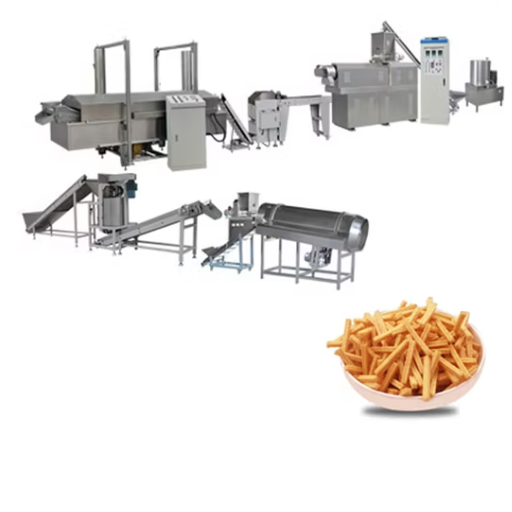
Food processing equipment maintenance covers every activity that keeps machinery reliable, sanitary, and compliant across a production line. It includes extruders, mixers, conveyors, continuous fryers, industrial microwave dryers, metal detectors, refrigeration units, and packaging machines.
The goal is simple: prevent contamination, avoid unplanned downtime, and extend asset life. The method is more nuanced. Maintenance teams must coordinate with production schedules, sanitation windows, quality assurance, and regulatory audits. A well-run program treats maintenance as a food safety function, not just a repair function.
This matters because food plants operate in harsh environments. High-pressure washdowns, temperature swings, caustic cleaners, and continuous production cycles wear on bearings, seals, belts, and electrical components faster than in many other industries. Maintenance leaders who understand these conditions can spot problems before they become recalls or shutdowns.
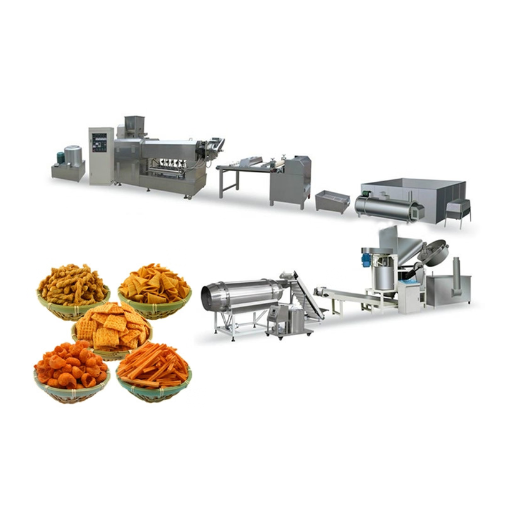
Want to see how production-line design affects lifetime maintenance? Explore our complete food production line solutions to learn how modular, hygienic equipment layouts simplify service.
Why Maintenance Is Critical in Food Processing
Maintenance in food processing sits at the intersection of safety, compliance, and profitability. When equipment fails, the cost is rarely limited to a repair bill.
Consider Maria, a plant manager at a mid-sized pet food co-manufacturer in Southeast Asia. Her twin-screw extruder developed a bearing fault on a Tuesday morning. The line stopped for six hours. By the time technicians repaired the gearbox, reassembled the line, and completed a full sanitation cycle, the plant had lost one full production day. The direct cost was $28,000. The hidden cost was a delayed shipment to a major retail customer and overtime pay for the sanitation crew.
Stories like Maria’s are common. Equipment failures account for 38–52% of unplanned downtime in manufacturing. In food plants, the ripple effects include product waste, missed deliveries, regulatory scrutiny, and in the worst cases, public recalls.
Beyond cost, maintenance protects food safety. Worn seals can harbor bacteria. Improperly calibrated metal detectors can let foreign contaminants pass. Failing refrigeration can push temperature-sensitive products out of specification. Every maintenance task on food-contact or critical-control equipment is also a food safety task.
The Four Core Maintenance Strategies
Most food plants use a blend of four maintenance strategies. Each has a place, but the balance determines your cost structure and risk profile.
Preventive Maintenance
Preventive maintenance is scheduled work performed at set intervals. Examples include lubricating bearings with food-grade grease, inspecting conveyor belts, replacing seals before failure, and verifying metal detector calibration. It is the foundation of most food plant programs because it is predictable and audit-friendly.
The drawback is that preventive work can be overdone. Replacing a component simply because a calendar says so may waste money if the part still has useful life. The best preventive programs combine time-based tasks with condition-based triggers.
Predictive Maintenance
Predictive maintenance uses sensors and data to forecast failures before they happen. Vibration analysis detects bearing wear. Thermal imaging spots overheating electrical connections. Oil analysis reveals internal gearbox degradation. Motor current analysis flags mechanical loading issues.
Predictive maintenance is the fastest-growing segment of the food processing equipment maintenance market. It reduces unnecessary interventions and extends component life. The upfront cost is higher, but the ROI is strong because it targets the most expensive failures.
Corrective Maintenance
Corrective maintenance is the repair work done after a failure. It is sometimes unavoidable, but reliance on corrective maintenance is expensive in food plants. Every breakdown typically requires a full stop, repair, re-sanitization, and restart. The true cost is usually 3–10 times higher than the repair invoice alone.
Major Overhaul Maintenance
Major overhauls happen during planned shutdowns. Teams strip down critical equipment, inspect structural components, replace worn parts, refresh coatings, and validate performance. These projects require careful planning but prevent catastrophic mid-production failures.
| Strategy | Trigger | Best For | Cost Profile |
|---|---|---|---|
| Preventive | Time or usage intervals | High-wear components, audit-critical tasks | Moderate, predictable |
| Predictive | Condition data | Critical assets with sensors, high failure cost | Higher upfront, high ROI |
| Corrective | Failure event | Low-impact, non-critical items | Low routine, high event cost |
| Overhaul | Planned shutdown | Long-life assets, capital equipment | High, but scheduled |
How to Build a Practical Maintenance Schedule
A good schedule balances equipment needs, production demands, and food safety requirements. Most plants organize tasks by frequency.
Daily and Per-Shift Checks
Operators should complete visual inspections before startup. Look for leaks, unusual noise, vibration, or product buildup. Verify that CIP systems ran correctly. Check that safety devices and emergency stops function. Confirm metal detector sensitivity if it supports a critical control point.
Weekly Inspections
Weekly tasks include checking conveyor belt tension and tracking, inspecting seals and gaskets for leaks, reviewing motor temperatures, cleaning filters, and checking drain lines. These inspections catch problems before they escalate into failures.
Monthly and Quarterly Service
Monthly work tends to be deeper. Calibrate temperature, pressure, and flow instruments. Relubricate bearings with verified NSF H1 food-grade lubricants. Inspect welds and food-contact surfaces for pitting or corrosion. Check refrigeration pressures and compressor performance.
Annual Overhauls and Compliance Audits
Annual work includes complete teardowns of critical equipment, replacement of wear parts, electrical thermography, control system backups, and full compliance audits. Schedule these during planned holiday shutdowns or seasonal lows.
The most important scheduling rule is simple: align maintenance with sanitation windows. Every minute a line is open for maintenance is a minute it is not producing. Plan the work so technicians can complete repairs, sanitation, and validation in one coordinated window.
Compliance, HACCP, and Food Safety Integration
Maintenance in food processing is governed by more than engineering judgment. It is governed by food safety law.
Under FDA 21 CFR Part 117 and the Food Safety Modernization Act (FSMA), food facilities must maintain equipment in a manner that prevents contamination. Maintenance records for critical control points must be complete, signed, and retrievable during audits.
HACCP principles require facilities to identify hazards and establish critical limits. Any equipment that supports a CCP, such as pasteurizers, metal detectors, or refrigeration systems, must be maintained with extra rigor. Over 60% of food manufacturers reportedly cannot produce complete preventive maintenance records for CCP equipment on demand during audits.
Food-Grade Materials and Sanitary Procedures
Use only NSF H1 food-grade lubricants in areas with product-contact risk. Use food-grade seals, gaskets, and adhesives. After any maintenance work on food-contact surfaces, the equipment must be re-cleaned, sanitized, and sometimes re-validated before production resumes.
Documentation and Record Retention
Good records are non-negotiable. Log every task, who performed it, when, and what the results were. Retain records according to regulatory requirements, typically two years or more for preventive control documentation. Digital CMMS systems make this far easier than paper logs.
Predictive Maintenance Technologies That Pay Off
Predictive maintenance is no longer reserved for the largest enterprises. Sensor costs have dropped, and cloud-based CMMS platforms have made condition monitoring accessible to mid-market plants.
Vibration Analysis
Vibration sensors detect imbalances, misalignment, and bearing wear in rotating equipment. They work well on mixers, pumps, extruder gearboxes, and conveyor drive motors. A snack manufacturer in China installed vibration sensors on its twin-screw extruder main drive and detected a bearing fault two weeks before failure. The planned repair took four hours during a scheduled changeover. An unplanned failure would have cost an estimated $34,000.
Thermal Imaging
Infrared cameras identify hot spots in electrical panels, motor connections, and bearings. Thermal imaging is fast, non-contact, and ideal for high-moisture environments where electrical faults are common.
Oil and Motor Current Analysis
Oil analysis reveals contamination, wear metals, and additive degradation in gearboxes and hydraulics. Motor current analysis detects mechanical loading changes that signal misalignment or bearing problems.
Ultrasonic Testing
Ultrasonic sensors detect leaks in compressed air systems, steam traps, and vacuum lines. They also monitor bearing condition at frequencies outside the range of vibration sensors.
CMMS and IoT Integration
A modern CMMS connects work orders, asset history, spare parts inventory, and sensor data in one system. It automates scheduling, tracks KPIs like mean time between failures (MTBF) and mean time to repair (MTTR), and creates audit-ready documentation.
Ready to reduce unplanned downtime on your production line? Request a custom maintenance and equipment consultation with our engineering team.
Common Failure Modes and Equipment-Specific Care
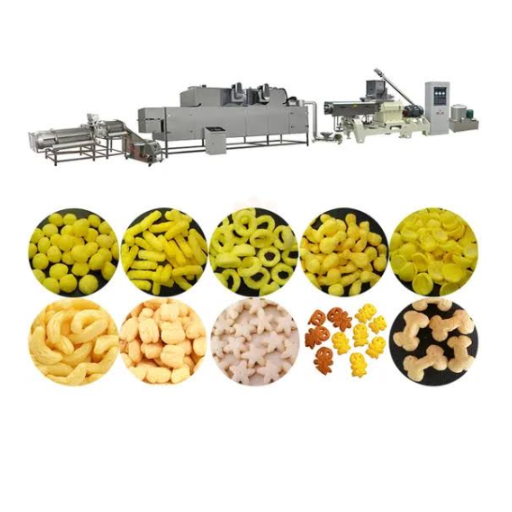
Different equipment faces different risks. Understanding these patterns helps maintenance teams prioritize resources.
Twin-Screw Extruders
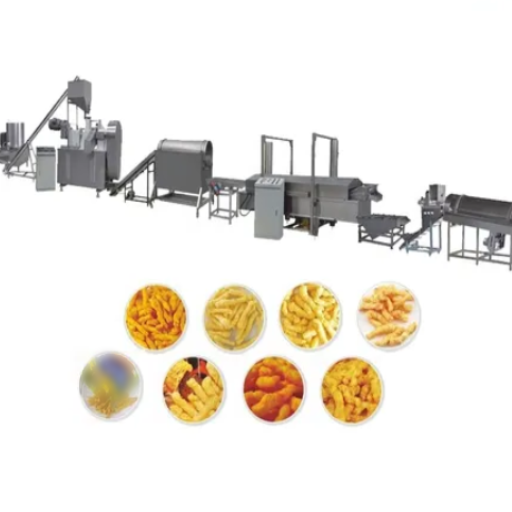
Extruders suffer from screw and barrel wear, gearbox overload, and die plate blockage. Monitor motor current, product temperature profile, and die pressure. Schedule barrel inspections based on throughput, not just calendar time. Our food extrusion solutions are designed with modular barrels and accessible gearboxes to simplify these inspections.
Continuous Fryers
Fryers require careful oil management. Monitor oil turnover rate, filtration performance, and sediment buildup. Calibrate temperature controls and oil level sensors weekly. Inspect heating elements and exhaust systems for carbon buildup. Poor oil management affects product quality before it becomes a safety issue.
Industrial Microwave Dryers and Sterilizers
Microwave systems need consistent calibration of power output, belt speed, and temperature sensors. Waveguide cleanliness affects energy efficiency. Door seals and interlocks must be inspected regularly for safety and leakage compliance. Learn more about industrial microwave drying and sterilization systems.
Mixers, Conveyors, and Packaging Lines
Mixers need seal and agitator inspections. Conveyors need belt tracking, chain tension, and sprocket wear checks. Packaging lines need seal jaw calibration, film tension checks, and date-code verification.
Corrosion on Stainless Steel
Stainless steel is corrosion resistant, not corrosion proof. Chloride-based sanitizers, salt-heavy products, and poor rinse practices cause pitting and crevice corrosion. Use 316 or 316L stainless steel in aggressive environments, passivate surfaces periodically, and follow our stainless steel food processing equipment guide for material selection and care.
A frozen vegetable processor in North America learned this the hard way. One packaging line was losing 847perminuteduringdowntime,totalingover847perminuteduringdowntime,totalingover1.1 million annually. After implementing a CMMS-linked preventive maintenance program and a critical spare parts strategy, the plant cut unplanned stops by more than half.
Downtime Cost, ROI, and Your Maintenance Checklist
Building the business case for maintenance starts with understanding what downtime actually costs.
Calculating Hourly Downtime Cost
Hourly downtime cost includes lost production, idle labor, wasted materials, expedited shipping, and customer penalties. A simple formula is:
Hourly Downtime Cost = Lost Revenue + Idle Labor + Wasted Materials + Penalties / Downtime Hours
For a line producing 5,000worthofproductperhourwith5,000worthofproductperhourwith1,200 in idle labor and 800inwastedmaterials,onehourofdowntimecostsatleast800inwastedmaterials,onehourofdowntimecostsatleast7,000. In reality, the number is usually higher.
Preventive Maintenance ROI
The global food processing equipment repair and maintenance market was valued at approximately 8.5billionin2024andisprojectedtoreach8.5billionin2024andisprojectedtoreach13.0 billion by 2035, growing at a 3.94% CAGR. That growth reflects a simple truth: maintenance pays. Preventive maintenance programs can reduce unplanned failures by 70–85% and deliver 300–500% ROI within 12–18 months.
Critical Spare Parts Inventory
Stock the parts that fail most often and take longest to source. Common critical spares include bearings, seals, gaskets, belts, chains, heater elements, and control boards. Track minimum stock levels and reorder points in your CMMS.
Maintenance Checklist
Use this framework to build your own equipment-specific checklist.
Daily / Per-Shift
- Complete pre-operational visual inspection
- Verify CIP cycle completion and drainage
- Check temperature, pressure, and flow readings
- Test safety devices and emergency stops
- Verify metal detector sensitivity if CCP-related
Weekly
- Inspect conveyor belts, chains, and sprockets
- Check seals and gaskets for leaks
- Review motor and bearing temperatures
- Clean filters and strainers
- Inspect drain and waste systems
Monthly / Quarterly
- Calibrate instruments and CCP devices
- Relubricate bearings with NSF H1 food-grade lubricant
- Inspect welds and food-contact surfaces for corrosion
- Perform vibration or thermal scans on critical assets
- Review CMMS reports for repeated failures
Annual / Overhaul
- Complete major equipment teardowns
- Replace wear parts and refresh coatings
- Conduct electrical thermography survey
- Back up and validate control systems
- Perform full regulatory and HACCP compliance audit
Frequently Asked Questions
What is the purpose of maintenance in food processing equipment?
Maintenance ensures product safety, prevents contamination, maintains regulatory compliance, and keeps production running without unplanned interruptions. In food manufacturing, equipment failures can trigger recalls, regulatory action, or public health issues, so the stakes go beyond uptime alone.
What are the main types of maintenance used in food processing plants?
The four core types are preventive maintenance, predictive maintenance, corrective maintenance, and major overhaul maintenance. Leading plants combine preventive schedules with predictive condition monitoring to minimize corrective repairs.
How often should food processing equipment be serviced?
Service frequency depends on equipment type, production volume, and operating environment. Daily operator checks, weekly inspections, monthly service, quarterly condition monitoring, and annual overhauls are common frameworks.
How does HACCP impact maintenance scheduling?
Maintenance on HACCP-critical equipment gets the highest priority and strictest documentation. After work on food-contact surfaces or temperature-critical systems, equipment must be re-cleaned, sanitized, and validated before production resumes.
What food-grade lubricants should be used in food processing equipment?
Use NSF H1-registered lubricants in areas with incidental food-contact risk. Verify lubricant inventory regularly to avoid accidental substitution with non-food-grade products.
What is TPM in food manufacturing?
Total Productive Maintenance (TPM) is a proactive approach in which operators participate in daily equipment care. The goals are zero breakdowns, zero defects, and zero accidents, with food safety built into every routine task.
Conclusion
Food processing equipment maintenance is not a cost center. It is a competitive advantage. Plants that combine preventive schedules, predictive technologies, strict compliance integration, and equipment-specific expertise run more reliably, produce safer food, and protect their margins.
Start with a clear schedule. Link every critical task to your HACCP plan. Train operators to spot early warning signs. Invest in the sensors and CMMS tools that turn data into action. And choose equipment designed for easy access, hygienic construction, and long service life from the beginning.
If you are planning a new production line or upgrading existing equipment, maintenance should be part of the conversation from day one. Contact our engineering team to discuss how our customizable food production line solutions can reduce your lifetime maintenance burden and keep your plant running at peak performance.