
Food Production Automation Benefits: A Complete ROI Guide for Manufacturers

When Maria Chen’s pasta facility shot to host a 30% production staff turnover in six months, she found herself at a crossroad: either disregard turning away orders or find another way out. Her competitors in Southeast Asia were also feeling their way through similar staff shortages and had seen wages rise by 18% year-over-year. Not about to search for the illusory skillset or extra labor, Maria weighed all her options tentatively and decided to take a leap that changed the course of the company: she decided to invest in a sophisticated automated system producing pasta line under the concept of reaping benefit of food production automation.
After 14 months, the facility has witnessed approximately 40% increased output with almost half the workforce. Labor-related costs were down by $85,000 monthly. Defect rates receded from 3.2% to the more satisfying 0.4%. And finally, when a surprise audit was instigated on her company last November, her automated documentation system was up and running, generating compliance reports in just minutes rather than days.
Maria’s story isn’t unique. Global food production automation benefits shifted from competitive advantages to survival necessities. Understanding these benefits helps manufacturers make strategic investment decisions. The food automation market is surging from 8.07 billion in 2025 to a projected 21.22 billion by 2035. Manufacturers who understand and act on these benefits will capture market share; those delaying risk to obsolescence.
Highlights the subject matter of this guide include:
The benefits of food production automation manifest revenue within twelve to eighteen months that can be measured.
The labor savings typical to food production automation benefits and productivity gains
Quality, safety, and compliance benefits translate to lowered risks and liability.
Sustainable energy efficiency benefits as a side result of modern automation systems
Operations’ transformation through data-driven decision-making capabilities
What Are Food Production Automation Benefits?

The food-processing-automation beneficiaries are the enhancements in operation, financial implications, and product quality that manufacturers enjoy by incorporating automated systems in the processing, packaging, and material handling operations. These benefits include productivity escalating by 20 to 40 percent, saving 2 million to 2.4 million USD in labor costs annually, achieving 99.4 percent consistency in quality inspection by automation, and obtaining full compliance with automation—with reasonably normal ROI drop in 12-18 months.
The line automation for a food producer integrates more than one technology aiding in operational excellence. It includes some features:
PLC control of processing, allowing precision control of temperature, pressure, and timing
Robotic material handling systems in packing, palletizing, and transporting
Visual inspection for quality-control purposes
IoT sensors for predictive maintenance and process enhancement
SCADA integration for centralized control and monitoring
Understanding such intertwined benefits in food manufacturing will thus be crucial in the year 2026 for an executive within food production, when investment analysis and facility upgrades have been contemplated to admit any venture in question.
Labor Cost Reduction: The Primary Driver
Addressing the Workforce Crisis
The food manufacturing industry faces an unprecedented labor crisis of food production automation benefits. According to the U. S. Bureau of Labor Statistics, the industry has experienced consistent declines in the workforce, with many establishments functioning at 70–80% of staff levels. The problem is not just finding, but keeping, workers for physically demanding repetitive tasks.
Automation changes the whole outlook; Food production automation benefits cater to the workforce aspect, reduce operational costs, and guarantee additional innovative ideas.
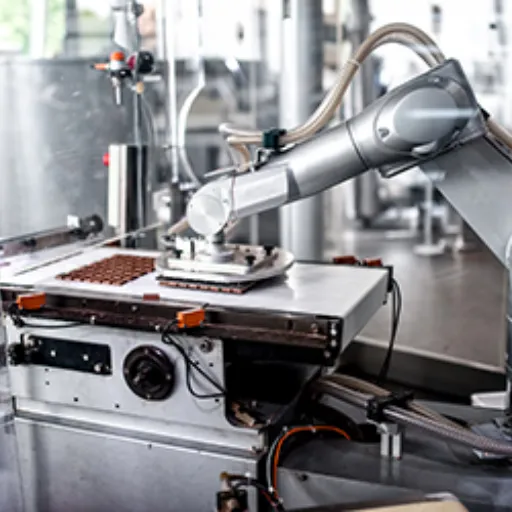
Real-life example: A Midwestern food manufacturer used collaborated robots for palletizing, dramatically increasing the product yield. This set-ups enabled them to release eight workers from handling tasks with repetitive movements. This only helped to drastically improve their overall process flow: The line went from being able to handle only 33,000 cups daily to 180,000! These employees transitioned into quality control and process enhancement roles—higher-value positions which resulted in a 60% reduction in turnover.
Key food production automation benefits for labor:
Rapid expansion of the labor pool without imbalanced recruitment
Seasonal and temporary labor usage is curtailed
Safety risks and repetitive task-related risks decrease because such tasks are carried out by robots
Training mentors as senior workers are running into retirement age
Quantifiable Labor Savings
The proof is in the numbers about the benefits of automated food production. It is important, therefore, to understand the optimal automation costs for consideration in any investment. Labor reductions tend to provide the highest ROI with the swiftest return.
Transformation of the Staffing:
Traditional pneumatic line: 40-60 operators per shift
Automated line: 2-4 operators per shift
Resulting in more than 90% reduction in direct labor needs to run the operations
Financial Impact:
Average annual savings per automated line: $2-2.4 million
Packaging-oriented labor reduction: 30-50%
ROI timeline: 12-18 months; basically breakeven
Mr. Ahmed Hassan relates a story close to reality. He speaks about his experience at an Egyptian pet food producer: “We cut our production personnel from 52 to 6 operators, but we increased production by 35%. It’s not like automation killed jobs. Automation killed jobs nobody wanted. Our staff now manages the system instead of badly de-straining with 50kg bags.”
Productivity and Throughput Gains
Continuous 24/7 Operation
Machines do not get tired; they don’t know about rest or starting to slow down just before a shift’s end. This core difference is what drives extreme productivity gains and speeds up the food production processes enabled by automated food processing lines.
When we speak of outputs for manual and automated solutions in setup, it becomes an obvious surprise:
Manual packaging: Canners produce about 30-50 units per minute. Automated packaging: 200-600 units per minute. A 4- to 12-fold increase in productivity
Further gains have been seen in thermal processing. The automatic extrusion and drying units that are in operation continually maintain the ideal process parameters all 24 hours, thus, eliminating the time-wasting thrust and coast cycles associated with batch operations.
Shandong Loyal’s turnkey pasta production lines demonstrate this advantage clearly. While manual operations achieve 60-70% equipment utilization, automated lines sustain 85-95% OEE (Overall Equipment Effectiveness) through synchronized material handling and continuous processing.
Rapid Product Changeovers
Now, product diversity is a given. Consumers expect alternatives—whether by flavor, size, or formulation. One clear benefit to automation in food production is that with product changeover time being low, multiple products can make use of a single line.
Changeover Time Comparison:
| Changeover Type | Manual Operation | Automated Line |
|---|---|---|
| Simple recipe adjustment | 45-60 minutes | 5-8 minutes |
| Major product switch | 2-4 hours | 8-12 minutes |
| Seasonal line reconfiguration | 1-2 days | 30-60 minutes |
Recipe management software can store parameter sets. You can switch between wheat-based pasta and gluten-free products at the touch of a button, and the pre-set temperature profiles, screw configurations, and cutting parameters will adapt automatically.
The most important automation offering for food production is its simultaneously productively engaging spectacle. Where traditional lines earmark equipment for one product, automated systems currently run 40+ SKUs without any physical reconfiguration, offering a drastic increase in food production efficiencies.
Predictive Maintenance Advantages
Unplanned downtimes reduce profitability in the context of the food production automation since this is combatted with different forms of intelligent monitoring through the internet of things.
These are monitored by IoT sensors:
Motor vibration patterns (bearing wear prediction)
Temperature variation (thermal stress specialists)
Current draw fluctuations (mechanical load indications)
Product consistency metrics (drift process)
Assistance:
41.25% reduction in unplanned downtime
30% extension in equipment lifespan
60% decrease in emergency maintenance costs
Quality Consistency and Waste Reduction
Precision Control Benefits
The human systems could have their good days and bad ones, but the automated system functions as sought by the specifications-2-3 times each time. It is forced to be capable of precision control for many food production automation benefits.
Temperature Control:
Manual operation: ±5-8°C variation
Automated PLC control: ±1-2°C precision
Impact: Consistent product texture, reduced scorching, optimal gelatinization
Dosing Accuracy:
Manual ingredient addition: 2-5% variation
Automated dosing systems: 0.1-0.5% accuracy
Impact: Recipe compliance, cost control, nutritional consistency
For nutrition panels and those under strict scrutiny, precision is no longer an option; it is now a function that must be there. The most crucial benefit to the applications of food production automation is it gets ensured that regulations are complied with impeccably. Every package gets filled with only what is listed on the label-systemically!
Vision Systems and Quality Control
The human eyes are remarkable but fall short at times. AI-powered vision never misses a beat. This is where the Bots truly come into their element when we talk automation in the food production domain.
Capabilities of the Machine Vision System:
Foreign Object: glass, plastic, bone, metallic piece as small as 1 mm
Defect Detection: Variations in color, Irregular shape, and variations in size
Verification of Packaging: Label presence, Seal intactness, and Fill levels
Performance Metrics:
Speed of inspection: 200-600 units every minute
Accuracy of defect detection: 99.4%
Our automated pet food production lines integrate vision inspection at multiple stages—after extrusion, after drying, and before packaging. This multi-point verification ensures consistent kibble size, proper coating application, and complete defect elimination.
Waste and Yield Improvements
Every wasted gram is money down the drain. Elimination of waste in food production can come through a precision position of each operation and in real-time by adjustment.
Spotting some measures taken for automation in the field:
Dairy processing: 83% reduction in waste in cutting operations (KUKA robotics deployment)
Inventory Management: 12-18% increase in yield accuracy
Filling operations: 20% reduction in product giveaway
Overall waste: 3-5% less waste to total production loss
Other than that, the environment sure is also affected. Any reduction in waste means less landfill, less carbon footprint from disposal, and more effective use of agricultural resources. Food production automation benefits tend to turn into achievements in sustainability.
Food Safety and Compliance Benefits

Reduced Contamination Risk
Each human touchpoint stands as a sort of possible contamination vector toward the product—it is in food production automation’s benefit to eliminate all of these chances. Therefore, any potential contamination source that hurts the product must be avoided.
Critical Control Point (CCP) Automation:
Metal detectors with the option for automatic rejection
Temperature monitoring with instant alerts if the temperature is out of range
pH monitoring for acidified products
Checkweighing for under- or over-weight packages
On production efficiency and safety through the best sanitary equipment framework:
Materials should be constructed in SUS 304/316 stainless steel, indicating FDA standards.
IP69K ratings are favorable for concentrations in environments of high pressure.
Design for sanitation with void-free surfaces and minimal profiles
Developing clean-in-place (CIP) connections
This system substantially reduces the risk of microbiological contamination. In the food industry, enterprises that have optimized food production automation benefits will experience a 40-60% drop in positive results during pathogen pathogen environmental monitoring, as opposed to less efficient companies.
Complete Traceability and Documentation
Regulatory requirements are tightening; FSMA Section 204 instituted new recordkeeping requirements for high-risk foods. Similar traceability rules are likely to be imposed by impending EU obligations. Compliance through food production automation is automatic due to the benefits thereof.
Automated Traceability Capabilities:
Printing and verifying Lot Codes in the appropriate stages
Electronic records for tracking by one-up-one-back
Ingredient genealogy with automated reconciliation
Mock recall completion: Under 4 hours with 100% accountability
Documentation Automation:
Monitoring HACCP records with timestamps
Temperature logs for refrigerated/frozen products
Testing sanitation with documentation of CIP cycle
Calibration records for all monitoring instruments
Documentation Automation:
Sanitation verification with documentation of CIP cycles
Calibration records for all monitoring instruments
When the auditors come—scheduled or unannounced—food production automation benefits include comprising full compliance documentation within minutes versus days.
Regulatory Standard Adherence
Automated compliance features:
- Electronic signatures with audit trails (21 CFR Part 11)
- Preventive maintenance scheduling and verification
- Supplier approval documentation management
- Allergen control with automated line clearance verification
BRCGS Issue 9 and SQF Edition 10 both emphasize food safety culture and continuous compliance. Automation embeds these requirements into daily operations rather than treating them as periodic exercises.
Energy Efficiency and Sustainability
Smart Resource Management
The saving of natural reserves is one thing, but enhanced savings are to be reached by such manufacturing practices as automation within food processing, where resource consumption can be optimized at rates manual applications will not be able to attain.
Automation Increases Energy Savings:
Branched networks help in running very energy-intensive processes when energy is cheaper
Variable speed drives can slow down and speed up motors as per the real need
Heat recovery ensures capturing of all available thermal energy
Result: Average reduction in energy consumption to 18%
Reduction in Water and Chemical Usage:
Performing smart operations for CIP where rinse cycles will be optimized subject to the conductivity sensor prediction
Control of dosing ensures that the care products will not be overdosed
Result: A 40% reduction in water and chemical used
Industrial microwave drying systems exemplify this efficiency. Compared to conventional hot-air drying, microwave technology reduces energy consumption by 30-50% while processing product in one-third the time.
Waste-to-Value Opportunities
Automation enables sophisticated upcycling that turns waste into streams of revenue. These gains from automation in food production systems help create completely new value opportunities.
Automated Upcycling Applications:
Fruit peels and trimmings processed into natural flavor extracts
Whey protein recovery from dairy operations
Oil extraction from snack food waste streams
Composting system integration for organic waste
Sustainability Metrics:
Carbon footprint reduction: 15-25% through optimized logistics and processing
Packaging waste reduction: 30-40% through automated portion control
Water reclamation: Up to 80% of process water recovered and reused
Prime cornering market sustainability designations favorably play to these environmental benefits as well for the uplift of sustainable sourcing by both retailers and consumers.
Data-Driven Decision Making
Real-Time Production Visibility
Manual systems operate on intuition and experience. Frankly speaking, automated ones are built on data—this one object material is complete, comprehensible, and directly actionable; and transforms food production automation benefits and drives management to evolve from being reactive to proactive-differential coding mode.
SCADA and MES Integrated:
Centralized dashboard showing all line parameters
Real-time OEE calculations for each component of OEE
Automatic alerts for out-of-specification conditions
Historical trending for pattern recognition
Key Performance Indicators: Available, Performance, Quality component of OEE.
Throughput rates for each product for each day and each shift
Downtime categorization and frequency analysis
Yield and waste metrics with automatic reporting
So, this presence slowly and imperceptibly transforms all the decision points from reactive to proactive, giving sufficient space for real-time awareness of multiple analytics. By and large, tomorrow’s crises can be recognized before they are allowed to impact production goals. These food production automation benefits render predictive management viable.
Process Optimization Through Analytics
Data accumulation is a way to obtain more leverage for improvement processes over time. There are numerous benefits of automating the food production sector, among which are persistent enhancement through analytics.
Continuous Improvement Applications:
SPC is an old idea with a new application-analyzing process drift.
Correlation analysis on process parameters of this study allows the relationship modeling to interpret contrasting outcomes.
Predictive modeling can greatly improve the scheduling and resource allocation system.
Machine learning has a very positive effect on the system through the suggestions made on parameter adjustment via algorithm iteration.
Business Intelligence Integration:
Inventory accuracy has an improvement of 25% from automated tracking.
Being reinforced with real-time visibility, the management should be 30% faster in response to demand.
Production planning is optimized according to the real data capacity or more.
Worker Safety and Ergonomics
Hazardous Task Elimination
Workers in food manufacturing had been highly exposed to hazardous conditions in the past. Automating the processes of food production have taken humans out of danger.
Enhancing Safety:
75% decrease in workplace accidents from 1972 onward (automation contribution)
Cuts eradicated from processing tools
Burns exterminated by ovens and fryers
Prevention of repetitive motion injuries
Elimination of claims caused by lifting heavy objects
Finally, robotic workstations have been assigned to take care of some of the areas utilizing tasks in fields which would hitherto have resulted as chronic injury contributors: handling 25 kg bags for palletizing, repetitive cutting, and exposure to extreme temperatures for extended periods.
Upskilling Opportunities
Automation elevates, rather than killing jobs. Workers move from laboring to managing systems. These food production automation benefits foster job advancement opportunities.
New Career Categories:
Automation technicians and maintenance specialists
Quality systems operators
Process optimization analysts
Production system supervisors
Knowledge Preservation
As older workers retire, complex software-based systems take/maintain their expertise through predefined, programmed parameters and procedures; indicate experiences determining food production automation benefits. Generative-algebraic interfaces provide real-time guidance to the fresh generation of workers. In this manner, the gigantic absorbent power of institutional knowledge, which accumulated for decades, is effectively shared with newcomers.
The concept that automation eliminates jobs is obsolete. Food production automation benefits such as allowing for more highly paid, tech-heavy roles instead of pure physical labor. So with a clear understanding of the merits of automation in their operations, some informed decisions can hopefully be made by stakeholders because change is good.
Calculating Your Automation ROI
Investment Considerations
Understanding true food manufacturing automation ROI requires comprehensive cost analysis.
Capital Investment Ranges:
| Line Component | Investment Range | Typical Payback |
|---|---|---|
| Packaging automation | 50K−50K−250K | 12-18 months |
| Processing automation | 300K−300K−800K | 14-20 months |
| Full turnkey line | 500K−500K−2M | 16-24 months |
Other Issues Which Bring about the Price, Relating to:
Repair: Likely to amount to between 3-5% of the investment value annually.
Training: Beginning expenditures with negligible annual costs
Software updates: Include up to 3-5 years
Electricity costs: in most cases, easily cancelled out by savings in maintenance costs
Conceivable Savings:
Reduction of Nonconformity, Scrap, and Rework
Decrease in insurance premiums (through fewer accidents)
Decrease in regulatory fines
Possibility of enhanced maintenance of customer base such that retention is assured through consistency
The Hidden Cost of NOT Automating
Though there is a cost to capital for automation, it is clear that the cost of not automating is high and growing yearly. Knowledge about savings on automated food production costs helps the food industry make rational and educated decisions.
Competitive Disadvantage:
Competitors having automated lines enjoy a competitive advantage on cost and consistent product quality over you-this means you are equipping your opponent with a winning chance from which you shall go down paying full to produce a lot less. Embedding automation benefits in food industry operations is no longer something which would be nice to consider; it is a must for anyone in the sector.
Labor Shortage Vulnerability:
The workforce is tiny anyway, and manual interpretations will be wiped, one by one. Operations are likely to halt in any organization that cannot adapt to lesser available labor.
Regulatory Risk:
Manual processes of documentation and compliance have so many areas for human error to flourish. One rouge document can be the cause of significant implications with hundreds of thousands in fines and remediation.
2026 Automation Trends Shaping the Future
The food production automation benefits landscape is currently changing daily. Understanding these evolving technologies will help manufacturers make the right investments for the future.
Digital Twin Technology
Virtual replicas of physical production lines enable:
- Testing process changes without disrupting production
- Operator training in simulated environments
- Predictive scenario modeling for capacity planning
By 2026, over 40% of large manufacturers will implement digital twin technology.
Generative AI Integration
AI systems have entered new spaces, such as active control, rather than merely monitoring:
Automatic adjustment of recipes, which are based on variations in the raw material
Automatic optimization of the production schedule
Real-time help and troubleshooting for operators
Adaptive Robotics
These innovations host the next age of robotics in handling delicate items that would otherwise require a human touch.
Soft robots for fragile baked products
3D vision system for appropriately handling irregular products
Gentle manipulation through the force-feedback control
Collaborative Robots (Cobots)
Cobots work hand in hand with humans without safety fencing:
Faster deployments than traditional industrial robots
Low capital investments
Multi-tasking flexibility
None of these trends are about food production process automation benefits, highlighted in this guide; they reinforce the same and bring about much more food production efficiency improvement at all levels of manufacturers.
Conclusion: Automation as Competitive Imperative
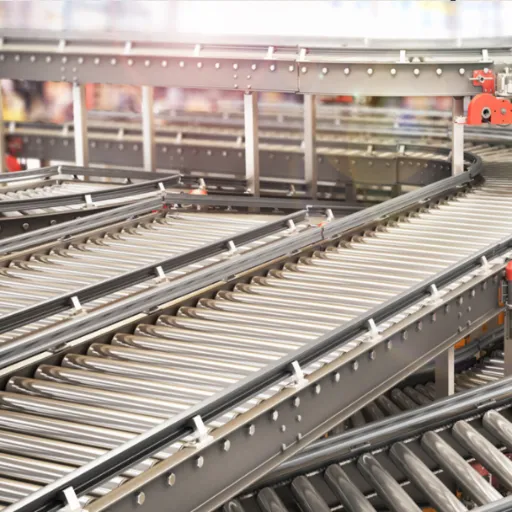
The food processing automation benefits discussed in this guide go beyond operational improvements and are more of the key to survival in competition beyond 2026.
Key highlights are:
Labor savings of between $2 million and $2.4 million per automated production line will help mitigate the labor challenges by cost reduction
An average production increase of 20 to 40% would allow the higher output while operating 24 hours a day, 7 days a week. The rapid changeovers would also further increase the capacity of the line without expense.
99.4% quality consistency due to automated quality control can eliminate defects and recalls that cause a financial disaster.
An ROI cycle of between 12 to 18 months could seal the deal for any operation as a financial must.
Automation in compliance allows for reduced regulatory pressure and easy audit preparation.
Maria Chen’s noodle plant is now the preferred supplier for three big retail chains contracts she couldn’t fulfill through her formerly manual equipment. The gunman said that Chen’s competitors would soon have to catch up.
The question of whether to automate is moot when it comes to the food manufacturer. The argument determining the speed at which food production automation advantages are implemented so competitors capture more of the market is up in the air. But the time to begin is today.
Quick Reference: Automation Benefits Summary
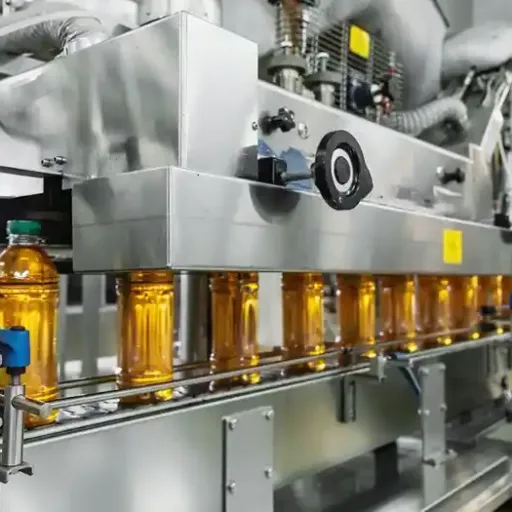
| Benefit Category | Typical Improvement | Timeline |
|---|---|---|
| Labor Reduction | 50+ to 2-4 operators | Immediate |
| Labor Cost Savings | $2-2.4M annually | 12-18 month payback |
| Throughput Increase | 20-40% | Immediate |
| Quality Consistency | 99.4% defect detection | Immediate |
| Waste Reduction | 12-20% | 3-6 months |
| Energy Efficiency | 18% improvement | Immediate |
| Uptime Improvement | 45% less unplanned downtime | 6-12 months |
| Changeover Speed | 45 min → 8-12 min | Immediate |
Frequently Asked Questions (FAQs)
What complex factors necessitate inserting robotics into packaging, being that they increase food safety compliance?
The use of automation significantly reduces the risk of contamination by humans in the final stages of production. It is very useful to handle fragile products with high accuracy in such a way to meet sanitary condition requirements to ensure strict compliance with food safety. This consistency ensures less useful product recoveries and a much safer final product for the consumer.
Which are the financial advantages of automating inventory tracking in the supply chain?
Implementing an automated tracking system could give you immediate knowledge on the inventory levels of ingredients, as well as their expiry dates, which can help plant managers to reduce food waste and slash down expensive costs for cold storage. Over time the ROI itself quickly sprouts as companies reduce lost product, in-plant inspections, and get their daily logistics into perspective.
Will there be any kind of recipe that automated quality control systems can’t handle?
New-age optical sensors coupled with machine learning algorithms work excellently to monitor intricate food formulations in production. They are able to detect the most minute variations in color, texture, and temperature much faster than what a manual operator could. This technology is very important for maintaining uniform taste and quality throughout all production runs with no effect on line speeds.
How can automation in food production alleviate serious labor shortages?
Labor shortages in food production are likely the results of companies easily identifying and retaining human employees for prolonged periods of time, especially regarding the repetitive and physically demanding tasks partially mandated on them. Now, automation can assume and handle every salty task that still requires some kind of workers, such as cleaning, sorting of ingredients, and the constitution of the final product, absolutely around the clock. In this model, a company may be able to allocate its already existing staff into much higher value-added areas like maintenance and management of equipment.
Will using smart equipment in processing necessitate a complete redesign of a facility?
The substantial advantage of these robots is their ability to effectively blend with the workers of the plant. Most surprisingly, their usage neither poses a threat to human workers nor bars their work performance. Due to this reason, there is an increasing tendency to make use of this advanced technology wherever possible.