

Panko vs. Extruded Breadcrumbs: Choosing the Right Production Line for Your Brand

In breadcrumb creation and cooking methods, there is a significant difference between working with panko breadcrumbs and through the extrusion of bread, which contains more compact breadcrumbs. There are impacts of these two types of breadcrumbs and how each type is special: either as a texturizer, functional, or creates an attraction for the final product. Either one needs to make light and crispy panko bread crumbs that are preferred for frying or “blocks and fillers” that are extrusion dies containing unnecessary mixture, the shape of one’s respective production line’s bread crumb compacting section will determine future results. This particular content will take you through the distinctions between these different forms of breadcrumbs, their applications, and how you can make the best designs for the manufacture of your products.
Introduction to Breadcrumb Production
In breadcrumb creation and cooking methods, there is a significant difference between working with panko breadcrumbs and through the extrusion of bread, which contains more compact breadcrumbs. There are impacts of these two types of breadcrumbs and how each type is special: either as a texturizer, functional, or creates an attraction for the final product. Either one needs to make light and crispy panko bread crumbs that are preferred for frying or “blocks and fillers” that are extrusion dies containing unnecessary mixture, the shape of one’s respective production line’s bread crumb compacting section will determine future results. This particular content will take you through the distinctions between these different forms of breadcrumbs, their applications, and how you can make the best designs for the manufacture of your products.
Traditional production of crumbs has many stages where ingredients are processed to finally form coatings and, if necessary, fillers. It usually involves making the dough first, then baking it, drying the baked dough, and pulverizing it to the necessary size and texture. The modelling process is accomplished by either one of the two main methods: traditional baking or extrusion. In the case of traditional baking, ovens are used to make soft and irregular crumb structures, while extrusion, on the other hand, is done with machines where high pressure is applied so as to produce uniform granules such as panko. The result of each process is utilized in exclusive ways in order to fully conform to the culinary and production demands of the finished product.
Importance of Efficient Production in the Food Industry
Food industry production must be efficient so that global requirements are met while retaining the quality, decreasing the costs, and minimizing the effect on the surrounding natural environment. Within a very short time scale, efficiency in production systems also empowers the firms to produce much more than before, thereby satisfying the ever-increasing demand of the consumers. Moreover, via mechanization and other up-to-date technologies, production quality is assured without much waste, energy, and labor. Efficient production also supports food safety by implementing stringent inspections and checks, which are very important, especially with very strict regulations and expectations of customers. As more concerns are raised about sustainability, the use of such innovative techniques not only enhances resource efficiency but also reduces carbon emissions, thereby making the firms be at the forefront of such matters as environmental protection. Thus, the importance of profitability and sustainability within food production competitiveness can never be understated, as these principles are fundamental in this growing industry.
Overview of Breadcrumbs and Their Uses
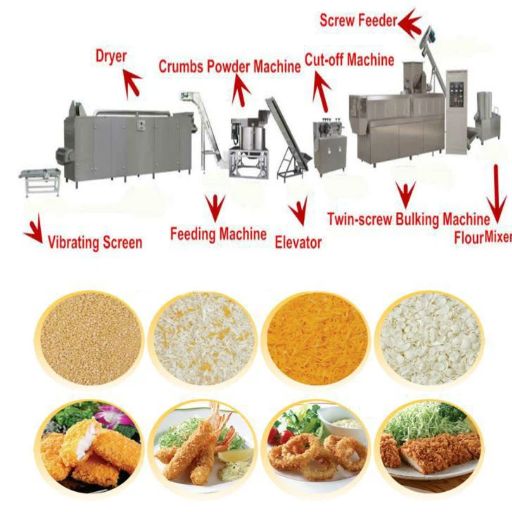
In terms of culinary advances, bakery crumbs or breadcrumbs refer to small, crisp fragments of bread that are either air-dried or oil-baked and are used as a filling or coating for different dishes. They have a wide range of applications from improving the outer-layer of the food to holding the inside together. They are mainly used in fried or baked dishes for coating, such as in breadcrumbs, meat, fish, or vegetables, and not only make the product more fulfilling but also make it achieve a golden-brown crust. Also, they are useful as binders in dishes like meatloaves and patties to retain and help ingredients come together as one.
🍗
Coatings & Crusts
Used for frying or baking meat, fish, and vegetables to achieve a golden-brown crust.
🥩
Binders & Fillers
Essential in meatloaves and patties to hold ingredients together as one cohesive mass.
♻️
Waste Reduction
Helps minimize bread wastage by ensuring productive use of leftover bread.
✨
Texture Enhancement
Panko’s light, airy, and crispy attributes have become very common in modern cooking.
Breadcrumbs in this regard are very handy in both old school and creative cooking methods, hence allowing them to be aggressively used in the food industry.
Overview of the Breadcrumb Production Process
The process of the breadcrumb production line starts with selecting the superior quality base material – bread, which meets the desired taste and texture. The chosen bread is either sliced into rings or cut into shreds that are suitable for further processing. The obtained pieces are then subjected to the controlled application of heat, which results in the removal of moisture content while extending the storage time of the product. The dried up bread is then ‘milled down’ or crushed to the appropriate level, and depending on the use, it goes from being very fine or coarse crumbs. As a result of grinding, it is possible to achieve more flavor in the finished product with the addition of seasonings and/or other components like herbs or spices. In the end, the hygienic breadcrumbs in packaging are meant to satisfy the quality and safety requirements and are distributed for use in food, as well as the industry stopped packaging design.
Steps in the Breadcrumb Production Line
1
Preparing the Bread
The first thing involved here is choosing high-quality bread that is either ready-made or baked inside for the breadcrumb production line. By choice, however, the bread may differ in texture, composition, or type, depending on the expected end product. This is then cut or transformed into sizes or shapes that can be cut.
2
Dehydrating
The baking of bread is thermally done with the aid of drying ovens for the purposes of extracting moisture content. The need for the drying process is to ensure that grinding of the bread will be facilitated because of the desirable crispy and dimensional sanitary reasons.
3
Milling and Sieving
Once the bread gets dry, industrial milling machinery is used to grind bread into a desired particle size that had been confirmed earlier on and approved after testing. Different settings can also be employed at this stage to permit the production of fine, middle, or coarse crumb required by different cuisines or industries.
4
Incorporation of Flavouring and Other Ingredients
Seasonings, such as herbs, spices, and other ingredients, are mixed into the breadcrumbs to fulfill some taste aspect or quality requirement of the final product. This step is essential for various flavored or combined breadcrumbs.
5
Quality Control and Packaging
Once produced, the breadcrumbs undergo a battery of rigorous quality control processes, including looking out for texture or contamination, to ascertain that they meet all food safety regulations. After this, the products go to the final controlled packaging for conservation of freshness and/or hygiene. The packing, as usual, is done to fulfil both the retail packaging and the bulk sale packaging requirements.
Key Components of a Bread Crumb Making Machine
In current projects, most factories are fitted with breadcrumb production lines in which cutting-edge machinery is used in order to produce quality products safely and hygienically. The main components and their respective roles are explained below:
| Machine Component | Primary Function |
|---|---|
| Unit for Mixing Ingredients & Preparing the Dough | This is the first step of making bread crumbs, in which various raw materials are put together, like flour, water, yeast, any spices, and enrichments where necessary. The industrial mixer helps in proper blending, as consistency determines the quality of breadcrumb after slicing. The standardized proportion of the components helps in more precise dosage to allow the scaling up of the process. |
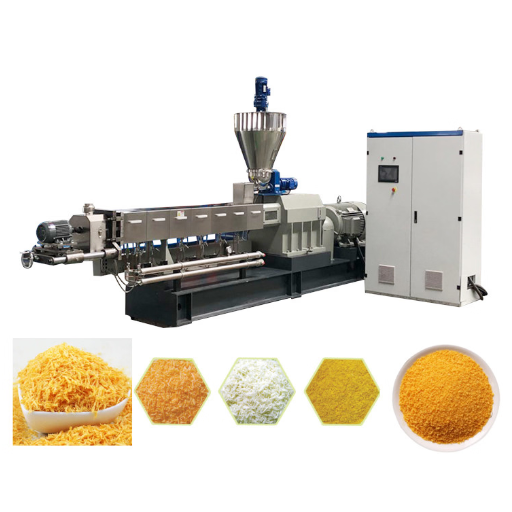
| Extruder | The extruder tube that processes the dough technique is capable of processing the dough out and forming a particular shape, e.g., strings, curls, or sheets. Hard press that’s used to give size and structure helps to achieve various textures of the crumb that incorporates varied aggregate components. The latest extruders have the ability to work under controlled temperature and pressure according to the production requirements due to the controls on the extruders. |
| Bread Oven | Once the dough has been shaped, the next process involves putting the dough in the bread oven and baking it at a controlled temperature. This step is usually accomplished using convection ovens with several compartmental thermostats that guarantee evenly baked bread. Temperature adjustments are done precisely to certain degrees, which is 300°F up to 500°F (about 150°C–260°C), adding crispiness without burning the product. |
| Conveyor Belt Cooling System | Once the products are baked, they must be quickly cooled down to maintain their form and to avoid any absorption of water, which might affect the texture. This cooling is mainly done on the conveyor belts fitted with enhanced air flow units. This process is very important so that the product is perfect and can be processed further. |
| Milling and Sieving Apparatus | The baked and cooled material is transferred to the grinding machine, where it is ground into crumbs of the required consistency. Grinders with adjustable knives or rollers make it possible to obtain fine, middle or coarse crumbs. The machine also has a sieving system, which ensures an acceptable discharge by ejecting and separating the larger pieces for further milling. |
| Product Quality Scanner | Some sophisticated optical and sensory devices along the breadcrumb production line check the bread crumbs for thickness, color, and alien bodies. The ineffective ones are rejected, while the fine, good bread crumbs move on to head to the packaging area. |
| Packing Unit | The finished product goes to a packing system that allows for both minor retail volumes and big bulk volumes. Packing equipment usually includes vacuum packers or machines for packing in a modified atmosphere (MAP), which keeps the products fresh for a long time. |
| Central Control Panel (HMI) | The modern machines for this purpose have a central control panel with the Human Machine Interface (HMI) to enhance performance. These systems enable users to operate and alter operational parameters such as heat, speed of conveyors, and grinders, among others, as the process unfolds, thus facilitating smooth overcoming of the production adjustments. |
All these components come together to make bread crumbs, which are of high quality and adhere to food safety standards. The advances in technologies and particularly in the automation aspect, material handling, as well as energy saving, have been incorporated to make the bread crumb production machine work more efficiently, as well as enhancing its capacity.
Automation in the Production Process
Automation has transformed the breadcrumb industry by incorporating state-of-the-art equipment that facilitates each step of the production process. The use of automation employs programmable control units (PLCs) and sensors to control the mixing of ingredients, baking, cooling, and grinding with accuracy and consistency. Humanoid robots as well as conveyor belts provide improved material flow, reduction of human tasks, and swab compliance with hygiene regulations. Moreover, machine learning and other automated technologies, in this case, optimize production by revealing bottlenecks and providing maintenance information and alerts. So damage is minimized. All these improvements make it not just quicker and more efficient to produce breadcrumbs but also make the breadcrumb production line much more flexible to the demand of production.
Panko vs. Traditional Breadcrumbs
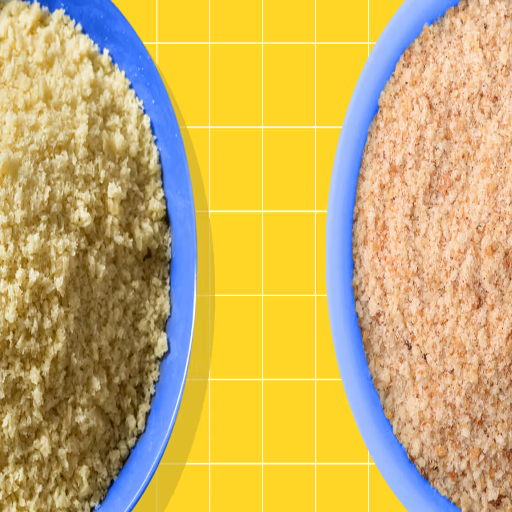
| Attribute | 🇯🇵 Panko Breadcrumbs | 🍞 Traditional Breadcrumbs |
|---|---|---|
| Formation & Nature | Prepared using electric baking in characteristic oven lines, producing larger and thinner, flaky crumbs that are light and crispy. | Fine and compact in nature, the filler or coating is not as light. |
| Usage in Cooking | Applied to light, crispy fried foods like tempura or similar breaded fried foods. | Useful in stuffing meatballs or loaves wrapped in cabbage, for a soft, even crust. |
| Oil Absorption | Improves how much oil food absorbs after frying — suitable for light and less fatty foods. | Thinner and more moist particles possess higher water or oil absorption, leading to denser or waterlogged dishes. |
| Preservation & Shelf Life | Generally offers longer preservation due to the particular methods used in production. | May vary in shelf life depending on seasoning and manufacturing; can degrade if not kept in optimal conditions. |
In an end note, different recipes allot different functions to panko vis-à-vis non-panko breadcrumbs, leading to different textures depending on the aims of the cook.
Characteristics of Panko Breadcrumbs
Panko breading stands out from the usual types due to its texture, how it’s made, and the various uses it is put to. Traditional bread crumbs are not quite the same as those made from panko, as panko is obtained from baking crustless white bread with an electric current to achieve larger flaky bread crumbs that are light and crispy. Further, they are moisture-free and don’t clump, thus assuring better oil and fat absorption during frying.
Panko Breadcrumbs are often favoured when you need to fry or bake a dish and still come up with golden and crispy breading on food, yet with fewer crumbs. This is because of their construction, which is quite different from that of traditional ones with cut surfaces. It is the reason why bakers prefer this kind of fine crumb in tempura, along with such delicacies as fish or sometimes casseroles, where it is important to have a crisp crust.
In addition to all of those benefits, panko is also neutral, thus easy to avoid being exotic in most foods that require a sandy layer and crunchy bite. Along with versatility, the ability of the breadcrumb production line to produce them stylistically is one of the reasons why people use them when they need both functionality and decoration.
Traditional Breadcrumbs: A Comparison
There is a marked distinction between panko crumbs and traditional breadcrumbs used in cooking, which can be explained by the components, texture, and usage factors. Different breads, with or without the crust, are usually used when making them instead of panko, which is made up of light, fluffy crust. As a consequence, such breadcrumbs provide the needed binding for structure-heavy recipes, such as a meatloaf or meatballs, since they are highly cohesive. Moreover, they proficiently take in the moisture from the surrounding surface and create a more extensive breading surface, which ultimately generates denser and more even crusts. Still, traditional breadcrumbs may lack that particular crispiness and light texture associated with panko. If panko is valued for its characteristic loose and fragile strands, then traditional ones are especially appreciated for being incorporated into function, as they are very often mixed with spices in order to gain more depth of taste. Each type of crumb has certain benefits coming from the specific expectations of chews in mind, which helps to determine the specific type of crumb produced based on the desired sensory and physical characteristics.
Production Line Adaptations for Different Breadcrumb Types
One of the challenges in designing a breadcrumb production line is the adaptation of the different types of breading to the existing equipment. In the cases concerning Panko production, such processes require ad hoc equipment containing, for example, certain wire cutting as well as baking apparatus, which help give this breading its distinctive open structure. The dough is usually baked into a sheet and carefully torn in such a way as to produce a hairy, fibrous texture. This method has to be carried out under defined temperatures and humidity to achieve panko’s consistency.
On the other hand, the process for making breadcrumbs is simpler. The prepared bread is baked, then the cooked bread is milled to the appropriate size, and traditionally, hammer mills, among other machines, are used in this process for grinding to the size needed. Additional processes can entail adding flavorings to the breadcrumbs. About particle size and mixing, which may or may not be used, the adjustment of the equipment to the traditional line is possible in many situations regarding the potential food uses.
Efficiency could be improved by switching between panko and traditional bread crumbs, switching modular gadgets in factories, and hence improving efficiency. The breadcrumb production line, therefore, requires the production of machines for sieving and detecting moisture; this is essential in ensuring that the processes are maintained in a uniform manner. In addition, apart from maximizing production costs, such equipment and standards of operation make it possible to manufacture a product according to the specifications of a client.
Factors to Consider When Upgrading Your Production Line
- 📈
Scalability
Make sure that the research about the production lines upgrades will permit the engineering team to compensate for any increase in volume production if need be, all the while maintaining the same levels of efficiency and quality. - 💰
Cost Efficiency
Analyze the financial efficiency of the upgrade by looking at the cost of the upgrade vis-à-vis how much will be saved in operation costs and downtime once the system is improved. - 🔗
Compatibility
Make sure that the added machines can work along with the existing machinery, and they will be able to perform the tasks that you wish them to for your production line. - 🤖
Automation and Technology
Look into options of advanced automation systems in an attempt to scale down the use of human labor and in an effort to ensure better control over the production output. - 🛡️
Compliance and Safety
Ensure that the new installations do not go against the regulations and the safety standards in place, so that, in the long run, the safety of personnel will not be compromised or questioned due to accidents. - 🔧
Maintenance and Support
Consider whether there are means for the provision of maintenance and parts or further support so as to enhance the use of the equipment in the breadcrumb production line without interruptions.
These aspects must be honed in on for an effective and efficient performance of the breadcrumb production line so as to be able to achieve your production objectives.
Automation and Efficiency in Machinery
The introduction of machinery automation in production has undeniably changed the face of manufacturing with better performance, standard of the commodities, and cost implications. It is important to consider the ways new technology is helpful to one’s operations in the following aspects:
📊 Level of Productivity
With computers doing all the work, production is uninterrupted by time or by any tiredness from workers, meaning that the machines get more things done within a given period and production stops for fewer occurrences. For instance, the incorporation of robotics and artificial intelligence facilitates both the control and a means of correction so that only the desired amount of material goes to waste.
💵 Cost Efficiency
Although the costs associated with the purchase of automation are typically high, the cost against labor and errors, in addition to wastage, versus losses of material are quite favorable in the end. One IOT application focused on predicting failure is helpful in cutting down maintenance costs as well as the additional costs associated with the machine’s failure, apart from maintenance.
🔄 Flexibility and Expansion
In today’s world, advanced automated solutions have high flexibility to respond to any change in production and demand rates. These systems, also when it comes to increasing scales of output or when incorporating new products into the production lines, all these operations are possible due to the possibility of the program-based machinery and technology that is able to adapt mechanisms without any problems during work.
Automation, through a combination of careful consideration of available resources, good design practices, and manufacturing principles, is a game-changer in this field. The use of these systems is aimed at improving efficiency and effectiveness concerns of the business, and therefore, these systems deem it worthy for clear attention on ROI or return on investment analysis, compliance with respective regulatory major changes, and also implementing those systems in terms of scalability and portability as well as system dynamics to achieve headicum assist to control costs in expanded opportunities.
Capacity and Scaling for Production Needs
Capability and finance constraints related to the maximum possible production depend on the set of tools available to meet different demand levels in an efficient and cost-effective way. Present-day production systems heavily focus on the design in modular forms, which means that additional production units can be added or the technology can be changed to allow capacity to be enlarged only in steps. Methods like lean production and just-in-time manufacturing help ensure that the demand-supply mismatch does not lead to excess capacity, hence there’s no waste, while allocation of resources is optimized. On top of that, the utilization of cloud-based applications offers a much broader perspective through KPI’s about capacity management, future projections, and effective supply chain integration.
With the increase in the scale of production, it is very important for the ability of the equipment to function; performance indicators such as Overall Equipment Effectiveness (OEE) must be assessed to detect bottlenecks and build capacity for production to a higher level. Increasing the capacity also requires investing in automation and robotics to maintain the quality and efficiency of production. In addition, the internet of things has greatly improved the maintenance function to include the prediction of when machines might fail to ensure that uptime is maintained and operational risks are backed up ashore. Adopting these measures enables the organizations to be ready for any variation in the efforts required and improve the operational costs, along with growth potential in the long run.
Energy Efficiency in Food Processing Machinery
An improvement in the energy efficiency of machinery for food processing can result from equipment design improvement, and energy efficient technological advancements, and using equipment in an optimal manner. Using high-efficiency motors and variable speed drives in machinery motors where the speed can be varied depending on the applied load is one of the central solutions. Implementation of energy-efficient technologies like heat exchangers also enables conservation of energy by capturing and reusing the heat that would otherwise be expelled. Smart sensors and automation systems help track energy consumption in real time and make meticulous corrections in the use of resources to improve efficiency.
Yet another factor that is aimed at improving energy efficiency is materials. The lightweight structures, along with improved thermal characteristics of the products, allow heat to be transferred more efficiently, and so fewer resources are required in their manufacture. The equipment should also be maintained at regular intervals, as wear and tear of badly maintained equipment always results in increased energy consumption. However, to shrink the carbon footprint of processing facilities, using renewable energies like solar and wind power is classified as either a partial or a total shift in energy supply for these facilities. By integrating these actions together, there will be a chance for food producers to increase energy performance and cut costs, as well as to work towards a green industrial environment.
Market Trends in Breadcrumb Production Machinery
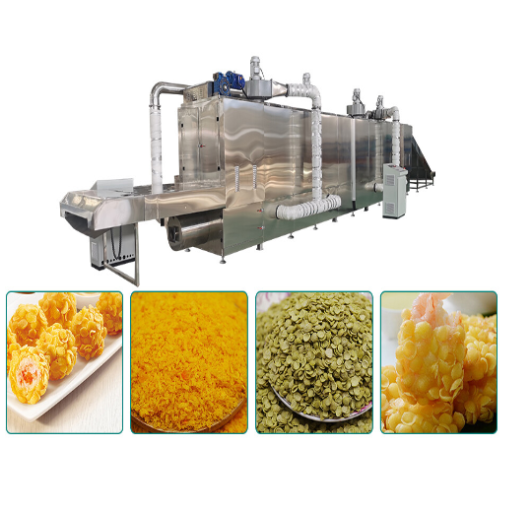
The market for machines used in the production of breadcrumbs is targeted for expansion as the need for more efficient, adequate, and faster equipment increases. Indeed, many producers in the industry are now shifting focus towards the minimization of the size of machines, adding to these user-friendly operating systems for ease of use, service, and many other reasons. Another current improvement related to sustainability is also observed, as development for machines that reduce wastage and conserve resources is underway. Using improved materials also adds to the durability and compliance with food regulations, which in turn supports the attainment of operational excellence. All these trends are indicative of an enhanced tendency towards developing novel and cost-effective means to fulfill the demands of the processing technology for food.
Recent Innovations in Food Processing Technology
Ongoing developments in food processing technology promise to revolutionize the field with efficient and accurate processes. In particular, algorithms powered by machine learning and artificial integration are now being used to improve quality control and production processes. Machine learning and artificial intelligence in the process include detection of defects, optimization of ingredient application and processing time, and, in total, processing waste and cost reduction.
The use of machine learning and deep learning provides identification and classification of different types of animals, together with the correct AI deep learning approach. Non-invasive change in latitude of the eye causes the field of view not to have any focus changes relating to the focus changes in depth.
In the same way, another important factor for development is the increasing recognition of the need to incorporate innovative and environmentally friendly biodegradable packaging solutions to mitigate adverse environmental effects. Many manufacturers are incorporating biodegradable or plant-based polymers, as well as methods for plastic usage reduction in the production lines. In many ways, the given movement of the food processing business is about sustainability, efficacy, and customer needs satisfaction, as history shows.
Sustainability Practices in Breadcrumb Production
Within the scope of our breadcrumb production line, we employ several strategies that are ecologically friendly practices. We keep the procurement of raw materials within the vicinity of the factory in order to cut back on pollution associated with transportation. Preferences are given to those who support or practice environmental farming. Further, the conservation of energy is accomplished using energy-sensitive gears and other methods of production enactment aimed at energy optimization.
Attention is also given to waste reduction efforts; for example, all worn-out or other material wastes are dealt with through feeding animals and generating electricity. Again, efforts are now being made to design and eliminate packaging waste, with the exception of suitable stability of the product.
🌾
Local Raw Material Sourcing
⚡
Energy-Efficient Gears
♻️
Waste-to-Energy Programs
📦
Eco-Friendly Packaging
All these steps justify the aim of decreasing the negative impact on the environment while preserving the quality of the produced goods.
Summary
Whether you produce panko or traditional breadcrumbs, the success of your breadcrumb production line depends on choosing the right machinery, embracing automation, optimizing for energy efficiency, and embedding sustainability at every stage. The distinctions between these two crumb types — in texture, oil absorption, shelf life, and culinary application — directly shape production decisions, from extruder design to sieving specifications. By understanding these factors holistically, food manufacturers can meet growing global demand while maintaining quality, reducing waste, and staying competitive in an evolving market.
Reference Sources
Methods for the characterisation of breadcrumbs
Focus: Methodologies for describing breadcrumb characteristics, providing academic insights into production and quality.
Evaluation of Bread Crumbs as a Potential Carbon Source
Focus: Research on using breadcrumbs as a carbon source, showcasing scientific applications and studies.
A Soft-Containing Gripper for High-Speed Handling of Breadcrumb-Coated Products
This academic paper discusses innovative technologies in food production lines, including breadcrumb-coated products.
Frequently Asked Questions (FAQs)
Explain the concept of a breadcrumb production line and elucidate the mechanism of crumb manufacturing.
A production line for manufacturing bread crumbs is a complex machine that takes the process from the incorporation of ingredients to the formation of the finished bread crumbs in grained or panko states Besides that, the typical process of bread crumb production entails a preparation of dough, baking or toast-made bread, followed by bread crushing to crumbles, puffing or poring by extrusion, enlargement or reduction by size, drying and lugging around. Chrome production lines may also use his modern lines employ other new extruders, and a bread crumb processing line may be automated to enhance productivity and achieve the diversity of products d variety of outputs of a bread crumbs processing line in terms of and that includes bread crumbs in and of them, panko, or snow flake like due to their ability to provide even coatings of these materials on various types of food.
How is panko crumb produced or puffed and expanded chips using extruding, and its derivative genre called extra-bullet point?
In extrusion processing, a twin-screw extruder is often employed to feed the dough mixture through a die, subjected to a predetermined level of heat and pressure, resulting in the formation of a material that is puffy and porous. The extruder can also be designed to manage the texture of the crumbs that, upon drying and grinding, produce coarse crumbs such as Japanese panko or puffed ones. This technology is also applied in the production of crunchy fried chicken, onion rings, and other crispy fry types in the snacks extruder range, as well as puffed snack food extruders.
What types of breadcrumb production lines and breadcrumb machines do you offer?
There are various commercial models for the breadcrumb machine, some of which include the simple breadcrumb grinders and shredders, others have fully incorporated food machine sets comprising ovens for baking bread, extruder units, drying machines, packaging systems, among others, depending on the needs of the client. People coming to purchase the machines will notice that different types of production lines handle manual, semi or even fully automatic operations. Existing manufacturers and suppliers of machinery for production accessories have established designs of their systems for small, medium, and large-scale breadcrumb production units. One can also find a bread crumb making machine or a bread crumb machine available in stores, which keeps production well optimized.
If there’s a problem with the system, can a breadcrumb production line be adjusted to process other kinds of bread crumbs, such as panko and granular bread crumbs?
The capability of the breadcrumb production line can go as wide as making different kinds of bread outside the typical functional flow. Recipe changes, extrusion parameters, bake/dry profiles, and grinder designs allow the production base to yield flaky panko crumbs, granular crumbs suitable for coating, or snowflake crumbs without switching the cheeseburger to another machine. The advantage of this phenomenon is explained in the performance of several snack food and industrial meat customers as they are required to provide different types of coatings applicable to fried chicken, onion rings, fried beefsteak, or any fried food types.
How is crumb processing monitored and controlled, and how can you be sure that the breadcrumbs’ structure is porous?
Quality control in the processing of crumbs is crucial and involves checking the quality of raw materials, moisture levels, extrusion conditions, the temperature of baking or toasting, the size of the mesh for grinding, and the final drying process, among other things. To achieve the desired level of airiness within the breadcrumbs, variations on the application of temperature in the extruder, changing the speed of the screw within the extruder, and altering the head of the extruder must be employed before verifying with sampling and performing the appropriate tests to check the moisture and absorption levels. There is a limit to the amount of food additives that can be used in the manufacture of a particular product. This is important so that the working life of the product is retained, but it is also important from a food safety point of view.
Is a fully automated food processing machine production line possible for mass-scale breadcrumb production?
Efficient industrial solutions for the manufacture of breadcrumbs supporting continuous operations are being improved. This will work entirely on one side like a pestle that can crush the powder, or in this case, the bread. Nice and neat, this dough completed unit works (integrates an attachment) with rollers and a profile knife. This works, thus far, only eliminating referral costs and modestly increasing capacity, which is consolidating women’s work little by little. If it is the English language, it started from the ethos and reduced standards of the blue-collar worker, of course! She did, however, change attitudes, beliefs about handling sooty kilns, and strengthened her understanding of…
Is it possible to use the machine line to manufacture panko breadcrumbs used to coat fried foods?
Surely, it is. Such manufacturing lines, which employ extrusion or any form of specialized baking followed by grinding, panko bread, and a range of other specialized crumbs for fried foods, can be generated. The methodology employed helps form light, hollow panko which offers crunchy sensations for fried chicken, fried beefsteak or drumstick, or any other snacks, and can be technology-stepped-up for industrial high-capacity machines.
What is the support, and what services are rendered by suppliers of bread crumb production equipment and machinery co?
Suppliers and machinery co usually offer services such as technical training, installation, commissioning, provision of spare parts, and provision of after-sales services for complete bread crumb production line systems. In addition, they may provide recipes, processing advice, schedules of maintenance for the extruder machine and grinders, or any other modification that the production line has to be preferably designed for. Most suppliers will also provide production sanitation issues and can also recommend a commercial bread crumb machine intended for the process and the type of line used to enhance the productivity in the line.