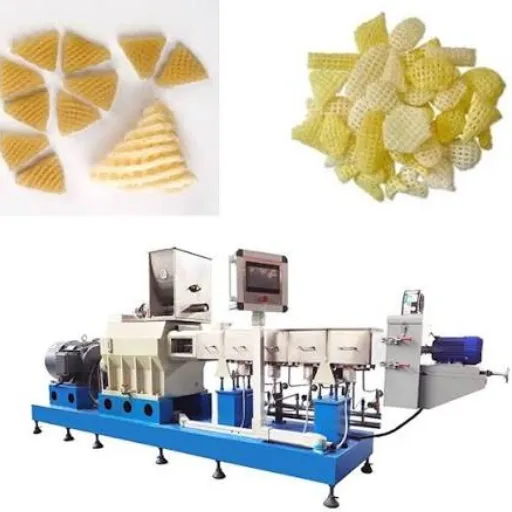
Snack Pellet Production Line Price: 2026 Cost Guide & Budget Planner

A snack pellet production line price typically ranges from 15,000forasmall80–150kg/hlineto15,000forasmall80–150kg/hlineto180,000 or more for an industrial 1,000+ kg/h system. Most growing snack producers land in the 26,000–26,000–47,000 range for a mid-capacity line that handles both 2D and 3D pellets.
When Priya Sharma planned her first fryums factory near Hyderabad in early 2024, she found online quotes that differed by $40,000 for what looked like the same machine. The lowest bid omitted shipping, installation, and molds. By the time she added those items, the “cheap” option cost nearly as much as the structured quote. Her experience is common. Sticker prices rarely tell the whole story.
In this guide, you’ll get real snack pellet production line price ranges by capacity and supplier region, a breakdown of what is (and isn’t) included, hidden costs that can add 25–50% to the invoice, and a simple ROI framework you can adapt to your own numbers. Whether you’re comparing a 100 kg/h startup line or a 500 kg/h industrial system, you’ll leave with a clear budget plan.
If you already know your target capacity, you can explore our snack pellet production line models and request an itemized quote.
Key Takeaways
- A snack pellet production line price ranges from 15,000to15,000to180,000+, with most mid-size buyers spending 26,000–26,000–47,000.
- Capacity, automation, extruder type, stainless steel grade, and supplier region are the biggest price drivers.
- Hidden costs, shipping, customs, installation, electrical upgrades, and molds, can add 25–50% beyond the equipment invoice.
- New equipment from Chinese manufacturers like Loyal offers the best balance of price, customization, and global support for most buyers.
- A typical payback period is 18–36 months when gross margin, output, and operating costs are modeled realistically.
How Much Does a Snack Pellet Production Line Cost?
The fastest way to budget is to match price to capacity. Below are the ranges buyers typically see in 2026, based on supplier listings from China, India, and Taiwan.
| Scale | Capacity | Typical Price Range |
|---|---|---|
| Small / Startup | 80–150 kg/h | 15,000–15,000–28,000 |
| Medium Commercial | 200–400 kg/h | 26,000–26,000–47,000 |
| Large Industrial | 500–800 kg/h | 48,000–48,000–90,000 |
| Industrial Scale | 1,000–3,000 kg/h | 100,000–100,000–180,000+ |
These figures cover the complete line: mixer, extruder, dryer or fryer, flavoring, and control panel. They do not include shipping, import duties, or installation.
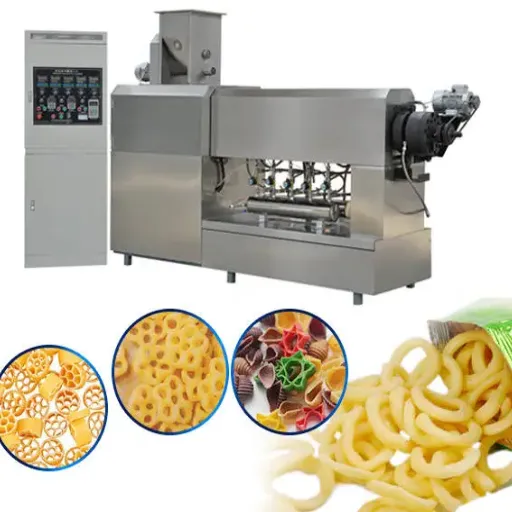
For buyers focused on 2D/3D pellet snacks specifically, the 2D 3D pellet production line price depends on whether you choose a 2D-only, 3D-only, or hybrid configuration. A 2D-only line is usually the simplest and least expensive. A 3D line needs more complex dies, pattern presses, and forming systems. A hybrid line that switches between both gives the most flexibility but costs more upfront.
Loyal Industrial lists three reference models that show how capacity scales with price:
| Model | Capacity | Power | Price Range |
|---|---|---|---|
| SNP-1 | 100 kg/h | 172 kW installed / 120 kW consumed | 16,500–16,500–18,900 |
| SNP-2 | 250–300 kg/h | 234 kW installed / 164 kW consumed | 22,000–22,000–28,600 |
| SNP-3 | 400–600 kg/h | 525 kW installed / 394 kW consumed | 36,500–36,500–42,500 |
These prices were published as promotional 2022 pricing, so contact the supplier for current quotes. Still, they provide a reliable anchor for budgeting.
For a deeper look at how 2D and 3D lines differ in process and equipment, see our complete guide to 2D 3D pellet production lines.
What Is Included in a Snack Pellet Production Line Price?
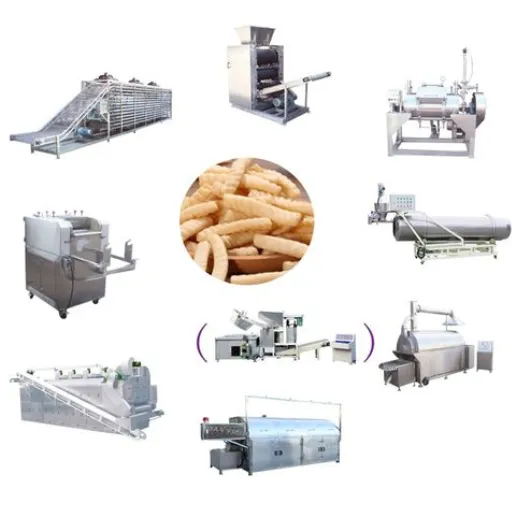
A “complete” snack pellet production line usually means a connected system that turns flour and starch into dried or fried pellets ready for seasoning. If you are comparing configurations, our complete fried snack production line overview explains how fryer-integrated systems are built.
A standard package includes:
- Flour mixer or powder blender
- Screw conveyor
- Extruder (single-screw or twin-screw)
- Cutting or shaping system
- Cooling conveyor
- Hoister or elevator
- Low-temperature dryer
- Fryer or hot-air expansion unit
- De-oiler (for fried lines)
- Flavoring/seasoning drum
- Final cooling conveyor
- Control panel or PLC
Optional upgrades that raise the price include automatic packaging machines, extra mold sets, stainless steel upgrade from SUS 304 to SUS 316, and remote monitoring software.
What is often not included in the base snack pellet production line price?
- Raw material storage silos
- Water treatment or filtration
- Packaging machine and film
- Air compressor
- Factory electrical upgrades
- Shipping, customs, and inland transport
- Installation, commissioning, and operator training
Always ask for an itemized quote. A price that looks 20% lower can quickly become the more expensive option once missing items are added.
7 Factors That Affect Snack Pellet Production Line Price
Understanding why one line costs 20,000andanothercosts20,000andanothercosts120,000 helps you buy the right configuration without overpaying.
1. Production Capacity
Higher output means larger extruders, bigger dryers, wider fryers, and more powerful motors. A 100 kg/h line might use a single-screw extruder with 50–70 kW. A 500 kg/h line often needs a twin-screw extruder and 200+ kW.
2. Automation Level
Manual feeding and batch control lower the upfront cost but increase labor. Fully automatic lines with PLC touchscreens, recipe storage, and automatic feeding cost more but reduce operator error and labor expense.
3. Extruder Type
Single-screw extruders are simpler and cheaper, ideal for basic 2D shapes. Twin-screw extruders offer better mixing, higher capacity, and the ability to run complex 3D and co-extruded products. That flexibility adds 20–40% to the extruder cost. Learn more in our overview of industrial food extrusion solutions.
4. Materials and Construction
Food-safe stainless steel (SUS 304 or SUS 316) is standard for contact surfaces. Full stainless construction costs more than carbon steel frames but lasts longer, resists corrosion, and meets stricter audits.
5. Shape Complexity and Dies
Simple sala chips or wheels need basic dies. 3D bugles, pillows, pani puri balls, and co-extruded shapes need pattern presses, compound shapers, and multiple die sets. Each extra mold can cost 200–200–2,000.
6. Heating Method
Electric heating is common and easy to control. Gas, diesel, or steam heating can lower operating costs in regions with cheap fuel but adds complexity and safety requirements to the line.
7. Supplier Region and Support
Chinese manufacturers typically offer the most competitive snack pellet machine prices. Indian suppliers can be attractive for South Asian buyers due to local service. European and North American brands charge premiums for advanced engineering and faster local support.
Snack Pellet Production Line Price Comparison by Supplier Region
Supplier location matters for both sticker price and total cost of ownership. According to Future Market Insights, the global snack pellet equipment market is projected to grow from roughly 2.0billionin2025to2.0billionin2025to3.3 billion by 2035, driven by rising demand for convenience foods and healthier baked snacks.
Chinese Manufacturers
China dominates the entry-level and mid-range market. Suppliers such as Loyal Industrial, Saibainuo, SunPring, Jinan Bright, and Shandong Arrow offer lines from roughly 15,000to15,000to180,000. Lead times are usually 30–60 days, and most accept small minimum orders.
Indian Manufacturers
Growmax Machinery lists a 200 kg/h 3D snack pellet frying line at roughly ₹17,50,000 (about 21,000).RadheEquipmentoffersentry−level2D/3Dpelletmachinesnear₹10,00,000(about21,000).RadheEquipmentoffersentry−level2D/3Dpelletmachinesnear₹10,00,000(about12,000). Indian suppliers can reduce shipping and import-duty costs for buyers in South Asia.
European and North American Premium Suppliers
Brands like GEA, Bühler, and Clextral focus on large-scale, high-automation systems. Prices often start above $200,000 and can reach several million dollars for turnkey plants. The premium buys faster local service, advanced process control, and proven uptime.
Which should you choose? Startups and small commercial producers usually get the best value from Chinese manufacturers. Buyers in India may prefer local suppliers for service access. Large multinationals with strict uptime requirements often justify European or North American systems.
Ready to compare specific configurations? Contact us for a detailed snack pellet production line price quote tailored to your product and capacity.
Hidden Costs to Budget For
The equipment invoice is only part of the investment. Here are the most common hidden costs buyers overlook.
| Cost Category | Typical Range | Notes |
|---|---|---|
| Shipping | 2,000–2,000–8,000 | Depends on container size and distance |
| Customs / import duties | 5% – 25% of equipment value | Varies by country |
| Installation and commissioning | 3,000–3,000–15,000 | Often 10–25% of equipment cost |
| Training | 500–500–3,000 | May be included by some suppliers |
| Electrical upgrades | 2,000–2,000–10,000 | Panels, wiring, transformers |
| Factory civil works | 1,000–1,000–5,000 | Flooring, drainage, ventilation |
| Spare parts package | 1,500–1,500–5,000 | Strongly recommended for year one |
| Molds and dies | 200–200–2,000 each | Depends on shape complexity |
| First-year maintenance | 2,000–2,000–8,000 | Labor, wear parts, lubricants |
Combined, these items can add 25–50% to the base snack pellet production line price. Build them into your budget from day one.
New vs. Used Snack Pellet Production Line: Which Is Better?
When you compare a new snack pellet making machine price against a used one, the upfront gap can be 30–50%. New equipment gives you full warranty support, the latest controls, and predictable spare-part availability. It also lets you specify voltage, language, and recipe parameters for your exact market.
Used or refurbished lines can save 30–50% upfront, which can make a big difference if your snack pellet machine price budget is tight. They make sense when:
- You have in-house maintenance expertise
- The machine has low operating hours and clear service history
- Spare parts are still available from the manufacturer
- You can inspect the line running before purchase
Red flags for used equipment include worn screws and barrels, obsolete PLCs with no programming backup, missing electrical drawings, and sellers who cannot demonstrate the line in operation.
For most first-time buyers, a new line from a manufacturer with export experience is the lower-risk choice.
Financing and Payment Terms for Snack Pellet Lines
Financing can spread the snack pellet production line cost over time and preserve working capital for raw materials and labor. Most suppliers structure payments in stages:
- T/T (Telegraphic Transfer): 30–50% deposit, balance before shipment. Simple and common.
- L/C (Letter of Credit): Bank-guaranteed payment. Safer for large orders but adds bank fees of 0.5–2%.
- D/P (Documents Against Payment): You pay when shipping documents arrive.
- O/A (Open Account): Supplier ships before payment. Rare for first-time buyers.
Some buyers also use equipment leasing or asset-backed loans to preserve working capital. If you go this route, compare the total interest cost against the expected monthly profit from the line.
ROI and Payback Period for a Snack Pellet Production Line
A snack pellet production line is a capital purchase, but it is also a revenue engine. The simple formula is:
Monthly Profit = (Monthly Output kg × Gross Margin per kg) − Monthly Operating Costs
Payback Period = Total Investment ÷ Monthly Profit
Operating costs include electricity, labor, raw materials, oil, packaging, and maintenance. Electricity is often the largest utility expense. A 250 kg/h line consuming 164 kW costs roughly 13–13–20 per hour to run at 0.08–0.08–0.12 per kWh.
Here are three illustrative scenarios:
| Line Size | Total Investment | Monthly Output | Gross Margin/kg | Monthly Profit | Payback Period |
|---|---|---|---|---|---|
| Small (100 kg/h) | $25,000 | 20,000 kg | $0.20 | $3,000 | ~8 months |
| Medium (250 kg/h) | $35,000 | 50,000 kg | $0.18 | $7,000 | ~5 months |
| Large (500 kg/h) | $70,000 | 100,000 kg | $0.15 | $12,000 | ~6 months |
These are examples only. Your payback depends on local ingredient costs, selling price, labor rates, and utilization.
When Emeka Okafor expanded his Lagos snack business in 2023, he evaluated the 2D 3D pellet production line price for several configurations before choosing a 300 kg/h hybrid line for around 45,000.The3Dbuglesandpillowscommandedahigherretailpricethanhisflatchips,improvinghisgrossmarginfrom45,000.The3Dbuglesandpillowscommandedahigherretailpricethanhisflatchips,improvinghisgrossmarginfrom0.12 to $0.19 per kg. At 75% utilization, the line paid for itself in 14 months.
How to Evaluate a Snack Pellet Production Line Quotation
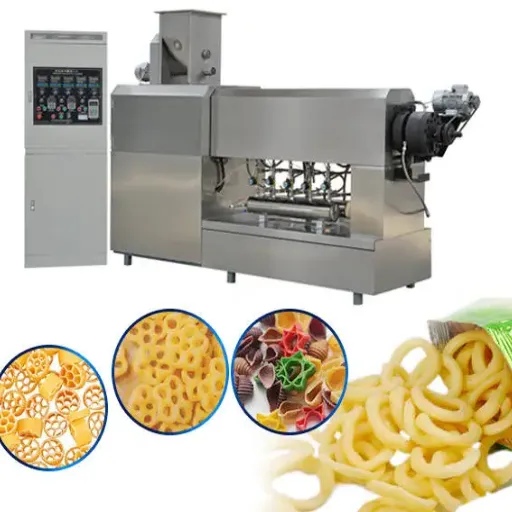
Use this 10-point checklist to compare quotes fairly:
- Is capacity stated clearly in kg/h of dried or finished pellets?
- Are all line components itemized with specifications?
- Is the stainless steel grade specified (SUS 304 or SUS 316)?
- Are voltage, frequency, and control language confirmed?
- Is the delivery lead time stated?
- What is the warranty period and what does it cover?
- Is installation, commissioning, and training included or quoted separately?
- Are spare parts and wear parts listed?
- How many molds or die sets are included?
- Are shipping terms (FOB, CIF, DAP) and Incoterms clear?
Ask every supplier the same questions. The goal is to compare apples-to-apples, not just the bottom-line snack pellet production line price.
Frequently Asked Questions
How much does a snack pellet production line cost?
A snack pellet production line price ranges from 15,000forasmall80–150kg/hlineto15,000forasmall80–150kg/hlineto180,000 or more for an industrial 1,000+ kg/h system. Most mid-range buyers spend 26,000–26,000–47,000.
What is included in a snack pellet production line price?
A typical price includes the mixer, extruder, conveyor, cutting/shaping system, dryer or fryer, de-oiler, flavoring drum, cooling conveyor, and control panel. It usually does not include shipping, customs, installation, electrical upgrades, packaging machines, or spare parts.
What factors affect snack pellet production line price most?
Capacity, automation level, extruder type, stainless steel grade, shape complexity, heating method, and supplier region have the biggest impact.
Is it cheaper to buy from China or India?
Chinese manufacturers usually offer the widest snack pellet machine price range and most customization. Indian suppliers can be cheaper for buyers in South Asia because shipping and import duties are lower. The best choice depends on your location and support needs.
Can I finance a snack pellet production line?
Yes. Common options include supplier payment terms (T/T, L/C, D/P), equipment leasing, and asset-backed loans. Compare total financing cost against expected monthly profit.
How long is the payback period?
Most well-run snack pellet lines pay back in 18–36 months. High-utilization lines with strong margins can pay back in under 12 months.
Should I buy new or used equipment?
New equipment is lower risk for first-time buyers because of warranty, support, and custom configuration. Used lines can save money if you have maintenance expertise and can verify condition.
Conclusion
The snack pellet production line price you see online is a starting point, not the final number. Capacity, automation, extruder type, and supplier region move the base price. Shipping, customs, installation, electrical work, molds, and spare parts add 25–50% on top. Financing options can spread the investment, and a clear ROI model keeps the purchase tied to real production economics.
Before you sign a quote, itemize every component, confirm what is not included, and model your payback period with conservative output and margin assumptions. The cheapest machine rarely wins when total cost of ownership is counted.
If you are ready to move forward, contact Shandong Loyal Industrial for an itemized snack pellet production line price quote. Our engineers can match a line to your capacity, product shape, and budget, and we support clients from initial consultation through commissioning.