Used Food Processing Machinery: A Complete Buyer’s Guide (2026)

Used food processing machinery can cut your upfront capital expense by 30–60%, but only if the equipment is food-safe, well-documented, and matched to your real production needs. For many buyers, the real question is not whether used equipment is cheaper. It is whether the long-term cost of repairs, energy, downtime, and compliance will erase those savings.
What if the “bargain” machine you found online ends up costing more than a new line within three years? That scenario is more common than most plant managers expect. A low purchase price is easy to celebrate. A failed inspection, obsolete control system, or missing spare parts can turn that celebration into an expensive production delay.
This guide will help you evaluate used food processing machinery with the same rigor you apply to any capital investment. You will learn what to inspect, how to calculate true total cost of ownership, and when a new, customized production line is the smarter long-term choice. Whether you run a snack plant, pet food facility, pasta operation, or emerging-market food processor, the framework below applies to your decision.
Key Takeaways
- Used food processing machinery typically costs 30–60% less upfront than new equipment, but hidden costs can offset those savings.
- Always verify food-grade materials, maintenance history, control system support, spare parts availability, and compliance certifications before buying.
- Simple, non-critical equipment (mixers, conveyors, tanks) is usually a safer used purchase than complex, quality-critical lines (extruders, fryers, sterilizers).
- Modern new production lines often win on energy efficiency, automation, warranty, customization, and 10-year total cost of ownership.
- Match your choice to production volume, product safety requirements, and how long you plan to run the equipment.
Why Buyers Consider Used Food Processing Machinery
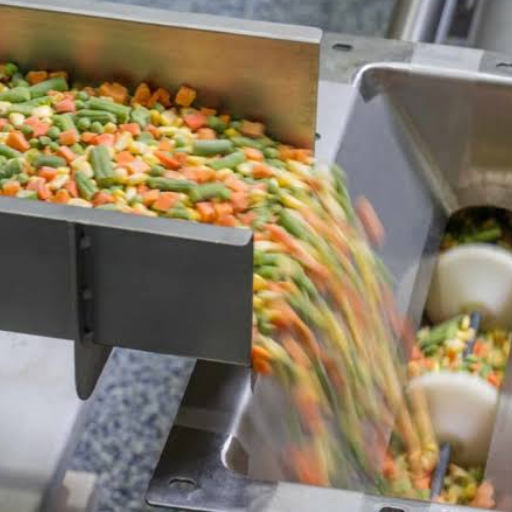
The appeal of used food processing equipment is straightforward. Lower purchase prices, faster availability, and sustainability benefits make secondhand machinery attractive to startups, smaller processors, and companies expanding capacity on a budget.
Lower Upfront Capital Requirements
A refurbished mixer, conveyor, or jacketed kettle can cost 30–60% less than a comparable new unit. For a startup launching its first product line, that difference can mean the difference between launching this year and waiting another funding round. A Vietnamese canned-fruit producer, for example, reportedly cut capital expenditure by roughly 58% using a refurbished can line while still matching modern output speeds.
Faster Availability
New custom production lines often require 12–24 weeks of manufacturing and shipping time. A used machine sitting in a dealer’s warehouse can sometimes ship within days. That speed matters when you need emergency replacement capacity or want to test a new product before committing to a full new line.
Sustainability and Circular Economy Value
Reusing equipment extends its useful life and reduces raw-material demand, manufacturing emissions, and landfill waste. For companies with net-zero commitments, refurbished machinery can support circular-economy goals.
However, these benefits only hold when the machine is truly fit for purpose. The next sections show you how to separate a smart purchase from a costly mistake.
Want a clearer picture of what new equipment costs before you decide? See our food processing equipment cost guide for a complete pricing breakdown.
What to Look For When Buying Used Food Processing Machinery
A thorough inspection is non-negotiable. Photos and seller descriptions are not enough. If you cannot visit in person, hire a qualified third-party inspector or request a live video demonstration with detailed close-ups.
Physical Condition and Wear
Check food-contact surfaces for corrosion, pitting, cracks, or residue that cannot be removed. Inspect seals, gaskets, bearings, belts, chains, and moving parts for wear. Look inside panels and guards, not just at a freshly painted frame. Excessive rust on structural steel or food-contact areas is often a sign that sanitation will be an ongoing battle.
Maintenance History and Operating Hours
Request complete service logs, repair records, and parts replacement history. Ask for the manufacturing date and total operating hours. Machines with long idle periods can sometimes degrade faster than machines run regularly, because seals dry out, lubricants separate, and corrosion starts in stagnant conditions.
Electrical and Control Systems
Verify that the control cabinet is complete, wiring is intact, and the software or operating system is still supported. Obsolete programmable logic controllers (PLCs) or human-machine interfaces (HMIs) can be expensive or impossible to replace. A machine that cannot connect to modern sensors or a central monitoring system may limit your future automation plans.
Food Safety Compliance and Certifications
Confirm the equipment meets current standards such as FDA 21 CFR Part 110, EU Regulation 852/2004, or your local equivalent. Look for documentation of CE marking, NSF certification, or third-party sanitary design approvals. Request the Declaration of Conformity, electrical schematics, manuals, and risk assessments.
Sanitary Design and Cleanability
Food-contact parts should be smooth, non-porous, crevice-free, and made of food-grade stainless steel, typically SUS 304 or SUS 316. The machine should tolerate high-pressure washdowns and chemical exposure. Internal components and lubricants must be food-safe, such as NSF-H1 rated. Ask yourself: can this unit be completely cleaned and sanitized at the end of every shift?
Spare Parts and After-Sales Support
Confirm that spare parts are still manufactured or can be standardized. Check whether the original equipment manufacturer still supports the model. Without parts, a minor breakdown can sideline the machine for weeks.
Quick Inspection Checklist
- No corrosion or pitting on food-contact surfaces
- Complete maintenance and repair history provided
- Control system is supported and programmable
- FDA, CE, NSF, or equivalent certifications documented
- SUS 304/316 food-grade stainless steel construction
- Spare parts available from OEM or standardized suppliers
- Live demo or third-party inspection completed
- Electrical and utility requirements match your facility
Used vs. New Food Processing Equipment: A Side-by-Side Comparison
The decision between used and new machinery depends on more than the purchase price. Use the comparison below to evaluate which option fits your operation.
| Factor | Used / Refurbished Equipment | New Equipment |
|---|---|---|
| Upfront cost | 30–60% lower | Higher initial investment |
| Lead time | Often immediate or weeks | Typically 12–24+ weeks |
| Warranty | Limited or none | Full manufacturer warranty |
| Customization | Usually fixed specifications | Recipe-specific, modular, scalable |
| Energy efficiency | Often older motors and controls | Modern high-efficiency systems |
| Compliance | Must verify current standards | Built to current FDA/CE/ISO requirements |
| Spare parts | Risk of obsolescence | OEM support for years |
| Automation | May lack modern controls | IoT-ready, predictive maintenance capable |
| Total cost of ownership | Can match or exceed new if repairs are frequent | Predictable when maintenance is planned |
| Best for | Simple, non-critical, low-volume equipment | High-volume, quality-critical, continuous lines |
When used makes sense: Simple, durable equipment like tanks, conveyors, standard mixers, or packaging auxiliaries where downtime is manageable and the machine is not central to product safety or texture.
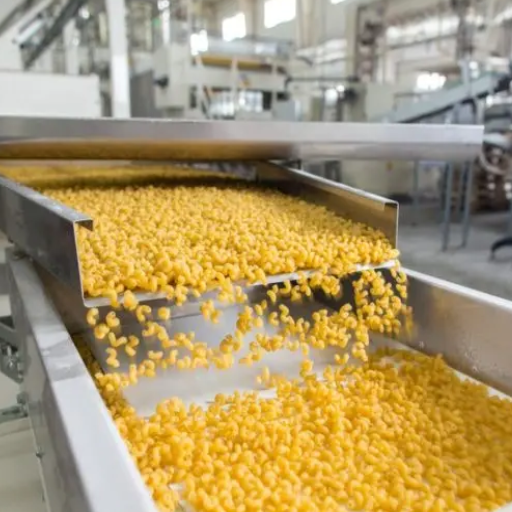
When new makes sense: Complex lines where recipe consistency, energy efficiency, hygiene, and uptime directly affect revenue. Examples include instant noodle production lines, pasta and macaroni systems, and pet food extrusion lines.
Calculating the True Cost of Used Machinery
The purchase price is only the first line in your budget. Total cost of ownership (TCO) includes every cost from delivery to decommissioning.
Hidden Upfront Costs
Shipping, customs, rigging, installation, electrical work, plumbing, and retrofitting can add 10–30% to the purchase price. If the machine needs new controls, upgraded motors, or sanitary modifications to meet your product requirements, those costs add up quickly.
Energy and Operating Costs
Older machines often run less efficiently than modern systems. A 20% increase in energy consumption is common for older motors, heating systems, or cooling units. Over a 10-year operating life, that difference can exceed the original purchase-price savings.
Maintenance and Downtime
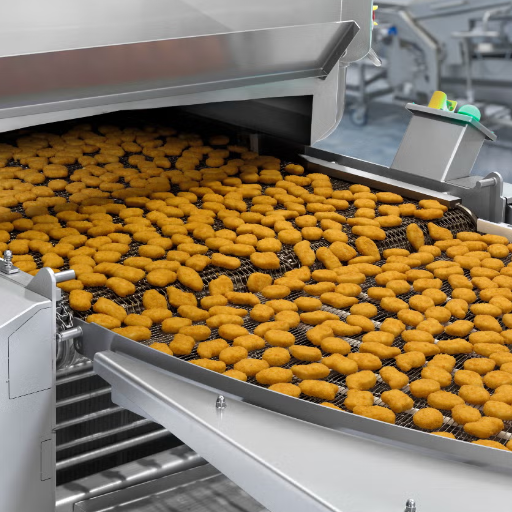
Used equipment usually has shorter remaining useful life and higher failure risk. Estimate repair frequency, parts costs, and the production value lost during downtime. A single week of unplanned downtime on a high-volume snack line can cost far more than the price difference between used and new equipment.
Resale and Depreciation
New equipment from a reputable manufacturer typically retains more residual value and is easier to resell or trade in. Used machines purchased from unknown sources may have little resale value if you outgrow them.
Mini-Story: When Marcus opened a small pet food facility in March 2025, he bought a used extruder at 45% below the cost of a new unit. Within 18 months, he had spent 30% of the new-machine price on control-system repairs, replacement screws, and lost production during two unplanned shutdowns. His energy bills were also 18% higher than projected. When he finally upgraded to a new, customized pet food production line, his yield consistency improved and his monthly maintenance costs dropped by half.
Red Flags That Should Stop a Purchase
Some deals are not worth the risk. Watch for these warning signs.
Missing Documentation
If the seller cannot provide manuals, schematics, maintenance records, or certification documents, walk away. You cannot validate safety or compliance without paperwork.
Obsolete or Unsupported Controls
A machine with a PLC that the manufacturer no longer supports is a future orphan. Replacement parts may be unavailable, and integration with modern plant systems may be impossible.
Non-Food-Grade Materials or Corrosion
Aluminum, carbon steel, or unknown alloys in food-contact zones create contamination and corrosion risks. Heavy rust anywhere on the frame suggests poor maintenance and possible hidden damage.
No Spare Parts Availability
If critical wear parts are proprietary and discontinued, the machine becomes disposable the first time a key component fails.
High-Pressure Sales Tactics
Reputable dealers welcome inspections, demonstrations, and third-party evaluations. If a seller rushes you or refuses a live test, consider it a red flag.
When a New Production Line Is the Smarter Choice
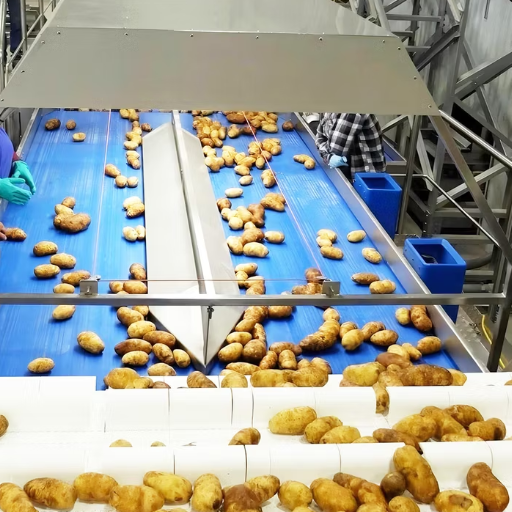
Used machinery can be a smart tactical purchase. For strategic, long-term production, a new line often delivers better value.
High-Volume, Continuous Operations
If your facility runs 20 hours per day, reliability and uptime dominate the decision. New equipment offers longer wear life, better warranty protection, and lower failure risk.
Strict Product Quality and Safety Requirements
Baby food, nutraceuticals, high-protein pet food, and ready-to-eat products require precise process control and hygienic design. New lines can be configured with recipe-specific parameters, CIP systems, and full traceability.
Need for Customization and Scalability
A complete food production line from Shandong Loyal can be tailored to your product, capacity, and facility layout. Modular designs let you add capacity or new functions without replacing the entire line.
Energy and Automation Goals
Modern extruders, dryers, fryers, and microwave systems use high-efficiency motors, optimized heating, and smart controls. These improvements reduce operating costs and support sustainability targets.
Mini-Story: Priya, a plant manager at a Southeast Asian snack company, considered a used extrusion line to save on capital costs. After modeling 10-year energy, maintenance, and downtime costs, she found the used line would actually cost 12% more than a new snack food production line with modern controls. She chose the new line, reduced energy use by 22%, and cut product changeover time from four hours to 90 minutes.
Not sure whether used or new fits your project? Contact our engineering team for a custom production line assessment and total cost of ownership estimate.
FAQ: Common Questions About Used Food Processing Machinery
Is it safe to buy used food processing machinery?
Yes, if the equipment is thoroughly inspected, properly documented, and built from food-grade materials that meet current regulations. Always verify compliance certifications and sanitary design before purchase.
How much can I save with refurbished food processing equipment?
Typical upfront savings range from 30% to 60% compared to new equipment. However, energy, maintenance, retrofitting, and downtime costs can reduce or eliminate those savings over time.
What certifications should used food machinery have?
Look for FDA compliance, CE marking, NSF certification, and documentation confirming food-grade stainless steel construction. Requirements vary by product and region, so verify against your local regulations.
Can used equipment meet modern hygiene standards?
Sometimes. Equipment with smooth, crevice-free, food-contact surfaces made from SUS 304 or SUS 316 stainless steel can often be brought into compliance. Machines with corroded, porous, or inaccessible surfaces usually cannot.
Where is the best place to buy used food processing machinery?
Established dealers who specialize in food and beverage equipment, offer inspection access, and provide refurbishment services are generally safer than auction sites or private sellers. Marketplaces like Aaron Equipment list a wide inventory, but buyer due diligence is still essential.
Conclusion
Used food processing machinery can be a practical way to lower upfront capital costs and speed up deployment. The key is to treat it as a capital decision, not a bargain hunt. Inspect the physical condition, verify compliance, demand documentation, and model the full total cost of ownership before you sign.
For simple, non-critical equipment, used machinery often makes sense. For complex, high-volume, or quality-critical lines, a new, customized production line usually delivers better long-term value through energy efficiency, automation, warranty protection, and expert support.
At Shandong Loyal Industrial Co., Ltd., we design food production lines tailored to your product, capacity, and compliance requirements. Whether you are expanding capacity, replacing legacy equipment, or launching a new product, our engineering team can help you choose the right configuration.
Ready to compare your options? Request a quote for a custom food processing solution and get a detailed total cost of ownership analysis for your project.