Food Processing Equipment Cost: 2026 Pricing Guide for Buyers
Food processing equipment cost typically ranges from 1,000 for a single machine to 1,000 for a single machine to 5,000,000 or more for a turnkey industrial line, with most commercial production lines falling between 150,000 and 150,000 and 1,500,000. That wide range surprises many first-time buyers. It also explains why two quotes for the same product can differ by hundreds of thousands of dollars.
Her story is common. Sticker price is not the same as project cost.
This guide will help you avoid that mistake. You will learn what drives food processing equipment cost and food processing machinery cost, how prices scale by capacity, which hidden expenses catch buyers off guard, and how to calculate total cost of ownership (TCO) and ROI. You will also get a practical checklist for requesting an accurate quote from any manufacturer.
Key Takeaways
- Most commercial food processing lines cost 150,000–150,000–1,500,000, while individual machines range from 1,000 to 1,000 to 100,000.
- Equipment sticker price is only 35–45% of total 10-year ownership cost; energy, labor, maintenance, and downtime make up the rest.
- Five-year TCO typically runs 145–165% of the initial equipment investment.
- 304 stainless steel is standard for most food equipment; 316 stainless steel adds 8–18% to finished cost but pays off in harsh environments.
- A complete RFQ should cover base price, scope of supply, installation, training, spare parts, warranty, and acceptance testing.
What Is Food Processing Equipment Cost?
Food processing equipment cost is the total capital investment required to purchase, install, and commission machinery used to transform raw ingredients into finished or semi-finished food products. It includes the equipment sticker price, freight, customs duties, site preparation, utilities, training, spare parts, and commissioning. It is not the number on the invoice alone.
Think of it like buying a car. The list price is only the starting point. Taxes, shipping, registration, insurance, fuel, and maintenance quickly reshape the real budget. The same principle applies to food processing machinery, except the numbers are much larger and the stakes are higher.
A single commercial meat grinder might cost 15,000.Acompletemedium−scalesnacklinemightcost15,000.Acompletemedium−scalesnacklinemightcost800,000. The difference is not just size. It is throughput, automation, material grade, compliance requirements, and the scope of support the manufacturer provides.
Factors That Drive Food Processing Equipment Cost
Several variables determine how much you will actually pay. Understanding them helps you compare quotes fairly and avoid surprises.
Production Capacity and Throughput
Higher capacity almost always means higher upfront cost. A line rated at 100 kg/hour uses smaller motors, simpler frames, and less control logic than a line rated at 1,000 kg/hour. However, larger lines usually deliver a lower cost per kilogram of output. According to industry benchmarks, cost per kg of hourly capacity drops from roughly 1,500–1,500–2,250/kg/h for small lines to 750–750–1,000/kg/h for large industrial lines.
Level of Automation
Manual and semi-automatic equipment costs less upfront but requires more labor. Fully automated lines with programmable logic controllers (PLCs), touchscreens, sensors, and vision systems typically add 15–25% to the base machine price. Over a 10-year period, that extra investment often pays for itself through labor savings, consistency, and reduced waste.
Material Grade and Hygienic Design
Food-grade stainless steel is the standard for food contact surfaces. 304 stainless steel handles most applications at a lower stainless steel food processing equipment cost. 316 stainless steel resists salt, acid, and chloride better, making it essential for seafood, pickles, citrus, and aggressive cleaning chemicals. The raw material premium for 316 is roughly 20–50%, but because steel is only one part of total manufacturing cost, the finished equipment premium is usually 8–18%.
Product Category and Process Complexity
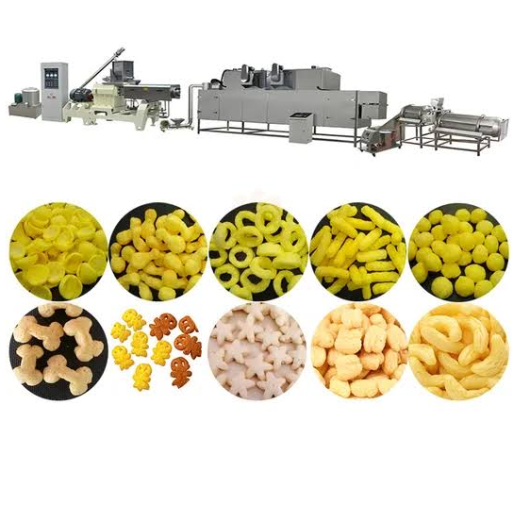
A simple dry-mixing line costs far less than a line that requires extrusion, frying, seasoning, cooling, and packaging. Thermal processes, refrigeration, and precise moisture control add cost because they need more advanced engineering and controls. For example, a fried snack production line includes fryers, oil filtration, and temperature control systems that a dry snack line does not need.
Customization, OEM, and Modular Upgrades
Off-the-shelf machines cost less than custom-engineered solutions. However, food manufacturers rarely operate with truly standard recipes. Recipe-specific dies, molds, cutters, and control recipes can add 5,000–5,000–50,000 or more to a project. Modular designs help because you can start with core equipment and add capacity or automation later.
Regional Sourcing and Logistics
Where equipment is built affects price. Chinese manufacturers often offer competitive pricing due to integrated supply chains and scale. European suppliers may charge 30–60% more but sometimes offer faster compliance documentation for EU markets. Shipping, customs duties, and import taxes can add 5–20% to the landed cost, depending on the destination.
Certification and Compliance
Equipment sold into regulated markets may need CE marking, FDA conformance, HACCP documentation, or third-party hygienic design certifications such as 3-A or EHEDG. Meeting these standards adds engineering, documentation, and testing cost. Skipping them to save money is risky if an audit or customer qualification fails later.
Food Processing Equipment Cost by Production Scale
One of the most useful ways to estimate industrial food processing equipment cost is to match cost with production scale. The table below gives practical ranges based on current market data.
| Scale | Capacity | Total Investment | Cost per kg/h Capacity |
|---|---|---|---|
| Small-scale | 100–300 kg/h | 150,000–150,000–450,000 | 1,500–1,500–2,250 |
| Medium-scale | 300–1,000 kg/h | 450,000–450,000–1,500,000 | 900–900–1,500 |
| Large-scale industrial | 1,000+ kg/h | 1,500,000–1,500,000–5,000,000+ | 750–750–1,000 |
Source: Uyarli Synergy Food Production Line Cost Guide 2025
Small-scale lines suit startups, test facilities, and niche products. They require less floor space and utility infrastructure but have higher per-unit operating costs. Medium-scale lines serve growing manufacturers who need repeatable output without the capital burden of a full industrial plant. Large-scale lines demand serious engineering, civil works, and utility upgrades, but they deliver the lowest cost per kilogram produced.
When a pet food co-manufacturer in Vietnam upgraded from a 200 kg/h dry-type line to a 1,000 kg/h wet-type line, the equipment investment jumped from 95,000to95,000to280,000. Over three years, the lower energy use and higher throughput cut the cost per ton by 34%. The larger line paid for itself in 26 months.
Common Equipment Types and Price Ranges
Individual machine prices vary by capacity, brand, and condition. The ranges below are typical for new industrial equipment. Used or refurbished units usually sell for 50–70% of new cost.
| Equipment Type | Typical Price Range (New) |
|---|---|
| Industrial meat grinder | 15,000–15,000–80,000 |
| Jacketed kettle / cooking mixer | 3,750–3,750–15,000 |
| Pasteurizer | 40,000–40,000–180,000 |
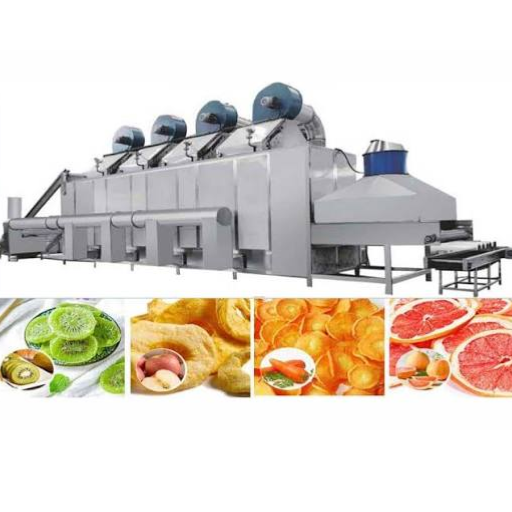
| Industrial oven or tunnel dryer | 60,000–60,000–300,000 |
| Continuous fryer | 50,000–50,000–200,000 |
| Single-screw extruder | 5,000–5,000–25,000 |
| Twin-screw extruder | 20,000–20,000–100,000+ |
| Industrial microwave dryer/sterilizer | 15,000–15,000–80,000 |
| Packaging line (filler, sealer, labeler) | 20,000–20,000–150,000 |
| Metal detector / X-ray inspection | 8,000–8,000–35,000 |
For readers focused on specific applications, our dedicated guides break down costs in more detail. See the pet food production equipment cost guide for extruder, dryer, and packaging pricing, or the modified starch production line cost guide for capacity-based pricing in that niche.
Complete Production Line Cost Breakdown
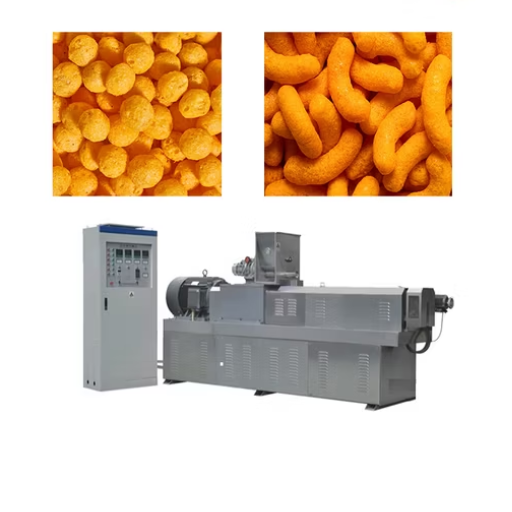
A complete food production line is more than the sum of its machines. A realistic budget divides costs into six main categories.
Core Processing Machinery
This is the equipment that actually transforms the product. It includes mixers, grinders, extruders, formers, cutters, pasteurizers, fryers, ovens, and dryers. For many lines, core machinery represents 40–60% of total equipment cost. In pet food extrusion, for example, the extruder alone can represent 25–40% of the total line cost. Learn more about our complete extrusion solutions for snack, pet food, and cereal applications.
Conveying and Material Handling
Conveyors, bucket elevators, hoppers, and transfer systems move product between process steps. They are easy to underestimate but essential for line efficiency. Expect to budget 40,000–40,000–120,000 for conveying on a medium-scale line.
Thermal Processing and Drying Equipment
Fryers, ovens, pasteurizers, dryers, freezers, and sterilizers control safety, shelf life, and texture. This category often includes the most energy-intensive equipment. Industrial microwave systems, for instance, can reduce drying time by up to 80% and lower energy use compared to conventional gas dryers. See the industrial microwave sterilizer cost guide for application-specific pricing.
Packaging and End-of-Line Equipment
Fillers, sealers, vacuum packers, flow wrappers, cartoners, labelers, and palletizers protect the product and prepare it for distribution. Packaging lines can range from 20,000forsimpleequipmentto20,000forsimpleequipmentto200,000+ for high-speed integrated systems.
Automation, Controls, and Quality Systems
PLCs, HMIs, sensors, vision systems, metal detectors, and checkweighers add cost upfront but reduce labor and quality risk. Budget 30,000–30,000–100,000 for automation on a medium-scale line.
Installation, Commissioning, and Training
Even the best equipment will not perform if it is installed poorly. Installation, commissioning, and operator training typically run 8–12% of equipment value. For complex lines, this can rise to 15% or more.
Hidden Costs Every Buyer Should Budget For
Hidden costs are the main reason projects overrun their budgets. A common rule of thumb is that year-one total cost runs 118–122% of the equipment sticker price after installation, training, and spare parts are included.
Shipping, Customs, and Insurance
International freight for a full production line can cost 5,000–5,000–50,000 depending on distance, volume, and whether sea or air freight is used. Customs duties, import taxes, and cargo insurance add another 5–15%.
Site Preparation and Utility Upgrades
Food processing equipment needs power, water, steam, compressed air, drainage, and sometimes refrigeration. Upgrading an existing building to handle these loads can cost 10–15% of the total project. Greenfield facilities are more expensive but designed around the process from the start.
Initial Spare Parts and Tooling
Wear parts such as screws, barrels, dies, cutter blades, belts, and seals should be on hand at startup. Budget 3–5% of equipment value for the initial spare parts package.
Regulatory Certification and Audits
HACCP, ISO 22000, FSSC 22000, SQF, BRC, and customer audits may require documentation, calibration, and minor equipment modifications. Plan for 5–10% of total project cost for compliance-related expenses.
First-Year Consumables and Maintenance
Lubricants, cleaning chemicals, packaging film, and preventive maintenance labor add up quickly. Annual maintenance typically runs 3–6% of equipment value.
Downtime and Ramp-Up Losses
New lines rarely hit full speed on day one. Yield loss, rework, and unplanned downtime during ramp-up can cost thousands of dollars per day. Experienced manufacturers build a 10–15% contingency into their first-year operating budget.
New vs. Used Food Processing Equipment
Used or refurbished equipment can save 30–50% compared with new equipment. That makes it attractive for startups and non-critical applications. However, it also carries risks.
When Used Equipment Makes Sense
Used equipment works well for simple, durable machines such as tanks, conveyors, and standard mixers. It is also a good option when you need a temporary capacity boost or when the machine is not central to product quality.
Inspection Checklist and Red Flags
Before buying used equipment, inspect the following:
- Wear parts condition (screws, barrels, seals, belts)
- Electrical and control system compatibility
- Availability of spare parts and technical documentation
- Evidence of proper sanitation and maintenance history
- Compliance with current food-safety standards
Avoid equipment with cracked welds, corroded food-contact surfaces, outdated controls, or missing documentation. The savings can disappear quickly if you cannot source parts or pass an audit.
TCO Comparison: New vs. Refurbished
A refurbished extruder might cost 50% less than a new one. However, if it consumes 20% more energy and needs twice as many repairs, the 10-year TCO may be nearly the same. Always model energy, maintenance, downtime, and residual value before deciding.
Total Cost of Ownership and ROI
Purchase price is a poor decision metric on its own. The real question for total cost of ownership food processing equipment buyers should ask is: how much will this equipment generate or save over its useful life?
Why Purchase Price Is Only 35–45% of 10-Year Cost
Over a decade, energy, labor, maintenance, downtime, and yield loss often exceed the original invoice. A budget-tier pasteurizer priced at 180,000mighthavea10−yearTCOof180,000mighthavea10−yearTCOof570,000. A premium unit priced at $310,000 might have a similar 10-year TCO because it uses less energy, breaks down less often, and holds higher residual value.
Key TCO Components
| Component | Typical Impact |
|---|---|
| Energy | 0.15–0.15–0.30 per kg produced |
| Maintenance and spare parts | 3–6% of equipment value per year |
| Labor | Varies by automation level |
| Downtime | 500–500–5,000 per hour on high-volume lines |
| Yield loss | 2–10% of raw material cost |
| Compliance upgrades | 5–8% of purchase price per year in regulated categories |
Simple ROI and Payback Formulas
Use these formulas to evaluate any food processing equipment ROI calculation:
- ROI (%) = (Net Financial Benefit ÷ Total Investment Cost) × 100
- Payback Period = Total Investment ÷ Annual Net Benefit
For example, a 1,000,000packagingautomationprojectthatsaves1,000,000packagingautomationprojectthatsaves1,286,000 per year has a first-year ROI of 28.6% and a payback period of about 9 months. Most food processing equipment projects pay back in 2–5 years, depending on capacity and automation level.
Example Payback Scenarios
- Small snack line ($200,000 investment): Labor savings and consistency improvements often pay back in 18–36 months.
- Medium pet food line ($600,000 investment): Higher throughput and lower energy use can deliver payback in 24–36 months.
- Industrial microwave drying upgrade ($50,000 investment): Energy savings and faster throughput can pay back in 12–24 months for a 500 kg/h facility.
Regional Cost Comparisons
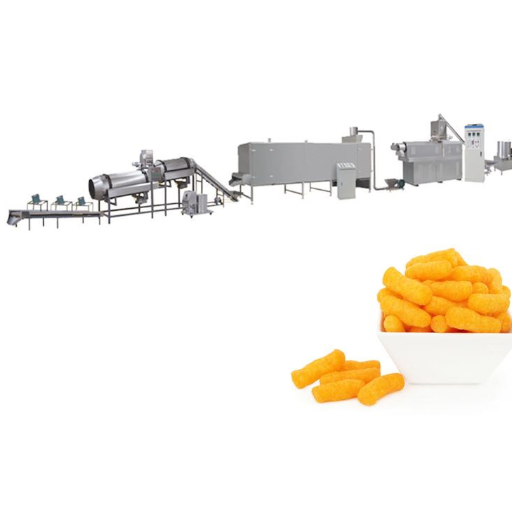
Where you source equipment affects price, lead time, and support. Here is what buyers typically experience.
China
Chinese manufacturers offer competitive pricing and wide customization options. Lead times are usually 30–90 days. Many suppliers provide turnkey engineering, installation, and commissioning support. The key is to verify certifications, visit the factory or request a virtual audit, and confirm spare parts availability.
Europe
European equipment often commands a 30–60% premium over Chinese equivalents. The trade-off is usually faster compliance documentation for EU markets, robust hygienic design, and established after-sales networks. Lead times can be longer for complex custom equipment.
Turkey
Turkish suppliers sit in the middle on price and quality. They are strong in bakery, confectionery, and dairy equipment. Regional proximity to Europe and the Middle East can reduce shipping costs and lead times.
North America
North American suppliers offer strong local support and fast parts availability. Prices are typically higher than Asian imports but lower than premium European brands for equivalent specifications. Domestic sourcing simplifies compliance with FDA and USDA requirements.
How to Get an Accurate Food Processing Equipment Quote
An accurate quote starts with clear communication. The more detail you provide, the more precise the proposal will be.
Information to Share with Manufacturers
Before requesting a quote, prepare the following:
- Product name and recipe basics
- Target capacity (kg/hour or units/hour)
- Raw material specifications
- Finished product requirements
- Available floor space and ceiling height
- Utility availability (power, water, steam, compressed air)
- Budget range and timeline
- Target certifications (CE, FDA, HACCP, etc.)
Quote Checklist
When you receive a proposal, verify it includes:
- Base equipment price
- Scope of supply (what is included and excluded)
- Optional add-ons and their prices
- Shipping terms (FOB, CIF, DDP)
- Installation and commissioning cost
- Training duration and location
- Initial spare parts package
- Warranty terms and conditions
- Payment schedule
- Lead time and delivery terms
Factory Acceptance Testing and Site Acceptance Testing
Request Factory Acceptance Testing (FAT) before shipment and Site Acceptance Testing (SAT) after installation. These tests prove the equipment meets agreed performance criteria. Defining acceptance criteria in the purchase order protects both buyer and seller.
Frequently Asked Questions
How much does food processing equipment cost?
Individual machines typically cost 1,000–1,000–100,000 new. Complete production lines range from 150,000∗∗forsmall−scalesystemsto∗∗150,000∗∗forsmall−scalesystemsto∗∗1,500,000+ for medium-scale lines and $5,000,000+ for large industrial plants.
What is the most expensive part of a food processing line?
Core processing machinery usually represents 40–60% of total equipment cost. In extrusion-based lines, the extruder alone can be 25–40% of the total. Thermal processing, refrigeration, and packaging equipment are often the next largest categories.
Is 316 stainless steel worth the extra cost?
316 stainless steel is worth the premium for high-salt, high-acid, or chloride-heavy environments such as seafood, pickles, citrus, and coastal facilities. For general food applications, 304 stainless steel is sufficient and more cost-effective.
How long does food processing equipment last?
With proper maintenance, most food processing equipment lasts 15–25 years. Harsh environments, poor sanitation, and skipped preventive maintenance can reduce lifespan significantly. Equipment in corrosive environments may last 8–15 years if built from 304 rather than 316.
What is a reasonable payback period for food processing equipment?
Most food processing equipment projects pay back in 2–5 years. High-volume packaging automation can pay back in under 2 years, while specialized thermal equipment may take 4–6 years. Always model TCO, not just purchase price, when estimating payback.
Conclusion
Food processing equipment cost is not a single number. It is a system of decisions about capacity, automation, materials, compliance, and long-term operating expenses. Buyers who focus only on the sticker price often miss the bigger picture and end up over budget.
Keep these points in mind as you plan your investment:
- Match equipment scale to realistic near-term demand, not wishful five-year projections.
- Budget 118–122% of sticker price for year-one total cost.
- Model 10-year TCO before choosing between budget and premium options.
- Ask for FAT and SAT criteria before signing the purchase order.
- Choose materials and certifications based on your actual product and market.
If you are planning a new line or upgrading existing equipment, start with a clear scope and a realistic budget. Contact our team to discuss your product, capacity, and compliance needs. We can help you build a complete food production line that fits your budget and grows with your business.