
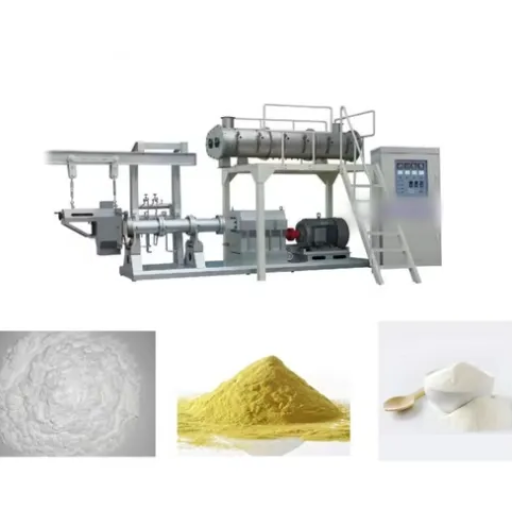
Modified Starch Production Troubleshooting: Common Defects & Fixes

The fastest way to solve modified starch production problems is to match each defect to its root cause. Dark color or off-odor usually means excessive heat or residence time. Off-spec viscosity points to dosing, moisture, or pH drift.
High final moisture or caking signals drying or packaging issues. Sudden extruder stops are almost always power, emergency-stop, or overheating faults. Below is a practical field guide that helps operators diagnose symptoms, fix them, and prevent them from coming back.
When a batch goes wrong, every minute of downtime costs money. Raw starch, reagents, energy, and labor are wasted while downstream customers wait. Most plant managers we speak with have process manuals, but those manuals rarely answer the urgent question: Why did this specific batch fail? This article gives you a symptom-based modified starch production troubleshooting framework for extruded, chemically modified, and physically modified starch lines.
Key Takeaways
- Dark color or off-odor in modified starch is usually caused by excessive temperature or long residence time; reduce heat, increase feed rate, or adjust screw speed.
- Off-spec viscosity is most often traced to incorrect reagent dosage, inconsistent moisture, or pH drift; automated pH control has improved first-pass yield by 18% in paper-coating starch operations.
- High final moisture and storage caking are prevented by drying to 8–12% moisture, cooling before packaging, and verifying bag seals.
- Sudden extruder stoppages should be checked in this order: power supply, emergency stop, and overheating/cooling system.
- A preventive maintenance schedule for screws, screens, seals, and sensors stops most defects before they reach the finished product.
Want a production-line audit before the next batch fails? Contact our engineers for a customized troubleshooting and maintenance plan.
How to Approach Modified Starch Production Troubleshooting Systematically
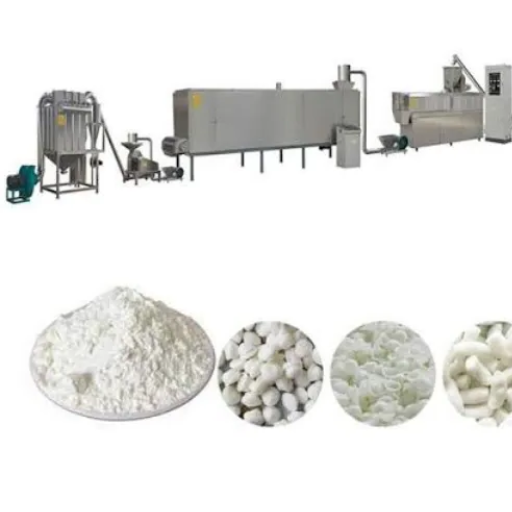
Jumping straight to a fix often hides the real problem. The best operators follow a simple loop: symptom → root cause → corrective action → prevention. This loop works whether you run a twin-screw extrusion line, a chemical reactor train, or a drum-dryer operation.
Start with the batch record. Note the raw material lot, operator, shift, set temperatures, screw speed, feed rate, moisture readings, pH logs, and dryer outlet temperature. Compare the failed batch to the last three good batches. The difference usually points to the cause.
Next, check the quality-control trend chart. Modified starch quality control tests are your early-warning system. Watch Water Absorption Index (WAI), Water Solubility Index (WSI), degree of substitution (DS), viscosity, moisture, and particle size. A drop in WSI before the viscosity drift appears can alert you to under-modification hours before the batch is rejected.
Finally, verify calibration. pH probes, temperature sensors, mass-flow meters, and moisture analyzers drift over time. A process that looks out of control is often just an instrument that needs recalibration. One plant we worked with traced six weeks of viscosity swings to a single pH probe that was reading 0.4 units high.
Common Modified Starch Production Problems: Defects, Causes, and Fixes
This section covers the modified starch production problems operators see most often. These modified starch manufacturing defects show up in extrusion, chemical reactor, drying, and packaging stages. Each defect is paired with the most likely causes and the corrective actions that usually fix it.
Dark Color or Off-Odor
Symptom: The finished starch is yellowish, brownish, or has a burnt or sour smell.
Likely causes:
- Barrel, dryer, or reactor temperature too high
- Residence time too long because feed rate is too low or screw speed is mismatched
- Burned residue left in the extruder barrel, die, or dryer from a previous run
- Localized hot spots from poor air or jacket distribution
Corrective actions:
- Reduce heat in the affected zone
- Increase feed rate or adjust screw speed to shorten residence time
- Clean the barrel, die, and dryer after off-odor batches
- Install multi-point temperature sensors to find hot spots
Prevention: Schedule regular CIP (clean-in-place) cycles and keep a cleaning log after every product changeover.
Off-Spec Viscosity
Symptom: Paste viscosity is too high, too low, or varies between batches.
Likely causes of modified starch viscosity problems:
- Incorrect reagent or enzyme dosage
- Moisture content off target
- pH drift in chemical modification
- Raw material variability between starch lots
- Extruder barrel temperature or screw speed outside the recipe window
Corrective actions:
- Recalibrate dosing pumps and mass-flow meters
- Check inbound starch moisture and adjust preconditioning
- Install or service automated pH control on reactor lines
- Lock recipes by raw material lot and update them when suppliers change
- Match barrel temperature and screw speed to the recipe card
Mini-story: A paper-coating plant in Southeast Asia kept rejecting batches. The cooked starch viscosity rose after cooling. The operator adjusted temperature, then enzyme dose, then dryer time. Nothing worked. A process audit found the pH loop was manual and drifting 0.3–0.5 units during the reaction. After installing an automated pH controller, first-pass yield improved by 18% and customer complaints dropped by half.
Prevention: Run viscosity checks at the reaction outlet, not only at final QC. Trend the data so small drift is caught before it becomes a rejected batch.
High Final Moisture
Symptom: Moisture analysis shows the product above 12–14%, or the starch feels damp.
Likely causes:
- Dryer temperature too low
- Residence time in the dryer too short
- Feed rate to the dryer higher than design
- Poor air distribution creating wet zones
- Product packed before cooling, which traps residual moisture
Corrective actions:
- Raise dryer temperature in 5°C steps
- Extend drying time or reduce feed rate
- Add a conditioning/cooling step before packaging
- Check dryer air nozzles, fans, and filters for blockages
Prevention: Monitor outlet moisture continuously and alarm when it trends above the upper control limit.
Poor Solubility or Low WSI
Symptom: The starch does not dissolve or swell properly in cold water, and WSI test results are below target.
Likely causes:
- Under-modification from low temperature, short reaction time, or low enzyme/reagent dose
- Feed moisture too low for the modification route
- Insufficient shear in extrusion
- Raw starch with high amylose content that needs a stronger modification recipe
Corrective actions:
- Increase extrusion barrel temperature, reaction time, or enzyme dose
- Adjust preconditioning to reach target feed moisture
- Inspect screw and die configuration for adequate shear
- Reformulate for high-amylose starches
Prevention: Validate WSI at the extruder or reactor outlet so under-modified material is caught early.
Inconsistent Particle Size
Symptom: Sieving shows too many fines or oversize particles, or customers report dispersion problems.
Likely causes:
- Worn mill screen or sifter mesh
- Grinder settings moved out of position
- Moisture variability before milling
- Feed rate to the grinder inconsistent
Corrective actions:
- Replace screens and inspect hammer mill beaters
- Recalibrate grinder gap settings
- Stabilize moisture before the grinder
- Add a feeder with feedback control
Prevention: Track particle size distribution per shift and replace wear parts before they fail.
Caking During Storage
Symptom: Product clumps inside the bag within days or weeks of packaging.
Likely causes:
- Final moisture above 8–12%
- Product packed while still warm
- Packaging failure or poor bag seals
- Storage area with high humidity or temperature swings
Corrective actions:
- Dry to 8–12% moisture before packaging
- Cool product to near ambient temperature before bagging
- Check bag-seal integrity and switch to moisture-barrier packaging if needed
- Improve warehouse humidity control
Prevention: Hold packaged samples under accelerated storage conditions and test for caking weekly.
Modified Starch Extruder Troubleshooting for Twin-Screw Lines
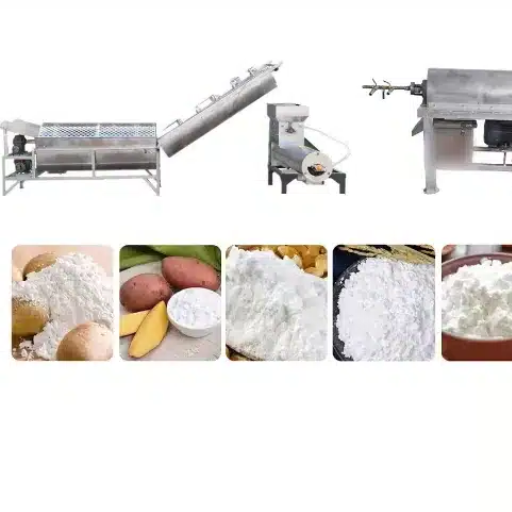
The twin-screw extruder is the heart of many physical modification lines. When it misbehaves, the defect shows up fast. Here is how to diagnose the most common modified starch extruder troubleshooting issues and common defects in extruded modified starch.
Sudden Extruder Stoppage
When the extruder stops without warning, check these three items in order.
- Power supply: Verify the main plug, circuit breaker, and fuses. Reset the breaker once. If it trips again, call an electrician.
- Emergency stop: Confirm the E-stop button was not accidentally pressed. Reset it and restart the startup sequence.
- Overheating: Read the temperature gauges. Allow the barrel to cool. Inspect cooling water flow, fans, ventilation ducts, and screw friction.
A blocked cooling line is a common cause of thermal shutdown. Check it first if the barrel temperature was rising before the stop.
Viscosity and Texture Issues from Extrusion
If the product is too thick, too thin, or inconsistent, the extrusion profile is usually the cause.
- Barrel temperature too high: breaks starch molecules further, lowering viscosity
- Barrel temperature too low: under-gelatinizes starch, raising viscosity and lowering solubility
- Screw speed too high: increases specific mechanical energy (SME) and can over-modify
- Feed moisture inconsistent: changes gelatinization and final texture
- Worn screw elements: reduce shear and create dead zones
Use the recipe card as your baseline. Change only one parameter at a time and wait three to five residence times before judging the result.
Mini-story: Maria, a shift supervisor at a pregelatinized starch plant, noticed something odd. Monday-morning batches always had lower viscosity than Friday batches. The recipe was the same. After checking logs, she found the night crew was flushing the cooling circuit every Sunday. That dropped barrel zone 3 temperature by 12°C for the first hour of Monday production. A simple pre-heat sequence solved the issue.
Mechanical Wear Symptoms
Watch for these warning signs:
- Unusual vibration or noise from the gearbox
- Rising motor current or torque spikes
- Product temperature higher than setpoint even with cooling on
- Visible metal particles in the product
These usually mean worn screws, barrel liners, bearings, or seals. Inspect screw elements and barrel every 500–1,000 operating hours, and budget 3–5% of equipment cost per year for wear-part replacement.
For more guidance on extruder setup, see our guide on twin screw extruder for modified starch.
Chemical Reactor Troubleshooting
Chemical modification routes such as etherification, esterification, cross-linking, and oxidation use reactors instead of extruders. The failure modes are different, but the diagnostic logic is the same.
pH Drift and Off-Spec Substitution
pH is the single most important control point in chemical starch modification. Small deviations cause under-substitution or over-substitution, which changes viscosity, stability, and reagent residue levels.
Likely causes:
- Manual pH adjustment
- Dosing pump calibration drift
- Inadequate mixing in the reactor
- Buffer capacity too low
Corrective actions:
- Install automated pH control with redundant probes
- Calibrate dosing pumps weekly
- Verify agitator speed and baffle design
- Use buffered reagent solutions where appropriate
Scale Formation and Heat-Transfer Loss
White or brown scale on reactor walls reduces heat transfer and creates local hot spots. Scale also flakes off and contaminates product.
Likely causes:
- Hard water in jacket or wash water
- Residual starch left after batches
- Reactor surface too rough
Corrective actions:
- Use softened or demineralized water
- Run CIP cycles after every batch
- Specify reactors with polished internal surfaces
Residual Reagents and Purity Issues
Food-grade modified starch must meet strict residue limits. If tests show excess reagent or salts, the washing step is usually incomplete.
Corrective actions:
- Switch to counter-current washing
- Monitor wash effluent conductivity
- Extend washing time until conductivity stabilizes
- Validate the wash step for each product grade
For reactor-specific equipment guidance, see our article on chemical starch modification equipment.
Drying and Packaging Troubleshooting
Even a perfectly modified starch can be ruined by poor drying or packaging. This stage is where moisture, contamination, and caking issues often begin.
Non-Uniform Drying and Hot Spots
A dryer with uneven air distribution creates wet zones and overheated zones in the same load. Wet zones lead to caking. Overheated zones cause discoloration.
Corrective actions:
- Map dryer air velocity and temperature across the bed
- Clean or replace clogged nozzles, filters, and fans
- Reduce load thickness if the dryer is overloaded
- Add mixing or raking to expose all particles evenly
Moisture Control Before Packaging
The final moisture target for most modified starches is 8–12%. Below 8% can create dust and handling losses. Above 12% invites caking and microbial growth.
Best practice: Cool the product to within 10°C of ambient temperature before bagging. Warm product continues to release moisture inside the bag, which condenses and causes clumping.
Need help selecting the right drying system for your starch line? Explore our industrial microwave drying solutions for fast, uniform moisture control.
Preventive Maintenance to Avoid Common Defects
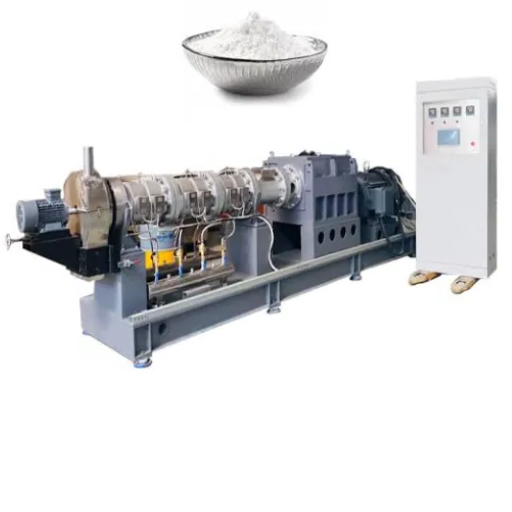
Troubleshooting is reactive. Preventive maintenance is what keeps modified starch production troubleshooting from becoming a daily routine. A simple schedule saves more money than any emergency repair.
Daily Checks
- Inspect screws, barrel, dies, and seals for wear or residue
- Check for leaks, abnormal noise, and vibration
- Verify pH and temperature probes against reference standards
- Clean screens, filters, and conveyors
Weekly Checks
- Calibrate dosing pumps and mass-flow meters
- Inspect mill screens and sifter meshes
- Test emergency stops and safety interlocks
- Review batch records for drift trends
Monthly Checks
- Replace wear parts before they reach failure limits
- Service gearboxes, bearings, and chains per manufacturer schedules
- Run full CIP cycles and inspect reactor surfaces
- Update recipe cards if raw material specs have changed
A well-maintained modified starch production line runs with fewer rejects, lower energy use, and longer equipment life. Our team can help you build a maintenance plan matched to your recipe mix and operating hours.
Mini-story: A corn-starch modifier in Eastern Europe was replacing extruder screws every 14 months and could not understand why. Wear was concentrated on the kneading blocks in zone 5. After reviewing the recipe, engineers found the abrasive filler added to one specialty grade was running 40 hours per week at high screw speed. They switched to a harder screw material for that grade and extended screw life to 28 months, cutting spare-part costs by 45%.
FAQ: Modified Starch Production Troubleshooting Questions
Below are quick answers to the questions operators ask most often.
Why does modified starch turn dark during production?
Dark color is usually caused by excessive temperature or long residence time. Reduce heat, increase feed rate, or adjust screw speed, and clean any burned residue from the barrel or dryer.
What causes viscosity to drift between batches?
Viscosity drift is most often caused by incorrect reagent dosage, moisture variation, or pH drift. Check calibration of dosing pumps and pH probes, and verify raw material moisture.
How do I stop modified starch from caking in storage?
Dry to 8–12% moisture, cool before packaging, verify bag seals, and store in a dry, temperature-stable warehouse.
Why does my modified starch extruder keep stopping?
Check power supply, circuit breaker, emergency stop button, and overheating/cooling system in that order. Repeated breaker trips suggest an electrical fault.
How do I know if my modified starch is under-modified?
Low Water Solubility Index (WSI) and poor cold-water swelling are the main signs. Increase temperature, reaction time, or enzyme/reagent dose.
What moisture level should modified starch be before packaging?
Most modified starches should be 8–12% moisture before packaging. Above 12% increases caking and microbial risk.
Conclusion
Modified starch production troubleshooting becomes straightforward when you treat every defect as a signal. Dark color points to heat or residence time. Off-spec viscosity points to dosing, moisture, or pH. High moisture and caking point to drying and packaging.
Sudden extruder stops point to power, safety, or cooling faults. The operators who solve problems fastest are the ones who read these signals early and act on them with a checklist.
Start with the symptom, compare the failed batch to recent good batches, check instrument calibration, and fix the root cause before adjusting everything else. Then lock the corrective action into your preventive maintenance schedule so the defect does not repeat.
If you are struggling with recurring defects, rising scrap rates, or unplanned downtime, Shandong Loyal Industrial can help. With over a decade of experience in food and industrial extrusion systems, we design tailored production lines, supply wear parts, and provide process audits that turn troubleshooting into prevention.
Request a process audit or quote today and keep your modified starch line running at peak efficiency.