Batch Fryer Heating Systems: Gas, Electric, Induction & Thermal Oil Compared
A batch fryer heating system is the component that moves heat into the cooking oil, and the four main types are direct-fire gas, electric immersion, electric induction, and thermal-oil heating. There is no single best option; the right one depends on what you fry, how much of it, and what energy costs in your region.
Here is the part almost everyone gets wrong. When a plant manager specs a batch fryer, the first question they ask is how fast it heats up. That is the question the sales sheets are built to answer.
But heat-up speed is the least expensive thing you will ever optimize. The heating system you choose quietly controls two costs that show up every single day for years: your oil bill and your product consistency.
You probably already suspect this. Every fryer vendor sells one heating system as if it were the obvious choice, and every one of them has a spec sheet that makes the other options look slower or more complicated. The truth is more useful. Each system trades heat-up speed against temperature uniformity, oil life, and operating cost.
This guide puts all four systems on one table and walks through that trade-off, so you can pick the batch fryer heating system your product and your energy prices can actually afford. You will learn how each system works, which one protects your oil, and how to match a system to your capacity band.
Key Takeaways
- The four batch fryer heating systems are direct-fire gas, electric immersion, electric induction, and thermal-oil heating, each with a different speed-versus-oil-life trade-off.
- How you heat the oil decides how fast it degrades: direct-fire surfaces can exceed 500°C, while thermal-oil exchangers hold around 230°C.
- Direct-fire gas heats fastest and costs least up front, which is why it owns kettle-chip production; thermal oil heats most uniformly and protects oil life.
- Electric immersion is precise and clean but scorches oil at the element surface; induction reaches 90% efficiency and up to 98% in some designs.
- Match the system to your product and capacity: electric or induction for small and precision runs, direct-fire for hard-bite chips, thermal oil for heat-sensitive and higher-volume products.
New to batch frying? Our batch fryer machine guide walks through how these fryers work end to end. This article focuses on the single decision that shapes your operating costs for years.
What Is a Batch Fryer Heating System?
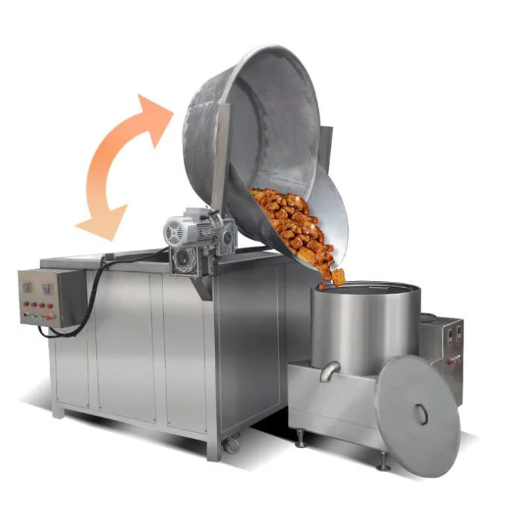
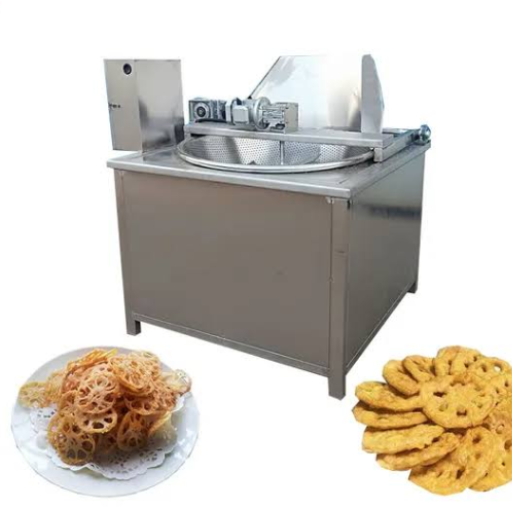
A batch fryer heating system is the component that transfers heat into the cooking oil. The main types are direct-fire gas, which fires a flame against the kettle or through fire tubes; electric immersion, which places heating elements in the oil; electric induction; and indirect thermal-oil heating, which circulates heated thermal fluid through a heat exchanger. Each trades off heat-up speed, temperature uniformity, oil life, and operating cost, so the right choice depends on your product, capacity, and local energy prices.
Two less common systems round out the picture. Steam heating uses a jacketed kettle but stays too low in temperature for real frying, so it mostly appears in kettle cooking and boiling. Diesel or heavy-oil burners behave like direct-fire gas and show up where a natural gas line is not available.
The reason this decision deserves its own article is simple. The heating system is the one part of the fryer you interact with every day through two invisible costs: how fast your oil degrades and how evenly your product cooks. Choose wrong, and you pay for it on every batch.
Why the Heating System Matters
The heating system does more than reach a set temperature. It determines how the heat reaches the oil, and that determines everything downstream.
Oil Life
Oil does not degrade evenly. It breaks down fastest where the heat-transfer surface is hottest. In a direct-fired fryer, that surface can exceed 500°C, which pushes the oil past the point where purely thermal breakdown takes off.
Researchers put that threshold at roughly 250°C: below it, heating method makes little difference, but above it, the oil starts to polymerize and darken fast. A thermal-oil exchanger, by contrast, runs its surface around 230°C while holding the oil near 175°C, which is why thermal oil is famous for extending oil life. The point is worth repeating: how you heat the oil decides how fast it degrades.
Temperature Uniformity
The same difference shows up in consistency. Indirect heat exchangers hold a swing of about 1°C. Thermal-fluid radiators sit in the middle, around 4 to 6°C.
Direct-fired fryers can swing 6 to 8°C or more. For a heat-sensitive product like nuts, that spread is the difference between a uniform roast and a scorched batch.
Energy and Operating Cost
On paper, electric is more efficient than gas. Electric fryers convert most of their energy into the oil, meeting a cooking-efficiency floor of 83%, while gas fryers manage about 50% because so much heat escapes through the exhaust. But efficiency is not the same as cost. A therm of gas is usually cheaper than the equivalent kilowatt-hours of electricity, so the winner flips depending on your local rates.
Consider a snack plant in Texas. The operations manager, Luis, was replacing an aging fryer and focused on one number: recovery time. He bought a direct-fire gas unit because it got back to temperature fastest after each load, and for the first month it felt like the right call.
Then the oil started going dark two days earlier every week. The burners were pushing the kettle floor past 500°C, and that localized heat was breaking the oil down faster than the plant could filter it. Luis’s “faster” fryer was quietly adding an oil cost every single day.
Want to see this trade-off mapped to a real line? Explore how Loyal builds heating, de-oiling, and flavoring into one fried snack production line. →
Direct-Fire Gas Heating
Direct-fire is the oldest and most common batch fryer heating system, and it is still the default for a reason. A gas burner fires directly against the bottom of the kettle, or through fire tubes that run through the oil. Because the flame touches the metal that touches the oil, heat reaches the product with almost no delay.
That speed is the headline benefit. Direct-fire fryers heat up fastest and recover fastest after a cold load, which keeps throughput high on back-to-back batches. They also cost the least up front and have the smallest footprint.
The trade-off is temperature control, and it is baked into the design. The heat concentrates where the flame hits, so the kettle floor runs far hotter than the oil above it. Those hot spots are what push the surface past 500°C and accelerate oil breakdown. Direct-fire also swings several degrees as the burner cycles, needs an exhaust hood and make-up air, and builds carbon on the burner tubes that has to be cleaned.
None of this is a bug for the right product. Kettle-chip makers actually want that variable temperature profile. The oil drops when a cold load goes in and climbs back as the chips finish, and that rise and fall is what creates the hard-bite crunch. For high-volume kettle and potato chips, direct-fire gas is still the standard answer.
Electric Immersion and Induction Heating
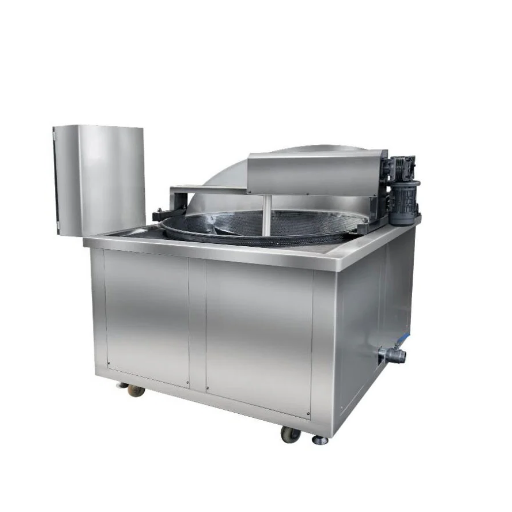
Electric heating splits into two very different technologies: immersion elements and induction.
Electric Immersion
Immersion heating places electric elements directly in the oil. The appeal is precision and cleanliness. The element responds instantly to the thermostat, holds a tight temperature window, needs no exhaust hood, and idles at a fraction of what a gas burner draws. In a small plant without gas service, it is the simplest way to fry.
The downside hides in the element surface. An immersion element runs around 300°C or hotter, which is still high enough to scorch the oil that touches it. Elements also scale over time, lose efficiency, and have to be replaced, and electricity costs more per unit of heat than gas in most markets. Electric immersion is the right call when precision and a ventless footprint matter more than raw throughput, and where power is cheap and reliable.
Electric Induction
Induction is the newer option and the one worth watching. Instead of a flame or a hot element, an induction coil generates heat directly in the kettle metal through an electromagnetic field. There is no open flame and no glowing element, so the heat spreads evenly and nothing localizes hot enough to scorch the oil. Induction systems report 90% efficiency and up to 98% in some industrial designs, with rapid recovery and precise, programmable temperature curves.
The cost is the barrier. Induction fryers carry a higher price tag and need a compatible vessel, and they are still less common at industrial scale. For a clean-label brand or an R&D line that wants the energy profile of electric without the scorching, induction is the forward-looking choice.
Thermal-Oil (Indirect) Heating
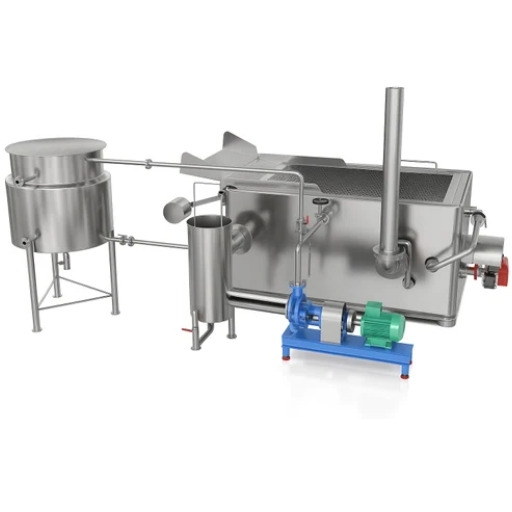
Thermal-oil heating flips the direct-fire model. Instead of heating the cooking oil directly, a burner or electric heater warms a thermal fluid, and that fluid circulates through an external heat exchanger to warm the oil gently. The cooking oil never touches a surface hotter than about 230°C.
That one change produces the system’s three advantages. Temperature stays extremely uniform, within about 1°C, because the heat arrives spread across a large surface. Oil life stretches, because nothing in the vessel reaches the 500°C range that drives breakdown.
And cleaning is easier, because the exchanger sits outside the kettle where residue does not bake onto the heat source. Thermal-oil systems also run near 90% overall efficiency.
The cost is capital and complexity. You are buying a thermal-fluid loop on top of the fryer, with a heat exchanger that adds several thousand dollars, plus an expansion tank, a pump, and fluid that needs periodic analysis. Heat-up is slower than direct-fire. In exchange, you get the gentlest, most consistent heat available, which is exactly what heat-sensitive products need.
A nut processor in the Midwest saw the difference in the product, not just the oil. Roasted almonds are unforgiving: a few degrees of hot spot scorches the surface and ruins the color. The plant’s direct-fire fryer ran a temperature swing of several degrees and produced the occasional dark batch that had to be downgraded.
After moving to an indirect thermal-oil exchanger, the kettle held within about 1°C, the dark batches stopped, and the oil lasted longer because nothing in the system ever touched 500°C. For nuts, fruit chips, and other delicate products, thermal oil is often the quiet fix.
Steam and Diesel Heating
Two more systems show up at the edges, and a short note is enough.
Steam heating uses a jacketed kettle, but steam tops out around 150°C, too low for actual frying. It is a cooking and boiling solution, not a frying one, and it rarely belongs in a fryer spec.
Diesel and heavy-oil burners are the direct-fire profile in regions without a gas line. They share direct-fire’s fast heat-up and its hot-spot trade-off, and they add fuel storage to the footprint. Where gas is unavailable, diesel is the stand-in, not a distinct technology.
Batch Fryer Heating Systems Compared
Put the four main systems side by side, and the trade-off becomes easy to read.
| System | Heat-up & recovery | Temperature uniformity | Oil life | Energy cost | Capital cost | Best for |
|---|---|---|---|---|---|---|
| Direct-fire gas | Fastest | Wide swing (6–8°C+) | Shortest (500°C+ hot spots) | Moderate (~50% efficiency) | Lowest | High-volume kettle chips |
| Electric immersion | Moderate | Tight | Moderate (300°C+ elements) | Highest per unit | Low-moderate | Small, precision, cheap power |
| Electric induction | Fast | Tight | Long (no hot spots) | Lowest (90–98% efficiency) | High | Precision, clean-label |
| Thermal oil | Slow-moderate | Tightest (±1°C) | Longest (~230°C surface) | Moderate (~90% efficiency) | Highest | Heat-sensitive, medium-large |
Read the table by asking which column you can least afford to lose. A kettle-chip line lives on throughput, so it prioritizes the first column. A nut line lives on color consistency, so it prioritizes the third and fourth.
The capital-cost column also feeds directly into your equipment budget, and the heating method is one of its biggest drivers. For the full price ranges by capacity and heating type, see our batch fryer machine price guide.
How to Choose a Batch Fryer Heating System
The choice almost always reduces to three questions: what are you frying, how much of it, and what does energy cost where you run?
- Small, precision, or R&D lines: electric immersion or induction. You trade some throughput for tight control and a clean, ventless footprint.
- Hard-bite kettle and potato chips: direct-fire gas. The variable temperature profile is the point, not a flaw.
- Heat-sensitive products, nuts, and medium-to-large volumes: thermal oil. The uniform, gentle heat protects both the oil and the product.
- No gas line and high volume: diesel, accepting direct-fire’s hot-spot trade-off.
Then apply the energy tiebreaker. Electric is more efficient at the machine, but gas is usually cheaper per unit of heat. Run the numbers on your local rates before you commit, because a system that is efficient on paper can still cost more to operate where power is expensive. The energy-efficiency floors are a useful anchor: electric fryers must meet 83% cooking efficiency, gas fryers 50%.
For hard-bite kettle chips, the variable profile is the point, not a flaw. A kettle-chip producer in Pennsylvania wants the oil to drop when a cold load of chips goes in, then climb back as they finish. That rise and fall, the inverted bell curve, is what gives a kettle chip its crunch, and direct-fire gas delivers it naturally. The same imprecision that would be a defect on a nut line is exactly what the chip maker is paying for.
The heating choice is one input in a larger selection process. For the full step-by-step method across capacity, oil volume, and materials, read our how to choose a batch fryer guide.
Frequently Asked Questions
What is a thermal oil fryer?
A thermal-oil fryer heats cooking oil indirectly. A burner warms a thermal fluid, and that fluid circulates through an external heat exchanger to warm the oil. The cooking oil never touches a surface above about 230°C, which keeps temperature uniform and extends oil life, at a higher capital cost.
Gas vs electric fryer, which is better?
It depends on volume and energy rates. Gas heats faster and recovers faster, which suits high-volume frying, but it is only about 50% efficient and needs an exhaust hood. Electric is more precise, cleaner, and over 83% efficient at the machine, but electricity usually costs more per unit of heat. Choose gas for throughput, electric for precision where power is affordable.
Does the heating method affect frying oil life?
Yes, and this is the point most buyers miss. Oil degrades fastest at the hottest heat-transfer surface. Direct-fire and electric-element surfaces exceed 300 to 500°C and accelerate breakdown, while a thermal-oil exchanger holds around 230°C and protects the oil. The ~250°C threshold is where purely thermal degradation takes off, as early frying-oil research established.
What is the difference between direct-fire and indirect heating?
Direct-fire applies a flame or a hot element straight to the cooking oil, which heats fast but creates localized hot spots that degrade oil. Indirect heating warms a separate medium, usually thermal fluid, which then warms the oil through a heat exchanger for more uniform, gentler heat at higher capital cost.
Which heating system is best for potato chips?
For standard and kettle potato chips at volume, direct-fire gas is the industry default, because fast recovery keeps throughput high and the variable temperature profile builds hard-bite texture. For heat-sensitive or premium lines where oil life matters more, thermal-oil heating is the stronger choice.
What is an induction fryer?
An induction fryer heats the kettle with an electromagnetic field instead of a flame or a heating element. There is no open flame and no glowing element to scorch the oil, so it runs at high efficiency, up to 98%, with precise, programmable temperature control, at a higher upfront cost.
Conclusion
Choosing a batch fryer heating system is less about finding the “best” technology and more about naming the trade-off you can live with. Direct-fire gas heats fast and costs little up front, but it scorches oil at the hot spots and swings several degrees. Electric immersion is precise and clean but hard on oil and expensive to run in most markets.
Thermal oil heats gently and uniformly and protects the oil, at the highest capital cost. Induction is the efficient newcomer still proving itself at scale.
The decision comes down to product, capacity, and energy price. Kettle chips want direct-fire’s variable profile. Nuts and heat-sensitive snacks want thermal oil’s steadiness. Small precision lines want electric, and cheap, reliable power tips the electric case in its favor.
Once you have chosen, the work is not done. The heating system still has to be inspected and maintained, and its choice shapes what that upkeep looks like. For the gas, electric, and thermal-oil checks that keep it running, see our batch fryer maintenance checklist.
Still deciding between systems, or wondering how heating fits into a complete line? Talk to our engineering team about your frying application. →