
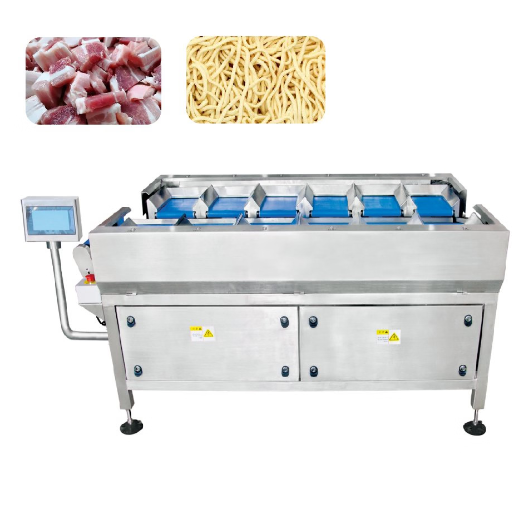
Semi Automatic Noodle Packing Machine: Buyer’s Guide

A semi automatic noodle packing machine costs 4,000to4,000to9,000 and packs 10 to 30 bags per minute with one or two operators loading product, placing bags, or triggering each cycle. It is the right first step for a small producer who has outgrown hand sealing but cannot yet keep a fully automatic line busy.
The number on the spec sheet is rarely the number you get. That gap decides whether the machine pays for itself or becomes a bottleneck you learn to live with.
Consider a stick-noodle producer we will call Priya. She ran 300 kg a day through two hand sealers and ordered a semi-automatic weigh-fill line rated at 40 bags per minute.
Her team managed 18 on the first shift. The weigher was fast; the bottleneck was one person placing each 400 g bag under the drop chute while another folded the top. A second operator lifted output to 26 bags per minute.
The machine was never the constraint. The operator’s hands were.
This guide covers the five machines sold as semi-automatic, what each one asks the operator to do, the output you can expect, the cost, and the point where an automatic line becomes cheaper. It also shows how to test a machine before you wire the deposit.
Key Takeaways
- “Semi-automatic” covers five different configurations. What the operator does each cycle matters more than the label.
- Expect 10 to 30 packs per minute in sustained output, not the 40 to 230 on the nameplate.
- A basic semi-automatic line runs 4,000to4,000to9,000; paper wrappers and tray sealers cost more.
- At 2 million packs a year and $3/hour labor, an automatic line often pays back in about three years. Below 1 million packs, semi-automatic usually wins.
- Leave room for a future automatic infeed. A machine that cannot grow with you is a dead end.
What Is a Semi Automatic Noodle Packing Machine?
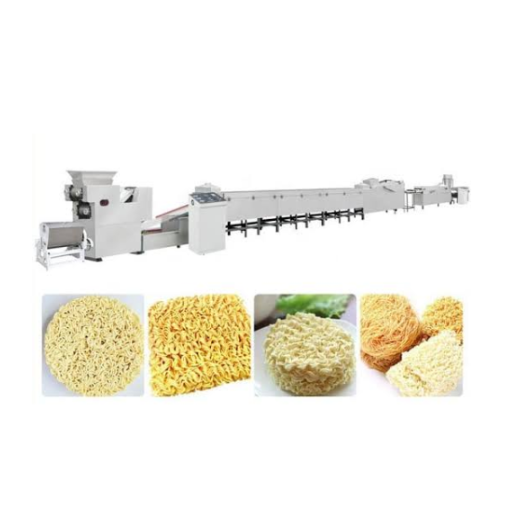
A semi-automatic noodle packing machine automates weighing, bag forming, filling, and sealing, but relies on an operator to load product, place bags, or trigger each cycle. Output is limited by the operator, typically 10 to 30 packs per minute.
The machine still does most of the physical work. It weighs the portion, forms the bag around a tube or folds film around the product, seals the ends, and cuts the pack free. What changes between machines is how much of the cycle still belongs to a person.
Suppliers use the label loosely. A vertical form-fill-seal machine with a manual bag former, a multihead weigher that waits for an operator to press a pedal, and a flow wrapper fed by hand are all sold as semi-automatic. The machines are not interchangeable.
Buyers use several names for the same equipment. A semi automatic noodle packaging machine, a semi automatic noodles packing machine, and a small noodle packing machine usually describe one of the configurations below. A semi automatic pasta packing machine uses the same weighing and sealing setup for short-cut or long pasta. A manual noodle packing machine sits one step lower, with hand filling and a pedal sealer.
So the useful question is not “Is it semi-automatic?” It is “What does the operator do in every cycle, and how many seconds does that take?” That answer sets your labor, your output, and your payback.
If you already know your pack format and target output, send our engineers the product spec and ask for a line layout. If you are still comparing formats, keep reading.
Five Types of Semi Automatic Noodle Packing Machines, Plus a Manual Option
Five configurations cover most small and mid-volume noodle production. A sixth, the manual scale and pedal sealer, is the bottom tier.
| Configuration | What the operator does | Rated output | Realistic sustained output | Price signal |
|---|---|---|---|---|
| Manual-load flow wrapper | Places blocks or stick bundles on the infeed | 30 to 230 packs/min | 15 to 30 packs/min | 6,000to6,000to20,500 |
| Manual-feed VFFS | Loads product into the hopper | 15 to 70 bags/min | 10 to 25 bags/min | 8,000to8,000to25,000 |
| Semi-auto weigh-fill-seal | Places the bag and triggers the drop | 15 to 60 bags/min | 10 to 25 bags/min | 8,000to8,000to20,000 |
| Paper/stick-noodle wrapper | Places the portion and paper | 8 to 18 bags/min | 8 to 15 bags/min | 20,000to20,000to21,000 |
| Semi-auto tray sealer | Loads trays and runs the cycle | 2 to 3 cycles/min | 4 to 12 trays/min | Quote only |
| Manual scale and pedal sealer | Weighs, fills, and presses the pedal | 30 to 80 seals/min | 5 to 12 packs/min | 300to300to2,000 |
The rated numbers are supplier maxima. The sustained numbers assume a trained operator, normal fatigue, and routine stops for film changes and rejects.
Manual-Load Flow Wrapper
This is the simplest semi-automatic configuration for instant noodle blocks. The operator places each block, or a bundle of stick noodles, on the infeed. The machine wraps the product in film, seals both ends, and cuts the pack free.
Loyal’s FW series runs 40 to 230 bags per minute on the FW-250, 40 to 180 on the FW-350, and 30 to 150 on the FW-450. Those are automatic infeed speeds. A manual loader will usually sustain 15 to 30 packs per minute, depending on block size and reach.
Manual loading has one real advantage with fragile, oily blocks. The operator can straighten the block and keep crumbs out of the seal area. That reduces leaks, which is why small plants often prefer this machine to a fully automatic infeed.
Manual-Feed VFFS
A vertical form-fill-seal machine forms a tube of film, fills it from above, and seals the top and bottom. In a manual-feed setup, the operator loads product into a hopper or a linear weigher rather than a multihead weigher.
Loyal’s VFFS-420 runs 15 to 70 bags per minute, the VFFS-520 runs 15 to 60, and the VFFS-720 runs 10 to 50. Realistic sustained output with one operator is 10 to 25 bags per minute. The machine suits loose, short-cut, and sachet formats better than long stick noodles.
Semi-Auto Weigh-Fill-Seal
Here the weighing is automatic, but the bag handling is not. A multihead or linear weigher doses the product, and the operator places a premade bag under the chute and triggers the drop. A separate sealer closes the bag.
One Chinese supplier publishes 15 to 60 bags per minute and ±0.1 to 1.5 g for its semi-automatic weigh-fill line. Another lists a 14-head line at a maximum of 25 bags per minute. Both are plausible because the operator, not the weigher, sets the pace.
A 2025 study of a semi-automatic rolled-rice-noodle packer in Thailand measured the operator effect directly. Cycle time fell from 44.44 to 31.15 seconds per bag, daily output rose from 650 to 880 bags, and operator steps dropped by 55.56% (study). This configuration works well for 500 g to 1 kg stick noodles and pasta.
Paper and Stick-Noodle Wrapper
Dried stick noodles are often wrapped in paper rather than film. The operator places a weighed portion and a sheet of paper in the machine. The machine folds, glues, and seals the pack.
Published speeds run 8 to 18 bags per minute for 200 g to 1 kg packs. Paper wrappers cost more than film machines, often 20,000to20,000to21,000, because the folding and gluing mechanism is more complex. The payoff is a premium pack and low film cost.
Semi-Auto Tray Sealer for Fresh Noodles
Fresh and cooked noodles need modified-atmosphere packaging (MAP) to hold shelf life. A semi-automatic tray sealer pulls a vacuum, flushes the tray with gas, and seals the film lid.
Utien’s FG-040 cycles 2 to 3 times per minute and seals 4 to 12 trays per minute depending on the mold. That sounds slow against a flow wrapper, and it is. The product is perishable and the tray is the format, so the comparison is not apples to apples.
Daniel, who runs a fresh-noodle kitchen, ordered a “semi-automatic” tray sealer expecting 30 packs a minute. The machine cycled two to three times a minute and sealed three trays per mold, so his real output was nine trays a minute. He kept it because MAP gave him seven days of shelf life, but he rebuilt his production schedule around nine trays a minute, not 30.
Manual Scale and Pedal Sealer
The bottom tier is not really a packing machine. It is a scale, a bag, and a foot-operated heat sealer. Output runs 5 to 12 packs per minute, and a setup costs 300to300to2,000.
It makes sense for a market test, a farmers’ market stall, or a producer packing fewer than 1,000 packs a day. It stops making sense when labor cost or seal inconsistency starts eating the margin.
Semi Automatic Noodle Packing Machine vs Automatic
The real comparison is not semi versus automatic. It is operator-limited versus machine-limited. If you are comparing an automatic vs semi automatic packing machine, start with the operator, not the brochure.
| Factor | Semi-automatic | Fully automatic |
|---|---|---|
| Typical capex | 4,000to4,000to20,000 | 15,000to15,000to50,000+ |
| Rated output | 10 to 60 packs/min | 30 to 70 bags/min VFFS; 40 to 230 packs/min flow wrap |
| Realistic output | 10 to 30 packs/min | 55 to 85% of nameplate |
| Operators per shift | 1 to 3 | 0.5 to 1 |
| Weight accuracy | ±1 to 2 g typical; ±0.5 g with a multihead weigher | ±0.5 to 1 g with a multihead weigher |
| Changeover | Often 5 to 15 minutes | Often 15 to 90 minutes |
| Footprint | 2 to 10 m² | 15 to 40 m² |
| Best fit | Startups, seasonal demand, high SKU count, available labor, fragile products | Stable volume, tight specs, labor scarcity, multi-lane lines |
Speed is the first difference, but not in the way buyers expect. A semi-automatic flow wrapper may be rated at 150 packs per minute. The operator may place 22 blocks a minute. The machine runs at 22.
An automatic line removes that hand-off, but it also needs a steady product supply, a matched infeed, and more maintenance.
Labor is the second difference. A semi-automatic line often needs 1.5 operators across a shift once breaks, relief, and secondary packing are counted. An automatic line may need one. Budget 1.3 to 1.5 times the nominal wage for fully loaded labor, including overtime, training, and turnover.
Changeover is where semi-automatic machines win. A tool-free former and a recipe memory can cut a bag-size change to 5 or 15 minutes. An automatic line may need 15 to 90 minutes for tooling, recipe changes, and trial packs. If you run eight SKUs a week, that difference matters more than top speed.
Consistency favors automation. Operators get tired, and tired operators produce misaligned bags and weak seals. A multihead weigher also holds weight tighter than a volumetric filler. If a retailer audits your pack weight or seal integrity, that consistency has a dollar value.
The Break-Even Math for a Semi Automatic Noodle Packing Machine
The decision comes down to a simple comparison: extra capital versus annual savings. The formula is:
Payback years = extra capex ÷ (annual labor savings + annual giveaway savings)
Use your own numbers. The assumptions below are illustrative, not a quote.
- 100 g pack, 8-hour day, 300 days a year, 70% OEE.
- Semi-automatic: $8,000 capex, 20 packs/min rated, 14 packs/min effective, 2.016 million packs a year, 1.5 operators.
- Automatic: $30,000 capex, 50 packs/min rated, 35 packs/min effective, 5.04 million packs a year, 1 operator.
- Labor: 2,400 hours a year per operator, fully loaded.
- Giveaway saving: 1 g per pack at 2/kg,or2/kg,or0.002 per pack.
- Extra capex: $22,000.
| Annual packs | $1.50/hour labor | $3.00/hour labor | $6.00/hour labor |
|---|---|---|---|
| 500,000 | 7.9 years | 4.8 years | 2.7 years |
| 1,000,000 | 5.8 years | 3.9 years | 2.4 years |
| 2,000,000 | 3.8 years | 2.9 years | 2.0 years |
At low volume and low labor cost, the semi-automatic machine wins. At $6/hour labor, the automatic line pays back in about two years even at 2 million packs. Above 2 million packs, the semi-automatic line needs a second machine or a second shift, so the automatic line wins on capital as well as labor.
A family-owned plant in Lahore ran about 1.2 million packs a year and paid roughly 2/hourfullyloaded.Theownercompareda2/hourfullyloaded.Theownercompareda9,000 semi-automatic line with a 32,000automaticVFFS.Athislaborrate,theautomaticsavedabout32,000automaticVFFS.Athislaborrate,theautomaticsavedabout2,400 a year in labor and $2,400 in giveaway.
The extra 23,000wouldtakealmostfiveyearstoreturn.Heboughtthesemi−automaticline,addedasecondsealingstationfor23,000wouldtakealmostfiveyearstoreturn.Heboughtthesemi−automaticline,addedasecondsealingstationfor4,000, and planned to revisit the decision at 2 million packs.
The model excludes maintenance, energy, financing, floor space, and quality rejects. It also ignores utilization. An automatic line running at 1 million packs a year uses about 20% of its capacity. That unused capacity is a real cost, even if it does not appear on the invoice.
What a Semi Automatic Noodle Packing Machine Costs
Observed 2026 listing quotes put a basic semi-automatic noodle packing machine at 4,000to4,000to9,000 FOB China. A semi-automatic weigh-fill line with a multihead weigher runs 8,000to8,000to20,000. Paper-wrapped stick-noodle machines run 20,000to20,000to21,000. Tray sealers are usually quote-only because the mold and gas system change the price.
India is a separate market. A domestic semi-automatic noodle packer with a 2,000-piece-per-hour rating lists around ₹2.45 lakh, or about 2,900∗∗.Asemi−automaticspaghettiflow−wrapperlistsaround∗∗₹8lakh,orabout2,900∗∗.Asemi−automaticspaghettiflow−wrapperlistsaround∗∗₹8lakh,orabout9,600. Do not compare those domestic prices with China FOB quotes without accounting for freight, duty, installation, and service.
For the full price bands and a total-cost-of-ownership model, see our noodle packing machine price guide.
Match the Machine to Your Noodle Format
Product state decides the configuration. Price comes second.
| Noodle format | Typical pack | Recommended semi-automatic configuration | Why |
|---|---|---|---|
| Fried instant noodle block | 60 to 120 g pillow bag | Manual-load flow wrapper | Manual handling protects the fragile, oily block and the seal area |
| Dried stick noodles | 200 to 1,000 g paper or plastic | Paper wrapper or weigh-fill-seal | Long strands need alignment; low speed is acceptable |
| Fresh or wet noodles | 200 to 500 g tray or pouch | Tray sealer with MAP, or VFFS | Sticky, perishable; gas flush extends shelf life |
| Short-cut pasta | 250 to 500 g bag | Manual-feed VFFS or premade bag | Free-flowing product; weighing accuracy matters more than speed |
| Cup or bowl noodles | 60 to 120 g cup | Usually automatic cup filler; semi-auto only for small runs | Cup filling is a multi-stage process, so manual loading is rarely economic |
Oil, moisture, and fragility matter as much as shape. A fried block that crumbles at the infeed needs gentle handling. A fresh noodle that clumps needs anti-stick tooling and a fast seal. A stick noodle that snaps needs an operator who can align the strands, which is one reason paper wrapping remains a manual-load process.
Film choice follows the product. OPP/CPP and PET/PE are common for dry noodles. Aluminum foil and high-barrier films suit products that need a longer shelf life or gas flushing. A machine that runs well on one film may fail on another, so test the exact film you plan to buy.
Selection Checklist and FAT
Do not buy from a brochure. Run a factory acceptance test (FAT) with your product, your film, and your operators. These ten checks catch most expensive mistakes:
- One-hour sustained output. Record packs per minute, stops, rejects, and operator fatigue.
- Thirty-pack weight test. Ask for average deviation, maximum deviation, and underweight count.
- Seal strength and leak test. Use a peel test such as ASTM F88 and a leak or burst check. Inspect for wrinkles and product in the seal.
- Bag dimensions and film tracking. Check repeatability, print registration, and gusset or center-seal quality.
- Changeover time. Time a bag-size change with the operator who will do it, not the sales engineer.
- Breakage rate. Count cracked blocks and fines for fragile products.
- Film compatibility and waste. Trial your film, not the supplier’s sample.
- Safety and compliance. Verify guards, interlocks, e-stop, and CE marking under the Machinery Directive.
- Hygiene. Check SUS 304 contact parts, cleanability, IP rating, drainage, and food-contact compliance under Regulation 1935/2004.
- Spares, service, and training. Ask for the recommended spare list, consumables, warranty, response time, and a training sign-off.
The one-hour test is the most important. A machine that hits 40 packs per minute for five minutes may settle at 26 after an hour. A machine that runs cleanly for an hour with your own operators is a machine you can plan around.
If you are still shortlisting suppliers, our guide to noodle packing machine manufacturers covers how to vet them before you request a quote.
Six Mistakes That Cost the Most
- Buying on nameplate speed. Apply a 30% haircut, then an OEE factor. A 60 bags/min machine at 70% OEE delivers 42.
- Trusting the label. Ask what the operator does in every cycle before you compare quotes.
- Forgetting secondary packaging. A semi-automatic primary packer usually feeds a manual case-packing station. Count that labor and floor space.
- Skipping the FAT. A witnessed test with your product is worth more than a brochure and a video.
- Choosing proprietary film or non-standard spares. You will pay for both for the life of the machine.
- Buying automatic too early. An underused automatic line ties up capital and adds maintenance without adding output.
Design for the Upgrade Path
The most expensive mistake is buying a machine that cannot grow. A semi-automatic line should be a step, not a dead end.
Design the layout for automation now, even if you buy the manual version. Leave space for an automatic infeed, a multihead weigher, and a case packer. Keep the discharge height and utilities compatible with a future line. A little floor space today can save a rebuild later.
Loyal’s FW flow wrappers and VFFS machines are automatic machines that can be run with manual loading at low volume. An automatic infeed can be specified when volume grows. That is a different proposition from a dedicated bench packer, and it is the right one for a producer who expects to scale.
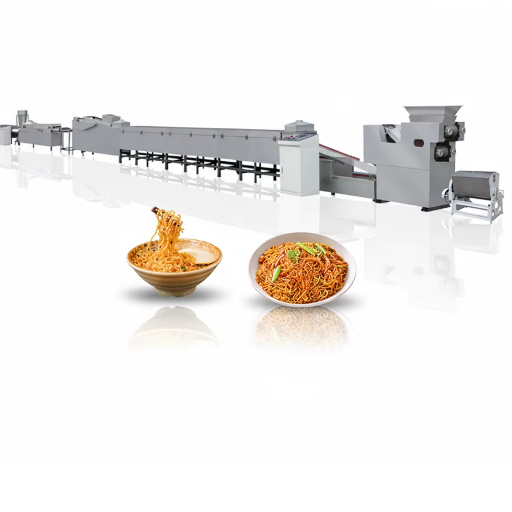
The whole-line view matters too. Product state at the packer is set upstream.
Block geometry comes from the extruder and cutter. Surface oil comes from frying and cooling. Moisture comes from drying.
A packing machine cannot fix a block that is too fragile or a noodle that is too wet. If you are building a line, start with the instant noodle production line or the pasta and macaroni line and specify the packer as part of the whole process.
If you want a line layout that starts semi-automatic and leaves room for automation, send us your product spec and target output. We will tell you which configuration fits, and which one you can grow into.
Conclusion
A semi-automatic noodle packing machine is a good first step for a small producer, but only when the machine matches the product format and the operator can keep up. Expect 10 to 30 packs per minute in sustained output, not the nameplate number. Budget 4,000to4,000to9,000 for a basic line, and more for paper wrapping or tray sealing.
Run the break-even math with your own labor rate and volume. At low volume, semi-automatic usually wins. At high volume and high labor cost, automatic pays back faster. Either way, design the layout for the next step.
If you are ready to compare configurations, review the types of noodle packing machines and our automatic noodle packing machine buyer’s guide. Then talk to our line engineers about a semi automatic noodle packing machine that fits your format, your labor, and your growth plan.
FAQ
What is a semi-automatic noodle packing machine?
A semi-automatic noodle packing machine automates weighing, bag forming, filling, and sealing, but an operator still loads product, places bags, or triggers each cycle. Output is limited by the operator, typically 10 to 30 packs per minute.
How fast is a semi-automatic noodle packing machine?
Most configurations sustain 10 to 30 packs per minute. A manual-load flow wrapper may reach 30, a manual-feed VFFS 10 to 25, and a paper wrapper 8 to 15. Nameplate speeds are higher because they assume a perfect infeed.
How many operators does it need?
Plan for one to two operators per shift. A flow wrapper may need one loader. A weigh-fill-seal line may need one person placing bags and another sealing or packing. Add relief for breaks and secondary packaging.
Is a semi-automatic machine cheaper to run than an automatic one?
It is cheaper to buy, but not always cheaper to run. A semi-automatic line uses more labor and usually gives away more product. At 2 million packs a year and $3/hour labor, an automatic line often pays back in about three years.
What is the difference between semi-automatic and automatic noodle packing?
A semi-automatic machine needs an operator in every cycle. A fully automatic machine handles feeding, weighing, forming, sealing, and discharge with minimal intervention. The automatic line costs more but removes the operator bottleneck.
Can a semi-automatic machine pack 500 g and 1 kg bags?
Yes, if the machine is specified for that weight range and bag size. Check the weigher range, bag former, and film width before you buy. A machine set up for 100 g blocks may not handle a 1 kg stick-noodle bag.
What does a semi-automatic noodle packing machine cost?
Observed 2026 listing quotes run 4,000to4,000to9,000 for a basic unit, 8,000to8,000to20,000 for a weigh-fill line with a multihead weigher, and 20,000to20,000to21,000 for a paper-wrapped stick-noodle machine. Freight, duty, installation, and training are extra.
When should I upgrade to automatic?
Upgrade when labor cost and giveaway exceed the financing cost of an automatic line, or when two or three packing staff can no longer keep up. Run the break-even math first. An underused automatic line can be more expensive than a busy semi automatic noodle packing machine.