
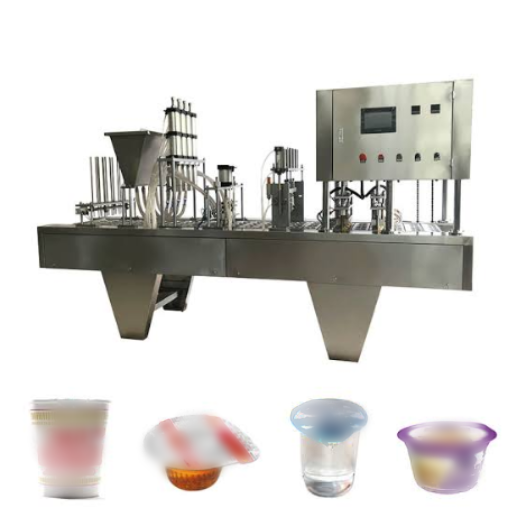
Cup Noodle Sealing Machine: The Complete Buyer’s Guide

A cup noodle sealing machine heat-seals a foil or laminate lid onto a filled cup or bowl at speeds of 40 to 120 cups per minute. That seal decides the shelf life of everything inside. Buy the right machine and your product holds its quality for months. Buy the wrong one and you inherit leak complaints, seal failures, and a machine that never reaches its rated speed.
Here is what most buyers get wrong. They choose a cup sealer the way they choose a printer: pick a model, check the price, place the order.
Then the machine arrives and leaks. The noodle cakes arrive too warm. The fill weight varies enough that lids never land on a clean flange. Or the lid material changed and nobody re-validated the seal parameters.
Take Wei, who runs a 60-cup-per-minute cup noodle line in Guangdong. In 2023 he bought a rotary cup sealer on nameplate speed and price alone. Twelve months later his leak rate was still running near 2%, and his distributor’s answer was always the same: raise the sealing temperature.
He raised it until the foil curled, the peel force swung wildly, and his customers started complaining that lids tore instead of peeling. Wei’s machine was fine. His specification was not.
This guide gives you the specification. We cover how the machine works, rotary versus inline architecture, the specifications that actually matter, lid material selection, and seal integrity as a quality system rather than an afterthought. You will also see why the cup sealer has to be specified together with your noodle line, which is the part packaging-only suppliers cannot tell you.
Key Takeaways
- A cup noodle sealing machine is specified against sustained throughput, not nameplate speed; realistic output runs at 55 to 65% of the rating once changeovers and stops are counted.
- Rotary carousel sealers suit high-speed single-format production; inline sealers suit frequent format changes and multi-cup or tray formats.
- Aluminum foil, Alox/Siox laminate, and plastic film differ enough in barrier, cost, and machinability that lid choice changes your seal parameters.
- Seal integrity is a validated system of temperature, pressure, and dwell time, and it is decided upstream by cake temperature, moisture, and fill-weight variation.
- Specifying the sealer with your noodle line removes the interface gaps that cause most leak complaints.
What Is a Cup Noodle Sealing Machine?
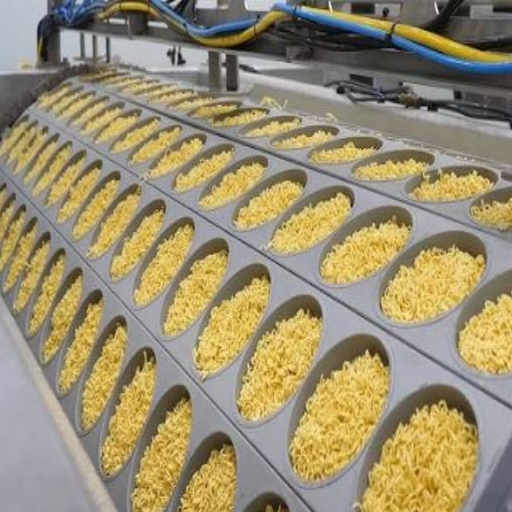
A cup noodle sealing machine is an automatic packaging machine. It fills a cup or bowl with a noodle cake and seasoning, seals a lid on with heat and pressure, then discharges the finished unit. It is the final primary packaging station on a cup or bowl noodle line, sitting between cooling and filling and the shrink wrap or cartoning stage.
What it is not matters as much. A cup sealer is not a flow wrapper or a pillow packer. Those machines form a package from roll film around a product, which is how bag and block noodles are packed. A cup sealer works with pre-formed containers and pre-cut or roll-fed lids, and it applies a flat heat seal across a defined flange.
The distinction drives everything downstream: tooling, lid material, changeover time, and the failure modes you should design against. For a full comparison of packaging formats, see our guide to the automatic noodle packing machine.
Where the Cup Sealer Sits in the Line
A cup noodle line runs a fixed sequence, and the sealer occupies one narrow window in it.
- Noodle cake production: mixing, rolling, steaming, and frying or hot-air drying.
- Cooling to near-ambient temperature.
- Cup de-nesting and feeding onto the sealer infeed.
- Filling: noodle cake, then seasoning sachets, oil, and dried vegetables.
- Optional nitrogen flush of the headspace.
- Lid placement and heat sealing.
- Date coding and discharge, with rejection of failed units.
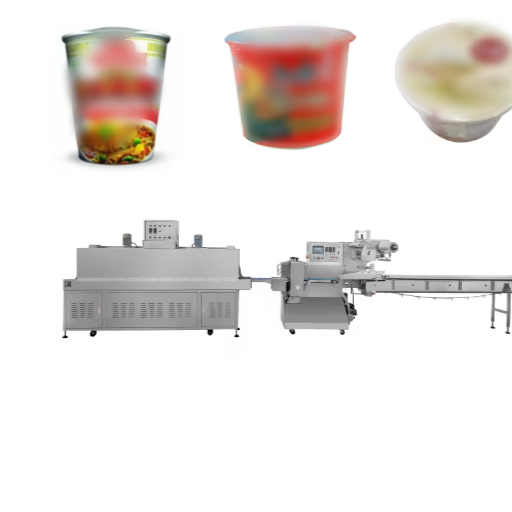
- Shrink wrapping, cartoning, and palletizing.
The sealer is step 6. Everything that goes wrong at step 6 was usually caused at step 2, 4, or 5, which is why this machine cannot be evaluated in isolation.
The scale of the market behind that decision is worth keeping in view. Global instant noodle demand passed 124 billion servings in 2025 according to the World Instant Noodles Association, with China the largest single consumer market. At that volume, a one-point change in leak rate is not a quality statistic. It is a recurring cost.
How a Cup Sealing Machine Works
A cup sealing machine runs the same five operations on every cycle, regardless of architecture. Understanding them tells you which specification numbers matter and which are marketing.
Cup Feeding and Indexing
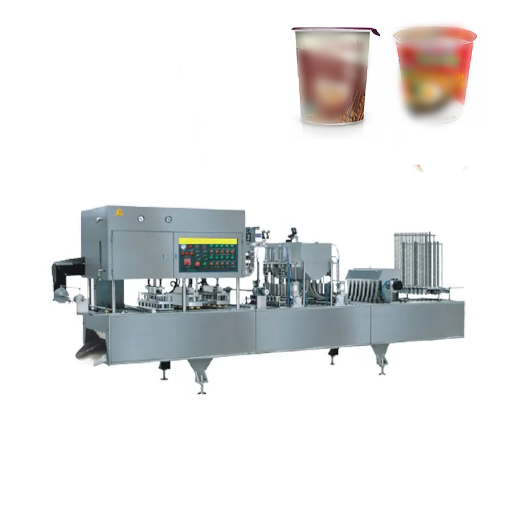
Empty cups arrive stacked in a magazine or tube and are de-nested one at a time onto the machine. A rotary machine drops cups into pockets on a carousel that indexes them station to station. An inline machine moves cups along a straight conveyor with lanes running in parallel.
Indexing accuracy is where cheap machines reveal themselves. If cup position varies by even a fraction of a millimetre, the lid lands off-centre. The seal then has to bridge a wider gap on one side than the other. That produces the classic half-sealed cup: strong on one edge, weak on the other, and it passes visual inspection while failing a leak test.
Filling the Cup
Filling happens at one or more stations between cup feeding and sealing. The noodle cake is placed first, usually by a pick-and-place or drop mechanism fed from the cooling conveyor. Then the seasoning sachets, oil sachet, and dried vegetables are dispensed, often by dedicated sachet feeders running in phase with the machine.
Two filling variables matter for seal quality. The first is fill height. Overfilled cups push product into the flange area, and a single grain of seasoning or a strand of noodle in the sealing zone creates a channel leak. The second is fill weight consistency, which determines how much headspace is left for the nitrogen flush.
Headspace and Nitrogen Flush
Before the lid goes on, most cup lines flush the headspace with nitrogen. This is not decoration. A fried noodle cake contains oil, and oil goes rancid when it meets oxygen.
Flushing the headspace displaces the oxygen that would otherwise sit above the cake. That is a large part of why a sealed cup holds its quality for months rather than weeks.
The flush has to be timed against the fill. Too little gas and you leave oxygen behind. Too much and you over-pressurise the cup, which balloons the lid and weakens the seal. If your fill weight swings, your residual oxygen swings with it, and no amount of sealing adjustment fixes that.
Lid Placement and Heat Sealing
The lid, either pre-cut foil or film fed from a roll, is placed over the cup. A sealing head then comes down and applies heat and pressure for a set dwell time. The seal forms where the lid’s heat-seal layer bonds to the cup flange.
Three parameters interact, and this is the part buyers consistently underestimate:
- Temperature. Too low and the polymer never fully melts and flows into the flange. Too high and the substrate distorts, the foil curls, and the seal becomes brittle.
- Pressure. Too light and the two surfaces never make intimate contact. Too heavy and you thin the seal web and squeeze product or air pockets into the bond.
- Dwell time. Too short and the bond never forms through the full depth of the seal layer. Too long and you overheat the flange.
Change any one of the three and you must re-validate the other two. This is why a lid material change is never a purchasing decision alone; it is a process change.
Date Coding and Discharge
Most cup sealers integrate a date or lot coder at or just after the sealing station, so the code lands on the lid or the cup sidewall. Rejection systems use checkweighers or vision to pull cups that failed sealing or fill checks before they reach the shrink wrapper.
Ask what the rejection rate is and whether rejected cups are automatically diverted rather than manually pulled. A machine that flags failures but relies on an operator to remove them will eventually let a bad cup through. That cup is the one that generates the complaint.
Rotary vs. Inline Cup Sealers: Which Architecture Fits Your Line?
The single biggest architectural choice is between a rotary carousel and an inline or linear machine. The two are not interchangeable, and the right answer depends on your output and your changeover pattern.
| Factor | Rotary carousel sealer | Inline (linear) sealer |
|---|---|---|
| Typical speed | 60 to 200+ cups/min | 30 to 120 cups/min |
| Format changes | Slower; tooling and pocket changes | Faster; lane and guide adjustments |
| Footprint | Compact for the output | Longer conveyor run |
| Multi-lane output | Limited by carousel pockets | Scales by adding lanes |
| Best for | Single high-volume format | Frequent SKU changes, trays, multi-packs |
| Relative cost | Higher at high speed | Lower at moderate speed |
Rotary machines win on speed and footprint. The carousel indexes continuously, so stations overlap. While one cup is being sealed, the next is being filled and the one after is being de-nested. That pipelining is how a rotary machine reaches 120 to 200 cups per minute in a footprint an inline machine would need far more length to match.
Inline machines win on flexibility. Changing cup diameter or switching from a round cup to a rectangular tray is a guide and lane adjustment rather than a tooling change. If you run six SKUs across three cup sizes on the same shift, the changeover time saved often outweighs the speed you give up.
Here is the honest part that suppliers rarely volunteer. A machine rated at 120 cups per minute is not a 120-cup-per-minute line. Realistic sustained throughput runs at roughly 55 to 65% of nameplate, once you account for film splices, cup magazine changes, product variation, planned stops, and changeovers.
That means a machine that will genuinely sustain 80 cups per minute is usually a 130-to-150-cup-per-minute nameplate machine. Size against your real requirement, not the brochure.
Match the architecture to your actual production pattern. One high-volume SKU running three shifts points to rotary. A regional producer running short campaigns across many formats points to inline. If you are still mapping out the packaging side of your line, our instant noodle production line overview shows how the sealing station integrates with the stages either side of it.
Cup Noodle Sealing Machine Specifications That Matter
Supplier spec sheets list twenty numbers. Six of them determine whether the machine works in your plant. Ask for these six in writing, tied to your product and your cup, not to a generic demonstration setup.
| Specification | What to ask for | Why it matters |
|---|---|---|
| Sustained throughput | Cups/min at your cup and lid, over a 2-hour run | Nameplate speed is not production speed |
| Cup size range | Min and max diameter and height | Determines changeover scope and SKU flexibility |
| Lid compatibility | Foil, Alox/Siox laminate, plastic film; roll or pre-cut | Drives seal parameters and consumable cost |
| Sealing station | Stations or lanes, seal head type, seal area | Caps your ceiling on speed and format |
| Utilities | Power, compressed air volume and pressure | A 380V machine on a 220V plant is a rewrite |
| Hygienic design | Stainless grade, washdown rating, access for cleaning | Decides whether you pass your own audits |
Sustained Throughput, Not Nameplate Speed
Insist on a sustained figure demonstrated with your cup and lid, not a best-case demo. Ask for the number over a two-hour run including at least one cup magazine change and one film splice. That is the number that goes into your capacity plan.
If a supplier will only quote nameplate, apply the discount yourself. Multiply by 0.6 and treat that as your planning figure. It is not pessimistic; it is what most lines actually achieve.
Cup and Lid Compatibility
Cup material drives the seal. A paper cup with a polyethylene or PLA coating seals differently from a PP cup, and a multi-layer barrier cup with EVOH seals differently again. The flange geometry, the surface energy of the coating, and the heat tolerance all change the temperature and pressure window.
This is why “it runs cups” is not an answer. Ask which cup constructions the machine has been validated on, and ask for a trial run with your exact cup and lid before you commit.
Control Systems, Hygiene, and Materials
Most machines in this class run a PLC with an HMI, pneumatic actuation, photoelectric sensors for cup and lid presence, and stepless speed adjustment. The brand of PLC matters less than whether you get the program, the password, and the drawings at handover. A supplier that withholds PLC access has kept a lever over you for the life of the machine.
On materials, food-contact surfaces should be stainless steel, typically SUS 304, with SUS 316 in wet or high-salt areas. Ask specifically about the sealing head, the cup guides, and the filling station, because those are the surfaces that touch product. Washdown rating and cleaning access matter if your plant is audited under HACCP or a customer scheme.
Lid Material Selection: Aluminum Foil vs. Laminate Film
Lid choice is a purchasing decision that behaves like an engineering decision. Three materials dominate, and each shifts your seal window.
| Lid material | Barrier | Cost | Peel feel | Watch-outs |
|---|---|---|---|---|
| Aluminum foil | Excellent oxygen and light barrier | Mid | Crisp, clean peel | Can curl if overheated; not microwave-safe |
| Alox/Siox laminate | Very good barrier, transparent | Higher | Smooth, controlled | Needs tighter temperature control |
| Plastic film (PET/PE) | Moderate barrier | Lowest | Soft, easy peel | Weaker barrier; less premium appearance |
Aluminum foil remains the default for fried cup noodles because the barrier is excellent and the cost is reasonable. Its weakness is thermal: overheat it and it curls, which changes the peel force and makes lids feel cheap to the consumer.
Alox/Siox laminates give you a transparent lid with a strong barrier, which matters for products where the consumer wants to see the contents. The trade-off is a narrower process window and a higher consumable cost.
Plastic film is the budget option and suits products with shorter shelf lives or where barrier performance is less critical.
The practical point: changing lid material requires re-validating your temperature, pressure, and dwell settings, and re-testing seal strength and peel force. Treat a lid change as a process change, and re-run your seal tests before the first production batch.
Seal Integrity: The Quality System Most Buyers Skip
A seal is not something you look at. It is something you measure. Most leak complaints trace back to a plant that checked seals visually and never validated them.
What Causes Seal Failure
Four causes account for the large majority of failures:
- Contamination in the seal zone. A seasoning granule, a noodle strand, or an oil film on the flange creates a channel through the seal. This is the most common cause of leaks and the easiest to prevent.
- Wrong temperature. Either the bond never forms, or the substrate distorts and the seal becomes brittle.
- Wrong pressure or dwell. The seal looks complete but never achieved full-depth bonding, so it peels apart under mild stress.
- Upstream variation. Cake temperature too high, moisture too high, or fill weight swinging, all of which arrive at the sealer as a problem the sealer cannot fix.
How Seal Integrity Is Tested
Industry practice adapts test methods from packaging standards. The three that matter most:
- Seal strength, measured as the force needed to peel the seal apart, using a tensile tester per a method such as ASTM F88. This tells you whether the bond is within your target window rather than merely present.
- Dye penetration, where a tracer solution is drawn through any leak path and reveals gross leaks visually. Used widely across food packaging, adapted from methods developed for medical barrier systems.
- Burst or internal pressurization testing, which pressurises the sealed cup and reveals both gross leaks and weak seals.
Set a target range for seal strength, not a minimum. A seal that is far stronger than needed is its own problem: it becomes hard to open, and consumers read that as a defect. You want a controlled window with an upper and a lower bound.
Validation and Routine Monitoring
Validate the seal when you commission the machine, when you change lid or cup material, and when you change product format. Then monitor in production: pull samples at a defined frequency, test seal strength, and record the results so you can see drift before it becomes a complaint.
This is the discipline that separates a plant with a 0.1% leak rate from one with a 2% leak rate. It costs a tester and a procedure rather than a new machine.
Why the Cup Sealer Must Be Specified With the Noodle Line
This is the section that packaging-only suppliers will not write, because it is the argument against buying a sealer in isolation. The cup sealer is the last machine in a chain, and it inherits every variation the chain produces.
Cake Temperature and Moisture
A noodle cake leaving the fryer or dryer is hot and carries residual moisture. If it reaches the sealer above near-ambient temperature, it heats the headspace and expands the air inside the cup. That can distort the seal as the air cools and contracts after sealing. Residual moisture also condenses on the inside of the lid and accelerates quality loss.
The cooling stage exists to solve this, and its performance is a sealer specification. Ask what cake temperature the line delivers at the sealer infeed, and hold the cooling stage to it.
Fill Weight Consistency
Fill weight variation does two things. It changes headspace volume, so your nitrogen flush leaves inconsistent residual oxygen. It changes fill height, so overfilled cups push product into the flange.
Neither is a sealer fault. Both are fixed upstream, at the filling station or by the cake-weight consistency coming out of the cutting and forming stage. If you buy a sealer without specifying fill-weight tolerance, you have bought a machine that will be blamed for a problem it did not create.
The Interface Problem
When the sealer comes from a different vendor than the rest of the line, every handoff is a place where responsibility blurs. The sealer supplier says the cakes are too warm. The line supplier says the sealer is set wrong. You sit in the middle while the leak rate stays where it is.
Consider Fatima, who runs a bowl noodle plant in Egypt. Her frying line came from one supplier and her cup sealing station from another. Throughput stalled at around 78% of target, and her two vendors spent four months attributing the shortfall to each other.
She eventually brought in a single supplier to own the flow from frying through sealing. The interface problems resolved because one team could change both sides of the handoff. Her sustained output moved to roughly 92% of target within a quarter.
The decision comes down to one question: is your risk in the packaging machine, or in the integration?
| Your situation | Better fit |
|---|---|
| Existing stable line; you need maximum sealing speed and format depth | Packaging specialist |
| Building or replacing the line end to end | Integrated-line vendor |
| Cup or bowl formats with tight coupling to cake temperature and fill | Integrated-line vendor |
| Multiple vendors in place with recurring interface disputes | Integrated-line vendor |
| One high-volume format, sealing is the bottleneck | Packaging specialist |
Loyal Industrial supplies the complete instant noodle line. That runs from mixing and rolling through steaming, frying or hot-air drying, cooling, and packaging. It includes cup and bowl formats with automatic seasoning dispensing and downstream boxing and palletizing.
That means the sealing station can be specified against the actual cake temperature, fill weight, and cake-weight consistency your line delivers. Not against assumptions. If you want to see how the pieces connect, our fried instant noodle line shows the capacity range and where packaging attaches.
Cup Noodle Sealing Machine Price and Total Cost of Ownership
Published listings for cup and bowl instant noodle sealing machines generally fall between roughly 10,000and10,000and45,000 per set, depending on configuration. Dedicated aluminum foil lid making machines sit around 24,000to24,000to30,000. Treat these as observed listing ranges rather than quotations; real pricing moves with options, destination market, and Incoterms.
The wider category is growing, which is part of why the supplier field is crowded. The food and beverage packaging machine market was valued at roughly USD 24.2 billion in 2025 and is projected to keep expanding, according to Global Market Insights. Growth attracts suppliers, and a crowded supplier field is exactly why the specification discipline in this guide matters more than the price comparison.
What Actually Drives the Price
- Stations or lanes, which set your throughput ceiling.
- Drive type. Servo-driven machines cost more and offer better positional accuracy and faster changeover than purely pneumatic machines.
- Nitrogen flush system, if fitted.
- PLC and HMI brand, and whether you receive the program and drawings.
- Tooling for each cup size and format.
- Compliance documentation for your destination market, including CE or FDA-related requirements.
- Ancillaries such as infeed conveyors, checkweighers, vision systems, and date coders.
The Costs That Do Not Appear on the Quotation
The purchase price is the smallest part of the decision. Budget for these as well:
- Consumables. Lid material is a recurring cost that scales directly with output, and the gap between film and foil compounds over years.
- Changeover downtime. A machine that takes 40 minutes to change format versus one that takes 10 costs you real capacity across a multi-SKU schedule.
- Spare parts, and the lead time on proprietary components. A sealing head or a proprietary sensor that takes eight weeks to ship can cost more in downtime than the part itself.
- Installation, commissioning, and training, which are frequently excluded from headline prices.
- Giveaway from fill-weight drift. At high volumes, a gram of overfill per cup is a material cost that never appears on the equipment invoice.
Weighing these against your output target is what turns a price into a decision. Our 2026 noodle packing price and cost guide works through the same arithmetic for the wider packaging scope.
How to Choose a Cup Noodle Sealing Machine: An 8-Point Checklist
- Write the requirement first. Cup sizes, formats, target sustained speed, lid material, SKU count, and changeover frequency.
- Size against sustained throughput. Multiply nameplate by roughly 0.6 and check it still meets your capacity plan.
- Match architecture to changeover pattern. Rotary for one high-volume format, inline for frequent format changes.
- Confirm cup and lid compatibility with a trial run using your exact cup and lid, not demonstration stock.
- Verify hygiene and materials. Stainless grade on all product-contact surfaces, washdown rating, cleaning access.
- Demand a witnessed FAT. At least two hours at sustained speed with your product, including seal-integrity and reject tests.
- Get spares and after-sales in writing. Lead times and prices for proprietary parts, and a stated service response.
- Ask the integrated-line question. Should this supplier also own your upstream noodle line?
Most buyers do points one through three loosely and skip the rest. That pattern is why the same leak complaints recur across the industry: someone bought a machine instead of specifying a system.
Troubleshooting Common Cup Sealing Problems
| Symptom | Likely cause | First thing to check |
|---|---|---|
| Leaking seals | Contamination in the flange, or low temperature | Inspect the flange for product residue; verify temperature against the validated window |
| Weak or inconsistent peel force | Pressure or dwell time drifting | Check pneumatic pressure and sealing-head alignment |
| Curling or distorted foil | Sealing temperature too high | Lower temperature, then re-test seal strength |
| Lids off-centre | Indexing or cup-position variation | Check cup guides and de-nesting alignment |
| Cup balloons after sealing | Over-aggressive nitrogen flush, or fill weight high | Verify flush timing and fill-weight tolerance |
| Rancid flavour before expiry | Insufficient nitrogen flush, or high residual oxygen | Check headspace oxygen and cake temperature at infeed |
Most of these resolve at the upstream cause rather than at the sealer. That is the recurring theme of this guide. The sealing station should be specified as part of the line rather than bought as a standalone unit.
If you are sizing a cup or bowl line now, talk to our engineering team and we will work through the throughput, cup format, and integration requirements with you.
FAQ
What is a cup noodle sealing machine?
A cup noodle sealing machine is an automatic packaging machine that fills a cup or bowl with a noodle cake and seasoning, heat-seals a foil or laminate lid onto it, and discharges the sealed unit. It is the final primary packaging station on a cup or bowl noodle line, running typically between 40 and 120 cups per minute.
How much does a cup noodle sealing machine cost?
Published listings generally range from about 10,000to10,000to45,000 per set depending on configuration, with dedicated aluminum foil lid making machines around 24,000to24,000to30,000. Actual quotations vary with the number of sealing stations, drive type, nitrogen flush, tooling, compliance documentation, and destination market.
What is the difference between a rotary and an inline cup sealer?
A rotary carousel sealer indexes cups through stations on a turning table, which pipelines filling and sealing to reach high speeds in a compact footprint. An inline sealer moves cups along a straight conveyor in parallel lanes, which is slower but changes format faster. Choose rotary for one high-volume format and inline for frequent SKU and cup-size changes.
How fast should a cup noodle sealing machine actually run?
Size against sustained throughput, not nameplate speed. Realistic production runs at roughly 55 to 65% of the rated figure once film splices, magazine changes, product variation, stops, and changeovers are counted. Multiply the nameplate by about 0.6 to get a realistic planning number.
Why do cup noodle seals leak?
The most common cause is contamination in the seal zone: a seasoning granule, noodle strand, or oil film on the cup flange creates a channel through the seal. Other causes include sealing temperature, pressure, or dwell time outside the validated window, and upstream variation in cake temperature, moisture, or fill weight.
What lid material is best for cup noodles?
Aluminum foil is the default for fried cup noodles because it gives an excellent oxygen and light barrier at moderate cost. Alox/Siox laminates offer a transparent lid with strong barrier performance at higher cost and a tighter process window. Plastic film is the budget option with a weaker barrier. Changing lid material requires re-validating seal temperature, pressure, and dwell time.
Can a cup sealer be bought separately from the noodle line?
Yes, and it is the right choice if you already have a stable upstream line and need maximum sealing speed or format depth. But if you are building or replacing the line, or if cake temperature and fill consistency are causing seal problems, a single vendor owning the whole flow removes the interface disputes behind most leak complaints.
Conclusion
A cup noodle sealing machine is not a printer. It is the station that decides whether your product reaches the consumer intact. Its performance is set as much by what happens upstream as by anything inside the machine.
Five things are worth carrying away. Size against sustained throughput rather than nameplate speed, and apply the 60% discount yourself. Match the architecture to your changeover pattern, rotary for one high-volume format, inline for many. Treat lid material as a process change, because it moves your seal window.
The rest matters just as much. Validate seal integrity with measured strength and leak testing rather than a visual glance. And specify the sealer together with your noodle line, because cake temperature, moisture, and fill-weight variation are what actually cause most leaks.
Wei’s problem was never the machine. It was a specification written around a brochure number. Fatima’s problem was never the sealer either. It was two vendors and a handoff nobody owned.
Both are avoidable with the same discipline: write the requirement, then choose the machine, then validate the seal.
Shandong Loyal Industrial supplies complete instant noodle lines. That runs from mixing and rolling through steaming, frying or drying, cooling, and packaging. It includes cup and bowl formats with automatic seasoning dispensing and downstream boxing and palletizing.
If you are specifying a cup or bowl line, get in touch with our team. We will work through your throughput, cup format, and integration requirements with you.