
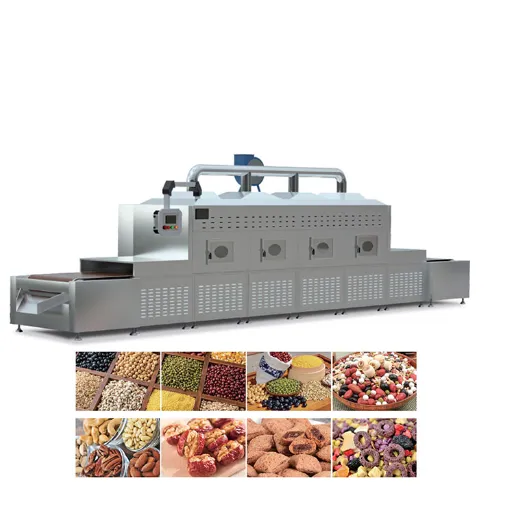
Industrial Microwave Sterilizer Cost: A Complete 2026 Pricing Guide for Food Processors

An industrial microwave sterilizer costs between 5,000forasmallbatchunitand5,000forasmallbatchunitand250,000+ for a heavy-duty continuous tunnel system. Most food processors should budget 15,000to15,000to50,000 for a mid-range tunnel sterilizer that handles 200 to 800 kg per hour. However, that’s just the start of the price tag. Energy savings, labor reduction, and yield improvements often cut the payback period to under two years.
Chen Wei runs a spice processing facility in Sichuan, China. In 2024, he spent $28,000 on a 30 kW tunnel microwave sterilizer to replace his steam sterilization line. He expected modest improvements. Within 18 months, the energy savings alone had covered nearly 60% of the equipment cost. His water bill dropped 97%. Cleaning time fell from four hours a day to 45 minutes. Chen’s story is not unique. It reflects what happens when buyers look past the upfront invoice and study the total cost of ownership. For a deeper dive into how these systems work, see our complete guide to industrial microwave sterilizers.
Most cost guides stop at listing microwave sterilization equipment price brackets. This article goes further. You will learn real 2026 industrial microwave sterilizer cost ranges by equipment category, the seven factors that drive cost, hidden expenses that catch buyers off guard, and how to calculate payback for your specific operation. By the end, you will have a clear budget framework and a business case you can present with confidence.
Key Takeaways
- Small batch microwave sterilizers start at 5,000;mid−rangetunnelsystemsrangefrom5,000;mid−rangetunnelsystemsrangefrom15,000 to 50,000;largeindustriallinescost50,000;largeindustriallinescost50,000 to $120,000+.
- Power output, machine configuration, frequency, automation level, and compliance requirements are the primary cost drivers.
- Hidden costs including shipping, installation, and magnetron replacement can add 15% to 30% to the initial purchase price.
- Microwave sterilization typically reduces energy use by 30% to 50% and water use by over 90% compared to retort or autoclave systems.
- Most continuous food processing operations achieve ROI payback in 18 to 26 months through combined energy, labor, and yield savings.
How Much Does an Industrial Microwave Sterilizer Cost? Real Price Ranges in 2026
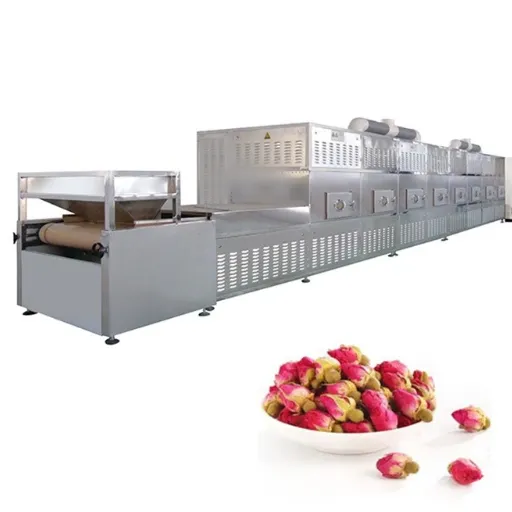
The industrial microwave sterilizer market spans a wide price spectrum. Understanding where your operation fits helps you budget accurately and avoid over-investing or under-specifying.
Small Batch and Cabinet Units: 5,000to5,000to15,000
Entry-level systems typically deliver 6 to 20 kW of microwave power. They suit pilot plants, R&D labs, and small-scale processors handling 50 to 500 kg per cycle. These units often use a cabinet or box configuration. The operator loads product, runs a sterilization cycle of 3 to 5 minutes, and unloads manually. For a startup spice company or a specialty tea processor testing new markets, this tier offers a low-risk entry point.
Mid-Range Tunnel Systems: 15,000to15,000to50,000
This tunnel microwave sterilizer price bracket is the sweet spot for most growing food processors. Continuous tunnel systems in this bracket deliver 20 to 60 kW and process 200 to 800 kg per hour. They include PLC touchscreen controls, variable belt speed, and food-grade stainless steel construction. A 30 kW tunnel sterilizer, for example, can handle spice powders, nuts, or grains at throughput levels that support commercial export. If you are scaling from batch to continuous production, this is where your search should begin.
Large-Scale Industrial Lines: 50,000to50,000to120,000
High-volume operations need 80 to 150 kW systems with belt widths of 1,000 mm to 1,500 mm. These tunnels process 800 to 2,000 kg per hour and often include advanced features like multi-zone temperature control and real-time moisture monitoring. Ready-to-eat meal manufacturers and large pet food facilities frequently land in this bracket.
Heavy-Duty and Custom Systems: 120,000to120,000to250,000+
At the top end, 200 to 300+ kW multi-zone tunnels serve major production facilities. These systems may use 915 MHz frequency for deeper penetration into dense products. Full automation, custom belt configurations, and integration into existing production lines push pricing into this range. Custom validation packages for FDA or CE compliance add further cost.
| Equipment Category | Power Range | Throughput | Price Range (USD) | Best For |
|---|---|---|---|---|
| Small batch / cabinet | 6 to 20 kW | 50 to 500 kg/cycle | 5,000to5,000to15,000 | R&D, startups, pilot plants |
| Mid-range tunnel | 20 to 60 kW | 200 to 800 kg/h | 15,000to15,000to50,000 | Growing spice, nut, grain processors |
| Large industrial line | 80 to 150 kW | 800 to 2,000 kg/h | 50,000to50,000to120,000 | RTE meals, large pet food operations |
| Heavy-duty / custom | 200 to 300+ kW | 2,000+ kg/h | 120,000to120,000to250,000+ | Major facilities, custom integration |
Want to see how these specs map to real equipment? Explore our industrial microwave equipment lineup to compare models by power, throughput, and configuration.
7 Factors That Determine Industrial Microwave Sterilizer Cost
Not every quote at the same kW rating carries the same price. Seven core factors separate a 20,000systemfroma20,000systemfroma120,000 one.
1. Power Output and Throughput
Higher power means faster processing. A 60 kW system moves roughly twice the product of a 30 kW unit. Manufacturers price magnetrons, generators, and cooling systems proportionally. If your target is 500 kg per hour, you need roughly 30 to 40 kW. If you need 1,500 kg per hour, you are looking at 100 kW or more.
2. Machine Configuration: Batch vs. Continuous Tunnel
Batch systems cost less because they use a simple chamber and manual loading. Tunnel systems require conveyor belts, continuous feed mechanisms, and longer waveguide assemblies. A tunnel typically costs two to three times more than a batch unit of equivalent power. But it also delivers five to ten times the throughput. For operations running 12 or more hours daily, the tunnel pays for itself faster.
3. Microwave Frequency: 2450 MHz vs. 915 MHz
Most food sterilizers use 2450 MHz. It works well for thin layers and small particles. The equipment is mature and costs less. The 915 MHz frequency penetrates deeper, up to 8 to 12 cm, making it ideal for dense products and bulk packages. However, 915 MHz generators and waveguides are more expensive. Expect a 20% to 40% premium for 915 MHz systems.
4. Automation and Control Systems
Basic models use manual power adjustment and simple timers. Mid-range systems add PLC touchscreens with recipe memory, variable belt speed, and automatic temperature feedback. Premium systems offer IoT connectivity, remote monitoring, and data logging for validation. Each step up the automation ladder adds cost but reduces labor and human error.
5. Construction Materials and Compliance
Food-grade SUS 304 stainless steel is standard. SUS 316 adds corrosion resistance for acidic or salty products but raises material cost. CE marking is standard from most manufacturers. FDA validation, USDA acceptance, or custom third-party certification require additional documentation and testing. That effort translates to higher pricing.
6. Application-Specific Design
A spice powder sterilizer needs different internal airflow and anti-caking features than a packaged food tunnel. Liquid pasteurizers require pumpable flow systems. Pet food post-extrusion sterilizers need to handle hot, fragile kibble without breakage. Custom engineering for your product format adds cost but prevents costly retrofitting later.
7. Customization and Integration Requirements
Standard tunnel lengths range from 6 to 12 meters. If your factory layout demands a shorter or longer tunnel, that requires custom frame fabrication. Integration with upstream extruders or downstream packaging lines may need custom conveyor interfaces. OEM and ODM modifications are common, but they add engineering time and cost.
At Shandong Loyal, we design our LY-series microwave sterilizers with modular architecture. This means you can start with a standard 30 kW tunnel and upgrade power, belt width, or controls as your volume grows. Modular design protects your investment and eliminates the need to replace the entire system when you scale.
Hidden Costs Every Buyer Should Budget For
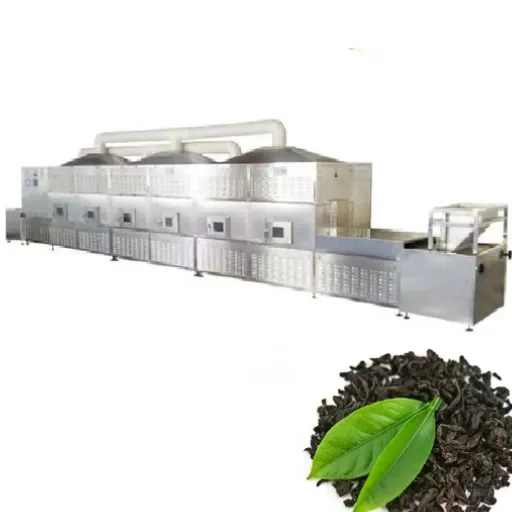
The factory invoice is not the final number when calculating total industrial microwave sterilizer cost. Smart buyers build a 15% to 30% buffer for expenses that arrive after the purchase order.
Shipping, Customs, and Import Duties
Most industrial microwave sterilizers ship from China under FOB terms. Ocean freight to North America or Europe typically adds 5% to 15% of the equipment cost. Import duty rates differ from country to country. Food processing machinery often enters at favorable rates, but you should confirm with your customs broker before budgeting.
Installation and Commissioning
Your facility needs three-phase industrial power, typically 380V. You may need an electrician to run dedicated lines. The foundation must support the tunnel weight, which can exceed 2,000 kg for large systems. Some buyers also need HVAC adjustments because microwave systems vent warm air. Commissioning, including initial calibration and test runs, usually takes 2 to 5 days.
Spare Parts and Maintenance Reserves
Magnetrons are the primary wear item. They last 5,000 to 8,000 operating hours and cost 800to800to2,000 each. A system of 100 kW capacity could have 10 to 16 magnetrons.
Conveyor systems can last from 2 to 4 years. Door seals and waveguide windows need periodic inspection. Set aside 3,000to3,000to6,000 annually for a mid-size system.
Training and Documentation
Operator training ensures safe, effective use. Validation documentation for food safety audits may require third-party review. Some manufacturers include basic training in the purchase price. Others charge separately for on-site training or extended documentation packages.
Extended Warranty and Service Contracts
Standard manufacturer warranties typically cover 12 months. Extended warranties and preventive service contracts add 3% to 8% annually but reduce the risk of unplanned downtime. For facilities running continuous shifts, this is often a sound investment.
Total Cost of Ownership: Microwave Sterilizer vs. Retort vs. Autoclave
Maria Gonzalez manages production at a ready-to-eat meal facility in Guadalajara. In 2023, her team ran a steam retort for pouch sterilization. The water bill was crushing. Cleaning took four hours every day. Energy costs climbed monthly. In 2024, she switched to a 50 kW tunnel microwave sterilizer. Her water bill dropped 97%. Cleaning time fell to 45 minutes. Energy use fell 35%. Maria did not just buy a machine. She restructured her operating economics.
Her experience illustrates a critical point. Microwave sterilizers tend to have higher initial costs than retort or autoclave systems with comparable capacities. However, the cost of ownership over a five-year period paints a different picture.
Upfront Capital Cost Comparison
A steam retort system for 500 kg per hour might cost 15,000to15,000to25,000. An equivalent microwave tunnel could cost 25,000to25,000to40,000. The microwave system requires a higher initial capital outlay. But that gap closes quickly once operations begin.
Energy and Utility Savings
Microwave sterilization uses 0.3 to 0.6 kWh per kilogram of product. Steam retorts consume 1.2 to 2.0 kWh per kilogram. For a line processing 500 kg per hour, 16 hours per day, that difference translates to 19,900to19,900to120,000 in annual energy savings depending on local utility rates. Water savings are even more dramatic. Autoclaves use 20 to 50 gallons per cycle. Microwave systems use as little as 800 milliliters.
Labor and Throughput Gains
Microwave sterilization cuts processing time by 60% to 75%. A retort cycle including come-up and cool-down can take 60 to 120 minutes. Microwave sterilization often completes in under 10 minutes. Faster cycles mean fewer operators per shift or higher daily throughput with the same staff. At scale, labor savings can exceed $55,000 per year.
Product Yield Improvements
Steam sterilization can cause overcooking, breakage, and fines. Microwave systems heat volumetrically, reducing thermal damage. Nut and spice processors report 2% to 5% yield improvement. On a line generating 1.5millioninannualproductvalue,thatimprovementadds1.5millioninannualproductvalue,thatimprovementadds30,000 to $75,000 to the bottom line.
Maintenance Cost Differential
Steam systems need boiler maintenance, descaling, steam trap repairs, and pressure vessel inspections. Annual maintenance often runs 14,000ormore.Microwavesystemsaresimplermechanically.Primarymaintenanceismagnetronreplacementandbeltinspection.Annualcoststypicallyrun14,000ormore.Microwavesystemsaresimplermechanically.Primarymaintenanceismagnetronreplacementandbeltinspection.Annualcoststypicallyrun6,000 for a mid-size system.
5-Year TCO Summary
| Cost Category | Microwave Sterilizer | Steam Retort | Autoclave |
|---|---|---|---|
| Upfront equipment | 30,000to30,000to50,000 | 15,000to15,000to25,000 | 20,000to20,000to35,000 |
| 5-year energy | 50,000to50,000to80,000 | 100,000to100,000to160,000 | 120,000to120,000to200,000 |
| 5-year water | 2,000to2,000to5,000 | 40,000to40,000to70,000 | 50,000to50,000to90,000 |
| 5-year maintenance | 25,000to25,000to35,000 | 60,000to60,000to80,000 | 70,000to70,000to100,000 |
| 5-year labor | 80,000to80,000to120,000 | 120,000to120,000to180,000 | 130,000to130,000to200,000 |
| 5-year TCO | 187,000to187,000to290,000 | 335,000to335,000to515,000 | 390,000to390,000to625,000 |
The microwave sterilizer costs more on day one. Over five years, it typically costs 40% to 50% less to operate.
Ready to see how these savings apply to your product? We offer free lab testing with 5 kg samples. You can validate throughput, energy use, and product quality before committing to a full system. Request a free lab test and customized quote to schedule a test.
Industrial Microwave Sterilizer ROI: Calculating Payback Period
Payback period is simple math. Divide the sum of equipment cost by the saving per year. The result tells you how many months until the system pays for itself.
The Payback Formula
Payback Period (months) = (Equipment Cost + Installation + Hidden Costs) / (Annual Energy Savings + Annual Labor Savings + Annual Yield Gains)
Most continuous food processing operations running 12 or more hours daily achieve payback in 18 to 26 months. Underutilized systems running single shifts may stretch payback toward 36 months.
Realistic Payback Scenarios
Small spice processor: 25,000totalinvestment.25,000totalinvestment.15,000 annual savings from energy, water, and labor. Payback: 20 months.
Mid-size RTE manufacturer: 60,000totalinvestment.60,000totalinvestment.35,000 annual savings from reduced utility bills and faster throughput. Payback: 21 months.
Large pet food facility: 150,000totalinvestment.150,000totalinvestment.90,000 annual savings from combined energy, yield, and labor improvements. Payback: 20 months.
Building Your Business Case
Start by documenting your current costs. Track energy use per ton, water consumption per cycle, labor hours per shift, and product reject rates. Then project microwave savings using the benchmarks in this guide. Factor in maintenance reserves of 3,000to3,000to6,000 per year. The distinction is your net annual savings. Divide by total investment, and you have your payback period.
When Payback Stretches Beyond Three Years
Be cautious if your facility runs fewer than 12 hours per day, processes small batches with frequent changeovers, or faces unusually low energy costs. In these cases, the savings multiplier shrinks. A batch system at lower utilization might see payback extend to 30 to 36 months. That is still viable for long-term equipment, but it requires a different investment mindset.
Cost by Application: What Different Food Processors Should Budget
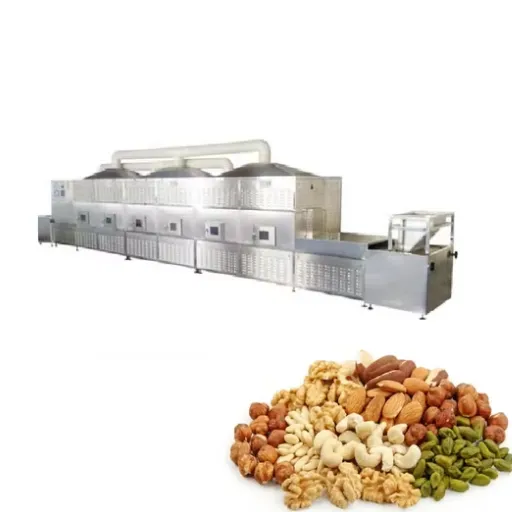
Your product type directly influences the system you need and the price you should expect.
Spice and Seasoning Processors
Spice powders require gentle handling to preserve volatile oils and color. A 20 to 40 kW tunnel with precise temperature control and anti-caking airflow typically costs 15,000to15,000to35,000. The investment pays back quickly because spice margins are sensitive to yield loss and energy cost.
Ready-to-Eat Meal Manufacturers
Packaged soups, sauces, and meals in flexible pouches need continuous tunnel sterilizers with overpressure options. Budget 25,000to25,000to65,000 depending on pouch size and throughput. The water and labor savings here are often the most dramatic because retort processing for RTE meals is notoriously water-intensive.
Pet Food and Aquatic Feed Producers
Post-extrusion sterilization of dry kibble or fish feed requires a system that handles hot, fragile product without breakage. A 30 to 80 kW tunnel with adjustable belt speed and gentle handling runs 20,000to20,000to80,000. Yield improvement from reduced fines often justifies the investment alone. If you are building a complete operation, see our pet food production line solutions.
Grain, Nut, and Dried Goods Processors
Soybean flour, dried sweet potatoes, tea leaves, and nuts need uniform surface treatment to eliminate mold spores and insect eggs. Budget 15,000to15,000to50,000 for a mid-size tunnel. The key specification is even power distribution across the belt width.
For a deeper look at how microwave sterilization technology works across these applications, see our complete guide to microwave sterilization equipment.
Conclusion
Industrial microwave sterilizer cost ranges from 5,000forentry−levelbatchunitsto5,000forentry−levelbatchunitsto250,000+ for custom high-capacity tunnels. Most food processors find their solution in the 15,000to15,000to50,000 bracket. The upfront investment exceeds that of steam retorts or autoclaves. But energy savings of 30% to 50%, water reduction of over 90%, labor efficiency gains, and product yield improvements create a compelling total cost of ownership story.
Operations running continuous shifts typically recover their investment in 18 to 26 months. The key is matching power, configuration, and frequency to your actual product and throughput. Buying too small limits growth. Buying too large wastes capital. The right fit delivers measurable returns year after year.
Before you finalize your budget, validate the numbers with your own product. Run a sample through a test system. Measure energy use, check final quality, and confirm throughput. Real data beats estimates every time.
Contact Shandong Loyal Industrial Co., Ltd. today for a free lab test and customized ROI assessment. We will analyze your product, estimate your savings, and recommend a system configuration that fits your production goals and your budget.