

Food Safety HACCP Certification: A Complete Production Line Guide (2026)

Maria Chen was ecstatic when her pasta business in Vietnam got a $2.3 million export order from a large European retail chain. An emergency clause in the purchase order required certification of HACCP production compliance documentation, recognized by the GFSI, produced within 90 days, which her plant did not have. Without them, the deal would be called off and expansion plans for her company would crumble.
Maria ran into action to set up understand the HACCP requirements, consultants, and modification of the production line. That was discovered in the search – the choice of equipment decided on all those years would dictate whether or not certification was to be an option at all. Gaps proper temperature checking, deficient metal detection, and record-keeping practices–which had seemed acceptable for domestic sales up until then became the major obstacles to export compliance.
Maria has taken 8 months of super hard work to make her certification happen; while that was certainly a taxing journey, incurring 180,000ugx in equipment upgrades, 180,000ugx in equipment upgrades, 25,000ugx in consulting fees, and countless sleepless nights. Had she engineered her production line with food safety HACCP certification for production demands from the beginning, the figure would have slimmed by a third and the time required been halved.
Maria’s experience guidse that certification planning for HACCP needs to begin before you pick equipment and not thereafter as a demand of signed contracts. Feel free to go through this detailed guide, and you will start with the why and how of HACCP certification-and how gear selections to fit the production line determines success.
What you’ll learn in this guide:
- The 7 HACCP principles and how to implement them on your production line
- Step-by-step certification process with realistic timeline expectations
- Equipment requirements for critical control point (CCP) monitoring
- Cost breakdown and ROI analysis for certification investment
- Common implementation failures and how to avoid them
What Is Food Safety HACCP Certification Production?

HACCP Definition and Origins
Hazard Analysis and Critical Control Points (HACCP) are a systematic, scientific method of food safety assurance to identify, evaluate, and control biological, chemical, and physical hazards that can occur throughout the production process. Originally created for ensuring food safety in space missions, HACCP has become the global standard for food processing.
The HACCP food safety certification system of production, within a comprehensive food safety management system, shifts food safety from reactive examination to preventive control. Instead of testing finished products and hoping they were produced with safety in mind, here, HACCP uses the process to actually build safety into the process, thereby controlling hazards before they have a chance to become problems.
Core Concept: Identify what hazards to look out for; implement controls at these points; continuously monitor, record, and document all monitoring activities.
Certification vs. Implementation
Understanding the differentiation is very important:
HACCP Implementation is pragmatically applying the principles of HACCP into your operations. It is mandatory in many jurisdictions worldwide for selected food classes (juice/seafood/meat/poultry in the U. S.) and is becoming more of a common requirement among retailers worldwide.
HACCP Certification is the third-party confirmation for the compliance of your HACCP system with international standards. Though it is not always a must, certification is often insisted upon for:
Exporting to the EU/UK and other regulated market
The specific terms of contracts with big retailers
Co-manufacturing arrangements
Brand portrayal/ risk management
Certification schemes recognized by the Global Food Safety Initiative (GFSI) and are a must for all the HACCP food manufacturing are:
SQF (Safe Quality Food)
BRCGS (British Retail Consortium Global Standards)
FSSC 22000 (Food Safety System Certification)
Food Safety HACCP Certification Production Requirements
Before the implementation of HACCP, certain Prerequisite Programs (PRPs) should be in place. These include:
Good Manufacturing Practices (GMPs):
Facility design and construction standards
Equipment specifications (food-grade SUS 304/316 stainless steel)
Personnel hygiene and training skills
Pest control management
Sanitation Standard Operating Procedures (SSOPs):
Cleaning and sanitizing protocols
Environmental monitoring
Master sanitation schedules
Clean-in-Place (CIP) system validation
The 7 HACCP Principles for Production Lines

The foundation of any effective food safety management system rests on seven principles mandated by the Codex Alimentarius and recognized globally in food safety HACCP certification production:
Principle 1: Conduct Hazard Analysis
Identify exposure to biological, chemical, and physical hazards at each production step.
Biological hazards: pathogens (Salmonella, Listeria, E. coli), toxins, spoilage organisms
Chemical hazards: pesticides, allergens, cleaning chemicals, heavy metals
Physical hazards: metal fragments, glass, plastic, bone, stones
Production Line:
Assessment of the risks of raw material at receipt
Hazard maps of process steps
Risk evaluation in item-specific equipment
Sources of environmental pollution
Principle 2: Determine Critical Control Points (CCPs)
A CCP is a step where control can be applied to prevent, eliminate, or reduce a food safety hazard to an acceptable level.
Common CCPs in Food Production:
| Production Stage | Typical CCP | Critical Control Function |
|---|---|---|
| Raw Material Receiving | Supplier certification, inspection | Prevent contaminated inputs |
| Cooking/Pasteurization | Temperature/time | Kill pathogens |
| Metal Detection | Inline detection systems | Remove physical hazards |
| Cooling | Temperature reduction rate | Prevent bacterial growth |
| Packaging | Seal integrity | Prevent post-process contamination |
HACCP compliance requirements specify that not every control point is a CCP. Use the Codex decision tree to determine true criticality:
- Do control measures exist for the hazard?
- Is the step specifically designed to eliminate or reduce the hazard?
- Could contamination occur at unacceptable levels?
- Will a subsequent step eliminate or reduce the hazard?
Principle 3: Establish Critical Limits
Critical limits are the actual boundaries that separate competitive from vulnerable products. These critical limits ought to be:
Measurable (e.g. temperature, time, pH, moisture content)
As per scientific validation
Specifically related along with product and procedure
Principle 4: Establish Monitoring Procedures
Through monitoring, CCPs are verified for control. Automated systems in today’s food industries are increasingly accepting HACCP systems where
Manual Monitoring:
– The operator monitors temp readings using calibrated manuals.
– Visually inspects prone areas.
– Paper record-keeping
Automated Monitoring:
– Continuous temperature sensors that are plugged in with the HVAC system.
– Real-time pH monitoring.
– Metal detectors and rejection system.
– Data loggers for the environmental conditions.
Principle 5: Establish Corrective Actions
If the monitoring finds deviations outside critical limits, the specified corrective measures must be taken:
Immediate Actions:
Separate affected product
Adjust the process to bring the monitored value within prescribed limits
Document the deviation
Follow-Up Actions:
Evaluate affected product for appropriate disposition
Identify root cause
Implementing corrective actions
Re-verify effectiveness of CCPs
Principle 6: Establish Verification Procedures
Verification is the statement of confirming the good work of the HACCP system as had been planned:
Validation:
Data or scientific information is therefore required to support the belief in the efficiency of control methods in ensuring safe food.
Calibration of Monitoring Equipment:
One has to verify the thermometer, scale, and metal detector at regular intervals.
Review of Records:
Everything is up for grabs with a regular audit involving reviewing monitoring records and corrective actions and the like.
Internal Audits:
Regular evaluation of HACCP implementation
Principle 7: Establish Documentation and Record-Keeping
Please Prepare the Following:
HACCP plan (product description, hazard analysis, decision as to critical control points (CCP))
Prerequisite program procedure
Monitoring records (temperature logs,metal detection checks)
Corrective action records
Verification records (calibration checklists, validation research)
Supporting scientific data
Keep for: Typically one year beyond the expiry date or as per requirements under any regulation.
Prerequisite Programs: The Foundation of HACCP

Before implementing HACCP, robust prerequisite programs must be in place. These are the foundation upon which HACCP is built.
Good Manufacturing Practices (GMPs)
Facility Design:
A distinction between raw and finished product areas
Keeping ventilation and adequate light
Sanitary building material (smooth and washable)
Appropriate drainage and waste discharge
Equipment Design for Food Safety:
SUS 304/316 stainless steel construction
Seamless welding (no space for bacteria)
It must be easy to clean and sanitize and must ensure the proper hygiene of the equipment
CIP (Clean-in-Place) compatibility
Personnel Hygiene:
Hand washing stations and protocols
Protective clothing regulations
Health check procedures
Training on hygiene practices
Sanitation Standard Operating Procedures (SSOPs)
Cleaning Guidelines:
Pre-rinse, apply detergent, scrub, post-rinse, and sanitize.
Schedules of frequency (daily, weekly, monthly deep clean)
Chemical concentration and exposure time
Validation by Environmental Monitoring
Clean-In-Place (CIP) Systems for Food Production Promote Safety in Indicator Food Safety HACCP-Certified Production Facilities:
Automated chemical dosing and temperature control
Circulation pumps for internal pipe cleaning
Validation of cleaning efficacy (ATP test)
CIP Cycle documentation
Supplier Control Programs
Documented quality sourcing lists
Incoming list of material specifications and inspection
Requirement for critical ingredients that the Certificate of Analysis (COA) must be provided
Traceability systems (one-up-one-back)
CCP Implementation on Production Lines

Equipment Design for Critical Control Points
The safety equipment of a modern food procession line must be designed keeping CCP integration in mind:
Temperature Integration:
Machines that will have sensors fixed at the critical thermal process points working along lines of the production control system
Real-time logging system for data, trend analysis, and alerts system connected to the Integrated Data System
Dual sensors should hence be installed in sensitive applications
Metal Detector Integration:
Metal detectors installed in-line before the final packaging stage
Automatic rejection of the contaminated product
Constant testing of sensitivity
Linked with the production data systems
Vision Systems:
Inspecting the seal of the package
Examining safekeeping
Detecting foreign materials
Integrated with traceability systems
Case Study: Pasta Production Line CCP Implementation
Facility Profile: Southeast Asian pasta manufacturer, 3-ton daily capacity
Identified CCPs:
- Extrusion Temperature (Cooking CCP)
- Critical limit: 85-92°C product temperature
- Monitoring: Inline temperature sensors every 30 seconds
- Equipment: Twin-screw extruder with PLC temperature control
- Corrective action: Automatic diversion if outside limits
- Metal Detection (Physical hazard CCP)
- Critical limit: Detection of ferrous ≥1.5mm, non-ferrous ≥2.0mm
- Monitoring: Continuous inline metal detection
- Equipment: Automated rejection conveyor
- Corrective action: Product isolation, equipment investigation
- Packaging Seal Integrity (Contamination prevention CCP)
- Critical limit: Vacuum seal ≤-0.8 bar, no leaks
- Monitoring: Vision system inspection
- Equipment: Automated packaging line with seal verification
- Corrective action: Reject non-conforming packages
Implementation Results:
- Zero major non-conformities at certification audit
- 40% reduction in customer complaints
- Full traceability achieved (batch to raw material in <15 minutes)
- Export market access secured ($2.3M annual contract)
The HACCP Certification Process Step-by-Step

Phase 1: Preparation (Months 1-2)
HACCP Team:
HACCP Team Leader (should have taken an accredited course on HACCP)
Production/Operations representatives
Quality Assurance representatives
Maintenance/Engineering representatives
Management representatives
Training:
Accredited training to the Team Leader of HACCP (e.g., the International HACCP Alliance)
General safety training for all personnel
Role-oriented training (e.g., CCP monitors, maintenance staff)
Development of Preliminary Document:
Product descriptions and intended use
Process flow diagrams.
Verification of On-Site Flow Diagram.
Phase 2: System Development (Months 2-4)
Perform Hazard Analysis:
Document all possible hazards in each step.
Consider the likelihood and severity.
Identify the significant hazards.
Suggest control measures.
Establish CCP:
Decidea over the respective CCP decision tree
Confine definitely to food-safety concerns only
Document rationale for CCP decisions
Set critical limits and monitoring requirements:
Define measurable limits based on validation
Develop monitoring procedures for these limits, including frequencies, methods, and personnels
Identify corrective actions for each CCP
Draft Verification Procedures:
Validation studies for critical limits
Calibration schedules for monitoring equipment
Internal audit procedures
Phase 3: Implementation (Months 4-7)
Operating the System:
Performance of all procedures
Training the staff in the functions they are to fulfill.
Assemble at least three months of operating records.
Carry out internal audits and gap analyses.
Refinement:
Alter procedures based on operating experiences.
Attend to any deficiencies in equipment.
Strengthening the document control system.
Phase 4: Certification Audit (Months 7-8)
Select the certification body:
1. GFSI-approved accreditation (ANSI, ISO 17021)
2. Industry experience.
3. Industry reputation slope.
4. Cost evaluation. Service estimation.
Stage 1 Audit (Documentation Review):
1. Review of the HACCP manual, hazard analysis, CCP plans
2. Checklist on conformance
3. Pointing out non conformities
Stage 2 Audit (implementation):
1. Plant walk through and process observation
2. Interviews with personnel to verify understanding
3. Record reviews (monitoring logs or corrective actions)
4. Traceability would be confirmed-perform mock recall
Treatment of Nonconformities:
* Rectify whatever was pointed out.
* Actify the rectification process.
* They’ll grant you certification (good for 3 years).
Phase 5: Maintenance (Ongoing)
Surveillance Audits:
- Annual audits (sometimes unannounced)
- Review of ongoing monitoring and corrective actions
- System updates for process changes
Re-certification:
- Full re-audit before 3-year certificate expiration
- Application submitted 6 months before expiry
HACCP Certification Costs and ROI
Implementation Costs by Facility Size
| Cost Category | Small Facility (1M−1M−5M revenue) | Medium Facility (5M−5M−25M) | Large Facility ($25M+) |
|---|---|---|---|
| Training | 2,000−2,000−5,000 | 5,000−5,000−10,000 | 10,000−10,000−20,000 |
| Consulting (optional) | 5,000−5,000−15,000 | 15,000−15,000−40,000 | 40,000−40,000−100,000 |
| Equipment Upgrades | 10,000−10,000−30,000 | 30,000−30,000−100,000 | 100,000−100,000−500,000 |
| Certification Audit | 3,000−3,000−8,000 | 8,000−8,000−20,000 | 20,000−20,000−50,000 |
| Documentation Systems | 2,000−2,000−5,000 | 5,000−5,000−15,000 | 15,000−15,000−40,000 |
| Total First Year | 22,000−22,000−63,000 | 63,000−63,000−185,000 | 185,000−185,000−710,000 |
Ongoing Costs
Auditing and compliance monitoring: Approximately$2,000-50,000
System support/maintenance: Approximately$5,000-75,000
Training: approximately$1,000-20,000
Calibration or certification: $5,000-25,000
Return on Investment
Reducing Risks:
Average Food Recall Cost: $10M+ (including any hidden and direct costs)
No recalls would have to take place in case of HACCP application
Insurance Premium Reductions: 10-20%
Market Access:
Export Markets: 500K-500K-50M + potential revenue a year
Retailers’ requirements: Over 75% of key retailers demand GFSI recognition
Guarantee of contracts: Often needed for co-manufacturing agreements
Operational Efficiency:
Waste reduced: 15-30% with process control
Reduced complaints by customers: 40-60%
Simplification of Regulatory Inspections
Typical Timeline for ROI:
Small facilities: 24-36
Medium facilities: 18-30
Large facilities: 12-24
Digital Transformation: Modern HACCP Systems
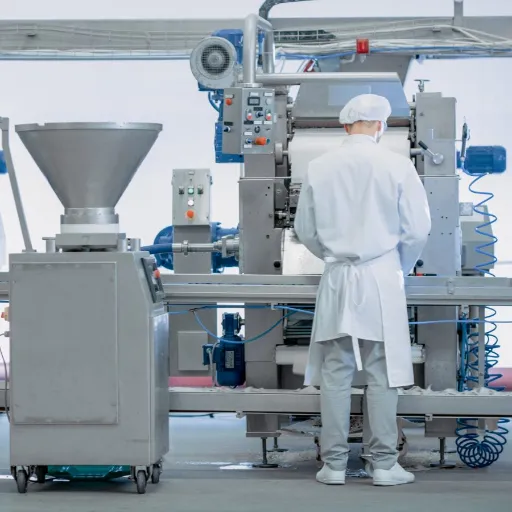
Automated CCP Monitoring
The move from paper-based to digital food safety management systems platforms is picking up speed:
IoT Sensor Networks:
Continuous temperature and pH monitoring
Cloud platform real-time data transmission
Automated SMS/email notifications when the critical limits are approached
Trend analysis for predictive maintenance
Integration with Production Systems:
SCADA integration
MES connectivity
Automatic production holds at CCP deviation
Recipe management with HACCP parameter enforcement
Digital Record-Keeping
Cloud-Based Documentation:
-report generation is automated
-floor personnel get the boon of working on mobile gadgets
-backup and disaster recovery
Blockchain Traceability:
-records that cannot be changed ensure that the supply chain’s transparency is accountable
-allow very fast tracing of consignments for recalls
-Consumer-facing transparency
AI and Predictive Analytics
Predictive Maintenance:
- Machine learning algorithms predict equipment failures before they impact CCPs
- Scheduled maintenance prevents unplanned downtime during production
Process Optimization:
- AI analysis identifies optimal process parameters
- Continuous improvement through data-driven insights
Common HACCP Implementation Failures (And How to Avoid Them)
Failure 1: Inadequate Prerequisite Programs
The Problem:Taking HACCP and thinking it won’t be necessary to ally it with solid GMP and SSOPs is somewhat trying to build bricks without straw. Masterfully-made CCPs can’t redress the fault of a poorly sanitized environment or an abysmal facility setting.
The Solution: First conduct the GMP/SSOP audit diligently, meek and humble, let it be unsatisfactory for all happenings for HACCP to be made operational. Treat essentially all respective shortcomings, and then begin.
Failure 2: Too Many CCPs
The Problem: Sometimes, facilities will designate every control point as a critical control point, imposing an unmanageable monitoring burden and stirring focus away from actual food safety hazards.
The Solution: Ensure strict adherence to the critical control point decision tree. Concentrate only on points where the hazard will be prevented, eliminated, or reduced to acceptable levels. Most facilities will have 3-7 real critical control points, not 20+.
Failure 3: Poor Equipment Selection
The Problem: It follows, then, that all the other components of an HACCP system are useless if equipment can’t reliably maintain or check critical limits. This provides an initial starting point for HACCP food safety planning—this is to deal with the delivery of equipment.
Example: A pasta manufacturer bought an extruder with no temperature monitoring system. They later realized that backfitting cost $35,000, plus more purchases for production downtime, knowing that these costs would have been minimal if initially specified.
Solution: If such equipment can accept it, engineer CCP capabilities into equipment specifications at set-up. Specify temp sensors and data logging for tracking, and provide for integration points for metal detection unit.
Failure 4: Inadequate Training
The Problem: Personnel don’t understand their role in HACCP or the importance of monitoring procedures. Paperwork gets “pencil-whipped” (falsified), and deviations go unreported.
The Solution:
- Comprehensive initial training with competency verification
- Role-specific training (CCP monitors, maintenance, management)
- Regular refresher training
- Create a food safety culture where reporting deviations is encouraged, not punished
Failure 5: Documentation Gaps
The Problem: Missing monitoring records, incomplete corrective action documentation, or unverified flow diagrams create audit failures.
The Solution:
- Simplified forms that are easy to complete
- Digital systems with automated reminders
- Daily verification by supervisors
- Monthly internal audits of documentation
2026 HACCP Trends and Regulatory Updates

Food Safety Culture Requirements
BRCGS Issue 9 and updated GFSI benchmarks now explicitly require food safety culture:
- Leadership commitment and visible engagement
- Employee empowerment to report issues
- Behavioral-based food safety programs
- Regular communication on food safety performance
Enhanced Traceability Requirements
FSMA Section 204 (Food Traceability Final Rule) in the US requires:
- Electronic record-keeping for high-risk foods
- Rapid traceback capability (within 24 hours)
- Key Data Elements (KDEs) at Critical Tracking Events (CTEs)
Allergen Management Evolution
- Sesame added to major allergen list (2023 FASTER Act in US)
- Enhanced labeling and control requirements
- Allergen cleaning validation protocols
- Supply chain allergen risk assessment
Climate Change Adaptations
- Emerging pathogen risks from temperature changes
- Supply chain resilience requirements
- Enhanced environmental monitoring for mycotoxins
HACCP Certification Decision Framework

Do You Need Certification?
Mandatory for:
- Export to EU, UK, and other regulated markets
- Supply contracts with major retailers (Walmart, Tesco, Carrefour, etc.)
- Co-manufacturing arrangements with certified partners
- Juice, seafood, and meat/poultry operations (regulatory HACCP required in US)
Voluntary but Valuable for:
- Risk reduction and liability protection
- Operational efficiency improvements
- Brand credibility and marketing advantage
- Insurance premium reductions
Certification Readiness Assessment
| Factor | Ready | Not Ready |
|---|---|---|
| GMP/SSOP Compliance | Fully implemented with documentation | Gaps identified, no written procedures |
| Management Commitment | Full support, resources allocated | Viewed as “quality department problem” |
| Personnel Training | Complete, competency verified | Minimal or no food safety training |
| Operational Stability | Consistent production processes | Frequent process changes, no SOPs |
| Documentation | Organized system, records complete | Disorganized or missing records |
| Equipment Capability | Monitoring equipment in place | No CCP monitoring capability |
Choosing a Certification Body
Accreditation:
- GFSI-recognized scheme (SQF, BRCGS, FSSC 22000)
- National accreditation (ANSI in US, UKAS in UK, etc.)
Selection Criteria:
- Industry experience in your product category
- Geographic coverage (for multi-site operations)
- Auditor qualifications and availability
- Cost and service level agreement
- Reputation and customer references
Conclusion: Building Food Safety Into Your Production Line
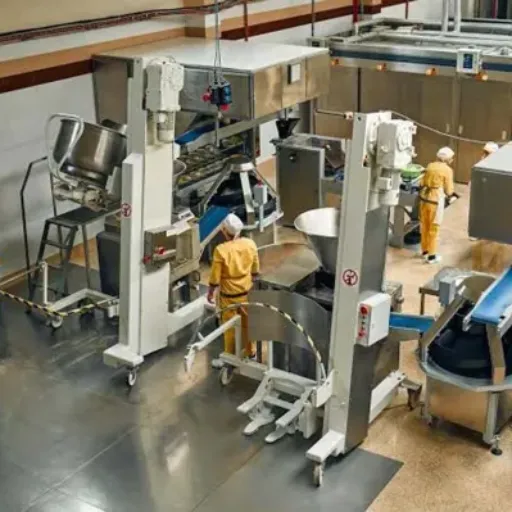
The food safety HACCP certification production journey isn’t just about passing an audit—it’s about building a system that consistently produces safe food while enabling business growth.
Key Takeaways:
- Start Early: HACCP planning should begin at equipment specification, not when customers demand certification
- Build on Strong Foundations: Robust GMPs and SSOPs are prerequisites for successful HACCP
- Engineer CCPs Into Equipment: Production line design determines monitoring capability and certification feasibility
- Invest in Training: People make the system work—comprehensive training is non-negotiable
- Think Long-Term: Certification opens markets, reduces risk, and improves efficiency—view it as investment, not cost
Marcus’s Story (Revisited):
After failing his first audit due to inadequate temperature monitoring on his aging production line, Marcus invested in a complete line upgrade with integrated CCP monitoring. Six months later, he achieved certification. Within a year, his certified facility secured contracts worth 4.2millionannually—contractsimpossiblewithoutcertification.The4.2millionannually—contractsimpossiblewithoutcertification.The280,000 investment paid for itself in 8 months.
The question isn’t whether you can afford HACCP certification. For growing food manufacturers, the real question is whether you can afford not to have it.
Quick Reference: HACCP Certification Checklist
Pre-Implementation
- Form HACCP team with trained leader
- Complete GMP/SSOP gap analysis
- Verify equipment CCP monitoring capability
- Develop process flow diagrams
System Development
- Complete hazard analysis
- Identify CCPs with documented rationale
- Establish critical limits with scientific basis
- Create monitoring procedures
- Define corrective actions
- Develop verification procedures
- Create documentation system
Implementation
- Train all personnel
- Operate minimum 3 months
- Generate monitoring records
- Conduct internal audits
Certification
- Select certification body
- Complete Stage 1 document audit
- Complete Stage 2 implementation audit
- Address any non-conformities
- Receive certificate
Maintenance
- Annual surveillance audits
- Ongoing system updates
- Re-certification every 3 years
Frequently Asked Questions (FAQs)
Acronym HACCP in food production signifies?
In perspective, this Hazard Analysis Critical Control Point system is employed so to guarantee food safety through the analysis and control of biological, chemical, and physical hazards. The system extends from raw material production to the distribution of processed products. By identifying critical control points in advance, the manufacturers are able to eliminate the likelihood of contamination long before testing becomes possible.
How to get food safety HACCP certification?
To get this certification, a set procedure must be followed to standardize the production process. The first step requires that any fundamental prerequisite programs, such as Good Manufacturing Practices (GMPs) as set by the standard, are in place. The second step involves the development of a thorough health hazard analysis plan vetted to the specifics of the particular facility. Subsequently, an audit is performed by an external body to ascertain that all documents and results from procedures clearly indicate that facilities meet the given regulatory standards to ensure consumer confidence in food safety.
What are the principal preventative features of a HACCP program?
The preventive nature of the plan is the first line of defense against foodborne diseases. Judges have established specific parameters for everything from cooking time to getting the most out of help from friends in the appropriate disposal of sanitation chemicals. By constant scrutiny of the stock regularly for safety and quality limits, you can stop hazards before they affect the batch. In the event that something were to not fall within limits that are deemed safe, immediate corrective actions must be put in place to assure the food supply chain.
Why do worldwide retailers insist on compliance checks upon suppliers?
Key retail chains and wholesalers must guarantee that whatever they sell to the customer will not harm the well-being of the customer. A formal compliance audit serves as an impartial verification for the food safety plan in place. With a certified badge, we have proof that conveys our adherence to acceptable international safety criteria and could enable us to promote this before a buyer. This is a bridge to global markets and protection against the brand reputation and public health.
Can small food businesses implement these quality management systems?
Small operations can absolutely adapt these safety frameworks to fit their unique size and scope. We scale the documentation and monitoring requirements to match the complexity of your actual production line. While a local bakery has different critical control points than a massive meat processing plant, you still apply the exact same core principles to identify hazards and guarantee product safety.