
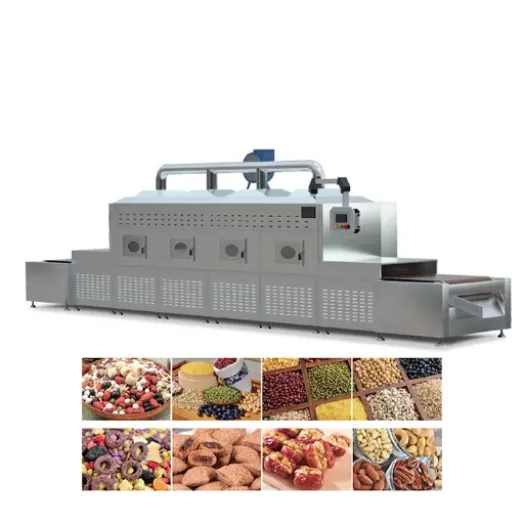
Microwave Sterilization vs Retort Sterilization: Which System Fits Your Food Processing Line?

Microwave sterilization delivers faster processing, superior product quality, and lower energy costs compared to retort sterilization, while retort remains the proven standard for low-acid canned goods requiring maximum shelf life. The right choice depends on your product type, packaging format, production volume, and budget.
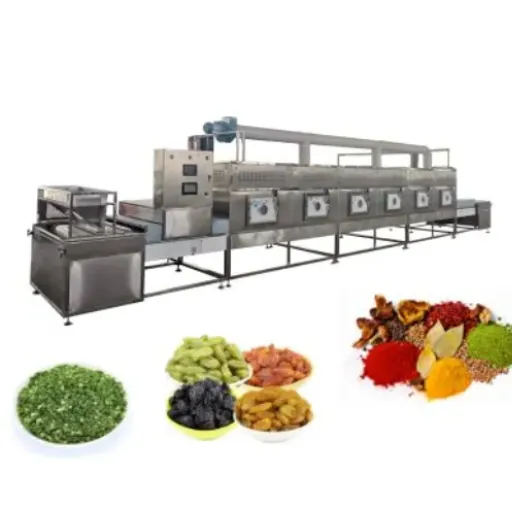
When Raj Patel evaluated sterilization options for his spice processing facility in Mumbai last year, he faced a familiar dilemma. His steam retort system took 90 minutes per batch, destroyed volatile aroma compounds, and consumed enough water to strain his utility budget. After switching to a continuous tunnel microwave sterilizer, his cycle time dropped to 18 minutes, his energy bill fell 42%, and customer complaints about off-flavors disappeared entirely. His only regret? Not making the switch sooner.
If you are weighing microwave sterilization vs retort sterilization for your operation, this guide gives you the data you need. We compare both technologies across speed, quality, energy use, equipment cost, packaging requirements, and safety. Every claim is backed by peer-reviewed research and real-world processing data.
Key Takeaways
- Microwave sterilization processes food 2.4 to 3.2 times faster than retort, cutting cycle times by 63% to 72%.
- Retort sterilization remains the gold standard for low-acid canned goods (pH > 4.6) and metal packaging.
- Microwave-treated products retain up to 9.14% more unsaturated fatty acids and score higher on texture, color, and flavor tests.
- Industrial microwave systems use 30% to 50% less energy and 98% less water per cycle than conventional steam retorts.
- Retort equipment costs less upfront (2,150to2,150to50,000) compared to microwave (15,000to15,000to100,000+), but microwave delivers lower total cost of ownership within 3 to 5 years for high-volume operations.
How Retort Sterilization Works
Retort sterilization has been the backbone of shelf-stable food production for over a century. The process uses saturated steam or pressurized hot water at temperatures between 115°C and 130°C to heat sealed containers from the outside in.
Heat transfers through the product via conduction and convection. The container surface heats first, then thermal energy gradually penetrates toward the center. This creates a significant temperature gradient between the outer layers and the core. The slowest-heating point, called the cold spot, determines the total cycle time because every part of the product must reach the target lethality.
A typical retort cycle includes three phases. The come-up phase heats the vessel and product to target temperature, which takes 15 to 30 minutes. The hold phase maintains sterilization temperature for 10 to 30 minutes depending on product density and container size. The cool-down phase gradually reduces pressure and temperature to prevent package deformation, adding another 15 to 20 minutes. Total cycle time usually ranges from 60 to 120 minutes.
Retort systems accommodate metal cans, glass jars, and flexible retort pouches. This versatility makes them indispensable for traditional canning operations, soups, sauces, and pet food in metal containers. Modern retorts use water immersion, steam-air mixtures, or rotary agitation to improve heat distribution, but the fundamental limitation remains: heat must travel from the outside inward.
How Microwave Sterilization Works
Microwave sterilization takes a fundamentally different approach. Instead of heating the exterior and waiting for heat to penetrate, it generates thermal energy directly inside the food through dielectric heating.
Electromagnetic waves at 915 MHz or 2450 MHz cause polar molecules (primarily water) to oscillate rapidly. This molecular friction creates heat volumetrically, meaning the food heats from the inside out simultaneously with surface heating. The result is dramatically faster temperature rise and more uniform heat distribution throughout the product.
The most advanced commercial systems use Microwave Assisted Thermal Sterilization (MATS), developed at Washington State University by Dr. Juming Tang. MATS combines 915 MHz microwave energy with a pressurized hot water bath. The hot water prevents package deformation while microwaves deliver rapid internal heating. The system moves products through four sequential stages: preheating, microwave heating, holding, and cooling.
Because energy converts directly into heat within the product, there is minimal thermal lag. A tray of macaroni and cheese that needs 40 minutes in a retort can reach sterilization temperature in 8 minutes using MATS. This speed advantage is not incremental — it is transformational for throughput planning.
Want to understand the full engineering behind microwave sterilization systems? Our complete guide to industrial microwave sterilization solutions breaks down power ratings, frequency selection, and tunnel configurations.
Speed and Throughput: The Numbers
Processing speed is where the microwave sterilization vs retort sterilization comparison becomes impossible to ignore. Peer-reviewed studies consistently show microwave systems heat food 2.37 to 3.20 times faster than retort while achieving identical microbial lethality.
Research published in Frontiers in Nutrition compared microwave, stepwise retort, and general retort heating for duck meat sterilization. The microwave system achieved the target F0 value (a measure of sterilization intensity) in a fraction of the time required by either retort method. Overall processing time dropped by 63% to 72%.
For a production manager, this translates directly into throughput. A facility running a 90-minute retort cycle completes roughly 5 cycles per 8-hour shift. Switching to a 25-minute microwave cycle pushes that to 15+ cycles per shift. The same floor space processes three times more product daily.
| Processing Metric | Retort Sterilization | Microwave Sterilization | Advantage |
|---|---|---|---|
| Heating rate to target temp | Baseline | 2.37x to 3.20x faster | Microwave |
| Total cycle time (typical) | 60 to 120 min | 20 to 45 min | 63% to 72% shorter |
| Batches per 8-hour shift | 4 to 8 | 12 to 20 | 2x to 3x more |
| Come-up time | 15 to 30 min | Under 10 min | Microwave |
| Cool-down time | 15 to 20 min | 5 to 10 min | Microwave |
The speed advantage compounds across multiple shifts. For a facility operating two shifts daily, the difference between retort and microwave can mean running 10 additional batches per day. Over a year, that capacity increase pays for equipment upgrades without expanding the production floor.
Product Quality and Nutrient Retention
Speed matters, but not at the expense of quality. Here microwave sterilization delivers one of its most compelling advantages. Because microwaves heat food rapidly and achieve target temperatures with less cumulative thermal exposure, they inflict significantly less damage on texture, nutrients, color, and flavor.
Texture Preservation
The Frontiers in Nutrition duck meat study provides concrete texture data. Researchers measured hardness, springiness, cohesiveness, chewiness, gumminess, and resilience across all three sterilization methods. Microwave-treated samples scored highest on every parameter. Stepwise retort placed second. General retort ranked last.
Microscopic analysis revealed why. Microwave-treated muscle fibers maintained neat, parallel alignment with minimal structural damage. Retort samples showed severe disruption, with gaps between muscle bundles and degraded protein networks. Retort heating converts bound water into free water, reducing water-holding capacity and creating that familiar mushy texture consumers dislike in shelf-stable meals.
Nutrient Retention
Heat-sensitive vitamins and fatty acids degrade under prolonged thermal exposure. The data shows microwave sterilization preserves these compounds measurably better.
A 2023 study in MDPI Foods compared microwave and retort sterilization of imitation crab meat. At equivalent F0 values, microwave-treated samples retained up to 9.14% more unsaturated fatty acids. Amino acid profiles also favored microwave, with better preservation of glutamic acid and lysine.
Vitamin C, thiamine, and anthocyanins — all highly heat-sensitive — show similar patterns. Shorter processing time means less cumulative thermal damage, and volumetric heating avoids the overcooked outer layers common in retort processing.
Color and Flavor
Sensory data tells the same story. Consumer panels in WSU research preferred microwave-pasteurized meals 59% to 25% over retort alternatives, citing better color, taste, and texture. Microwave-treated duck meat retained more desirable volatile compounds, including 1-octen-3-ol (mushroom aroma), while retort samples developed off-flavors like 2-pentyl-furan that were absent in microwave-treated products.
The cook value (C100), which measures cumulative thermal damage, is significantly lower for microwave sterilization. Less thermal history means the final product tastes closer to freshly prepared food.
Energy and Water Consumption
Beyond product quality, operating costs separate these technologies. Industrial microwave systems consume 30% to 50% less energy than conventional steam retorts. The reason is simple physics: retorts must first heat a large metal vessel, then the water or steam medium, then the package exterior, and finally the food. Each transfer step loses energy.
Retort thermal efficiency typically hovers around 43.9%. That means nearly 56% of input thermal energy is lost to vessel walls, drainage, venting, and purging. Microwave energy converts directly to heat within the product, with minimal environmental loss.
Water consumption reveals an even starker difference. A steam retort autoclave uses 20 to 50 gallons of water per cycle for steam generation, cooling, and chamber filling. An industrial microwave sterilizer uses as little as 800 mL per cycle — a reduction exceeding 98%.
For a facility running 10 cycles daily, annual water savings reach hundreds of thousands of gallons. In regions with high water costs or usage restrictions, this operational advantage alone can justify equipment investment.
Curious about total cost of ownership? Our industrial microwave sterilizer cost guide breaks down pricing tiers, operating expenses, and ROI calculations for different production volumes.
Equipment Cost and Total Cost of Ownership
Capital expenditure is where retort sterilization retains an edge, at least initially.
Upfront Investment
Entry-level retort autoclaves start around 2,150forsmalllaboratoryorpilot−scaleunits.Standardindustrialbatchretortsrangefrom2,150forsmalllaboratoryorpilot−scaleunits.Standardindustrialbatchretortsrangefrom7,800 to 23,000.Advancedrotaryorwater−immersionsystemsreach23,000.Advancedrotaryorwater−immersionsystemsreach30,000 to $50,000.
Microwave sterilization equipment carries a higher entry price. Small lab-scale units begin near 7,000.Mid−rangecontinuoustunnelsystemscost7,000.Mid−rangecontinuoustunnelsystemscost15,000 to 25,000.Large−capacityindustrialsystemswith100kW+outputrangefrom25,000.Large−capacityindustrialsystemswith100kW+outputrangefrom46,000 to $100,000+ depending on conveyor length, power density, and control system sophistication.
Operating Costs
The operating cost equation shifts over time. Retort systems require significant energy and water inputs for every cycle. Steam boiler maintenance, pressure vessel inspections, and gasket replacements add predictable but ongoing expenses.
Microwave systems have lower per-cycle utility costs but require magnetron replacement every 5,000 to 8,000 operating hours. For a 100 kW system using 32 magnetrons, replacement runs approximately $30,000 per cycle. Spread across years of operation and offset by energy savings, this is manageable — but it must be factored into financial planning.
5-Year TCO Comparison
| Cost Factor | Retort (Mid-Range) | Microwave (Mid-Range) |
|---|---|---|
| Initial equipment | $15,000 | $22,000 |
| Annual energy cost | $8,500 | $4,500 |
| Annual water cost | $3,200 | $150 |
| Annual maintenance | $2,800 | $4,200 |
| 5-year operating total | $72,500 | $44,250 |
| 5-year TCO | $87,500 | $66,250 |
Assumptions: 2-shift operation, 250 working days/year, regional utility rates. Actual costs vary by location and usage.
For high-volume operations, microwave reaches breakeven within 3 to 5 years. For smaller facilities with lower throughput, retort’s lower capital cost may keep total costs lower over the same period. The calculation changes significantly when you factor in the value of increased throughput capacity.
Packaging Requirements
Packaging compatibility is a critical decision factor that sometimes makes the choice for you.
Retort sterilization works with virtually any hermetically sealable container. Metal cans, glass jars, rigid plastic trays, and flexible multilayer pouches (PET/NY/CPP laminates) all withstand retort processing. This versatility is why retort dominates traditional canning.
Microwave sterilization requires non-metallic packaging because metal reflects microwave energy, creating arcing hazards and uneven heating. Compatible materials include high-barrier plastic trays, certain flexible films with EVOH oxygen barrier layers, and glass containers designed for microwave exposure.
A less obvious limitation involves standard retort pouches. These flexible multilayer films are designed to withstand external steam pressure. During microwave sterilization, rapid internal steam generation creates pressure inside the package. Without engineered venting or rigid structure, seals fail. This is why MATS systems typically use rigid or semi-rigid trays with specialized lidding films rather than conventional pouches.
The packaging cost difference is generally modest for comparable barrier properties. However, processors locked into metal can formats (soups, certain pet foods, vegetables) will find microwave sterilization incompatible regardless of other advantages.
Safety, Efficacy, and Regulatory Status
Both technologies achieve commercial sterility when properly validated. The question is not whether they work, but how validation and regulatory acceptance differ.
Microbial Lethality
When validated correctly, both retort and microwave sterilization achieve equivalent F0 values — the standard measure of microbial kill rate. Properly configured microwave systems destroy Clostridium botulinum spores, Salmonella, Listeria monocytogenes, E. coli, and Bacillus cereus with the same reliability as retort.
The challenge with microwave systems is ensuring heating uniformity. Cold spots — areas receiving less microwave energy — can create underprocessed regions. Advanced systems address this through multimode applicators, mode stirrers, and real-time temperature monitoring. Validation requires rigorous temperature mapping and biological indicator testing to confirm every product location reaches target lethality.
Regulatory Acceptance
Retort sterilization follows the simplest regulatory pathway. FDA 21 CFR 113 establishes well-understood requirements for low-acid canned foods. Inspectors, consultants, and internal QA teams know retort validation inside and out.
Microwave sterilization has earned formal regulatory acceptance but requires more extensive documentation. In 2009, the FDA accepted the first microwave sterilization process for pre-packaged low-acid food (mashed potatoes processed using MATS at Washington State University). Subsequent filings expanded acceptance to salmon fillets, processed meats, and chicken with dumplings.
The USDA Food Safety and Inspection Service issued a non-objection letter for microwave sterilization of shelf-stable and chilled foods containing more than 2% meat, poultry, or egg products. This cleared a major regulatory hurdle for ready-to-eat meals with protein components.
Commercial operations using MATS are now running in the United States, India (Tata SmartFoodz), and Australia (military rations). The technology has moved beyond pilot phase into validated commercial production.
When to Choose Which: A Decision Framework
The microwave sterilization vs retort sterilization debate does not have a universal winner. The right technology depends on your specific operation.
Choose Retort When:
- You process low-acid foods (pH > 4.6) in metal containers. Soups, sauces, vegetables, and certain pet foods in cans require retort’s packaging flexibility.
- Maximum shelf life is your top priority. Retort achieves 2 to 5 years of ambient shelf stability with proven reliability.
- Capital budget is constrained. Entry-level retort systems cost significantly less than comparable-capacity microwave equipment.
- You need the simplest regulatory pathway. Retort validation follows established frameworks with broad inspector familiarity.
- Your product is already optimized for retort. Switching technologies requires recipe reformulation and packaging redesign.
Choose Microwave When:
- Throughput capacity limits your growth. Microwave’s 2x to 3x speed advantage turns the same floor space into higher daily output.
- Product quality is your competitive differentiator. Better texture, color, flavor, and nutrient retention command premium pricing.
- Energy and water costs are escalating. The 30% to 50% energy reduction and 98% water savings compound quickly at scale.
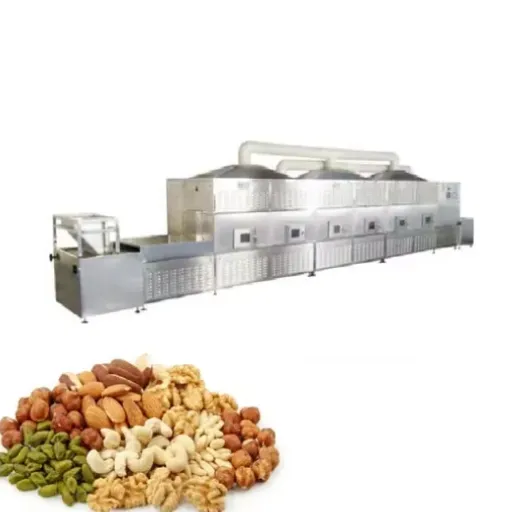
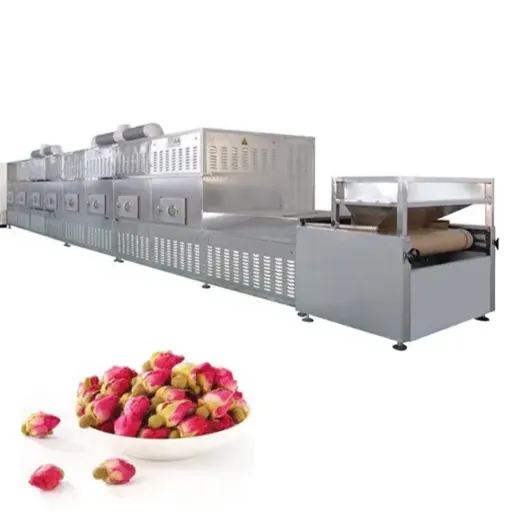
- You process spices, seasonings, powders, grains, or RTE meals. These products benefit disproportionately from rapid, low-thermal-damage processing.
- Continuous-flow production fits your layout. Tunnel microwave systems integrate cleanly into automated production lines.
- You need simultaneous drying and sterilization. Microwave systems handle both processes in a single pass, eliminating separate drying equipment.
When the team at Southeast Asian Spice Exports in Vietnam faced a quality crisis in 2024, their retort-processed chili powder had excellent safety records but flat, cooked flavor profiles that European buyers rejected. After installing a continuous tunnel microwave sterilizer, their sterilization cycle dropped from 75 minutes to 22 minutes. Volatile oil retention improved 34%, and their largest German distributor renewed a contract they had been planning to terminate. The equipment paid for itself in 14 months through retained contracts alone.
Not sure which technology fits your product? Our engineers can evaluate your specific recipe, packaging, and volume requirements. Explore our complete food production line solutions and request a customized equipment recommendation.
Conclusion
Microwave sterilization and retort sterilization each serve essential roles in modern food processing. Retort remains the reliable, low-capital workhorse for canned goods and applications requiring metal packaging. Microwave delivers superior speed, quality retention, and operational efficiency for processors ready to invest in next-generation technology.
The data is clear: microwave sterilization processes food 2.4 to 3.2 times faster, uses 30% to 50% less energy, preserves up to 9.14% more nutrients, and produces texture and flavor that consumers prefer. Retort answers with lower upfront costs, universal packaging compatibility, and the simplest regulatory validation pathway.
Your decision should start with your product, not the technology. Define your packaging requirements, quality targets, throughput goals, and budget constraints first. Then match those requirements to the system that delivers.
At Shandong Loyal Industrial Co., Ltd., we engineer both tunnel microwave sterilizers and integrated production lines for spice processors, pet food manufacturers, snack producers, and ready-to-eal meal facilities worldwide. Whether you need a standalone sterilization system or a complete production line with integrated extrusion, drying, and packaging, our team designs equipment around your specific requirements.
Ready to evaluate which sterilization system fits your operation? Contact our engineering team for a free consultation and equipment recommendation based on your product specifications and production targets.