Food Production Line Commissioning: From Site Readiness to Accepted Production

Food production line commissioning brings installed equipment through controlled checks, product trials and recorded acceptance. The aim is a line the team can run within clear limits. Records must support the decision to start production; a successful demonstration alone is not enough.
The motors turn. The conveyor runs. But who can approve the first production batch? That question links engineering, production and quality, and it should shape the project before the installation team arrives.
Illustrative scenario: A new line is installed, and the team wants to start its trial. Nobody has approved the sampling plan or named the person who will review the results. The team needs someone to own that decision.
This guide explains food production line commissioning through practical release gates. You will see what evidence is needed, who reviews it and what happens when a condition stays open. It begins where the supplier-selection checklist leaves off.
Key takeaways
- Agree requirements, responsibilities and test limits before starting work.
- Release each activity only when its prerequisites and records are complete.
- Separate factory checks, installed-line acceptance and food-batch release.
- Measure accepted output on an agreed basis, with quality results attached.
- Keep failed checks, retests and handover actions visible until resolved.
Preparing a project? Send Loyal your product, output basis, site schedule and trial expectations to start a focused discussion about your requirements.
Define Food Production Line Commissioning and Its Release Gates
Separate the different acceptance decisions
Installation puts the equipment in its agreed location and connects the required services. Food production line commissioning then checks how the installed system behaves within its approved scope. The work can overlap. Still, an installation record does not answer every question about how the line runs.
A factory acceptance test, or FAT, examines the agreed equipment and functions before shipment. A site acceptance test, or SAT, addresses the agreed installed setup and site-dependent conditions. Check the contract. Neither term alone defines the full scope or who can release food for sale.
GEA’s description of remote FATs provides a useful OEM example: preparation, defined checks and recorded deviations support the release process. Its scope concerns GEA centrifuges. It does not establish what another supplier has promised to test.
Food production line commissioning also differs from validating a food-safety process. A machine may meet its agreed operating requirement. The plant still needs evidence that its food process controls the named hazards. Keep that evidence and its approval with the plant food-safety team.
Put the basis and responsibilities in one register
Start with the approved requirements produced during food-equipment selection. Identify the product, equipment setup, interfaces, intended operating range and exclusions. Resolve conflicting document versions before treating either as a test criterion.
For food production line commissioning, use a shared register that links each requirement to its prerequisites, test record and decision. This is a suggested project tool, not a prescribed legal format. Each entry should state what is being accepted and who can accept it.
| Gate | Evidence to review | Responsible decision |
|---|---|---|
| Site ready | Approved layout and verified services | Release the specified installation or test activity |
| Functional checks complete | Executed records and open deviations | Permit the next defined test phase |
| Product trial assessed | Run identity, quality results and output record | Accept, hold or require a retest |
| Handover reviewed | Documents, training and open-item decisions | Transfer the agreed operating scope |
Name people or roles from both the buyer and supplier teams. For food production line commissioning, each signature needs a clear purpose. A witness can confirm what they saw without approving the result. Assign one coordinator to maintain the register while each discipline retains its own technical authority.
Before mobilizing for food production line commissioning, approve the basis and list work that remains outside it. A factory check can pass while an installed interface remains untested. Preserve both facts in the record instead of merging them into one broad “complete” label.
Watch a focused FAT example
KeepingFoodSafe’s external video, Factory Acceptance Test (FAT) with Snyders/Lance Inc., offers context for factory testing of a packaged-product inspection system. Use it to frame questions about test scope and evidence; it is third-party footage, not a Loyal project or proof of whole-line acceptance.
Release the Site for Installation and Controlled Start-Up
Confirm identity, location and access
Begin site readiness for food production line commissioning with the latest approved drawing and machine list. Match delivered items to their identifiers and record damage, missing parts or setup differences. A receiving record should distinguish an item that arrived from an item accepted for installation.
Check the route into the building, placement and service clearances against approved project documents. Include access for inspection, cleaning and maintenance. Does the machine fit? Then ask whether the team can reach the places they need to clean, check and service.
For applicable US human-food operations, 21 CFR 117.40 addresses equipment cleanability and installation that facilitates cleaning and maintenance. Its instrument and compressed-air provisions also inform relevant checks. Check where the rule applies. This section does not require every plant to use FAT or SAT.
Food production line commissioning should record whether the installed arrangement matches the reviewed arrangement. If a conveyor moves or a service route changes, name the affected access and interface checks. An old approved drawing cannot document a new layout without a recorded update.
Verify utilities at the point of use
A connection on a drawing is only a plan. Check that the required service is there, at the machine. Build a utility schedule from the approved model-level documents. Depending on the equipment, this may cover electrical supply, water, air, heating, cooling, drainage and extraction.
Do not copy values from another machine in the same category. For food production line commissioning, compare the service at the site with the agreed machine needs. Keep the measured result and the conditions of the check together. Qualified personnel should define and perform the checks using approved procedures.
Keep readiness records specific enough to support a decision:
| Item | Evidence reference | Owner | Decision |
|---|---|---|---|
| Equipment location | Current layout and installation inspection | Site project lead | Release or hold |
| Required utility | Approved schedule and verification record | Responsible site specialist | Release or hold |
| Cleaning access | Installed-access review | Plant hygiene owner | Release or hold |
| Delivery discrepancy | Receiving record and agreed disposition | Buyer/supplier coordinator | Resolve before affected work |
Separate mechanical completion from permission to apply power, run equipment or introduce material. Each activity may have different prerequisites. Where the required evidence is missing, hold the affected activity and state exactly what must be provided to release it.
For an industrial food extrusion line, for example, review the connections between preparation, extrusion and downstream equipment as well as each machine. The agreed setup defines those links. The team still needs records showing that the installed connections were checked.
The site review for food production line commissioning should end with a usable work list. For example, write “extraction verification pending,” name its owner and set the next review point. Leave the measured-value field blank until the actual check is done. If another activity can proceed independently, document its separate release rather than treating the whole site as ready.
Before leaving this gate, check the test resources. Are the materials, measuring tools and people ready for the next phase? Keep physical readiness and test readiness in the food production line commissioning schedule. Different people may approve them.
Test Safety, Controls and Line Interfaces Before Product
Start with controlled machine checks
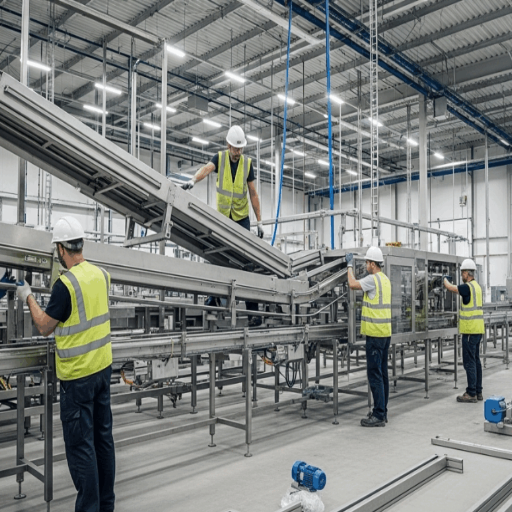
Food production line commissioning needs an approved test procedure and qualified people. Name the people who will carry out each part.
The procedure states the safe test conditions. It lists permitted actions, expected results and when to stop. A buyer’s general checklist cannot replace that work. Use the approved engineering procedure for each test.
Record equipment identity, software version and the setup used. Check the functions included in the approved scope and retain actual observations.
Was a function left untested? Say so. A blank result is not a pass.
Separate the procedure from the executed record. The procedure says what should happen. The record says what happened, under which conditions and with what evidence. Link readings, observations and deviations to the relevant test step so another reviewer can follow the decision.
For food production line commissioning, list any interface that uses a simulated signal. That may help test one function. It leaves questions about how the real connected machines work together. Record which installed checks must follow and who owns them.
Check the connected sequence
Use the food-manufacturing process stages and handoffs to name boundaries between operations. What does each station need from the one before it?
What must it tell the next one? Review the agreed responses to stops, recovery and machines being out of service. Use the approved test methods.
Illustrative scenario: A downstream conveyor stops during an approved integration check. The team finds that the upstream equipment’s response has not been demonstrated in the installed setup.
Keep the open item in the test record. Name the engineer who owns it and define a retest. Do not improvise a bypass.
Food production line commissioning should make these interface limits visible before real production material enters the system. A set of separate machine demonstrations may leave the line sequence untested. Mark the boundary between those two levels of evidence.
Document the state before the test, the approved action, the observed response and the result. Include relevant timing or sequence evidence where the protocol requires it. Avoid “works normally” as the entire entry when the reviewer needs to know which behavior was demonstrated.
Control changes and retests
When a failed check leads to a software, setting or mechanical change, retain the original observation. Name the changed item and assess which earlier results may be affected. Ask the named engineer to define the retest scope. Fixing one symptom does not show that all affected functions work.
For food production line commissioning, a retest needs its own date, setup and evidence reference. Link it to the original deviation. This allows the buyer to distinguish the failed first attempt from the later accepted result without losing useful history.
Release the next phase only within the agreed scope. Keep the affected trial on hold if a required safeguard or interface check is still open, or a prerequisite is not met.
Be specific about delays. Name the missing decision and the work it blocks. That gives the team a basis for changing the schedule.
Use Food Production Line Commissioning Trials to Prove Agreed Performance
Agree the trial basis before introducing material
Product trials in food production line commissioning should answer an approved question about the intended product and line setup. Before the run, define the recipe or material specification.
Agree the packaging where needed, the sampling method and the pass criteria. Agree this first. Otherwise, teams may gather results but disagree about what those results prove.
Confirm the plant’s hygiene release and material-handling arrangements. The plant team should approve cleaning status and how trial output will be handled. Keep the material traceable and use the agreed hazard controls. Keep machinery acceptance and food release separate even when the same trial supplies evidence for both.
Choose material that represents the agreed use. Record lot identity and relevant condition, along with any permitted substitutions.
Using a substitute? State why. Its result may answer one question, but it does not prove performance with every planned raw material.
For food production line commissioning, also list what the trial leaves out. One product format may leave a second recipe untested. It may also leave out a changeover or another pack size. Record those boundaries now, so a later buyer does not read a limited result as broad approval.
Measure accepted output on a defined basis
Agree where to measure output. Define what passes the quality checks and which time period to use in the rate calculation.
What does the quantity mean? Material flow, packed output and product that passes quality checks are different measures. A catalogue rate is a reference. It cannot replace a measured result from the agreed trial.
Food production line commissioning records should connect the output measure to quality results. Explain what the record includes. State how it treats rejects, start-up waste, holds, rework and planned stops. If the agreed basis excludes a period, explain the exclusion and preserve the underlying observations.
A compact run record can capture the essentials without prescribing a universal trial length:
| Record field | What to enter |
|---|---|
| Run identity | Product, lot, equipment setup and recipe version |
| Measurement boundary | Start/end points, clock basis and measuring method |
| Output | Gross quantity, accepted quantity and units |
| Quality evidence | Sample identifiers, methods and reviewed results |
| Losses and stops | Categories, quantities or duration, and explanations |
| Decision | Pass, fail, not tested or retest required; named approver |
Compare like with like. Use the same units and boundary for each result.
If accepted quantity is divided by elapsed test time, say whether that time includes the recorded stops. Another rate may count only time when the line runs. Explain that difference before you compare the two.
In food production line commissioning, a clear denominator can resolve an apparent disagreement about capacity. The sums can be right and still answer the wrong question. Check the agreed measurement basis before changing settings or repeating the run.
Keep the result and the release decision separate
Good samples alone do not prove sustained output. A run can pass the sample checks and still fail that output test. It can also meet an engineering criterion while food remains on quality hold. Preserve each result and let the named reviewers decide within their own scope.
Food production line commissioning needs a clear decision when evidence is missing. If a required sample is missing, record the missing sample and its effect on the decision. Do not relabel the requirement as passed because other samples looked satisfactory.
Before a retest, agree what changed, which material will be used and which criteria will apply. Keep the original run linked to the new record. First, fix an unclear test basis. More data from the same unclear trial may not answer the buyer’s question.
Discuss the proposed product and acceptance basis with the supplier before committing trial resources. Contact Loyal with the intended material, output definition and site conditions. Ask which questions need project-specific agreement; do not assume that an inquiry confirms a booked trial or a particular support package.
The result of food production line commissioning needs clear limits. State which criteria the setup met under the recorded conditions.
List the work that remains. Keep that wording close to the evidence. Broad statements about every recipe, future operating condition or regulatory approval require their own support.
Close Deviations and Transfer an Operable Line
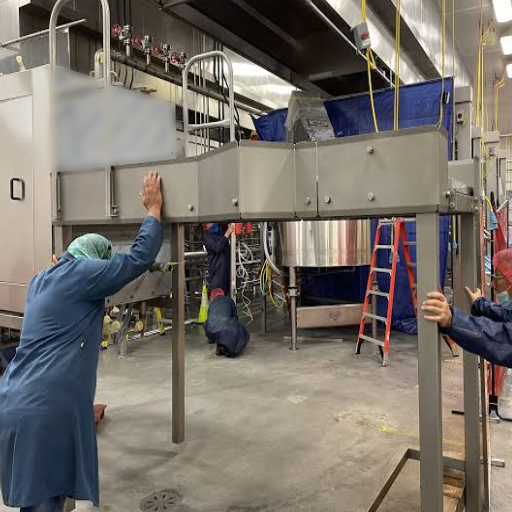
Keep open items visible
A deviation record should state what happened and which requirement it affects. Name the owner and the proposed action.
For food production line commissioning, distinguish a failed test from one that has not yet been done. Both can block release. Each needs its own next step.
Agree which unresolved items block the proposed operating scope. Some items may be closed later, if the named team agrees. Record that decision and who made it. Do not use an open-item list to bypass safety, food-quality or contractual requirements that must be met before release.
Retain corrective-action and retest evidence beside the original finding. Close an item only when the named reviewer accepts the specified evidence. An email may say the work is done. Link it to the required check or test record before closing the item.
Transfer documents and working knowledge
Food production line commissioning should leave the plant with a controlled handover index. Include the as-installed drawings, relevant manuals, executed tests, approved settings or recipes, backup references and unresolved-item decisions. List the version and where it is stored. The next shift should be able to find the right file.
Connect these records to the plant’s food-production-line maintenance plan. Baseline observations and equipment identity help maintenance understand the accepted setup. Spare-part and service requirements should come from the relevant equipment documents and agreed project scope, not a generic list copied from another line.
Training in food production line commissioning should name tasks, trainees and the proof that each task was learned. Attendance shows participation. Does the agreed scope call for a skills check? Record the task, who assessed it and what the trainee could do.
Illustrative scenario: The training session has ended, but nobody has demonstrated restoration of the approved recipe backup. The team records the gap.
It names the owner and defines the demonstration needed. A backup file alone does not show that the team can restore it. Nor does an attendance sheet.
Keep access rights and backup ownership clear in the food production line commissioning file. Who holds the approved version?
Who may change it? Make both answers clear to the plant team. Define how later changes will be reviewed and stored. State how operators will learn about them.
Sign the scope that is actually ready
Food production line commissioning ends through agreed decisions, not simply because the supplier leaves site. State which equipment, products, functions and documents the handover covers. Name restrictions and unresolved work in the same package as the acceptance decision.
In food production line commissioning, name who accepts technical handover and who approves production release. They may be different people. Tetra Pak’s plant-design and implementation overview illustrates the collaborative nature of plant projects; the buyer’s own project documents still determine the roles and commitments.
Agree how early operating observations will return to the named team. For food production line commissioning, agree a contact route and record owner. Set a review point for the follow-up work. Check the contract for warranty terms and agreed response times.
Before signing, ask a practical question: can the receiving team find the accepted settings, explain the restrictions and name the owner of each remaining action? Does the answer depend on one person’s memory? Add the missing knowledge to the handover file before signing it off.
Food Production Line Commissioning Questions
These questions help a buyer clarify the next decision. Use the approved project scope to turn each answer into an assigned action.
What must be ready before commissioning starts?
The approved layout, equipment identity, relevant utilities and task-specific safety prerequisites must support the planned activity. For food production line commissioning trials, also agree material, hygiene status, sampling and acceptance criteria. Name who can release each phase. Keep missing prerequisites visible; delivery does not mean the site is ready.
Does a factory acceptance test replace site acceptance?
A FAT covers the agreed factory conditions and scope. Site acceptance addresses the installed system and its agreed site-dependent checks. Review the factory record to identify reusable evidence, then list what remains unproven at the plant. Passing one scope does not automatically approve interfaces or conditions outside it.
How long should a product trial run?
Set trial duration from the approved objective, product, operating conditions, sampling needs and acceptance criteria. Food production line commissioning has no single run length that proves every requirement. Define the measurement period and stop rules before testing, and record any departure so reviewers can judge whether the evidence remains usable.
Who approves accepted production?
The project documents should name the technical acceptance authority and the plant’s food-release authority. Their decisions can draw on the same records but answer different questions. Keep signed engineering results, reviewed quality findings and any production restrictions together, so operators can see exactly what is approved and what remains on hold.
Can a video or certificate replace test records?
A video or certificate can support a defined part of the evidence package. Check its identity, scope and connection to the installed equipment. It does not, by itself, provide every agreed result, deviation or release decision. Keep it linked to the executed records and the person authorized to review them.
Agree the next evidence and decision
Before the next run, check the current gate. Which record will release it? Name the owner, the reviewer and the activity that remains on hold. Keep passed, failed and untested requirements distinct; a useful project register should make the next action clear to every team.
Make food production line commissioning decisions easy to trace. State the scope of each one and link it to its proof. Carry that discipline from site readiness through product trials and into the handover file. The goal is an operating team that knows both the accepted setup and its limits.
Discuss your project requirements with Loyal. Share the intended product, accepted-output basis, site conditions and proposed trial criteria to give the conversation a concrete starting point.