
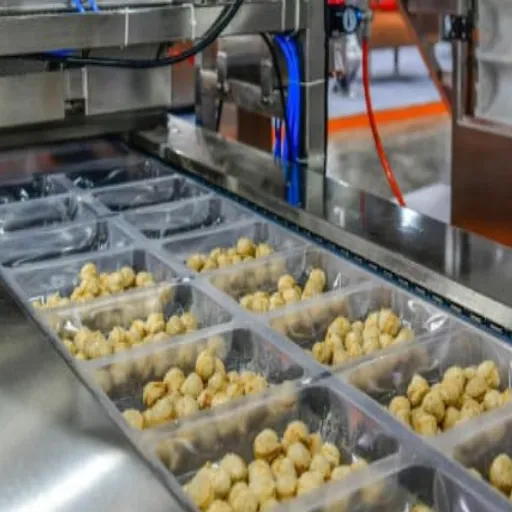
Food Manufacturing Process: Seven Stages and Equipment Handoffs
The food manufacturing process turns raw ingredients into finished food. A useful map has seven stages: preparation, mixing, processing, forming, drying or cooling, finishing and packaging. The stages can combine, change order or be skipped.
Finished food is not always ready to eat. Dried pasta, for example, still needs cooking before serving.
A machine can meet its rated output yet send unsuitable product to the next machine. What should plant managers and buyers check? Start here: What must each stage deliver before the next stage can accept it?
This guide links the steps, equipment and checks. Settings must suit the recipe.
What is the food manufacturing process?
Think of the food manufacturing process as a chain of changes to food. It is more than a row of machines. Cleaning prepares the incoming material. Mixing brings the recipe together.
Heat or mechanical work changes the food structure. Forming sets the size and shape. Drying or cooling prepares it for later handling. Packaging protects the accepted product and shows what it is.
The simplified flow is:
Receiving and preparation → mixing → processing → forming → drying or cooling → finishing → packaging and release.
This flow is a guide to functions. It does not set a fixed factory layout. Extrusion can combine processing and forming.
Biscuit dough can be formed before baking. Wheat pasta can be shaped by cold extrusion, then dried. This route does not use extrusion cooking. Bühler’s dough preparation and extrusion explanation distinguishes hot extrusion from cold extrusion for wheat pasta.
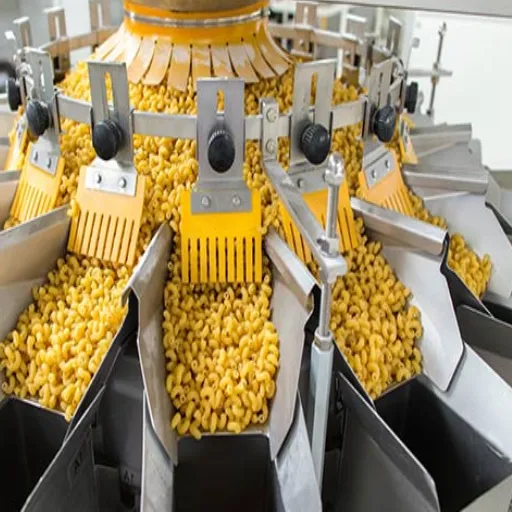
A batch system handles one set amount at a time. A continuous system keeps material flowing through linked machines. A food manufacturing process can use both. Batch mixing can feed a continuous line if the transfer suits the product and feed needs.
See our comparison of continuous production and batch processing for that separate operating-mode decision.
Illustrative scenario: A mixer releases dough in batches. The next machine needs steady feed. Before choosing a larger mixer, record when dough leaves and how fast the next machine needs it.
How long can this dough wait? Use that limit to assess a transfer or holding arrangement. This is a planning example, not a customer result.
Start your food manufacturing process map with the incoming ingredient specification and the finished-product specification. Then draw the changes needed between them. Equipment selection follows that map.
Food manufacturing process stages 1-4: ingredients to formed product
1. Receive and prepare ingredients
This stage starts with a delivered lot. It ends with accepted material ready for weighing and mixing. Receiving is more than unloading. Check what the ingredient is, who supplied it and which lot it belongs to.
Does its condition meet your purchase specification? Keep material awaiting a decision separate from released stock. Record the result so the next operator knows which material can be used.
Preparation depends on the food manufacturing process. Grains may need cleaning or milling. Fruit and vegetables may need washing, sorting or cutting. Handle dry powders according to their properties.
Not every food manufacturing process needs washing. Cleaning also does not prove that later food-safety controls can be skipped.
Equipment categories include receiving hoppers, conveyors, screens, mills, washers and sorters. Manitoba Agriculture’s equipment-needs guide groups preparation and processing operations and stresses selection for the actual food and production requirements. For a broader machine overview, use our guide to types of food processing equipment.
At the handoff, check the required particle size and handling condition. Record the lot and whether it can be used. A mill setting alone does not prove the material is right. Choose a way to inspect or measure the actual output.
2. Weigh, mix and establish the formulation
Mixing turns accepted ingredients into a blend or dough for the next step. Scales measure amounts. Liquid dosing equipment adds liquids, and the mixer brings them together. The recipe should state amounts, addition order and checks before discharge.
In the food manufacturing process, correct weights are only the start. Are the ingredients spread through the mix as intended? Is the mix ready for the next step? Record the recipe version and ingredient lots.
Check the output against the recipe limits. Tests may cover moisture, temperature, appearance or how well the ingredients are mixed. The person responsible for the process must define the limits.
Don’t borrow a moisture range from another product. Two extruded foods can need different feed conditions because their recipes and textures differ. If the line uses preconditioning, define what it does. This step prepares the mix before extrusion.
It isn’t just another name for mixing. Bühler describes conditioning as part of this preparation. Its description is not a universal recipe for a Loyal line.
Illustrative scenario: A dough begins feeding unevenly after an ingredient lot changes. Compare incoming material condition, actual dosing records and mixed-product measurements before adjusting the extruder. The new lot is a possible cause, not a confirmed diagnosis. No production improvement is assumed.
Does your food manufacturing process use extrusion? Compare our extrusion applications with your recipe and required output condition. Bring those details to a line discussion. One screw arrangement will not suit every recipe.
3. Transform the product through processing
This stage changes the prepared food. It may use an extruder, oven, fryer or another system. Mixed dough is one possible input. Define what must change and how you will check the output before it moves on.
Extrusion cooking combines mechanical work and heat. Material can take shape as it passes through the die. One machine may therefore process and form the food.
Cold extrusion is different. Not every extruder is a cooking system. The food manufacturing process for wheat pasta shows why this matters.
Baking and frying offer other transformation routes. The right choice follows the product specification, not a general ranking of machine types. Our fried snack production line page covers that equipment category; it does not make frying a required stage for all snacks.
Separate quality targets from food-safety controls. Color or texture alone does not prove that a required hazard control has worked.
If this stage controls a food-safety hazard, qualified staff must set the process and its checks. They must also define what to do when a limit is missed. One time or temperature cannot suit all foods.
The FAO introduction to HACCP places hazard control within a system supported by good hygiene practices. For your food manufacturing process, write down the checks needed while it runs. State what happens to affected product if a required condition is missed. Don’t wait for final inspection to address a process deviation.
4. Form, shape and cut
Forming sets the product shape. It can use dies, rollers, molds, depositors or cutters. The input may be dough or a processed mass. Set the size, shape and handling checks that the output must meet.
Position this stage correctly in the food manufacturing process. Biscuit dough may be rolled or molded and cut before baking, as illustrated by the operations on our biscuit production line page. In an extrusion-cooked snack route, shaping can accompany discharge from the extruder. These are different arrangements of the same broad functions.
Record the checks that matter to the next step. These could cover piece size, weight, shape and spacing. Choose them for the product. A piece can look right at the cutter yet be too large for the pack or hard to load evenly in the dryer.
For bars, compare the nutrition bar production line category with your mixing and forming needs. The word “bar” does not tell you whether baking is needed. It also does not prove which ingredients a machine can handle.
At this handoff, specify how pieces reach the next conveyor without unacceptable breakage, sticking or crowding. The food manufacturing process specification should cover the transfer itself, not just the forming machine’s nominal output.
Food manufacturing process stages 5-7: stabilization to pack release
5. Dry or cool to the required condition
Drying removes water. Cooling lowers temperature. A product may need one step or both. Their order depends on the route.
The output must be ready for finishing, handling and packing. Define those needs before choosing a dryer or cooler.
Two terms need separating in the food manufacturing process: moisture content describes the amount of water, while water activity concerns its availability. FDA’s Water Activity in Foods technical guide explains the distinction and the importance of maintaining the relevant conditions during storage. Moisture percentage alone is not a universal release criterion.
Set the tests and sampling method for the actual food. Where will you take readings? Do samples across the load meet the approved limits?
Looking dry does not prove that pathogens have been killed. Drying is not a treatment that makes all foods sterile.
Illustrative scenario: Warm product reaches the packing area. Before changing the sealer, measure the product at the cooler exit and packer entry. Check transfer time and the approved packing limits.
Does the product meet those limits? If unsure, follow the site procedure to hold it for assessment. These checks help investigate the fault. They do not prove the food is safe.
Considering industrial microwave equipment? Define its task and the tests a trial must pass. Check the product, load and process conditions. No fixed drying-time saving can be promised for all foods.
This food manufacturing process stage must deliver an accepted output condition. That goal applies whichever technology you choose.
6. Apply finishing ingredients where needed
Finishing can add seasoning, oil or a coating to a product that has reached the required condition. Equipment can include dosing systems and coating drums. The stage may be absent entirely; it is not a compulsory stop in every food manufacturing process.
State the required input condition and how much finish to add. Check how it spreads across the product. Record the added ingredient lots and confirm that the final recipe matches the label.
For coated food, check the surface and handling needs before packing. Flavor and appearance are only part of this handoff.
Pay attention to ingredients and contact surfaces introduced after a processing step. FDA’s January 2025 low-moisture ready-to-eat food sanitation draft guidance discusses sanitation and the limitations of relying on product testing alone. It is draft guidance, not a newly binding machinery rule.
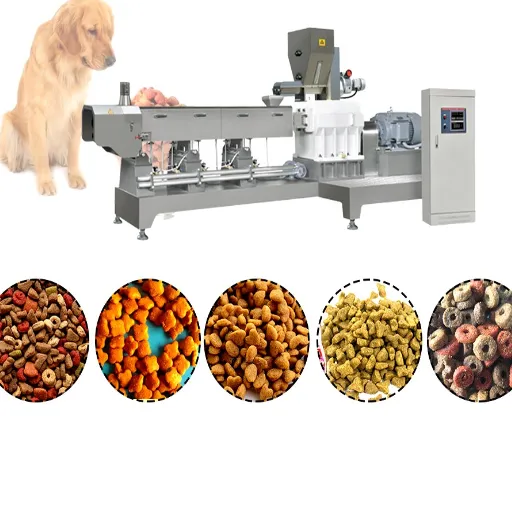
Our pet food production line page is a separate application reference. Do not transfer a human-food recipe, coating specification or regulatory assumption to that application without checking its requirements. Similar equipment functions do not make the products interchangeable.
7. Package, verify and release
Packaging takes accepted product and places it in the specified pack. Depending on format, equipment may include weighers, baggers, flow wrappers, labelers and case packers. Select the arrangement for the product’s dimensions, handling needs and packaging material.
The food manufacturing process continues through checks and release. Define checks for pack weight, seal, label version and lot code as needed. Test any inspection and reject systems fitted to the line.
Does a rejected pack actually leave the product stream? Don’t assume that a machine alarm proves the reject function works. Verify it under the site’s procedure.
Who decides whether a suspect pack can continue? The answer should be in the operating procedure. Separate rejected or held material, identify the affected production period and retain the records needed for assessment. Passing a later check does not automatically cancel a missed upstream control.
The food manufacturing process also needs records that trace product through the line. Link ingredient lots, recipe records and process records to the final pack codes. This shows which product a release decision covers. Keep the link intact during stops and recipe changes too.
Use the site’s hazard analysis to define controls across the chain. Check the rules for the product and its market too. HACCP addresses hazards; it is not an equipment certificate. Our overview of food production quality standards and compliance provides a separate starting point for those questions.
The output is more than a sealed bag. It must meet the release requirements. Record the decision and retain the details needed to store and distribute the product.
Connect the stages with an equipment handoff checklist
For each transfer in the food manufacturing process, state what leaves one machine and what the next machine can accept. The result is a shared specification. Plant staff, engineers and suppliers can use it to discuss the same needs.
| Interface question | What to record before equipment selection |
|---|---|
| What arrives? | Product form, formulation, temperature and other specified condition checks |
| How does it arrive? | Batch discharge or steady flow, transfer method and acceptable holding conditions |
| What rate is required? | Required accepted output, operating pattern and the basis of each equipment rating |
| What happens during a stop? | Stop signals, upstream response, held-product identification and restart responsibility |
| What supports the operation? | Available utilities, floor space, access for cleaning and maintenance |
| How is acceptance shown? | Measurement method, records, reject handling and the person responsible for release |
For each handoff, keep a short acceptance record. The following summary helps you review the food manufacturing process without prescribing recipe settings.
| Stage | Output to check before the next step |
|---|---|
| Receiving and preparation | Accepted lot, correct ingredient and required prepared condition |
| Mixing | Correct recipe record and a mix that meets its specified checks |
| Processing | Required product change and records of the applicable process controls |
| Forming | Piece size, weight and handling condition suited to the next step |
| Drying or cooling | Measured condition within the approved product limits |
| Finishing | Correct added ingredients, amount and distribution |
| Packaging and release | Accepted pack, correct code and documented release decision |
Use one named person or role for each acceptance decision. State the record to use and where held product goes. A shared worksheet makes it easier to discuss a change without losing the limits already agreed for your food manufacturing process.
Apply the worksheet to the mixer example. Record the batch discharge pattern and the next machine’s feed demand. A larger mixer does not by itself establish a compatible interface. Likewise, increasing upstream speed does not prove that the dryer can deliver an accepted product at the higher rate.
Two simplified product paths show how the food manufacturing process changes:
Extrusion-cooked snack example: prepare and mix → extrusion cooking and shaping → drying or cooling as specified → seasoning if required → packaging.
Dried wheat pasta example: prepare and mix → cold extrusion and shaping → drying and cooling as specified → packaging. Our pasta and macaroni production line page gives the application context. This food manufacturing process makes pasta that still needs cooking.
Both examples are schematic. Neither supplies a validated recipe or establishes that one machine can switch between them. Use our industrial food machinery selection guide for the broader selection discussion and our food equipment overview to identify relevant categories.
Before asking for a configuration, agree where the supply starts and ends. Does it include ingredient handling? Does it end before packing or with finished packs?
Confirm who supplies transfers and controls at each boundary. That keeps both parties focused on the same scope.
Troubleshoot quality drift before increasing output
A symptom late in the food manufacturing process can originate upstream. Treat it as an observation to investigate, rather than proof that the nearest machine needs adjustment.
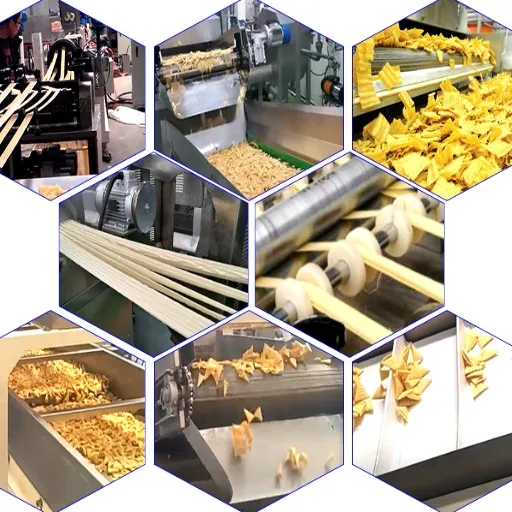
| Observed symptom | Possible area to investigate | Evidence to collect before changing settings |
|---|---|---|
| Product texture changes between lots | Ingredient condition, dosing or processing conditions | Lot records, actual addition records and process trends for accepted and affected runs |
| Downstream feed repeatedly stops | Discharge pattern, transfer arrangement or downstream stoppage | Time-aligned discharge and stop records; actual material levels |
| Product reaches packaging outside its specified condition | Drying, cooling or the transfer between them and packing | Measurements at discharge and infeed, holding time and approved acceptance criteria |
| Seal or pack rejects increase | Product presentation, packaging material or packer condition | Reject type, pack samples, product condition and settings at the time of the fault |
These are possible causes, not diagnoses. In the warm-product example, compare readings at discharge and infeed. That helps locate where the condition changes. Follow the release procedure for affected product.
For an existing food manufacturing process, record a baseline: accepted output, rejects, stops, changeovers and product condition. Follow the site’s approval procedure when making changes. Check the results against that baseline. Don’t change an established food-safety limit just to raise output.
Adding equipment can shift the constraint to another stage. A second mixer does not promise twice the packed output. Review the food manufacturing process as a whole: transfers, processing time, utilities and packaging demand. Our production line maintenance guide covers maintenance planning; this process map identifies where its findings affect connected operations.
Questions to answer before planning your production line
Must every product use all seven stages? No. They help map a food manufacturing process. An uncoated product skips finishing. Extrusion can process and shape food in one step.
Map the actual route before choosing machines.
Does cooking always happen before forming? No. Biscuit dough can be formed before baking, and wheat pasta can be cold extruded before drying. Do not infer a cooking step from the word “extrusion.”
Is batch or continuous operation better? Choose for the product, recipe changes and feed needs. Check how long the product can wait.
If you combine the two modes, define how each batch feeds the continuous stage. Neither mode guarantees quality.
What determines the equipment budget? Start with the product and required accepted output. Add operating hours, package format, utilities and site limits. State what must be supplied.
These details support a scoped quote. A generic price band hides differences between projects.
Which controls apply? Check the food hazards, hygiene needs, intended use and market rules. Set checks across the whole food manufacturing process. State what to record and what to do when a limit is missed.
Packaging is only one control point.
US facility reminder, checked October 22, 2026: FDA’s September 29 renewal notice sets the 2026 renewal window: October 1 through December 31. It applies to facilities required to register.
Check whether your facility must renew. Registration does not establish machinery approval or validate a production process.
To discuss a line with Loyal, send us your product and line requirements. Include:
- Ingredients and the intended finished product.
- Target accepted output and operating hours.
- Package format and available utilities.
- Operations you need supplied, with the start and end points.
- Known limits on product holding and transfer.
Use these details to map your food manufacturing process. Agree on what each stage must deliver before choosing the machines that connect it.