

Breadcrumb Production Line: Commercial Equipment & Capacity

Bread production methods have developed into their current state because of commercial equipment improvements and food industry demands for exact product output and operational efficiency. The article examines the complex operations of a commercial breadcrumb production facility that uses advanced technology and equipment to produce high-quality products. This complete guide helps both industry experts who want to expand their business and new users who want to learn about system capacity optimization to understand essential system functions and system performance features. The upcoming section will present essential information about how to achieve consistent performance, optimize production capacity, and create production plans that meet market requirements.
Overview of the Breadcrumb Production Process
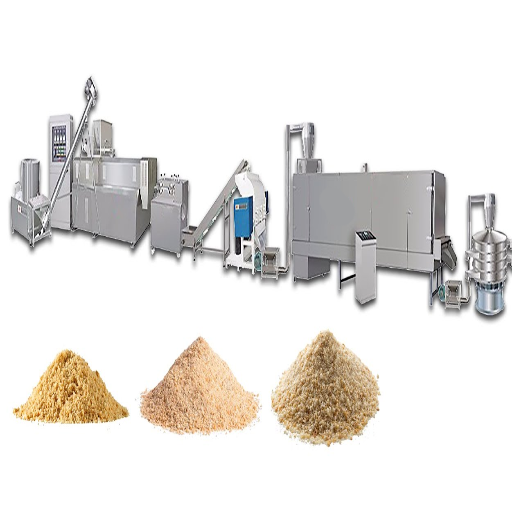
The production process of breadcrumb production uses controlled steps to achieve consistent product quality and production quantity. First, raw materials such as flour, water, yeast, and other additives are combined to create a dough mixture. Bakers use the dough to create bread, which they bake into loaves. The bread undergoes a cooling process before special equipment starts to slice, dry, and grind it into uniform crumb sizes. The entire process uses quality control measures to verify that the final product achieves required texture and moisture content specifications. The streamlined method produces finished breadcrumbs that culinary and industrial applications require.
Understanding Bread Crumb Production
Bread crumb production involves a systematic process that ensures consistency and quality in the final product. The following section presents compiled responses from leading sources to create a comprehensive explanation of the subject matter.
The primary purpose of bread crumb production is to create ready-to-use crumbs that are versatile in the microwave for multiple culinary applications and industrial food coating and filler material functions.
The essential production process of bread crumb manufacturing consists of seven main steps, which include bread preparation, baking and cooling, slicing and drying, grinding, and packaging. The process controls three essential elements that determine product quality through their effect on texture and particle size, and moisture content.
The production process requires management of two specific elements, which control crumb size distribution and drying process to achieve target moisture content, and proper storage methods, which safeguard against contamination and spoilage. The calibration of machinery establishes standard grinding results that enable effective packaging operations.
The structured method of bread crumb production establishes industry standards that require safe operations, efficient procedures, and flexible product development.
Key Steps in the Production Line
Preparation and Ingredient Sourcing
The production process starts with selecting high-quality raw materials, which require a specific crumb structure to create the final product. The bread selection process requires specific bread types that meet consistency requirements to be obtained from special suppliers or through direct baking at the location.
Pre-Processing
The bread sorting process involves removing all defective loaves and any foreign objects from the product. The product undergoes a pre-conditioning process, which prepares slices or loaves to achieve their optimal state of dryness before the grinding procedure begins. The current stage requires precise management of both heat and airflow throughout the entire process.
Grinding and Sizing
The pre-processed bread goes through a grinding process, which happens because the machinery has been set to produce consistent ground results. The product needs to have its particle size modified between these two extremes, which include fine and coarse crumb dimensions. Precision grinding method produces consistent results that food manufacturers need for their various products.
Moisture Control and Drying
The process of stabilizing bread crumbs’ moisture content starts after grinding ends. The process requires close monitoring because it needs to stop clumping while keeping the product intact. Modern drying equipment uses both temperature and humidity control systems to achieve accurate drying results.
Sieving and Quality Inspection
The sieving process separates the crumbs into different particle sizes, which helps verify their compliance with established requirements. The inspection process uses both automated systems and manual evaluations to detect possible contamination and process deviations.
Packaging and Storage
The company prepares the crumbs for packaging after they meet the quality standards by using sterile packaging systems, which create air-tight seals to maintain product freshness while stopping spoilage. The company provides batch information through package labels, which they keep in temperature-controlled storage spaces to protect the products.
Manufacturers ensure product quality through these procedural steps, which help them produce breadcrumbs that maintain safety and flexible usage.
Importance of Quality Control in Processing
Processing needs quality control because it safeguards product quality and protects consumer safety while delivering customer satisfaction. The process requires monitoring all production stages, which start from raw material selection and end with final packaging. The implementation of strict quality control systems leads to decreased product defects and lower contamination dangers while achieving compliance with FDA and ISO certification requirements. Manufacturers who sustain exact measurement practices and track environmental conditions, and follow established hygiene standards, achieve industry compliance while enhancing their brand image. Quality control helps organizations use their resources more effectively while decreasing waste and making their operations run better and cheaper.
Types of Equipment Used in Breadcrumb Production
Breadcrumb production requires specialized equipment to ensure consistency, efficiency, and quality. The main equipment consists of:
Mixers
Used to prepare dough by thoroughly combining ingredients to achieve a uniform texture and composition.
Proofing Chambers
Provide controlled temperature and humidity for proper fermentation and dough rising.
Ovens
Bake the dough to the required specifications, ensuring even cooking and the desired texture.
Cooling Systems
Specially designed systems which rapidly chill baked bread to stop moisture build-up while keeping product quality intact until further processing.
Crumb Grinders
Break down baked bread into uniform crumb sizes for final product consistency.
Sieves and Separators
Remove oversized or undersized particles to ensure uniformity in the final product.
The components work together to create streamlined processes that enhance operational accuracy and allow the team to meet production targets.
Machinery for Bread Crumb Making
Bread crumb production requires machines that operate with special equipment that provides both efficient performance and consistent product quality. The bread production process starts with machines that create standard loaves, which have specific moisture content and texture properties that enable crumb production. The cooling systems, which handle baked loaves, work to bring down the bread temperature because they need to stop moisture from building up during the grinding process.
The next critical stage involves crumb grinders, where the bread is mechanically reduced into granulated particles of a specific size. The grinders provide different texture settings, which enable users to produce different crumb textures that include coarse, medium, and fine sizes. The grinding procedure uses vibration sieves together with separation systems to separate crumbs according to their size while removing any particles that exceed their size limit. This ensures the final product meets the desired specifications.
The advanced systems include thermal dryers, which remove remaining moisture from the crumbs to improve their shelf life. The machines use modern controls, which enhance production accuracy while maintaining food processing industry hygiene and safety requirements. The integrated approach of these components establishes efficient operations that enable consistent product quality and large-scale bread crumb production capacity.
Drying Machines and Their Role
Drying machines serve an essential function during the bread crumb production process by decreasing the moisture content until they reach the required level for maintaining product stability and achieving extended shelf-life. The machines use convection and conduction methods or their combined system to maintain uniform drying results while protecting the structural integrity of the crumbs. Modern thermal dryers use their sophisticated temperature and humidity control systems to achieve energy savings while providing efficient operation capabilities. The system uses stainless steel construction and automated cleaning systems to achieve food safety standards, which require high levels of hygiene protection against contamination. The drying systems provide essential support to large-scale production because they improve product quality and operational efficiency while decreasing waste.
Automated Systems for Efficient Production
Automated systems handle vital functions that improve production efficiency across different industrial sectors. The systems use robotics, artificial intelligence, and Internet of Things technologies to create efficient operations that need less human work and deliver better accuracy. Automated material handling systems use their capacity to move raw materials and finished products throughout production facilities to eliminate operational delays. The combination of programmable logic controllers and machine learning algorithms enables ongoing system assessment and operational modifications, which maintain product standards while minimizing equipment outages. Manufacturing environments need these systems because they enhance operational capacity and energy savings, and production cost efficiency.
Different Varieties of Breadcrumbs
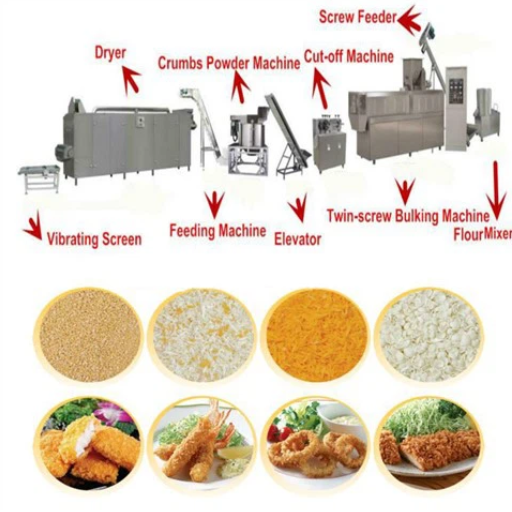
Breadcrumbs are available in several types, each suited to specific culinary applications. The most common varieties include:
The selection of an appropriate breadcrumb type affects both the dish’s texture and flavor because breadcrumbs serve as essential elements of culinary preparation.
Panko Bread Crumb vs. Traditional Breadcrumbs
Panko breadcrumbs and traditional breadcrumbs show distinct differences in their texture and composition, and in their different ways of being used. Panko breadcrumbs are created from crustless white bread, which produces a light and airy texture that results in a crispier coating for tempura and fried chicken dishes. Traditional breadcrumbs, on the other hand, are made by grinding all parts of bread, including the crust, resulting in a denser and finer texture.
Nutritionally, panko tends to absorb less oil due to its texture, which may contribute to a lighter finished product. Traditional breadcrumbs, being more compact, absorb more oil during frying or baking. Panko works best in recipes that need to maintain minimal fat content while delivering a refined crisp texture, whereas traditional breadcrumbs function better for meatball binding and for creating smooth coatings on baked dishes such as casseroles. Both types have their specialized applications, and selecting the appropriate one depends on the dish’s desired texture and culinary function.
Granular and Needle-Shaped Breadcrumbs
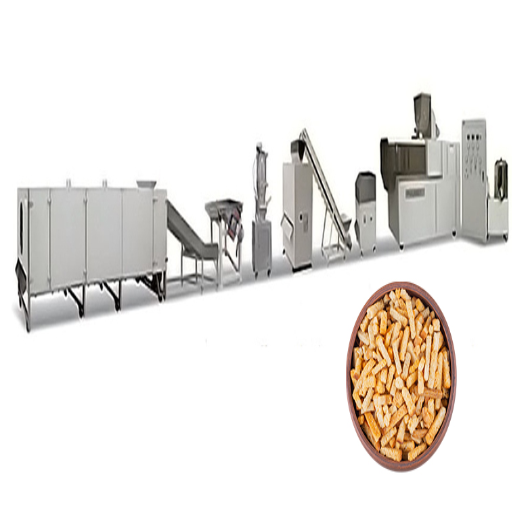
The smaller particles of granular breadcrumbs create a cohesive coating that reaches maximum density through their uniformity. These particles suit dishes that need compact coatings that breaded cutlets and croquettes require. The product offers uniform application, which professional chefs use to create baked goods that need strong structural support and proper sticking capabilities. The product uses needle-shaped breadcrumbs, which panko customers prefer because they provide an open structure that lacks complete symmetry. The design creates crispy results because it enables air movement during the cooking process, which results in light and crunchy food. The choice between these two options depends on the cooking requirement because granular breadcrumbs create strong bonds and stable structures, while needle-shaped breadcrumbs provide better crispiness and lower oil retention. The two culinary variations establish specific functions that modern chefs use to create texture and culinary performance.
Snowflake Breadcrumbs and Their Applications
Distinctively puffy and light, giving them the look of irregular fluffy particles, snowflake breadcrumbs are supposed to have a wide layer of surface area and a relatively crisp feel as intended by their structure. As part of frying applications, a unique shape makes snowflake breadcrumbs adhere evenly to the item to be coated. This coating is comparatively light and crisp, and also has a good surface area for optimum crunch.
However, snowflake breadcrumbs have also been found to possess more extensive properties in global gastronomy, mainly used in Japanese foods or any foods that need to be battered or fried in panko style. It is possible to bread proteins like chicken, fish, and shrimp with them or to top off baked goods or casseroles with a fine crust. In chef lingo, the roughness and unevenness of snowflake breading allow for great durability in the relative dryness of fast food—courtesy of various styles of cooking. This particularly means a textural upgrade for several classic desserts as well as experimental dishes.
Choosing the Right Supplier for Equipment
It is necessary to choose suppliers who have demonstrated reliability through their record of delivering dependable equipment and their ability to provide high-quality products and effective customer support. The organization must inspect its certifications and warranties and industry standard compliance to verify its operational and safety requirements. The overall value of the service provider requires assessment of their delivery schedules and pricing, and their ability to provide post-purchase assistance. The organization can assess its operational abilities through customer reviews and case studies, which show its performance and market standing. The organization should select a supplier who effectively meets its current operational requirements and its future strategic objectives.
Factors to Consider When Selecting Suppliers
The process of supplier selection demands multiple factors to be assessed, which enables organizations to determine whether suppliers match their operational needs and business goals. Begin by assessing the supplier’s reliability and capacity to meet your order volumes and deadlines consistently. The assessment process requires evaluation of their production capabilities, their available resources, and their developed contingency plans, which handle unexpected disruptions.
Their quality assurance systems should be investigated next, according to their implemented ISO standards and their other industry-specific certifications, which show their dedication to maintaining exceptional performance standards. The organization needs to verify its compliance with all applicable regulatory standards, which ensures that its products achieve safety and legal requirements.
The evaluation process requires assessment of pricing and payment terms because unit costs should be analyzed together with total value, which includes discounts for bulk purchases, delivery expenses, and payment options that customers can use. Customers should choose suppliers who provide clear financial terms, together with warranty protection and customer support that includes easy access to service.
The two factors of reputation and experience provide essential information. The supplier assessment should include client reviews, case studies, and the supplier’s experience with companies that resemble your business. A supplier with a well-documented track record of reliability and customer satisfaction is often more dependable and capable of fostering long-term collaboration.
Evaluating Machinery Equipment Quality
The optimal performance and durability of machinery equipment depend on these evaluation factors, which should be selected as evaluation criteria. The primary factor that needs assessment consists of the Building Material and Durability.
🔧 Building Material and Durability
The equipment construction materials require evaluation because they determine their ability to withstand corrosion, maintain strength, and handle wear. High-quality materials such as stainless steel or reinforced alloys often enhance the lifespan and reliability of machinery.
📊 Performance Metrics
The equipment performance evaluation requires assessment of three performance metrics, which include energy efficiency, speed, and output consistency. The operational efficiency of machines should reach or surpass industry standards while they demonstrate consistent productivity across different operating situations.
✅ Certification and Compliance
The machinery must meet all necessary certification requirements and regulatory standards, which include ISO certifications and CE markings, and other industry-specific mandates. The equipment shows compliance with international safety and quality standards through its certification status.
🔨 Ease of Maintenance
The assessment needs to measure how easily technicians can perform standard maintenance tasks, which include accessing equipment components and diagnosing equipment failures. The manufacturer must deliver complete technical documentation and training materials and dedicated customer support for their products.
⚙️ Versatility and Scalability
The assessment needs to determine whether the machinery can function in different operational tasks and production processes while maintaining its serviceability. Scalable equipment enables businesses to expand their operations without requiring multiple investments in new equipment.
The thorough investigation of these criteria enables businesses to choose solutions that match their operational objectives and their future requirements. Quality and suitability assessment processes decrease operational risks while increasing equipment availability, which results in better return on investment.
Cost Considerations for Commercial Equipment
The assessment of commercial equipment requires cost evaluation to consider multiple essential elements that determine both operational performance and financial control. The total cost of ownership (TCO) measurement exceeds the basic acquisition cost because it includes all maintenance expenses, repair costs, and energy needs throughout the equipment’s operational period. Although energy-efficient models require businesses to pay higher initial costs, these investments result in substantial long-term savings because they decrease utility expenses.
The next step involves examining various methods for financing and making payments. Businesses that operate with limited cash resources can benefit from leasing or financing options, which provide them with operational flexibility. However, businesses need to evaluate both interest rates and terms associated with these solutions to confirm whether they can manage their costs.
The third aspect to examine involves how equipment can expand and receive technical improvements. Choosing equipment that companies can improve through modular upgrades or that works with future technologies will help organizations reduce their need to purchase new equipment when their business needs change. The evaluation process needs to include warranty protection and technical support reliability because these factors determine repair costs and equipment downtime expenses.
A complete cost examination establishes a financial framework that balances immediate costs against future operational cost reductions. This framework assists organizations in making educated decisions about their investments in commercial equipment.
Future Trends in Breadcrumb Production

The breadcrumb production industry is witnessing a shift toward automation and sustainability. Advanced machinery is increasingly being integrated into production lines to enhance efficiency, consistency, and scalability. At the same time, there is a growing demand for eco-friendly practices, leading producers to adopt energy-efficient equipment and reduce waste. Additionally, consumer preferences are driving innovation in recipe development, with an emphasis on gluten-free and whole-grain breadcrumbs. These trends ensure that breadcrumb production meets evolving market needs while maintaining high productivity and minimizing environmental impact.
The Impact of Automation on the Industry
Automation has brought about significant changes to the breadcrumb production industry through its ability to boost operational efficiency and product consistency while managing expenses. The current production facilities use cutting-edge robotic technology and intelligent systems to enhance their operational efficiency, which results in less need for human work and better production results. The automated equipment enables businesses to achieve precise product distribution together with identical product application and constant quality evaluation, which guarantees their products will meet high product standards throughout their entire production process. The systems provide organizations with two essential features, which include immediate system performance tracking and forecasted equipment maintenance capabilities that help decrease operational downtime and production interruptions.
Automation helps businesses achieve sustainable practices through its ability to decrease energy usage while making better use of their resources. Intelligent systems can manage energy consumption during times of high production demand while increasing operational accuracy, which leads to reduced waste according to their operational capabilities. The automation system enables manufacturers to meet market requirements that demand both customized gluten-free and organic breadcrumb products and smaller production runs without sacrificing overall operational effectiveness.
Automation systems have enabled industrial enterprises to increase their production capacity while delivering higher-quality products that satisfy changing customer needs and environmental requirements at competitive market prices.
Emerging Technologies in Production Processes
When I assess new production technologies, I will analyze three fields, which include artificial intelligence (AI), machine learning systems, and Internet of Things (IoT) device networks. The technologies provide systems that allow operators to monitor equipment performance in real time and conduct maintenance activities based on future equipment needs, which leads to improved operational performance. 3D printing enables new methods for creating prototypes and manufacturing customized products, while technological progress in robotics helps achieve better accuracy with less need for human operation. The use of these technologies enables manufacturing facilities to operate with increased flexibility and expanded operational capacity, and improved ability to adjust to changes in production requirements.
Sustainability Practices in Equipment Manufacturing
Sustainability practices within equipment manufacturing are necessary for achieving lower environmental effects while sustaining operational efficiency through their production activities. The main approaches involve using energy-saving technologies for energy loss reduction, along with implementing solar and wind energy systems to power manufacturing plants. The practice of materials optimization requires organizations to acquire recyclable or biodegradable materials, while engineers use exact design methods to minimize material wastage, and organizations create closed-loop supply chains that support circular economy practices.
Manufacturers are using digital tools, which include lifecycle assessments (LCA), to track product environmental effects from the design phase until the product reaches its end-of-life stage. Sustainable manufacturing practices rely on advanced manufacturing techniques, which include additive manufacturing (3D printing), because these methods minimize material waste while enabling factories to produce goods closer to their customers, which results in lower shipping distances. The implementation of water management systems, which include recycling facilities and wastewater treatment processes, enables organizations to achieve water conservation goals.
Companies now establish partnerships with suppliers who follow sustainable practices because this enables them to maintain sustainability throughout their entire business operations. The implementation of ISO 14001 standards, together with other regulatory requirements, helps organizations achieve their sustainable development objectives through structured practice execution. Equipment manufacturers can use these methods to meet their operational targets while advancing global sustainability goals and building responsibility for their environmental protection activities.
Conclusion
Understanding the breadcrumb production process and selecting the right equipment are essential steps for manufacturers seeking to optimize operations and meet market demands. By implementing quality control measures, leveraging automation, and considering sustainability practices, businesses can enhance efficiency while producing high-quality breadcrumb products that serve diverse culinary and industrial applications.
Reference Sources
Equipment – The Wilbur A. Gould Food Industries Center
Provides detailed information on food production equipment, including bread and snack food processing machinery.
Discusses considerations for scaling up food production processes, including equipment requirements and residue management.
Rajant BreadCrumb ME4-2409 Level 2
While this document focuses on a different type of “breadcrumb” (networking technology), it provides insights into production line equipment terminology and standards.
Frequently Asked Questions (FAQs)
An automatic bread crumb production line has the capability to process multiple types of input materials, which include both corn and rice?
The production line can process various raw materials, which include corn flour and rice flour, cereal blends, and traditional bread waste, because fully automated production lines are designed for this purpose. The line configuration includes mixers and extruder and dryer, and screening modules, which enable users to operate the system easily while they can switch to different tasks quickly. The production line serves multiple purposes because it provides food additives and coatings, which customers use for chicken and seafood and onion rings.
What packaging and processing equipment is needed after producing puffed bread crumb products?
After producing puffed bread crumbs or flaky bread crumbs, processing equipment such as cooling conveyors, crushers, or needles for size control, screening machines, and automatic packaging systems are required. The production line integrates packaging equipment, which automatically handles weighing, filling, and sealing processes to maintain product quality and cleanliness because it uses stainless steel contact components that are standard in professional manufacturing designs.
Is stainless steel construction important in breadcrumb production machinery and installation?
Stainless steel plays a crucial role in breadcrumb production machinery because it ensures food safety through its corrosion-resistant properties and its ability to maintain hygiene through easy cleaning. Stainless steel constitutes the main material choice that professional manufacturers and ODM/OEM suppliers use for their production of mixers, extruders, pipes, and contact surfaces. The correct installation of stainless steel components together with their proper configuration establishes a foundation that enables smooth operation, maintenance, and regulatory compliance for automated processing facilities of all sizes.
How do formulations and mix choices affect the finished crumb for chicken or seafood coatings?
The choice of formulation and mix, which includes rice flour and corn flour, cereal crumbs, and reprocessed machine bread, determines three specific characteristics for the final product, which are texture, adhesion, and frying performance. A wet mix, together with specific extrusion settings, produces puffed bread crumb which are suitable for creating crispy seafood coatings, whereas a dry mix, plus different screening, results in granular bread crumbs, which are used for chicken coatings. The intended application of fried foods and functional food additives determines the specific crumb size and additive requirements for the product.
What production equipment options do professional manufacturers offer for an automatic bread crumb-making machine?
Professional manufacturers provide production equipment in modular form, which includes mixers and twin screw extruders, dies and molds for various shapes, cutters, dryers and crushers, screening units, and complete automatic packaging systems. The system provides several features, which include full automation capabilities and customization for ODM/OEM, the ability to handle various types of materials, and the option to use needles and special molds for onion rings and puffed shapes. The configuration of the system needs to match three factors, which are the capacity requirement, the desired crumb type, and the budget limit.
How simple is operation and maintenance for a fully automated production line that produces flaky bread crumbs?
Modern fully automated lines are designed for simple operation with PLC controls, automated feeding, and integrated monitoring. The standard maintenance procedure involves cleaning all stainless steel surfaces and checking both the extruder screws and barrels, the screens and molds, and performing periodic packaging equipment calibration. Proper installation and supplier training enable small teams of skilled workers to operate complex extrusion-based production equipment efficiently.