
Food Processing Equipment FAT: Protocol, Witness Records and Shipment Decisions

A food processing equipment FAT is a factory acceptance test. It checks the agreed equipment requirements at the supplier’s works before shipment. The record shows what was tested, the conditions used, what remains open, and who can approve dispatch.
A machine can run and still leave the shipment decision unresolved. The buyer may see one product format. The order may cover more.
A witness may sign in without approving a result. You need a clear path from test to release. This guide sets out that path.
A factory demo alone can’t prove site performance.
Key Takeaways
- Define the equipment, materials, interfaces, and exclusions before the visit.
- Give each test an expected result and a separate actual-result field.
- Link failed tests to corrections, change reviews, and recorded retests.
- Separate witnessing, technical acceptance, and authority to release shipment.
Define the Food Processing Equipment FAT Scope Before the Visit
Agree on what will be present
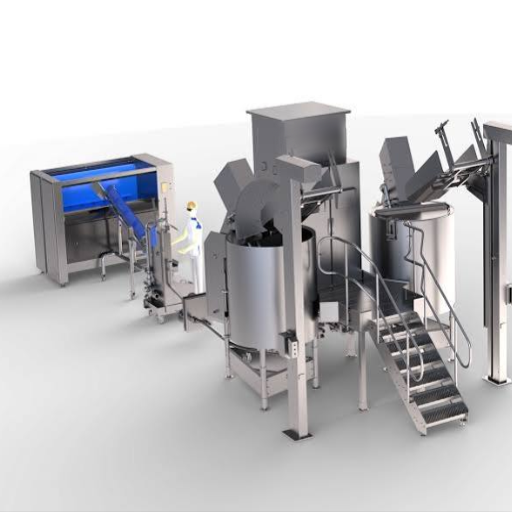
Start the food processing equipment FAT with the approved machine list and requirements. Name the machines, serial numbers, product formats, and controls covered. List their connections too.
List missing modules and temporary connections alongside them. A line drawing doesn’t prove which parts will be ready for the test.
Carry forward the requirements established during equipment selection and user-requirement planning. Don’t quietly redesign acceptance criteria during the demonstration. If a requirement must change, record it. Get the agreed approval before judging a result against it.
For your proposed food processing equipment FAT, contact Loyal with the product, equipment scope, and records you expect to review. Discuss the test arrangements before confirming the visit.
Make limitations visible before travel
Ask the supplier what is ready. Confirm utilities, test materials, current drawings, and open pretest issues. An internal pretest helps prepare the machine.
It doesn’t mean the buyer witnessed those results. Agree which checks to repeat. Name the existing records the technical reviewer may assess.
Illustrative scenario: an absent downstream machine. The extruder is ready, but the dryer will not be present. The team agrees to test a defined extruder function. It uses a simulated downstream signal.
The food processing equipment FAT record should name the simulation. Leave connected drying performance for a later test. It should not describe the complete production line as accepted.
Use a scope note to distinguish present, simulated, and excluded interfaces. Name who supplies each material and who checks it is suitable. Check the delivery plan too: a test cannot use a sample that has not arrived.
For a food processing equipment FAT involving several formats, decide which formats require separate observations. Settle this before the visit. The witness needs an agreed basis for judging the run.
Build a Food Processing Equipment FAT Protocol the Team Can Execute
Turn requirements into observable steps
A checkbox reading “works normally” leaves the next reviewer guessing. A food processing equipment FAT protocol needs an approved method. State the starting condition and expected response. Leave space for what the witness sees.
Keep the planned method separate from the result. If the team changes a step during the visit, stop and review the change. Record who agreed to it and why.
The final record must show which method was used, not just which one was first planned. Cite the agreed requirement. Don’t ask the operator to invent a limit on the day.
YMC’s FAT explanation provides a supplier example linking user requirements, functional specifications, an approved test plan, and a signed protocol. Its schedules and test media apply to its own systems. Use its document chain as an example. Don’t turn its schedule into a rule for every project.
Use the following as a suggested protocol template. It is a planning aid, not an approved engineering procedure or a mandatory regulatory form.
| Protocol field | What the team should enter |
|---|---|
| Test ID | A unique reference, such as FAT-01 |
| Requirement | Source document, clause, and approved revision |
| Equipment | Machine identity and relevant configuration |
| Prerequisites | Safe starting state, material, utilities, and instruments |
| Method | Approved procedure reference and steps to observe |
| Expected result | Agreed response or limit, with units where applicable |
| Responsibilities | Executor, witness, and technical reviewer |
| Evidence | Required readings, photographs, files, or sample references; for example ATT-01 |
Review each food processing equipment FAT step with a qualified colleague. Can they follow it without the author present? “Check alarm” is too loose.
Name the alarm and approved test method. State the response and reset behavior the witness must observe. Competent staff must control safety tests under approved procedures.
Never use this template to bypass guards or create a hazard.
Separate the signatures by purpose
Name who runs the test, who takes notes, who witnesses it, and who reviews the result. Also name who may release shipment under the project agreement. One person may hold more than one role. Label what each signature means.
For a food processing equipment FAT, attendance means someone was present. A witness records what they saw and any limits to that view. Keep technical acceptance and dispatch approval separate unless the agreement combines them. Don’t leave a signature box without a clear label.
Check the document requests made during food machinery supplier evaluation. Before starting, confirm that the protocol references the same approved scope. Log each revision. Give the operator, witness, and reviewer the same current copy.
Run Food-Specific Checks and Record the Conditions
Establish identity, access, and construction records
At the start of the food processing equipment FAT, match the machines to the approved list. Check the current drawings too. Record nameplates, supplied parts, and relevant control revisions.
Check that manuals and instrument records are present. Keep the drawings needed to read the test results. Log each missing document as an open item.
Don’t hide it inside a general pass.
Inspect the agreed food-contact areas. Check access for cleaning and maintenance. Name the area checked and what could be reached.
Cite the document that sets the build requirement. A polished outer surface doesn’t prove that inner parts can be cleaned. Nor does it identify an unseen material.
For US human-food operations, 21 CFR 117.40 addresses equipment cleanability, contamination prevention, food-contact surfaces, certain instruments, and compressed air. Ask the plant reviewer which clauses apply. This suggested food processing equipment FAT checklist isn’t certification. It doesn’t prove that a machine meets the regulation.
Record functions and the actual material run
Run the agreed functional checks using the approved methods. Record the actual response, relevant settings, and instrument identity. If a reading decides the result, keep its units.
Retain the instrument’s applicable calibration record too. If the response differs, open a deviation. Don’t change the expected result to match what happened.
For a food processing equipment FAT product run, record the material or recipe revision. Add the lot, format, machine setup, utilities, and sampling method. Record the agreed run boundaries, including start and end conditions.
If output is assessed, distinguish material fed, material collected, rejects, and product accepted under the stated criterion. Use the project’s agreed definitions. A moving conveyor alone doesn’t prove accepted production capacity.
Illustrative scenario: substitute material. The intended blend is missing. The team proposes another material for a feed check. Record the substitution and the limited question it can answer.
Feed movement alone doesn’t prove the intended recipe works. It can’t prove allergen removal or accepted finished-product output either.
Put that limit in the food processing equipment FAT result. Don’t leave it in a later email. State which requirement remains untested and what later evidence is needed.
Label samples with the run ID. Name who will assess them. Don’t release a food lot merely because the equipment completed a mechanical test.
Use the plant’s food production quality controls and evidence to frame product decisions. Keep HACCP implementation and production-line evidence in its proper food-safety scope. Access checks and machinery tests answer specific questions.
Process validation and food release need their own evidence. Show which question each observation answers.
For a reading or sample result, ask three plain questions: what was checked, how was it checked, and which limit applies? Keep the raw record with the summary. If a result is still at a lab, mark it pending. Don’t fill the result cell with a hoped-for pass.
Keep Witness Records Useful for On-Site and Remote Reviews
Connect each observation to its evidence
The completed food processing equipment FAT record should stand on its own. Don’t leave the reviewer relying on memory. Retain the protocol revision, run identity, actual conditions, result, and attachment reference.
Add the executor and witness names with the scope of their involvement. Did the witness see the whole test? If not, say which part they saw.
This suggested example deliberately leaves a result unresolved. It illustrates record structure, not a completed customer test.
| Executed-record field | Illustrative entry |
|---|---|
| Test and protocol | FAT-01; approved protocol revision to be entered |
| Setup | Machine and software revisions to be entered |
| Material/run | Substitute material; run identifier to be entered |
| Actual observation | Agreed observation not yet recorded |
| Result | Not tested against the intended-product criterion |
| Attachments | ATT-01: material-substitution note; test evidence pending |
| Witness scope | No intended-product run witnessed |
| Follow-up | DEV-01: approved test on intended product remains open |
| Technical approval | Pending; no acceptance signature implied |
Give evidence files stable IDs that survive copying. “See video” is weak. Give the file ID and the time range to review.
In a food processing equipment FAT, preserve the original record and show corrections with their author and reason. Don’t silently overwrite a disputed observation.
Before the team leaves, follow one test ID through the file set. Can you find the method, setup, result, and evidence? Can you tell who saw it? If a link is missing, log it while the people who ran the test are still available.
Plan the remote view before the test
PMMI’s announcement of revised FAT guidance emphasizes aligned expectations and responsibilities and includes virtual FAT coverage. For a remote food processing equipment FAT, agree how the witness will identify the machine, see the relevant display, and follow the test sequence. If the link drops at a key moment, log the gap. Agree how to repeat the test or recover the missing evidence.
The third-party video below is KeepingFoodSafe’s Factory Acceptance Test (FAT) with Snyders/Lance Inc. Its description covers assembly, calibration, operation, checklist review, and shipping for an inspection system. This is a third-party example. It isn’t a Loyal project and doesn’t prove complete-line acceptance.
For an industrial food extrusion line configuration, map the visible equipment to the tested boundary. Video of one machine can’t prove how an absent downstream unit performs. Keep off-camera readings and unobserved steps open until their agreed evidence is available.
Resolve Deviations Before the Shipment Decision
Keep the finding and review the change
When a food processing equipment FAT step fails, preserve the original result. Record the affected requirement, observed difference, equipment revision, and supporting attachment. Name an owner and a proposed fix.
Use clear statuses: failed, not tested, or incomplete evidence. They mean different things.
A correction is not a retest. Before repeating the step, log what changed. Review which other results it could affect.
A control change may affect a sequence already witnessed. A changed part may alter access already checked. Ask the reviewer which checks must be repeated under the project procedures.
For the food processing equipment FAT deviation log, use linked references rather than a new disconnected checklist. Link the finding to the fix and change review. Then add the approved retest and closure decision.
Keep both results. The reader needs to trace what happened.
Illustrative scenario: a revised sequence. A sequence fails its agreed test. The control program is revised. The team logs the new revision.
It lists earlier steps that may be affected. The original failure remains visible. Keep shipment on hold until the required tests and review are complete.
A software change note alone doesn’t close the issue.
Make the release decision explicit
Use the following suggested decision aid for the food processing equipment FAT. Adapt it to the parties’ agreement and applicable requirements. These suggested statuses aren’t universal defect classes. They don’t waive safety or food requirements.
| Decision | Evidence needed to support the recorded scope |
|---|---|
| Hold shipment | Required test failed, remains untested, or lacks necessary evidence; record the action and decision owner |
| Release agreed equipment | Required results reviewed, relevant deviations closed, current configuration identified, and authorized release recorded |
| Consider a limited release | Specific outstanding items, scope, permitted actions, restrictions, owners, and later checks reviewed by the authorized parties |
Don’t use limited release to conceal a failed mandatory requirement. Does the item affect safety, food requirements, or another test result? Get the required specialist review.
Keep the hold until the issue is properly resolved. A dispatch deadline can’t fill an evidence gap.
An issue log can track both technical work and document work. Keep those tasks distinct. Replacing a missing manual does not prove that a failed test now passes.
Equally, a passing retest does not supply the missing manual. Close each item against the evidence it needs.
The food processing equipment FAT release record should identify the equipment covered, the reviewed protocol revision, unresolved items, and any restrictions. Name the person approving the decision and the authority under which they act. Shipping staff need a clear release instruction. A folder of signatures may not tell them what to do.
Before closing the food processing equipment FAT, reconcile the machine’s current setup with its manuals, drawings, and retained control files. Include the information needed for maintenance access and documentation. The machine may be fixed while its manual is out of date. Check both.
Ask a final practical question: could someone outside the visit explain why this equipment may leave the factory? Does the answer rely on a private conversation? Add the decision and its evidence before dispatch.
Food Processing Equipment FAT Questions Buyers Ask
The answers below explain which choices belong to your project. Use them to resolve open points before approving the protocol. A food processing equipment FAT needs evidence for its stated decision. More signatures or longer footage can’t fix an unclear scope.
How long should a factory acceptance test take?
Set the duration from the approved scope, formats, run conditions, document review, and time for deviations. A set number of days cannot prove completeness. For a food processing equipment FAT, agree the witness sequence before travel. Keep unfinished tests visible if the visit ends before the work is complete.
Can FAT proceed without the actual product?
Some agreed build or functional checks may proceed without the intended product. Record the substitute or no-product condition and limit the conclusion. This food processing equipment FAT cannot prove how an untested recipe performs. Name the product checks still open and agree where they will occur.
Does a witness signature approve shipment?
Only if the project agreement grants that authority and the signature clearly covers release. A witness records what they saw and its limits. For a food processing equipment FAT, label witnessing, technical review, and shipment approval separately. Being present does not grant permission to dispatch.
What if a test fails or is not performed?
Record the correct status, affected requirement, evidence, and next action. A failed test needs a fix and agreed retest. An unperformed test needs execution or an authorized scope decision.
Keep both visible in the food processing equipment FAT record. Do not pass a requirement without evidence.
Does FAT replace SAT or food-safety validation?
No. Factory checks cover agreed supplier-works conditions. Site acceptance testing checks installed equipment under agreed site conditions.
Food-safety validation answers separate process questions. Transfer open food processing equipment FAT items into the site plan with their owners and required evidence. Do not mark those items complete just because the equipment ships.
Before approving these choices, check the scope and roles in the protocol. Tests in the same visit may need different answers. Attach each limit to its result. A broad disclaimer at the end of the report is easy to miss.
Prepare the Shipment Record and Site Follow-Up
Close the food processing equipment FAT with an indexed file set for the receiving team. Include the approved and executed protocol, equipment identities, current configuration, attachments, deviation and retest history, and the authorized shipment decision. Keep a separate list of site checks still required.
Match the released equipment list to the packing and dispatch records. Will parts be removed for transport? Name the agreed reassembly checks and who will do them.
Don’t assume the installed setup will match the factory setup. Tell the receiving team which checks to repeat.
The food processing equipment FAT package should also identify the current manuals, drawings, instrument documents, and retained control files. State where the approved copies are kept. Tell the site team how to get them. An index is useful only if its references lead to the actual files.
Name a receiving contact for the package. Ask them to check access to the files before dispatch, while missing copies can still be supplied. Keep the released version as the shared baseline.
Return to the revised-sequence scenario: the handoff should show the original failure, the change, the required retest results, and the resulting decision. List each open site check with its owner. The next team gets a clear starting point. Commissioning still has its own work to do.
To discuss a food processing equipment FAT, contact Loyal with your product and equipment list, proposed protocol, and open evidence questions. Agree what must be observed, what records will be retained, and who will decide on shipment before confirming the test arrangements.