

Food Production Line Utility Readiness: Verify Connections Before Start-Up

Utility readiness means showing that each required supply meets the approved machine and process requirements at its connection, under the agreed test conditions. A fitted pipe, cable or hose proves that it is in place. It does not prove the supply is fit to use or safe to start.
That distinction matters when a new food line shares services with an operating plant. This guide helps plant teams turn checks into records they can review. Use it to prepare a release for a named task. Take the actual limits from your project files.
Key Takeaways
- Check utility readiness at the machine, including return and discharge paths.
- Record the requirement revision, load state and actual result together.
- Separate air and water capacity from their suitability for the intended food use.
- Keep failed and untested items visible until a named reviewer resolves them.
Preparing a machinery inquiry? Send Loyal your model list, layout and available utility schedule so the discussion starts with the connections you need to clarify.
Define Food Production Line Utility Readiness Before Connecting
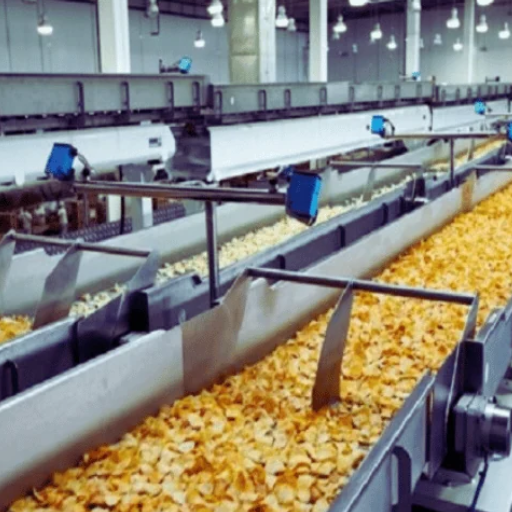
Establish the requirement and revision
Start with one question: which document sets the requirement for this connection? Name the machine model, equipment tag and approved drawing version. A quote may help you find the right file. If it differs from the site drawing, get a written ruling on which to use.
For utility readiness, keep separate fields for physical connection, required supply condition and acceptance evidence. A pipe size describes where the supply joins the machine. Pressure and flow show how it performs.
A quality report asks whether it is fit for its use. One cannot stand in for the others just because someone signed the row.
Use the equipment selection and requirements guide to organize missing buyer inputs before they become site assumptions. If the required range is missing, mark the gap. Name the person who will obtain it. Don’t borrow a value from a similar machine or a web checklist.
Name the interface owners
Name who supplies the required values and who fits the services. Then name a reviewer with the skills to assess the records. The supplier scope and RFQ checklist helps frame that boundary.
Check the scope for each owner. Cover the main supply, final joints, treatment, samples and return routes.
Illustrative scenario: A new line has a connected air hose, so its installation row is marked complete. Another plant user starts, and the pressure at the machine falls below its documented requirement. The utility readiness gap was a test under shared load. A photo of the hose could not close it.
State the activity being released
A utility readiness record should name the next task. This might be a defined inspection or an approved machine test. State which supplies and test records that task needs. Don’t use one box marked “ready for production” to cover several different tests.
Use the site’s rules for safe access and control of stored or live energy. Where US servicing and maintenance rules apply, OSHA 1910.147 addresses isolation and verification within its scope. This checklist does not permit live work. The site’s qualified staff must control that work.
Agree which files govern the check before you measure. Otherwise two people can reach different utility readiness decisions from one reading. They may have used different limits.
Check Power and Compressed Air for Utility Readiness
Electrical compatibility and evidence
Have qualified electrical staff check the fitted supply against the approved machine files. They must also check the site rules that apply. Their utility readiness review should cover voltage, frequency, phases and load.
It must also cover the required means of protection. Keep electrical test reports linked to the equipment tag rather than copying an unexplained “electrics OK” into the schedule.
Check both the supply type and the load it can serve. The supply type may match the machine. That still leaves its ability to serve the planned loads unproved.
Ask the engineer which starting and running states the tests cover. Include other machines served by the same supply.
Record who checked what and which limit they used. A nameplate photo helps identify the machine. It can’t replace the electrical checks needed for the planned task. Don’t take live readings just to fill a utility readiness form.
Air pressure and flow under demand
For compressed air, name the test point near the machine. Show which parts of the supply path are upstream of it. Show the hose, regulator and treatment units in the record if they form part of that path. Otherwise the reading may describe a different supply from the one the machine gets.
The US Department of Energy’s compressed-air sourcebook, Fact Sheet 4, explains distribution pressure loss and the importance of peak flow. Use this engineering principle to plan point-of-use checks. It does not provide a universal pressure limit for your food line.
Record the load state beside the reading. Name the machine demand, other users and how long the test ran. An idle gauge reading can’t close a utility readiness item that needs a loaded test.
If supply falls short, check the path and load first. Don’t jump straight to changing plant settings.
Air quality depends on its use
Distinguish actuator air from air introduced into food or used to clean food-contact surfaces. For applicable US human-food operations, 21 CFR 117.40(g) requires treatment that prevents the specified contamination. It does not prescribe one purity class for every connection.
Ask the food-safety lead which records each contact use needs. Name the sample point, load state, test method and report. A compressor label or upstream certificate can’t by itself prove what reaches the point of use. Keep air flow and air quality as separate utility readiness decisions.
This IFSQN educational video addresses compressed-air contamination concerns. Its description identifies particles, water, oil and microorganisms; use it as background for the sampling discussion, not proof that your air supply passes.
Before closing the air row, check the supply path. Its quality reports and loaded readings must refer to the same fitted parts. If a filter, hose or joint changes, ask which tests need to be repeated.
Verify Water, Steam and Drainage at the Machine
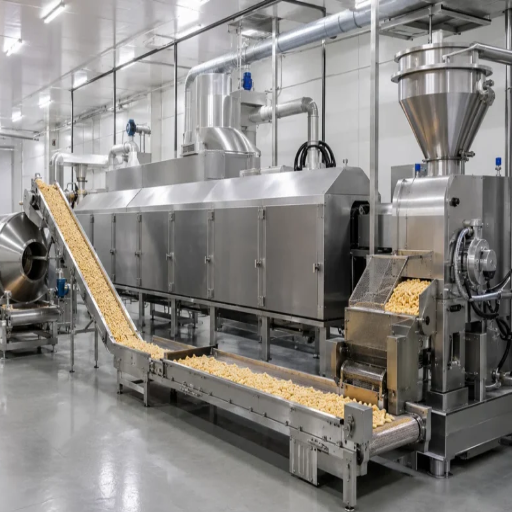
Identify water purpose before choosing evidence
Classify each water connection by use: ingredient, food-contact cleaning, indirect cooling or another documented purpose. Utility readiness needs proof suited to that use. It needs more than a note that the plant has water. Name the source, treatment path, sample point and machine inlet.
For facilities within its scope, 21 CFR 117.37(a) and (b) addresses adequate water supplies, sanitary quality for specified contact uses, and plumbing. These US requirements do not establish a universal water pressure, wash temperature or laboratory sampling frequency for every food line.
Compare pressure, flow and temperature with the approved limits. Use readings taken under the required load. Check whether other planned users were active.
A lab report may support water quality but not prove flow. A flow reading may prove supply volume but leave quality untested.
Attach the right report and ask the named reviewer to assess it. Show any gap between the sample point and the machine inlet. That gap needs a utility readiness decision with a clear basis. Check whether storage, treatment or a changed hose lies beyond the sample point.
Check steam supply and condensate together
For steam, identify whether the use is direct contact or indirect heating. The process needs and food-safety rules set the test basis. Steam at the right pressure is not proof that it suits the use.
Spirax Sarco’s technical guidance, dated 18 July 2024, distinguishes filtered and clean steam and discusses chemical carryover concerns. Treat it as supplier engineering guidance. Do not infer that a particulate filter removes every chemical risk or that all applications require an identical steam grade.
Include the condensate or waste route in utility readiness checks. Condensate is the water formed as steam gives up heat. Ask the engineer to state the required return limits and test records. A full inlet record still leaves a gap if no one has checked the return path.
Illustrative scenario: A team finds steam at the inlet but lacks test records for the condensate return. It marks the return as untested and holds the heating test. The owner must now supply the missing basis and arrange the required check. This is a fictional example, not a Loyal customer result.
Follow discharge to its destination
Document where cleaning water, process discharge and condensate go. Check the planned waste flows that may occur at once. Review how the design prevents backflow and cross-connections. The plumbing provisions of section 117.37 address these concerns for applicable facilities; the actual design still needs project-specific review.
Use the food manufacturing process and handoff guide to identify neighboring operations that may share supply or discharge routes. Keep this utility readiness review focused on the supply and waste paths. Product trials and final acceptance need their own test records.
Have an unresolved connection or return-route question? Send the relevant drawing and equipment reference with your inquiry. Name the missing limit in your question. Don’t treat a guess as an approved value.
For each water or steam row, finish with two questions: does the supply meet the intended use, and can the corresponding return or discharge function under the agreed conditions? Keep separate report references where different reviewers own those answers.
Match Cooling, Extraction and Fuel Interfaces to the Test
Cooling supply and return
For each cooling loop, name the fluid and required supply and return limits. Take the flow basis from the approved files too. State whether the check covers an idle machine or the planned heat load. These are different utility readiness states, even when both use the same pipes.
Use a blank row until actual evidence is available:
| Interface | Requirement source | Test state | Observation and decision |
|---|---|---|---|
| Equipment tag / cooling supply and return | Approved drawing and revision; required values with units | Agreed load and shared users | Enter measured values, evidence ID and reviewer decision |
The row is a documentation example, not a test result. Avoid filling it with plausible numbers to make the schedule look complete. If you can’t yet prove a condition, record the gap. Name the later test that will address it.
Extraction and replacement air
Where a machine needs extraction, check the duct joint and required flow. Check how it joins the building system too. Ask the engineer how air will be replaced.
Agree which load states the test must cover. A fitted duct alone does not settle those questions.
For extrusion buyers, the extrusion-line equipment and layout guide provides wider process context. Use the exact selected equipment to determine the extraction and cooling entries. Do not infer utility readiness requirements from a generic line illustration or assume every extruder has the same services.
Fuel and other conditional services
If the chosen machine uses fuel, list the required supply point. Name the qualified trade that owns the work. Use the site’s approved rules for checks, tests and permits.
Keep their records with the job. This article supplies no gas commissioning sequence or instruction to bypass an interlock.
Mark a utility “not applicable” only with a documented reason, such as its absence from the approved machine configuration. “Not installed” and “not applicable” are different findings. A missing service may be an open need. It is not a reason to shorten the checklist.
Review utility readiness again when the setup changes. A replaced heater, revised cooling package or altered extraction route may change the evidence needed. Link the change to each affected row. Earlier approval must not silently cover a different setup.
Record Utility Readiness Under Representative Demand
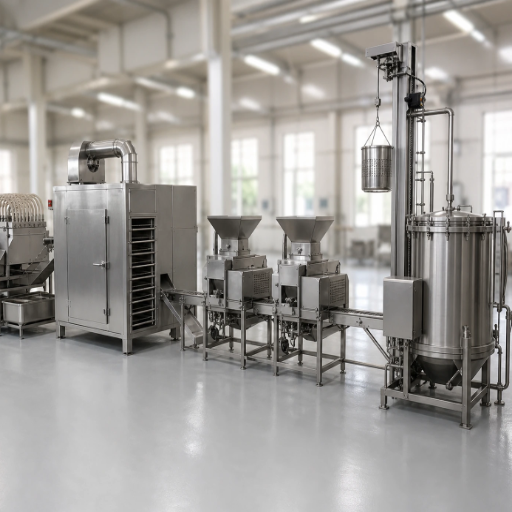
Define what the test represents
Agree which starting, running and cleaning states need proof for the next task. Name the other users that share the supply. List any load combinations that the approved running plan rules out. Utility readiness should demonstrate the intended case, rather than an arbitrary “everything on” exercise or an easy idle condition.
In its 13 October 2026 food-line expansion guide, engineering firm C1S discusses existing utility constraints. The practical question for this record is: what else uses the shared supply? Turn that question into a test condition. Ask the engineer to check whether old load assumptions still apply.
For each utility readiness observation, record these details:
- When the test began and ended.
- Which users were drawing from the same supply.
- Whether the load was steady or changing.
- Which parts of the planned test state were not covered. If the required load can’t yet be created safely, record what remains unproved. Do not label partial observations as a completed loaded test.
Build a record someone else can review
The form below is a suggested record. It is not a form required by law. Add detail where the project needs it. Even a short form needs fields for the point, limit and result.
| Record field | What to enter | Why it matters |
|---|---|---|
| Equipment and connection | Tag, model, location and physical connection ID | Ties evidence to the installed point |
| Requirement | Approved source, revision, parameter, range and units | Makes the acceptance basis visible |
| Test basis | Point, method, duration, load state and concurrent users | Shows what the result represents |
| Observation | Actual result, time, instrument ID and report reference | Allows review and later comparison |
| Finding | Pass, fail, not tested or justified not applicable | Keeps missing evidence visible |
| Decision | Reviewer, deviation reference and permitted next activity | Limits the scope of release |
Keep units and reference conditions explicit, especially for flow and pressure. Don’t compare values on different bases without an approved conversion. A utility readiness result should make sense to the next reader. Don’t leave them to ask what an unlabeled number means.
Check instrument suitability and traceability
Ask the reviewer to check the tool and method. Both must suit the value and range being measured. Section 117.40(f) addresses instruments controlling specified food-safety conditions in applicable operations. It does not set one time interval for checking every utility gauge.
File the report with the machine tag and test-point reference. Photos help locate points; reports hold the test detail. Before closing utility readiness, try to open the test files.
Check that each limit matches the approved drawing version. A file that won’t open or a screenshot with no context leaves work to do. It is not a pass.
Hold, Correct and Release the Defined Start-Up Activity
Give every open item an owner
Use four clear findings:
- Pass: the required check meets the approved limit.
- Fail: the result falls outside that limit.
- Not tested: the required proof is still missing.
- Not applicable: the reviewer has recorded why the item does not apply. Keep a missing limit separate from a failed reading. Both may block a task. One needs an approved limit; the other needs a cause check, a fix and a retest.
For utility readiness failures, record the point, limit and reading. Name the owner and the next decision needed. State which planned activity is held.
If a limited task may proceed, state its scope. It needs the site’s safety and technical review first.
Preserve the failure and retest trail
Illustrative scenario: A team investigates a supply shortfall, corrects the identified installation issue and repeats the relevant check. It retains the original failure, correction reference and new result. If the authorized reviewer accepts the evidence, only the named next activity is released; no production output or savings are claimed.
Do not erase the first observation or quietly replace its attachment. Utility readiness evidence should show what changed and why the repeat check is relevant. If a fix affects another supply or food-contact path, ask the reviewer what else needs checking.
Changes and retests must follow the site’s energy-control and safe-work procedures. A closed utility readiness deviation does not itself authorize someone to remove isolation or restart equipment. Keep the test finding separate from permission to run the machine.
Make the handover useful
Transfer accepted baseline readings, report references and remaining restrictions into the production-line maintenance records. Name who will review changes to the supply path later. This keeps the records useful after the project team leaves.
The final utility readiness signature should name the equipment, document basis, tested state and authorized activity. It does not certify the whole line, validate sanitation, demonstrate accepted output or replace site acceptance testing. Those decisions need their own agreed limits and test records.
Before booking the next test, bring the limits, results and open items together. Put them in one file set that others can review. A short list of clear gaps is more useful than a full sheet of ticks with no basis. Link the decision to the test records you actually have that day.
Questions Before Food-Line Start-Up
What is the difference between connected utilities and utility readiness?
Connected utilities have their pipes, cables or hoses fitted. Utility readiness adds proof that the supplies meet the required limits for the planned task. Link the limit, actual reading, load state and reviewer decision in one record. A photo helps show the point checked; it can’t prove flow or quality.
Which utilities must be checked before a food production line starts?
Check the utilities required by the selected equipment and the defined start-up activity. These may include power, air, water, steam, drainage, cooling, extraction and fuel. Build the list from approved machine and process documents. Include return paths and shared-system conditions, and justify each item marked not applicable rather than silently omitting it.
Does oil-free compressed air automatically meet food-contact requirements?
No. An oil-free label alone does not prove that air at the contact point meets the required limits. Utility readiness needs checks matched to the use, supply path and contaminants of concern.
Ask the food-safety reviewer to set the limits and sample plan. Don’t infer a single purity class from the compressor label.
Can we pass the check with a boiler-room or compressor-room reading?
A plant-room reading supports only the state it measures. It may not prove the supply at the machine under load. Compare its point and load state with the approved test plan. Where the pipes or downstream parts remain unproved, get the needed test records before closing that utility readiness item.
Who can approve start-up when a utility item is still open?
The project’s named authority must decide under the site’s approved safety and technical rules. An open item needs an owner, a risk review and a clear scope decision. Missing proof is not a pass. A utility readiness signature cannot replace the permits or other approval needed for the machine or test.
Prepare the next decision
Review the schedule with the people who own the machine limits, fitted services and food-safety decisions. Ask each reviewer what evidence is still needed for the named activity. Agree on the limit before accepting a number. Then keep the reading and its load state together.
For a machinery project discussion, contact Loyal with the model list, utility schedule and unresolved connection questions. Clear inputs help define the questions to settle before start-up. Keep utility readiness tied to proven conditions and a named release decision throughout the project.