
Category Blog
Industrial Food Packaging Equipment: A Complete Buyer’s Guide
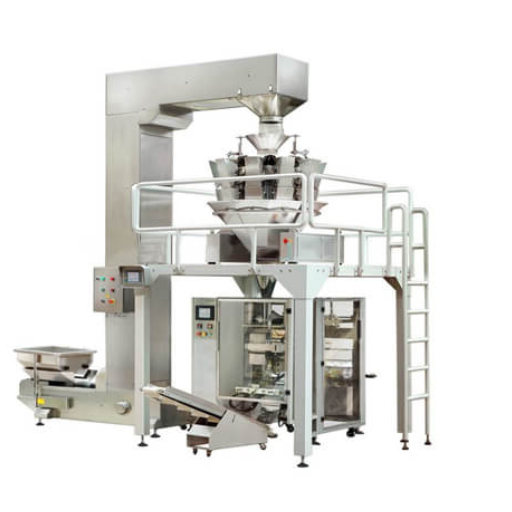
Industrial food packaging equipment protects your product, extends shelf life, and determines how efficiently your line moves from finished goods to shipped orders. The right system reduces waste, cuts labor costs, and keeps your brand compliant with food safety regulations…
How to Choose Industrial Food Processing Equipment: A 7-Step Buyer’s Framework
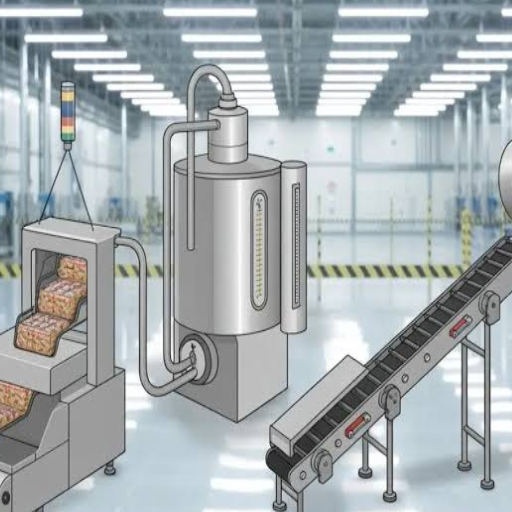
To choose industrial food processing equipment, start by defining your product and throughput requirements. Next, map machines to each production stage. Set material and compliance standards, and document everything in a User Requirement Specification (URS). Finally, calculate total cost of…
Food Processing Equipment Cost: 2026 Pricing Guide for Buyers
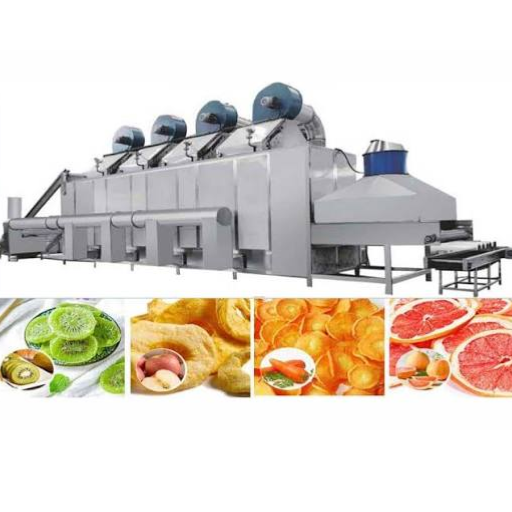
Food processing equipment cost typically ranges from 1,000 for a single machine to 1,000 for a single machine to 5,000,000 or more for a turnkey industrial line, with most commercial production lines falling between 150,000 and 150,000 and 1,500,000. That wide range…
Food Machinery Manufacturer: 9-Point Buyer Checklist
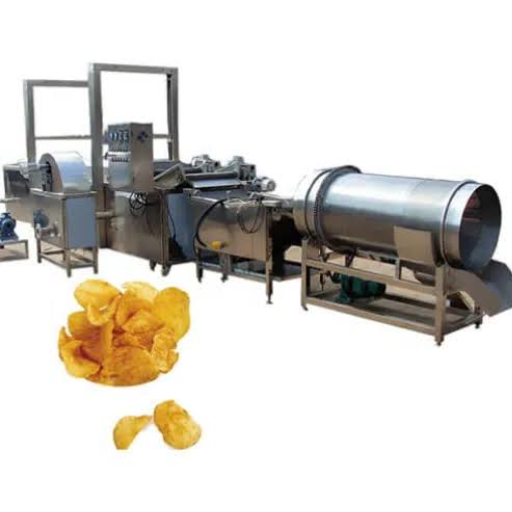
Choose a food machinery manufacturer by verifying product fit, hygienic design, capacity assumptions, integration scope, testing, documentation, commissioning, and lifecycle support. Compare price only after every supplier has quoted against the same requirements and acceptance criteria. Counterintuitively, the lowest-priced machine…
Types of Food Processing Equipment: A Complete Guide by Production Stage
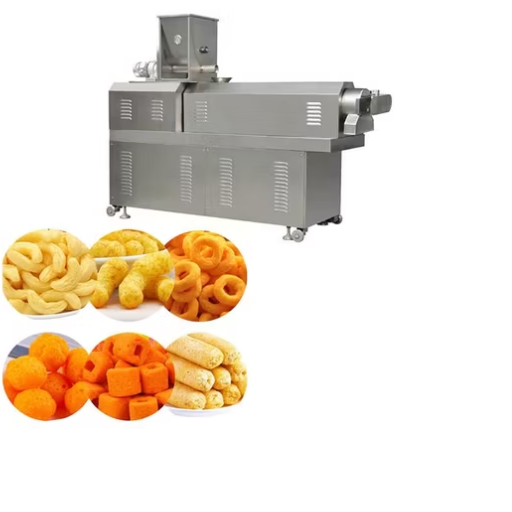
The main types of food processing equipment include preparation and cleaning machines, mechanical processing equipment, thermal processing systems, forming and extrusion equipment, drying and dehydration units, separation and filtration devices, packaging lines, and quality-control inspection systems. Each type handles a specific stage…
Industrial Food Machinery Equipment: Complete Guide to Types, Selection & Standards
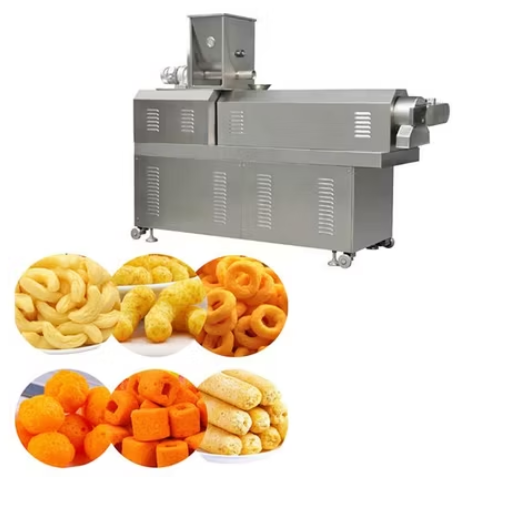
Industrial food machinery equipment is the large-scale, automated, and sanitary machinery used to receive, prepare, process, thermally treat, package, and inspect food products in factories and co-manufacturing plants. The right food manufacturing equipment mix depends on your product, target throughput, hygiene requirements, and…
Pani Puri Pellet Making Machine: A Complete Guide to Equipment, Process & Selection
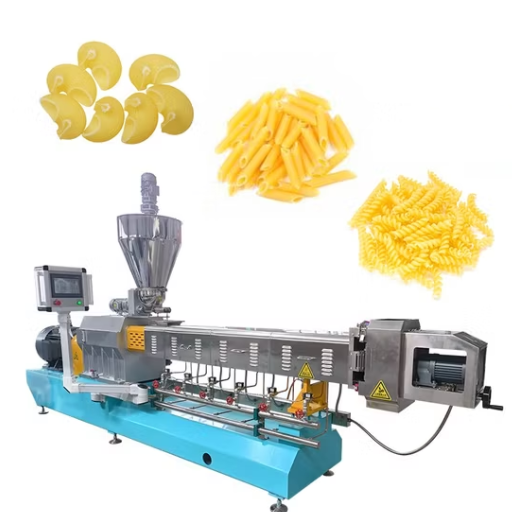
A pani puri pellet making machine is an industrial extrusion system that forms hollow, round snack pellets, also called golgappa or puchka shells, from wheat flour, corn starch, or tapioca starch. These pellets are dried and then fried or air-puffed to create…
Bugles Snack Production Line: Complete Equipment, Process & Buyer’s Guide
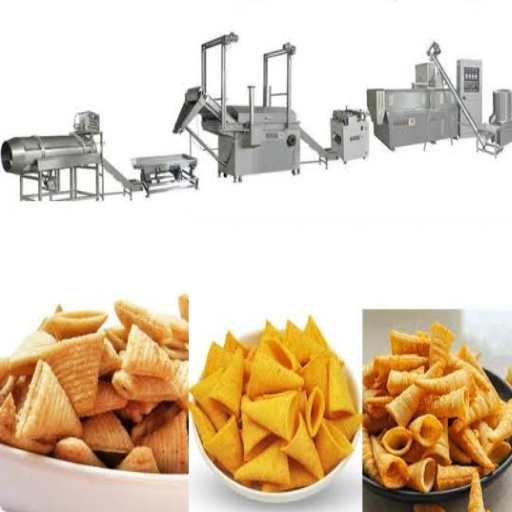
A bugles snack production line is an automated system that mixes flour or starch, extrudes and shapes the dough, and then fries or bakes it. After cooking, the line seasons, cools, and packages the finished snack. The right system can produce 100…
Industrial Pellet Dryer Machine: A Complete Guide for Feed & Food Producers
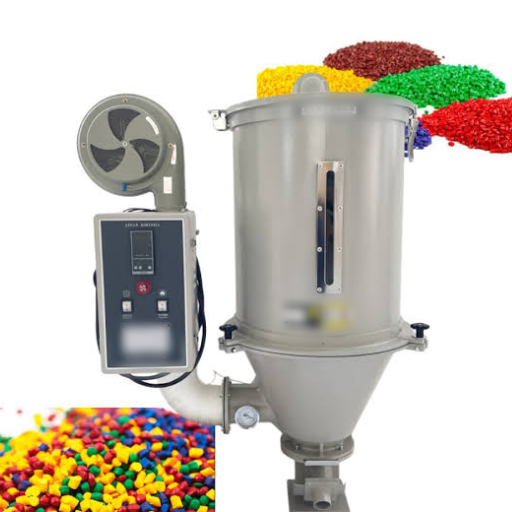
An industrial pellet dryer machine removes excess moisture from extruded or pressed pellets so they can be stored, transported, and sold without spoiling, breaking, or losing nutrition. For food, feed, pet food, and aquatic feed producers, the right dryer protects product quality,…
Fryums Production Line: Complete Equipment, Process & Business Guide
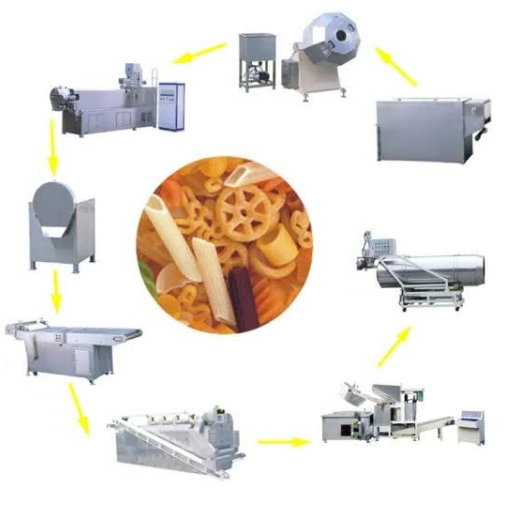
A fryums production line is an integrated system of mixers, extruders, dryers, fryers, and packaging machines that turns starches and flours into crispy, puffed snack pellets. The right line can produce anything from simple 2D wheels and rings to complex 3D pani…